August 28 ~ This Day in Music History

• 1850 ~ Wagner’s opera, Lohengrin, was performed for the first time.

• 1894 ~ Karl Böhm, Austrian conductor

OCMS   1913 ~ Richard Tucker, American tenor
More information about Tucker

• 1924 ~ Dinah Washington, American rhythm-and-blues singer. She popularized many, many great songs, including What a Diff’rence a Day Makes, Unforgettable, and several hits with Brook Benton.

• 1925 ~ Billy (William Wayne) Grammer, Singer

• 1931 ~ You Rascal You was recorded by Henry Allen, with the Luis Russell Band, for the Victor label.

• 1939 ~ Clem Cattini, Drummer with Tornados

• 1948 ~ Daniel Seraphine, Drummer with Chicago

• 1951 ~ Wayne Osmond, Singer with The Osmond Brothers

• 1964 ~ The Beatles appeared on the cover of LIFE magazine.

• 1965 ~ Shania Twain (Eilleen Regina Edwards), Grammy Award-winning singer

• 1984 ~ The Jacksons’ Victory Tour broke the record for concert ticket sales. The group surpassed the 1.1 million mark in only two months.

• 2002 ~ Kay Gardner, whose last musical work with the Bangor Symphony Orchestra memorialized the Sept. 11 terrorist attacks, died of a heart attack. She was in her early 60s.
On hearing of her death, symphony officials scheduled Gardner’s work, “Lament for Thousand,” for the orchestra’s season-opening concert Oct. 13 at the Maine Center for the Arts in Orono.
Gardner was a pianist, flutist and conductor who performed in 46 states and several countries.
More than 20 years ago, she sued the Bangor Symphony, unsuccessfully, for sex discrimination after she had applied for a conducting position and learned that orchestra members had been asked how they felt about working with a female conductor.
In 2000, she was the guest conductor for a 40-member orchestra of women from the Bangor Symphony, playing a repertoire written by women.
Gardner studied music at the University of Michigan and at the State University of New York at Stony Brook. In 1972, she helped found a feminist and openly lesbian women’s band, Lavender Jane.
Why is Theory Important for Piano Students?

Music_Theory


Students at the O’Connor Music Studio know that music theory is always a part of lessons.  I strongly believe that theory is needed so that students understand what they are playing and why.

To me, theory work is just as important as playing.  A firm knowledge of musical structure makes playing everything easier.

Music knowledge learned through piano lessons transfers easily to other  musical activities.  Students in Fairfax County Public Schools, students learn to play recorder.  Students are sometimes surprised to learn that they already know all the notes – from their piano lessons!

When you sing in a choir, harmonize with Sweet Adelines, play an instrument in your school or community band/orchestra, join your church’s handbell choir (note:  Pender UMC has an excellent Handbell program), teach yourself guitar – theory will help in every instance. By learning to read, write, and understand this musical language, many more musical opportunities will be made available the rest of your life.

Most piano methods come with a theory book that matches page by page what concepts are being learned in the lesson books.  I actually recommend that students do the theory first when they get home, while the concepts are still fresh in their minds.

If the student is not in a piano method, I’m starting to use the Theory Time series.  Book One covers music alphabet, introduction to keyboard and staff, stem rule, steps & skips on a keyboard and staff, repeated notes, dynamics, treble clef lines & spaces, bass clef lines & spaces, quarter note & rest, half note & rest, whole note & rest, dotted half note, bar lines, double bar line, measures, time signatures, rhythm drill, vocabulary, ear training and a review test. Free ear training videos for each ear training exercise are hosted on the Theory Time YouTube channel. The Grade One workbook is appropriate for beginning 1st, 2nd or 3rd grade students. This workbook includes 51 pages, 13 lessons and 8 Fun Sheets.

For adults and more advanced students, I have a copy of All About Music Theory: A Fun and Simple Guide to Understanding Music which can be used as a review or a “try before buy”.

Stop procrastinating and go do your theory!

The Magic Flute ~ Coming to Daniels Run Elementary School

MagicFlute


Music will fill Daniels Run Elementary at 9:55 a.m. on Friday, November 20, as the Children’s Opera Company performs “The Magic Flute” as a cultural arts assembly for students in grades 3 – 6. The assembly aligns with the fifth grade Program of Studies proscribed work, Mozart’s Magic Flute, while giving students an opportunity to experience a live opera, modified and adapted for a school-age audience.

Some members of the Daniels Run Singers will participate in the performance, and the sixth grade chorus will perform four adapted arias during the performance.  This professional touring ensemble performs opera for young audiences in Northern Virginia and the Washington, D.C., metropolitan area, and was started by an FCPS music teacher.

The Daniels Run PTA and Daniels Run Singers activity fund are underwriting the cost of the performance.

Contact principal Adam Erbrecht at 703-279-8400 or awerbrecht@fcps.edu or event liaison Lucinda Sexton at ljsexton@fcps.edu.


Why Work on Music Theory?

Music_Theory


Students at the O’Connor Music Studio know that music theory is always a part of lessons.  I strongly believe that theory is needed so that students understand what they are playing and why.

To me, theory work is just as important as playing.  A firm knowledge of musical structure makes playing everything easier.

Music knowledge learned through piano lessons transfers easily to other  musical activities.  Students in Fairfax County Public Schools, students learn to play recorder.  Students are sometimes surprised to learn that they already know all the notes – from their piano lessons!

When you sing in a choir, harmonize with Sweet Adelines, play an instrument in your school or community band/orchestra, join your church’s handbell choir (note:  Pender UMC has an excellent Handbell program), teach yourself guitar – theory will help in every instance. By learning to read, write, and understand this musical language, many more musical opportunities will be made available the rest of your life.

Most piano methods come with a theory book that matches page by page what concepts are being learned in the lesson books.  I actually recommend that students do the theory first when they get home, while the concepts are still fresh in their minds.

If the student is not in a piano method, I’m starting to use the Theory Time series.  Book One covers music alphabet, introduction to keyboard and staff, stem rule, steps & skips on a keyboard and staff, repeated notes, dynamics, treble clef lines & spaces, bass clef lines & spaces, quarter note & rest, half note & rest, whole note & rest, dotted half note, bar lines, double bar line, measures, time signatures, rhythm drill, vocabulary, ear training and a review test. Free ear training videos for each ear training exercise are hosted on the Theory Time YouTube channel. The Grade One workbook is appropriate for beginning 1st, 2nd or 3rd grade students. This workbook includes 51 pages, 13 lessons and 8 Fun Sheets.

For adults and more advanced students, I have a copy of All About Music Theory: A Fun and Simple Guide to Understanding Music which can be used as a review or a “try before buy”.

Stop procrastinating and go do your theory!

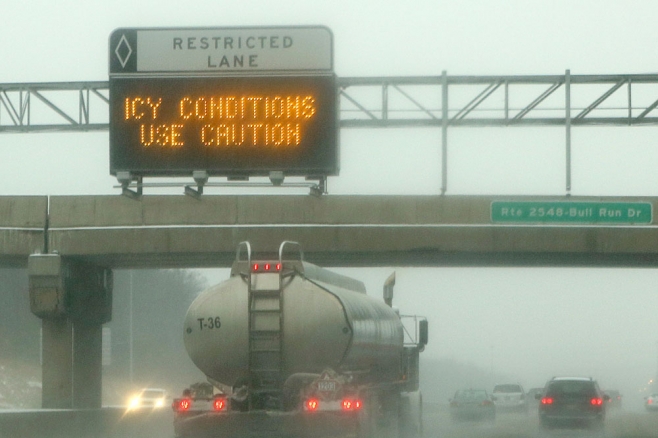
Icy Weather and Piano Lessons

icy-weather


Fairfax County has just closed school again, so, technically, I’m not teaching.  But it’s been too many Mondays off.

So, I leave it up to you if you want to come for lessons today or not.

Please let me know if you intend to be here today – or not.

Thanks!

My husband was out last night and said that the roads were ok but our driveway was icy.  He used the last of our salt but didn’t know if it would be melted or not.

Sooner or later there WILL be another Monday piano lesson, I hope.

Stay warm, dry and keep practicing.

maryorhsnowysurprise

Summer Schedules!

It’s hard to believe but summer is nearly upon us.  FCPS students are getting out later this year due to snow days, so the regular school year piano lessons are going a bit longer, as well.

Here’s the basic schedule from now through the start of fall lessons.  Please remember that students must take at least 6 summer lessons to hold a current school year lesson time for the fall.

The last day of school is  June 25, so there are no lessons week of June 23 (school age students only.  Adults continue, as always)

No lessons 4th of July weekend – July 3-5

No lessons after noon the week of July 7-11 (Pender UMC Music Camp)

No lessons August 15-Sept 2


Lessons (11 adult lessons, 10 school age students offered):

June 2 9, 16, 23 (except FCPS students – last week of school), 30
July 7 (mornings only), 14, 21, 28
Aug 4, 11

Sept 8, the fall semester begins


If you need to reschedule, please call, email or FaceBook me and with at least 24-hours notice. There are some open spots available on the schedule.  You can view them here: https://ocms.youcanbook.me/.   Those times are “more like guidelines.  I will contact you to confirm any changes.  As always, the PW is “piano”.


happy_summer