

March 27 ~ Today in Music History

. 1771 ~ A review of a concert in Venice given today by 15 year old Mozart read: “He worked out (a fugue theme) for more than an hour with such science, dexterity, harmony and proper attention to rhythm that even the greatest connoisseurs were astounded.”
. 1851 ~ (Paul-Marie-Theodore) Vincent d’Indy, French composer and conductor
More information about d’Indy
. 1868 ~ Patty Smith Hill, songwriter, with Mildred Hill, composers of Happy Birthday To You. It’s first title was Good Morning to All
. 1892 ~ Ferde Grofe, Composer
More information about Grofe
. 1914 ~ Snooky Lanson (Roy Landman), Singer, vocalist on Your Hit Parade on radio and TV
. 1920 ~ Richard Hayman, Musician, house conductor for Mercury Records, harmonica player
. 1924 ~ Sarah Vaughan, ‘The Divine One’, American jazz singer, pianist, she was awarded the Grammy Lifetime Achievement Award in 1989
. 1927 ~ Mstislav Rostropovich, Soviet cellist and conductor
More information about Rostropovich
. 1931 ~ Burt Collins, Jazz musician, trumpet, flugel horn, played with Jess Roden Band, Lalo Schifrin, T. Rex
. 1945 ~ Ella Fitzgerald and the Delta Rhythm Boys recorded the classic, It’s Only a Paper Moon for Decca Records.
. 1947 ~ Tom Sullivan, Singer, composer
. 1950 ~ Tony Banks, Keyboards with Genesis
. 1950 ~ Jazz pianist Erroll Garner became one of the first jazz instrumentalists to give a solo concert. He played the Music Hall in Cleveland, OH. In 1954, Garner would gain international applause for writing and recording a standard that has been presented many times since: Misty. Johnny Mathis and Sarah Vaughan are but two of many recording artists to offer vocal renditions of this renowned Garner composition. Play Misty for me.
. 1951 ~ Frank Sinatra recorded I’m a Fool to Want You for Columbia.
. 1958 ~ CBS Laboratories announced a new stereophonic record that was playable on ordinary LP phonographs, meaning, monaural. In stereo, on the proper equipment, a new rich and fuller sound was heard. It eventually became a standard for record and equipment buyers.
. 1959 ~ Andrew Farriss, Keyboards with INXS
. 1967 ~ Pop hit Happy Together by The Turtles became the No. 1 song in America.
. 1970 ~ Mariah Carey. Grammy Award-winning singer. She has sold more than 120 million albums and singles since her debut in 1990, only artist with a #1 single in every year of the 1990s. She has spent more weeks at #1 than any other artist
. 1971 ~ Janis Joplin started her second (and final) week at the top of the pop music charts with the hit, Me and Bobby McGee, written by Kris Kristofferson.
. 1975 ~ Sir Arthur Bliss, English composer and Master of the Queen’s Music, died. Master of the Queen’s Music (or Master of the King’s Music) is a post in the Royal Household of the Sovereign of the United Kingdom. The holder of the post originally served the monarch of England.
The post is roughly comparable to that of Poet Laureate. It is given to people eminent in the field of classical music; they have almost always been composers (George Frederick Anderson was one exception; he was a violinist who is not known to have ever composed any music). Duties are not clearly stated, though it is generally expected the holder of the post will write music to commemorate important royal events, such as coronations, birthdays, anniversaries, marriages and deaths, and to accompany other ceremonial occasions. The individual may also act as the Sovereign’s adviser in musical matters.
. 2015 ~ Tomas Tranströmer, winner of the 2013 Nobel Prize for Literature, died at the age of 83.
His poems, translated into 60 languages, have been set to music by some of Sweden’s foremost composers.
A passionate pianist, Tomas Tranströmer had to relearn how to play after a stroke in 1990 left him paralysed down his right side. He said that playing the piano every day was the key to saving his life.
Piano Pedals – History of Piano Pedals
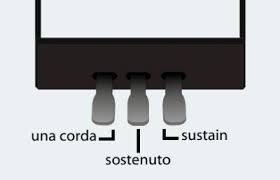
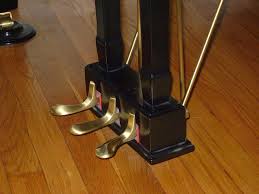
Piano pedals have existed for almost as long as the modern piano itself, but they had a rocky start. While the modern piano accepted most of its final touches, the evolution of the piano pedal continued.
In 1722, the piano’s first tone-modifying mechanism came in the form of a hand stop, and was created by Father Piano himself: Bartolomeo Cristifori. The device positioned the hammers to strike only one piano string per key, which created a soft, relaxed timbre. But it was far from ideal; a spare hand was required to use it, meaning the pianist either repeatedly removed one hand from the keys, or practiced alongside a hand-stop operator. Thankfully, the mechanism was later modified to be operated by the knee, and became the predecessor to today’s una corda, or “soft,” pedal.
The next modification arrived soon after. Gottfried Silbermann — renowned European constructor of keyboard instruments — created a mechanism that lifted the dampers off of the strings, causing a reverb effect. This early sustain pedal had an advantage over most modern sustains: treble and bass notes could be controlled separately from one another; however, like the una corda, the sustain did not start off as a foot pedal; an impracticality which may have justified its early unpopularity. Today, the sustain is the most frequently used, and possibly the most favored, piano pedal.
Which brings us to the underdog: the sostenuto pedal. Created in the mid 1800s by Boisselot & Sons, it is by far the most misunderstood piano pedal. The sostenuto is constantly being replaced — or removed entirely — from its position as the middle pedal, and is only standard on an American grand. It allows certain notes to be “sustained” while other notes are left unaffected, and even piano leader Steinway saw potential in the pedal, opting to patent the idea three years after its début in 1844. But, surprisingly, the impressive effects of the sostenuto never caught on.
Alternative middle pedals have included practice rails, which muffle the notes for quiet practice; and the faux-sostenuto, which allows only the bass notes to resonate. Most modern pianos now have only two pedals, leaving the sostenuto –- one of the most unique and inspiring pedals –- to fade into antiquity.
via Piano Pedals – History of Piano Pedals.
March 26 ~ Today in Music History
. 1827 ~ German composer Ludwig van Beethoven died in Vienna. Beethoven is considered one of the greatest western composers ever. He composed many of his finest works after he had become totally deaf.
. 1828 ~ Franz Schubert, Austrian composer, performed his one and only public concert in the capital city of Vienna.
. 1871 ~ François-Joseph Fetis died. He was a Belgian musicologist, composer, teacher, and influential music critic.
. 1918 ~ Cesar Cui, Russian composer, died
More information about Cui
. 1921 ~ Joe Loco (Jose Esteves, Jr.), Jazz musician, arranger, credited with introducing the mambo (1951) and cha-cha-cha (1953) to the US
. 1925 ~ Pierre Boulez, French composer and conductor. His later work, notably “Le Marteau sans maitre,” gained him a worldwide reputation.
More information on Boulez
 Grammy winner
. 1929 ~ Maurice Simon, Jazz musician, tenor sax
. 1940 ~ Rod Lauren, Singer
. 1941 ~ Jimmy Lunceford and his orchestra recorded the tune, Battle Axe, for Decca Records. Lunceford began with the Chickasaw Syncopaters, a 10-piece band, in the late 1920s. By 1934, he would add names like Sy Oliver, Willie Smith, Earl Caruthers, Joe Thomas, Al Norris, Moses Allen, and James Crawford to form orchestras that would entertain through the mid-1940s.
. 1944 ~ Diana Ross (Diane Earle), American pop soul singer with The Supremes
. 1948 ~ Richard Tandy, Bass with Electric Light Orchestra
. 1948 ~ Steven Tyler (Tallarico), Singer with Aerosmith
. 1949 ~ Vicki Lawrence, Emmy Award-winning actress, singer
. 1949 ~ Fran Sheehan, Bass with Boston
. 1950 ~ Teddy Pendergrass, American soul singer, songwriter and drummer
. 1974 ~ David Essex received a gold record for the hit, Rock On. Though a million seller, Rock On never made it to number one on the pop-rock charts – stalling at number five. It was on the charts for a total of 14 weeks. Essex portrayed the role of Christ in the London production of Godspell. He starred in several British films in 1970. 1975 ~ Tommy, the film based on the rock opera by the group, The Who, premiered in London.
. 2000 ~ John Corigliano won an Oscar for the score to the movie The Red Violin
. 2015 ~ Joseph Smith died. He was a well-liked, modest and warmly adventurous New York pianist.
Benita Meshulam, a close friend, wrote: “Joe was the most curious musician I have ever known, always looking for forgotten works, studying them thoroughly. He was interested not only in the works but the composers and investigated everything. He was a pianist who didn’t care about the condition of the pianos he performed on. It was his message that he wanted to get across–a real musician’s musician who lived and breathed his art. He was also the kindest and most generous colleague.”
Student Schedule Change!

I WILL be teaching next Monday, March 30 (even though it’s Fairfax County School break) if you can come.
I WILL NOT be teaching Monday, April 6 instead.
March 25 ~ Today in Music History
. 1699 ~ Johann Adolph Hasse, German composer, singer and teacher of music. Immensely popular in his time, Hasse was best known for his prolific operatic output, though he also composed a considerable quantity of sacred music.
. 1784 ~ François-Joseph Fetis, Belgian musicologist, composer, teacher, and influential music critic.
. 1851 ~ The Playel piano factory in Paris was destroyed by fire. Playel was the favorite of Chopin in the 19th century, and it was identified with French composers known as the impressionist musicians of the early 20th century — like Ravel and Debussy.
Pleyel was founded in 1807 by Ignaz Pleyel, a composer and music publisher who studied with Franz Joseph Haydn.
. 1867 ~ Arturo Toscanini, Italian conductor and musical director. Famed for his temper in rehearsals, he was director of La Scala and the Metropolitan opera houses. He also conducted the NBC symphony orchestra. With a career spanned 68 years, he was a cellist at age 19
Read quotes by and about Toscanini
More information on Toscanini
. 1881 ~ Béla Bartók, Hungarian composer and pianist, born. His knowledge of western musical techniques allied to the inspiration he derived from Hungarian peasant songs enabled him to become a unique musical force.
More information about Bartók
. 1903 ~ Grammy winner Frankie Carle (Carlone), Pianist and bandleader
More about Carle
. 1913 ~ The Palace Theatre opened its doors in New York City. Ed Wynn was first on the vaudeville bill. Some 20 years later, Wynn would be named as radio’s top entertainer. He later became popular on television, as well.
. 1918 ~ Claude Debussy, French composer, died. His music, described as “musical Impressionism”, explored original avenues of expression.
. 1931 ~ Hal Kemp and his orchestra recorded Whistles, with Skinnay Ennis, for Brunswick Records. Both Kemp and Ennis sang in the Dorsey Brothers Concert Orchestra, under the direction of Dr. Eugene Ormandy (later, conductor of the Philadelphia Symphony Orchestra). The pair were part of the orchestra vocal quartet that also featured Nye Mayhew and Saxey Dowell in 1928.
. 1934 ~ Johnny Burnette, ‘The Master’, singer, brother of singer Dorsey Burnette
. 1938 ~ Hoyt Axton, Singer, musician and songwriter. Axton’s mother, Mae Boren Axton, wrote Elvis Presley’s Heartbreak Hotel
. 1940 ~ Anita Bryant, Singer
. 1942 ~ Aretha Franklin, American soul singer, known as the “Queen of Soul” and “Lady Soul”, she won 15 Grammy Awards and was the first woman inducted into Rock and Roll Hall of Fame (1987)
. 1947 ~ Elton John (Reginald Kenneth Dwight), Entertainer
More information about John
. 1948 ~ Kelly Garrett, Actress, singer
. 1949 ~ Neil Jones, Musician with Amen Corner
. 1951 ~ Maizie Williams, Singer with Boney M
. 1966 ~ Jeff Healey, Guitarist, singer, songwriter with the Jeff Healey Band, CBC radio show: My Kind of Jazz
. 1971 ~ Tom Jones went gold with his single, She’s a Lady.
. 1972 ~ The group, America, rode to the top of the pop music charts with their LP, America, and the single (included on the LP), A Horse with No Name. A Horse With No Name would be the group’s only gold record.
A Day in the Life of a Piano Teacher

Four students.
The Model Student and the Bored Teenage Student:
The Can’t-Stop-Playing-Even-When-the-Teacher-Is-Talking Student and the Whiny Student:
March 24 ~ Today in Music History
. 1784 ~ Mozart‘s Piano Concerto No. 15 in B flat, K. 450 in B flat, K. 450 was first performed. Mozart was the soloist.
It is a concertante work for piano, or pianoforte, and orchestra. Mozart composed the concerto for performance at a series of concerts at the Vienna venues of the Trattnerhof and the Burgtheater. In a letter to his father, Mozart compared this concerto with the 16th concerto in D:
“I consider them both to be concertos which make one sweat; but the B flat one beats the one in D for difficulty.” Indeed, many pianists consider this to be the most difficult of all of Mozart’s piano concertos. The concerto is primarily difficult from its many quick scale patterns which must be played perfectly and also from its many fast chord patterns moving up and down.
Beginning with this concerto, Mozart began to use the term “grand” to describe his concerti such as K.450 which feature a prominent and required wind section for the ensemble. The work is orchestrated for solo piano, flute, two oboes, two bassoons, two horns, and strings.
The concerto is in three movements:
1. Allegro
2. Andante in E-flat major
3. Allegro
. 1808 ~ María Felicità Malibran, Spanish contralto
. 1900 ~ June (Algeria Junius) Clark, Musician, trumpeter
. 1916 ~ Enrique Granados, Spanish composer, died in the English Channel. Best known for his piano suite “Goyescas” after paintings by Goya.
. 1920 ~ Gene Nelson (Eugene Leander Berg), Actor, dancer in Lullaby of Broadway, Oklahoma, Tea for Two, The West Point Story
. 1922 ~ Dave Appell, Arranger for big bands: Benny Carter, Earl ‘Fatha’ Hines; TV music director, record producer, singer, songwriter, musician with Dave Appell and the Applejacks
. 1928 ~ Byron Janis (Yanks), American pianist, NBC Symphony Orchestra; well-known piano performance on Hugo Winterhalter’s Rhapsody in Blue recording, composed by George Gershwin.
. 1935 ~ After a year as a local show from New York City, “Major Bowes’ Original Amateur Hour” was heard on the entire NBC radio network. The show stayed on the air for 17 years. Later, Ted Mack took over for Bowes and made the move from radio to television.
. 1937 ~ Benjamin Luxon, British baritone
. 1941 ~ Glenn Miller began work on his first motion picture for 20th Century Fox. The film was Sun Valley Serenade.
. 1958 ~ Elvis Presley reported to local draft board 86 in Memphis, TN. He became US 53310761. Oddly, since Elvis was now ‘government property’ serving his time in the Army, Uncle Sam stood to lose an estimated $500,000 in lost taxes each year that Private Presley was in the Army.
. 1980 ~ Capitol Records released some rare Beatles tracks. Included in the album were stereo versions of Penny Lane and She Loves You, sung by the group in German, under the title, Sie Liebt Dich. Also included was a German version of I Want to Hold Your Hand or, in the Teutonic tongue, Komm Gib Mir Deine Hand.
. 2000 ~ French Quarter pianist and chanteuse Lily Simha Hood, whose fans included Tennessee Williams, died of kidney failure. She was cagey about revealing her age, and her husband asked that the secret remain with her death. Her musical career began on a whim. After dinner one night in 1976, the Hoods and a friend stopped at Lafitte’s Blacksmith Shop, a Bourbon Street bar across from their house. Mrs. Hood played a few tunes on the piano for her friend and was hired on the spot, even though she wasn’t looking for a job. Soon, “Miss Lily” had a crowd of regulars including Tennessee Williams, who would bring in a songbook for her to sing from. Mrs. Hood never formally studied the piano and never learned to read music. She was self-taught and learned by listening. She performed at Lafitte’s for 16 years, but health problems ended her career about 1993.
The Piano Guys are coming to Wolf Trap August 6
The Piano Guys are an American musical group who gained popularity through YouTube, where they posted piano and cello renditions of popular songs and classical music.
They are also adding piano music books. This one from amazon.com says:
With their clever and inspiring takes on popular music and creative videos, The Piano Guys serve up an eclectic mix of classical, film score, rock and pop favorites that resonates with a wide variety of audiences.
Play 12 of their most popular songs in these arrangements for easy piano with optional cello: All of Me * Arwen’s Vigil * Begin Again * Home * Kung Fu Piano: Cello Ascends * Moonlight * Over the Rainbow * Paradise * Rolling in the Deep * A Thousand Years * Titanium * Without You.
Includes separate pull-out cello part.
I am not sure about their idea of “easy piano” but I have ordered a copy for the studio.
Wolf Trap tickets are available here: http://www.wolftrap.org/tickets/calendar/performance/15filene/0806show15.aspx
March 23 ~ Today in Music History
. 1731 ~ Johann Sebastian Bach‘s first performance of the St. Mark Passion. It was Good Friday that year.
. 1743 ~ It was the first London performance of Handel’s “Messiah”, and King King George II was in the audience. In the middle of the “Hallelujah Chorus, the King rose to his feet in appreciation of the great piece! The entire audience followed suit out of respect for the King. And so began the custom of standing during the singing of the “Hallelujah Chorus”.
More about Handel’s Messiah
. 1750 ~ Johann Matthias Sperger, Austrian contrabassist and composer.
. 1878 ~ Franz Schreker, Austrian composer and conductor
. 1887 ~ Anthony von Hoboken, Dutch music bibliographer; cataloguer of the works of Haydn
. 1917 ~ Johnny Guarnieri, Pianist, played with Benny Goodman and Artie Shaw; played at the Tail O’ The Cock in LA for a decade
. 1926 ~ Martha Wright (Wiederrecht), Singer on The Martha Wright Show
. 1927 ~ Régine Crespin, French soprano
. 1949 ~ Ric Ocasek (Richard Otcasek), Guitarist, singer with The Cars
. 1950 ~ Aaron Copland won an Oscar for his score to the movie The Heiress
. 1953 ~ Chaka Khan (Yvette Marie Stevens), Singer
. 1966 ~ Marti Pellow (Mark McLoughlin), Singer with Wet, Wet, Wet
. 1974 ~ Cher reached the top of the music charts as Dark Lady reached the #1 spot for a one-week stay. Other artists who shared the pop music spotlight during that time included: Terry Jacks, John Denver, Blue Swede, Elton John and MFSB.
. 1985 ~ Singer Billy Joel married supermodel Christie Brinkley in private ceremonies held in New York City.
. 1985 ~ Zoot (John Haley) Sims passed away. He was an American jazz saxophonist, playing mainly tenor and soprano.
. 1985 ~ We Are the World, by USA for Africa, a group of 46 pop stars, entered the music charts for the first time at number 21.
. 2000 ~ Ed McCurdy, a leading 1950s folk music figure whose songs were recorded by Johnny Cash, Arlo Guthrie and Joan Baez, in Halifax, Novia Scotia. He was 81.
 MaryO'Studio