00:00 Sinfonia N.40 in sol minore – I. Molto allegro 05:58 Sinfonia N.40 in sol minore – II. Andante 13:55 Sinfonia N.40 in sol minore – III. Minuetto allegretto 18:08 Sinfonia N.40 in sol minore – IV. Finale Allegro assai 22:42 Symphony No. 38 in D ‘Prague’, K. 504 – I. Adagio-Allegro 36:28 Symphony No. 38 in D ‘Prague’, K. 504 – III. Finale (Presto) 44:29 Symphony no. 36 in C ‘Linz’, K. 425 – I. Adagio – Allegro spiritoso 55:01 Symphony no. 36 in C ‘Linz’, K. 425 – III. Menuetto 1:05:34 Symphony no. 17 in G, K. 129 1:18:55 Overture to The Magic Flute, K. 620 1:25:36 Flute Concerto in D, K. 314 1:44:17 String Quartet No. 15 In D Minor, K 421 – I. Allegro Moderato 1:51:58 String Quartet No. 15 In D Minor, K 421 – II. Andante 1:57:13 String Quartet No. 15 In D Minor, K 421 – III. Minuetto 2:01:26 String Quartet No. 15 In D Minor, K 421 – IV. Allegro Ma Non Troppo 2:08:04 Quintet in Eb, K.452 2:44:27 Piano Quartet in Gm, K. 478
. 1885 ~ Jerome Kern, American songwriter and composer of musical comedies He was known as the father of the American musical, composing Show Boat, Ol’ Man River, Smoke Gets in Your Eyes, Lovely to Look At, The Way YouLook Tonight and The Last Time I Saw Paris
. 1895 ~ Harry Ruby (Rubinstein), Musician and composer
. 1905 ~ John Schaum, Pianist, composer and music educator. Schaum began his career as a piano teacher in the late 1920s. In 1933 he founded the Schaum Piano School in Milwaukee. About the same time he began to compose piano music for teaching purposes. He also founded the first company to produce award stickers specifically for music students. Always on the lookout for better materials for his students, Schaum eventually decided to create his own books, beginning in 1941 with Piano Fun for Boys and Girls, which he later revised as the first in a series of nine piano method books that became the Schaum Piano Course, completed in 1945. These books are still widely used today.
. 1918 ~ Skitch Henderson, Conductor of the Tulsa Symphony Orchestra, bandleader, musical director of NBC-TV’s The Tonight Show with Steve Allen and JohnnyCarson
. 1961 ~ Leontyne Price made her debut at the Metropolitan Opera House in New York City. She sang in the role of Leonora in “Il Trovatore”. Price was only the seventh black singer to make a debut at the Met. Marian Anderson was the first (1955).
. 1968 ~ The Bee Gees played their first American concert, as a group. They earned $50,000 to entertain at the Anaheim Convention Center in California. This is identical to what The Beatles were paid to perform at the Hollywood Bowl a few years earlier.
. 1968 ~ Otis Redding’s(Sittin’ On) The Dock of the Bay was released on this day, seven weeks after the singer’s death. It became #1 on March 16, 1968 and remained at the top spot for a month. Redding began his recording career in 1960 with Johnny Jenkins and The Pinetoppers (on Confederate Records). He sang duet with Carla Thomas and had 11 chart hits. Redding of Dawson, GA was killed in a plane crash at Lake Monona near Madison, WI. Four members of the Bar-Kays were also killed in the crash. The Dock of the Bay, his only number one song, was recorded just three days before his death.
. 1984 ~ Michael Jackson’s hair caught on fire during the filming of a Pepsi commercial in Los Angeles. Pyrotechnics did not operate on cue, injuring the singer. Jackson was hospitalized for a few days and fans from around the world sent messages of concern.
Statistically, people who’ve ‘liked’ Mozart on Facebook have a higher IQ. It got us thinking… what would Mozart ‘like’ on Facebook? And what would his profile look like?! On the tenth anniversary of the social network’s launch, we’ve imagined what the composer might have posted online throughout his life.
. 1908 ~ Stéphane Grappelli, French jazz violinist
. 1913 ~ Jimmy Van Heusen (Edward Chester Babcock), American songwriter and Academy Award-winning composer. He wrote Swinging on a Star in 1944, All the Way in 1957, High Hopes in 1959 and Call Me Irresponsible in 1963. He also wrote the music to over 75 songs for Frank Sinatra with lyricists Johnny Burke and Sammy Cahn … My Kind of Town and Second Time Around
. 1928 ~ Eartha Kitt, American singer of popular music. See January 17 for Ms. Kitt’s real birthday.
. 1934 ~ The Apollo Theatre opened in New York City as a ‘Negro vaudeville theatre’. It became the showplace for many of the great black entertainers, singers, groups and instrumentalists in the country.
. 1945 ~ Jacqueline DuPré, British cellist
. 1956 ~ Buddy Holly had his first of three 1956 recording sessions for Decca Records and producer, Owen Bradley, in Nashville. Nothing much came out of those sessions. He formed the group, The Three Tunes (changed later to The Crickets), and went on to find fame and fortune when he hooked up with producer Norman Petty in New Mexico. Holly died in a plane crash near Mason City, IA, February 3, 1959 (“the day the music died”). He was 22. Holly was inducted into the Rock and Roll Hall of Fame in 1986.
. 1979 ~ The Gizmo guitar synthesizer was first demonstrated.
. 1992 ~ Jose Ferrer, Puerto Rican actor, theater, and film director, died.
My son was at this Opening Concert and found it very interesting.
Math and music join forces for the Harmonic Series, an exciting quarterly program presented by MoMath, hosted by public radio’s “Piano Puzzler” Bruce Adolphe, each event will bring together different musicians, composers, and mathematicians — and some who are all three at once — in conversation and performance. Enjoy the best of both worlds as these talented minds play live music and participate in an ongoing discussion about the artistic and logical intersections of these two disciplines.
Opening Concert – December 16, 2015 7:00 PM “All Things Equal: Music and Math at the Piano”
Featuring performances by Noam Elkies & Orli Shaham
Noam Elkies is a mathematician, composer, and the youngest ever tenured professor at Harvard. Orli Shaham is an acclaimed pianist and the host of “Dial-A-Musician.” Celebrate Beethoven’s birthday on December 16 with this eagerly anticipated debut! Noam and Orli will display their performance talents and discuss with host Bruce Adolphe the subtle and splendid ways that mathematics weaves into their artistry.
The National Museum of Mathematics (MoMath) is located at 11 East 26th Street in Manhattan and is open from 10:00 am to 5:00 pm, seven days a week, 364 days a year (MoMath is closed on Thanksgiving Day). Special note: MoMath closes early the first Wednesday of every month, at 2:30 PM.
. 1858 ~ Felix Mendelssohn’s overture to “A Midsummer Night’s Dream”was first used as a wedding march. The bride was Queen Victoria’s daughter, the groom was the Crown Prince of Prussia.
. 1886 ~ Wilhelm Furtwängler, German conductor and composer
1913 ~ Witold Lutoslawski, Polish composer
More information about Lutoslawski
. 1940 ~ Mary Martin recorded My Heart Belongs to Daddy — for Decca Records. The song was her signature song until she starred in “South Pacific” in 1949. Then, Larry Hagman’s mother had a new trademark: “I’m gonna wash that man right out of my hair…”
More about Mary Martin
. 1945 ~ Richard Tucker debuted at the Metropolitan OperaHouse in New York City in the production of “La Gioconda”.
. 1964 ~ The Beatles reached the #1 spot on the music charts, as their hit single, I Want to Hold Your Hand, grabbed the top position in “Cash Box” magazine, as well as on the list of hits on scores of radio stations. It was the first #1 hit for The Beatles. “Billboard” listed the song as #1 on February 1. The group’s second #1 hit song, She Loves You, was also released this day – but not on Capitol Records. It was on Swan Records. Other songs by The Beatles were released on Vee Jay (Please, Please Me), M-G-M (My Bonnie with Tony Sheridan), Tollie (Twist and Shout), Atco (Ain’t She Sweet) and the group’s own label, Apple Records, as well as Capitol.
. 1999 ~ Robert Shaw passed away. Shaw was an American conductor most famous for his work with his namesake Chorale, with the Cleveland Orchestra and Chorus, and the Atlanta Symphony Orchestra and Chorus. Shaw received 14 Grammy awards, four ASCAP awards for service to contemporary music, the first Guggenheim Fellowship ever awarded to a conductor, the Alice M. Ditson Conductor’s Award for Service to American Music; the George Peabody Medal for outstanding contributions to music in America, the Gold Baton Award of the American Symphony Orchestra League for “distinguished service to music and the arts,” the American National Medal of Arts, France’s Officier des Arts et des Lettres, England’s Gramophone Award, and was a 1991 recipient of the Kennedy Center Honors.
. 2004 ~ Ronald Fredianelli, a co-founder of the 1950s pop vocal group the Gaylords, died in Las Vegas. He was 73. Fredianelli, who performed as Ronnie Gaylord teamed with Bonaldo Bonaldi and Don Rea in the early 1950s. Bonaldi performed as Burt Holiday. Their debut song, Tell Me You’re Mine, was a Top 10 hit in 1953. Other hits included From the Vine Came the Grape and The Little Shoemaker.Although the Gaylords formed in Detroit, Fredianelli and Bonaldi became a staple in Nevada showrooms, where they performed for decades as Gaylord and Holiday. Bonaldi and Rea live in Reno. One of Fredianelli’s sons, Anthony, is guitarist for the rock group Third Eye Blind.
2014 ~ Artemios “Demis” Ventouris Roussos (June 15 1946-January 25, 2015) was a Greek singer and performer who had international hit records as a solo performer in the 1970s after having been a member of Aphrodite’s Child, a progressive rock group that also included Vangelis. He has sold over 60 million albums worldwide.
All sorts of things can go wrong in a performance. A cockroach can scuttle across your pedalling foot (this has happened to me). The music may fall off the stand (this has happened to me). A blood blister on your cuticle may burst during a glissando (you guessed it, this has happened to me).
But no matter what happens, as they say, ‘the show must go on’. What is the reason for this? Why do you have to keep going no matter what?
Because it’s not about you. It’s about the audience, and their enjoyment of the music you are playing. As a performer, it’s your job to make sure their enjoyment is not interrupted.
So here are, in my opinion, the Seven Deadly Performance Sins:
1. Drawing attention to mistakes
If you say ‘oh sorry’ while you’re playing, or start again, or suddenly slow down during a performance, the…
. 1913 ~ Norman Dello Joio, American composer
More information about Dello Joio
. 1919 ~ Leon Kirchner, American composer and pianist
. 1925 ~ Maria (Betty Marie) Tallchief, Prima ballerina: Ballet Russe de Monte Carlo, New York City Ballet; formed ballet troupe and school (1974) which became Chicago City Ballet in 1980, wife of choreographer George Balanchine
. 1936 ~ Jack Scott (Scafone), Singer
. 1936 ~ Benny Goodman and his orchestra recorded one of the all-time greats, Stompin’ at the Savoy, on Victor Records. The song became such a standard, that, literally, hundreds of artists have recorded it, including a vocal version by Barry Manilow. The ‘King of Swing’ recorded the song in a session at the Congress Hotel in Chicago.
. 1941 ~ Neil Diamond, American pop-rock singer and songwriter
. 1941 ~ Ray Stevens, Singer and entertainer
. 1942 ~ Abie’s Irish Rose was first heard on NBC radio this day as part of “Knickerbocker Playhouse”. The program was a takeoff on the smash play from Broadway that ran for nearly 2,000 performances. Sydney Smith played the part of Abie. Rosemary Murphy was played by Betty Winkler.
. 1973 ~ ‘Little’ Donny Osmond, of the famed Osmond Brothers/Family, received a gold record for his album, “Too Young”. When he played the gold-plated disc on his Mickey Mouse phonograph, all he heard was Ben by ‘little’ MichaelJackson, a competitor in the ‘Kids Who Sing Really High Awards’ battle.
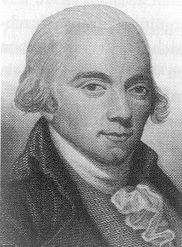
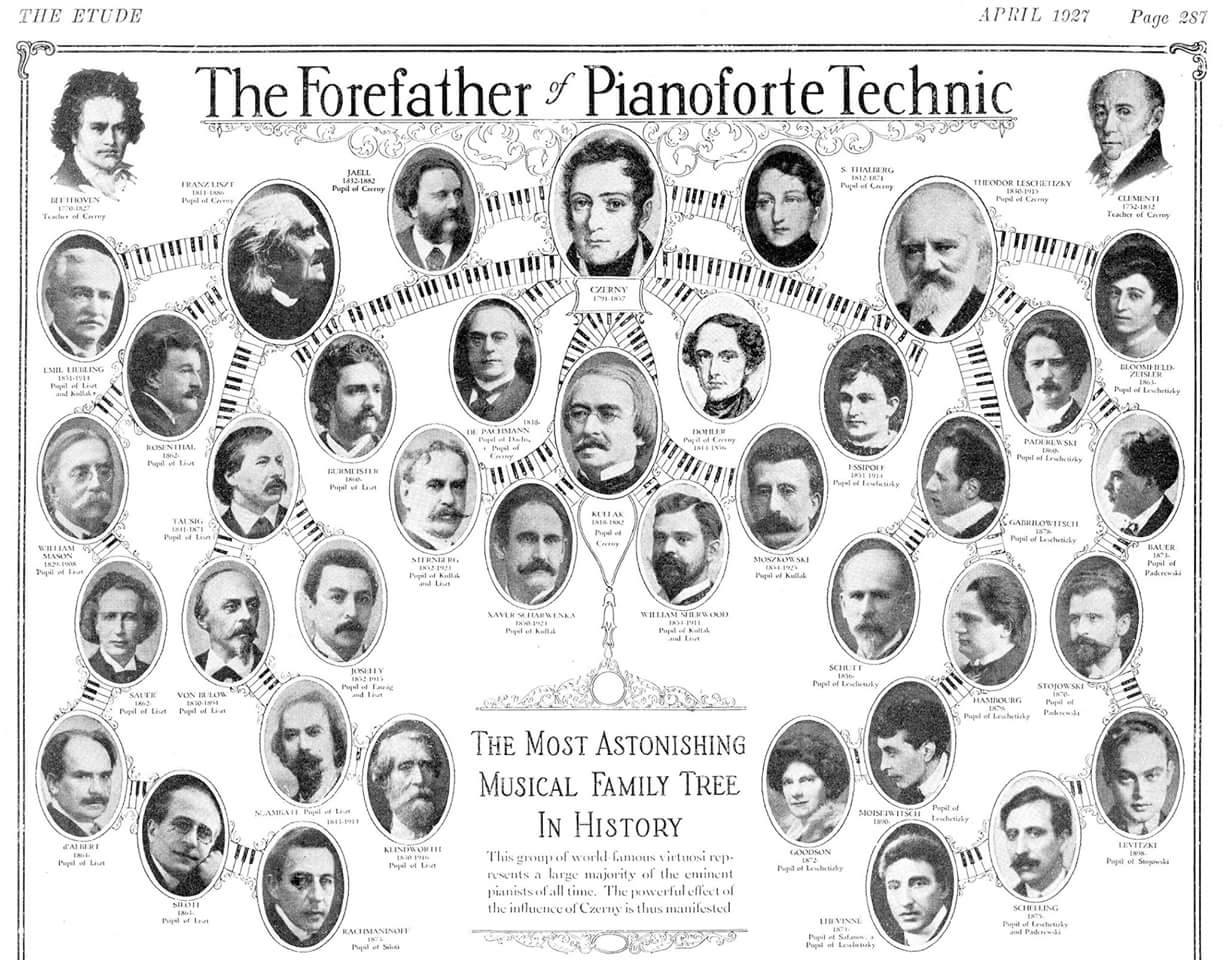
Today, in 1752, Muzio Clementi Italian pianist and composer was born.
More information about Clementi
Clementi was an Italian-born English composer, pianist, pedagogue, conductor, music publisher, editor, and piano manufacturer. Born in Rome, he spent most of his life in England.
Encouraged to study music by his father, he was sponsored as a young composer by Sir Peter Beckford who took him to England to advance his studies. Later, he toured Europe numerous times from his long-time base in London. It was on one of these occasions in 1781 that he engaged in a piano competition with Wolfgang Amadeus Mozart.
His student John Field would become a major influence on Frédéric Chopin
In 1802, Clementi and Field embarked on a European tour together. They went to Paris, Vienna and St. Petersburg.
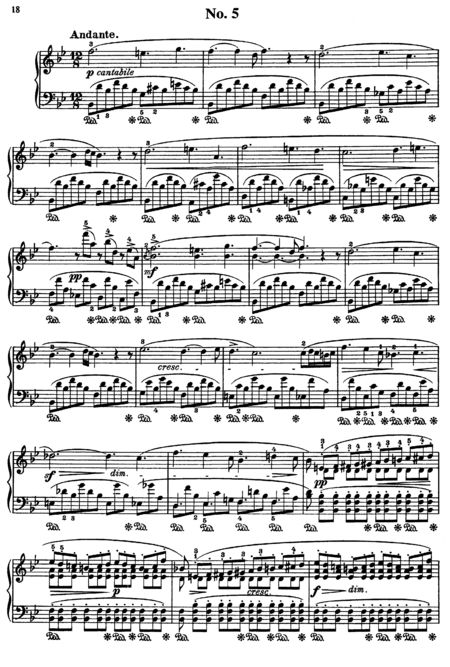
John Field adopted the French word nocturne, meaning “of the night” and became the first composer to use this term in music. He wrote a series of short studies for solo piano which had a gently romantic late-night feeling about them.
Chopin soon took up this idea and wrote 21 nocturnes.
Compare: Field’s Nocturne No. 5 in B flat major
Chopin’s Nocturne E Flat Major Op.9 No.2 played by Valentina Lisitsa
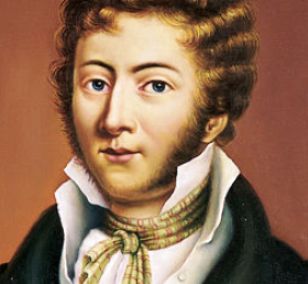
Today, in 1837, Clementi’s student John Field died. Field was an Irish pianist, composer, and teacher. He was very highly regarded by his contemporaries and his playing and compositions influenced many major composers, including Frédéric Chopin, Johannes Brahms, Robert Schumann, and Franz Liszt.





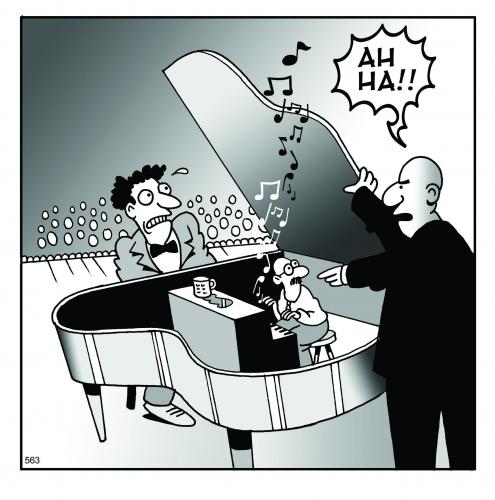 All sorts of things can go wrong in a performance. A cockroach can scuttle across your pedalling foot (this has happened to me). The music may fall off the stand (this has happened to me). A blood blister on your cuticle may burst during a glissando (you guessed it, this has happened to me).