

A New Way to Learn: Piano Gloves!
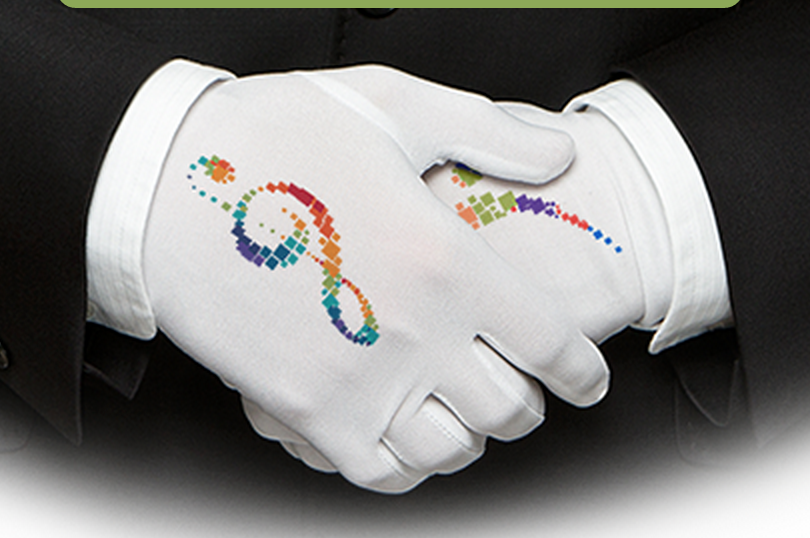
JoyTunes Piano Gloves
I thought this would surely interest all piano teachers and lovers out there – JoyTunes’ just came out with new piano teaching GLOVES!
Take a look in the clip and share it to all piano lovers everywhere.
The JoyTunes gloves, still in beta version, will turn you into Mozart in the blink of an eye! Don’t know how to play piano? These gloves will take you from 1 note to Beethoven in a flash. Our gloves allow your hands to auto magically bend and move to play any song your heart desires! Check out the video for more info.
Want to get your own pair of gloves? Purchase them here: http://www.joytunes.com/gloves
Today’s Practice Assignment

I have a copy of this music (Faerie’s Aire and Death Waltz) if anyone is interested in playing it!
Actually, this has been attempted!
but for my students…April Fools!

April 1 in Music History

April Fool’s Day
 . 1866 ~ Ferruccio Busoni, Italian pianist and composer
Read quotes by and about Busoni
More information about Busoni
1873 ~ Sergei Rachmaninoff, Russian-born American composer and pianist
Read quotes by and about Rachmaninoff
More information about Rachmaninoff
. 1895 ~ Alberta Hunter, American blues singer
. 1909 ~ Eddie Duchin, Bandleader
. 1917 ~ Scott Joplin, U.S. jazz musician famous for his ragtime pieces notably The Entertainer, died.
. 1932 ~ Jane Powell, Singer
. 1932 ~ Debbie Reynolds, Entertainer
. 1984 ~ Marvin (Pentz) Gaye, Jr. passed away.
. 1985 ~ The long-awaited album, We Are the World, was finally released. Eight rock stars donated previously unreleased material for the LP. Three-million copies of the award-winning single of the same name had already been sold. The song, We Are the World, was number five, and moving up, on the Billboard magazine pop single’s chart this day.
. 1991 ~ Martha Graham passed away. She was an American modern dancer and choreographer.
. 2001 ~ Eva Heinitz, who fled Nazi Germany in the prime of her career as a cello performer and was one of the first professional viola da gamba players in modern times, died at the age of 94. Heinitz, a native of Berlin, soared to prominence as a brilliant, temperamental soloist with the greatest orchestras of Europe in her 20s. Initially instructed on the cello, Heinitz taught herself to play the smaller instrument and performed the Bach Passions under the direction of Wilhelm Furtwangler and Otto Klemperer, who called her the world’s best viola da gamba player. Heinitz, who once described herself as “51 percent” Jewish, fled Germany in 1933. She lived in Paris and London, moved to New York in 1939 and was hired by Fritz Reiner as a section cellist with the Pittsburgh Symphony. She came to Seattle in 1948 and was hired as faculty cellist at the University of Washington. During her 28-year tenure, she became one of the founders of the early-music revival, which brought a renewed interest in music and instruments of the 17th and 18th centuries. In 1991, her international colleagues gathered in Indiana and accorded her the title “Grande Dame du Violoncelle” – great lady of the cello.
. 2001 ~ Trinh Cong Son, Vietnam’s most beloved singer-songwriter who opposed the Vietnam War and sought postwar reconciliation, died after a long battle with diabetes at the age of 62. Dubbed the “Bob Dylan of Vietnam” by American folk singer Joan Baez for his anti-war songs, his music is still widely performed in Vietnam and in overseas Vietnamese communities. Son, who was persecuted by the South Vietnamese government in the late 1960s and early ’70s, wrote more than 600 songs. His pacifist songs about the futility of war were banned at the time, but bootleg copies circulated throughout South Vietnam and overseas. When the war ended, most of Son’s family fled overseas but he stayed. He was equally unpopular with the new Communist government for his songs about reconciliation and spent 10 years in forced labor “re-education camps.” But by the late ’80s, he regained popularity, and his songs are still performed by some of Vietnam’s biggest pop artists.
. 2001 ~ Theodore M. “Ted” McCarty, a key figure in the development of the electric guitar and former president of Gibson Guitar Co., died at the age of 91. In his 18 years as president at Gibson, McCarty transformed the Kalamazoo, Mich.-based maker of acoustic musical instruments into the purveyor of guitars to the stars. The solid-body electric guitar was considered something of a gimmick when McCarty left the Wurlitzer Co. to join Gibson in 1948. He had a degree in commercial engineering and had been an engineering designer for the military during World War II. Despite not being musically inclined, McCarty saw possibilities in the electric guitar. At Gibson, he helped bring to life the Les Paul series, named for the blues guitarist who endorsed it, the Explorer series, widely used by both rock and country guitarists, and the radical Flying V. McCarty later bought the Bigsby Co., which manufactures vibratos for guitars. He sold the company and retired in 1999.
. 2015 ~ Cynthia Lennon, the late John Lennon’s wife from 1962-1968, has died at age 75.

Four Piano Students

Four students.
The Model Student and the Bored Teenage Student:
The Can’t-Stop-Playing-Even-When-the-Teacher-Is-Talking Student and the Whiny Student:
March 31 in Music History

. 1732 ~ Franz Joseph Haydn, Austrian composer
Listen to Haydn’s music
More information about Haydn
. 1872 ~ Sergei Pavlovich Diaghilev. He was a Russian art critic, patron, ballet impresario and founder of the Ballets Russes.
. 1901 ~ John Stainer died. He was an English composer and organist whose music, though not generally much performed today, was very popular during his lifetime.
. 1928 ~ Lefty (William Orville) Frizzell, Country Music Hall of Famer
. 1934 ~ Shirley Jones, Singer, actress
. 1935 ~ Herb Alpert, American trumpeter, bandleader (Tijuana Brass), composer, record company executive: the “A” of A&M Records
. 1937 ~ Phil Harris recorded one of his best-known songs in Los Angeles, CA. That’s What I Like About the South was recorded on a 78 RPM disk. Harris would move to TV stardom and continue as a popular vocalist during the 1950s with such hit songs as The Thing.
. 1943 ~ The show, Away We Go, was renamed. The show opened at the St. James Theatre in New York City and, thanks to the talents of stars like Alfred Drake, Joan Roberts and Howard DeSilva, it became an instant hit. The show ran for 2,248 performances, until 1948. The musical, which has grossed millions of dollars on stage and as a blockbuster movie was initially produced for the sum of $75,000. It is still legendary among musical productions – especially after it was retitled Oklahoma!
. 1944 ~ Rod Allen (Rodney Bainbridge), Bass, singer with The Fortunes
. 1944 ~ Mick Ralphs, Guitarist
. 1945 ~ Al Nichol, Guitarist, keyboards with The Turtles
. 1953 ~ Sean Hopper, Keyboards with Clover and Huey Lewis and The News
. 1959 ~ Angus Young, Guitarist with AC/DC
. 1967 ~ Jimi Hendrix burned his guitar for the first time in a public performance at Finsbury Park in London.
. 1985 ~ Tootsie’s Orchid Lounge, long a favorite of country music stars, closed its doors in Nashville, TN.
March 30 in Music History
. 1674 ~ Pietro Antonio Locatelli died. He was an Italian Baroque composer and violinist.
. 1872 ~ Sergei Vasilenko, Russian composer
. 1900 ~ Ted (Edward) Heath, Musician, trombonist, bandleader: played big band concerts every Sunday at the Palladium in the 1940s and 1950s
. 1913 ~ Frankie Laine (Frank Paul LoVecchio), Singer
. 1923 ~ The Audubon Ballroom in New York City was the scene of the first dance marathon. Alma Cummings danced the fox trot, one-step and waltz with half a dozen partners.
. 1932 ~ Leonard Bernstein participated in his first piano recital at New England Conservatory, performing Brahm’s Rhapsody in G Minor. He was 13.
. 1935 ~ Gordon Mumma, American composer of experimental music
. 1941 ~ Graeme Edge, Drumer with The Moody Blues
. 1942 ~ Bobby Wright, Country artist, actor, son of Johnny Wright of Johnnie and Jack country duo
. 1945 ~ Eric Clapton, British rock rock guitarist with the Yardbirds; song writer, Grammy Award-winning singer: Bad Love in 1990
. 1959 ~ Sabine Meyer, German clarinetist
. 1963 ~ The Chiffons began a four-week stay at the top of the pop music charts as their hit single, He’s So Fine, became number one. The song stayed at the top of the top tune tabulation until Little Peggy March came along with I Will Follow Him on April 27th.
. 1964 ~ Tracy Chapman, Grammy Award-winning folk singer-songwriter
. 1968 ~ Celine Dion, Singer
. 1970 ~ Lauren Bacall starred in Applause which opened on Broadway. The show became one of the hardest tickets to get on the Great White Way. Critics called Bacall “a sensation.” The play, at the Palace Theatre, was an adaptation of the film, All About Eve. It continued for 896 performances. A London version of the show, also starring Bacall, opened in 1972.
. 1971 ~ The Bee Gees received a gold record for the single, Lonely Days. When playing it, they heard the song at a faster speed and said, “Hey, this sounds like disco!” and the rest was Saturday Night Fever music history…
. 1974 ~ John Denver reached the top spot on the music charts with his hit, Sunshine on My Shoulders. It was the singer’s first number one song. Three other singles by Denver reached the top of the music world: Annie’s Song, Thank God I’m a Country Boy and I’m Sorry. Take Me Home Country Roads made it to the number two position, while Rocky Mountain High just cracked the Top 10 at number 9. Denver wrote Leaving on a Jet Plane for Peter, Paul and Mary and won an Emmy for the TV special, An Evening With John Denver.
From TED-Ed: How Playing An Instrument Benefits Your Brain
When you listen to music, multiple areas of your brain become engaged and active. But when you actually play an instrument, that activity becomes more like a full-body brain workout.
What’s going on? Anita Collins explains the fireworks that go off in musicians’ brains when they play, and examines some of the long-term positive effects of this mental workout.
via How playing an instrument benefits your brain – Anita Collins | TED-Ed.
March 29 in Music History
. 1788 ~ Charles Wesley, writer of over 5,500 hymns and, with his brother John, the founder of Methodism, died.
. 1871 ~ The Royal Albert Hall in London opened
. 1878 ~ Albert Von Tilzer, Composer. He was the composer of “Take Me out to the Ball Game” among other old favorites.
More information about Von Tilzer
. 1879 ~ “Eugene Onegin”, best-known opera by Russian composer Tchaikovsky, was first performed at the Maliy Theatre in Moscow
. 1888 ~ Charles-Valentin Alkan died. He was a French composer and pianist.
. 1902 ~ Sir William Walton, British composer
More information about Walton
. 1906 ~ E. Power Biggs, English Organist
. 1918 ~ Pearl Mae Bailey, American jazz singer, lead in black cast of Hello Dolly
. 1936 ~ Richard Rodney Bennett, British composer
. 1947 ~ Bobby Kimball (Toteaux), Singer with Toto
. 1949 ~ Michael Brecker, Jazz musician, reeds with The Brecker Brothers
. 1951 ~ The King and I, the wonderful Rodgers and Hammerstein musical based on Margaret Langdon’s novel, Anna and the King of Siam, opened this night in 1951 on Broadway. The King and I starred Yul Brynner in the role of the King of Siam. The king who, along with his subjects, valued tradition above all else. From this day forward, the role of the King of Siam belonged to Yul Brynner and no other. Brynner appeared in this part in more than 4,000 performances on both stage and screen (the Broadway show was adapted for Hollywood in 1956). Anna, the English governess hired to teach the King’s dozens of children, was portrayed by Gertrude Lawrence. Ms. Lawrence and Mr. Brynner acted, danced and sang their way into our hearts with such memorable tunes as Getting to Know You, Shall We Dance, Hello, Young Lovers, I Whistle a Happy Tune, We Kiss in a Shadow, I Have Dreamed, Something Wonderful, A Puzzlement and March of the Siamese Children. The King and I ran for a total of 1,246 outstanding performances at New York’s St. James Theatre.
. 1952 ~ Roy Henderson’s last singing performance was on this date in the role of Christus in Bach’s “St. Matthew Passion” at Southwark Cathedral, the Anglican cathedral on the south bank of the Thames in London.
. 1958 ~ W.C. (William Christopher) Handy, Composer passed away
More information about Handy
. 1963 ~ M.C. Hammer (Stanley Kirk Burrell), Grammy Award-winning singer
. 1973 ~ Hommy, the Puerto Rican version of the rock opera Tommy, opened in New York City. The production was staged at Carnegie Hall.
. 1973 ~ After recording On the Cover of ‘Rolling Stone’, Dr. Hook finally got a group shot on the cover of Jann Wenner’s popular rock magazine. Inside, a Rolling Stone writer confirmed that members of the group (Dr. Hook and the Medicine Show) bought five copies of the magazine for their moms – just like in the song’s lyrics!
. 1980 ~ Annunzio Paolo Mantovani, Anglo-Italian conductor and arranger, died. Created the “Mantovani sound” that made him a highly successful recording artist and concert attraction.
. 1982 ~ Carl Orff, German composer of “Carmina Burana,” died.
. 1982 ~ Ray Bloch passed away
. 1999 ~ Legendary U.S. jazz and blues singer Joe Williams died aged 80.
. 2001 ~ John Lewis, a pianist who masterminded one of the most famous ensembles in jazz, the Modern Jazz Quartet, died at the age of 80. The M.J.Q., as the quartet was known, remained mostly unchanged from the mid-1950’s to the 90’s. It began recording in 1952 with Lewis, vibraphonist Milt Jackson, bassist Percy Heath and drummer Kenny Clarke. When Clarke moved to Paris in 1955, Connie Kay replaced him and the quartet continued until Kay’s death in 1994. Lewis contributed the bulk of the group’s compositions and arrangements, including Django and Two Degrees East, Three Degrees West, and he insisted members wear tuxedos to dignify jazz as an art. He was born in LaGrange, Ill., in 1920, and grew up in Albuquerque, N.M. His entree to the jazz world came during World War II, when he met Kenny Clarke, an established drummer in the nascent bebop movement. At Clarke’s urging, Lewis moved to New York after his discharge and eventually replaced Thelonious Monk as Dizzy Gillespie’s pianist. He also performed or recorded with Charlie Parker, Lester Young and Ella Fitzgerald. In 1952 he formed the M.J.Q. with Clarke, Jackson and Heath. The quartet was a steady seller of records and concert tickets well into the 1970’s. Lewis also taught music at Harvard and the City College of New York, and in the late 1950’s helped found the Lenox School of Jazz in Massachusetts.
Never Too Old!
At 90 years of age, she has recently cut back a bit on her musical engagements, but she is still the official pianist for Club 55+ and happily plays hymns and old favourites for residents in her seniors’ complex in New Glasgow.
“My parents were both great singers and we had a piano at home, so I was anxious to play. I was sent for eight lessons and that is the full extent of my musical education.”
She was nine or ten when she travelled by horse and sleigh from Iron Ore to Stellarton with an uncle who brought butter, eggs and vegetables to town to sell on Saturday mornings.
“He dropped me at Langston Miller’s on Rundle Street and that’s where I learned all the notes. After that, it was just practice. I still play a lot by ear.”

Read the entire article at Love for piano remains many decades later – Community – The News.
 MaryO'Studio