Pianos, free for the taking – The Washington Post

old-piano

There’s nothing like the gift of music, but sometimes the gift of music can be a curse. Take a piano, for example.

How do you dispose of an unwanted piano? It’s easy to get rid of an empty wine bottle or a dead goldfish (recycling bin and toilet, respectively). Even an unwanted trombone or guitar is relatively easy to shift. (More on that later.) But a piano . . .

John Kelly writes “John Kelly’s Washington,” a daily look at Washington’s less-famous side. Born in Washington, John started at The Post in 1989 as deputy editor in the Weekend section. View Archive

Facebook

A reader of mine named Mary has a 40-year-old Yamaha upright piano that is taking up space. She’s not interested in selling it. She just doesn’t want it around anymore.

“Our kids are gone. We’re in an apartment. It’s really more than we want in our living room,” Mary said. She wondered if I knew of any organization that could use a free piano. She even offered to pay for moving it.

I’m sure I will now be inundated with people who want pianos, but until then, let us explore the issue. One possibility is to call around to churches, nursing homes and schools, though I suspect that most of the places that wants ’em already has ’em. Of course, there’s CraigsList. There are always a few free pianos there.

What if you want it to go to a good cause?

The Beethoven Foundation (beethovenfoundation.com), based in Asheville, N.C., is a nonprofit organization started by Dutch-born concert pianist Jan Mulder that accepts pianos, both for piano-less people around the country and to sell to fund projects.

“The pianos go to help families in need of a piano, so we will move a piano directly from Point A to Point B,” said Gabriel Mulder, son of the founder. “We will use a professional, trusted piano mover. They will pick up the piano; then we provide a tax receipt. It’s very convenient for anybody looking to donate.”

If there’s no family in need of a piano in a particular area, the Beethoven Foundation will sell it and use the money for music scholarships. Gabriel estimated the foundation handles about 10 pianos a day. Generally, it accepts only pianos less than 20 years old.

“We can’t accept them all obviously,” he said. “Some are not at all in a condition for students to be using.”

That’s a problem with pianos. No one knows that better than Brian Goodwin, a piano mover in Nashua, N.H.

In 2005, Brian started Piano Adoption (pianoadoption.com), an online clearinghouse to match people who have unwanted pianos with people who want to have pianos. Givers post a photo and description and arrange delivery with receivers.

Brian is delighted to see pianos in use, but he cautions that a free piano may not be a good deal.

“We see it as movers,” he said. “We’re not technicians, but we’ve seen enough pianos to know if the piano is just a hunk of crap. We deliver it, then they start telling us, ‘Oh, I found it for free!’ You don’t have the heart to tell them, ‘You really shouldn’t take this piano.’”

That’s because 500 pounds of messed-up piano is worse than no piano at all. If you’re offered a free piano, pay a piano technician to check it out before accepting it. Don’t forget that moving a piano can cost $150 to $500. You don’t want to fork that over to move a lousy one — twice.

Inevitably, some pianos must go to the great concert hall in the sky. This can be hard to accept. Brian put a video on YouTube of some of his guys disposing of broken pianos at a New England landfill. The instruments roll from the back of the truck like bombs from a B-17.

This pains some people. “That’s terrible,” one person commented. “Every home should have a piano even if no one can play it.”

Hmm, probably not.

If you have ideas on getting rid of pianos, let me know. And if you have smaller stuff — guitars, violins, wind instruments, drums — try Hungry for Music (hungryformusic.org), a charity that since its founding in Alexandria in 1994 has distributed 7,000 instruments in 41 states and 11 countries.
via Pianos, free for the taking – The Washington Post.

Piano Stores, Teachers Adapt to Decline in Interest in the Instrument

SALISBURY, Md. – Mozart, Beethoven and Chopin wouldn’t be thrilled to hear that fewer people are choosing to learn to play the piano than ever before.

At B&B Music in Salisbury, people have been shopping for pianos since they opened 60 years ago. One think you won’t see on the display floor in 2015 is a grand piano.

“We used to have actual string pianos at one time,” said store manager Mike Jarrell. “The way the economy was, it wasn’t very feasible for a lot of people. They can cost up to several thousands of dollars.”

The best year for new piano sales in the United States was 1909, when more than 364,500 were sold. Now that number has plunged to between 30,000 and 40,000 each year.

Denise Crothers is on her 36th year of teaching people young and old how to play piano. She averages about 60 students per week.

“I teach for half an hour, usually for each lesson and half of I teach them in the note because I think it’s important to still know how to read. Half of it would be like the praise and worship and learning how to chord and how to play by ear,” said Crothers. “They can play what they hear on the radio. Some of them don’t even need me anymore.”

Nationally, increased interest in sports or electronics is blamed for declining interest in learning to play the piano. Denise says lessons have evolved over the years in order to keep it fresh.

“I think it’s important for teachers to be able to apply the real world into their teaching. Not maybe strictly Classical. Classical is wonderful, you know, don’t get me wrong. I absolutely love it, but I think it’s important for them to do fun songs and stuff like that,” said Crothers.

Rather than smashing old pianos on the curb, B&B Music is adapting to suit a more tech-savvy generation.

“Our more common models are the digital style models with weighted keys so it’s more like playing a real string piano. Then you start getting into more production type keyboards which are more for making your own scores and hip-hop beats and that kind of thing. It’s more of a production opposed to performance,” said Jarrell.

Despite a national downward trend in piano purchases and lessons, those in the biz can’t stress enough how important it is.

“In the music business, you’re constantly learning. It’s a never-ending thing,” said Jarrell.

“Once you commit to something, really having the work ethic to keep going and keep learning, it’s really rewarding and that’s something I think our culture lacks sometimes, you know the ‘stick-to-it-ness’,” said Crothers.

via Piano Stores, Teachers Adapt to Decline in Interest in the Instr – WBOC-TV 16, Delmarvas News Leader, FOX 21 –.

Handmade instrument donated to Black Hills State

steinway-new

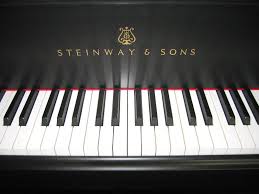
A Steinway Model-B is the new addition to Black Hills State’s Meier Recital Hall.

The nearly $100,000 piano was fully funded by donations, including Rachel Headley, the Science, Technology, Engineering & Mathematics liaison to Academic Affairs at BHSU.

The university donors purchased the 7-foot handmade instrument from Black Hills Piano Gallery in Rapid City.

Gallery owner Tony Thomas believes the Meier Recital Hall is the perfect home for a Steinway.

“That hall cries for the best possible sound,” he said. “The Meier Hall is just a wonderful hall and they have a great faculty to provide good instruction to the students there.”

Thomas, a musician himself, understands the decision of purchasing a top-of-the-line instrument.

“Anytime you have a good hall that provides that kind of acoustics, Steinway is the choice of 98 percent of concert artists on stage. That’s the sound that they want to hear. You can head all of the textures of tunes, it’s beautiful.”

Black hills state received the handcrafted piano Monday afternoon, with an unveiling ceremony planned for that evening.

via Handmade instrument donated to Black Hills State | KOTATV.com Rapid City, Black Hills, So Dak. Gillette Sheridan KOTA Territory News.

Western Springs Man Still Keeps Things In Tune

Gibbons said most people have their pianos tuned about once a year.

“It varies,” he said. “I did some every couple of weeks for a while at a club in Chicago, and I’ve gone to tune for people who haven’t had their pianos tuned in 10 years. The quality of pianos has increased considerably over the past 10 to 20 years.”

Gibbons said tuning is affected by seasonal changes.

“The temperature outside affects the environment inside,” he said. “It’s really the humidity that has the biggest impact on the tuning. How often you play really doesn’t have much of an impact on the tuning, although it can matter if you’re really banging things out over a period.”

As is the case with many things, technology has resulted in the biggest changes over the years in piano tuning.

“It’s still basically the same process, but there are some electronics that are relatively new,” he said. “They haven’t replaced the tuning fork; they have supplemented the tuning fork.”

Gibbons even has a couple of apps on his cellphone that are designed specifically to aid in the tuning of pianos.

“A good technician has to be conscientious and can’t be in a hurry,” he said. “Good customer relations is very important, too.”

Gibbons must be doing something right, as he has had some clients for several years.

via Western Springs man still keeps things in tune – The Doings Western Springs.

Historic Horowitz piano visits ONU – The Daily Journal: Local

steinway-new

The concert piano, known in classical music circles as CD 503, was chosen specifically for Horowitz and presented in 1941. It was in his home until it was shipped to Russia when he made his triumphant return to the homeland he left in the 1920s.

Without Horowitz, the piano has traveled to from Fort Worth to Philadelphia and Florence, Ky. It’s made stops in London, Vancouver, Kansas City, Pensacola, Fla., Cleveland, Berlin and scores of other cities, large and small. There is no official estimate of how many individuals have played it, only a guess of “thousands.”

“It’s scheduled to be in our Chicago studios for just six weeks,” said Rhapsody Snyder, a Steinway employee and manager of this portion of the tour. “I’m not sure where it goes next, but don’t worry: It weighs between 700 and 800 pounds, but we move pianos every day.”

It is tuned for every performance, but there are standing orders that the piano’s “voice” will never be altered. It sounds today as it sounded when Horowitz played it.

via Historic Horowitz piano visits ONU – The Daily Journal: Local.

Steinway’s New Piano Can Play a Perfect Concerto by Itself | WIRED


THE BLACK AND white keys move so fast it’s hard to tell if Jenny Lin is even touching them. Lin, a classical pianist known for virtuosic speed, is sitting at a grand piano in Steinway’s New York offices, as the rest of the room listens intently, focused on the keyboard.

No, she’s definitely not touching the keys. Not this time. Minutes earlier, Lin played a hyper-speed arrangement of George Gershwin’s “I’ve Got Rhythm.” The same song is playing now, except this time Lin hands are on her lap. It’s uncanny, really: The exact same keys are pressed, the exact same trills are heard, the same dynamics are present. It’s a little magical—or “almost scary” as Lin puts it—as though you’re witnessing a prodigious ghost mimic her every move.

It’s not a ghost, of course. It’s technology. Which, considering Steinway’s old-school legacy, is nearly as unlikely an explanation as a poltergeist. Lin is demonstrating the Spirio, Steinway’s newest and first self-playing piano.

When you buy a Spirio—not you, necessarily; they run upwards of $110,000—it comes with an iPad loaded with a Spotify-like app. This app communicates with the piano via Bluetooth, prompting the piano to play any one of the 1,700 songs recorded specifically for the instrument. New songs will sync every week. By itself, an iPad-controlled piano is nifty, if not exactly a technological marvel. What makes Spirio different is that it can play songs with an unprecedented level of accuracy and nuance.

Read more at Steinway’s New Piano Can Play a Perfect Concerto by Itself | WIRED.

Duet Artist Piano Bench

bench-duet


I am considering getting this split bench for the O’Connor Music Studio since we play lots of duets here.

The current bench that came with the piano is one of those that opens up and has some storage but is not adjustable at all.  This creates a problem for some of the older students and we have to move the music rack quite far forward so they can see properly.  An adjustable bench would help them, too.

There may be a quiz on this option at your next lesson – give it some thought!

Watch: Mystery piano at Topanga Lookout – UPI.com

piano-santa-monica


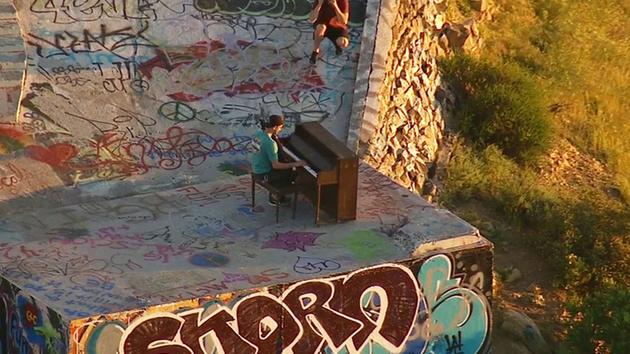
A musical mystery is unfolding in California’s Santa Monica Mountains as a piano appeared without explanation at a lookout point 2 miles from the nearest road.

Hikers and news helicopters captured images and video Thursday showing the piano, estimated to weigh at least 300 to 400 pounds, that was apparently placed late Wednesday or early Thursday at the Topanga Lookout, which is accessible by a 2-mile hike from the nearest road.

The piano was placed on the site of an old fire tower, which famously also once hosted a couch of similarly mysterious origins.

via Watch: Mystery piano at Topanga Lookout – UPI.com.

Piano Pedals – History of Piano Pedals

piano-pedal-diagram piano-pedal

Piano pedals have existed for almost as long as the modern piano itself, but they had a rocky start. While the modern piano accepted most of its final touches, the evolution of the piano pedal continued.

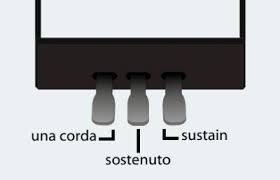
In 1722, the piano’s first tone-modifying mechanism came in the form of a hand stop, and was created by Father Piano himself: Bartolomeo Cristifori. The device positioned the hammers to strike only one piano string per key, which created a soft, relaxed timbre. But it was far from ideal; a spare hand was required to use it, meaning the pianist either repeatedly removed one hand from the keys, or practiced alongside a hand-stop operator. Thankfully, the mechanism was later modified to be operated by the knee, and became the predecessor to today’s una corda, or “soft,” pedal.

The next modification arrived soon after. Gottfried Silbermann — renowned European constructor of keyboard instruments — created a mechanism that lifted the dampers off of the strings, causing a reverb effect. This early sustain pedal had an advantage over most modern sustains: treble and bass notes could be controlled separately from one another; however, like the una corda, the sustain did not start off as a foot pedal; an impracticality which may have justified its early unpopularity. Today, the sustain is the most frequently used, and possibly the most favored, piano pedal.

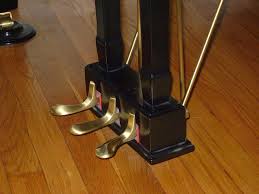
Which brings us to the underdog: the sostenuto pedal. Created in the mid 1800s by Boisselot & Sons, it is by far the most misunderstood piano pedal. The sostenuto is constantly being replaced — or removed entirely — from its position as the middle pedal, and is only standard on an American grand. It allows certain notes to be “sustained” while other notes are left unaffected, and even piano leader Steinway saw potential in the pedal, opting to patent the idea three years after its début in 1844. But, surprisingly, the impressive effects of the sostenuto never caught on.

Alternative middle pedals have included practice rails, which muffle the notes for quiet practice; and the faux-sostenuto, which allows only the bass notes to resonate. Most modern pianos now have only two pedals, leaving the sostenuto –- one of the most unique and inspiring pedals –- to fade into antiquity.

via Piano Pedals – History of Piano Pedals.