Steinway & Sons Marks A Historic Milestone

fibonaci

Steinway & Sons, manufacturer of the world’s finest pianos, has unveiled the company’s 600,000th piano, stunningly designed by master artisan, Frank Pollaro. Handcrafted using natural Macassar ebony, the end result is a feat of artistry, engineering and precision that celebrates this milestone for Steinway & Sons and demonstrates the company’s ongoing commitment to uncompromising craftsmanship.

Named “The Fibonacci,” the piano’s veneer features the iconic Fibonacci spiral made entirely from six individual logs of Macassar Ebony, creating a fluid design that represents the geometric harmony found in nature. The lines of The Fibonacci spiral on the top of the piano’s lid are projected down to its unique curved base. Synthetic ivory inlay adds a breathtaking effect to the design, which also features unique patinated bronze details. In the end, over 6,000 hours of work over a four-year period were devoted to the creation of The Fibonacci, from design to finish. The superior craftsmanship of the piano’s exterior is matched only by the unparalleled craftsmanship that is at the very core of all Steinway & Sons pianos.

According to Frank Pollaro, “Designing Steinway & Sons’ 600,000th piano was an honor and a challenge.  To me, knowing that this piano would become part of history meant that it had to be more than just a beautiful design, but also needed to visually convey a deeper message.” Pollaro added, “As I considered the number 600,000, the Fibonacci spiral came to mind. The way in which it continues to grow but stay true to its form is very much like Steinway & Sons over these many years. Combining the universal languages of music and mathematics suddenly made perfect sense.”

“Steinway & Sons has a long tradition of world-class craftsmanship, so as we began planning the 600,000th piano, it quickly became apparent that Frank Pollaro was the artist we needed for creative design and perfect execution. His ability to create unforgettable images through woodwork demonstrates artistry at the highest level, something that spoke to the very core of what this company is all about,” stated Darren Marshall, Chief Marketing Officer of Steinway & Sons. Adding, “The Fibonacci spiral is a representation of perfect proportions and natural beauty. Without a doubt, Frank captured those qualities in this piano, creating a work of art for the eyes and the ears.”

The Fibonacci is destined to become an important piece of cultural history, taking its place of honor amongst previous milestone models that the company has created. The 100,000th was originally given to the United States White House and is now part of the permanent collection at the Smithsonian Institute in Washington D.C., while the 300,000 piano currently resides in the East Room of the White House.

In April The Fibonacci was previewed during a special VIP reception at Steinway & Sons’ new showroom in Beverly Hills, where the internationally celebrated Steinway Artist, Lang Lang, had the honor of being the first artist to perform on the piano. This June The Fibonacci will travel to the United Kingdom, where it will be showcased at the 2015 Masterpiece London art fair.

The Fibonacci is a Steinway & Sons Model D piano, nine foot concert grand, priced at $2.4 million. In addition to the original 600,000th version, Steinway & Sons will create up to six exclusive, limited edition Model B pianos (6’10.5″) inspired by the same design.

via Steinway & Sons Marks A Historic Milestone With The Unveiling Of The… — NEW YORK, June 15, 2015 /PRNewswire/ —.

WATCH: Famous Jingles Performed on a Piano Using The Products

Musician and artist Grant Woolard has created this brilliant video where he performs 25 famous commercial jingles on a piano using the brand packaging or actual product relating to each earworm.

From the YouTube description of the video: “Remember those product jingles you could never get out of your head? I’ve woven together 25 of the most famous tunes here.”

via WATCH: Famous Jingles Performed on a Piano Using The Products.

Smale Riverfront Park: Oinkithopter, foot piano opening soon

foot-piano


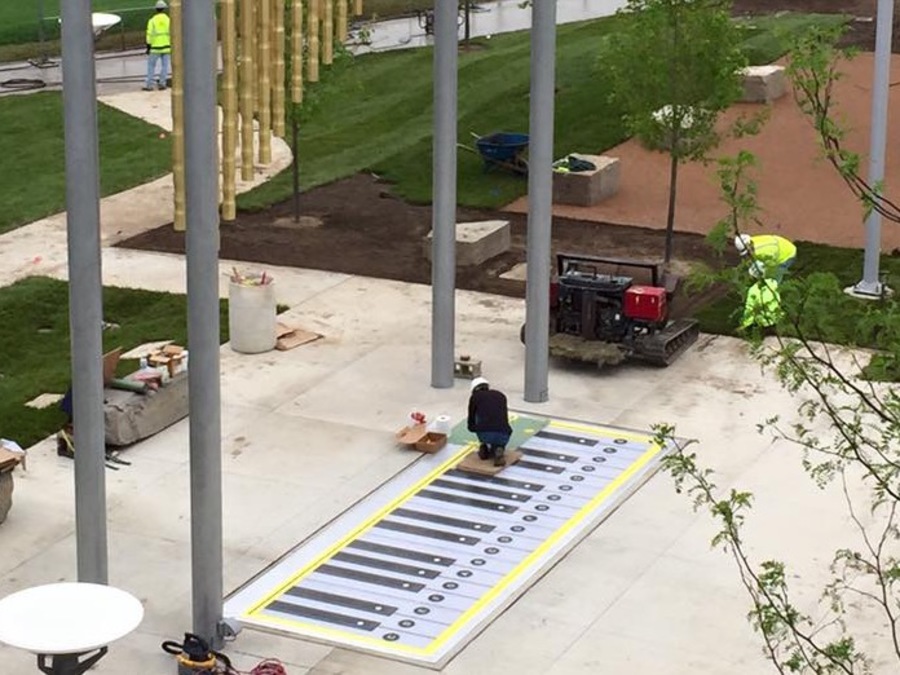
In a nearly 14-minute video released Tuesday, Smale Park project manager Dave Prather showed off that history and some of the more fun features opening soon — the “Big”gest of all probably being the giant outdoor foot piano. (Yeah, like that one from the Tom Hanks movie .)

The foot piano, created by Verdin Bell , has 32 individual chimes overhead with two and a half octaves. It’s part of the P&G go Vibrantscape, designed for people to get active in the park.

“So it’s not only a feature you can interact with, but it’s also a musical instrument,” Prather said. “Two or three can work together and play music.”

Putting final touches on the foot piano. Image courtesy Cincinnati Park Board.

Or, staff can plug in a keyboard to play it. The chimes will sound every quarter-hour and on the hour to mark the time, Prather said.


via Smale Riverfront Park: Oinkithopter, foot piano opening soon – Story.

Luxury news round up

Spirio


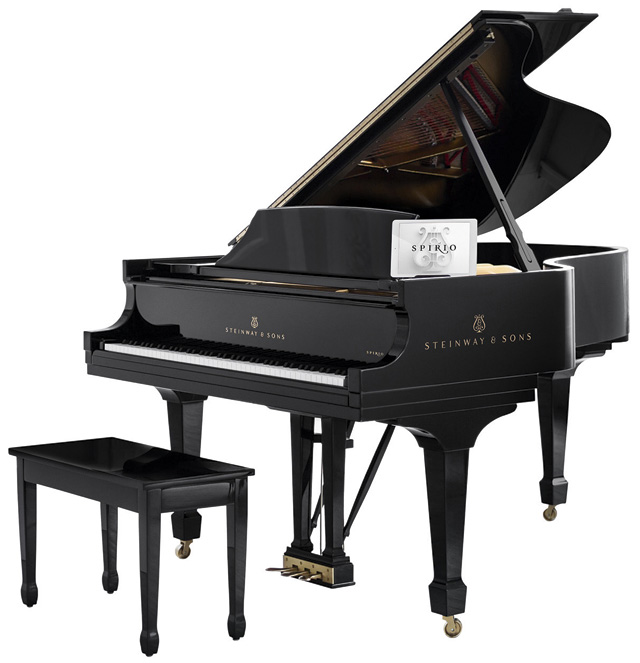
Renowned piano manufacturer Steinway has launched a self-playing piano. Programmed via its own iPad and linked up to play more than 1,700 different pieces of music, the Spirio high-resolution system will be offered exclusively on select Steinway grands. Able to replicate the virtuosity of the most talented of pianists, this player piano is bound to impress unsuspecting dinner guests. Spirio Model O, £77,150 (020 7487 3391, http://www.steinway.co.uk)

via Luxury news round up – May 2015 – Country Life.

Pianos in harmony with palace halls – ARTS

pianos-Istanbul

The pianos in Istanbul’s Dolmabahçe Palace, which hosted some 1 million people last year, draw great interest from local and foreign visitors for their magnificence and harmony with their surroundings.

National Palace guide Osman Nihat Bişgin said Dolmabahçe Palace was a Tanzimat (reform-era) palace, adding, “All features of the reform era are clearly seen in Dolmabahçe Palace. This process, which we call the Europeanization and westernization process, made western music enter Dolmabahçe Palace.”

He said the palace had a total of 12 pianos, and all of them had ornamentations suitable to the style and harmony of the palace.

Bişgin said the palace opened in 1856 and the pianos were brought there nearly at the same time. “The wives of sultans were taking piano education in the palace, particularly in the final years of the Ottomans. There are many pianos and none of them were inactive; all of them were being played,” he said.

He said most of the piano brands in the palace were Hertz, Pleyel, Gaveau and Erard, and that the number of grand pianos was less.

Speaking of a striking green piano in Zülvecheyn Hall on the upper floor of the palace, Bişgin said it was a classical Pleyel-brand palace piano.

“Since the magnificence and glory was dominant in the palace, the pianos draw our attention visually. Their sound is not very famous, but they are very important and famous visually,” he said.

Bişgin said Zülvecheyn Hall had gilded ornamentation on its white and beige ceiling, adding, “We see enormous harmony between the piano and the ceiling.”

He said the furniture in Dolmabahçe Palace was in its original place, and added, “We can say that the pianos belong to these halls. The pianos in the Zülvecheyn and Süfera halls were designed to add visual richness to halls like them. They are not generally played.”

Crystal piano and chair in the Glass Kiosk

As for the rare crystal piano in the Glass Kiosk, Bişgin said the following: “The Glass Kiosk is a big venue hidden behind the walls of the palace. Mustafa Kemal Atatürk greeted the public in this place. It is like a winter garden surrounded with glass. In harmony with this kiosk, there is a crystal piano. It is a Paris-made Gaveau piano. Its chair is crystal, too.”

Another piano in the palace is a plain black German-made Steinway. Bişgin said its sound was very strong and it was very valuable.

“It was produced as a Hamburg Steinway in 1912. Then the factory moved to the U.S. Accordingly, there were only five Steinway pianos made in Germany. This is one of them. Its estimated price is 200,000 euros. It also has the emblem of the sultan Abdulmecid,” Bişgin added.

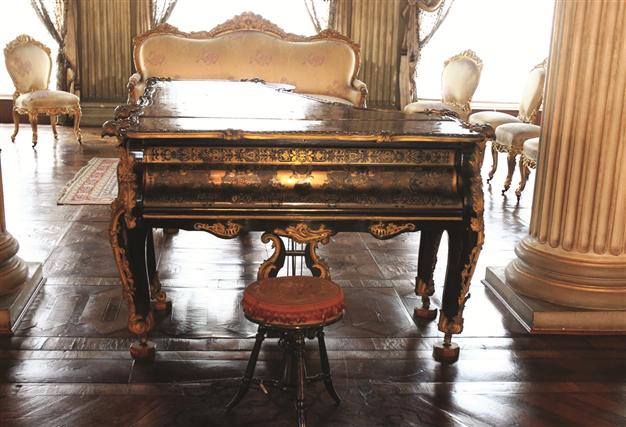
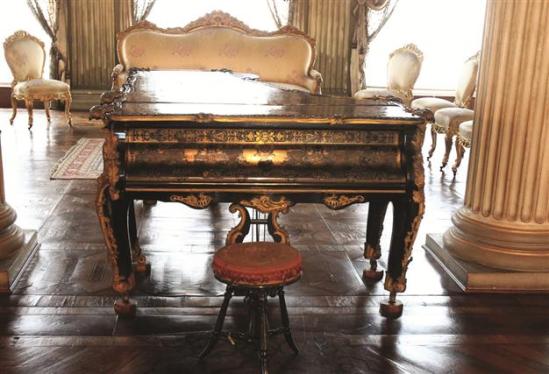
Speaking of the piano, which was used during the acceptance of ambassadors in the Süfera Hall, Bişgin said, “Süfera is the plural of the word sefir [ambassador]. This hall was created to address foreigners. The furniture is gold-plated; the ceiling is the same. There is a boulle-work piano here to show the beauty of metal and gold. This piano is wonderful for decoration.”

More pictures at Pianos in harmony with palace halls – ARTS.

A different music from this piano

Renowned pianist and conductor Daniel Barenboim has unveiled a new type of piano, which he says is a “sound alternative” to the standard concert grand piano that has not undergone much change over a century.

Barenboim, 72, launched the instrument at the Royal Festival Hall here on Tuesday, in advance of his Schubert recital series.

Declaring the new piano a “sound alternative”, Barenboim said: “I’ve fallen in love with it and I want to spend as much time with it as possible.”

The exterior of the new piano looks much the same as any other modern concert grand piano, but inside, there are some dramatic differences, The Guardian reported.

Designed by the Belgian instrument-maker Chris Maene, the Barenboim has straight parallel strings instead of the diagonal-crossed ones of a contemporary piano. The wooden soundboard veins go in different directions. The bridges, ribs and bracings are specially designed and the hammers and strings have been repositioned.

Barenboim, currently heading Berlin’s flagship opera house, the State Opera, said he intended to perform the entire series on the new piano.

Modern pianos have become highly standardised, with few changes to their fundamental design over the past 100 years.

They are largely cross-strung, with the bass strings crossing over the middle and treble strings in an “X” pattern, allowing the sound to be concentrated on the centre of the soundboard.

He developed his idea with Belgian instrument maker Chris Maene, with support from Steinway & Sons.

via A different music from this piano.

As well as the straight strings, the Barenboim-Maene piano features a double bridge and horizontal soundboard veins.

According to a press release, the piano “combines the touch, stability, and power of a modern piano with the transparent sound quality and distinguishable colour registers of more historic instruments”.

Pianist Gwendolyn Mok, who plays an 1875 straight-strung Erard piano, has said that such instruments possess superior clarity.

“If you look inside your own piano, you will notice that the strings are all crossing each other,” she told the San Francisco Examiner in 2013.

“With the straight strung piano you get distinct registral differences – almost like listening to a choir where you have the bass, tenor, alto, and soprano voices.

“It is very clear and there is no blending or homogenizing of the sound. It therefore gives you huge opportunities in experimenting with colour.”

Via http://www.bbc.com/news/entertainment-arts-32885683

Piano lessons possibly on the decline

piano-teacher

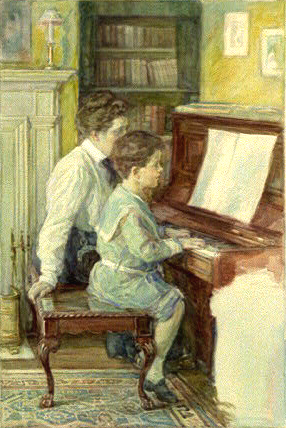
Growing up, many people remember taking piano lessons, or having several friends who learned the instrument.

But as generations change, some hobbies evolve too…

When it comes to the amount of people learning to play the piano, is it really on the decline?

“I don’t think you see it quite as much today just because there’s so much more distraction nowadays,” Steve Buckman, a piano instructor at Vancil Performing Arts Center said.

Buckman says when it comes to taking lessons it’s very different than 50 years ago.

He says between video games, social media, and other hobbies, the piano can sometimes take a back seat when it comes deciding what to spend your free time on.

Another factor is something that typically has a large weight in our decision making…money.

Read more at Piano lessons possibly on the decline : News : ConnectTriStates.com.

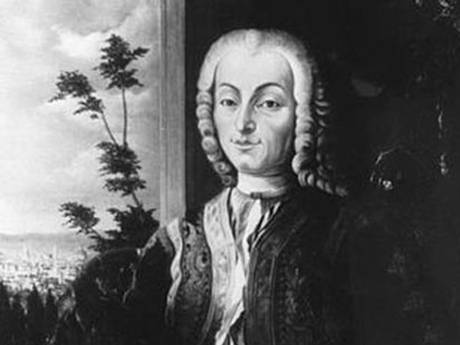
Who Invented the Piano? Bartolomeo Cristofori’s Birthday Celebrated in Today’s Google Doodle

The inventor of the piano, Bartolomeo Cristofori, is celebrated in today’s Google Doodle.

Born on 4 May, 1655 in Padua, northern Italy, Cristofori initially worked making harpsichords and clavichords and was employed by Prince Ferdinando de Medici, son of the duke of Tuscany.

He is believed to have started work on what would become a piano in the 1690s and the first one is thought to have been made in 1709.

In a harpsichord the strings are plucked, so it is not possible to play the notes softer or louder. Cristofori managed to design a mechanism that transferred the pressure placed on the keys to the hammers that hit the strings.

He called his invention a “gravecembalo col piano e forte” – a clavichord with soft and loud. The name was shortened to pianoforte and then simply piano.

Francesco Mannucci, a musician at the Medici court, described one early version as “a large ‘Arpicembalo’ [the name of a type of harpsichord] by Bartolomeo Cristofori, of new invention that produces soft and loud, with two sets of strings at unison pitch, with soundboard of cypress without rose”.

Bartolomeo Cristofori

Bartolomeo Cristofori di Francesco was an Italian maker of musical instruments, generally regarded as the inventor of the piano.


While other musical instrument makers had attempted to solve the same problem with the harpsichord, Cristofori’s invention is generally regarded as the first real piano.

However, the piano was not popular at first and many felt it was too difficult to play. Cristofori died largely uncelebrated for an invention that would later change the musical world in 1731 – a year before the first sheet music for the piano appeared.

via Who invented the piano? Bartolomeo Cristofori’s birthday celebrated in today’s Google doodle – News – Gadgets and Tech – The Independent.

$40,000 baby grand piano stolen in Paris

A $40,000 Bergmann baby grand piano that belonged to the Paris Community Theatre vanished over the weekend. Now, police are trying to figure out why and how somebody stole it.

Josh Maxwell, the office manager for the Paris Community Theatre, says it was a typical start to the work week when he arrived Monday morning. That’s until he checked on the Brown Centre at Clarksville and South Church Street around 11 o’clock that morning where he says children rehearse several times a week.

“Someone one was needing in, and walked in and noticed that the very large grand piano was missing,” said Maxwell.

Completely blown away, Maxwell says he was dumbfounded when the 1000-pound Bergmann baby grand piano was nowhere to be found. He says the last time the piano was seen in the building was Saturday afternoon. How the thieves got away with such a large object, remains a mystery.

“When they moved it into the moving, it took six people, plus a specially built dolly for a piano,” said Maxwell. “I can’t see how one person by themselves could move something that weighs over a thousand pounds.”

via $40,000 baby grand piano stolen in Paris.

Need a Piano?

showroom284


If you want to adopt a piano, here’s a site that lists free pianos!

Please be aware that a piano, new or old, will need to be tuned after it is moved into your home.  There will also be moving costs.  Most movers charge extra if you need to move a piano up stairs – and they may charge by the number of stairs.

Don’t let this happen:

A good book on the subject of getting a piano, either new or used is The Piano Book by Larry Fine

pianobook