. 1957 ~ Lionel Hampton’s only major musical work, “King David”, made its debut at New York’s Town Hall. The four-part symphony jazz suite was conducted by Dimitri Mitropoulos.
. 1972 ~ “Grease” opened at the Eden Theatre in New York City. The musical later moved to the Broadhurst Theatre on Broadway where it became the longest- running musical ever with 3,388 performances. A hit movie based on the stage play starred John Travolta and Olivia Newton-John and produced the hit song, Grease, byFrankie Valli, You’re the One That I Want and Summer Nights by Travolta and Newton-John.
. 1984 ~ British rocker Elton John married Renata Blauel in Sydney, Australia on this day.
. 1998 ~ Frederick Loewe American composer of musicals, died
More information about Loewe
. 2003 ~ Jack Maher, 78, who served more than three decades as publisher of respected jazz magazine Down Beat and its parent company, Maher Publications, died. Down Beat began in 1934 to chronicle the comings and goings of touring swing bands. A previous owner forfeited the magazine to his printer, Mr. Maher’s father, John Maher. After his father died in 1968, Jack Maher put up his own money to acquire Down Beat, outbidding Playboy founder and jazz aficionado Hugh Hefner. Mr. Maher was credited with transforming Down Beat into a leading forum on jazz, with a roster of writers that included Leonard Feather, Nat Hentoff, Dan Morgenstern and Ira Gitler. He changed a number of his father’s policies, including one that had frowned on putting pictures of black musicians on Down Beat’s cover.
. 2004 ~ Joe McFarlin, whose late-night shows on WCCO radio featured big bands, swing and traditional jazz for a quarter-century, died. He was 78. McFarlin was as a nightly presence on 830 AM during the 1960s, ’70s and ’80s, attracting a following across the country. McFarlin retired from WCCO in 1992. Management and format changes had reduced his broadcast to about two hours on the weekends and he was forced to choose from a jazz-free play list. He served as a U.S. Navy signalman during World War II and was stationed in the Philippines and Pearl Harbor. McFarlin began his radio career in 1947 at WREX in Duluth and worked at several other stations before moving to the Twin Cities in 1961, where he worked at KRSI before joining WCCO.
Thomas Wright “Fats” Waller (May 21, 1904 – December 15, 1943) was an influential American jazz pianist, organist, composer, singer, and comedic entertainer, whose innovations to the Harlem stride style laid the groundwork for modern jazz piano. He wrote the Valentine Stomp above in 1929.
To celebrate Valentine’s Day this year, students who play any version of John Legend’s “All of Me” using Piano Maestro and get 3 stars will have a chance to win an Amazon gift card!
The winner will be announced on February 15th!
NOTE: This is a contest through JoyTunes/Piano Maestro so the winner may not be from the O’Connor Music Studio.
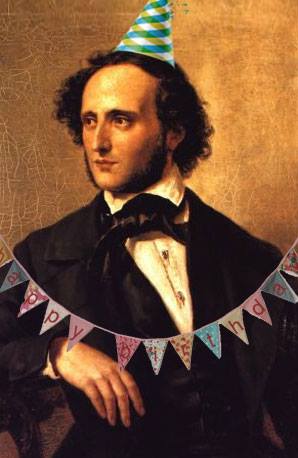
Felix Bartholdy Mendelssohn lived between 1809 and 1847. He is considered to be a romantic composer and pianist best known for his symphonies and concert overtures. Mendelssohn played the piano in public by the age of nine, so he was often compared to Mozart.
He composed works for solo instruments and orchestra, and German songs. Some of his better known works are the Wedding March, Elijah and Fingal’s Cave. Felix Mendelssohn, along with Hector Berlioz was one of the first conductors of a large orchestra.
Mendelssohn harmonized the works of other composers, including Johann Crüger. Listen to Mendelssohn’s harmonization of Now Thank We All our God:
One of my favorites,Mendelssohn’s Piano Concerto No. 1 in g minor, op. 25:
Franz Peter Schubert lived between 1797 and 1828. He is considered to be a romantic composer. He was an Austrian composer who was one of the greatest creators of melody and foremost writer of ‘lieder’ (German songs).
Although he only lived for 31 years, Schubert composed more than 600 songs, 22 piano sonatas and many short piano pieces. This melodic output has never been equaled either in quantity of quality. He was one of the first musicians to earn a living from the sale of his music.
Schubert’s Ave Maria was featured in the Walt Disney movie Fantasia.
Schubert’s musical genius went well beyond his incomparable gift for melody
During Beethoven’s funeral in 1827, one of the torchbearers was a young composer who would himself die the following year. There’s a poignant irony in this image of Franz Schubert (1797-1828) paying homage to the master, for the extent of Schubert’s own accomplishment was to remain one of music’s best-kept secrets for decades after his death. He had indeed struck out on a uniquely personal creative path, however intense his hero worship of Beethoven was. As often happens in such periods of transition–in this case, the evolution in style and attitude from classical balance toward romantic experimentation–Schubert simply slipped through the cracks, not easily fitting into his contemporaries’ sense of the direction music was taking.
Yet the fact that the only recognition that came his way was mostly confined to a tight-knit circle of musical friends didn’t deter Schubert from pursuing his inspiration. Even though an astonishing number of compositions were never performed during his short lifetime, the prolific composer produced a wide body of material, all with a seemingly effortless swiftness reminiscent of Mozart (another of the composer’s idols). His style is most frequently associated with an uncanny gift for melody, but that’s a shortsighted view of the true nature of Schubert’s genius.
The selections on our featured disc represent two key but divergent aspects of his music: the gemlike miniaturism of his songwriting and his preoccupation with large-scale forms from the classical period. “Die Forelle” (“The Trout”)–sung here with a silvery, seductive grace by Barbara Bonney–is an example of how Schubert elevated the art of song to an opera in miniature, rich in evocative scene-painting. Pay attention not just to the beguiling melody but to how perfectly Schubert mirrors the text’s images in the details of the burbling piano accompaniment.
The cheerful quintet that takes its name from the song makes an excellent introduction to the composer’s longer works. Most of these belong to the realm of “chamber music”; that is, pieces written for small groups of musicians to be performed in people’s homes. From the high-spirited interplay of the ensemble gathered here–all virtuosos on their respective instruments but clearly merging their voices into a common goal–it’s easy to imagine a typical evening of Schubert making music with his friends. There’s a flowing sense of conversation in the music, and just as you think you’ve heard one untoppable melody, Schubert obliges with another, taking it down an unexpected course with a sudden harmonic surprise–another of the composer’s trademarks–and spinning it out as it suits his fancy. Schumann once characterized the composer’s tendency to make us want the music to last, following its multiple digressions, as Schubert’s “heavenly lengths.”
Much of the pleasure here can also be heard in the way Schubert plays sonorities off each other, above all in the fourth movement. It offers a set of variations on the melody from the “Trout” song, presaging how Mahler would later incorporate material from his own songs into vast symphonic structures. You can notice this both in the interwoven yet contrasting timbres from the keyboard against four strings and in the opposition between double bass and sparkling passages high in the register. And within the spontaneity of the moment, there’s something else: emerging within all the joie de vivre are ambivalent shadows hinting at Schubert’s darker side, particularly in the intensity of the slow movement’s middle core. This is also apparent in the opening of the “Arpeggione” Sonata (nicknamed after a short-lived invention that was a sort of cross between a guitar and a cello), which unfolds a kind of aching, spun-out lyricism that could belong to no one but Schubert.
In his final decade, when intense poverty and a debilitating case of syphilis began to take their toll, Schubert would mine this vein of profound self-expression. His last quartets and piano sonatas, the String Quintet, and his despairing song cycle Winterreise, he touches in his own way on the inwardness probed by Beethoven’s late-period creations. Thomas May, Classical Editor
00:00 Sinfonia N.40 in sol minore – I. Molto allegro 05:58 Sinfonia N.40 in sol minore – II. Andante 13:55 Sinfonia N.40 in sol minore – III. Minuetto allegretto 18:08 Sinfonia N.40 in sol minore – IV. Finale Allegro assai 22:42 Symphony No. 38 in D ‘Prague’, K. 504 – I. Adagio-Allegro 36:28 Symphony No. 38 in D ‘Prague’, K. 504 – III. Finale (Presto) 44:29 Symphony no. 36 in C ‘Linz’, K. 425 – I. Adagio – Allegro spiritoso 55:01 Symphony no. 36 in C ‘Linz’, K. 425 – III. Menuetto 1:05:34 Symphony no. 17 in G, K. 129 1:18:55 Overture to The Magic Flute, K. 620 1:25:36 Flute Concerto in D, K. 314 1:44:17 String Quartet No. 15 In D Minor, K 421 – I. Allegro Moderato 1:51:58 String Quartet No. 15 In D Minor, K 421 – II. Andante 1:57:13 String Quartet No. 15 In D Minor, K 421 – III. Minuetto 2:01:26 String Quartet No. 15 In D Minor, K 421 – IV. Allegro Ma Non Troppo 2:08:04 Quintet in Eb, K.452 2:44:27 Piano Quartet in Gm, K. 478
Statistically, people who’ve ‘liked’ Mozart on Facebook have a higher IQ. It got us thinking… what would Mozart ‘like’ on Facebook? And what would his profile look like?! On the tenth anniversary of the social network’s launch, we’ve imagined what the composer might have posted online throughout his life.
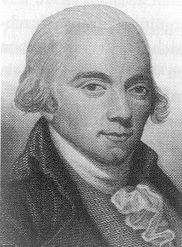
Today, in 1752, Muzio Clementi Italian pianist and composer was born.
More information about Clementi
Clementi was an Italian-born English composer, pianist, pedagogue, conductor, music publisher, editor, and piano manufacturer. Born in Rome, he spent most of his life in England.
Encouraged to study music by his father, he was sponsored as a young composer by Sir Peter Beckford who took him to England to advance his studies. Later, he toured Europe numerous times from his long-time base in London. It was on one of these occasions in 1781 that he engaged in a piano competition with Wolfgang Amadeus Mozart.
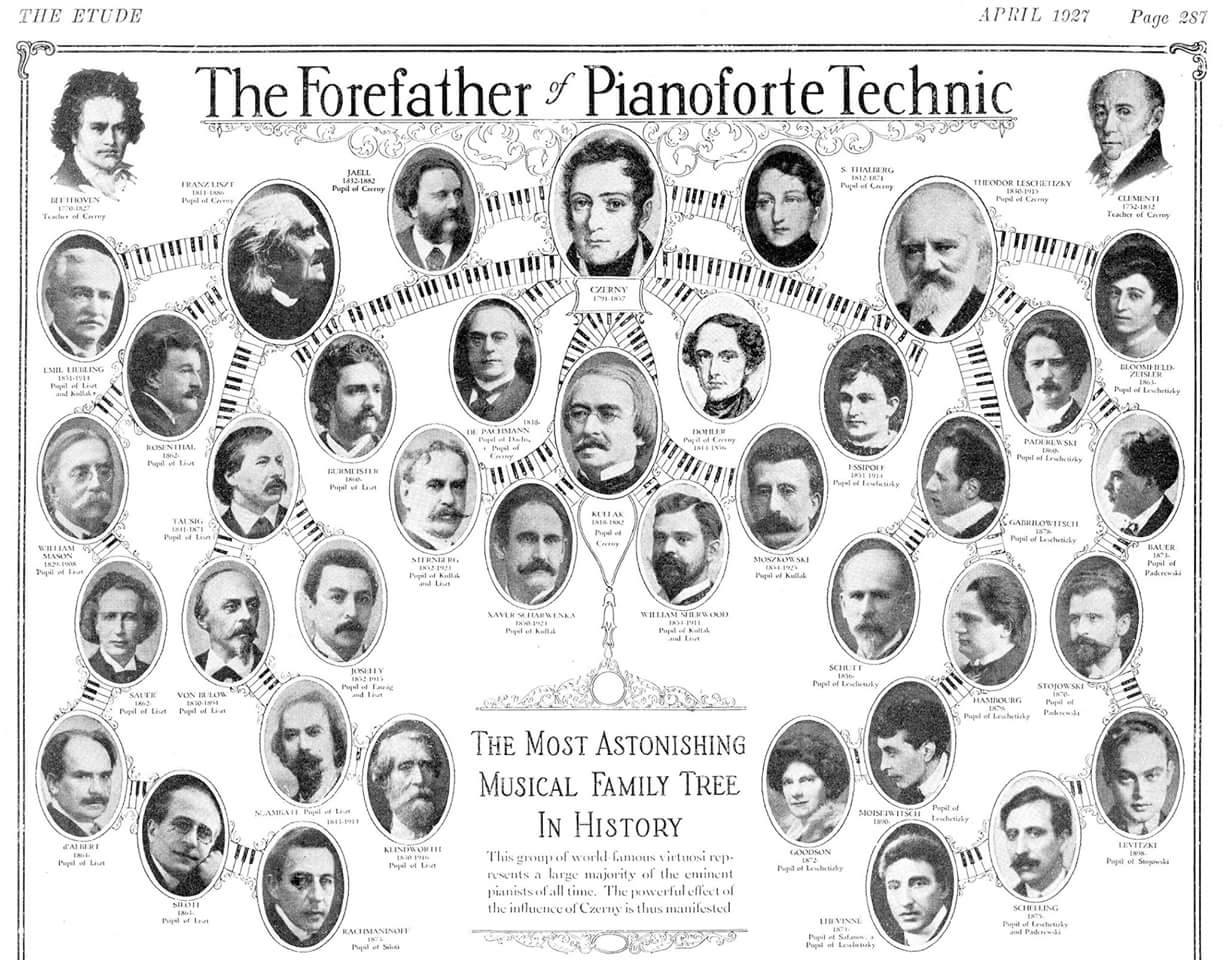
His student John Field would become a major influence on Frédéric Chopin
In 1802, Clementi and Field embarked on a European tour together. They went to Paris, Vienna and St. Petersburg.
John Field adopted the French word nocturne, meaning “of the night” and became the first composer to use this term in music. He wrote a series of short studies for solo piano which had a gently romantic late-night feeling about them.
Chopin soon took up this idea and wrote 21 nocturnes.
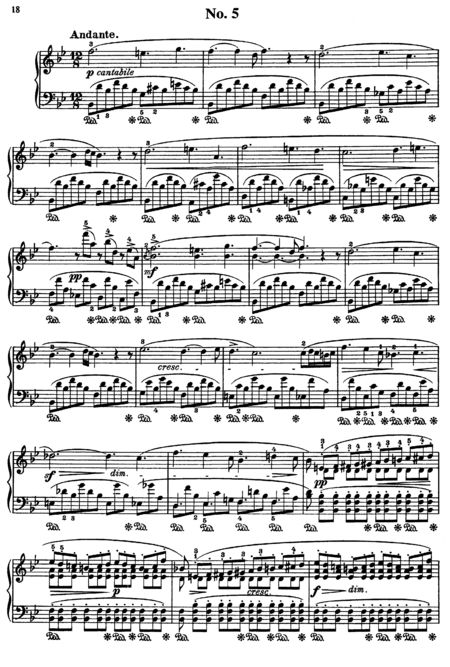
Compare: Field’s Nocturne No. 5 in B flat major
Chopin’s Nocturne E Flat Major Op.9 No.2 played by Valentina Lisitsa
Today, in 1837, Clementi’s student John Field died. Field was an Irish pianist, composer, and teacher. He was very highly regarded by his contemporaries and his playing and compositions influenced many major composers, including Frédéric Chopin, Johannes Brahms, Robert Schumann, and Franz Liszt.
Alfred Brendel was born in 1931 in Wiesenberg, Czech Republic.
After World War II, Brendel composed music, as well as continuing to play the piano, to write and to paint. However, he never had more formal piano lessons and, although he attended master classes with Edwin Fischer and Eduard Steuermann, he was largely self-taught after the age of six.
He made his debut in Graz (1948), and has since performed widely throughout Austria, where he lives.
He is known for his interpretations of Mozart, Beethoven, Schubert, Liszt, and Schoenberg. He tours internationally, and has written many essays on music.
A short insight from Alfred Brendel on his recording career:
Victor Borge was born in 1909 in Copenhagen, Denmark. He wass an entertainer and pianist – a deliciously funny performer. He studied at the Royal Danish Academy of Music, Copenhagen, and in Vienna and Berlin.
He made his debut as a pianist in 1926, and as a revue actor in 1933. From 1940 until his death in 2000 he worked in the USA for radio, television, and theatre, and has performed with leading symphony orchestras on worldwide tours since 1956. He was best known for his comedy sketches combining music and narrative. He used his classical training to skew serious music and performers.
From his obituitary:
Pianist Victor Borge, died in his sleep Dec 23, 2000 at his Greenwich, Connecticut home, was known as the unmelancholy Dane of international show business. He would have turned 92 on Jan. 3, 2001.
“The cause of death was heart failure,” his daughter, Sanna Feirstein, told Reuters.
“He had just returned from a wonderfully successful trip to Copenhagen … and it was really heartwarming to see the love he experienced in his home country,” she said.
Borge was one of five performers selected for the Kennedy Center Honors in 1999.
“He went to sleep, and they went to wake him up this morning, and he was gone,” said his agent, Bernard Gurtman.
“He had so much on the table, and to the day he died he was creative, and practicing piano several hours a day,” Gurtman told Reuters. “He was just a great inspiration.”
Funeral services will be private, his daughter said.
Borge made a career of falling off piano stools, missing the keys with his hands and getting tangled up in the sheet music.
One of his inspirations was a pianist who played the first notes of the GriegA Minor Concerto and then fell on the keys dead.
He said that the only time he got nervous on stage was when he had to play seriously and adds that if it had not been for Adolf Hitler he probably would never have pursued a career as a concert-hall comedian.
Until he was forced to flee Denmark in 1940 he was a stage and screen idol in his native country.
Lampooned Hitler
But as a Jew who had lampooned Hitler, Borge — his real name was Boerge Rosenbaum — was in danger and fled first to Sweden and then to the United States, where he arrived penniless and unknown and by a fluke got booked on the Bing Crosby radio show. He was an instant success.
He became an American citizen in 1948, but thought of himself as Danish. It was obvious from the numerous affectionate tributes and standing ovations at his 80th birthday concert in Copenhagen in 1989 that Danes felt the same way.
In the concert at Copenhagen’s Tivoli gardens, Borge played variations on the theme of “Happy Birthday to You in the styles of Mozart, Brahms, Wagner and Beethoven — all executed with such wit that the orchestra was convulsed with laughter that a woman performing a piccolo solo was unable to draw breath to play.
“Playing music and making jokes are as natural to me as breathing,” Borge told Reuters in an interview after that concert.
“That’s why I’ve never thought of retiring because I do it all the time whether on the stage or off. I found that in a precarious situation, a smile is the shortest distance between people. When one needs to reach out for sympathy or a link with people, what better way is there?
“If I have to play something straight, without deviation in any respect, I still get very nervous. It’s the fact that you want to do your best, but you are not at your best because you are nervous and knowing that makes you even more nervous.”
His varied career included acting, composing for films and plays and writing but he was best known for his comic sketches based on musical quirks and oddities.
Unpredictable Routine
His routines were unpredictable, often improvised on stage as his quick wit responded to an unplanned event — a noise, a latecomer in the audience — or fixed on an unlikely prop — a fly, a shaky piano stool.
Borge was born in Denmark on January 3, 1909, son of a violinist in the Danish Royal Orchestra.
His parents encouraged him to become a concert pianist, arranging his first public recital when he was 10. In 1927 he made his official debut at the Tivoli Gardens.
Borge’s mischievous sense of humor was manifest from an early age. Asked as a child to play for his parent’s friends he would announce “a piece by the 85-year-old Mozart” and improvise something himself.
When his mother was dying in Denmark during the occupation, Borge visited her, disguised as a sailor.
“Churchill and I were the only ones who saw what was happening,” he said in later years. “He saved Europe and I saved myself.”
From 1953 to 1956, he appeared in New York in his own production “Comedy in Music,” a prelude to world tours that often took him to his native Scandinavia.
On radio and television, Borge developed the comedy techniques of the bungling pianist that won him worldwide fame.
Many of his skits were based on real-life events. One of his classics evolved from seeing a pianist playing a Tchaikovsky concerto fall off his seat.
Borge’s dog joined the show after it wandered on stage while he was at the keyboard — an entrance nobody would believe had been unplanned.
One incident could not be repeated. A large fly flew on to Borge’s nose while he was playing. “How did you get that fly to come on at the right time?” people asked. “Well, we train them,” Borge explained.
Borge’s book, “My Favorite Intervals”, published in 1974, detailed little-known facts of the private lives of composers describing Wagner’s pink underwear and the time Borodin left home in full military regalia but forgot his trousers.
In 1975, Borge was honored in recognition of the 35th anniversary of his arrival in the United States and his work as unofficial goodwill ambassador from Denmark to the United States. He celebrated his 75th birthday in 1984 with a series of concerts at Carnegie Hall and in Copenhagen.
Borge received a host of honors from all four Scandinavian countries for his contributions to music, humor and worthy causes.
Borge, who had lived in Greenwich since 1964, is survived by five children, nine grandchildren, and one great grandchild. His wife of many years, Sanna, died earlier this year. Borge’s birthday


 Happy Valentine’s Day






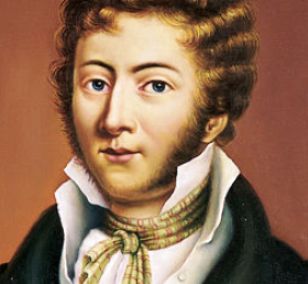
 Franz Peter Schubert lived between 1797 and 1828. He is considered to be a romantic composer. He was an Austrian composer who was one of the greatest creators of melody and foremost writer of ‘lieder’ (German songs).





 Victor Borge was born in 1909 in Copenhagen, Denmark. He wass an entertainer and pianist – a deliciously funny performer. He studied at the Royal Danish Academy of Music, Copenhagen, and in Vienna and Berlin.
 MaryO'Studio