“The New-England Boy’s Song about Thanksgiving Day”, also known as “Over the River and Through the Wood”, is a Thanksgiving poem by Lydia Maria Child originally published in Flowers for Children, Volume 2.
Although many people sing “to grandmother’s house we go,” the original edition shows that the author’s words were “to grandfather’s house.”
This poem celebrates the author’s childhood memories of visiting her Grandfather’s House.
Over the river, and through the wood,
To grandfather’s house we go;
The horse knows the way,
To carry the sleigh,
Through the white and drifted snow.
Over the river, and through the wood,
To grandfather’s house away!
We would not stop
For doll or top,
For ‘t is Thanksgiving day.
Over the river, and through the wood,
Oh, how the wind does blow!
It stings the toes,
And bites the nose,
As over the ground we go.
Over the river, and through the wood,
With a clear blue winter sky,
The dogs do bark,
And children hark,
As we go jingling by.
Over the river, and through the wood,
To have a first-rate play—
Hear the bells ring
Ting a ling ding,
Hurra for Thanksgiving day!
Over the river, and through the wood—
No matter for winds that blow;
Or if we get
The sleigh upset,
Into a bank of snow.
Over the river, and through the wood,
To see little John and Ann;
We will kiss them all,
And play snow-ball,
And stay as long as we can.
Over the river, and through the wood,
Trot fast, my dapple grey!
Spring over the ground,
Like a hunting hound,
For ‘t is Thanksgiving day!
Over the river, and through the wood,
And straight through the barn-yard gate;
We seem to go
Extremely slow,
It is so hard to wait.
Over the river, and through the wood,
Old Jowler hears our bells;
He shakes his pow,
With a loud bow wow,
And thus the news he tells.
Over the river, and through the wood—
When grandmother sees us come,
She will say, Oh dear,
The children are here,
Bring a pie for every one.
Over the river, and through the wood—
Now grandmother’s cap I spy!
Hurra for the fun!
Is the pudding done?
Hurra for the pumpkin pie!
I’m thankful for my piano studio, my students, and my piano 🙂
When I was growing up, my dad was a minister, meaning we lived in whatever parsonage the church chose to let us live in. The one we had in Pawcatuck, CT had an upright piano that someone had put out in the sunroom. Not the best place for a piano, but I digress.
Since we had the piano already, someone – probably my mom – decided that I would take lessons. We had the organist from the Baptist church just across the river in Westerly, RI
Apparently, Clara Pashley was fondly remembered at the church (now Central Baptist Church) since she was mentioned in an article from 2010.
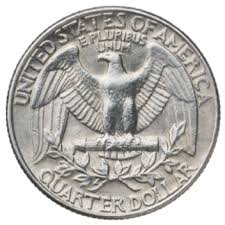
Miss Pashley walked to our house each week and taught me (and my mom who was always listening in) piano for the grand sum of 25 cents.
I started with Ada Richter’s classic Teaching Little Fingers to Play, which has now been morphed into the John Thompson library.
From there, it was the Michael Aaron series, and some sheet music.
There was no music store in our town, so I have no idea where any of this music came from – but I still have it all.
My parents did very well for their quarter a week investment, especially since my mom paid good attention and was able to beef up lessons she’d had as a child. Later on, she played well enough that she was church organist for a local Roman Catholic Church.
But I digress…
In those days, kids couldn’t do a whole lot of activities, so in 6th grade, I decided I wanted to be a Girl Scout. Bye, bye Clara.
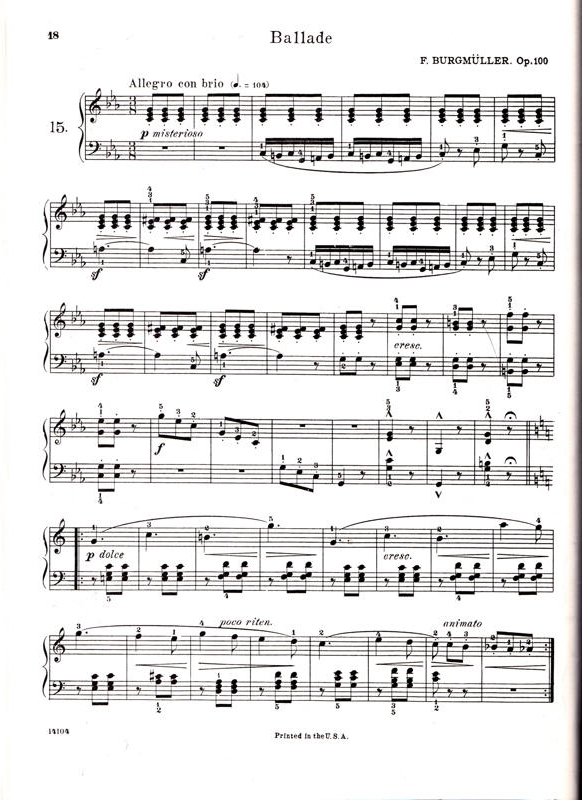
Girl Scouts didn’t last long but I did play piano in a talent show. I remember, I carefully cut Burgmüller’s Ballade out of my Michael Aaron book and made a nice construction paper cover. (I still have this, too)
I doubt that I played this well but here’s what it was supposed to sound like:
A few years intervened and moved to Springfield, MA. The parsonage piano there was in terrible shape and in the dark, never-used basement. But I decided to make it mine and cleared up the area around it and started “practicing”.
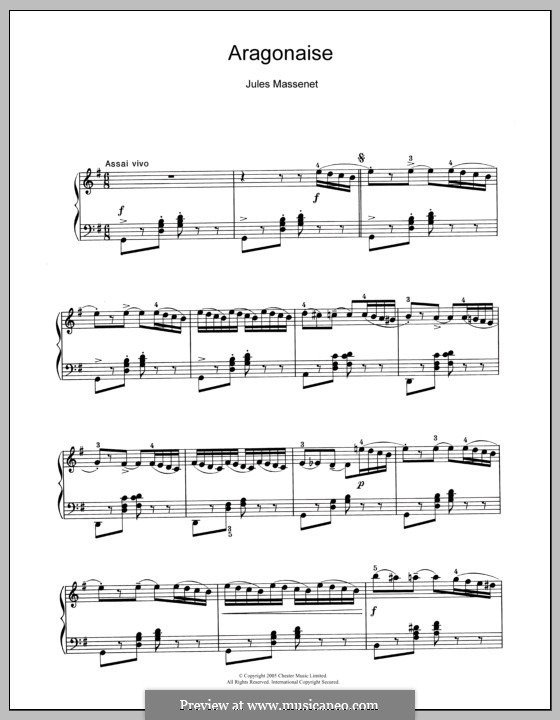
My Junior or Senior year of High School I decided I wanted to major in music in college. I decided to learn, on my own, a piano arrangement of Aragonnaise by Jules Massenet. I have no idea why or where that sheet music came from but I started working furiously on this piece.
Hopefully, at some point, it should have sounded like this:
I started pedaling (no pun intended!) my music to the Universities of Connecticut and Massachusetts and ended up at UMass Amherst since we were state residents.
Early morning gym classes (usually swimming), then wet hair traipsing across campus to music theory in winter 5 days a week. AARRGGH!
But I stuck it out.
My wonderful piano teacher, Howard Lebow, was killed in a car accident during my sophomore year and I was devastated. There will be more about him in a post on January 26, 2019 here on https://atomic-temporary-44596882.wpcomstaging.com
I took yet another break from piano lessons – but I kept playing.
After DH graduated, we moved to Milwaukee, WI for his graduate school. Besides working 2 jobs, I found time to commandeer the practice rooms at the University of Wisconsin. I also found a teacher at the Schaum School of Music. She was amazed that I had no piano at home to practice on.
When we later moved to Alexandria, VA my DH gave me a choice of new car or piano. So, I found a used piano. The owner had acquired it in a divorce and wanted it gone. Yesterday. She even paid to move it out of her apartment.
The new-to-me piano took up half our living room. When my parents came to visit, their feet we under my piano as I slept.
I found yet another new piano teacher and she is still my best friend to this day.
That piano moved to several locations before I bought a brand new Yamaha grand piano. The movers accidently brought in the wrong one and I made them return it. The people who lived in an apartment were probably unhappy when they had to return my piano and take their own new baby grand back.
I started teaching as a traveling piano teacher in Silver Spring, Maryland. I continued that in Wilmington, DE.
When we got to Fairfax, VA I decided no more traveling. Students would come to me. And so they have since 1973.
What is supposed to be our living room is filled with music books, electric keyboards, the grand piano, 2 organs, 2 violins, 2 clarinets and other musical “stuff”.
Piano playing has gotten me through the worst times of my life. Teaching has been a lifeline for me, as well.
I am so thankful for the students who have stayed with me over the years.
.1918 ~ This is Armistice Day or Remembrance Day or Veterans Day or Victory Day or World War I Memorial Day. The name of this special day may be different in different places throughout many nations; but its significance is the same. It was on this day, at 11 a.m., that World War I ceased. The Allied and Central Powers signed an armistice agreement at 5 a.m. in Marshal Foch’s railway car in the Forest of Compiegne, France. Even today, many still bow their heads in remembrance at the 11th hour of this the 11th day of the 11th month.
The Armistice of 11 November 1918 was the armistice that ended fighting on land, sea and air in World War I between the Allies and their opponent, Germany. Previous armistices had eliminated Bulgaria, the Ottoman Empire and the Austro-Hungarian Empire from the war.
Also known as the Armistice of Compiègne from the place where it was signed, it came into force at 11 a.m. Paris time on 11 November 1918 (“the eleventh hour of the eleventh day of the eleventh month”) and marked a victory for the Allies and a complete defeat for Germany, although not formally a surrender.
.1883 ~ Ernst Ansermet, Swiss conductor
.1927 ~ Mose Allison, American jazz pianist, trumpeter and singer
.1929 ~ Dick Clark, TV producer, host of American Bandstand, former Philadelphia DJ
.1929 ~ Andy Kirk and his orchestra recorded “Froggy Bottom” in Kansas City.
.1931 ~ Leslie Parnas, American cellist
.1932 ~ The National Broadcasting Company opened its new studios at Radio City in New York City. They celebrated with a gala program at Radio City Music Hall.
.1938 ~ Kate Smith sang God Bless America for the very first time. It would later become her signature song. Irving Berlin penned the tune in 1917 but never released it until Miss Smith sang it for the first time on her radio broadcast. Actually, the song was then 20 years old, but it had never been publicly performed before.
.1944 ~ Frank Sinatra began a long and successful career with Columbia Records.
.1964 ~ Edward Steuermann, composer, died at the age of 72. Howard Lebow, one of Mrs. O’Connor’s teachers studied under Steuermann
.1974 ~ Leonardo DiCaprio, American actor
.1979 ~ Dimitri Tiomkin passed away. He was a Russian-American film score composer and conductor.
.1992 ~ Erskine Hawkins passed away. He was an American trumpet player and big band leader.
.2000 ~ Isadore Granoff, a Ukrainian immigrant who started teaching violin lessons as a teenager and built a famed music school in Philadelphia, died in his sleep at the age of 99. Granoff taught Dizzy Gillespie, John Coltrane and others during more than a half-century at the Granoff School of Music. Granoff taught amateurs and professionals. Some of his students went on to become prominent players of classical music, jazz, swing, big band and Latin sounds. Granoff sold the school in 1970 and later stepped down from the board of directors, renouncing the new owner’s promotional tactics.
.2015 ~ Dr. Maurice Hinson died. He was one of America’s most respected authorities on piano literature. Many of the books in the OCMS library were edited by Dr. Hinson. Mrs. O’Connor took a piano pedagogy class with him several years ago and learned so much from him.
Among his outstanding achievements, he received the Lifetime Achievement Award from the Music Teachers National Association at it Washington, D.C. convention in the spring of 1994, the Outstanding Alumni Award from the University of Florida in 1990, and the Outstanding Alumni Award from the University of Michigan in the fall of 1995. Dr. Hinson has performed, lectured and given master classes worldwide. His books and editions have become classic standards in the studios of serious piano teachers and students the world over. He was awarded the Franz Liszt Medal by the Hungarian Government in 1986. Hailed as a specialist in American piano music, some of his most recent articles appear in the New Grove Dictionary of American Music in the United States.
Diwali is the Hindu festival of lights celebrated every year in autumn in the northern hemisphere (spring in southern hemisphere). One of the most popular festivals of Hinduism, it spiritually signifies the victory of light over darkness, good over evil, knowledge over ignorance, and hope over despair.
As per India’s official holiday calendar, Diwali in 2017 will be on October 19, coinciding with the 15th day of Kartik, the holiest month in the Hindu lunar calendar.
.1916 ~ Joe Bushkin, American jazz pianist (A Couple of Joes)
.1922 ~ Al Hirt, Trumpeter, Flight of the Bumble Bee as theme song for TV’s The Green Hornet, played in singer Don Gibson’s band, regular on Make Your Own Kind of Music
.1926 ~ Dame Joan Sutherland, Australian coloratura soprano
.1930 ~ The Waltz You Save for Me, by ‘The Waltz King’ himself, Wayne King, was recorded on Victor. It became King’s theme.
.1937 ~ Mary Travers, American folk singer, Mary of Peter, Paul and Mary
.1938 ~ Dee (Delectus) Clark, Singer
.1942 ~ Johnny Rivers (John Ramistella), Singer
.1943 ~ Joni Mitchell, Canadian folk-rock singer, songwriter and guitarist, 1970 UK No.11 single ‘Big Yellow Taxi’, 1974 US No.7 single ‘Help Me’. She wrote ‘Both Sides Now’ a hit for Judy Collins and ‘Woodstock’ a hit for Crosby Stills Nash and Young and Matthews Southern Comfort. Mitchell’s work is highly respected by critics, and she has deeply influenced fellow musicians in a diverse range of genres.
.1947 ~ Billboard magazine began listing the top 15 popular records. Only 10 songs had been featured previously.
.1956 ~ Elvis Presley hit the charts with Love Me. The song was the first million-seller to make the charts without being released as a single. It was, instead, an EP (extended play) 45 rpm, with three other songs on it: Rip It Up, Paralyzed and When My Blue Moon Turns to Gold Again on RCA Victor.
.1970 ~ Does Anybody Really Know What Time It Is? was released by Columbia. It became the third tune by Chicago to hit the pop music charts. Make Me Smile and 25 or 6 to 4 were previous hits. Does Anybody Really Know What Time It Is? made it to #7 on the charts, January 7, 1971.
.1976 ~ Gone With the Wind was aired (over two nights) on NBC-TV. The showing was the highest-rated TV show in history. 65 percent of all viewers turned on their sets to watch Scarlet O’Hara and Rhett Butler.
.1978 ~ Nick Gilder, Singer
.1979 ~ The Rose, starring Bette Midler, got star treatment with a world premiere in Los Angeles. The movie was modeled after the life of Janis Joplin.
.2000 ~ Doug Nelson, bassist in teen blues star Jonny Lang’s band, was killed when he was hit by a pickup truck on a rural highway in northern Minnesota. He was 46. Nelson began playing professionally at age 15. He worked in Los Angeles for a time and toured with Olivia Newton-John, before returning in the late 1980s to the Twin Cities, where he played with local bands. He joined Lang’s group about three years ago.
.2000 ~ Columbia Legacy and Verve released a five-CD box set companion titled “Ken Burns Jazz: The Story of American Music” in addition to 22 individual artist discs.
Read the news item
.2001 ~ Gene Wooten, a dobro player who backed Patty Loveless, the Osborne Brothers, Wilma Lee Cooper and other country stars, died from complications of lung cancer. He was 49. “He was like a teacher for everyone,” said mandolinist Roland White. “He was like our guru. He just helped everybody in music. … There was no ego ever – ever – and that’s hard to find.” Wooten, a native of Franklinton, N.C., attended Appalachian State University in Boone, N.C., where he began his career in music. He moved to Nashville in 1977 and was hired by Cooper. Wooten played on the Mountain Soul album by Loveless this year. He was voted best dobro player three times by the Society for the Preservation of Bluegrass in America.
.2004 ~ Howard Keel, American actor, singer and president of the Screen Actors Guild (7 Brides for 7 Brothers, Kiss Me Kate), died at the age of 87
.2016 ~ Leonard Cohen, Canadian writer and singer-songwriter (Death of Ladies Man), died at the age of 82
.2018 ~ Francis Lai, the French composer best known for his themes for the movies “Love Story” and “A Man and a Woman,” died at the age of 86.
Halloween (All Hallow’s Eve) is an ancient celebration dating back to the sixth or seventh centuries. This holiday combines the Druid autumn festival and the Christian celebration of Hallowtide, long associated with witches, ghosts, devils, spirits, magic … and all scary things that go bump in the night.
• 1896 ~ Ethel Waters, American blues and jazz singer
• 1906 ~ Louise Talma, American composer
• 1912 ~ Dale Evans (Frances Butts), Singer, songwriter of Happy Trails to You, actress, wife of ‘King of the Cowboys’ Roy Rogers
• 1922 ~ Illinois (Battiste) Jacquet, Tenor saxophone, played with Lionel Hampton, Cab Calloway, Count Basie
• 1927 ~ Anita Kerr, Pianist, singer, record producer, The Anita Kerr Singers, composer
• 1930 ~ In a rare recording, William ‘Count’ Basie sang with Bennie Moten’s orchestra, Somebody Stole My Gal, on Victor.
• 1934 ~ Tom Paxton, American folk singer, guitarist and songwriter
• 1947 ~ Russ Ballard, Singer, songwriter, guitar with Argent
• 1952 ~ Bernard Edwards, Bass with Chic
• 1953 ~ NBC televised “Carmen” on Opera Theatre in living color. It was the first major opera televised in anything other than black and white.
• 1956 ~ Tony Bowers, Bass with Simply Red
• 1961 ~ Larry Mullen, Grammy Award-winning drummer, with U2
• 1963 ~ Johnny Marr, Guitarist with The Smiths
• 1972 ~ Curtis Mayfield received a gold record for Freddie’s Dead from the movie, Superfly.
• 1984 ~ Caribbean Queen became a gold record for Billy Ocean. It was Ocean’s second hit song and the only one of his 11 hits to become a million-seller. He would have two other #1 songs and a pair of #2 hits, but none as big as Caribbean Queen (No More Love on the Run). Billy’s from Trinidad, and his real name is Leslie Sebastian Charles.
Johann Sebastian Bach’s towering monument of organ music, with its deep sense of foreboding, will forever be associated with Halloween.
Get a free copy of the sheet music at IMSLP or borrow a copy from the O’Connor Music Studio. I have this arranged for organ, piano, duet, 2-piano, simplified…
Classic horror themes are ominous and generally dread-inspiring for a reason: They are written in minor keys. Find a nifty melody, go minor, and watch the goosebumps pile up. For composers, sometimes it’s almost too easy.
To prove that it’s the minor key and not the melody that is eerily accenting the work of cinema’s most murderous villains, musician/writer/filmmaker Ian Gordon re-recorded five iconic themes in major keys. What comes next will definitely not frighten you.
A quick rundown:
The X-Files theme sounds like the beginning of an inspirational journey across side-scrolling Nintendo worlds. (One where you’re searching for a magic flute.)
Halloween sounds like the side A, track one of an indie-pop outfit’s meadow-frolicking breakout record.
Saw recalls the music that scores when the football game is getting out of hand and only the underdog protagonist can bring you back.
Night on Bald Mountain refers to a series of compositions by Modest Mussorgsky (1839–1881). Inspired by Russian literary works and legend, Mussorgsky composed a “musical picture”, St. John’s Eve on Bald Mountain on the theme of a witches’ sabbath occurring on St. John’s Eve, which he completed on that very night, June 23, in 1867.
Get a free copy of the sheet music at IMSLP or buy it on amazon.com.
From Disney’s Fantasia
Piano version transcribed for solo piano by Konstantin Chernov (1865-1937).
The Ludwig Symphony Orchestra, conducted by Maestro Thomas Ludwig
The Funeral March of a Marionette (Marche funèbre d’une marionnette) is a short piece by Charles Gounod. It was written in 1872 for solo piano and orchestrated in 1879. It is perhaps best known as the theme music for the television program Alfred Hitchcock Presents, which originally aired from 1955 to 1965.
In 1871-72, while residing in London, Gounod started to write a suite for piano called “Suite Burlesque”. After completing one movement, the Funeral March of a Marionette, he abandoned the suite and had the single movement published by Goddard & Co. In 1879 he orchestrated the piece. The instrumentation is: piccolo, flute, 2 oboes, 2 clarinets in A, 2 bassoons, 2 horns in D, 2 trumpets in A, 3 trombones, ophicleide, timpani, bass drum, triangle, strings. The work is in the key of D minor, with a central section in D major. Various arrangements by other hands exist.
There is a program underlying the Funeral March of a Marionette: The Marionette has died in a duel. The funeral procession commences (D minor). A central section (D major) depicts the mourners taking refreshments, before returning to the funeral march (D minor).
The score contains the following inscriptions in appropriate places:
La Marionnette est cassée!!! (The Marionette is broken!!!)
Murmure de regrets de la troupe (Murmurs of regret from the troupe)
Le Cortège (The Procession)
Ici plusieurs des principaux personnages de la troupe s’arrêtent pour sa rafrâichir (Here many of the principal personages stop for refreshments)
Retour a la maison (Return to the house). (Wikipedia)
Download this music in several versions from IMSLP. Click on Arrangements and Transcriptions. There are also some arrangements for piano at the O’Connor Music Studio.
On Alfred Hitchcock:
From Faber Piano Adventures Performance Book Level 3B No.7 (Also available in the OCMS Library):






 Veteran’s Day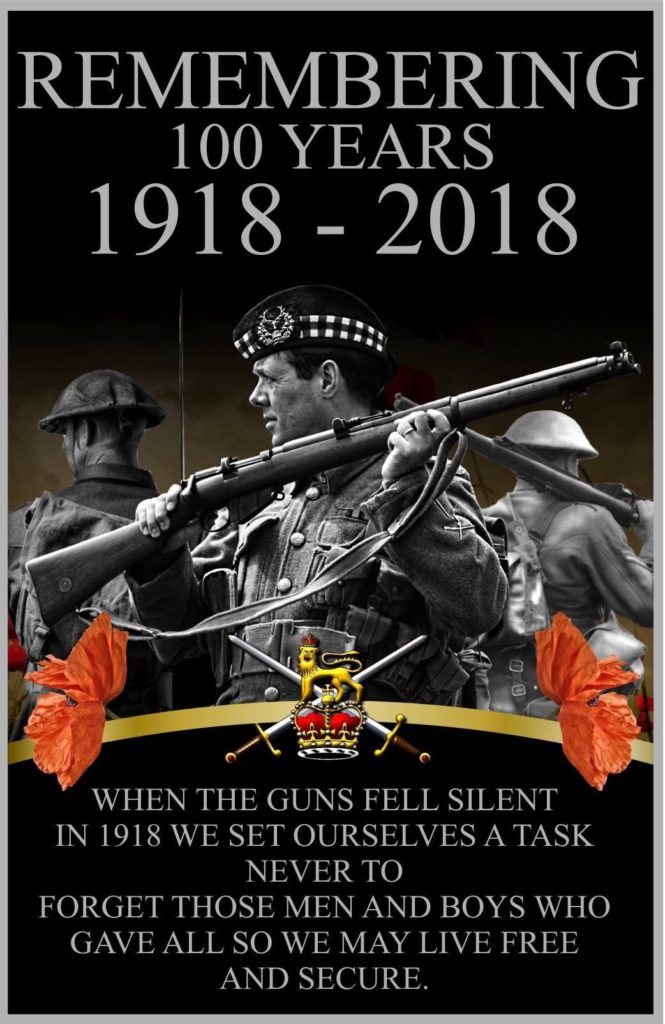

 Happy Halloween


 MaryO'Studio