When my students are first working with the Grand Staff, they are often confused about the placement of the various clefs.
In piano music, we generally use only the G-clef (Treble clef – not “trouble clef” as some think!) and the F-clef (Bass clef) I try to show students how the curvy part of the G-clef wraps around the G above middle C and the F-clef looks sort of like an F marking the F below middle C. I draw out G and F on the staff to show how these could have looked.
Originally, instead of a special clef symbol, the reference line of the staff was simply labeled with the name of the note it was intended to bear: F and C and, more rarely, G. These were the most often-used ‘clefs’ in Gregorian chant notation. Gregorian chant developed mainly in western and central Europe during the 9th and 10th centuries, with later additions and redactions.
Over time the shapes of these letters became stylized, leading to their current versions.
• 1888 ~ Friedrich Schorr, Hungarian bass-baritone
• 1917 ~ Laurindo Almeida, Grammy Award-winning composer, musician, guitarist
• 1919 ~ Marge Champion (Marjorie Belcher), Dancer, actress, choreographer with Gower Champion, model for animated Snow White
• 1924 ~ Theatregoers heard the song Indian Love Call for the first time in the operetta Rose Marie, which opened in New York City.
• 1927 ~ Sophie Tucker recorded her signature song, Some of These Days, for Columbia Records.
• 1931 ~ The radio show 15 Minutes with Bing Crosby debuted on CBS. The singer became a super-hot property after the debut.
• 1936 ~ David Blaki, British composer
• 1939 ~ Sam Gooden, Singer with Roosters
• 1940 ~ Jimmy Clanton, Singer, songwriter, toured with Dick Clark’s Caravan of Stars
• 1943 ~ Rosalind Ashford, Singer with Martha and the Vandellas
• 1946 ~ Marty Grebb, Musician, keyboards with The Buckinghams
• 1957 ~ Steve Porcaro, Keyboards, singer with Toto
• 1958 ~ Fritz McIntyre, Keyboards with Simply Red
• 1965 ~ The Beatles received a gold record for their single Help!, from the movie of the same name.
• 1997 ~ Sir Rudolf Bing died. He was an Austrian-born opera impresario who worked in Germany, the United Kingdom and the United States, most notably being General Manager of the Metropolitan Opera in New York City from 1950 to 1972.
• 2000 ~ Elvera Sanchez Davis, a tap dancer and the mother of Sammy Davis, Jr., died at the age of 95. Known as Baby Sanchez, Davis began performing at 16 in the chorus line at the Lafayette Theater in Harlem. She continued her career into the early 1940s, dancing for six years in the chorus line at the Apollo Theatre. In 1923, performing in a touring show called “Holiday in Dixie”, she met and married Sammy Davis Sr., also a dancer in the show. Their son was born in 1925. He became a tap-dance prodigy by age 10, trained and brought up by his father after his parents separated. Mrs. Davis retired when the Apollo disbanded its dance chorus, though she danced informally into her 90s. She also performed in touring revues and in films including Carl Micheaux’s 1936 “Swing”. Davis continued to be involved with tap dance until her death, serving from 1989 as an adviser to the New York Committee to Celebrate National Tap Dance Day.
Sammy Davis, Jr. died in 1990 at the age of 64.
• 2001 ~ Troy Donahue died at the age of 65. He was a matinee idol who climbed to stardom in the 1950s with his role in “A Summer Place.”
• 2001 ~ Jazz saxophonist Jay Migliori, who worked with musicians and singers ranging from
Frank Zappa to Frank Sinatra, died of colon cancer. He was 70.
Migliori, who was also a founding member of the Grammy-winning jazz group Supersax, played on some 4,000 recordings during his career. Although he described his own style as “modern acoustic jazz with roots in bebop,” he was equally comfortable working with country stars like Glen Campbell, a wide variety of rock musicians including Zappa and the Four Seasons and pop stars as varied as Dean Martin and Celine Dion. He performed with more than two dozen bands over the years, including those led by Miles Davis, Stan Kenton, Terry Gibbs and Maynard Ferguson. In 1971, he joined Supersax, an ensemble built around a five-saxophone section that specialized in orchestrated Charlie Parker solos. He also recorded several albums of his own, including “Jazz in Transition” and “Smile.”
• 2006 ~ [Jean-Josephat] Clermont Pépin, Canadian pianist and composer (Implosion Symphony), died at the age of 80
• 1888 ~ Friedrich Schorr, Hungarian bass-baritone
• 1917 ~ Laurindo Almeida, Grammy Award-winning composer, musician, guitarist
• 1919 ~ Marge Champion (Marjorie Belcher), Dancer, actress, choreographer with Gower Champion, model for animated Snow White
• 1924 ~ Theatregoers heard the song Indian Love Call for the first time in the operetta Rose Marie, which opened in New York City.
• 1927 ~ Sophie Tucker recorded her signature song, Some of These Days, for Columbia Records.
• 1931 ~ The radio show 15 Minutes with Bing Crosby debuted on CBS. The singer became a super-hot property after the debut.
• 1936 ~ David Blaki, British composer
• 1939 ~ Sam Gooden, Singer with Roosters
• 1940 ~ Jimmy Clanton, Singer, songwriter, toured with Dick Clark’s Caravan of Stars
• 1943 ~ Rosalind Ashford, Singer with Martha and the Vandellas
• 1946 ~ Marty Grebb, Musician, keyboards with The Buckinghams
• 1957 ~ Steve Porcaro, Keyboards, singer with Toto
• 1958 ~ Fritz McIntyre, Keyboards with Simply Red
• 1965 ~ The Beatles received a gold record for their single Help!, from the movie of the same name.
• 1997 ~ Sir Rudolf Bing died. He was an Austrian-born opera impresario who worked in Germany, the United Kingdom and the United States, most notably being General Manager of the Metropolitan Opera in New York City from 1950 to 1972.
• 2000 ~ Elvera Sanchez Davis, a tap dancer and the mother of Sammy Davis, Jr., died at the age of 95. Known as Baby Sanchez, Davis began performing at 16 in the chorus line at the Lafayette Theater in Harlem. She continued her career into the early 1940s, dancing for six years in the chorus line at the Apollo Theatre. In 1923, performing in a touring show called “Holiday in Dixie”, she met and married Sammy Davis Sr., also a dancer in the show. Their son was born in 1925. He became a tap-dance prodigy by age 10, trained and brought up by his father after his parents separated. Mrs. Davis retired when the Apollo disbanded its dance chorus, though she danced informally into her 90s. She also performed in touring revues and in films including Carl Micheaux’s 1936 “Swing”. Davis continued to be involved with tap dance until her death, serving from 1989 as an adviser to the New York Committee to Celebrate National Tap Dance Day.
Sammy Davis, Jr. died in 1990 at the age of 64.
• 2001 ~ Troy Donahue died at the age of 65. He was a matinee idol who climbed to stardom in the 1950s with his role in “A Summer Place.”
• 2001 ~ Jazz saxophonist Jay Migliori, who worked with musicians and singers ranging from
Frank Zappa to Frank Sinatra, died of colon cancer. He was 70.
Migliori, who was also a founding member of the Grammy-winning jazz group Supersax, played on some 4,000 recordings during his career. Although he described his own style as “modern acoustic jazz with roots in bebop,” he was equally comfortable working with country stars like Glen Campbell, a wide variety of rock musicians including Zappa and the Four Seasons and pop stars as varied as Dean Martin and Celine Dion. He performed with more than two dozen bands over the years, including those led by Miles Davis, Stan Kenton, Terry Gibbs and Maynard Ferguson. In 1971, he joined Supersax, an ensemble built around a five-saxophone section that specialized in orchestrated Charlie Parker solos. He also recorded several albums of his own, including “Jazz in Transition” and “Smile.”
• 2006 ~ [Jean-Josephat] Clermont Pépin, Canadian pianist and composer (Implosion Symphony), died at the age of 80
1653 ~ Johann Pachelbel, German composer and organist
More information about Pachelbel
• 1887 ~ Emile Berliner filed for a patent for his invention of the lateral-cut, flat-disk gramophone. We know it better as the record player. Emile got the patent, but Thomas Edison got the notoriety for making it work and making music with his invention.
1854 ~ Engelbert Humperdinck, German opera composer
Read quotes by and about Humperdinck
More information about Humperdinck
• 1933 ~ Conway Twitty (Harold Lloyd Jenkins), Songwriter, CMA Male Vocalist of the
Year in 1975, Grammy Award-winner with Loretta Lynn, owns booking agency, music publishing company, Twitty Burgers, Twitty City theme park
1935 ~ Seiji Ozawa, Japanese conductor
More information about Ozawa
• 1940 ~ Dave White (Tricker), Singer, songwriter with Danny & The Juniors
• 1944 ~ Leonard Slatkin, Grammy Award-winning orchestra director of the St. Louis Symphony Orchestra and National Symphony Orchestra
• 1946 ~ Barry Gibb, Musician, rhythm guitar, songwriter, singer with The Bee Gees
• 1946 ~ Greg Errico, Drummer with Sly and The Family Stone
• 1955 ~ Bruce Foxton, Guitar with 100 Men and The Jam
• 1957 ~ Gloria Estefan (Gloria Maria Milagrosa Fajardo), ‘Queen of Latin Pop’, Grammy Award-winning singer
• 1960 ~ When Oscar Hammerstein II died, the musical theater lost an outstanding composer. To honor the man and his music, every New York theater turned off its lights on this night in 1960.
• 1972 ~ The O’Jays received a gold record for Back Stabbers. It was the first hit for the group from Canton, OH. The O’Jays would place nine more hits on the pop and R&B charts. Five of them were gold record winners: Love Train, I Love Music, Use ta Be My Girl, For the Love of Money and Put Your Hands Together.
• 1977 ~ Singer Debbie Harry (of Blondie) signed a recording deal with Chrysalis Records. Chrysalis bought the group’s private stock label for $500,000. With the high visibility of the former Playboy Bunny, it was difficult to think of Blondie as a band, and not just Debbie Harry.
• 1982 ~ Clifford M Curzon, England, pianist, died at the age of 75
• 2001 ~ Sil Austin, a jazz artist who recorded more than 30 albums and the Top 40 hits Slow Walk, My Mother’s Eyes, and his signature song, Danny Boy, died of prostate cancer. He was 71. Austin taught himself how to play the tenor saxophone when he was 12. Four years later, he played Danny Boy on the Ted Mack Amateur Hour, a performance that caught the attention of Mercury Records. Austin performed all over Europe and Asia, usually traveling with his wife, the Rev. Vernice Austin.
• 1653 ~ Johann Pachelbel, German composer and organist
More information about Pachelbel
• 1887 ~ Emile Berliner filed for a patent for his invention of the lateral-cut, flat-disk gramophone. We know it better as the record player. Emile got the patent, but Thomas Edison got the notoriety for making it work and making music with his invention.
• 1854 ~ Engelbert Humperdinck, German opera composer
Read quotes by and about Humperdinck
More information about Humperdinck
• 1933 ~ Conway Twitty (Harold Lloyd Jenkins), Songwriter, CMA Male Vocalist of the
Year in 1975, Grammy Award-winner with Loretta Lynn, owns booking agency, music publishing company, Twitty Burgers, Twitty City theme park
• 1935 ~ Seiji Ozawa, Japanese conductor
More information about Ozawa
• 1940 ~ Dave White (Tricker), Singer, songwriter with Danny & The Juniors
• 1944 ~ Leonard Slatkin, Grammy Award-winning orchestra director of the St. Louis Symphony Orchestra and National Symphony Orchestra
• 1946 ~ Barry Gibb, Musician, rhythm guitar, songwriter, singer with The Bee Gees
• 1946 ~ Greg Errico, Drummer with Sly and The Family Stone
• 1955 ~ Bruce Foxton, Guitar with 100 Men and The Jam
• 1957 ~ Gloria Estefan (Gloria Maria Milagrosa Fajardo), ‘Queen of Latin Pop’, Grammy Award-winning singer
• 1960 ~ When Oscar Hammerstein II died, the musical theater lost an outstanding composer. To honor the man and his music, every New York theater turned off its lights on this night in 1960.
• 1972 ~ The O’Jays received a gold record for Back Stabbers. It was the first hit for the group from Canton, OH. The O’Jays would place nine more hits on the pop and R&B charts. Five of them were gold record winners: Love Train, I Love Music, Use ta Be My Girl, For the Love of Money and Put Your Hands Together.
• 1977 ~ Singer Debbie Harry (of Blondie) signed a recording deal with Chrysalis Records. Chrysalis bought the group’s private stock label for $500,000. With the high visibility of the former Playboy Bunny, it was difficult to think of Blondie as a band, and not just Debbie Harry.
• 1982 ~ Clifford M Curzon, England, pianist, died at the age of 75
• 2001 ~ Sil Austin, a jazz artist who recorded more than 30 albums and the Top 40 hits Slow Walk, My Mother’s Eyes, and his signature song, Danny Boy, died of prostate cancer. He was 71. Austin taught himself how to play the tenor saxophone when he was 12. Four years later, he played Danny Boy on the Ted Mack Amateur Hour, a performance that caught the attention of Mercury Records. Austin performed all over Europe and Asia, usually traveling with his wife, the Rev. Vernice Austin.
• 2023 ~ James William Buffett (December 25, 1946 – September 1, 2023) was an American singer-songwriter, musician, author, and businessman. He was best known for his music, which often portrays an “island escapism” lifestyle. Jimmy Buffett was one of the world’s richest musicians, with a net worth of $1 billion as of 2023.
Vivaldi, one of the greatest baroque composers, has a very interesting story. He ran an orphanage in the 18th century in Italy that became famous all over the western world for its musically talented children. A lot of his pieces were written for specific children in his school. Vivaldi learned the violin from his father, and was trained as a priest. He was nicknamed “the red priest” for his red hair and was apparently somewhat sure of himself, having claimed once he can compose a concerto faster than it can be copied.
Vivaldi wrote over 500 pieces, most of which are lost today. He is considered one of the greatest musical landmarks in history, having inspired many composers that followed him, including J.S.Bach and others.
• 1834 ~ Amilcare Ponchielli, Italian composer
More information about Ponchielli
• 1903 ~ Arthur (Morton) Godfrey, Ukulele playing, TV/radio entertainer
• 1918 ~ Alan Jay Lerner, American lyricist for the musical theater
Read quotes by and about Lerner
More information about Lerner
• 1930 ~ Dudley “Big Tiny” Little Jr, American pianist on the Lawrence Welk Show
• 1939 ~ Jerry Allison, Drummer with The Crickets
• 1939 ~ Frank Sinatra recorded All or Nothing at All with the Harry James Band. The tune failed to become a hit until four years later – after Ol’ Blue Eyes had joined the Tommy Dorsey Orchestra.
• 1945 ~ Itzhak Perlman, Israeli-born American violinist, recorded with André Previn and Scott Joplin
• 1945 ~ Van Morrison, Songwriter, singer with Them
• 1955 ~ Anthony Thistlethwaite, Saxophone with The Waterboys
• 1957 ~ Glenn Tilbrook, Guitar, singer, songwriter with Squeeze
• 1959 ~ Tony DeFranco, Singer with The DeFranco Family
• 1970 ~ Debbie Gibson, Singer
• 1976 ~ A judge ruled that George Harrison was guilty of copying from the songHe’s So Fine (a 1963 Chiffons hit). The judge said that the chorus to Harrison’s My Sweet Lord was identical to He’s So Fine and it eventually (appeals went on for about five years) cost the former Beatle over half a million dollars.
• 1987 ~ This day saw the largest preorder of albums in the history of CBS Records. 2.25 million copies of Michael Jackson’s Bad album were shipped to record stores. The LP followed in the tracks of the Jackson album, Thriller, the biggest Jackson-seller of all time (35 million copies sold). The Bad album was successful but sold only 13 million copies.
• 2002 ~ Lionel Hampton, American Jazz vibraphone player and actor, died at the age of 94
• 2016 ~ Jacques Leduc, Belgian composer, died at the age of 84
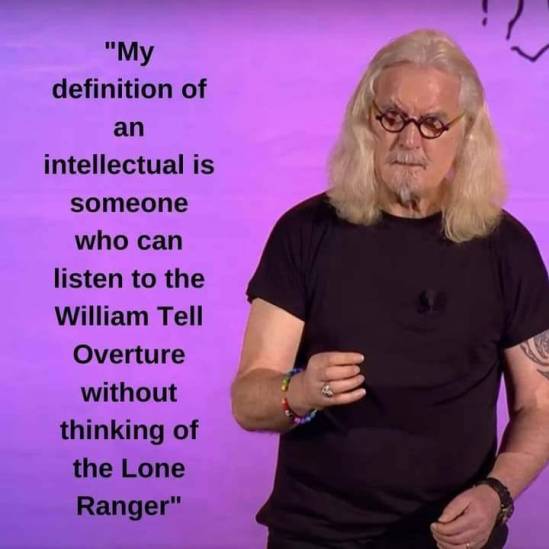
Today, we’ll be listening to the end of the William Tell Overture by Gioachino Rossini. This piece, originally the overture to an opera, has been arranged for piano and is in several method books, including Piano Pronto Movements 1 and 2. It’s also in Bastien Book 4 and Piano Maestro.
The original story
Maybe your grandparents watched the original Lone Ranger
Or you saw the newer Lone Ranger with Johnny Depp
Here’s the entire William Tell Overture played by an orchestra
Piano Solo
Franz Liszt made a really hard version for piano solo. See if you can follow along!
Piano Duet (1 piano, 4 hands)
Piano Duet arranged by Louis Moreau Gottschalk
Piano Duo (2 pianos, 8 hands)
Piano Quartet (4 pianos, 16 hands)
For pipe organ
For synthesizer
And then things get nuts with cartoons. Lots of cartoons used this music. Here are Mickey Mouse and friends
And Spike Jones
Handbells…
Poor Rossini – I think he’d have a fit if he knew how is music was being used.
• 1842 ~ (Victor) Alphonse Duvernoy, French pianist and composer. His works include operas, various pieces for piano and orchestra, chamber music, songs and piano music (including a set of 100 studies).
• 1853 ~ Percy Goetschius, American music teacher and critic
• 1919 ~ Kitty Wells (Muriel Ellen Deason),‘The Queen of Country Music’, Country Music Hall of Fame, married to Johnny Wright
• 1922 ~ Regina Resnik, American mezzo-soprano
• 1922 ~ The New Orleans Rhythm Kings recorded Tiger Rag, one of the most familiar ragtime jazz tunes ever. It was released on the General record label.
• 1935 ~ John Phillips, Singer with The Mamas & The Papas, actress MacKenzie Phillips’ father
• 1941 ~ John McNally, Singer, guitarist with The Searchers
• 1945 ~ Van Morrison, Irish blues-rock singer, songwriter and instrumentalist
• 1968 ~ The Beatles recorded their first songs for their own Apple label. The initial session included the big hits Revolution and Hey Jude.
• 1968 ~ The stars came out for charity as John and Yoko Lennon hosted the One on One concert in New York’s Madison Square Garden. Among the music greats appearing were Stevie Wonder and Roberta Flack. Over $250,000 was raised to aid mentally retarded children.
• 1984 ~ Beatles fans paid $271,180 dollars for memorabilia at an auction in London, England. An unpublished manuscript by John Lennon brought the largest amount – $23,056. A snare drum belonging to Ringo Starr brought $1,440.
• 1920 ~ Charlie Parker, American jazz alto saxophonist
Read quotes by and about Parker
More information about Parker
• 1924 ~ Dinah Washington (Ruth Lee Jones), Singer, Lionel Hampton’s band from 1943 to 1946
• 1928 ~ Thomas Stewart, American baritone
• 1942 ~ Sterling Morrison, Bass, guitar, singer with The Velvet Underground
• 1943 ~ Paul Whiteman Presents, a summertime radio replacement show, was heard for the last time. The hostess for the show was Dinah Shore. Whiteman’s 35-piece orchestra serenaded listeners on the NBC radio network. Whiteman’s well~known theme song was Rhapsody in Blue, composed by George Gershwin.
• 1946 ~ Ella Fitzgerald and The Delta Rhythm Boys recorded It’s a Pity to Say Goodnight on Decca Records. The song turned out to be one of Lady Ella’s most popular.
• 1964 ~ Roy Orbison’s Oh, Pretty Woman was released. It hit number one (for 3 weeks) on September 26th and became the biggest of his career. The title was inspired by Orbison’s wife Claudette interrupting a conversation to announce she was going out; when Orbison asked if she was okay for cash, his co-writer Bill Dees interjected: “A pretty woman never needs any money.” Oh, Pretty Woman was Orbison’s second #1 hit. The other was Running Scared on 6/05/61.
• 1966 ~ The Beatles performed at Candlestick Park in San Francisco, CA. It was the group’s last live appearance before they disbanded in 1970.
• 1986 ~ The former American Bandstand studio, at the original home of WFIL-TV in Philadelphia, PA, was placed on the National Register of Historic Places. The studio is located at 4548 Market Street. We expect that any day now, Bandstand host Dick Clark will also be placed on the National Register.
• 2018 ~ Paul Taylor, American dancer and choreographer (Paul Taylor Dance Company), died at the age of 88.


 1653 ~ Johann Pachelbel, German composer and organist


 MaryO'Studio