Oliver Sacks and Music

sacks-music


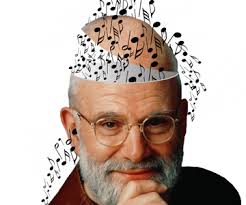
Writer and neurologist Oliver Sacks, who died on Sunday, August 30, 2015 at age 82, spent his life wondering on the myriad connections among biology, thought, emotion and perception.

For those of us who obsess over the how and why of music, Sacks’ work on sound and its effects on the brain – and vice versa – was particularly illuminating. His book on the subject, “Musicophilia: Tales of Music and the Brain,” remains essential reading for those who want to understand the mechanics of music.

Through bountiful research and mesmerizing case studies, Sacks addressed topics including music and amnesia, music therapy, musical prodigies and those who suffer from debilitating aural hallucinations.

Read more at Oliver Sacks & music: On brainworms, hallucinations and sonic overload – LA Times

The O’Connor Music Studio has a copy of Musicophilia: Tales of Music and the Brain if anyone would like to borrow it.

September 11 ~ Today in Music History

We will always remember 911


OCMS 1786 ~ Friedrich Kuhlau, German-born Danish composer and pianist
More information about Kuhlau

• 1847 ~ This night an audience at the Eagle Saloon in Pittsburgh, Pennsylvania enjoyed Foster’s rendition of his minstrel song, Oh! Susanna. Stephen got a bottle of whiskey for his performance.

• 1850 ~ Jenny Lind sang at the Castle Garden Theatre in New York City. It was her first performance in America. Lind’s voice was so sweet that she was nicknamed ‘The Swedish Nightingale’.

• 1911 ~ Alice Tully, American mezzo-soprano and music patron

OCMS 1956 ~ Arvo Pärt (1935) Estonian composer
More information about Pärt

• 1942 ~ Lola Falana, Singer, actress

• 1944 ~ Mickey Hart, Drummer, songwriter with Grateful Dead

• 1944 ~ Phil May, Singer with The Pretty Things; Fallen Angels

• 1945 ~ Ernest Tubb recorded It Just Doesn’t Matter Now and Love Turns to Hate on the Decca label. Tubb became the second recording artist to have made a commercial record in Nashville, TN.

• 1946 ~ Dennis Tufano, Guitarist, singer with The Buckinghams

• 1952 ~ Tommy Shaw, Guitarist with Styx

• 1959 ~ On this day in 1959 a statue to honor songwriter George M. Cohan was unveiled in New york City’s Duffy Square. Ten thousand people watched and sang his “Give My Regards to Broadway.” Today crowds gather near the statue daily to buy half-priced theater tickets.

• 1962 ~ Ringo Starr joined John, Paul and George for his first recording session as a Beatle, replacing bounced drummer Pete Best. Love Me Do was the result and it took 17 takes to complete … to everyone’s satisfaction.

• 1967 ~ Harry Connick, Jr., Grammy Award-winning singer

• 1969 ~ Leon Payne passed away

• 1984 ~ Bruce Springsteen broke the attendance record at the Spectrum in Philadelphia. The Boss entertained 16,800 fans for the first of six sold-out shows. Springsteen broke his own record; one he set during a visit to Philly in 1981.

• 2001 ~ Larry Kegan, a singer-songwriter who performed in concert with Bob DylanJackson Browne and others, died of cardiac arrest. He was 59. Kegan sang at Gov. Jesse Ventura’s inaugural celebration in 1999, at American Indian functions and at Stillwater prison. A paraplegic since a diving accident when he was 15, and a quadriplegic after a car accident a decade later, Kegan was nonetheless very active. Kegan ran a resort for disabled veterans in Mexico and managed orange groves in Florida before returning to Minnesota in the mid-1970s. He met Dylan when they were teen-agers at a summer camp. Decades later, in 1978, Dylan dedicated his album Street Legal to Kegan.

Another App from JoyTunes

Simply-Piano


Simply Piano helps you learn piano step by step, no previous knowledge required. It works with any piano or keyboard. Simply Piano is meant to teach people with little to no previous experience how to play songs and read music.

Run the app as you play and it provides real-time feedback as you progress through lessons. Just place your iPhone (or iPad) on your piano (or use your MIDI keyboard) and play, your iPhone will immediately recognize what you are playing!

The app slowly progresses from learning a few notes at a time to simple (and later, more complex) songs.

The app doesn’t let you skip ahead between lessons to maximize their effect. But not everyone has to start at square one. If you have some prior experience, you can indicate that the first time you use the app and it adjusts accordingly.


Free: iOS (I had to search for “Joytunes”)

IMAGE: JOYTUNES

September 10 ~ Today in Music History

today


• 1714 ~ Niccolò Jommelli, Italian composer

• 1914 ~ Robert Wise, Academy Award-winning director of The Sound of Music [1965], West Side Story [1961]; Two for the Seesaw, The Andromeda Strain, Star Trek: The Motion Picture

• 1927 ~ Yma Sumac (Zoila Emperatriz Chavarri del Castillo), Peruvian singer, of Inca descent, with a 4-octave range

• 1935 ~ “I’m Popeye the sailor man…” toot! toot! Popeye was heard for the first time on NBC radio. The show was based on the Elzie Crisler Segar comic strip, which featured Popeye, Olive Oyl, Brutas, Wimpy and Sweepea.
Now, eat your spinach in celebration!

• 1937 ~ Tommy Overstreet, Singer

• 1941 ~ Christopher Hogwood, British harpsichordist, musicologist and conductor

• 1942 ~ Danny Hutton, Singer with Three Dog Night

• 1945 ~ Jose Feliciano, Grammy Award-winning singer, Best New Artist in 1968, guitar, songwriter of the theme for Chico and the Man

• 1950 ~ Joe Perry, Guitarist with Joe Perry Project; Aerosmith

• 1950 ~ Don Powell, Drummer with Slade

• 1950 ~ Eddie Cantor moved from radio to TV, as he hosted the Colgate Comedy Hour on NBC.

• 1955 ~ Pat Mostelotto, Drummer with Mr. Mister

• 1955 ~ Bert Parks began a 25-year career as host of the Miss America Pageant on NBC. The show became a TV tradition as Parks sang to the newly~crowned beauty queen, “There She is … Miss America”. The song was composed by Bernie Wayne and was sung for the first time on this day. Sharon Kay Ritchie was the first Miss America to be honored with the song. When she married singer Don Cherry (Band of Gold), There She Is was part of the wedding ceremony.

• 1956 ~ Johnnie Fingers (Moylett), Keyboards, singer with The Boomtown Rats

• 2000 ~ In a flourish of fur and song, whiskers and many tears, “Cats”, the longest running show in Broadway history, closed after 18 years, 7,485 performances and a box office gross of more than $400 million.
Read the whole news article.

Vivaldi’s Spring ~ on Piano Maestro!

vivaldi


Vivaldi, one of the greatest baroque composers, has a very interesting story. He ran an orphanage in the 18th century in Italy that became famous all over the western world for its musically talented children. A lot of his pieces were written for specific children in his school. Vivaldi learned the violin from his father, and was trained as a priest. He was nicknamed “the red priest” for his red hair and was apparently somewhat sure of himself, having claimed once he can compose a concerto faster than it can be copied.

Vivaldi wrote over 500 pieces, most of which are lost today. He is considered one of the greatest musical landmarks in history, having inspired many composers that followed him, including J.S.Bach and others.

Other fun facts about Vivaldi can be found here.

Vivaldi’s Spring is available on Piano Maestro, which is available to my students free of charge.

September 9 ~ Today in Music History

today

OCMS 1583 ~ Girolamo Frescobaldi, Italian organist and composer
More information about Frescobaldi

• 1846 ~ This was the day when Richard Wagner began work on his opera Lohengrin. It remains an opera hit and “Here Comes the Bride”, based on the “Wedding March” from this opera.

• 1872 ~ Edward Burlingame Hill, American composer

• 1941 ~ Otis Redding, American rhythm-and-blues singer and songwriter

• 1942 ~ Inez Foxx, Singer with brother, Charlie

• 1942 ~ Luther Simmons, Singer with Main Ingredient

• 1945 ~ Dee Dee Sharp (Dione LaRue), Singer with Chubby Checker

• 1946 ~ Billy Preston, Musician, songwriter, singer with The Beatles, Syreeta, played with Little Richard’s Band

• 1947 ~ Freddy Weller, Musician, guitar with Paul Revere and The Raiders (1969), solo, songwriter

• 1952 ~ David Stewart, Guitarist, keyboard with Eurythmics

• 1956 ~ On this Sunday night, 54,000,000 viewers (82.6 percent of the U.S. television audience) turned their TV dials to CBS as Ed Sullivan introduced 21-year-old singer Elvis ‘The Pelvis’ Presley. Elvis sang Hound Dog and Love Me Tender. Ed Sullivan, watching out for the moral safety of the viewing public (plus a live audience of screaming Elvis fans in the show’s New York theatre) demanded that the CBS cameras not venture lower than Elvis’ waist! Sullivan felt that Presley’s wild gyrations of his pelvis would lead the nation’s females into a frenzy of untold proportions. One female Elvis fan described him as, “One big hunk of forbidden fruit.” Elvis got the largest fee to that date for appearing on Ed Sullivan’s Toast of the Town: $50,000.

• 1993 ~ Helen O’Connell passed away.  She was an American singer, actress, and hostess, sometimes described as “the quintessential big band singer of the 1940s”.

• 1996 ~ Bill Monroe passed away.  He was an American mandolinist, singer, and songwriter who created the style of music known as bluegrass. The genre takes its name from his band, the Blue Grass Boys, named for Monroe’s home state of Kentucky.

• 2003 ~ Warren Zevon, who wrote and sang the rock hit “Werewolves of London” and was among the wittiest and most original of a broad circle of singer-songwriters to emerge from Los Angeles in the 1970s, died at the age of 56. Zevon moved to Los Angeles in the 1960s, making a living writing jingles for television commercials. He also composed the song “She Quit Me Man” for the movie “Midnight Cowboy.” He was just out of his teens when he went to work for the Everly Brothers, first as a pianist and later as their band leader.

Anniversary of Ricard Strauss’ Death

richard-strauss


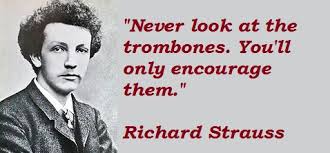
Richard Strauss was born June 11, 1864 in Munich, Germany. He died on September 8, 1949 in Garmisch-Partenkirchen, Germany. He was a German composer and conductor known for his intense emotionalism in his symphonic poems. He characterized himself as ‘composer of expression’ which is born out in his colorful orchestration. In his operas he employed Wagnerian principles of music drama, but in a more compact form.

Strauss was composing by the age of six, having received basic instruction from his father, a virtuoso horn player. This was, however, his only formal training. The elder Strauss instilled in his son a love of the classical composers, and his early works follow in their path. Strauss’ first symphony premiered when he was seventeen, his second (in New York) when he was twenty. By that time, Strauss had directed his energies toward conducting, and in 1885 he succeeded Hans von Bülow as conductor of the orchestra in Meiningen. For the next forty years, he conducted orchestras in Munich, Weimar, Berlin and Vienna.

As a conductor, Strauss had a unique vantage point from which to study the workings of the orchestra. From this vantage point he developed a sense for orchestration that was unrivaled. He immediately put this sense to use in a series of orchestral pieces that he called “tone poems”, including Macbeth, Don Juan, Tod und Verklärung, Till Eulenspeigels lustige Streiche and Don Quixote. These works are intensely programmatic, and in the last two, Strauss elevated descriptive music to a level not approached since the techniques of text painting during the Renaissance. He also used his knowledge of orchestral techniques to produce a revised version of Hector Berlioz’s important orchestration treatise; this edition remains a standard to this day.

After the turn of the century, Strauss began to shift his focus to opera. With his principal librettist Hugo von Hofmannsthal, he created two forward-looking and shocking works: Salome, based on Oscar Wilde’s controversial play, andElektra, Hoffmannsthal’s version of the classical Greek tragedy. In these works, the intense emotions and often lurid narrative elicited a more daring and demanding musical language full of extreme chromaticism and harsh timbres. But with his next opera, Der Rosenkavalier, Strauss seems to have left this aside, turning to a more focused, almost neoclassical approach in his later works. With this, Strauss settled into a comfortable place in German musical society, perhaps too comfortable, given his willingness to acquiesce to the artistic maneuverings of the rising Nazi regime. In the end, he broke with the Nazis on moral grounds, and died virtually penniless in the aftermath of the Second World War.

Musical Examples:

  • Don Quixote
  • Suite from Le Bourgoise gentilhomme, Op.60, Prelude
  • Also Sprach Zarathustrahttps://youtu.be/3rzDXNQxjHs

    One of Richard Strauss’ most popular works is Also Sprach Zarathustra since it was made popular in the 1968 Stanley Kubrick science-fiction movie 2001: A Space Odyssey.

    Also sprach Zarathustra, Op. 30 (Thus Spoke Zarathustra or Thus Spake Zarathustra) is a tone poem by Richard Strauss, composed in 1896 and inspired by Friedrich Nietzsche’s philosophical treatise of the same name. The composer conducted its first performance on 27 November 1896 in Frankfurt. A typical performance lasts half an hour.

    The work has been part of the classical repertoire since its first performance in 1896. The initial fanfare — entitled “Sunrise” in the composer’s program notes — became particularly well known to the general public due to its use in Stanley Kubrick’s 1968 film 2001: A Space Odyssey, and as the theme music of the Apollo program. The fanfare has also been used in many other productions.

    The piece starts with a sustained double low C on the double basses, contrabassoon and organ. This transforms into the brass fanfare of the Introduction and introduces the “dawn” motif (from “Zarathustra’s Prologue”, the text of which is included in the printed score) that is common throughout the work: the motif includes three notes, in intervals of a fifth and octave, as C–G–C (known also as the Nature-motif). On its first appearance, the motif is a part of the first five notes of the natural overtone series: octave, octave and fifth, two octaves, two octaves and major third (played as part of a C major chord with the third doubled). The major third is immediately changed to a minor third, which is the first note played in the work (E flat) that is not part of the overtone series.

    “Of Those in Backwaters” (or “Of the Forest Dwellers”) begins with cellos, double-basses and organ pedal before changing into a lyrical passage for the entire section. The next two sections, “Of the Great Yearning” and “Of Joys and Passions”, both introduce motifs that are more chromatic in nature.

    “Of Science” features an unusual fugue beginning in the double-basses and cellos, which consists of all twelve notes of the chromatic scale. It is one of the very few sections in the orchestral literature where the basses must play a contra-b (lowest b on a piano). “The Convalescent” acts as a reprise of the original motif, and ends with the entire orchestra climaxing on a massive chord. “The Dance Song” features a very prominent violin solo throughout the section. The end of the “Song of the Night Wanderer” leaves the piece half resolved, with high flutes, piccolos and violins playing a B major chord, while the lower strings pluck a C.

    One of the major compositional themes of the piece is the contrast between the keys of B major, representing humanity, and C major, representing the universe. Because B and C are adjacent notes, these keys are tonally dissimilar: B major uses five sharps, while C major has none.

Works:

  • Orchestral music, including symphonic poems: Macbeth (1888), Don Juan (1888-1889), Tod und Verklärung (Death and Transfiguration, 1889), Till Eulenspiegels lustige Streiche (Till Eulenspiegel’s Merry Pranks, 1895), Also sprach Zarathustra (Thus Spake Zarathustra, 1896), Don Quixote (1897) and Ein Heldenleben (A Hero’s Life, 1898); 2 symphonies (Domestic, 1903 and Alpine, 1915); 3 concertos (2 for horn, 1 for oboe)
  • 15 operas, including Salome (1905), Elektra (1909), Der Rosenkavalier (The Cavalier of the Rose, 1911), Ariadne auf Naxos (1912) and Die schweigsame Frau (The Silent Woman, 1935)
  • Choral works (with and without orchestra), chamber works

     Strauss’s birthday

     anniversary of Strauss’s death

     Read quotes by and about Strauss


September 8 ~ Today in Music History

today

OCMS Fairfax County First Day of School


OCMS 1841 ~ Antonin Dvorák, Czech composer
More information about Dvorák

• 1849 ~ Richard Strauss, German composer and conductor, died. Strauss wrote in nearly every genre, but is best known for his tone poems and operas.
More information about Strauss

• 1897 ~ Jimmie (James Charles) Rodgers,‘The Blue Yodeler’, Country Music Hall of Famer, First country singer to be in a film

• 1932 ~ Patsy Cline (Virginia Petterson Hensley), Country Music Hall of Famer, American country-music singer

• 1934 ~ Peter Maxwell Davies, British composer

• 1935 ~ The Hoboken Four, featuring Frank Sinatra as lead singer, appeared on Major Bowes Amateur Hour on WOR radio. The group won the competition held at the Capitol Theatre in New York City.

• 1941 ~ Dante Drowty, Singer with Dante and The Evergreens

• 1941 ~ Harry James and his orchestra recorded Misirlou for Columbia Records.

• 1942 ~ Brian Cole, Bass, singer with The Association

Happy Labor Day!

laborday1

Labor Day is a United States federal holiday observed on the first Monday in September celebrating the economic and social contributions of workers.

The first Labor Day holiday was celebrated on Tuesday, September 5, 1882, in New York City, in accordance with the plans of the Central Labor Union. The Central Labor Union held its second Labor Day holiday just a year later, on September 5, 1883.

In 1884 the first Monday in September was selected as the holiday, as originally proposed, and the Central Labor Union urged similar organizations in other cities to follow the example of New York and celebrate a “workingmen’s holiday” on that date. The idea spread with the growth of labor organizations, and in 1885 Labor Day was celebrated in many industrial centers of the country.

It was first nationally recognized in 1894 to placate unionists following the Pullman Strike. With the decline in union membership, the holiday is generally viewed as a time for barbecues and the end of summer vacations – and time to go back to school in Fairfax County – and piano lessons!

September 7 ~ Today in Music History

today


• 1920 ~ Al Caiola, Musician, guitarist

• 1921 ~ Arthur Ferrante, Pianist, duo: Ferrante and Teicher

• 1924 ~ Hugh Aitkin, American composer

• 1929 ~ “Sonny” (Theodore) Rollins, American jazz tenor saxophonist, composer, awarded Guggenheim Fellowship in 1972

• 1936 ~ Buddy Holly (Charles Hardin Holley), American rock-and-roll singer and guitarist with The Crickets

• 1940 ~ Artie Shaw and his orchestra recorded Temptation on the Victor label.

• 1951 ~ Chrissie Hynde, Guitarist, singer, songwriter with The Pretenders

• 1972 ~ Curtis Mayfield earned a gold record for his Superfly album, from the movie of the same name. The LP contained the hits, Freddie’s Dead and Superfly. Both songs were also million sellers.

• 1975 ~ Steve Anderson set a record for picking a guitar. Anderson, 22, picked for 114 hours, 7 minutes, breaking the old record by over four hours.

• 2001 ~ Igor Buketoff, an American conductor who specialized in Russian music and contemporary opera, died at the age of 87. Buketoff was best known for his orchestration of the first act of Rachmaninoff’s unfinished opera, Monna Vanna. Buketoff led the Philadelphia Orchestra in the world premiere in 1984. Buketoff also was recognized for restoring folk texts to Tchaikovsky’s 1812 Overture. Buketoff earned bachelor’s and master’s degrees at the Juilliard School, and later directed the choral departments there and at Adelphi College and Columbia University. He won the first Alice Ditson Award for outstanding American conductors in 1941. He won it again in 1967. In 1959, Buketoff established the World Music Bank – now called the International Contemporary Music Exchange – to promote modern orchestral music.

• 2001 ~ Stelios Kazantzidis, a legendary Greek folk singer with a career spanning more than half
a century, died at the age of 70. His popularity crossed generations and his music reflected the joys, sorrows and battles of Greece, according to MBI, his recording company. Kazantzidis’ popularity was carried beyond Greek borders by immigrants to such countries as the United States, Canada and Australia, which he often visited. He abandoned the night club scene in 1965 and would only have contact with the public through recordings after that. During his prolific career, he released more than 120 albums. In a letter to the singer shortly before his death, Culture Minister Evangelos Venizelos said Kazantzidis occupied an “unrivaled” chapter in the history of Greek music.