May 12 ~ Today in Music History

today


• 1739 ~ Jan Krtitel Vanhal, composer

• 1754 ~ Franz Anton Hoffmeister, composer

• 1755 ~ Giovanni Battista Viotti, composer

OCMS 1871 ~ Jules Emile Frédéric Massenet, French composer
More information about Massenet

• 1845 ~ Gabriel Fauré, French composer and organist
More information about Fauré

• 1871 ~ Daniel-Francois-Esprit Auber, French opera composer, died. He was best known for developing opera containing spoken as well as sung passages.

• 1884 ~ Czech composer Bedrich Smetana, composer of operas including “The Bartered Bride” and “The Brandenburgers in Bohemia”, died.
More information about Smetana

• 1909 ~ Margaret Harshaw, American opera singer and voice teacher

• 1921 ~ (Otis W.) Joe Maphis, Country singer with wife, Rose Lee

• 1928 ~ Burt Bacharach, American pianist and Oscar-winning composer. With Hal David, Raindrops Keep Fallin’ on My Head, Tony award for score for Promises, Promises; What the World Needs Now, Walk on By, Close to You, I Say a Little Prayer, Do You Know the Way to San Jose? Oscar-winning team with his wife, Carol Bayer Sager

• 1943 ~ David Walker, Keyboards with Gary Lewis & The Playboys

• 1946 ~ Ian McLagan, Keyboards

• 1955 ~ Gisele MacKenzie played a singer on the NBC-TV program, Justice. She introduced her soon-to-be hit song, Hard to Get. The song went to number four on the Billboard pop music chart by September.

• 1971 ~ The Rolling Stones’ Mick Jagger married Bianca Perez Morena de Macias.

• 1977 ~ The Eagles earned a gold record for the hit, Hotel California. The award was the second of three gold record singles for the group. The other million sellers wereNew Kid in Town and Heartache Tonight. Two number one songs by The Eagles — Best of My Love and One of These Nights — didn’t quite make the million-seller mark.

• 1985 ~ Lionel Richie received an honorary Doctor of Music degree from Tuskegee Institute in Alabama (his alma mater). Richie had put 14 hits on the pop charts in the 1980s, including one platinum smash, Endless Love (with Diana Ross) and four gold records (Truly, All Night Long, Hello and Say You, Say Me). All but one song (Se La) of the 14 charted made it to the top ten.

• 2001 ~ Perry Como, the crooning baritone barber famous for his relaxed vocals, cardigan sweaters and television Christmas specials, died after a lengthy illness. He was 87.
More information about Como
Expose children to classical music whether they like it or not, says Nicola Benedetti

classical-music

All children should be compelled to learn about classical music in the same way they must do maths and science, Nicola Benedetti has argued.

Benedetti, the award-winning violinist, said all youngsters should be exposed to classical music, whether they like it or not.

Saying the concept of letting children do exactly what they want in other areas of education is “alien”, she admitted she is “bemused” by the current approach to teaching art and culture.

“It actually really upsets me when people say: ‘Kids hate listening to a symphony, why would we do that to them?’” she said, in an interview with Scotland on Sunday.

“I think, hang on a minute, if you were to turn round and say to a kids: ‘Would you like to play video games or would you like to have a maths lesson?’ Of course, they’re going to go for the video games.”

Benedetti is involved with the Sistema Scotland music education and its Big Noise Orchestra.

She added: “Needing the child’s approval for what they do in school is just such an alien concept when you’re talking about maths, science, history or English.

“But, suddenly, when you bring music into the mix, it’s: ‘Oh no, we can’t show them anything that they don’t instantly love because that would be like forcing children into something that they don’t want to do.’

“It just bemuses me.”

Read more at Expose children to classical music whether they like it or not, says Nicola Benedetti – Telegraph.

May 11 ~ Today in Music History

today

• 1885 ~ Joseph “King” Oliver, American jazz cornetist and bandleader

https://youtu.be/X46-Y71klFo

• 1888 ~ Irving Berlin, Russian-born American songwriter and lyricist
More information about Berlin
Grammy winner

https://youtu.be/1G05jCG866c

• 1894 ~ Martha Graham, Modern dancer: Denishawn dance school and performing troupe, Graham company, established school of modern dance at Bennington College; choreographer

• 1895 ~ William Grant Still, American composer
More information about Still

• 1927 ~ The Academy of Motion Picture Arts and Sciences was founded; although the first Oscars were not presented for several years after its founding.

• 1931 ~ Dick Garcia, Guitarist

• 1941 ~ Eric Burdon, Singer with The Animals

• 1943 ~ Les (John) Chadwick, Bass with Gerry & The Pacemakers

• 1965 ~ Liza Minnelli opened in Flora the Red Menace. The musical ran for only 87 performances at the Alvin Theatre.

https://youtu.be/YddiIfAS8h8

• 1970 ~ The Chairmen of the Board received a gold record for the hit, Give Me Just a Little More Time. The Detroit group recorded three other songs in 1970, with moderate success.

• 1979 ~ Lester Flatt passed away.  He was a bluegrass guitarist and mandolinist, best known for his collaboration with banjo picker Earl Scruggs in the The Foggy Mountain Boys.

• 2000 ~ Zydeco trumpeter Warren Ceasar, who recorded three solo albums and performed with the legendary Clifton Chenier, died of a brain aneurysm. He was 48. Ceasar, who was born and raised in Basile, was the nephew of the late internationally known fiddler, Canray Fontenot. In addition to his role as frontman for Warren Ceasar and the Zydeco Snap Band, Ceasar also played with Clifton Chenier, who is known as “The Grandfather of Zydeco.” Ceasar also performed with soul greats Isaac Hayes and Al Green.

May 10 ~ Today in Music History

today


OCMS 1855 ~ Anatoli Liadov, Russian composer
More information about Liadov

• 1876 ~ Richard Wagner’s Centennial Inaugural March was heard for the first time at the Centennial Exposition in Philadelphia, PA. Wagner did just fine for creating the magnificent work. He received a paycheck of $5,000. In 1876 dollars, that was quite a lot of money.

• 1888 ~ Max Steiner, composer and conductor, born. Best known for his film scores for such films as “The Informer” and “Now Voyager” for which he won academy awards and Gone With The Wind.

• 1899 ~ Fred Astaire (Austerlitz), Dancer

https://youtu.be/wTiEJqZMW7E

• 1899 ~ Dmitri Tiomkin, Conductor, composer: film scores such as “High Noon.”

• 1909 ~ Mother Maybelle Carter (Addington), Played melody on bass strings of guitar, rhythm on treble, singer with The Carter Family

• 1916 ~ OCMS Milton Byron Babbitt, American composer and theorist
More information on Babbitt

• 1935 ~ Larry Williams, Singer

• 1940 ~ Jimmy Dorsey and his orchestra recorded the classic, Perfidia, for Decca Records. The song would later be a hit for The Ventures (1960).

• 1936 ~ Gary Owens, DJ, TV and radio host

• 1938 ~ Henry Fambrough, Singer with The Spinners

• 1941 ~ Danny Rapp, Singer with Danny & The Juniors

• 1945 ~ Graham Gouldman, Musician: guitar, singer, songwriter

• 1946 ~ Donovan (Leitch), Scottish folk singer

• 1946 ~ Dave Mason, Songwriter, musician, singer

• 1951 ~ Frank Sinatra teamed with Axel Stordahl’s orchestra and on Columbia Records.

• 1963 ~ The Rolling Stones produced their very first recordings this day. The session included Come On and I Wanna Be Loved. The Stones would make it to the American pop music charts in August, 1964.

• 1974 ~ Just Don’t Want to Be Lonely earned a gold record for the group, The Main Ingredient. The trio began as the Poets in 1964. Cuba Gooding, Sr. is heard singing lead.

• 2000 ~ Margaret Harris, a theater designer whose work helped modernize staid, gilt- laden English theater in the 1930s, died at the age of 95. Harris began attending theater as a teen-ager with her sister and a friend. They sketched the actors they saw on stage, sending the drawings to each theater. One sketch caught the eye of actor John Gielgud, who suggested the trio design the costumes for a production of “Romeo and Juliet” he planned to direct. Adopting the name Motley, the three went on to design several productions for Gielgud, including 1932’s landmark “Richard of Bordeaux,” “The Merchant of Venice” and “Hamlet.” Harris also worked on Broadway and in Hollywood, designing an American production of “Romeo and Juliet” starring Laurence Olivier and Vivien Leigh and working on the sets for the film version of the musical “Oklahoma!” Queen Elizabeth II made Harris a member of the Order of the British Empire in 1975. In 1997, she received a special Olivier award, Britain’s equivalent of Broadway’s Tony.

Why Work on Music Theory?

Music_Theory


Students at the O’Connor Music Studio know that music theory is always a part of lessons.  I strongly believe that theory is needed so that students understand what they are playing and why.

To me, theory work is just as important as playing.  A firm knowledge of musical structure makes playing everything easier.

Music knowledge learned through piano lessons transfers easily to other  musical activities.  Students in Fairfax County Public Schools, students learn to play recorder.  Students are sometimes surprised to learn that they already know all the notes – from their piano lessons!

When you sing in a choir, harmonize with Sweet Adelines, play an instrument in your school or community band/orchestra, join your church’s handbell choir (note:  Pender UMC has an excellent Handbell program), teach yourself guitar – theory will help in every instance. By learning to read, write, and understand this musical language, many more musical opportunities will be made available the rest of your life.

Most piano methods come with a theory book that matches page by page what concepts are being learned in the lesson books.  I actually recommend that students do the theory first when they get home, while the concepts are still fresh in their minds.

If the student is not in a piano method, I’m starting to use the Theory Time series.  Book One covers music alphabet, introduction to keyboard and staff, stem rule, steps & skips on a keyboard and staff, repeated notes, dynamics, treble clef lines & spaces, bass clef lines & spaces, quarter note & rest, half note & rest, whole note & rest, dotted half note, bar lines, double bar line, measures, time signatures, rhythm drill, vocabulary, ear training and a review test. Free ear training videos for each ear training exercise are hosted on the Theory Time YouTube channel. The Grade One workbook is appropriate for beginning 1st, 2nd or 3rd grade students. This workbook includes 51 pages, 13 lessons and 8 Fun Sheets.

For adults and more advanced students, I have a copy of All About Music Theory: A Fun and Simple Guide to Understanding Music which can be used as a review or a “try before buy”.

Stop procrastinating and go do your theory!

May 9 ~ Today in Music History

today


• 1914 ~ Carlo Maria Guilini, Italian conductor

• 1914 ~ Hank Snow (Clarence Eugene), Canadian-born American country-music singer, guitarist and songwriter, Country Music Hall of Fame

• 1937 ~ Sonny Curtis, Guitarist with Buddy Holly & The Crickets, songwriter

• 1939 ~ Nokie Edwards, Guitarist with The Ventures

• 1939 ~ Ray Eberle recorded Stairway to the Stars with the Glenn Miller Orchestra for Bluebird records.

• 1941 ~ Pete Birrell, Guitarist with Freddie & The Dreamers

• 1942 ~ Tommy Roe, Singer, songwriter

• 1944 ~ Richie Furay, Musician with Poco and Buffalo Springfield

• 1945 ~ Steve Katz, Record producer; musician: guitar, harmonica, singer with Blood, Sweat and Tears

• 1949 ~ Billy Joel, Grammy Award-winning American rock singer, songwriter and pianist Inducted into the Rock and Roll Hall of Fame on 3/15/99
More information on Joel

• 1962 ~ The Beatles signed their first recording contract. George Martin was hired to be the group’s producer and the band would record for EMI Parlophone.

• 1964 ~ Hello Dolly! became the nation’s top pop record. The milestone put Louis Armstrong on the Billboard music chart in the top spot for the first time in his 41-year music career. Later, ‘Satchmo’ was cast in the movie version of Hello Dolly!

https://youtu.be/HoVyjK-N4ZU

• 1965 ~ Vladimir Horowitz played his first public concert in 12 years at Carnegie Hall in New York City. The audience applauded the piano virtuoso with a standing ovation that lasted for 30 minutes.

https://youtu.be/9Vt41yWC8Xo

• 1991 ~ Rudolph Serkin passed away.  He was a Bohemian-born pianist who was widely regarded as one of the greatest Beethoven interpreters of the twentieth century.

• 2001 ~ James Myers, whose two-minute, eight-second tune Rock Around the Clock is considered the granddaddy of all rock ‘n’ roll songs, died of leukemia. He was 81. The song was No. 1 for eight weeks and went on to sell 22 million copies worldwide. It has been recorded by more than 500 artists, from Mae West to the Sex Pistols, and has been used in more than 40 movies. Myers, who also wrote under the name Jimmy DeKnight, penned more than 300 songs and had bit parts in movies and TV shows, but Rock Around the Clock remained his most famous work.

https://youtu.be/HLOniKqfoX0

Liszt is dead, long live the piano recital

On Monday, Google’s homepage ran a picture to celebrate the 360th birthday of Bartolomeo Cristofori, inventor of the piano and keeper of instruments for the Medicis in Florence. The instrument Cristofori invented was originally called a “harpsichord with soft and loud” even though the distinction between the two is large (the harpsichord produces sound by plucking strings, the piano by striking them with a hammer). Only three of the newfangled instruments he made – all of them dating from the 1720s – survive.

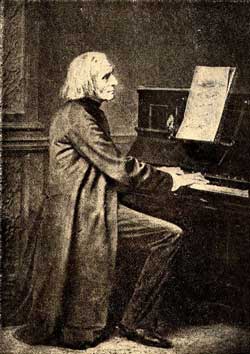
liszt-recitalMore than a century later the piano recital was devised. It was Liszt who first decided to have the whole stage to himself, and set the fashion for dispensing with the mixture of celebrities and supporting acts that had prevailed up to that time. As he wrote about his audacity to a friend: “Le concert, c’est moi!” And he called his appearance at the Hanover Square Rooms in London in June 1840 not a concert but a recital.

The composer-pianists of the day concentrated on their own works. Liszt set a marker in this regard, too, choosing music that ranged from Bach through Beethoven and up to Chopin. He set the pattern for playing from memory, and cemented the platform layout we know today by turning the then-conventional position of the instrument on the stage through 90 degrees. He was what we would now call a sex symbol as well as a star musician, and the new arrangement allowed the audience to see his impressive profile as well as to hear the instrument more clearly. The standards he set have survived without significant alteration right up to the present.

via Liszt is dead, long live the piano recital.

May 8 ~ Today in Music History

today


OCMS  1829 ~ Louis Moreau Gottschalk, American pianist and composer
Listen to Gottschalk’s music
More information on Gottschalk

• 1948 ~ Oscar Hammerstein I, Playwright, producer

• 1910 ~ Mary Lou Williams, American jazz pianist, composer and arranger

• 1911 ~ Robert Johnson, Blues Hall of Fame, singer, songwriter, guitarist, inducted into Rock and Roll Hall of Fame in 1986

• 1941 ~ Anita O’Day recorded Let Me Off Uptown on Okeh Records with Gene Krupa and his band.

• 1943 ~ Toni Tennille, Singer

• 1944 ~ Gary Glitter (Paul Gadd), Singer

• 1945 ~ Keith Jarrett, American jazz pianist and composer