A History of Piano Pedals

piano-pedal-diagrampiano-pedal


Piano pedals have existed for almost as long as the modern piano itself, but they had a rocky start. While the modern piano accepted most of its final touches, the evolution of the piano pedal continued.

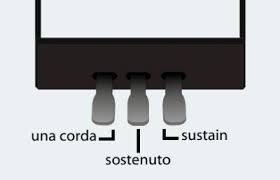
In 1722, the piano’s first tone-modifying mechanism came in the form of a hand stop, and was created by Father Piano himself: Bartolomeo Cristifori. The device positioned the hammers to strike only one piano string per key, which created a soft, relaxed timbre. But it was far from ideal; a spare hand was required to use it, meaning the pianist either repeatedly removed one hand from the keys, or practiced alongside a hand-stop operator. Thankfully, the mechanism was later modified to be operated by the knee, and became the predecessor to today’s una corda, or “soft,” pedal.

The next modification arrived soon after. Gottfried Silbermann — renowned European constructor of keyboard instruments — created a mechanism that lifted the dampers off of the strings, causing a reverb effect. This early sustain pedal had an advantage over most modern sustains: treble and bass notes could be controlled separately from one another; however, like the una corda, the sustain did not start off as a foot pedal; an impracticality which may have justified its early unpopularity. Today, the sustain is the most frequently used, and possibly the most favored, piano pedal.

Which brings us to the underdog: the sostenuto pedal. Created in the mid 1800s by Boisselot & Sons, it is by far the most misunderstood piano pedal. The sostenuto is constantly being replaced — or removed entirely — from its position as the middle pedal, and is only standard on an American grand. It allows certain notes to be “sustained” while other notes are left unaffected, and even piano leader Steinway saw potential in the pedal, opting to patent the idea three years after its début in 1844. But, surprisingly, the impressive effects of the sostenuto never caught on.

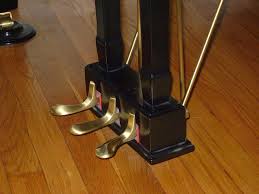
Alternative middle pedals have included practice rails, which muffle the notes for quiet practice; and the faux-sostenuto, which allows only the bass notes to resonate. Most modern pianos now have only two pedals, leaving the sostenuto –- one of the most unique and inspiring pedals –- to fade into antiquity.

via Piano Pedals – History of Piano Pedals.

https://youtu.be/ciR52_fccoQ

ABBA Piano Going on Sale!

dancing-queen


The piano that featured on many of ABBA’s greatest hits is going under the hammer next month in London, auctioneers Sotheby’s said.

The piano is estimated to fetch between £600,000 (R12.1-million) and £800,000 when it goes on sale on September 29.

Swedish pop foursome ABBA dominated the 1970s disco scene.

“The opening piano glissando from Dancing Queen is one of the most distinctive sounds of the 1970s and we are delighted to offer the actual instrument used by the legendary ABBA in their major recordings,” said Sotheby’s expert Philip W Errington.

“The piano itself is an instrument of real importance and with the added ABBA provenance we expect it will have worldwide appeal.”

It was built by Swedish musical instrument designer Georg Bolin for the US jazz pianist Bill Evans.

The New York Times described it in 1964 as a “space-age piano”.

It was bought by Stockholm’s Metronome Studios in 1967 and appeared on nearly all of ABBA’s recordings between 1973 and 1977.

“The Bolin Grand is one of a kind and was a great source of inspiration while working in the recording studio during the ABBA sessions,” said the group’s pianist Benny Andersson.

ABBA disbanded in 1983.

Famous pianos have earned huge sums at previous auctions.

In 2000, John Lennon’s Steinway upright piano, on which he composed Imagine, was bought for £1.67-million by the singer George Michael. The upright piano which featured in Rick’s Café Americain in the 1942 film Casablanca was sold in 2014 for $3.4-million (R44.6-million).

From http://www.timeslive.co.za/thetimes/2015/08/28/ABBA-piano-to-make-money-money-money

Golden Oldie: A Piano Spectacular for 80 fingers

Louise Schwartzkoff

From October 5, 2010

There will be $1.6 million worth of piano on stage at the City Recital Hall on Friday night. With their legs and lids removed for transport, eight Steinway grand pianos will be trucked to the venue.

There they will be reassembled on stage and tuned, ready for eight of Australia’s finest classical pianists.

In The Steinway Spectacular 16 hands and 80 fingers will play some of classical music’s greatest hits.

Conducted by Guy Noble, the pianists will work as an ensemble to perform works by composers such as Ravel, Saint-Saens and George Gershwin. ”It’s a very large affair,” says Noble. ”Logistically, it’s a nightmare.” The piano technician Ara Vartoukian will spend hours tuning the instruments.

For past concerts in Melbourne the process sometimes took all night. ”The pianos all, in essence, sound the same, so they have to be absolutely in tune with each other.”

Even after the most careful tuning, things can go awry.

The pianists – Anthony Halliday, Roger Heagney, Clemens Leske, Tamara Smolyar, Mikhail Solovei, Evgeny Ukhanov, Gerard Willems and Alexey Yemtsov – usually perform as soloists. Every now and again, Noble says, one of them ”goes rogue”.

”One will suddenly break out and play their own thing,” he says. ”I have to herd them back into the pride, glaring at them with eyes of death. It’s one of the hardest things I’ve ever had to conduct. It’s like herding cats.”

There is no repertoire for an ensemble of pianists, so Noble has created new arrangements.

His favourite is a rendition of the children’s staple Chopsticks. ”That just goes wild,” he says.

The segment titled So You Think You Can Play Scales is also a crowd pleaser. ”It’s like Piano Idol. People get voted off if they go off the rails.”

Other pieces will feature the organist Calvin Bowman and the soprano Shu-Cheen Yu. Bowman, who usually plays above the stage in a loft, will join the other performers on stage on an electronic organ.

”It’s a relief for him to be down on stage because he suffers terribly from vertigo,” Noble says. ”He’s been terrified in organ lofts all over Australia.”

More boisterous extravaganza than a recital for purists, the performance will appeal to an eclectic crowd.

”We get classical music lovers, as well as people who are just curious. It’s pure fun and enjoyment.”

The Steinway Spectacular is at the City Recital Hall on Friday.

From http://www.smh.com.au/entertainment/music/a-piano-spectacular-for-80-fingers-20101004-164ac.html

Luxury news round up

Spirio


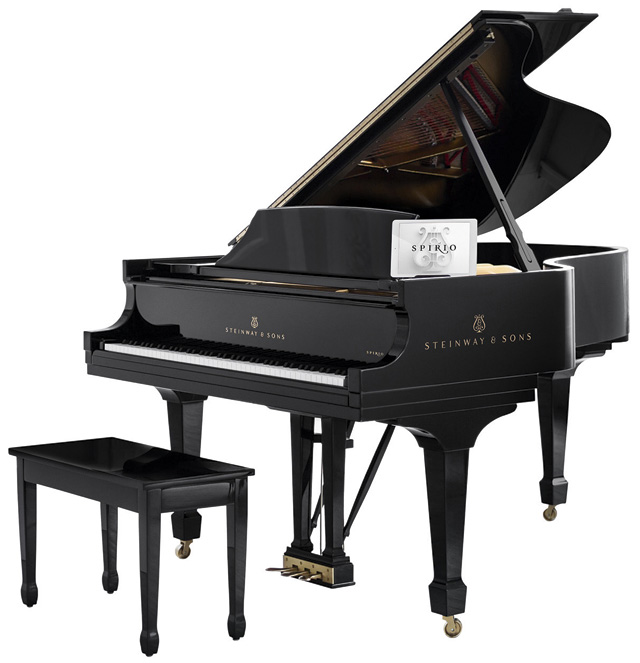
Renowned piano manufacturer Steinway has launched a self-playing piano. Programmed via its own iPad and linked up to play more than 1,700 different pieces of music, the Spirio high-resolution system will be offered exclusively on select Steinway grands. Able to replicate the virtuosity of the most talented of pianists, this player piano is bound to impress unsuspecting dinner guests. Spirio Model O, £77,150 (020 7487 3391, http://www.steinway.co.uk)

via Luxury news round up – May 2015 – Country Life.

Pianos in harmony with palace halls – ARTS

pianos-Istanbul

The pianos in Istanbul’s Dolmabahçe Palace, which hosted some 1 million people last year, draw great interest from local and foreign visitors for their magnificence and harmony with their surroundings.

National Palace guide Osman Nihat Bişgin said Dolmabahçe Palace was a Tanzimat (reform-era) palace, adding, “All features of the reform era are clearly seen in Dolmabahçe Palace. This process, which we call the Europeanization and westernization process, made western music enter Dolmabahçe Palace.”

He said the palace had a total of 12 pianos, and all of them had ornamentations suitable to the style and harmony of the palace.

Bişgin said the palace opened in 1856 and the pianos were brought there nearly at the same time. “The wives of sultans were taking piano education in the palace, particularly in the final years of the Ottomans. There are many pianos and none of them were inactive; all of them were being played,” he said.

He said most of the piano brands in the palace were Hertz, Pleyel, Gaveau and Erard, and that the number of grand pianos was less.

Speaking of a striking green piano in Zülvecheyn Hall on the upper floor of the palace, Bişgin said it was a classical Pleyel-brand palace piano.

“Since the magnificence and glory was dominant in the palace, the pianos draw our attention visually. Their sound is not very famous, but they are very important and famous visually,” he said.

Bişgin said Zülvecheyn Hall had gilded ornamentation on its white and beige ceiling, adding, “We see enormous harmony between the piano and the ceiling.”

He said the furniture in Dolmabahçe Palace was in its original place, and added, “We can say that the pianos belong to these halls. The pianos in the Zülvecheyn and Süfera halls were designed to add visual richness to halls like them. They are not generally played.”

Crystal piano and chair in the Glass Kiosk

As for the rare crystal piano in the Glass Kiosk, Bişgin said the following: “The Glass Kiosk is a big venue hidden behind the walls of the palace. Mustafa Kemal Atatürk greeted the public in this place. It is like a winter garden surrounded with glass. In harmony with this kiosk, there is a crystal piano. It is a Paris-made Gaveau piano. Its chair is crystal, too.”

Another piano in the palace is a plain black German-made Steinway. Bişgin said its sound was very strong and it was very valuable.

“It was produced as a Hamburg Steinway in 1912. Then the factory moved to the U.S. Accordingly, there were only five Steinway pianos made in Germany. This is one of them. Its estimated price is 200,000 euros. It also has the emblem of the sultan Abdulmecid,” Bişgin added.

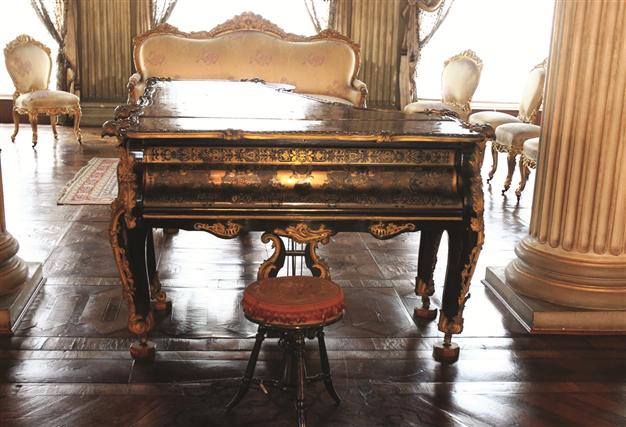
Speaking of the piano, which was used during the acceptance of ambassadors in the Süfera Hall, Bişgin said, “Süfera is the plural of the word sefir [ambassador]. This hall was created to address foreigners. The furniture is gold-plated; the ceiling is the same. There is a boulle-work piano here to show the beauty of metal and gold. This piano is wonderful for decoration.”

More pictures at Pianos in harmony with palace halls – ARTS.

Handmade instrument donated to Black Hills State

steinway-new

A Steinway Model-B is the new addition to Black Hills State’s Meier Recital Hall.

The nearly $100,000 piano was fully funded by donations, including Rachel Headley, the Science, Technology, Engineering & Mathematics liaison to Academic Affairs at BHSU.

The university donors purchased the 7-foot handmade instrument from Black Hills Piano Gallery in Rapid City.

Gallery owner Tony Thomas believes the Meier Recital Hall is the perfect home for a Steinway.

“That hall cries for the best possible sound,” he said. “The Meier Hall is just a wonderful hall and they have a great faculty to provide good instruction to the students there.”

Thomas, a musician himself, understands the decision of purchasing a top-of-the-line instrument.

“Anytime you have a good hall that provides that kind of acoustics, Steinway is the choice of 98 percent of concert artists on stage. That’s the sound that they want to hear. You can head all of the textures of tunes, it’s beautiful.”

Black hills state received the handcrafted piano Monday afternoon, with an unveiling ceremony planned for that evening.

via Handmade instrument donated to Black Hills State | KOTATV.com Rapid City, Black Hills, So Dak. Gillette Sheridan KOTA Territory News.

Piano Pedals – History of Piano Pedals

piano-pedal-diagram piano-pedal

Piano pedals have existed for almost as long as the modern piano itself, but they had a rocky start. While the modern piano accepted most of its final touches, the evolution of the piano pedal continued.

In 1722, the piano’s first tone-modifying mechanism came in the form of a hand stop, and was created by Father Piano himself: Bartolomeo Cristifori. The device positioned the hammers to strike only one piano string per key, which created a soft, relaxed timbre. But it was far from ideal; a spare hand was required to use it, meaning the pianist either repeatedly removed one hand from the keys, or practiced alongside a hand-stop operator. Thankfully, the mechanism was later modified to be operated by the knee, and became the predecessor to today’s una corda, or “soft,” pedal.

The next modification arrived soon after. Gottfried Silbermann — renowned European constructor of keyboard instruments — created a mechanism that lifted the dampers off of the strings, causing a reverb effect. This early sustain pedal had an advantage over most modern sustains: treble and bass notes could be controlled separately from one another; however, like the una corda, the sustain did not start off as a foot pedal; an impracticality which may have justified its early unpopularity. Today, the sustain is the most frequently used, and possibly the most favored, piano pedal.

Which brings us to the underdog: the sostenuto pedal. Created in the mid 1800s by Boisselot & Sons, it is by far the most misunderstood piano pedal. The sostenuto is constantly being replaced — or removed entirely — from its position as the middle pedal, and is only standard on an American grand. It allows certain notes to be “sustained” while other notes are left unaffected, and even piano leader Steinway saw potential in the pedal, opting to patent the idea three years after its début in 1844. But, surprisingly, the impressive effects of the sostenuto never caught on.

Alternative middle pedals have included practice rails, which muffle the notes for quiet practice; and the faux-sostenuto, which allows only the bass notes to resonate. Most modern pianos now have only two pedals, leaving the sostenuto –- one of the most unique and inspiring pedals –- to fade into antiquity.

via Piano Pedals – History of Piano Pedals.


https://youtu.be/ciR52_fccoQ

‘Seymour’: Ethan Hawke Makes an Introduction

sbernstein

Seymour Bernstein might have ranked alongside such classical pianists as Alfred Brendel and Van Cliburn. His recitals were glowingly reviewed and he had a highly supportive patron. Yet, at the significant age of 50, he voluntarily withdrew from the world of public performance to concentrate on teaching.

When it comes to piano technique and music theory, he clearly has much to offer. But he also has insight into how one best pursues an artistic career in general, or at least that is what one future Oscar nominee thought when he happened to meet Bernstein at a dinner party. The music teacher gets a low-key but satisfying ovation in Ethan Hawke’s documentary profile, “Seymour: An Introduction.”

Evidently, Hawke found in Bernstein an empathetic counselor-guru who could well understand his bouts of stage fright and the general career uncertainty that was plaguing him. Perhaps he was also frustrated about that film he had spent over 10 years on, but had yet to come out. Regardless, Bernstein had a knack for saying reassuring things.

In a variety of master classes and private lessons, we observe Bernstein at work. He is indeed a calm and constructive instructor, but also firm and specific. If you have the talent, he will refine it. Should you doubt it, several of his former students, including pianists Joseph Smith and Kimball Gallagher, offer their reminiscences and insights into Bernstein’s lasting influence on their careers.

For his documentary directorial debut, Hawke was not out to rake any muck. While not exactly hagiography, his “Introduction” is unflaggingly nice and polite. Fortunately, Bernstein is a New Yorker (albeit a really pleasant one), whose experienced, down-to-earth personality keeps it all real and grounded.

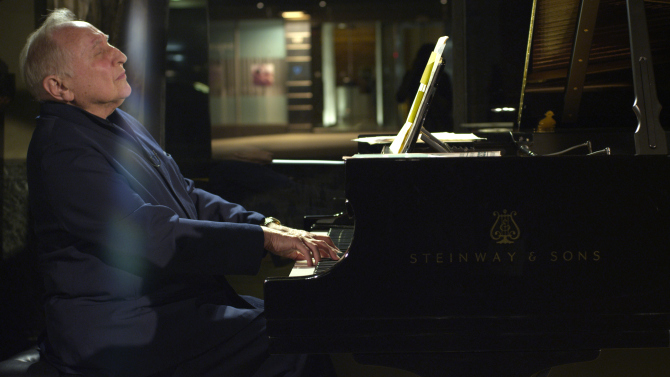
Anyone who knows pianos will not be surprised to see the prime placement for American Steinway in “Seymour.” As always, their concert models look and sound lovely. It is also cool to see that they still consider Bernstein a Steinway artist 30-some years after his last public performance. Fittingly, Hawke coaxes Bernstein into a return performance in the Steinway Rotunda on 57th Street, which naturally serves as the closing sequence for the film. Obviously, he still has his touch.

“Seymour: An Introduction” has surely received considerably more attention because of Hawke’s involvement than it otherwise would have, but that is a fine way for him to spend some of his accrued “Boyhood” and “Before Midnight” capital in a way that will generate further good will. It is a very refined and civilized film that will probably have a number of viewers checking out YouTube for Bernstein’s original compositions. (He has a number of them posted, including “The Hawke.”)

Respectfully recommended for classical connoisseurs, Hawke fans, and Steinway admirers, the Salingerishly titled “Seymour: An Introduction” opens this Friday, March 13, in New York at the IFC Center.

From ‘Seymour’: Ethan Hawke Makes an Introduction.

What George Gershwin’s Piano Teaches Us About Technology

gershwinpiano

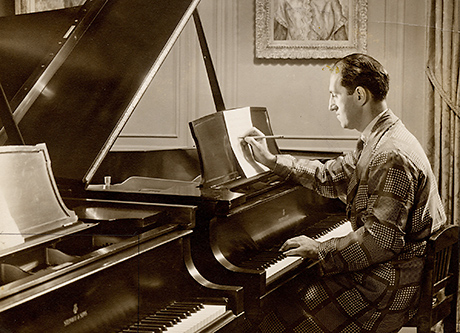
The Gershwin family donated the Steinway to the University as part of the George and Ira Gershwin initiative that is focused on research and study of the brothers’ music.

According to Marc Gershwin, George and Ira’s nephew, “I wanted the instrument to be accessible to the students and faculty who would be preserving the legacy of George and Ira Gershwin’s music… I’m delighted that the piano will once again be in regular use [by students and faculty], and am thrilled that it has been restored to performance condition.” [Two other Gershwin Steinways are in museums.]

From what I know of George he would have wanted it this way. Unlike some composers George was a gifted pianist. He had a rich social life and enjoyed playing his music for anyone who would listen.

There’s a lesson in that thought. If you have something valuable, sometimes it becomes more valuable – or at least more appreciated – when people can see it and use it. If you look at the piano as an instrument of technology that is it, then it makes sense that organizations give people access to technology – as well as resources – to do their work.

Adapted from  What George Gershwin’s Piano Teaches Us About Technology.

The Piano: A 300 Year Old Legaley [sic] Still Going Strong | Free Press Journal

steinway-old


The piano market is booming in India. Experts in the music instrument retail business say that the piano market is expected to see further growth over the next decade says NERITA D’CRUZ.

The lobby of a popular luxury hotel in South Mumbai resonates to the sound of melodious piano music, post 7.00 pm every evening. A Steinway boudoir grand piano stands in the middle of the lobby adding a classy look to the place. The pianist plays popular tunes which instantly lights up the ambience of the hotel, while guests at the hotel sit back in the lobby a few minutes longer to enjoy the music. Afterall, the piano is a classy music instrument known for its soothing and relaxing sound.

The hype associated with the piano is such that dealers in the piano retail business say that there has been a huge growth in the piano market in India over the last decade. “Over the last ten years there has been 300 to 400 percent growth in the piano market. The market share for pianos is high and there is expected to be a healthy growth for the next ten years,” says Anthony Gomes, Partner at B.X Furtados and Sons, which operates music instrument retail stores across India.

Read the entire article at  The Piano: A 300 Year Old Legaley Still Going Strong | Free Press Journal.