FREE Piano Practice Book Through Tuesday!

101


From the author:

Let’s face it. Most kids don’t want to practice the piano. And if they do find the time to practice, it’s usually because their parent kept nagging them. How frustrating!

Piano teachers are frustrated too. It’s nearly impossible to teach students new concepts when they don’t understand the old ones–all because of a lack of practice.

If you’re a parent in this situation, I have just the solution you’re looking for.

In this upbeat book, I share all the tips I’ve discovered in my 14 years of teaching piano. You’ll learn fun, practical ways to get your kids to the keyboard.

But this book goes one step further. I’ll show you easy ways to encourage better quality practice. Even if you’ve never had a music lesson in your life!

I wrote this book for kids of all ages. There are creative ideas for elementary students and also a section for teens.

There’s even a section for what to do if your child wants to stop taking piano lessons. That’s right, there is hope and my book will show you exactly how to get them interested in piano again.

Don’t be the kind of parent who sits on the sidelines waiting until their child wants to practice. Piano lessons are too expensive for you to let another “no-practice” day go by.

This book is your answer to get your child to the keyboard, have good quality practice and develop a life-long love of music.

Download for free here.

Summer Camp is Back. New Pop Song Released Each Week!

PM-SummerCamp

Summer is upon us which means BBQ cook outs, poolside hangouts and lots of ice cream! It also means less time by the piano, which means getting back into the groove of playing can be difficult come September.

We at JoyTunes want to keep you playing all summer long! To do so we are bringing back Summer Camp in Piano Maestro!

Each week, starting July 1st, we will release a new fun song for you to learn and play. Songs from artists such as

Colbie Caillat

Michael Buble

Florida Georgia Line and more!

Summer Camp songs can be found in the “summer camp” category in the Library.

Prizes will be rewarded to top players, we want to recognize your awesome playing!

Summer Camp is the perfect way to keep your piano practice up during this summer, as to not miss a beat.

The first song of Summer Camp will be Andy Grammer “Honey, I’m good”. Check out the (very cute!) video for the song to get a taste of what to look forward to!

via Summer Camp is Back. New Pop Song Released Each Week! | JoyTunes.

Shocking News for Piano Students: Note Reading Not the Best Way to Learn Piano?

So many piano students would love to be able to just sit down at the piano and play without having to read sheet music. At least, that’s according to pianist/composer Edward Weiss.

Weiss, owner and webmaster of Quiescence Music’s online piano lessons believes anyone can play the piano. And he does it all without note reading.

Weiss explains…

“Most piano students assume they must learn how to read music before they attempt anything creative. Nothing could be further from the truth. In fact, I encourage students to speak the language of music first through chords before learning how to read it.”

This ‘backwards’ approach isn’t really backwards at all according to this teacher. When asked why he teaches piano this way, Weiss says:

“We learn our native language first by speaking it. This is a normal and natural thing. Why not music? Note reading should be the last thing taught. As students become more and more comfortable with ‘speaking the language’ of music, the need to play what other’s have written and produced decreases.”

via Shocking News for Piano Students: Note Reading Not the Best Way to Learn Piano? | PRLog.

Sleep Through this Piece of Classical Music—It’s What the Composer Wants

Anyone who’s ever dozed in the middle of a concerto will appreciate the sweet sound of this news: A composer has created a piece for doing just that.

British artist Max Richter has written an eight-hour “lullaby” called “SLEEP.” The piece is not only meant to facilitate slumber, but the premiere audience is set to listen from the comfort of actual beds. The performance will take place in Berlin this September, and will last from midnight until 8 a.m.

For those who can’t make it to Germany, an eight-hour digital version will be released on September 4. It will be the longest piece of classical music ever recorded and the piece itself is the longest single piece of classical music ever written. An hour-long adaptation will also be released, should someone wish to have a conscious experience engaging with the music.

“SLEEP” is scored for piano, strings, vocals and electronics. While writing it, Richter consulted with American neuroscientist David Eagleman to learn about how the brain functions during sleep.

In a teaser for the piece on YouTube, Richter says, “It’s a piece of nighttime music and I’m hoping people will actually sleep through it.” He goes on to describe it as “an eight hour place to rest.”

via Sleep Through this Piece of Classical Music—It’s What the Composer Wants | Mental Floss.

Changing Piano Design #1

Bosendorfer-290-Imperial


 Ferruccio Busoni: 97 Keys

Any piano student can tell you that their instrument has a total of 88 keys, but that isn’t always the case. While working on transcriptions of Bach organ works for the piano, composer and pianist Ferruccio Busoni found that the standard keyboard was unsatisfactory.

In order to mimic the sound of the largest organ pipes, Busoni worked with Ludwig Bösendorfer of the eponymous piano factory to create an instrument with an extended the piano’s lower register. The result was the Model 290 Imperial, a 97-keyed piano that encompasses eight full octaves.

The first prototype was built in 1909.  Its extraordinary sound inspired major composers, including Bartók, Debussy and Ravel. Several music pieces composed require an Imperial to ensure that they are played true to the original.

Garrick Ohlsson once called it the “Rolls Royce of pianos.”

Steinway & Sons Marks A Historic Milestone

fibonaci

Steinway & Sons, manufacturer of the world’s finest pianos, has unveiled the company’s 600,000th piano, stunningly designed by master artisan, Frank Pollaro. Handcrafted using natural Macassar ebony, the end result is a feat of artistry, engineering and precision that celebrates this milestone for Steinway & Sons and demonstrates the company’s ongoing commitment to uncompromising craftsmanship.

Named “The Fibonacci,” the piano’s veneer features the iconic Fibonacci spiral made entirely from six individual logs of Macassar Ebony, creating a fluid design that represents the geometric harmony found in nature. The lines of The Fibonacci spiral on the top of the piano’s lid are projected down to its unique curved base. Synthetic ivory inlay adds a breathtaking effect to the design, which also features unique patinated bronze details. In the end, over 6,000 hours of work over a four-year period were devoted to the creation of The Fibonacci, from design to finish. The superior craftsmanship of the piano’s exterior is matched only by the unparalleled craftsmanship that is at the very core of all Steinway & Sons pianos.

According to Frank Pollaro, “Designing Steinway & Sons’ 600,000th piano was an honor and a challenge.  To me, knowing that this piano would become part of history meant that it had to be more than just a beautiful design, but also needed to visually convey a deeper message.” Pollaro added, “As I considered the number 600,000, the Fibonacci spiral came to mind. The way in which it continues to grow but stay true to its form is very much like Steinway & Sons over these many years. Combining the universal languages of music and mathematics suddenly made perfect sense.”

“Steinway & Sons has a long tradition of world-class craftsmanship, so as we began planning the 600,000th piano, it quickly became apparent that Frank Pollaro was the artist we needed for creative design and perfect execution. His ability to create unforgettable images through woodwork demonstrates artistry at the highest level, something that spoke to the very core of what this company is all about,” stated Darren Marshall, Chief Marketing Officer of Steinway & Sons. Adding, “The Fibonacci spiral is a representation of perfect proportions and natural beauty. Without a doubt, Frank captured those qualities in this piano, creating a work of art for the eyes and the ears.”

The Fibonacci is destined to become an important piece of cultural history, taking its place of honor amongst previous milestone models that the company has created. The 100,000th was originally given to the United States White House and is now part of the permanent collection at the Smithsonian Institute in Washington D.C., while the 300,000 piano currently resides in the East Room of the White House.

In April The Fibonacci was previewed during a special VIP reception at Steinway & Sons’ new showroom in Beverly Hills, where the internationally celebrated Steinway Artist, Lang Lang, had the honor of being the first artist to perform on the piano. This June The Fibonacci will travel to the United Kingdom, where it will be showcased at the 2015 Masterpiece London art fair.

The Fibonacci is a Steinway & Sons Model D piano, nine foot concert grand, priced at $2.4 million. In addition to the original 600,000th version, Steinway & Sons will create up to six exclusive, limited edition Model B pianos (6’10.5″) inspired by the same design.

via Steinway & Sons Marks A Historic Milestone With The Unveiling Of The… — NEW YORK, June 15, 2015 /PRNewswire/ —.

WATCH: Famous Jingles Performed on a Piano Using The Products

Musician and artist Grant Woolard has created this brilliant video where he performs 25 famous commercial jingles on a piano using the brand packaging or actual product relating to each earworm.

From the YouTube description of the video: “Remember those product jingles you could never get out of your head? I’ve woven together 25 of the most famous tunes here.”

via WATCH: Famous Jingles Performed on a Piano Using The Products.

Smale Riverfront Park: Oinkithopter, foot piano opening soon

foot-piano


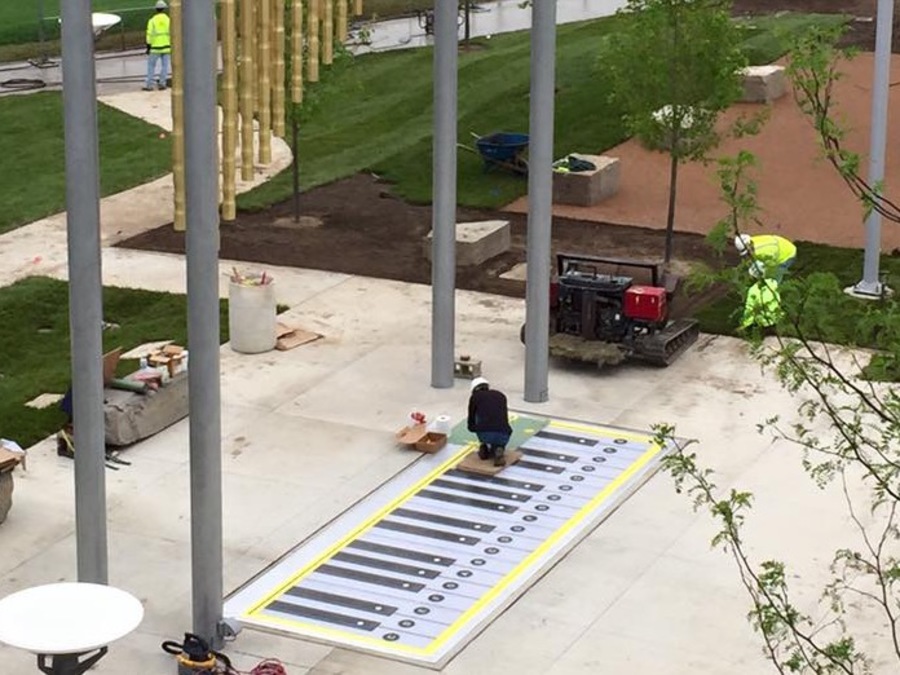
In a nearly 14-minute video released Tuesday, Smale Park project manager Dave Prather showed off that history and some of the more fun features opening soon — the “Big”gest of all probably being the giant outdoor foot piano. (Yeah, like that one from the Tom Hanks movie .)

The foot piano, created by Verdin Bell , has 32 individual chimes overhead with two and a half octaves. It’s part of the P&G go Vibrantscape, designed for people to get active in the park.

“So it’s not only a feature you can interact with, but it’s also a musical instrument,” Prather said. “Two or three can work together and play music.”

Putting final touches on the foot piano. Image courtesy Cincinnati Park Board.

Or, staff can plug in a keyboard to play it. The chimes will sound every quarter-hour and on the hour to mark the time, Prather said.


via Smale Riverfront Park: Oinkithopter, foot piano opening soon – Story.

Luxury news round up

Spirio


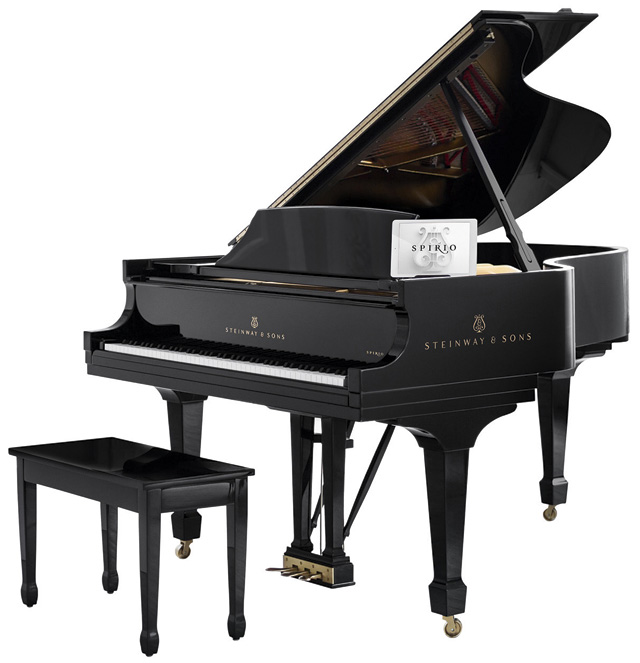
Renowned piano manufacturer Steinway has launched a self-playing piano. Programmed via its own iPad and linked up to play more than 1,700 different pieces of music, the Spirio high-resolution system will be offered exclusively on select Steinway grands. Able to replicate the virtuosity of the most talented of pianists, this player piano is bound to impress unsuspecting dinner guests. Spirio Model O, £77,150 (020 7487 3391, http://www.steinway.co.uk)

via Luxury news round up – May 2015 – Country Life.

The Science of Music with Josh Groban | StarTalk Radio Show by Neil deGrasse Tyson

There’s more to a song than meets the ear, as Neil deGrasse Tyson finds out when he interviews singer/songwriter/producer Josh Groban. Josh shares how he got started playing his family’s electronic Casio piano while he was still in diapers, and whether he was a science geek in school.

In studio, concert pianist and MIT Lecturer in Music, Elaine Kwon, and co-host Chuck Nice add their voices to the chorus to help us hear the science woven into the songs. You’ll learn how artists breathe life into their music, and about the qualitative difference between human generated and automated music.

Explore the importance of the acoustics of a performance space, the effect music has on people, the difference between melody and harmony, the ranges the human voice is capable of, and which was more important, Charlie Parker’s personal style or his sax.

Plus, Neil and Josh discuss “acoustic panty removers”, Chuck admits to singing first soprano in his church choir, and we find out whether Rachmaninoff really had “big hands” and what rubato means.


via The Science of Music with Josh Groban | StarTalk Radio Show by Neil deGrasse Tyson.