Meet Charles Kester, Piano Entertainer

By Rick Runion
The Ledger

Published: Saturday, September 6, 2008

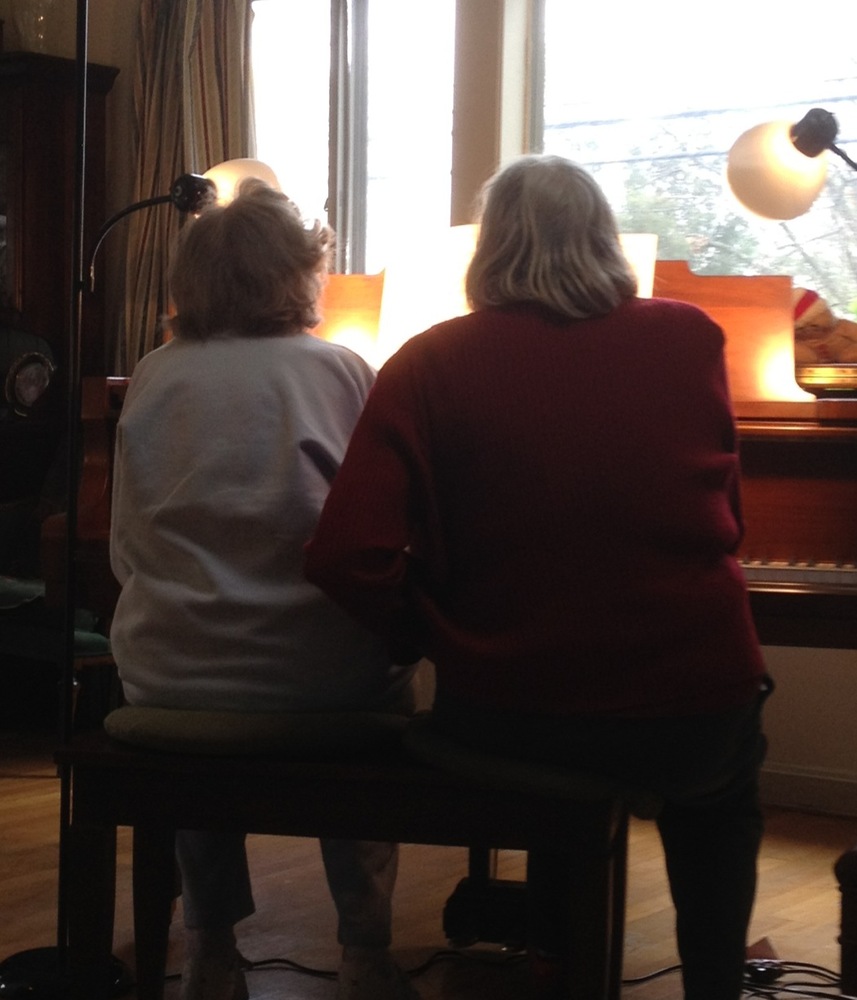
Charles Kester, 73, has been playing piano since he was 8 years old and stills plays every day for his own enjoyment.


CHARLES KESTER has been playing the piano since he was 8. Now he’s 73.

” I love music, that’s all there is to it”

Kester, who was born in Yeddo Indiana in 1935, is the subject of this month’s “Ageless Aging” series. Through this special project, Ledger videographer Rick Runion provides a look at older adults who have gifts and dreams they refuse to give up.

Kester has been married to Linda for 54 years and has two children, son Larry Kester of Lake Wales and daughter Jane Stringfellow of Winter Haven.

Kester worked for the railroad for 43 years and starting as a telegraph operator.

The Kesters started spending the winters in Polk County in the 1990s and moved here full-time in 2002.

Kester doesn’t read music but plays by ear. He has his own system of writing cords symbols, which helps him remember the key of the music he plays.

In the 1950s, Kester and his fellow musicians in Indiana began playing nursing homes and found out senior adults liked the same music he liked and says he is “not much up on the new music”. Some 50 years later Kester is still playing senior facilities and does not charge for his performances.

“My pay is they come up afterward, or you can go and shake their hand and (they) tell you they enjoyed it. That to me is the reason I do it”.

He passes out song books and calls his act “Sing along with Charlie”.

His audiences sing along with the songs of the 1930s and 1940s.

“They call out numbers and away we go”.

He says that even Alzheimer patients remember words to songs when they can’t remember a lot of things: “That’s one of the good things”.

Kesters even throws in jokes, “so it’s more of a show than it is straight music all the way.

“If you can make them smile or sing along with you, that’s what I was meant to do, I really feel that.”

This story appeared in print in The Ledger

Practicing the Piano – The Myth of the Instant Fix

practice-eat


When they make a mistake they hack away at it until it finally yields, and simply move on. What they have actually practised is getting it wrong three or four times in a row and right on the fifth attempt. What, then, are the chances of getting it right the first time in the context of the flow of the piece?

via Practising the Piano – The Myth of the Instant Fix.

Piano Maestro is Available at the O’Connor Music Studio

Piano Mania

The O’Connor Music Studio has a copy of this app if you (or your student) would like to try it during a lesson.

I see great potential with this app and think it could be useful for you at home.

It’s a fun game that can be used with a piano, the iPad or it can be hooked up to an electric keyboard.

Piano Maestro is free for all OCMS students to use on their own iPads at home.  Your student’s piano lesson books are most likely included to help the student learn the pieces – accompanied by a full backing track!


Read a review at Piano Mania Review » 148Apps » iPhone, iPad, and iPod touch App Reviews and News.

Piano Lessons Not Just For Kids

~~~

By Diana Greenburg 

When Paula Fay started taking piano lessons for the first time in her late fifties, it fulfilled a lifelong dream.

“I always wanted to learn how to play as a child, but my parents couldn’t afford it,” she said.

Today, four years later, Paula can play some of her favorite tunes. And she’s loving every minute of it.

Some adults may groan at childhood memories of lesson after lesson, practice after practice and a lot of teacher nagging, but many wish those days were back.

And more and more, these adults are turning wishful thinking into reality. According to the National Piano Foundation, adults ages 25-55 are the fastest-growing segment of people learning piano.

When Ruth Ann Laye started teaching an adult piano class at Mandarin’s Keyboard Connection, there was only one weekday class. Now, she’s up to seven classes. And of her own private practice of 28, 11 are adults.

One of her students is Belinda May from St. Augustine, who is in her 60s and in her second year of piano lessons.

Though her brothers played piano, she was more athletically inclined than musical. Then after years of “picking” at the pianos in her house, she recently resolved to start taking lessons. A beginner when she started, “now I’m playing Christmas carols,” she said.

“It tells me that you’re never too old to learn something new.”

Maureen Rhodes, a piano teacher on the Southside, would likely agree. She has more adults in her practice than she did 20 years ago.

“I think baby boomers are looking for ways to stay active,” she said. “Sometimes, kids come to me for lessons and then when they grow up and leave, their mother starts to take lessons,” says Rhodes. “Other adults have a specific goal in mind, like they want to play in church or accompany their grandson.”

Sandra Stewart, outgoing president of the Jacksonville Music Teachers Association and adjunct professor teaching a non-degree adult piano course at Florida State College, believes technology is a big part of the reason for the greater interest in piano among adults.

“Keyboards are more affordable, and that’s made all the difference,” she says.

But the piano is not always a succession of high notes for the adult student. Says Stewart: “Adults can have problems with finger dexterity. If they never played before, this can be frustrating. People who use computer a lot have an advantage. But if they don’t have this experience, they have to get over that hurdle.”

And some adults expect to transform into Mozart overnight.

“They may be symphony patrons or just love classical music and want to play instantly and do it like the pros,” Rhodes says. “But they have to develop the skills first, and it takes a lot of patience.”

But for adults committed to learning, it can be very satisfying for student and teacher alike.

“Adults are there for their own pleasure,” said Marc Hebda, president of the Florida State Music Teachers Association. “They have wonderful enthusiasm; it’s fun to see them get excited. It’s also interesting that with the economic downturn, they are not cutting back on lessons or buying instruments. Piano is a constant source of entertainment and personal development.”

The key to any student learning well, whether that student is an adult or child, is finding the right teacher. Hebda stresses the importance of taking lessons from a teacher with a music degree.

“Some people who took piano figure it’s easy to teach. But credentials are very important. You wouldn’t go to a doctor without certification or a lawyer who didn’t pass the bar. All our teachers have a music degree or demonstrate teaching ability.”

Hebda also notes that rapport between teacher and student is important.

“The student should interview the teacher, because not all students and teachers are a good match.”

For those who want to fast-track the learning process, there are alternatives. “The Piano Guy,” Scott Houston, has been teaching piano using a non-traditional method through his shows on public station WJCT.

“It seemed like there was a single path to the world of piano: this long process of taking lessons,” he said. “But people want to play the tunes they know.”

So Houston came up with a simple way for adults to learn quickly, based on the concept behind “lead sheets,” which are used by professional musicians. Houston’s technique is to teach adults a single line of notes on the treble clef with their right hand and chords with their left.

“My goal is not to teach adults to be the greatest players but to be able to play the tunes they want to play,” Houston says.

His approach has clearly struck a chord, as his book has sold 300,000 copies and he has taught many adults through his workshops in Indiana and master class “piano camp” from his beach home in Fort Myers.

There’s also a new trend gaining traction called “recreational music making” — RMM — which like Houston’s approach focuses on a simplified method to teaching music. The goal is not for a student to become accomplished at the piano and perform, but rather to just have fun making music. It is often taught to adults in group settings, such as music stores, churches and senior centers.

“Research has found that RMM is very helpful for seniors, promotes hand/eye coordination and keeps the brain working,” said Erin Bennett, assistant professor of piano and pedagogy at the University of North Florida. “Its asset is the ability to reach more people; it’s more inclusive and easier for the non-experienced.”

Whether learning piano through traditional or nontraditional means, its many benefits include boosting self-confidence.

“When I first started, I didn’t think I could do it,” Fay said. “And my friends and family were in disbelief that I was taking lessons. Then they wanted to hear a concert. In another year, I might just do it.”

She gets some measure of satisfaction in surprising those around her.

“Society puts restrictions on us as we get older that we stop learning,” she says. “But we are wiser, more patience and accept our limitations.”

Read more at Jacksonville.com: http://jacksonville.com/entertainment/music/2011-10-27/story/piano-lessons-not-just-kids#ixzz1l14hSFaV

Is This Beethoven’s Last Work for Piano?

Arts-SMH


IS THIS Beethoven’s last work for piano? The Sydney musicologist Peter McCallum believes it is.

The 32 bars of handwritten musical notation caught his eye when he was studying the composer’s last sketchbook in Berlin a couple of years ago. But it has required some detective work to determine what the great composer – whose handwriting was famously chaotic – intended.

“I didn’t know it was a piano piece until I actually sat down and tried to write it out,” says McCallum. “Beethoven almost never used clefs or key signatures so you have to think about it … but once you do crack the code it’s clear.”

McCallum, who is associate professor in musicology at the University of Sydney and the Herald’s classical music critic, believes the piece was written about October 1826, just a few months before the composer died in March 1827.

“Beethoven always jotted down ideas, it was almost compulsive,” he says. “The amount of paper he covered in the last three years of his life was quite amazing. There are a lot of little ideas that crop up that don’t go anywhere. But this was more than a little idea. It actually has a right hand and a left hand and it’s got phrasing marks and staccato marks in a few places. So it’s quite clear it was a complete piece.”

Now the pianist Stephanie McCallum has used her husband’s transcription to make the first recording of the piece. Bagatelle in F minor is just 54 seconds long and is the final piece on her CD Fur Elise, Bagatelles For Piano By Ludwig Van Beethoven.

Although most of Beethoven’s sketchbooks have been studied in detail, the final sketchbook – housed in Berlin’s State Library – has attracted little attention.

Although his later works are often seen as spiritual, the fragment has a different quality, says Peter McCallum. “It’s slightly melancholy. But it’s a pleasant little thing and it’s quite easy to play. What I like about it is that a child could enjoy playing it. We could give Fur Elise a rest for a while.”

From: http://www.smh.com.au/articles/2008/09/04/1220121428067.html

July 24 ~ Today in Music History

today


OCMS1803 ~ Adolphe Adam, Opera Composer, composer of Oh, Holy Night
More information about Adam


• 1849 ~ Georgetown University in Washington, DC, became the first college to offer a doctor of music degree. It was presented to Professor Henry Dielman.

• 1880 ~ Ernest Bloch, Swiss-born American composer and conductor
More information about Bloch

• 1908 ~ Cootie (Charles) Williams, Trumpeter with Echoes of Harlem born. He performed with Duke Ellington and Benny Goodman; band leader for Cootie Williams Sextet and Orchestra

• 1915 ~ Bob Eberly (Robert Eberle), Singer born. He performed with Kitty Kallen, sang with the Jimmy Dorsey Orchestra & on TV’s Top Tunes; brother of singer Ray Eberle

• 1921 ~ Billy Taylor, Jazz Piano. He was also the leader of the Billy Taylor Trio, Orchestra; coofounder of Jazzmobile ’65; the music director of The David Frost Show; and performed jazz segments on Sunday Morning with Charles Kuralt

• 1934 ~ Rudy Collins, Drummer with Dizzy Gillespie quintet

• 1938 ~ Clarinet virtuoso and big band leader Artie Shaw recorded his now-classic, Begin the Beguine, for Bluebird Records in New York City. Shaw was married to Ava Gardner at the time.

• 1941 ~ Barbara Jean Love, Singer with Friends of Distinction

• 1942 ~ Heinz Burt, Musician, bass with The Tornados

• 1947 ~ Mick Fleetwood, British rock drummer

• 1947 ~ Peter Serkin, American pianist

• 1951 ~ Lynval Golding, Musician, guitarist with The Specials

• 1956 – After a decade together as the country’s most popular comedy team, Dean Martin and Jerry Lewis called it quits this night. They did their last show at the Copacabana nightclub in New York City. The duo ended their relationship exactly 10 years after they had started it.

• 1958 ~ Pam Tillis, Country Singer

• 2000 ~ Violinist Oscar Shumsky, a brilliant performer who trained generations of successful younger artists, died at the ate of 83 from heart disease. Shumsky displayed his musical talent at an early age, first picking up a violin when he was 3 years old. His father, an amateur player who recognized his son’s brilliance, took him to the Curtis Institute of Music, where he was accepted as a student by violinist Leopold Auer and was later taught by Efrem Zimbalist. At the age of 9, Shumsky performed with the Philadelphia Orchestra, and after graduating from Curtis in 1936, he began playing around the world to widespread critical acclaim. He later branched into conducting. Shumsky was featured at Lincoln Center’s “Great Performer Series.” He trained generations of violinists at some of the nation’s most prestigious music schools, including the Curtis Institute, the Peabody Conservatory, Yale University and, for 25 years, at the Juilliard School.

• 2001 ~ Charles Henderson, editor of The American Organist, died at the age of 84. Henderson, who edited the journal for more than a decade, starting in 1973, conducted a production of Britten’s “Noye’s Fludde” broadcast nationally on CBS television in 1964. He was on the faculty of the Union Theological Seminary’s School of Sacred Music, and from 1976 to 1983 was the organist at the First Presbyterian Church in Milford, N.J. Born in West Chester, Pa., Henderson studied music at Bucknell University, the Juilliard School, Syracuse University and the Fontainebleau School in France.

Piano Maintenance Tips

piano-old

Piano Maintenance Tips

by Gray Rollins

Did you know that a piano can have up to 12,000 moving parts? It’s true. Not only that, but many of those parts are moving parts. And if you want your piano to stay in good working order, it needs a little bit of maintenance to stay its best.

During the first year of a piano’s life it’s suggested to have it serviced two to four times. Then talk to your piano technician to decide what frequency to continue service at. Usually twice a year after the first year is recommended, but sometimes once a year is enough. Servicing includes having the piano tuned, regulated as needed, voiced as needed, and eventually having worn parts repaired or replaced as needed.

A piano has over 200 strings and when the technician starts tuning a piano, it’s the strings he’s going to work on. The technician wants all the strings to have the correct pitch.

How does a piano go out of tune in the first place? The most common cause is humidity changes. It’s recommended that you don’t get your piano tuned right after the humidity has changed or the tune will only hold a couple months.

When a piano is regulated, that means that mechanical parts of the piano are being worked on. There are no hard and fast rules to how often a piano needs to be regulated as it depends largely on the climate its being kept in.

When it comes to voicing the piano, we’re talking about adjusting the pianos quality of sound or tone. The frequency that voicing needs to be done depends largely on how much you use your piano – 1 to 5 years tends to be the typical range.

You’ll also want to make sure you take good care of the exterior of the piano too. Neglecting the exterior of your piano can, believe it or not, affect the sound quality of your piano. Keeping it clean is a pretty simple job, but one thing to remember is that you don’t want to use furniture polish.

Your piano will also need to be reconditioned occasionally. Some parts will get worn out from use and will need to be replaced.

If your piano has deteriorated severely then reconditioning it won’t be enough. You’ll have to get the piano completely rebuilt which involves completely disassembling the piano. As you might imagine it’s very labor intensive and quite expensive, but in some cases it’s the only way to restore the original performance level of your piano.

Keep in mind that a piano is an investment, and that a well maintained piano can actually increase in value over its life.

About the Author:

Gray Rollins is a featured writer for PianosCentral – a site that helps people learn how to play the piano. Learn more about Rocket Piano review and the Pure Pitch Method at his site.

From http://www.3×24.com/piano-maintenance-tips/801659

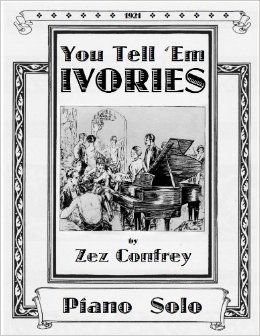
Zez Confrey (1895-1971)

confrey-you

I just love Zez Confrey’s music.  It’s not overplayed like some of Scott Joplin’s works but it’s just as much fun.

This is a piece I have often played in recitals and just for fun.

If any of my students are interested in tackling this piece, just let me know and we’ll start learning!

More about Zez Confrey

One of the books in my studio is Zez Confrey at the Piano: Piano Solos.

confrey-book“This collection represents a cross-section of Confrey’s works and encompasses the broad range of his styles. Besides his famous 1920s novelty works (including Kitten on the Keys), there are many wonderful, lesser-known gems of remarkable quality included here from later in his career. Appearing for the first time in print are transcriptions of one of his disc recordings (Poor Buttermilk) and two of his player piano roll arrangements (My Pet and Humorestless). Many of Confrey’s later works have long been out of print and are included here for the first time in decades.”

July 21 ~ Today in Music History

today


• 1748 ~ Louis-Henry Paisible, Composer

• 1779 ~ Gottlob Wiedebein, Composer

• 1782 ~ Placidus Cajetan von Camerloher, Composer, died at the age of 63

• 1797 ~ Franz Schoberlechner, Composer

• 1865 ~ Robert Kahn, Composer

• 1870 ~ Josef Strauss, Austrian composer, died at the age of 42

• 1896 ~ Jean Rivier-Villemomble France, Composer

• 1898 ~ Ernest Willem Mulder, Composer

• 1898 ~ Sara Carter, Vocalist/guitarist with the Carter Family

• 1903 ~ Theodore Karyotakis, Composer

• 1906 ~ Daniel Ayala Perez, Composer

• 1915 ~ Floyd McDaniel ~ blues singer/guitarist

• 1920 ~ Isaac Stern, American concert violinist
Read quotes by and about Stern
More information about Stern

• 1920 ~ Manuel Valls Gorina, Composer

• 1921 ~ Billy Taylor, Orchestra leader on the David Frost Show

• 1922 ~ Kay Starr (Katherine Starks), Pop Singer

• 1925 ~ Lovro Zupanovic, Composer

• 1926 ~ Albert Fuller, American harpsichordist

• 1926 ~ Norman Jewison, Director of Jesus Christ, Superstar, Fiddler on the Roof

• 1927 ~ Stefan Niculescu, Composer

• 1931 ~ Leon Schidlowsky, Composer

• 1931 ~ Ted Husing was master of ceremonies for the very first CBS-TV program. The gala show featured singer Kate Smith, composer George Gershwin and New York City Mayor Jimmy Walker.

• 1935 ~ Kaye Stevens, Singer and comedienne on the Jerry Lewis Show

• 1938 ~ Anton Emil Kuerti, Composer

• 1938 ~ Paul Hindemith and Leonide Massines ballet premiered in London

• 1947 ~ Cat Stevens (Steven Demitri Georgiou) (Muslim name: Yusuf Islam), British folk-rock singer and songwriter

• 1948 ~ Donald Nichols Tweedy, Composer, died at the age of 58

• 1950 ~ Albert Riemenschneider, Composer, died at the age of 71

• 1958 ~ The last of Arthur Godfrey’s Talent Scouts programs aired on CBS-TV. Many artists got their start on Talent Scouts, including Tony Bennett, Pat Boone, The McGuire Sisters and a singer named Connie Francis, who not only sang, but played the accordion, as well.

• 1962 ~ Dmitri Shostakovitch completed his 13th Symphony

• 1964 ~ Dmitri Shostakovitch completed his 10th String quartet

• 1969 ~ Just one day after Neil Armstrong set foot on the moon, Duke Ellington and a portion of his band performed a 10-minute composition on ABC-TV titled Moon Maiden. The work featured piano, drums, bass and vocals.

• 1973 ~ Bad, Bad Leroy Brown reached the top spot on the Billboard pop-singles chart, becoming Jim Croce’s first big hit. Croce died in a plane crash two months later (September 20, 1973).

• 1976 ~ “Guys & Dolls” opened at Broadway Theater New York City for 239 performances

• 1994 ~ Dorothy Collins, Singer on Your Hit Parade, died at the age of 67

• 1995 ~ Edwin “Russell” House, Saxophonist, died at the age of 65

• 2000 ~ Iain Hamilton, the Scottish composer who turned Tolstoy’s “Anna Karenina” into an opera at the age of 78. Hamilton wrote four symphonies and dozens of orchestral and chamber works but is known best for his vocal music, which includes a cantata based on the poems of Robert Burns. “Anna Karenina” premiered at the English National Opera in 1981 to critical acclaim. His other operas include “Agamemnon”, “The Catiline Conspiracy”, based on a Ben Jonson play, and an adaptation of Peter Shaffer’s play “The Royal Hunt of the Sun”. From 1961 to 1978 he was a professor of music at Duke University in North Carolina.

• 2000 ~ Barbra Streisand announced final concerts

• 2001 ~ Norman Hall Wright, the last surviving writer who worked on the Disney film Fantasia 2000, died at the age of 91. Wright studied at the University of Southern California before being hired by Walt Disney Productions. He started as an animator but later became a writer, producer and director. Wright developed the story of The Nutcracker Suite sequence for Fantasia 2000. He also was responsible for a sequence in Bambi. He wrote several cartoon shorts for Mickey Mouse, Donald Duck, and Goofy and also produced several Wonderful World of Disney television programs.

• 2002 ~ Gus Dudgeon, a respected music producer who worked on many of Elton John’s hit recordings, died in a car crash in western England. He was 59. Dudgeon produced Rocket Man, Goodbye Yellow Brick Road, Your Song, Daniel and Don’t Let The Sun Go Down On Me. Dudgeon also produced David Bowie’s Space Oddity and worked with other stars, including Chris Rea and Joan Armatrading. But it was his partnership with Sir Elton in the 1970s for which he will be best remembered. Dudgeon began his career in the early 1960s as a tea boy, running errands at Olympic Studios in London before joining Decca Records. He engineered the Zombies’ classic She’s Not There and the groundbreaking Blues Breakers album by John Mayall with Eric Clapton, before moving into producing.

• 2015 ~ Theodore Meir Bikel,  Austrian-American actor, folk singer, musician, composer, and activist, died at the age of 91.

FREE Piano Practice Book Through Tuesday!

101


From the author:

Let’s face it. Most kids don’t want to practice the piano. And if they do find the time to practice, it’s usually because their parent kept nagging them. How frustrating!

Piano teachers are frustrated too. It’s nearly impossible to teach students new concepts when they don’t understand the old ones–all because of a lack of practice.

If you’re a parent in this situation, I have just the solution you’re looking for.

In this upbeat book, I share all the tips I’ve discovered in my 14 years of teaching piano. You’ll learn fun, practical ways to get your kids to the keyboard.

But this book goes one step further. I’ll show you easy ways to encourage better quality practice. Even if you’ve never had a music lesson in your life!

I wrote this book for kids of all ages. There are creative ideas for elementary students and also a section for teens.

There’s even a section for what to do if your child wants to stop taking piano lessons. That’s right, there is hope and my book will show you exactly how to get them interested in piano again.

Don’t be the kind of parent who sits on the sidelines waiting until their child wants to practice. Piano lessons are too expensive for you to let another “no-practice” day go by.

This book is your answer to get your child to the keyboard, have good quality practice and develop a life-long love of music.

Download for free here.