November 19 ~ Today in Music History

today

• 1724 ~ First Performance of J. S. Bach’s Sacred Cantata No. 26 Ach wie flüchtig, ach wie nichtig performed on the 24th Sunday following Trinity. A portion of Bach’s second annual Sacred Cantata cycle in Leipzig, 1724-25.

• 1736 ~ J. S. Bach named court composer by Poland’s King Agustus III.

• 1739 ~ First Performance of Jean-Philippe Rameau‘s opera Dardanus in Paris.

• 1826 ~ Composer Felix Mendelssohn and his sister Fanny performed his overture to “A Midsummer Night’s Dream” for the first time.

• 1828 ~ Death of Austrian composer Franz Schubert in Vienna, at the age of 31 from typhus.   He is buried near Beethoven.

• 1859 ~ Mikhail Ippolitov-Ivanov, Russian composer and conductor
More information about Ippolitov-Ivanov

• 1874 ~ Birth of composer Karl Adrian Wohlfahrt.

• 1875 ~ First Performance of Tchaikovsky‘s Third Symphony, in Moscow.

• 1888 ~ Piano Debut in Boston of composer Edward MacDowell with the Kneisel Quartet.

• 1905 ~ Tommy Dorsey, American trombonist and bandleader

• 1923 ~ First Performances of Béla Bartók‘s Five Dances and Zoltán Kodály‘s Psalums Hungaricus in Budapest, marking the 50th anniversary of the union of cities Buda and Pest.

• 1936 ~ Birth of classical music commentator (Detroit Symphony broadcasts) Dick Cavett, in Kearney, Nebraska. ABC-TV talk show host (Dick Cavett Show).

• 1936 ~ First concert recorded on magnetic tape with the London Philharmonic orchestra conducted by Sir Thomas Beecham at BASF’s own concert hall in Ludwigshaven, Germany.

• 1937 ~ Ray Collins, Songwriter

• 1938 ~ Hank Medress, Singer with The Tokens, record producer

• 1943 ~ Fred Lipsius, Piano, sax with Blood Sweat & Tears

• 1943 ~ Stan Kenton and his orchestra recorded Artistry in Rhythm, the song that later become the Kenton theme. It was Capitol record number 159. The other side of the disk was titled, Eager Beaver.

• 1944 ~ Agnes Baltsa, Greek mezzo-soprano

• 1954 ~ Sammy Davis, Jr. was involved in a serious auto accident in San Bernardino, CA. Three days later, Davis lost the sight in his left eye. He later referred to the accident as the turning point of his career.

• 1957 ~ American conductor Leonard Bernstein named Music Director of the New York Philharmonic. First American-born and educated conductor named to head an important American Orchestra.

• 1961 ~ A year after Chubby Checker reached the #1 spot with The Twist, the singer appeared on The Ed Sullivan Show to sing the song again. The Twist became the first record to reach #1 a second time around, on January 13, 1962.

• 1962 ~ For the first time, a jazz concert was presented at the White House. Jazz had previously been served as background music only.

• 2000 ~ First Performance of Philip Glass‘ Double Concerto for Timpani and Orchestra, by the American Composers Orchestra. Lincoln Center in New York.

2004 ~ Composer Cy Coleman, who wrote the musical “Sweet Charity” and whose songs included such Frank Sinatra classics as WitchcraftBig Spender and The Best is Yet to Come, died at the age 75
More information about Cy Coleman

Adapted from http://www.oconnormusic.org/month-nov.htm

If Only I lived in San Diego!

Piano 6


Come January, thanks to the San Diego Symphony, it’s going to be all pianos, all the time in San Diego. The orchestra is collaborating with a host of community partners in an ambitious, month-long Upright & Grand Festival.

With the assistance of its collaborators, the orchestra aims to show as many aspects of the piano as possible during the course of festival, which includes more than a dozen concerts plus community events.

“Pianos can be found in concert halls, night clubs, homes, schools, libraries and department stores,” said symphony CEO Martha Gilmer in a statement. “A pianist can play entire symphonies or a solo sonata. The piano can play the role of the orchestra in rehearsals of great opera and ballet scores, and it is a partner to instrumentalists and singers. The piano is both a solitary and partner instrument.”

Among the orchestra’s partners are the La Jolla Music Society, the Poway Center for the Performing Arts and the California Center for the Arts, Escondido.

The Music Society will bring Garrick Ohlsson (Jan. 14) to Sherwood Auditorium and Emanuel Ax (Jan. 20) to the Jacobs Music Center. The Poway Center will showcase the orchestra and pianist Jeremy Denk on Jan. 15 (he’ll also perform with the orchestra on Jan. 16-17 and with orchestra musicians in a chamber music concert on Jan. 19 at Jacobs Music Center). The California Center for the Arts, Escondido, will host a performance by Ben Folds and the orchestra on Feb. 5 (Folds will also perform in Jacobs Music Center Feb. 6).

In addition, Combat Arts; PATH — Connections Housing; Urban Discovery Academy; the New Children’s Museum and ARTS: A Reason to Survive will participate in a piano painting endeavor; as will artists Anna Stoa, Grace Gray Adams and Grace Matthews, Christie Beniston, and Sheena Dowling.

Once painted, the pianos will be placed in at least 10 public spaces including Horton Plaza, Liberty Station, the Courtyard at East Village, the New Children’s Museum and the California Center for the Arts as part of the “Play Me: Pianos in Public Spaces” element of the festival.

“Upright & Grand offers the public the opportunity to get involved by performing outdoors at any number of the ‘Play Me’ pianos in public spaces throughout San Diego,” said Tommy Phillips, the orchestra’s director of artistic planning, in a statement. “This collaborative component of Upright & Grand has both a celebratory and accessibility element as we bring the piano festival to the people via the Jacobs Music Center, Poway Center for the Performing Arts and California Center for the Arts, Escondido.”

In addition to nine programs at Jacobs Music Center, ranging from Marc-Andre Hamelin performing Gershwin’s “Rhapsody in Blue” with the orchestra (Jan. 8-10) to a Jazz Piano Masters: A Tribute to Thelonious Monk, Art Tatum and Bud Powell concert (Jan. 23) to Ben Folds performing his own piano concerto with the orchestra (Feb. 6), the symphony is offering a community day on Jan. 16 from noon to 5 p.m..

The Jan. 16 “Hands On: Play a Little, Learn a Lot” event will will present a range of keyboard-centric activities including free piano lessons, demonstrations (including a music app session with Apple Store representatives) and the chance to play a short piece on stage.

The community day ends with a “Monster Piano” performance on the Jacobs Music Center stage: 10 pianists will play on five pianos.

More information and tickets: sandiegosymphony.org or (619) 235-0804.

From http://www.sandiegouniontribune.com/news/2015/nov/17/san-diego-symphony-piano-festival/

November 18 ~ Today in Music

today


• 1307 ~ The story of William Tell shooting the apple off of his young son’s head is said to have taken place on this day. Gioachino Rossini made this story into an opera.

• 1680 ~ Birth of French-Belgian composer and flutist Jean Baptiste Loeillet in Gent. d-London, 19 JUL 1730.

• 1736 ~ Birth of German composer Carl Friedrich Christian Fasch in Zerbst. d-Berlin, 3 AUG 1800.

• 1741  ~ George Frideric Handel arrived in Dublin at the invitation of the country of Ireland to attend current concert season. Presented numerous concerts in the Irish capital, including the first performance of his oratorio Messiah early in 1742.

• 1763 ~ Leopold Mozart and his two children, Wolfgang and Maria, arrive in Paris on their European concert tour.

• 1786 ~ Carl Maria von Weber, German composer, conductor and pianist, began the era of German romantic music
More information about von Weber

• 1838 ~ Sir William Schwenck Gilbert, British playright and librettist, best known for his comic operettas with Arthur Sullivan

• 1859 ~ Birth of Russian composer and pianist Sergei Mikhailovich Liapunov, in Yaroslavl. d-Paris, 1924.

• 1888 ~ First Performance of Peter Ilyich Tchaikovsky’s 5th Symphony, in St. Petersburg.

• 1889 ~ Amelita Galli-Curci, Opera soprano, “If not the greatest coloratura soprano of all time, she must surely be recognized as among the world’s finest examples of true operatic artistry.”

• 1891 ~ First Performance of Tchaikovsky‘s symphonic work The Voyevode in Moscow.

• 1892 ~ First concert at Carnegie Hall by the New York Philharmonic.

• 1899 ~ Eugene Ormandy (Jeno Blau), Hungarian-born American conductor of The Philadelphia Orchestra
More information about Ormandy

• 1909 ~ Johnny (John Herndon) Mercer, Academy Award-winning composer, lyricist, wrote or co-wrote over a thousand songs

• 1926 ~ Dorothy Collins (Marjorie Chandler), Singer on Your Hit Parade, sang with Benny Goodman band

• 1936 ~ Hank Ballard, Singer, songwriter with The Midniters, wrote and recorded The Twist
More about Hank Ballard

• 1950 ~ Graham Parker, Singer with Graham Parker and The Rumour

• 1953 ~ Herman Rarebell, Drummer with Scorpions

• 1960 ~ Kim Wilde, Singer

• 1967 ~ Lulu’s To Sir with Love, from the movie of the same name, started its fifth and final week at number one.

• 1974 ~ Frank Sinatra emerged from retirement to do a TV special with dancer Gene Kelly. The show was a smash hit and revived Sinatra’s career.

• 1975 ~ John Denver received a gold record for I’m Sorry.

• 1986 ~ The Roseland Ballroom reopened in New York City. The 67-year-old home for those wanting to dance cheek to cheek featured America’s dean of society music, Lester Lanin. He played for patrons who wanted to cut a rug on the 112-by-55-foot, maple wood dance floor.

• 1999 ~ Doug Sahm passed away

• 2003 ~ First Performance of John Corigliano‘s Snapshot: Circa 1909. Elements String Quartet at Merkin Concert Hall, NYC.

• 2003 ~ Oscar-nominated composer, conductor and arranger Michael Kamen, one of Hollywood’s most sought-after musicians, died at age 55 after suffering from multiple sclerosis for several years. The native New Yorker and Juilliard School of Music Graduate was one of Hollywood’s most successful composers who worked on music for the “Lethal Weapon” series and scored “Die Hard” among many other films. In the late 1960s, he helped found the New York Rock ‘n’ Roll Ensemble, a critically acclaimed group that fused classical with pop and recorded five albums before dissolving. In the 1970s, Kamen scored ballets, served as musical director for David Bowie’s “Diamond Dogs” tour and began writing scores for film. Although he began in Hollywood working on offbeat films like “Polyester” and “Brazil,” he turned more mainstream in the 1980s, working on the “Lethal Weapon” series, “Robin Hood: Prince of Thieves,” “Mr. Holland’s Opus” and “X-Men,” plus the HBO series “Band of Brothers.” In 1991, Kamen earned his first Academy Award nomination for “(Everything I Do) I Do It for You,” the Bryan Adams pop hit from the movie, “Robin Hood: Prince of Thieves.” Co-written with Adams and Robert John “Mutt” Lange, the song received two Grammys. The three united in 1993 for “All for Love.” In 1999, Kamen conducted the orchestra which backed Metallica on their S&M project.
Adapted from http://www.oconnormusic.org/month-nov.htm

November 17 ~ Today in Music

today


• 1726 ~ The first performance of J. S. Bach‘s Sacred Cantata No. 55 Ich armer Mensch, ich Sündenknecht on the 22nd Sunday following Trinity. Was part of Bach’s third annual Sacred Cantata cycle in Leipzig 1725-27


• 1848 ~ Frederic Chopin played his final piano concert at a Polish benefit ball at Guildhall in London.

• 1850 ~ Giuseppe Verdi‘s opera Stifellio was first performed at the Teatro Grande in Trieste despite difficulties with the censors which resulted in cuts and changes.


• 1861 ~ First Performance of Johannes Brahms‘ Piano Quintet No. 1 in g, Op. 25, at a rehearsal in Hamburg, with pianist Clara Schumann.

• 1862 ~ The work noted above received its official premiere with members of the Hellmesberger Quartet; Brahms at the piano, in Vienna.

• 1870 ~ Birth of Australian composer Alfred Hill in Melbourne. d-Sydney, 30 OCT 1960.

• 1876~ The first performance of Peter Ilyich Tchaikovsky‘s March Slav in Moscow.

• 1877 ~ The first production of Gilbert and Sullivan’s opera, The Sorcerer, was presented, in London.

• 1888~ The first production of Tchaikovsky‘s Fifth Symphony in St. Petersburg.

• 1891 ~ Poland’s premier and premier ivory tickler, Ignace Jan Paderewski, made his American debut at Carnegie Hall in New York City. In later years, Paderewski, who suffered from arthritis, settled in Paso Robles, CA. The hot mineral baths located there eased his pain. He played only Steinway grand pianos custom-built to his specifications. In fact, five were made just for his use.

• 1925 ~ Sir Charles Mackerras, Australian conductor

• 1930 ~ David Amram, American composer and French-horn player

• 1938 ~ Gordon Lightfoot, Canadian folk singer, songwriter and guitarist

• 1938 ~ Orchestra leader Kay Kyser, speaking to an audience at the College of the City of New York (CCNY) told of the “inner workings and artistic features of swing music.” It marked the first of a series of lectures on swing music presented by Kyser, who went on to presentThe Kollege of Musical Knowledge on radio.

• 1941 ~ Gene Clark, Singer, guitar with The Byrds

• 1942 ~ Bob Gaudio, Singer with The Royal Teens; The Four Seasons

• 1946 ~ Martin Barre, Guitarist with Jethro Tull

• 1950 ~ Roberta Peters filled in for the lead in Mozart’s Don Giovanni, making her debut at the Metropolitan Opera in New York City. She would become one of the Met’s most famous stars.

• 1962 ~ The 4 Seasons, with Frankie Valli as lead singer, began a five-week run at the top of the tunedex with Big Girls Don’t Cry.

• 1967 ~ Ronald DeVoe, Singer with New Edition

• 1970 ~ Elton John recorded an album live, on what was WABC-FM in New York City. It marked the first time that a concert was aired live and recorded for release as aired. The LP was titled, 11/17/70.

• 1981 ~ Bob Eberly died

• 2001 ~ Jerry Jerome, a tenor sax player who was a featured soloist with the bands of Glenn Miller and Benny Goodman, died of leukemia. He was 89. One of the big names in the Big Band era, Jerome was a featured soloist with the Glenn Miller, Benny Goodman, Red Norvo and Artie Shaw orchestras. He then became a successful musical director and conductor on radio and television. Jerome also established a music business, scoring and arranging commercial jingles. Three years ago, Arbors Records released Jerome’s “Something Old, Something New.” The sequel recording, “Something Borrowed, Something Blue,” will be released in December. Born in Brooklyn, N.Y., Jerome started playing the sax while in high school. He attended the University of Alabama and went on the medical school, playing gigs at jazz clubs to earn tuition money. He joined Goodman’s orchestra at the height of its popularity in 1938. When Goodman broke up his band in 1940, Jerome joined Shaw. While with Shaw, he appeared in the film “Second Chorus,” with Fred Astaire and Burgess Meredith.

• 2003 ~ Arthur Conley, a 1960s soul singer and protege of Otis Redding’s, died at his home in the town of Ruurlo, in the eastern Netherlands. He was 57. Conley was born in Atlanta and started his recording career in 1959 as leader of the group Arthur and the Corvets. He was best known for his 1967 hit, Sweet Soul Music, which he co-wrote with Redding based on a number by Sam Cooke. Conley had several minor hits in the following two years. He moved to Europe in the early 1970s after several tours of the continent, deciding that he was “fed up with the pressure” in the United States, said Giesen. In the Netherlands, Conley appeared on television and radio, and ran an independent record label. In the last five years he was an adviser to The Original Sixties R&B and Soul Show, which sought to reproduce the sound and look of the heyday of soul.

Adapted from http://www.oconnormusic.org/month-nov.htm

Today in Music History ~ November 15

today


• 1766 ~ Birth of French violinist, teacher and composer Rodolphe Kreutzer in Versailles. In 1810 broken arm ended virtuoso career. Beethoven dedicated sonata op 47 to him. d-Geneva, 6 JAN 1831.

• 1905 ~ Mantovani, Orchestra leader, (1953 UK No.1 single ‘Moulin Rouge’, 1957 US No. 12 single ‘Around The World In Eighty Days’) was born. He died on 30th March 1980.

• 1914 ~ Jorge Bolet, Cuban-born American pianist was born

• 1926 ~ NBC broadcast its first music program. It featured the New York Symphony Orchestra and many distinguished soloists. 24 stations carried the first broadcast. The program was a gala 4½-hour broadcast from the Waldorf-Astoria Hotel in New York City. Two remote pickups were also on the program. Opera star Mary Garden sang from Chicago and Will Rogers presented a humorous monologue from Independence, Kansas. Charles Lindbergh was among the luminaries who attended the broadcast.

• 1928 ~ C.W. McCall (William Fries), Singer, songwriter was born

• 1932 ~ Petula Clark, British pop singer (Downtown, My Love) was born

• 1933 ~ Clyde (Lensley) McPhatter, Singer with the Dominoes was born

• 1937 ~ Little Willie John (William Edward John), Singer, convicted of manslaughter

• 1942 ~ Daniel Barenboim, Argentine-born Israeli pianist and conductor of English Chamber Orchestra was born

• 1945 ~ Anni-Frid Lyngstad, Singer with Abba was born

• 1946 ~ Janet Lennon, Singer with The Lennon Sisters was born

• 1954 ~ Tony Thompson, Drummer with Chic; played with Led Zeppelin, Live Aid, drummer with Patti LaBelle was born
More about Thompson

• 1954 ~ Studio One on CBS-TV featured Joan Weber singing Let Me Go, Lover. The song had enjoyed limited popularity before the TV show, but skyrocketed to fame immediately after.

• 1956 ~ Love Me Tender, the first Elvis Presley film, premiered.

• 1967 ~ Mari Fernandez, Singer with Sweet Sensation was born

• 1969 ~ The first album featuring Karen and Richard Carpenter was released by A&M Records. Offering would not be a big seller, but a single from the disc, a remake of The Beatles’ Ticket to Ride, would gain national attention. Their next album, however, would establish them as major international stars (Close to You).

• 1969 ~ Janis Joplin was arrested during a gig in Tampa, Florida, after badmouthing a policeman and using vulgar and indecent language. Joplin became upset after police moved into the hall forcing fans to move back to their seats. As the singer left the stage she confronted a detective calling him ‘a son of a bitch’ and told him she would kick his face in. She was released on $504 bail.

• 1974 ~ The most expensive 2-record album was released-on Casablanca Records. It was a comedy disc titled, Here’s Johnny – Magic Moments from the Tonight Show.

• 1974 ~ The group, Faces, released their tune with the longest title. You Can Make Me Dance, Sing or Anything (Even Take the Dog for a Walk, Mend a Fuse, Fold Away the Ironing Board, Or Any Other Domestic Shortcomings).

• 1980 ~ After years of success on the music charts with the New Christy Minstrels and the First Edition, Kenny Rogers got his first #1 song. Lady, written by Lionel Richie, stayed at the top for six weeks.

• 1986 ~ The first major operetta written by Gian Carlo Menotti in over 20 years was presented at the Kennedy Center in Washington, DC. Starring tenor Placido Domingo, Goya was said by critics to be only “intermittently good.”

• 2003 ~ David Holt, a former child actor once touted by Paramount Pictures as its answer to Shirley Temple, has died. He was 76. Holt, who later became a successful jazz musician and songwriter, died of congestive heart failure. Although his career never rivaled Temple’s, Holt had his share of success as a child actor, playing Elizabeth Taylor’solder brother in “Courage of Lassie” in 1946 and appearing as bratty Sidney Sawyer in “The Adventures of Tom Sawyer” in 1938. He also played the crippled boy for whom New York Yankee great Lou Gehrig hit a home run in “Pride of the Yankees” and appeared in “The Big Broadcast of 1936.” Paramount signed Holt to a long-term contract after his 1934 role as a boy whose mother dies in “You Belong To me.” Holt eventually segued into music. He co-wrote the song The Christmas Blues with Sammy Cahn and wrote the music for numerous jazz albums. He hosted the TV show “American Music Shop” in the 1990s.

Adapted from http://www.oconnormusic.org/month-nov.htm

Dr. Maurice Hinson

hinson


I have always respected Dr. Hinson’s work and his music.  So much so that I went to Connecticut to take a class on Piano Pedagogy with him several years ago.  I have also attended several local piano teacher workshops with him.  At one of them, he claimed to remember me from that Connecticut class.  Whether true or not, I treasure that comment and the signature on a piano book he gave me.

We have several of his books at the O’Connor Music Studio and many are available for loan.  If you are interested in buying any for yourself, amazon.com has a great selection.  In addition to those books he has authored, he has edited the works of many composers.  Amazon lists 270 works edited and annotated by Dr. Hinson.


From his page on alfred.com:

One of America’s most respected authorities on piano literature, Dr. Maurice Hinson received the Lifetime Achievement Award from the Music Teachers National Association at its Washington, D.C. convention in the spring of 1994, the Outstanding Alumni Award from the University of Florida in 1990, and the Outstanding Alumni Award from the University of Michigan in the fall of 1995. Hailed as a specialist in American piano music, some of his articles appear in the New Grove Dictionary of American Music in the United States.

Dr. Hinson received his Bachelor of Arts degree from the University of Florida and his Master of Music and Doctor of Musical Arts degrees from the University of Michigan. He also studied at The Juilliard School and the Conservatoire National in Nancy, France.

While a Senior Professor of Piano in the School of Church Music at the Southern Baptist Theological Seminary in Louisville, Kentucky, Dr. Hinson’s curriculum included teaching piano, piano literature, and piano chamber music. He performed, lectured, and gave masterclasses worldwide. His books and editions have become classic standards in the studios of serious piano teachers and students the world over.


From his obituary at legacy.com:

Hinson, Dr. G. Maurice, age 84 died November 11, 2015 in the company of his family. Dr. Hinson was Professor and Senior Professor of Piano at the Southern Baptist Theological Seminary from 1957 to 2015, and a member of Broadway Baptist Church. He was also organist-choirmaster of churches in Florida, Michigan and Kentucky from 1943 to 1980. Dr. Hinson received his BA degree from the University of Florida and his MM and DMA degrees from the University of Michigan, and also studied at The Julliard School and the University of Nancy, France (Conservatoire National).

He was the first president of the Greater Louisville Music Teachers Association, and president of the Kentucky Music Teachers Association as well as the Southern Division of the MTNA. He also taught “The Dorsey Class,” a group of selected piano teachers from 1963 to 2015.

Dr. Hinson is the author of 14 books mostly published by Indiana University Press, plus over 100 articles for music publications. He was a senior editor for The Alfred Publishing Company of California. He edited more than 300 editions of classical piano music and recorded five DVDs of piano music.

As Professor of Piano at the Southern Baptist Theological Seminary for 58 years, he taught and nurtured many pianists who now hold distinguished positions in churches and universities throughout the world.

Dr. Hinson received many awards in piano pedagogy and performance. He was awarded the Liszt Commemorative Medal by the Hungarian Government and the Medal of Excellence by the American Liszt Society for his research on the music of Franz Liszt. He was hailed as a specialist in American Piano music and some of his most recent articles appeared in the NEW GROVE DICTIONARY OF AMERICAN MUSIC. He gave recitals, lectures, and master classes in five continents and 50 states.

Hinson was the founding editor of the JOURNAL OF THE AMERICAN LISZT SOCIETY, past editor of THE AMERICAN MUSIC TEACHER, and contributing editor of THE PIANO QUARTERLY and PIANO AND KEYBOARD.

November 14 ~ Today in Music

today


.1778 ~ Johann Nepomuk Hummel, German pianist and composer

OCMS 1900 ~ Aaron Copland, American composer and conductor
Read quotes by and about Copland
More information about Copland

.1904 ~ Art Hodes, Russian-born American jazz pianist

.1915 ~ Martha Tilton, Singer, actress in The Benny Goodman Story, Sunny

.1920 ~ Johnny Desmond (Giovanni DeSimone), Singer with the Bob-O-Links, the Bob Crosby Band, Glenn Miller AAF band, Don McNeill’s Breakfast Club, Your Hit Parade, Face the Music and an actor

.1921 ~ KYW radio, Chicago, IL broadcast the first opera by a professional company. Listeners heard Samson Et Dalila as it was being performed at the Chicago Auditorium.

.1940 ~ Freddie Garrity, Singer with Freddie and the Dreamers

.1944 ~ An outstanding array of musicians gathered in Hollywood to record a classic. Tommy Dorsey and orchestra made Opus No. 1, Victor record number 20-1608. Buddy Rich was the drummer in the session, Al Klink and Buddy DeFranco blew sax and Nelson Riddle played trombone on the Sy Oliver arrangement.

.1948 ~ James Young, Guitarist with Styx

.1951 ~ Stephen Bishop, Singer, guitarist, songwriter

.1953 ~ Alexander O’Neal, Songwriter, singer

.1954 ~ Yanni (Chrysomallis), Pianist, music used on broadcasts of: Tour de France, Olympic Games, World Series; swimmer on the Greek National Swim Team

.1955 ~ Frankie Banali, Musician with Quiet Riot

.1956 ~ Alec Such, Bass with Bon Jovi

.1967 ~ The Monkees received a gold record for Daydream Believer.

.1975 ~ They Just Can’t Stop It (The Games People Play) became a gold record for the Spinners. Their other hits include Then Came You (with Dionne Warwick), Could It Be I’m Falling in Love, The Rubberband Man, Working My Way Back to You, Cupid, It’s a Shame and I’ll Be Around, for Motown.

.1981 ~ For the second week in a row, Daryl Hall and John Oates owned the top spot on the pop music charts with Private Eyes.

.2000 ~ David Wilson, drummer and backup vocalist for The Cascades, died at the age of 63. The Cascades were best known for their No. 1 1963 hit Rhythm of the Rain, as well as Second Chance and Shy Girl. Wilson was born in 1936 in Scotland and moved to the United States with his family six years later. After he joined the Navy, Wilson formed a band with songwriter John Gummoe and some friends in San Diego. They first called themselves the Thunder Notes, but later took the name The Cascades when they recorded Rhythm of the Rain. The single earned the group a gold record.

November 11 ~ Today in Music

veterans-day


OCMS Veteran’s Day OCMS

.1918 ~ This is Armistice Day or Remembrance Day or Veterans Day or Victory Day or World War I Memorial Day. The name of this special day may be different in different places throughout many nations; but its significance is the same. It was on this day, at 11 a.m., that World War I ceased. The Allied and Central Powers signed an armistice agreement at 5 a.m. in Marshal Foch’s railway car in the Forest of Compiegne, France. Even today, many still bow their heads in remembrance at the 11th hour of this the 11th day of the 11th month.

.1883 ~ Ernst Ansermet, Swiss conductor

.1927 ~ Mose Allison, American jazz pianist, trumpeter and singer

.1929 ~ Dick Clark, TV producer, host of American Bandstand, former Philadelphia DJ

.1929 ~ Andy Kirk and his orchestra recorded “Froggy Bottom” in Kansas City.

.1931 ~ Leslie Parnas, American cellist

.1932 ~ The National Broadcasting Company opened its new studios at Radio City in New York City. They celebrated with a gala program at Radio City Music Hall.

.1938 ~ Kate Smith sang God Bless America for the very first time. It would later become her signature song. Irving Berlin penned the tune in 1917 but never released it until Miss Smith sang it for the first time on her radio broadcast. Actually, the song was then 20 years old, but it had never been publicly performed before.

.1944 ~ Frank Sinatra began a long and successful career with Columbia Records.

.1974 ~ Leonardo DiCaprio, American actor

.1979 ~ Dimitri Tiomkin passed away.  He was a Russian-American film score composer and conductor.

.1992 ~ Erskine Hawkins passed away.  He was an American trumpet player and big band leader.

.2000 ~ Isadore Granoff, a Ukrainian immigrant who started teaching violin lessons as a teen-ager and built a famed music school in Philadelphia, died in his sleep at the age of 99. Granoff taught Dizzy Gillespie, John Coltrane and others during more than a half- century at the Granoff School of Music. Granoff taught amateurs and professionals. Some of his students went on to become prominent players of classical music, jazz, swing, big band and Latin sounds. Granoff sold the school in 1970 and later stepped down from the board of directors, renouncing the new owner’s promotional tactics.

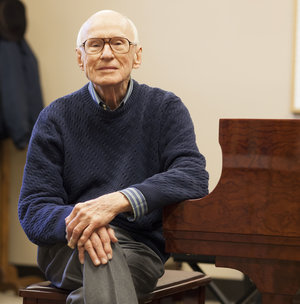
.2015 ~ Dr. Maurice Hinson died. He was one of America’s most respected authorities on piano literature. Many of the books in the OCMS library were edited by Dr. Hinson.  Mrs. O’Connor took a piano pedagogy class with him several years ago and learned so much from him.

Among his outstanding achievements, he received the Lifetime Achievement Award from the Music Teachers National Association at it Washington, D.C. convention in the spring of 1994, the Outstanding Alumni Award from the University of Florida in 1990, and the Outstanding Alumni Award from the University of Michigan in the fall of 1995. Dr. Hinson has performed, lectured and given master classes worldwide. His books and editions have become classic standards in the studios of serious piano teachers and students the world over. He was awarded the Franz Liszt Medal by the Hungarian Government in 1986. Hailed as a specialist in American piano music, some of his most recent articles appear in the New Grove Dictionary of American Music in the United States.

November 10 ~ Today in Music

today

. 1483 ~ Martin Luther, German religious reformer, composer of hymns and flutist

OCMS 1668 ~ François Couperin, French composer and organist
Read more about Couperin

.1888 ~ Fritz Kreisler, a 13-year-old violinist from Vienna, made his American debut in New York City.

.1900 ~ “Floradora” opened in New York City this day. The play was received by cheering audiences.

.1939 ~ Muggsy Spanier and his band recorded Dipper Mouth Blues on Bluebird Records.

OCMS 1944 ~ Tim Rice, British author and librettist
Read more about Rice

.1956 ~ Billie Holiday returned to the New York City stage at Carnegie Hall after a three-year absence. The concert was called a high point in jazz history.

.1969 ~ On this day, twenty years after the first release of “Rudolph the Red-Nosed Reindeer”, Gene Autry received a gold record for the single.

.1969 ~ “Can you tell me how to get … how to get to Sesame Street?” The classic, “Sesame Street” debuted on 170 Public Broadcasting stations and 20 commercial outlets. Created by the Children’s Television Workshop, the show starred endearing characters including Gordon, Susan, Bob, Bert, Ernie, the Cookie Monster, Oscar the Grouch and, of course, Big Bird!

.1986 ~ “Bruce Springsteen & The E Street Band Live/1975-85″, the long-anticipated album by ‘The Boss’, hit record stores this day. Fans made the LP a one~day sellout, buying over a million copies and generating more first-day dollars than any record in 30 years. It’s a five-disc, 40-song set.

.1994 ~ Carmen McRae passed away

.2015 ~ Allen Toussaint passed away.  He was a New Orleans-based pianist, songwriter and Rock and Roll Hall of Famer.

.2015 ~ Robert Lawson Craft died.  He was an American orchestral conductor, scholar and writer. Mr. Craft spent nearly a quarter-century as Stravinsky’s amanuensis, rehearsal conductor, musical adviser, globe-trotting traveling companion and surrogate son. After Stravinsky’s death in 1971, at 88, he was a writer, lecturer, conductor, public intellectual and keeper of the Stravinskian flame.

November 9 ~ Today in Music

today


OCMS 1881 ~ Johannes Brahms gave the first performance of his Piano Concerto No.2 in Budapest.

.1899 ~ “Mezz” Mezzrow, American jazz clarinetist and saxophonist

.1929 ~ Piero Cappuccili, Italian baritone

.1930 ~ Ivan Moravec, Czech pianist

.1938 ~ 24-year-old Mary Martin made her Broadway stage debut in the musical comedy “Leave It to Me”. She brought down the house as she sang My Heart Belongs to Daddy. And the critics raved about New York’s bright new star. The following year brought Martin a top-ten hit with the same song. Martin suddenly found herself singing duets with Bing Crosby; starring on “Broadway in One Touch of Venus” in 1943; “Lute Song” in 1946; touring in “Annie Get Your Gun”; and then taking on what would become her immortal role, that of Nellie in “South Pacific”. South Pacific was one of Broadway’s biggest hits and the cast album was one of the first of its kind, also a big seller. Then came Mary’s stage and TV performances as Peter Pan. This would become her signature role, a memorable moment as the petite actress flew through the air with Tinkerbell and fought the dangerous Captain Hook. Broadway called to Mary Martin again in 1959 for “The Sound of Music” and once more in 1966 for “I Do, I Do”. Back in 1951, Mary Martin recorded a duet with a young man who was also destined for instant and long-term stardom. The song they sang together was Get Out Those Old Records. The twenty-year-old was her son, Larry Hagman, who later played J.R. Ewing. This is one man that Mary Martin didn’t want to wash out of her hair!

.1955 ~ Harry Belafonte recorded Jamaica Farewell and Come Back Liza for RCA Victor. The two tunes completed the Calypso album which led to Belafonte’s nickname, ‘Calypso King’.

.1967 ~ The first issue of Rolling Stone was published. John Lennon was on the cover. The magazine said it was not simply a music magazine but was also about “…the things and attitudes that music embraces.”

.1969 ~ Simon and Garfunkel recorded what would become their signature tune, ‘Bridge Over Troubled Water’ with future member of Bread, Larry Knechtel on piano. Art wanted Paul to sing the song, but Paul insisted that Art’s voice was better suited for it. It was a decision that Paul would later say he regretted. The song won five awards at the 13th Annual Grammy Awards in 1971, including Grammy Award for Record of the Year and Song of the Year.

.1974 ~ Bachman Turner Overdrive went to No.1 on the US singles chart with ‘You Ain’t Seen Nothin’ Yet’. Randy Bachman stuttered through the lyrics of the demo recording as a private joke about his brother Gary, who had a speech impediment. The record company liked that take better than the non-stammering version and released it.

.2003 ~ Saxophonist Buddy Arnold, who performed with such jazz greats as Stan Kenton, Buddy Rich and Tommy Dorsey and co-founded a program to help musicians suffering from drug and alcohol abuse, died at the age of age 77. Born Arnold Buddy Grishaver, he began playing the saxophone at age 9. And by the time he was 16, he was touring as a professional sideman and performing at the Apollo Theater in Harlem with bandleader George Auld. After serving in the Army during World War II, Arnold joined the band of super-drummer Buddy Rich on a West Coast tour. Arnold earned his first recording credits in 1949 on the Mercury Records release of Gene Williams and the Junior Thornhill Band, and he toured with clarinetist Buddy DeFranco’s orchestra in 1951. But he soon descended into a decades-long struggle with drug addiction. Although he landed a recording contract with ABC Paramount in 1956 following an 18-month hospitalization, he was sentenced to prison in 1958 on an attempted burglary conviction. Pardoned two years later, he played with the Dorsey Band and toured with Stan Kenton. He later settled in Los Angeles and recorded four albums for Capitol Records. Arnold took a job in a drug treatment program after his early release from prison and went on to establish the Musician’s Assistance Program with his wife, Carole Fields, in 1992. The organization, dedicated to helping needy musicians obtain treatment for drug and alcohol addiction, has served more than 1,500 individuals during the past decade.