January 4 ~ Today in Music History

today


OCMS 1710 ~ Giovanni Battista Pergolesi, Italian Composer
More information about Pergolesi

. 1720 ~ Johann Friedrich Agricola, German organist and composer

. 1809 ~ Louis Braille, Inventor of the Braille system which enables the blind to read words and music. When he was only 3, Louise Braille, was permanently blinded in an accident with a leatherworking awl in his father’s saddlemaking shop in Coupvray, France. Several years later, he was admitted to a school for the blind, the Institution Nationale des Jeunes Aveugles. Later, as a teacher at the school, he worked at adapting Charles Barbier’s system of writing with points. Ironically, his method centered around using an awl-like stylus to punch marks in paper that could be felt and interpreted by the blind, allowing them to “read” with their fingertips. Braille’s work went unnoticed until after his death, in poverty, in 1852.

1874 ~ Joseph Suk, Czech violinist and composer
More information about Suk

. 1928 ~ NBC radio debuted one of radio’s first variety shows. “The Dodge Victory Hour” starred Will Rogers, Paul Whiteman and his Orchestra and singer Al Jolson. The cost to produce this one show was $67,600.

. 1932 ~ NBC Red presented “The Carnation Contented Hour”. The show continued on network radio for 19 years as a showcase for top singers and musicians.

. 1933 ~ Ray Starling, Arranger for Stan Kenton

. 1935 ~ Bert Ambrose and his orchestra recorded the song that became the group’s theme song. It was titled Hors d’oeuvres and was cut in London for Decca Records.

. 1935 ~ Bob Hope was first heard on network radio as part of “The Intimate Revue” with Jane Froman, James Melton and the Al Goodman Orchestra.

. 1936 ~ The first pop music chart based on national sales was published by “Billboard” magazine this day. Joe Venuti, jazz violinist, was at the top of the chart with a little ditty called Stop! Look! Listen!.

1937 ~ Grace Bumbry, American mezzo-soprano
More information about Bumbry

. 1942 ~ John McLaughlin, Rock guitarist

. 1944 ~ Arthur Conley, Singer
More information about Conley

. 1950 ~ RCA Victor announced that it would manufacture long-playing (LP) records. This news came two years after Columbia Records debuted the ‘album’.

. 1954 ~ Elvis Presley strolled into the Memphis Recording Service and put $4 on the counter. He recorded Casual Love and I’ll Never Stand in Your Way, two songs that so impressed record executive Sam Phillips that he had Elvis record his first professional sides for Sun Records the following August.

. 1956 ~ Barney Sumner (Bernie Albrecht) (Dicken), Guitarist, singer

. 1960 ~ Michael Stipe, Grammy Award-winning singer

. 1965 ~ The Fender Guitar Company was sold to CBS for $13 million.

. 1979 ~ With a new interest in Beatles music on this day, the Star Club reopened in Hamburg, Germany. None of The Beatles returned to their beginnings to attend the gala opening.

. 2000 ~ Fantasia 2000 Hit Imax Record

. 2001 ~ Les Brown, whose Band of Renown scored a No. 1 hit with Sentimental Journey during America’s big band era of the 1930s and ’40s, died of lung cancer at the age of 88. A conductor-clarinetist whose smooth arrangements of swing melodies transcended changes in musical tastes, Brown was cited in 1996 by the Guinness Book of Records recognized him as the leader of the longest lasting musical organization in pop music history. He started his professional career in 1936, and his Band of Renown was still performing about 60 dates a year as recently as five months ago, often conducted by son Les Brown Jr. Brown formed his Band of Renown in 1936. In the 1940s heyday of swing, Brown never achieved the greatness of Tommy Dorsey, Glenn Miller or Benny Goodman. But the band scored two hit records – Sentimental Journey, with Doris Day as vocalist, and the instrumental I’ve Got My Love to Keep Me Warm. Sentimental Journey, co-written with Ben Homer and Bud Green, became a theme for soldiers returning home from World War II. “The happiest times in my life were the days when I was traveling with Les and his band,” Day said. “I loved Les very much, I am going to miss his phone calls.” Brown’s career included a close association with Bob Hope. In 1950, he joined Hope for the first of 18 Christmas tours to entertain American troops at military bases around the world. Day also participated. “The world has lost a great musician,” Hope said. “I have lost my music man, my sideman, my straight man and a special friend.” As the first president of the Los Angeles chapter of the Academy of Recording Arts and Sciences, Brown helped make the Grammy Awards a televised event. He convinced Hope, Frank Sinatra and Bing Crosby to participate in the first telecast.

. 2004 ~ Jake Hess, a four-time Grammy winner who sang with some of the premier quartets in gospel music and influenced the career o fElvis Presley, died. He was 76. Hess, whose career spanned more than 60 years, is best known to contemporary audiences as a regular member of Bill Gaither’s Homecoming Friends, on various Christian and country music cable channels, including TBN and TNN. Hess joined The John Daniel Quartet in 1943 and reached stardom with The Statesmen Quartet. He was founder of The Imperials and sang with The Masters V. Each of these groups is enshrined in the Southern Gospel Music Hall of Fame, as is Hess. He is also a member of the Alabama Music Hall of Fame. As a teen, Elvis Presley was a regular at Statesmen concerts. Later, Hess was a backup singer on several of Presley’s Grammy-winning albums. When Presley died in 1977, Hess sang at his funeral, as he had at the funeral of country legend Hank Williams in 1953. Peter Guralnick, author of a two-volume biography of Presley, said the rock star always wanted to emulate the voices of Hess and crooner Roy Hamilton.

Get Them Started Early!

piano-gym

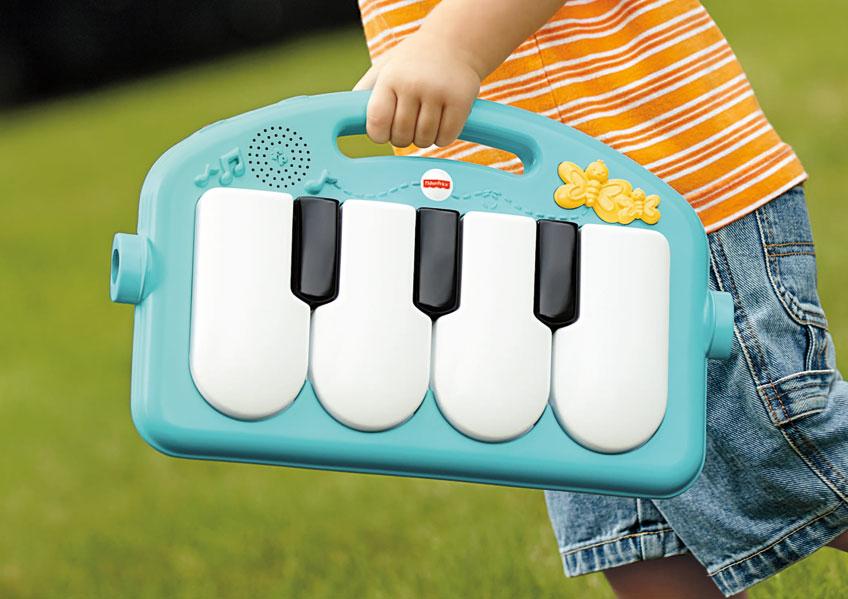
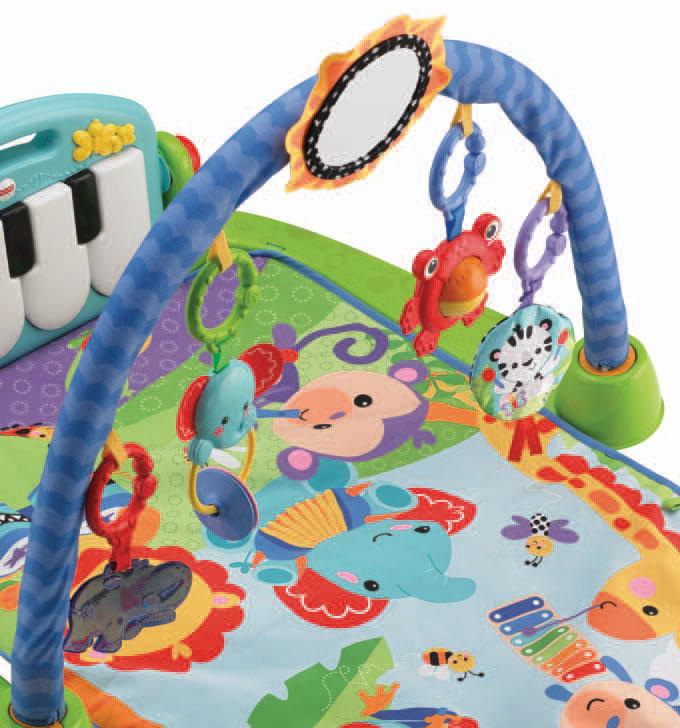
Baby kicks. Music plays. And that’s just the beginning. Movable toys on the overhead gym encourage baby to bat and grasp. Move the arch down for tummy-time play, or let baby sit and entertain you with a piano concert! And now with a removable piano, you can take the musical fun wherever you and baby go!


Features
  • Four ways to play: Lay & play; Tummy time; Sit & play; Take-along
  • Music rewards baby as she kicks the piano keys
  • Five busy activity toys & a large mirror
  • Toys include a hippo teether, elephant clackers, rollerball frog, and more
  • Short or long-play music—up to 15 minutes
  • Soft, comfy mat
  • Power/volume control
  • Requires 3 AA batteries

Toys overhead encourage batting and grasping, including a hippo teether, elephant clackers, rollerball frog and more!

Stretching & kicking

With four ways to play, this musical toy grows with your little one! From laying and playing, to tummy time and sitting up, busy activities at each stage are just the beginning of the fun. Baby’s in charge of the action as her little kicky feet activate music. Moveable toys overhead encourage batting and grasping, including a hippo teether, elephant clackers, rollerball frog and more.

When it’s time to change modes, move the arch down for tummy time or let baby sit up and entertain you with a piano concert. Remove the piano and take the fun on-the-go. Includes long and short play modes with up to 15 minutes of music. Power and volume control for quiet play.

Removable piano provides musical fun wherever you and baby go!

Learning through play!

As baby plays, new discoveries are made and key developmental skills get stronger and stronger. As baby stretches and kicks at the piano keys or bats at and reaches for the busy activity toys, gross motor skills are enhanced. Music, lights and bright colors stimulate baby’s senses.

Help baby learn the connection between actions and reactions. Put baby’s foot within reach of the piano. From there, it’s bound to happen: baby’s foot will connect and activate a fun and rewarding response from the gym!

It’s Never Too Late!

“I used to play piano, when I was a child,” Fitzgerald explained. “My mother liked it, because she could just say, ‘Go play piano!’ and I’d go off and play it by myself.”

Fitzgerald stopped playing when she was young, due to the large size of her family. None of her brothers or sisters were much interested in the instrument, and she began to feel uncomfortable about her hobby.

She explained that big families can’t afford everything, and that keeping an expensive object like a piano for just one person would have been selfish.

So Fitzgerald gave up her piano, grew up, and moved on. But she always remembered her love of the piano. And when she moved into the Cartmell Home, and found out about the lessons, she was hooked.

“I decided to give it a try,” she said, laughing, “I’ve already got one foot in the grave! When else will I get the chance to?”

Although Fitzgerald’s skill with the instrument has atrophied since she was younger, (she laughs while pointing out that her music practice book is designed for children) her innate talents are as sharp as ever.

“I’ve always had an ear for music” she explains, “I can play a tune just from hearing it.”

Read the entire article at Returning to the keys: retired techer takes piano lessons after decades.

How do we know if children are ready to begin music lessons? « Piano Pedagogy @ The New School for Music Study

child-piano

These days, there is much pressure for parents to begin their children in activities from an early age.  We know that children tend to pick up new skills easily and we want for them to have an opportunity to become experts at these new skills.  We also see curiosity, desire and eagerness to learn in our children and want to capitalize on that.

Music lessons are no exception.  We often get calls asking the question, “When is the best time to enroll my child in piano lessons?”  The answer to that is a tricky one, and varies for each child.  The right age for one may not be the right age for another.  Here are a few questions to ask yourself if you are considering enrolling your child in music lessons:

1.   Does my child have an attention span to sit still for chunks of time and listen to instruction?

Many teachers today are very creative in using off-bench activities during lessons and have a plethora of activities to make lessons fun and engaging.  However, the fact remains that your child will need to sit at the piano for some periods of time during the lesson.  It is important that your child have the attention span to do this.

Read more at  How do we know if children are ready to begin music lessons? « Piano Pedagogy @ The New School for Music Study.

Pianos are Popping Up all over Corvallis

Lee Eckroth couldn’t hold back a smile as piano music filled the air Wednesday afternoon on the streets of downtown Corvallis.

The moment marked the culmination of months of work from by Eckroth, Corvallis Imagination Music & Art founder David Lundahl and dozens of volunteers who’d banded together to create the first Play Corvallis, Play.

The art installation features eight theme-decorated pianos, placed at outdoor locations around Corvallis. It is open to the public from 7 a.m. to 10 p.m. daily through Aug. 16 as a prelude event to the Imagination Music and Art festival at Bruce Starker Arts Park on Aug. 15 and 16.

Play Corvallis, Play is intended to inspire appreciation of the arts, and it is just what it sounds like: an invitation to residents to stop and play the piano to showcase local musical creativity and art as a way of drawing attention to the fundraising at Corvallis public schools.

Read the whole article at Pianos are popping up all over Corvallis.

Finding The Right Teacher For Your Music-Loving Kid: Deceptive Cadence

NOT Mrs. O'Connor!

NOT Mrs. O’Connor!

See if a prospective teacher allows a trial lesson to test how the personalities mesh. And be sure to ask lots of questions. What’s the teacher’s background as a musician and as an instructor? What kinds of teaching materials and music does she use? How much practice time is expected for students, and does that vary by the student’s age? Does the teacher have access to student ensembles? What kinds of performance opportunities will he provide? Will the teacher allow the student to record the lesson? This can be a terrific practice aid, especially when it comes to remembering how something is supposed to sound. Does she teach any music theory or composition? What are the expectations for students and for their parents?

A good teacher can be a friendly, encouraging and inspiring presence — even when a student hits rough patches. He will point out the student’s weaknesses without being harsh or dismissive, suggest innovative ways to overcome challenges, and create engaging ways to tackle even rote activities like playing scales or honing fine motor skills. The instructor’s age and experience might or might not be a deciding factor; for example, I’m consistently impressed by the range of tricks my own child’s very youthful private teacher has up her sleeve to turn what could easily be drudgery into fun. Not to mention the huge helpings of good humor and patience she brings to her tiny charges!

Read more at Finding The Right Teacher For Your Music-Loving Kid : Deceptive Cadence : NPR.