June 9: Today’s Music History

happy-birthday-dd

National Donald Duck Day is observed annually on June 9th.  This day commemorates the birthday of the funny animal cartoon character, Donald Duck. Donald made his first screen debut on June 9, 1934, in The Wise Little Hen.

More about National Donald Duck Day

Be sure your student reads and listens to Today’s Daily Listening Assignment

• 1361 ~ Philippe de Vitry, French Composer and poet, died at the age of at 69

• 1656 ~ Thomas Tomkins, Composer, died

• 1717 ~ Louis Le Quointe, Composer, died at the age of 64

• 1810 ~ (Carl) Otto (Ehrenfried) Nicolai, Composer
More information about Nicolai

• 1828 ~ Carlo Marsili, Composer

• 1829 ~ Gaetano Braga, Composer

• 1832 ~ Manuel Garcia, Composer, died at the age of 57

• 1849 ~ Joseph Vezina, Composer

• 1849 ~ The term recital used for the first time to describe a solo performance by an instrumental player. The first recitalist was Franz Liszt

• 1865 ~ Carl Nielsen, Danish composer and conductor
More information about Nielsen

• 1865 ~ Alberic Magnard, Composer

• 1870 ~ Erik Drake, Composer, died at the age of 82

• 1879 ~ Oscar Back, Austrian-Dutch viola player

• 1886 ~ Kusaku Yamada, Composer

• 1888 ~ Hugo Kauder, Composer

• 1890 ~ The opera “Robin Hood” premiered in Chicago

• 1891 ~ Cole Porter, American composer and lyricist for the musical theater. His many famous musicals include “Anything Goes”, “Kiss Me Kate” and “Can Can”.
More information about Porter

• 1892 ~ Friedrich Wilhelm Langhans, Composer, died at the age of 59

• 1900 ~ Fred Waring, Musician, conductor and inventor of the Waring Blender

• 1904 ~ The London Symphony Orchestra presented its inaugural concert.

• 1905 ~ Walter Kraft, Composer

• 1912 ~ Edgar Evans, Tenor

• 1914 ~ Hermann Haller, Composer

• 1915 ~ Les Paul, Guitarist and inventor of the Les Paul guitar

• 1924 ~ Jelly-Roll Blues was recorded by blues great, Jelly Roll Morton

• 1927 ~ Franco Donatoni, Composer

• 1931 ~ Henrique Oswald, Composer, died at the age of 79

• 1932 ~ Natalia Janotha, Composer, died at the age of 76

• 1904 ~ Pal Karolyi, Composer

• 1934 ~ Jackie Wilson, Singer

• 1934 ~ Wild Jimmy Spruill, blues guitarist

• 1938 ~ Charles Wuorinen, American composer, won the Pulitzer Prize in 1980

• 1957 ~ Robert Oboussier, Composer, died at the age of 56

• 1958 ~ Purple People Eater by Sheb Wooley hit #1

• 1962 ~ Tony Bennett debuted in concert at Carnegie Hall in New York City

• 1963 ~ Barbra Streisand appeared on “Ed Sullivan Show”

• 1967 ~ Stefan Boleslaw Poradowski, Composer, died at the age of 64

• 1970 ~ Bob Dylan given honorary Doctorate of Music at Princeton University

• 1971 ~ Paul McCartney’s album “Ram” went gold

• 1972 ~ Bruce Springsteen signed a record deal with Columbia

• 1975 ~ David Frederick Barlow, Composer, died at the age of 48

• 1975 ~ Tony Orlando and Dawn received gold record for He Don’t Love You

• 1980 ~ Fourteenth Music City News Country Awards, Statler Brothers & Loretta Lynn

• 1984 ~ Cyndi Lauper’s first #1 Time After Times

• 1986 ~ Twentieth Music City News Country Awards, Statler Brothers & Loretta Lynn

• 1990 ~ Michael Jackson was hospitalized with inflamed rib cartilage

• 1991 ~ Claudio Arrau, Chilian/American pianist and composer, died at the age of 88

• 1991 ~ Bruce Springsteen wed his backup singer Patty Scialfa

• 1991 ~ Max van Praag, Dutch singer, died at the age of 77

• 1992 ~ Clarence Miller, Blues/jazz vocalist, died at the age of 69 of a heart attack

• 1993 ~ Arthur Alexander, Singer/songwriter, died at the age of 53

• 1995 ~ Frank Chacksfield, Conductor/arranger, died at the age of 81

• 2000 ~ Jazz bassist Burgher “Buddy” Jones, who played in big bands behind Peggy Lee and Frank Sinatra and toured with Harry James and Tommy Dorsey, died at the age of 76.

A native of Hope, Ark., Jones was a childhood friend of the late Virginia Kelley, mother of President Clinton. At 17, Jones went to the University of Kansas City, where he met and befriended saxophonist Charlie Parker. Jones later introduced Parker to his wife, Chan. Jones played in the Elliot Lawrence band, when its arrangers included Al Cohn, Tiny Kahn and Johnny Mandel. As a staff musician for CBS in New York in the 1950s and 1960s,

Jones played for the Jack Sterling radio show and in bands behind Lee and Sinatra. In 1996, Jones was inducted into the Arkansas Jazz Hall of Fame.

• 2020 ~ Bonnie Pointer, who rose to fame as a member of the Pointer Sisters, died at age 69.

Daily Listening Assignments ~ June 5, 2026

Happy Birthday is a song that I like to have each of my students learn at various levels appropriate to their level. When a friend or family member has a birthday, it’s great to be able to sit down and play.

It’s only been fairly recently that piano students could have this music in their books.

“Happy Birthday to You”, more commonly known as simply “Happy Birthday”, is a song that is traditionally sung to celebrate the anniversary of a person’s birth. According to the 1998 Guinness World Records, “Happy Birthday to You” is the most recognized song in the English language, followed by “For He’s a Jolly Good Fellow”.

The melody, or part you sing, of “Happy Birthday to You” comes from the song “Good Morning to All”, which has traditionally been attributed to American sisters Patty and Mildred J. Hill in 1893, although the claim that the sisters composed the tune is disputed.

Patty Hill was a kindergarten principal and her sister Mildred was a pianist and composer.  The sisters used “Good Morning to All” as a song that young children would find easy to sing.  The combination of melody and lyrics in “Happy Birthday to You” first appeared in print in 1912, and probably existed even earlier.

“Happy Birthday” in the style of Bach, Mozart, Beethoven, Mendelssohn, Chopin, Liszt, Dvorak, and Stravinsky.  Find the melody!

Lots of legal stuff below which you can skip…

None of the early appearances of the “Happy Birthday to You” lyrics included credits or copyright notices. The Summy Company registered a copyright in 1935, crediting authors Preston Ware Orem and Mrs. R. R. Forman. In 1988, Warner/Chappell Music purchased the company owning the copyright for US$25 million, with the value of “Happy Birthday” estimated at US$5 million. Based on the 1935 copyright registration, Warner claimed that the United States copyright will not expire until 2030, and that unauthorized public performances of the song are illegal unless royalties are paid to Warner. In one specific instance in February 2010, these royalties were said to amount to US$700. By one estimate, the song is the highest-earning single song in history, with estimated earnings since its creation of US$50 million.In the European Union, the copyright for the song expired on January 1, 2017.

The American copyright status of “Happy Birthday to You” began to draw more attention with the passage of the Sonny Bono Copyright Term Extension Act in 1998. When the U.S. Supreme Court upheld the Act in Eldred v. Ashcroft in 2003, Associate Justice Stephen Breyer specifically mentioned “Happy Birthday to You” in his dissenting opinion. American law professor Robert Brauneis, who extensively researched the song, concluded in 2010 that “It is almost certainly no longer under copyright.”

In 2013, based in large part on Brauneis’s research, Good Morning to You Productions, a company producing a documentary about “Good Morning to All”, sued Warner/Chappell for falsely claiming copyright to the song.  In September 2015, a federal judge declared that the Warner/Chappell copyright claim was invalid, ruling that the copyright registration applied only to a specific piano arrangement of the song, and not to its lyrics and melody.

In 2016, Warner/Chappell settled for US $14 million, and the court declared that “Happy Birthday to You” was in the public domain.

Legal stuff is finished and people can now sing and play “Happy Birthday to You” whenever and wherever they want.

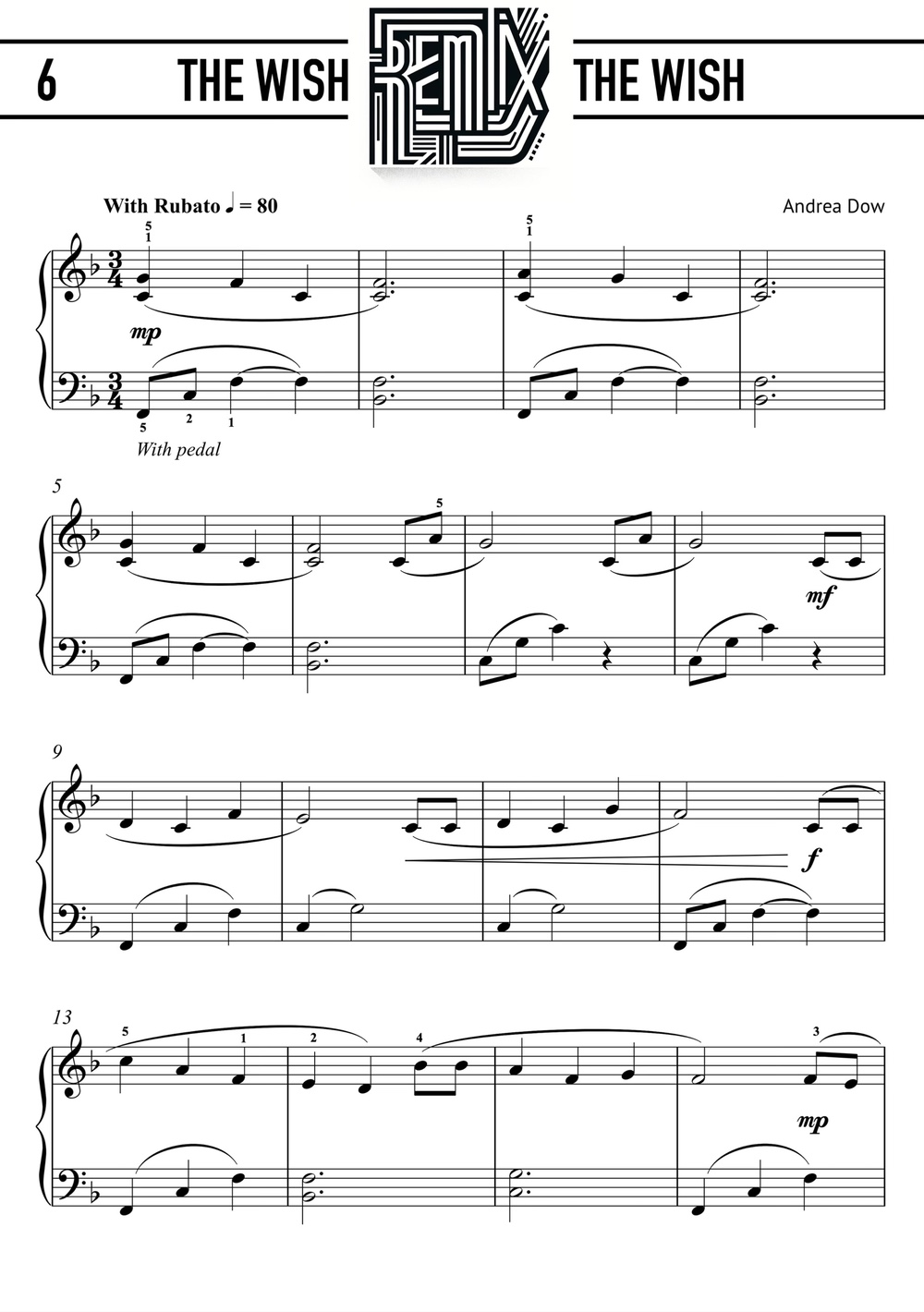
Students in Wunderkeys may play this version from Remix: Teen Hits from Kids Tunes

One of my all-time versions of Happy Birthday, in duet form – and I have the music if you want to tackle it.

May 8: Today’s Music History

1829 ~ Louis Moreau Gottschalk, American pianist and composer
Listen to Gottschalk’s music
More information on Gottschalk

• 1948 ~ Oscar Hammerstein I, Playwright, producer

• 1910 ~ Mary Lou Williams, American jazz pianist, composer and arranger

• 1911 ~ Robert Johnson, Blues Hall of Fame, singer, songwriter, guitarist, inducted into Rock and Roll Hall of Fame in 1986

• 1941 ~ Anita O’Day recorded Let Me Off Uptown on Okeh Records with Gene Krupa and his band.

• 1943 ~ Toni Tennille, Singer

• 1944 ~ Gary Glitter (Paul Gadd), Singer

• 1945 ~ Keith Jarrett, American jazz pianist and composer

• 1953 ~ Alex Van Halen, Amsterdam The Netherlands, Dutch drummer (Van Halen)

• 1960 ~ Hugo Alfven, Swedish composer (Midsommarvaka), died at the age of 88

• 1967 ~ Laverne Andrews, American singer (Andrews Sisters), died at the age of 55

. 1970 ~ The Beatles Final original album “Let It Be” was released by Apple Records.

• 1985 ~ Karl Marx, German composer/conductor, died at the age of 87

March 22: Today’s Music History

today


. 1687 ~ Jean-Baptiste Lully, French composer, died.  He was an Italian-born French composer, instrumentalist, and dancer who spent most of his life working in the court of Louis XIV of France. He is considered the chief master of the French baroque style.

. 1840 ~ Clara Wieck wrote a letter dated today to Robert Schumann.  Part of it said: “When I heard Liszt for the first time…I was overwhelmed and sobbed aloud, it so shook me.”

. 1842 ~ Carl August Nicolas Rosa, German violinist and composer. In 1873 he founded the Carl Rosa Opera Company.

. 1865 ~ Theophile Ysaye, Belgian composer and pianist

. 1868 ~ Hamish Maccunn, Scottish Romantic composer, conductor and teacher

. 1911 ~ Herman Jadlowker became the first opera singer to perform two major roles in the same day at the Metropolitan Opera House in New York City.

. 1920 ~ Fanny Waterman, DBE is a piano teacher and the founder, Chairman and Artistic Director of the Leeds International Pianoforte Competition. She is also president of the Harrogate International Music Festival.

. 1925 ~ The first Japanese radio station, Tokyo Shibaura, began broadcasting.

. 1930 ~ Stephen Sondheim, American composer and lyricist of musicals
More information about Sondheim

. 1936 ~ Glen Campbell, Singer and studio guitarist

. 1937 ~ Johnny Ferguson, Singer

. 1943 ~ Keith Relf, Recording artist of The Yardbirds

. 1943 ~ George Benson, American jazz and pop guitarist and singer

. 1944 ~ Jeremy Clyde, Singer with Chad & Jeremy

. 1947 ~ Harry Vanda, Guitarist with The Easybeats

. 1948 ~ Andrew Lloyd Webber, British composer
More information about Lloyd Webber

. 1948 ~ Randy Hobbs, Bass with The McCoys

. 1948 ~ The Voice of Firestone was the first commercial radio program to be carried simultaneously on both AM and FM radio stations.

. 1956 ~ Sammy Davis, Jr. starred in the play, Mr. Wonderful, in New York City. The critics were unkind, saying that they didn’t care for the production. Audiences, however, gave it ‘thumbs up’ and the show went on to be one of Broadway’s more popular musicals — catapulting Davis into the limelight. His father had already launched him into the vaudeville spotlight when Sammy was just three years old. By the time he was Mr. Wonderful, Sammy Davis, Jr. had played vaudeville and the nightclub circuit singing and dancing his way to the top over a twenty-eight-year period. He entertained us for sixty-two years!

. 1956 ~ Perry Como became the first major TV variety-show host to book a rock and roll act on his program. The ‘Incomparable Mr. C.’ booked Carl Perkins for the show and Perkins sang Blue Suede Shoes. 1962 ~ The play, I Can Get It For You Wholesale, opened on Broadway. It featured a 19-year-old named Barbra Streisand. She stopped the show at the famed Shubert Theatre in New York City. Streisand starred as Miss Marmelstein. Audiences kept coming back for more of Barbra for 300 performances.

. 1980 ~ The first CD (compact disc) was put on sale by RCA.  The first major artist to have his entire catalog converted to CD was David Bowie, whose 15 studio albums were made available by RCA Records in February 1985, along with four greatest hits albums.

. 1980 ~ Pink Floyd started a 4-week run in the #1 slot on the pop charts with their smash, Another Brick in the Wall. When the boys popped open their gold record and threw it on the stereo, they heard Flowers on the Wall by the Statler Brothers.

. 2015 ~ Norman O. Scribner, founder and artistic director of the Choral Arts Society of Washington, one of the region’s preeminent symphonic choirs, died

March 8: Today’s Music History

today

. 1714 ~ Carl Phillip Emanuel (C.P.E.) Bach, German composer
More information on C. P. E. Bach

. 1857 ~ Ruggero Leoncavallo, Italian composer
More information about Leoncavallo

. 1866 ~ “It is possible to be as much of a musician as Saint-Saëns;  it is impossible to be more of one!” ~ Franz Liszt on meeting fellow composer Camille Saint-Saëns in Paris.

. 1869 ~ Hector Berlioz, French composer (Symphony Fantastic), died at the age of 65

. 1889 ~ John Thompson, Piano educator

. 1911 ~ Alan Hovhaness, American composer
More information about Hovhaness

. 1922 ~ Cyd Charisse, Dancer

. 1927 ~ Dick Hyman, Pianist and music director for Arthur Godfrey

. 1945 ~ Michael Dolenz best known as the drummer vocalist of the television sitcom “The Monkeys” which appeared on American television from 1966 to 1968. He also wrote a number of the songs which later became hits including “Last Train to Clarksville” and “I’m a Believer”. He has also toured at various times since with reunion tours for “The Monkeys”. Micky stage name (“Micky Braddock” ) had TV experience prior to the formation of The Monkeys TV show from his time as the 10-year-old star of the Circus Boy series in the 1950s.

. 1961 ~ Conductor, Sir Thomas Beecham died at the age of 81.

. 1962 ~ The Beatles performed for the first time on the BBC in Great Britain. John, Paul, George and … Pete Best sang Dream Baby on the show, “Teenager’s Turn” on ‘Auntie Beeb’ (as the BBC was known).

. 1993 ~ Billy Eckstine, jazz singer (Fools Rush In), died at the age of 78 of stroke

. 1983 ~ William T Walton, English composer (Belhazzar’s feast), died at the age of 80

. 2001 ~ Ballet Legend Dame Ninette De Valois died at the age of 102. She was the founder of Britain’s Royal Ballet who launched dancer Margot Fonteyn on the road to stardom. De Valois, a strict and demanding disciplinarian with her pupils, was a gifted and theatrical choreographer who almost single-handedly put British ballet on the international stage. The doyenne of dance helped to nurture the talents of unknowns like Fonteyn and courted controversy in the 1960’s at the height of the Cold War when she invited Russian dancer Rudolph Nureyev to appear with her company. De Valois always gave credit to Russian impresario Sergei Diaghilev for teaching her all she knew. “Everything,” she once said of the Ballet Russe legend. “Diaghilev just managed the whole company. He knew all about the different teachers. He knew the types of teachers he wanted, he knew the type of ballet he wanted. He was a musician.” Born Edris Stannus in 1898 in the Irish county of Wicklow, she graduated from Irish jig to the ballet, worked with the writer W.B. Yeats at Dublin’s Abbey Theater and then, almost single-handedly, brought ballet to the fore in Britain. The famed diva, who adopted her professional name from an ancestor who had married into a French family, was first inspired at the age of 11 when she watched Anna Pavlova dancing The Dying Swan. In 1923, she joined Diaghilev’s troupe in Monte Carlo and began to lay the foundations of her own ballet empire. She gave up dancing herself after discovering that she had been suffering for years from polio. “It was no tragedy. I wasn’t that great,” she once said. In 1926, she opened her own ballet school in London. From the tiniest beginnings, she built up the Sadlers Wells Ballet in less than a decade. At the end of World War II, the company moved triumphantly into the Royal Opera House. A ballet dynasty was born. De Valois retired in 1963 but remained intimately involved in the ballet school, forever the sharp-tongued martinet who could strike terror in tomorrow’s ballet hopefuls.

. 2001 ~ Maude Rutherford, a singer and dancer in the glory days of black theater during the 1920s, died. She was believed to have been 104. Rutherford was billed as the Slim Princess when she worked with entertainers such as Fats Waller, Josephine Baker and Pearl Bailey. She was a featured performer and favorite at Harlem’s Cotton Club. Rutherford’s theater credits include: “Dixie to Broadway,” (1924), “Chocolate Sandals,” (1927), and “Keep Shufflin”‘ (1928). She retired from show business in 1950 and worked as a switchboard operator at an Atlantic City hotel.

. 2003 ~ Adam Faith, a square-jawed British singer who was briefly a Cockney challenger to Elvis Presley’s rock ‘n’ roll crown, died of a heart attack. He was 62. Born Terry Nelhams in west London in 1940, Faith was a handsome teenager who was playing with a skiffle music group – a mixture of jug band, acoustic, folk, blues and country and western styles – when he was spotted by producers of a British Broadcasting Corp. music program. Adopting the stage name Adam Faith, he became – alongside Cliff Richard, Tommy Steele and Billy Fury – a pop star of the pre-Beatles era. Developing a hiccuping delivery reminiscent of Buddy Holly, Faith had more than 20 British hits, including the chart-topping What Do You Want? and Poor Me. Faith also was a versatile actor, appearing in films like Beat Girl, Mix Me A Person and 1975’s Stardust opposite David Essex. In the 1970s he played a Cockney ex-con in the TV series Budgie.

. 2015 ~ Lew Soloff, American jazz trumpeter (Blood, Sweat and Tears), died at the age of 71

March 7: Today’s Music History

today

. 1809 ~ Johann Georg Albrechtsberger passed away.  He was was an Austrian musician.

. 1824 ~ “I am convinced that the soul and spirit of Mozart have passed into the body of young Liszt” ~ Review of a concert given on this day by Franz List in Paris.

. 1875 ~ Maurice Ravel, French composer
More information on Ravel

. 1907 ~ Victor Alphonse Duvernoy, French piano virtuoso,  composer and professor of piano at the Conservatoire de Paris, died at the age of 64

. 1917 ~ In the United States, RCA released the first jazz record ever: The Dixie Jazz Band One Step by Nick LaRocca’s Original Dixieland Jazz Band.

. 1917 ~ Robert Erickson, American composer

. 1939 ~ Guy Lombardo and his Royal Canadians recorded one of the most popular songs of the century. The standard, “Auld Lang Syne”, was recorded for Decca Records.

. 1955 ~ “Peter Pan”, with Mary Martin as Peter and Cyril Richard as Captain Hook, was presented as a television special for the first time.

. 1969 ~ The Apollo astronauts began this day of their space voyage by singing Happy Birthday.

. 1985 ~ The song We Are the World, from the album of the same name, was played on the radio for the first time. Forty-five of pop music’s top stars gathered together to combine their talents to record the music of Lionel Richie and Michael Jackson. Richie and Jackson sang, too, while Quincy Jones did the producing of the USA for Africa record. The proceeds of the multimillion-selling recording went to aid African famine victims. The project, coordinated by Ken Kragen, was deemed a huge success.

. 2001 ~ Frankie Carle, a big-band leader best known for Sunrise Serenade, at the age of 97. Carle, who died in Mesa, Ariz., reached the high point of his popularity during World War II, when he was the focus of a bidding war among bands. His repertory was wide, ranging from classics like a revival of Stephen Foster’s Swanee River, to a World War II release that anticipated the Allied victory called I’m Going to See My Baby. Although Carle’s music did not rank high on record industry charts after the 1940s, he still toured and played concerts into the 1980s, some 70 years after he began his musical career.

. 2003 ~ A four-day walkout by 325 Broadway musical orchestra members over the issue of the size of the orchestras required for Broadway shows, forcing nearly every Broadway musical to cancel performances. The Musicians claim they want to replace live music with a virtual orchestra, a couple of synthesizers and computer-generated sound.

. 2015 ~ Steve Zegree died.  He was a legendary jazz educator and former Western Michigan University Gold Company director.

It’s Carl Czerny’s Birthday!

czerny599

1791 ~ Carl Czerny, Austrian pianist and composer whose vast musical production amounted to over a thousand works.

His books of studies for the piano are still widely used in piano teaching.
More information on Czerny

Czerny is in the center top of this image. He influenced many!

Czerny is in the center top of this image. He influenced many!

At the age of fifteen, Czerny began a very successful teaching career. Basing his method on the teaching of Beethoven and Muzio Clementi, Czerny taught up to twelve lessons a day in the homes of Viennese nobility.

His ‘star’ pupils included Theodor Döhler, Stephen Heller, Sigismond Thalberg, Leopoldine Blahetka and Ninette de Belleville.In 1819, the father of Franz Liszt brought his son to Czerny.

Liszt became Czerny’s most famous pupil. He trained the child with the works of Beethoven, Clementi, Ignaz Moscheles and Johann Sebastian Bach. The Liszt family lived in the same street in Vienna as Czerny, who was so impressed by the boy that he taught him free of charge. Liszt was later to repay this confidence by introducing the music of Czerny at many of his Paris recitals.

Shortly before Liszt’s Vienna concert of 13 April 1823 (his final concert of that season), Czerny arranged, with some difficulty (as Beethoven increasingly disliked child prodigies) the introduction of Liszt to Beethoven. Beethoven was sufficiently impressed with the young Liszt to give him a kiss on the forehead. Liszt remained close to Czerny, and in 1852 his Études d’exécution transcendente (Transcendental Études) were published with a dedication to Czerny.

February 11: On This Day in Music

today

. 1830 ~ Peter Arnold Heise, Danish composer

. 1830 ~ Hans Bronsart Von Schellendorf, classical musician, pianist and composer who studied under Franz Liszt

. 1889 ~ John Mills, Guitarist, singer, bass with The Mills Brothers. He was father of the four Mills brothers and took youngest son John, Jr.’s place after his death in 1935

. 1908 ~ Josh White, ‘The Singing Christian’, blues/folk singer, guitarist

. 1912 ~ Rudolf Firkušný, Czech composer, classical pianist

. 1914 ~ Matt Dennis, Pianist, singer, recorded vocals for Paul Whiteman

. 1916 ~ The Baltimore Symphony Orchestra presented its first concert. The symphony was the first by a municipal orchestra to be supported by taxes.

. 1941 ~ Sergio Mendes, Brazilian jazz pianist and composer

. 1935 ~ Gene Vincent (Craddock), Singer, actor

. 1938 ~ Larry Clinton and his orchestra recorded Martha on Victor Records. Bea Wain was heard warbling the vocals on the tune.

. 1938 ~ Bobby”Boris” Pickett, American singer-songwriter (Monster Mash), born in Somerville, Massachusetts (d. April 25, 2007)

. 1939 ~ Gerry Goffin, Lyricist with Carole King and with Michael Masser

. 1940 ~ NBC radio presented “The Chamber Music Society of Lower Basin Street” for the first time. The famous Blue network series included several distinguished alumni — among them, Dinah Shore and Zero Mostel. The chairman, or host, of “The Chamber Music Society of Lower Basin Street” was Milton Cross. He would say things like, “A Bostonian looks like he’s smelling something. A New Yorker looks like he’s found it.” The show combined satire, blues and jazz and was built around what were called the three Bs of music: Barrelhouse, Boogie Woogie and Blues.

. 1968 ~ The new 20,000 seat Madison Square Garden officially opened in New York. It was the fourth arena to be named Madison Square Garden. The showplace for entertainment and sports opened with a gala show hosted by Bob Hope and Bing Crosby.

. 1973 ~ Ethan Iverson, US pianist, composer, and critic, born in Menomonie, Wisconsin

. 1982 ~ Eleanor Powell, American actress and tap dancer (Born to Dance), died of cancer at the age of 69

. 1985 ~ Ulysses Simpson Kay, composer, died at the age of 68

. 2001 ~ Dame Sonia Arova, a Bulgarian-born ballerina who danced with Rudolf Nureyev, at his request, in his American debut, died of pancreatic cancer at the age of 74. Arova was knighted by King Olaf V of Norway, only the second woman to receive that distinction. During her years as founding artistic director of the State of Alabama Ballet, Dame Sonia Arova changed the face of dance in Birmingham. Through a stage career that lasted three decades and a teaching career that occupied three more, she lived and breathed ballet. Born in Sofia, Bulgaria, Arova began dancing at age 6. By 8, she was studying ballet intensively in Paris. When war broke out in 1940, she escaped the Nazis’ advance with her English piano teacher in a harrowing flight during which their train was machine-gunned by German troops. Arriving in England, Arova was enrolled in an arts school and later joined the International Ballet. In 1965, Arova became artistic director of the Norwegian National Ballet, moved to California in 1971 to co-direct the San Diego Ballet and in 1975 accepted a teaching position at the Alabama School of Fine Arts. Maintaining her position at ASFA, she took over the newly formed State of Alabama Ballet in 1981 as artistic director, with her husband, Thor Sutowski, as artistic associate and choreographer. In 1996, the couple returned to San Diego, and she spent her last years with the San Diego Ballet.

. 2003 ~ Moses G. Hogan, 45, a pianist and choral conductor known for his contemporary arrangements of spirituals, died of a brain tumor in New Orleans. He was editor of the Oxford Book of Spirituals, published in 2001 by Oxford University Press. The book has become the U.S. music division’s top seller. Mr. Hogan also toured with his own singing groups, the Moses Hogan Chorale and Moses Hogan Singers. His arrangements, more than 70 of which have been published by the Hal Leonard publishing company, were performed by the Mormon Tabernacle Choir, soprano Barbara Hendricks and countertenor Derek Lee Ragin.

. 2003 ~ William L. “Weemo” Wubbena Jr., 72, a retired Army colonel who sang in Washington area barbershop quartets, died of cancer. Col. Wubbena was born in Marquette, Mich., and raised in Washington. He was a member of the Montgomery County chapter of the Society for the Preservation and Encouragement of Barber Shop Quartet Singing in America.

. 2012 ~ Mega-star and singer Whitney Houston died at the age of 48 in a Los Angeles hotel the night before the Grammy Awards. Plagued by substance abuse in her later life, Houston had become one of the most popular and celebrated singers in her early career.

. 2018 ~ Vic Damone [Vito Farinola], American singer (On the Street Where You Live), entertainer, actor and TV presenter (Vic Damone Show), died at the age of 89

February 2: On This Day in Music

It’s Groundhog Day…again!  In weather lore, if a groundhog, also known as a woodchuck, or marmot emerges from its burrow on this day and fails to see its shadow winter will soon end. If on the other hand, it is sunny and the groundhog sees its shadow, winter will continue for 6 more weeks.

. 1594 ~ Giovanni Perluigi da Palestrina, Italian composer, died at the age of 68

. 1714 ~ Gottfried August Homilius, German composer, cantor and organist

. 1789 ~ Armand-Louis Couperin, French composer, organist, and harpsichordist died at the age of 63

. 1875 ~ Fritz Kreisler, Austrian-born American violinist and virtuoso/composer Some of his best-known works are Caprice Viennois, Tambourin Chinois, Liebesfreud and La Gitana

. 1901 ~ Jascha Heifetz, Russian-born American violinist
Read quotes by and about Heifetz
More information about Heifetz

. 1911 ~ Jussi Björling, Swedish tenor

. 1912 ~ Burton Lane (Levy), Composer of How Are Things in Glocca Morra, That Old Devil Moon, Look to the Rainbow, How About You, I Hear Music, Come Back to Me, On a Clear Day You Can See Forever, How Could You Believe Me?; His Broadway musicals were Finian’s Rainbow (collaboration with Yip Harburg), On a Clear Day You Can See Forever (collaboration with Alan Jay Lerner). He contributed songs to over 30 films: Babes on Broadway, Royal Wedding, Ship Ahoy, St. Louis Blues and credited with discovering Judy Garland

. 1927 ~ Stan Getz (Stanley Gayetzby), American jazz tenor saxophonist

. 1937 ~ Tom Smothers, Entertainer, The Smothers Brothers Comedy Hour, The Smothers Brothers Show, The Steve Allen Show, Dick’s Brother

. 1937 ~ Guy Lombardo and his orchestra recorded one of Guy’s most famous tunes. Boo Hoo was waxed on Victor Records and became one of the group’s all-time great hits.

. 1940 ~ Alan Caddy, Guitarist with The Tornados

. 1941 ~ Serge Alexandrovich Tcherepnin, composer

. 1942 ~ Graham Nash, Singer with Crosby, Stills, Nash and Young

. 1947 ~ Peter Lucia, Drummer with Tommy James and The Shondells

. 1945 ~ The first 45 RPM vinyl record was released. It was one of the most popular ways for music lovers to enjoy their favorite song without buying an entire record. The cassette single during the 1980s and 1990s was a comparable format.

. 1949 ~ Ross Valory, Bass with Journey

. 1959 ~ The Coasters tune, Charlie Brown, was released. The tune went to #2 and stayed there for three weeks, but didn’t make it to the top spot of the charts. A catchy song (“Fee fee fi fi fo fo fum. I smell smoke in the auditorium…”), it was on the charts for a total of 12 weeks. The song at number one, preventing Charlie Brown from reaching the top, was Venus, by Frankie Avalon.

. 1996 ~ Gene Kelly, American actor and dancer (Singin’ in the Rain), died at the age of 83

. 2001 ~ French pianist Nicole Henriot, who entered the Paris Conservatory at age 7 and went on to perform around the globe with conductor Charles Munch, died at the age of 75. Emerging on the world music scene after World War II, Henriot built her reputation on interpretations of works from Liszt to Prokofiev, and especially French composers such as Ravel, Fauré and Milhaud. She was most famous for her performances with Munch, music director of the Boston Symphony from 1949 to 1962. Munch, who died in 1968, was the uncle of Henriot’s husband. Born in 1925, Henriot won the Paris Conservatory’s first prize at age 13. During the war, Henriot gave aid to her brother, a member of the French Resistance. When Gestapo agents searched her home in 1944, she managed to destroy her brother’s secret documents but was badly beaten. After the war, Henriot became the first French pianist to appear in Britain and began an international tour that took her from Scandinavia to Egypt. She made her American debut in 1948 as a soloist with the New York Philharmonic under Munch’s direction. When Munch formed the Orchestra of Paris in 1967, Henriot was one of the fledgling orchestra’s first soloists. In the 1970s and 1980s, Henriot devoted herself to teaching, and worked at the Conservatory of Liege, Belgium, and at the Walloon Conservatory of Brussels.

. 2001 ~ Victor Norman, who founded the Eastern Connecticut Symphony Orchestra and conducted the group for three decades, died at the age of 95. Colleagues said Norman was a visionary who needed to be as skilled in politics as he was in music to keep the symphony together. “He had this idea that a symphony orchestra could be created around here, when really it had been tried several times before, never with any kind of significant success,” said Charles Frink, a New London composer who studied with Norman. Norman founded the New London Civic Orchestra in 1946. It merged with the Willimantic Orchestra in 1952 to become the Eastern Connecticut Symphony Orchestra. He stepped down from the podium in 1980. In his retirement, Norman composed music. Two of his orchestral pieces were performed by the New Britain Symphony Orchestra and the Westminster Community Orchestra in Princeton, N.J. His memoirs, “Victor Norman: A Life in Music, a Lifetime of Learning,” were published in 1999.

. 2015 ~ French piano virtuoso Aldo Ciccolini died at age 89. Born on August 15, 1925, into a musical family in Naples, Aldo Ciccolini was a child prodigy, beginning composition classes in the city’s conservatory at age nine.