June 7: Today’s Music History

today

Be sure your student reads and listens to Today’s Daily Listening Assignment

• 1571 ~ Pier Francesco Corteccia, Composer, died at the age of 68

• 1730 ~ Georg von Pasterwiz, Composer

• 1736 ~ Karl Frieberth, Composer

• 1778 ~ Johann Georg Zechner, Composer, died at the age of 62

• 1784 ~ Jean-Baptiste Canavas, Composer, died at the age of 71

• 1789 ~ Vaclav Jan Kopriva, Composer, died at the age of 81

• 1863 ~ Franz Xavier Gruber, Composer, died at the age of 75

• 1833 ~ Alexander Ritter, Composer

• 1846 ~ Wladyslaw Gorski, Composer

• 1865 ~ Guido Gasperini, Composer

• 1867 ~ Luigi Maurizio Tedeschi, Composer

• 1873 ~ Landon Ronald, British composer, pianist and teacher

• 1874 ~ Theodor Streicher, Composer

• 1885 ~ Percy Brier, Composer

• 1891 ~ Athos Palma, Composer

• 1893 ~ Johann Schrammel, Composer, died at the age of 43

• 1897 ~ George Szell, Hungarian-born American conductor

• 1909 ~ Actress Mary Pickford made her motion picture debut in “The Violin Maker of Cremona”.

• 1911 ~ Franz Reizenstein, Composer

• 1911 ~ Silas Roy Crain, Singer/arranger/songwriter

• 1915 ~ Benjamin Lambord, Composer, died at the age of 35

• 1917 ~ Dean Martin (Dino Crocetti), Singer

• 1922 ~ Hubert Du Plessis, Composer

• 1926 ~ Dick Williams, Choral director of the Andy Williams Show

• 1926 ~ Henry Charles Tonking, Composer, died at the age of 63

• 1928 ~ Charles Strouse, American of popular music

• 1931 ~ Henry Weinberg, Composer

• 1932 ~ Emil Pauer, Composer, died at the age of 76

• 1934 ~ Phillip Entremont, Pianist

• 1934 ~ Samuel Lipman, Music critic

• 1934 ~ Wynn Stewart, Singer

• 1939 ~ Larry Clinton and his orchestra recorded In a Persian Market (by Ketelbey) on Victor Records.

• 1940 ~ Tom Jones, Grammy Award-winning singer

• 1941 ~ Jaime Laredo, Bolivian-born American violinist Clarence White (1944) Guitarist with the Byrds

• 1945 ~ Ruben Marcos Campos, Composer, died at the age of 69

• 1945 ~ The opera “Peter Grimes” by Benjamin Britten, premiered in London, at Sadler’s Wells Theater.

• 1948 ~ Georges Adolphe Hue, Composer, died at the age of 90

• 1949 ~ Due to an impending lawsuit that stemmed from Milton Berle’s TV show, comedienne Cathy Mastice held the first musical press conference. She sang her way into announcing the court action. Due to the publicity she received, Ms. Mastice became an overnight success.

• 1953 ~ Kukla, Fran (Allison) and Ollie, along with the Boston Pops Orchestra under the direction of Arthur Fiedler, were featured on the first network telecast in ‘compatible color’. The program was broadcast from Boston, MA.

• 1958 ~ Prince (Prince Rogers Nelson), Singer

• 1963 ~ First Rolling Stones TV appearance (Thank Your Lucky Stars)

• 1965 ~ Pierre Cardevielle, French Composer/conductor, died at the age of 59

• 1969 ~ “Johnny Cash Show,” debuted on ABC~TV

• 1969 ~ Bob Dylan and Johnny Cash combined on a Grand Ole Opry TV special

• 1969 ~ Tommy James & Shondells released Crystal Blue Persuasion

• 1970 ~ The Who’s rock opera “Tommy” was performed at NY’s Lincoln Center

• 1972 ~ “Grease” opened at Broadhurst Theater NYC for 3,388 performances

• 1974 ~ The Entertainer by Scott Joplin, used in the motion picture The Sting, earned a gold record for pianist and conductor, Marvin Hamlisch.

• 1975 ~ Thank God I’m a Country Boy, by John Denver hits #1

• 1976 ~ Bobby Hackett, Jazz cornetist/orchestra leader, died at the age of 61

• 1982 ~ Sixteenth Music City News Country Awards: Barbara Mandrell

• 1983 ~ Daniele Amfiteatrov, Composer, died at the age of 81

• 1990 ~ Michael Jackson hospitalized for chest pains

• 1991 ~ Singer Jimmy Osmond wed Michelle Larson

• 1993 ~ Prince celebrated his birthday by changing his name to a symbol and calling himself The Artist Previously Known as Prince. He went back to “Prince” in 2000

Daily Listening Assignments ~ June 7, 2025

Today, we’ll be listening to the end of the William Tell Overture by Gioachino Rossini.  This piece, originally the overture to an opera, has been arranged for piano and is in several method books, including Piano Pronto Movements 1 and 2.  It’s also in Bastien Book 4 and Piano Maestro.
The original story

Maybe your grandparents watched the original Lone Ranger

Or you saw the newer Lone Ranger with Johnny Depp

Here’s the entire William Tell Overture played by an orchestra

Piano Solo

Franz Liszt made a really hard version for piano solo. See if you can follow along!

Piano Duet (1 piano, 4 hands)

Piano Duet arranged by Louis Moreau Gottschalk

Piano Duo (2 pianos, 8 hands)

Piano Quartet (4 pianos, 16 hands)

For pipe organ

For synthesizer

And then things get nuts with cartoons. Lots of cartoons used this music. Here are Mickey Mouse and friends

And Spike Jones

Handbells…

Poor Rossini – I think he’d have a fit if he knew how is music was being used.

Have a nice day!

June 6: Today’s Music History

today

Be sure your student reads and listens to Today’s Daily Listening Assignment

• 1661 ~ Giacomo Antonio Perti, Composer

• 1676 ~ Georg Reidel, Composer

• 1722 ~ Adrien Trudo Sale, Composer

• 1735 ~ Anton Schweitzer, Composer

• 1735 ~ Georg Osterreich, Composer, died at the age of 71

• 1747 ~ Jean Barriere, Composer, died

• 1785 ~ Johann Michael Demmler, Composer, died at the age of 36

• 1807 ~ Adrien François Servais, Composer

• 1735 ~ Francesco Antonio Norberto Pinto (1815) Composer

• 1819 ~ William Howard Glover, Composer

• 1840 ~ John Stainer, Organ composer

• 1852 ~ Tommaso Marchesi, Composer, died at the age of 79

• 1861 ~ Giuseppe Concone, Italian singing teacher, died at the age of 59

• 1869 ~ Siegfried Wagner, German opera composer/conductor

• 1878 ~ Gottfried Herrmann, Composer, died at the age of 70

• 1881 ~ Henry Vieuxtemps, Belgian Composer, died at the age of 61

• 1883 ~ Ciprian Porumbescu, Composer, died at the age of 29

• 1885 ~ The opera “Lakme” was produced in Paris

• 1891 ~ Istvan Kardos, Composer

• 1893 ~ Ludovic Feldman, Composer

• 1894 ~ Sabin V Dragoi, Composer

• 1891 ~ Ted Lewis (Theodore Leopold Friedman), Clarinettist, singer, bandleader with Ted Lewis & His Band.

• 1902 ~ Avraham Daus, Composer

• 1902 ~ James Melvin Lunceford, American jazz dance-band leader
More information about Lunceford

• 1903 ~ Aram Khachaturian, Armenian composer
More information about Khachaturian

• 1905 ~ John Gart, Russian orchestra leader of the Paul Winchell Show

• 1910 ~ Toshitsugu Ogiwara, Composer

• 1915 ~ Vincent Persichetti, American composer

• 1917 ~ Iacob Moresianu, Composer, died at the age of 59

• 1922 ~ Ian Hamilton, Composer

• 1922 ~ Lillian Russell, Entertainer, died at the age of 60

• 1924 ~ Serge Nigg, Composer

• 1926 ~ Klaus Tennstedt, German conductor

• 1926 ~ Henry Tate, Composer, died at the age of 52

• 1928 ~ Heinrich Gottlieb Noren, Composer, died at the age of 67

• 1929 ~ Boguslaw Schaffer, Composer

• 1931 ~ There Ought To Be A Moonlight Saving Time by Guy Lombardo hit #1

• 1934 ~ Philippe Entremont, French pianist/conductor, Vienna Chamber Orchestra

• 1935 ~ Misja Mengelberg, Dutch jazz pianist/composer

• 1935 ~ Jacques Urlus, tenor (Opera of Leipzig, Song of the Earth), died at the age of 68

• 1936 ~ Levi Stubbs (Stubbles), Lead singer of the popular R&B group, the Four Tops. The group was signed to Motown Records in 1963 and Levi had a number of successful songs with the Four Tops throughout the 1960s and 1970s including, “Baby I Need Your Loving,” “I Can’t Help Myself (Sugar Pie, Honey Bunch),” and “Reach Out I’ll Be There.” In addition to his singing career, Stubbs did a little voice work as he provided the voice of Audrey II in the film version of Little Shop of Horrors in 1986 and voiced the character of Mother Brain in the cartoon Captain N: The Game Master from 1989 to 1991.

• 1939 ~ Gary “US” Bonds (Anderson), Singer/songwriter

• 1939 ~ Louis Andriessen, Dutch Composer

• 1940 ~ Phillip Rhodes, Composer

• 1943 ~ Joe Stampley, Country singer

• 1944 ~ Peter Albin, Bass, guitar & vocals with Big Brother and The Holding Company

• 1944 ~ Monty Alexander, Jazz musician, piano

• 1955 ~ Bill Haley and Comets, Rock Around the Clock hit #1

• 1958 ~ Lily Theresa Strickland, Composer, died at the age of 71

• 1962 ~ The Beatles met their producer George Martin for first time. After listening to a playback of the audition tapes, Martin said, “They’re pretty awful.” He changed his mind after meeting the group, however.

• 1964 ~ The Beatles arrived in the Netherlands

• 1966 ~ Claudette Orbison, wife of singer Roy, died in a motorcycle crash

• 1971 ~ Arnold Elston, Composer, died at the age of 63

• 1971 ~ John Lennon and Yoko Ono unannounced appearance at Fillmore East in NYC

• 1971 ~ For the last time, we saw Polish dancing bears, a little mouse named Topo Gigio, remembered The Beatles, The Dave Clark Five, the comedy of Jackie Mason, John Byner, Rich Little, Richard Pryor and so many more, as The Ed Sullivan Show left CBS-TV. Gladys Knight and The Pips and singer Jerry Vale appeared on the final show. The Ed Sullivan Show had been a showcase for more than 20 years for artists who ranged from Ethel Merman to Ella Fitzgerald, from Steve (Lawrence) and Eydie (Gorme) to The Beatles. The Ed Sullivan Show was the longest-running variety show on TV ~ a “rillly big sheeeew.”

• 1991 ~ Stan Getz, Jazz saxophonist (Girl from Ipanema), died at the age of 64

• 1994 ~ Willie Humphrey, Jazz clarinetist, died at the age of 93

• 1995 ~ Imam Elissa, Singer, died at the age of 76

• 2006 ~ Billy Preston, American soul musician, singer and pianist, 5th Beatle (David Brenner Show), died following long-term health issues at the age of 59

• 2006 ~ Hilton Ruiz, Puerto Rican-American jazz pianist died

• 2010 ~ Marvin Isley, American Musician The Isley Brothers died

• 2015 ~ Ronnie Gilbert, American folk singer (The Weavers), died at the age of 88

Daily Listening Assignments ~ June 6, 2025


What can I say about John Cage’s 4′33″?  Pretty much anyone can play this anytime.

It consists of the pianist going to the piano, and not hitting any keys for four minutes and thirty-three seconds. (He uses a stopwatch to time this.) In other words, the entire piece consists of silence or rests.

On the one hand, as a musical piece, 4’33” leaves almost no room for the pianist’s interpretation: as long as he watches the stopwatch, he can’t play it too fast or too slow; he can’t hit the wrong keys; he can’t play it too loud, or too melodramatically, or too subduedly.

On the other hand, what you hear when you listen to 4’33” is more a matter of chance than with any other piece of music — nothing of what you hear is anything the composer wrote.

With orchestra and soloist

Next time you come to a lesson and haven’t practiced, just tell me you’re playing Cage’s 4’33”!

June 5: Today’s Music History

today

Be sure your student reads and listens to Today’s Daily Listening Assignment

• 1625 ~ Orlando Gibbons, English organist/composer, died at the age of 41

• 1665 ~ Nicolas Bernier, Composer

• 1686 ~ Cristoph Raupach, Composer

• 1722 ~ Johann Kuhnau, Composer, died at the age of 62

• 1759 ~ Theodor Zwetler, Composer

• 1785 ~ Gottfried August Homilius, Composer, died at the age of 71

• 1798 ~ Alexey Fyodorovich L’vov, Composer

• 1813 ~ Prosper Philippe Catherine Sainton, Composer

• 1816 ~ Giovanni Paisiello, Italian Composer (Serva Padrona), died at the age of 76

• 1826 ~ Carl Maria von Weber, German Composer (Oberon), died at the age of 39
Read more about von Weber

• 1826 ~ Ivar Christian Hallstrom, Composer

• 1852 ~ Tomasz Napoleon Nidecki, Composer, died at the age of 45

• 1861 ~ Tomas Genoves y Lapetra, Composer, died at the age of 55

• 1863 ~ Arthur Somervell, Composer

• 1868 ~ Anselm Huttenbrenner, Composer, died at the age of 73

• 1879 ~ Adolf Wiklund, Composer

• 1895 ~ August Baeyens, Flemish Composer of Coriolanus

• 1885 ~ Julius Benedict, Composer (Protoghesi), died at the age of 80

• 1894 ~ Immanuel Faisst, Composer, died at the age of 70

• 1908 ~ Luca Fumagalli, Composer, died at the age of 71

• 1909 ~ Alfred Uhl, Composer

• 1913 ~ Friedrich Wildgans, Composer

• 1922 ~ Specs (Gordon) Powell, Musician: drummer: CBS staff musician

• 1923 ~ Daniel Pinkham, American composer

• 1925 ~ Bill Hayes, Singer, entertainer

• 1927 ~ Paul Lacombe, Composer, died at the age of 89

• 1932 ~ Pete Jolly (Cragioli), Pianist

• 1937 ~ Stanley Lunetta, Composer

• 1941 ~ Martha Argerich, Brazilian pianist

• 1941 ~ Floyd Butler, Singer with Fifth Dimension and Friends of Distinction

• 1941 ~ Roy Eldridge was featured on trumpet and vocal as drummer Gene Krupa and his band recorded After You’ve Gone for Okeh Records.

• 1942 ~ Sammy Kaye and his orchestra recorded the classic I Left My Heart at the Stage Door Canteen for Victor Records.

• 1942 ~ Charles Dodge, Composer

• 1943 ~ Bill Hopkins, Composer

• 1944 ~ Riccardo Zandonai, Composer, died at the age of 61

• 1945 ~ Don Reid, Singer, Grammy Award-winning group: The Statler Brothers and CMA Vocal Group of the Year from 1972 to 1980

• 1946 ~ Fred Stone, Singer with Sly and the Family Stone

• 1947 ~ Laurie Anderson, American composer and performance artist

• 1956 ~ Kenny G (Gorelick), Saxophonist. Kenny G is one of the most successful international musicians, a best-selling artist with over 75 million record sales worldwide. He began playing the saxophone at the age of 10 and played music professionally while at University for various bands. In 1982 he got his big break and was signed to Arista Records and released his first solo album. Throughout his career he has worked with top artists including Patti LaBelle, Aretha Franklin, Frank Sinatra, Celine Dion, Smokey Robinson, Natalie Cole, and many others. He has also worked on several soundtracks including The Bodyguard. He has been nominated for 15 Grammy Awards and has won one in 1994 for his instrumental “Forever in Love.”

• 1956 ~ Elvis Presley made his second appearance on Milton Berle’s Texaco Star Theatre. Presley sang Heartbreak Hotel, his number one hit. The TV critics were not kind to Elvis’ appearance on the show. They panned him, saying his performance looked “like the mating dance of an aborigine.”

Also in 1956,  Presley introduced his new single, “Hound Dog,” on The Milton Berle Show. and scandalized the audience with his suggestive hip gyrations.

• 1959 ~ Bob Zimmerman graduated from high school in Hibbing, MN. Zimmerman was known as a greaser to classmates in the remote rural community, because of his long sideburns and leather jacket. Soon, Zimmerman would be performing at coffee houses at the University of Minnesota in Minneapolis, and later, in Greenwich Village in New York City. He would also change his name to Bob Dylan (after poet Dylan Thomas, so the story goes).

• 1964 ~ David Jones and The King Bees had their first record, Liza Jane, released by Vocalion Records of Great Britain. Less than a decade later, we came to know Jones better as David Bowie.

• 1965 ~ “Wooly Bully” by Sam the Sham and Pharaohs hit #2

• 1971 ~ Marky Mark (Mark Wahlberg), Guitarist, singer with Marky Mark and The Funky Bunch

• 1972 ~ Maureen McGovern quit her job as a full-time secretary for a new career as a full-time singer. Maureen was part of a trio before recording as a solo artist in July, 1973. Her first song, The Morning After, from the movie, The Poseidon Adventure, was a million-seller. She also sang the theme, Different Worlds, from ABC-TV’s Angie, and Can You Read My Mind from the movie, Superman. Ms. McGovern starred in Pirates of Penzance for 14 months on Broadway.

• 1993 ~ Conway Twitty, Country star (Linda on My Mind), died at the age of 59 during surgery

• 1994 ~ Ish Kabbible (Merwyn A Bogue), Cornetist with Kay Kyser, died at the age of 86

• 1999 ~ Mel Torme passed away

• 2016 ~ Phyllis Curtin, American soprano (New York City Opera), died at the age of 94

Daily Listening Assignments ~ June 5, 2025

Happy Birthday is a song that I like to have each of my students learn at various levels appropriate to their level. When a friend or family member has a birthday, it’s great to be able to sit down and play.

It’s only been fairly recently that piano students could have this music in their books.

“Happy Birthday to You”, more commonly known as simply “Happy Birthday”, is a song that is traditionally sung to celebrate the anniversary of a person’s birth. According to the 1998 Guinness World Records, “Happy Birthday to You” is the most recognized song in the English language, followed by “For He’s a Jolly Good Fellow”.

The melody, or part you sing, of “Happy Birthday to You” comes from the song “Good Morning to All”, which has traditionally been attributed to American sisters Patty and Mildred J. Hill in 1893, although the claim that the sisters composed the tune is disputed.

Patty Hill was a kindergarten principal and her sister Mildred was a pianist and composer.  The sisters used “Good Morning to All” as a song that young children would find easy to sing.  The combination of melody and lyrics in “Happy Birthday to You” first appeared in print in 1912, and probably existed even earlier.

“Happy Birthday” in the style of Bach, Mozart, Beethoven, Mendelssohn, Chopin, Liszt, Dvorak, and Stravinsky.  Find the melody!

Lots of legal stuff below which you can skip…

None of the early appearances of the “Happy Birthday to You” lyrics included credits or copyright notices. The Summy Company registered a copyright in 1935, crediting authors Preston Ware Orem and Mrs. R. R. Forman. In 1988, Warner/Chappell Music purchased the company owning the copyright for US$25 million, with the value of “Happy Birthday” estimated at US$5 million. Based on the 1935 copyright registration, Warner claimed that the United States copyright will not expire until 2030, and that unauthorized public performances of the song are illegal unless royalties are paid to Warner. In one specific instance in February 2010, these royalties were said to amount to US$700. By one estimate, the song is the highest-earning single song in history, with estimated earnings since its creation of US$50 million.In the European Union, the copyright for the song expired on January 1, 2017.

The American copyright status of “Happy Birthday to You” began to draw more attention with the passage of the Sonny Bono Copyright Term Extension Act in 1998. When the U.S. Supreme Court upheld the Act in Eldred v. Ashcroft in 2003, Associate Justice Stephen Breyer specifically mentioned “Happy Birthday to You” in his dissenting opinion. American law professor Robert Brauneis, who extensively researched the song, concluded in 2010 that “It is almost certainly no longer under copyright.”

In 2013, based in large part on Brauneis’s research, Good Morning to You Productions, a company producing a documentary about “Good Morning to All”, sued Warner/Chappell for falsely claiming copyright to the song.  In September 2015, a federal judge declared that the Warner/Chappell copyright claim was invalid, ruling that the copyright registration applied only to a specific piano arrangement of the song, and not to its lyrics and melody.

In 2016, Warner/Chappell settled for US $14 million, and the court declared that “Happy Birthday to You” was in the public domain.

Legal stuff is finished and people can now sing and play “Happy Birthday to You” whenever and wherever they want.

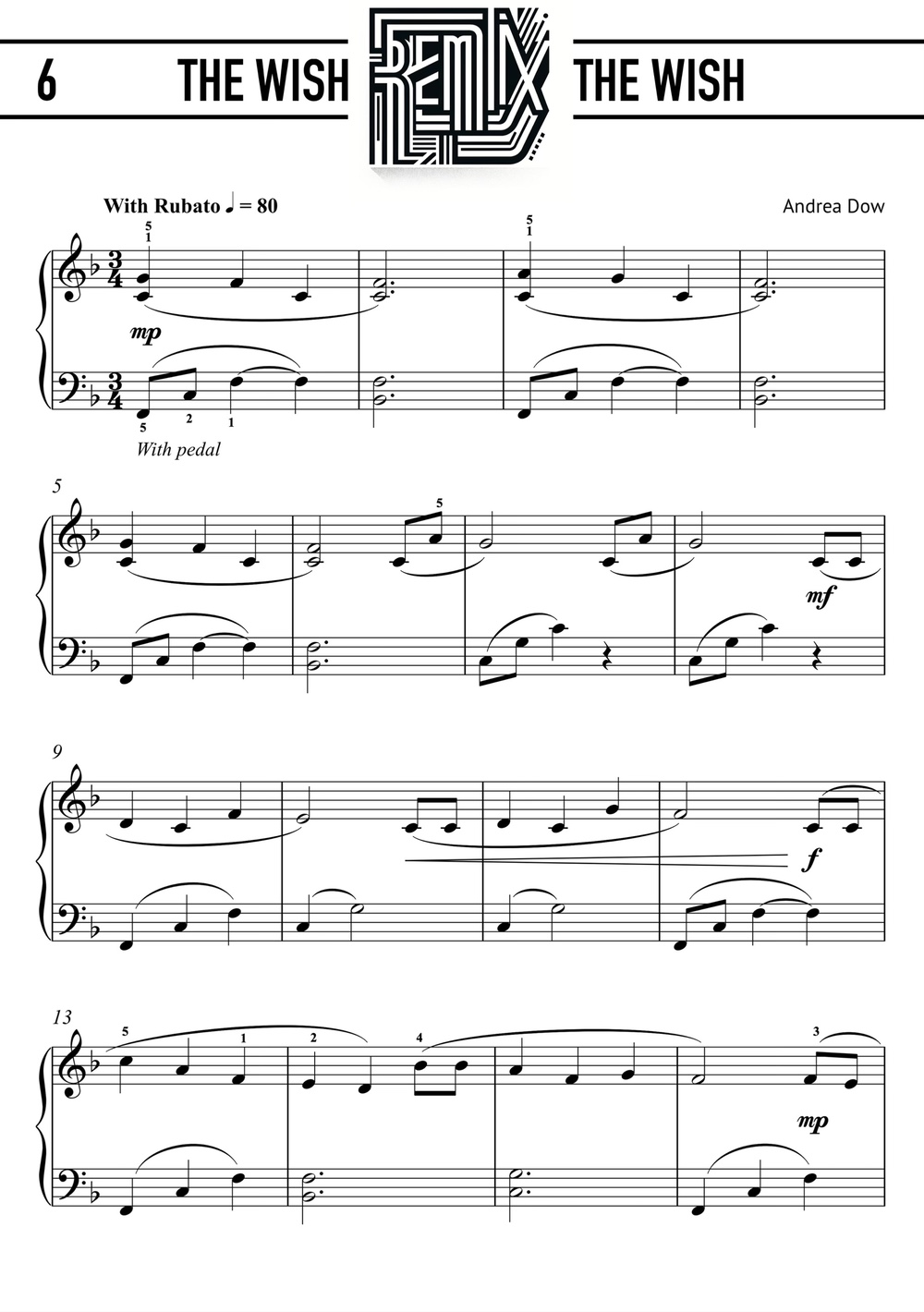
Students in Wunderkeys may play this version from Remix: Teen Hits from Kids Tunes

One of my all-time versions of Happy Birthday, in duet form – and I have the music if you want to tackle it.

June 4: Today’s Music History

today

Be sure your student reads and listens to Today’s Daily Listening Assignment

• 1585 ~ Marc-Antoine de Muret, Composer, died at the age of 58

• 1770 ~ James Hewitt, Composer

• 1846 ~ Josef Sittard, Music writer

• 1872 ~ Stanislaw Moniuszko, Composer, died at the age of 53

• 1585 ~ Erno Rapee (1891) Hungarian conductor

• 1899 ~ Leo Spies, Composer

• 1905 ~ Carl Albert Loeschhorn, Composer, pianist and Royal Professor died at the age of 85

• 1907 ~ Marjan Kozina, Composer

• 1907 ~ Agathe Grondahl, Composer, died at the age of 59

• 1909 ~ Paul Nordoff, American composer of the Frog Prince

• 1913 ~ Bruno Bettinelli, Composer

• 1915 ~ William Charles Denis Browne, Composer, died at the age of t 26

• 1919 ~ Robert Merrill (Moishe Miller), Metropolitan Opera singing star, baritone

• 1922 ~ Irwin Bazelon, American composer

• 1916 ~ Mildred J Hill, Composer/musician (Happy Birthday To You), died at the age of 56

• 1927 ~ Gerry Mulligan, American jazz baritone saxophonist and arranger

• 1930 ~ Morgana King, Jazz singer

• 1930 ~ Pentti Raitio, Composer

• 1931 ~ Cesar Bolanos, Composer

• 1934 ~ The Dorsey Brothers, Tommy and Jimmy, recorded Annie’s Aunt Fanny on the Brunswick label. The track featured trombonist Glenn Miller, who also vocalized on the tune.

• 1937 ~ Freddie Fender, Guitarist

• 1940 ~ Dorothy Rudd Moore, Composer

• 1942 ~ Glenn Wallichs did what was called ‘promotion’ for Capitol Records in Hollywood. He came up with the idea that he could send copies of Capitol’s new records to influential radio announcers all around the U.S. and, maybe, add to the chances that stations would play the records. The practice would soon become common among most record labels.

• 1944 ~ Roger Ball, Musician, saxophonist and keyboards with Average White Band

• 1945 ~ Anthony Braxton, Jazz musician
Read more about Braxton

• 1945 ~ Michelle Phillips (Holly Michelle Gilliam), Singer with The Mamas and the Papas

• 1945 ~ Gordon Waller, Singer with Peter and Gordon

• 1951 ~ Conductor Serge Koussevitsky died. Born in Russia, he conducted the State Symphony Orchestra in Petrograd before moving to the U.S. to conduct the Boston Symphony Orchestra.
Read more about Serge Koussevitsky

• 1956 ~ Max Kowalski, Composer, died at the age of 73

• 1961 ~ “Wildcat” closed at Alvin Theater NYC after 172 performances

• 1963 ~ First transmission of Pop Go The Beatles on BBC radio

• 1964 ~ The Beatles “World Tour” begins in Copenhagen Denmark

• 1972 ~ Godfried Devreese, Composer, died at the age of 79

• 1978 ~ 32nd Tony Awards: Da and Ain’t Misbehavin’ won

• 1988 ~ “Cabaret” closes at Imperial Theater NYC after 262 performances

• 1988 ~ 42nd Tony Awards: M Butterfly and Phantom of the Opera won

• 1989 ~ Vaclav Kaslik, Czech opera Composer/conductor, died at the age of 71

• 1994 ~ Derek Lek Leckenby, rock guitarist (Herman’s Hermits), died at the age of 48

• 1994 ~ Earle Warren, Alto sax player, died at the age of 79

• 1995 ~ 49th Tony Awards: Love! Valour! Compassion! and Sunset Boulevard won

• 1997 ~ Ronnie Lane, bassist (Faces), died at the age of 50 of multiple sclerosis

• 2001 ~ John Hartford, a versatile and wry performer who wrote the standard Gentle on My Mind and turned his back on Hollywood to return to bluegrass music, died Monday at the age of 63. He was a singer-songwriter, comedian, tap-clog dancer, television performer and riverboat enthusiast. Gentle on My Mind has been broadcast on radio or television more than 6 million times, according to Broadcast Music Incorporated, which collects song royalties. It has been recorded more than 300 times, most prominently by Glen Campbell in 1967. Hartford’s career rambled from Hollywood to Nashville, with stops writing and performing on network television, thousands of shows at bluegrass clubs and festivals, and stints as a licensed steamboat pilot on the Mississippi River. At the height of his fame in the early 1970s, Hartford reconsidered his decision to take an offer to star in a detective series on CBS. Instead, he returned to Nashville and resumed his career as an innovative, relatively low-profile bluegrass singer-songwriter. “I knew that if I did it, I would never live it down,” Hartford said of the television series in a 2000 interview. “Because then when I went back to music, people would start saying, `Oh, he didn’t make it in acting so he’s gone country.”‘ Born in New York City and raised in St. Louis, Hartford was enthralled as a youngster by riverboats and bluegrass music, in particular that of Lester Flatt and Earl Scruggs. He moved to Nashville in 1965, and his first album “John Hartford Looks at Life” was released the following year. Hartford’s version of Gentle on My Mind from second album “Earthwords & Music” was a minor hit in 1967. The song is about a hobo whose mind is eased by the thought of a former lover. Hartford moved to California in 1968, landing a job writing and performing on “The Smothers Brothers Comedy Hour.” His went on to the cast of “The Glen Campbell Goodtime Hour.” Returning to Nashville in 1971, Hartford released the landmark acoustic album “Aereo-Plain” and continued to record until his death. He was one of the performers on the hit soundtrack to the film “O Brother, Where Art Thou?”

Daily Listening Assignments ~ June 4, 2025

I’m sure many have you have learned Twinkle, Twinkle Little Star by now.  Did you know its’ the same melody as the ABC Song?  You know…

Don’t believe it? Sing them both in your head or out loud.

The French melody first appeared in 1761, and has been used for many children’s songs, such as “Twinkle, Twinkle, Little Star”, “Baa, Baa, Black Sheep” and the “Alphabet Song”.

This is one of the first pieces a student learns in piano methods, since it has them reach just a bit outside their accustomed hand position on the word “little”.

Twinkle

I try to remember to let students know that Wolfgang Amadeus Mozart composed a set of twelve variations on the theme “Ah, vous dirai-je, Maman” for the piano and it started as the same basic Twinkle tune.

The sheet music is available at the O’Connor Music Studio if you want to borrow it or download it here about 1/3 of the way down the page under “Scores”.

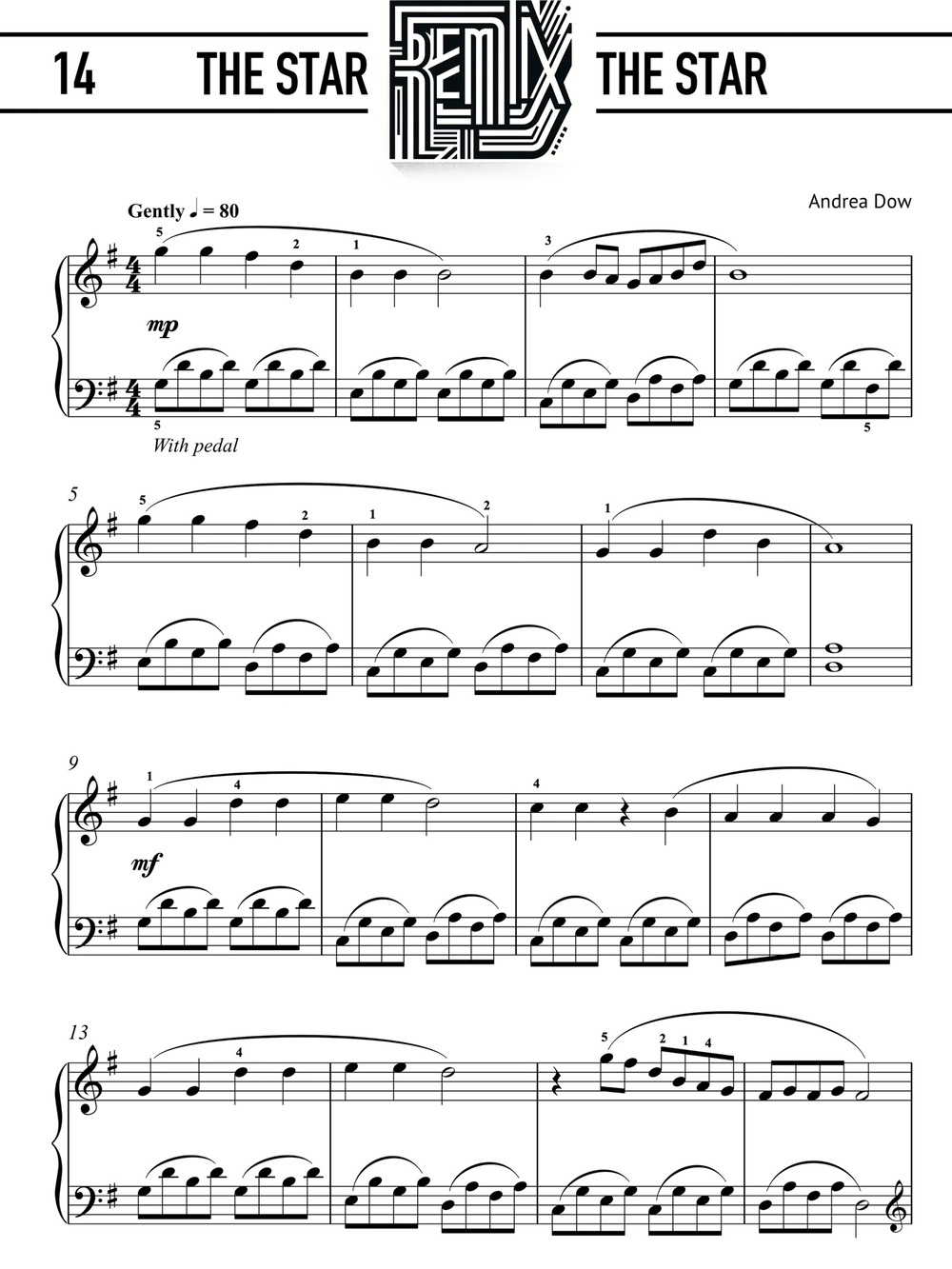
Students in Wunderkeys may play this version from Remix: Teen Hits from Kids Tunes:

I always enjoy these graphical scores.  Watch the colors as the melody gets more and more complex:

Who knew?  There’s an accordion version.

Have a great day!

June 3: Today’s Music History

Be sure your student reads and listens to Today’s Daily Listening Assignment

• 1657 ~ Manuel de Egues, Composer

• 1660 ~ Johannes Schenck, Composer

• 1661 ~ Gottfried Scheidt, Composer, died at the age of 67

• 1736 ~ Johann Christoph Oley, Composer

• 1746 ~ James Hook, Composer

• 1750 ~ Frederic Thieme, Composer

• 1773 ~ Michael Gottard Fischer, Composer

• 1801 ~ Frantisek Jan Skroup, Composer

• 1804 ~ Jean-Engelbert Pauwels, Composer, died at the age of 35

• 1809 ~ John “Christmas” Beckwith, Composer, died at the age of 58

• 1828 ~ Jean Alexander Ferdinand Poise, Composer

• 1828 ~ Jose Inzenga y Castellanos, Composer

• 1829 ~ Alfonse Charles Renaud de Vilback, Composer

• 1832 ~ Alexander Charles Lecocq, Composer

• 1841 ~ Eduardo Caudella, Composer

• 1844 ~ Emile Paladilhe, Composer

• 1849 ~ Francois de Paule Jacques Raymond de Fossa, Composer, died at the age of 73

• 1858 ~ Julius Reubke, Composer, died at the age of 24

• 1867 ~ Bela Anton Szabados, Composer

• 1868 ~ Lvar Henning Mankell, Composer

• 1872 ~ Heinrich Esser, Composer, died at the age of 53

• 1875 ~ French composer Georges Bizet died at the age of 36, the same year his “Carmen” was first produced. It caused a scandal at first but went on to become one of opera’s most popular works.
More information on Bizet

• 1887 ~ Roland Hayes, American tenor

• 1887 ~ Emil Axman, Composer

• 1888 ~ Cark Reidel, Composer, died at the age of 60

• 1890 ~ Henryk Oskar Kolberg, Composer, died at the age of 76

• 1893 ~ Assen Karastoyanov, Composer

• 1898 ~ Nikolai Afanisev, Composer, died at the age of 77

• 1899 ~ Johann Strauss Jr., Viennese conductor and composer of waltzes including “The Blue Danube”, died at the age of 73.
More information on Strauss

• 1904 ~ Jan Peerce (Jacob Pincus Perlemuth), Opera singer, tenor

• 1906 ~ Josephine Baker, American-born French jazz singer and dancer

• 1907 ~ Antonio Emmanvilovich Spadavecchia, Composer

• 1911 ~ Come Josephine in My Flying Machine hit #1

• 1913 ~ Josef Richard Rozkosny, Composer, died at the age of 79

• 1922 ~ Ivan Patachich, Composer

• 1926 ~ Carlos Veerhoff, Composer

• 1926 ~ Janez Maticic, Composer

• 1927 ~ Boots Randolph, American saxophonist (Yakety Sax)

• 1931 ~ The Band Wagon, a Broadway musical, opened in New York City. The show ran for 260 performances.

• 1932 ~ Dakota Staton (Aliyah Rabia), Jazz singer

. 1932 ~ The Broadway musical “The Band Wagon” opened in New York City. The comedic musical film about an aging star that tries to revive his career in a Broadway production. The film ranked #17 in the American Film Institute’s list of best musicals in 2006.

• 1939 ~ Beer Barrel Polka hit #1 on the pop singles chart by Will Glahe

• 1942 ~ Curtis Mayfield, American rhythm-and-blues singer, songwriter, producer and guitarist Grammy Award-winner, inducted into the Rock and Roll Hall of Fame, March 15, 1999

• 1944 ~ Mike Clarke, Musician, drummer with The Byrds

• 1946 ~ Ian Hunter, Singer, songwriter with Mott the Hoople

• 1949 ~ Stephen Ruppenthal, Composer

• 1950 ~ Suzie Quatro (Quatrocchio), Singer

• 1951 ~ Deniece Williams, Singer

• 1952 ~ Frank Sinatra recorded the classic Birth of the Blues for Columbia Records

• 1959 ~ Ole Windingstad, Composer, died at the age of 73

• 1961 ~ Charles Hart, Lyricist: Phantom of the Opera

• 1961 ~ “Wildcat” closed at Alvin Theater NYC after 172 performances

• 1964 ~ The Hollywood Palace on ABC-TV hosted the first appearance of the first U.S. concert tour of The Rolling Stones. Dean Martin emceed the show. One critic called the Stones “dirtier and streakier and more disheveled than The Beatles.”

• 1971 ~ Yehudi Menuhin performed on a 250-year-old Stradivarius violin at Sotheby’s auction house. It sold for $200,000.

• 1978 ~ Johnny Mathis and Deniece Williams combined their singing talents to reach the number one spot on the nation’s pop music charts with Too Much, Too Little, Too Late.

• 1986 ~ Arthur Charles Ernest Hoeree, Composer, died at the age of 89

• 1994 ~ Hub Matthijsen, Violinist/bandmaster, died at the age of 52

Daily Listening Assignments ~ June 3, 2025


Today we’re going to listen and learn about the opera Carmen.

I chose this for today since it’s the anniversary of French composer Georges Bizet‘s death.

Georges Bizet was born in Paris, France. Both his parents were musicians, and they actually wanted their son to become a composer when he grew up! Bizet loved music, but he also loved to read books. His parents wound up hiding his books so that he would spend more time on his music.

When Georges was 10 years old, his father enrolled him in the Paris Conservatory. While he was there, he wrote his only symphony, but it wasn’t performed until many years after he died. Bizet graduated from the Conservatory with awards in both composition and piano.

Bizet also composed operas. His most famous opera is Carmen. When Carmen first opened in Paris, the reviews were terrible. Many critics said there were no good tunes in it, so audiences stayed away.

In the middle of the night during the first round of Carmen performances, Bizet died. He was only 36. Four months later, Carmen opened in Vienna, Austria, and was a smash hit. It is now one of the most popular operas ever written. Bizet never knew that audiences would come to consider it his masterpiece.


Vladimir Horowitz made Carmen his own by turning it into a fantasy (or the more musical spelling – fantasie).

The fantasia (Italian; also English: fantasy, fancy, fantazy, phantasy, German: Fantasie, Phantasie, French: fantaisie) is a musical composition with its roots in the art of improvisation. Because of this, like the impromptu, it seldom approximates the textbook rules of any strict musical form.

When you play wrong notes for an audience, just tell the audience it’s a “Fantasie”, not the original work!

As you can see, Carmen is a popular work. Here it is for two pianos, played by Anderson and Roe.

The Canadian Brass tell the story of Carmen in their own humorous words.

If you want to learn this, just let me know!