At 90 years of age, she has recently cut back a bit on her musical engagements, but she is still the official pianist for Club 55+ and happily plays hymns and old favourites for residents in her seniors’ complex in New Glasgow.
“My parents were both great singers and we had a piano at home, so I was anxious to play. I was sent for eight lessons and that is the full extent of my musical education.”
She was nine or ten when she travelled by horse and sleigh from Iron Ore to Stellarton with an uncle who brought butter, eggs and vegetables to town to sell on Saturday mornings.
“He dropped me at Langston Miller’s on Rundle Street and that’s where I learned all the notes. After that, it was just practice. I still play a lot by ear.”
. 1974 ~ Stevie Wonder got five Grammy Awards for his album, Innervisions and his hit songs, You Are The Sunshine of My Life and Superstition.
. 1985 ~ Country singer Gary Morris hit #1 on the country charts for the first time with Baby Bye Bye, from his album, Faded Blue.
. 2003 ~ Hank Ballard, 75, the singer and songwriter whose hit The Twist ushered in a nationwide dance craze in the 1960s, died. He wrote and recorded The Twist in 1958, but it was released only on the B-side of a record. In 1959, Chubby Checker debuted his own version of the song on Dick Clark’s Philadelphia television show. It soon topped the charts and launched a dance craze that prompted the creation of other Twist songs, including Twist and Shout by the Isley Brothers and Twistin’ the Night Away by Sam Cooke. Mr. Ballard was inducted into the Rock and Roll Hall of Fame in 1990. Mr. Ballard was discovered in the early 1950s by writer-producer Johnny Otis. He was lead singer for the Royals, which changed its name to the Midnighters. Mr. Ballard, who was born John H. Kendricks in Detroit, grew up singing in church in Bessemer, Ala. At 15, he returned to Detroit and set out to form a doo-wop group while working on a Ford Motor Co. assembly line.
Fairfax County has just closed school again, so, technically, I’m not teaching. But it’s been too many Mondays off.
So, I leave it up to you if you want to come for lessons today or not.
Please let me know if you intend to be here today – or not.
Thanks!
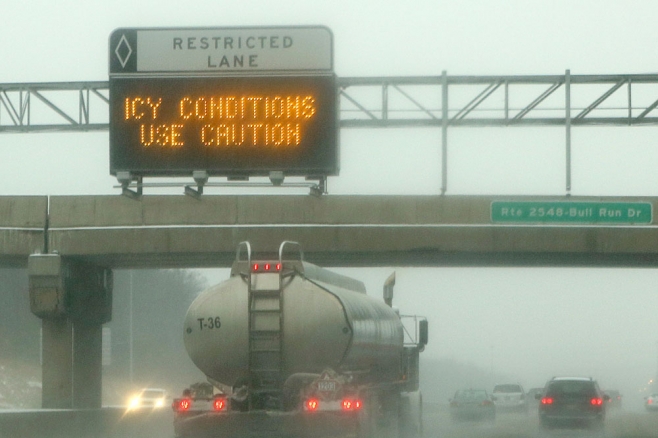
My husband was out last night and said that the roads were ok but our driveway was icy. He used the last of our salt but didn’t know if it would be melted or not.
Sooner or later there WILL be another Monday piano lesson, I hope.
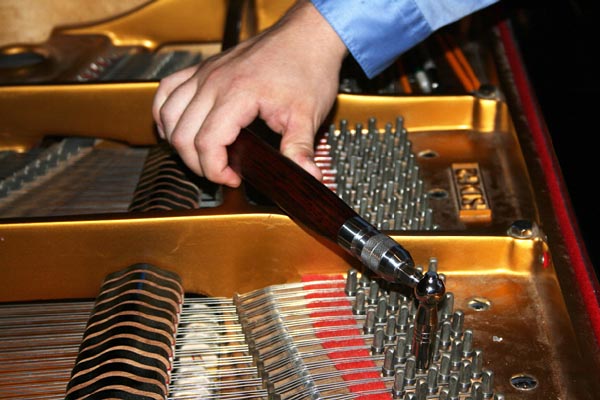
When it comes to tuning, every piano is different, even two pianos of the same style and make are different, and the humidity of the room makes a big difference, he said.
High humidity causes the sound board to swell, stretching the strings and causing the pitch to go sharp, while low humidity has the opposite effect.
In Minnesota, humidity can easily range from 80 percent in the summertime to 10-15 percent in the winter, if the home doesn’t have a humidifier. Wood-heated homes tend to be especially dry, he said.
“Pianos like it between 40 and 50 percent humidity in the house,” he said.
Even places that are supposedly “climate-controlled,” aren’t always. The heat might get turned down substantially evenings and weekends, for example.
A new piano needs a few weeks to settle into its new home before tuning, Fry said.
“If they get a new piano, generally they call us the day before it gets in the house,” he said. “It should sit in the house a couple weeks just to acclimatize it to its new surroundings … brand new pianos stretch for a while. They go out of tune quicker. The wire stretches and they settle into themselves.”
Some people think they have to let a new, or recently moved older piano, sit six months or a year before it gets tuned. That’s not true, Fry said, but it does need a few weeks.
He recommends that pianos be tuned at least once a year (he tunes his own piano once a year, even though he no longer gives lessons) and the busiest time for him is before the holidays — September through December.
“Piano-tuning is something people can put off,” he said. “We noticed a real drop in tuning when gas got over $3 a gallon. I didn’t think it would make that much of a difference, but it did.”
Fry said he is looking for some kind of work to do in the summertime when his other businesses are slow.
He doesn’t give piano or guitar lessons anymore, but does enjoy tuning all types of pianos.
“It takes me a couple of hours. I have time,” Fry said. “I’m going to do the job that I like to do, and do it right.”
. 1904 ~ Glenn Miller, American trombonist and bandleader
More information about Miller
. 1922 ~ Michael Flanders, Songwriter, comedian with the duo: Flanders and [Donald] Swann, made humorous mockery of English and American failings, died in 1975
. 1927 ~ Harry Belafonte, American calypso and folk singer, UNICEF goodwill ambassador, father of Shari Belafonte
. 1928 ~ Paul Whiteman and his orchestra recorded Ol´ Man River for Victor Records. The featured vocalist on the track was 29-year-old Paul Robeson. The song became an American classic.
. 1941 ~ FM Radio began in the U.S. when station W47NV in Nashville, TN started operations on this day. W47NV was the first commercial FM radio station to receive a license, some 20 years after its AM radio counterpart, KDKA in Pittsburgh. FM stands for ‘frequency modulation´ as opposed to ‘amplitude modulation´.
. 1941 ~ Downbeat magazine scooped the entertainment world with news that GlennMiller’s renewed contract with Chesterfield Cigarettes was worth $4,850 a week (for three 15-minute programs).
. 1944 ~ Roger Daltrey, Singer with The Who
. 1968 ~ Country music stars Johnny Cash and June Carter got married on this day. Johnny walked down the aisle knowing that his 1956 hit, Folsom PrisonBlues, was about to be redone for a June release. Cash has a daughter, Rosanne, (previous marriage) who became a country star in her own right in the 1980s.
. 1968 ~ Elton John’s first record, I’ve BeenLoving You, was released by Philips Records in England. Philips, not realizing the potential of the soon-to-be superstar, released him in 1969, just prior to his teaming with lyricist Bernie Taupin. Elton then signed a contract with Uni Records and began to turn out what would become a string of more than 50 hits over the next 25 years.
. 1973 ~ The Robert Joffrey Dance Company opened with a unique presentation in New York City. The show featured music of the Beach Boys in “Deuce Coupe Ballet”. A clever show, even if it didn’t do much to bring the masses to ballet.
. 1985 ~ A Beatles song was used for the first time in a U.S. TV commercial. The rights for Lincoln-Mercury to use the song, HELP!, cost $100,000, helping boost the fortunes of the Ford Motor Company. March has been designated as the “Music In Our Schools” month. Visit the National Association for Music Education website for exciting programmatic information.
. 2003 ~ Nadine Conner, a soprano who performed for nearly two decades at the Metropolitan Opera after singing on national radio, died. She was 96. Conner debuted at the Met in 1941 as Pamina in Mozart’s “The Magic Flute,” conducted by Bruno Walter. She performed there 249 times over 18 seasons. She won acclaim not only for her Mozart roles, including Zerlina in “Don Giovanni” and Susanna in “The Marriage of Figaro,” but also for her portrayals of Violetta in Verdi’s “La Traviata,” Mimi inPuccini’s “La Boheme,” Gilda in Verdi’s “Rigoletto,” and Rosina in Rossini’s “The Barber of Seville.” Conner began her career singing on national radio from Los Angeles, and appeared with such stars as Bing Crosby and Gordon MacRae and toured with film star Nelson Eddy. She joined a fledgling opera troupe in Los Angeles, making her debut as Marguerite in Gounod’s “Faust.” Her Met farewell, in 1960, also was in “Faust.”
. 1932 ~ Bing Crosby and the Mills Brothers teamed up to record Shine for Brunswick Records.
. 1936 ~ Fanny Brice brought her little girl character “Baby Snooks” to radio on “The Ziegfeld Follies of the Air” on CBS Radio. Miss Brice presented the character and later sang My Man on the program. She was 44 at the time, and was known as America’s “Funny Girl” long before Barbra Streisand brought her even greater fame and notoriety nearly 30 years later.
. 1964 ~ The United States was in the grip of Beatlemania! I Want to HoldYour Hand, by the lads from Liverpool, was in its 5th week at #1 on the pop charts. It stayed there until March 21, when it was replaced by She Loves You, which was replaced byCan’t Buy Me Love, which was finally replaced by Hello Dolly, by Louis Armstrong, on May 9, 1964. 14 straight weeks of #1 music by The Beatles!
Joyce Fessenden has been playing piano in public for 70 years. At the age of 83, she still plays four or five times a week at area nursing homes and assisted living centers. She has no thought of quitting.
“Music has always been a very important part of my life,” Fessenden said. “I’m very grateful for that. I don’t plan to quit playing.”
On a recent Tuesday, Fessenden played old favorites on the piano at the William S. Cohen Community Center in Hallowell. Her music blended in and enhanced the boisterous sound of lunchtime diners.
“I love it here because the food is good and the people are kind,” Fessenden said. “If somebody says ‘play the piano,’ the only thing I ask is where and when.”
. 1915 ~ Lee Castle (Castaldo), Trumpet, bandleader, led Jimmy Dorsey’s band during time of smash hit, So Rare
. 1926 ~ Seymour Shifrin, American composer
. 1930 ~ Ted Lewis and his orchestra recorded On the Sunny Side of theStreet for Columbia Records on this day. Mr. Lewis was heard as the featured vocalist as well, on the tune that has been recorded hundreds of times and is an American music standard.
. 1939 ~ Tommy Tune, Tony Award-winning dancer, actor, director of musical theater
. 1959 ~ Cash Box magazine, a trade publication for the music/radio industry, began using a red ‘bullet’ on its record charts to indicate those records that have the strongest upward movement each week. The phrase, “Number one with a bullet” designates those hits that have reached the pinnacle of statistical chartdom. To be so means to be at the top of the list and still climbing higher.
. 1966 ~ The famous Cavern Club in Liverpool, England closed because of financial difficulties. During its peak of success, the club was best known as the home of The Beatles.
. 1968 ~ Frankie Lymon passed away. He was an American rock and roll/rhythm and blues singer and songwriter.
. 1984 ~ It was Michael Jackson Night at the Grammy Awards in Los Angeles. He set a record for most wins by taking home eight of the gramophone statuette honors. He broke the previous record of six awards set by Roger Miller in
. 1965. The reason: the biggest selling album of all time, Thriller, which sold more than 35-million copies around the world soon after its release in 1983.
. 1993 ~ Ruby Keeler passed away. She was a Canadian-born American actress, dancer and singer most famous for her on-screen coupling with Dick Powell in a string of successful early musicals at Warner Brothers, particularly 42nd Street.
Piano lore can be summarised thus: there are good and bad pianos. This is the basic fact in a pianist’s life. Both kinds are to be found in all sizes, from all manufacturers, at any price point. A concert grand costing more than £100,000 can be bad. Smaller can be better than larger, but between two good pianos, the sound of the larger will be richer and more present.
One can get used to any piano, even when the instrument is terrible, but the better the piano, the less time is required, and vice versa. Spending time with a good piano is rewarding: there is always something more to discover in its tone. A bad piano functions in what-you-see-is-what-you-get mode, producing the same sound even after hours of practice. And each piano is unique. Manufacturing involves hundreds of processes and adjustments, most done by hand, all affecting the final tone. As a result two pianos of the same model, made in the same year, will sound different to the untrained ear, despite their outward sameness. The contrast in sound between different models, or between pianos made in different years or from different companies will be even more apparent.
. 1873 ~ Enrico Caruso, Italian tenor, sang nearly 70 roles; appeared in nearly every country of Europe and North and South America
Read quotes by and about Caruso
More information about Caruso
. 1883 ~ Oscar Hammerstein of New York City patented the first practical cigar- rolling machine. If Oscar’s name sounds familiar, it should. Hammerstein’s grandson later made his mark by writing some of the best- known music in the world, teaming up frequently with Richard Rodgers.
. 1936 ~ Chuck Glaser, Singer with Glaser Brothers
. 1948 ~ Eddie Gray, Guitarist with Tommy James & The Shondells
. 1951 ~ Steve Harley (Nice), Singer with Steve Harley & Cockney Rebel
. 1954 ~ Neal Schon, Guitarist with Santana; Journey
. 1955 ~ Garry Christian, Singer with The Christians
. 1970 ~ Simon and Garfunkel received a gold record for the single, BridgeOver Troubled Water.
. 2003 ~ Tom Glazer, 88, the balladeer, guitarist and songwriter who, along with BurlIves, Josh White, Pete Seeger and others, helped spark national interest in folk music in the 1940s, died. Mr. Glazer wrote songs for children, including a hit 1963 parody, On Top of Spaghetti, that won him National Critics’ and Parent Magazine awards. He also acted, sang and wrote for movies and TV. He was singer-narrator for the film, Sweet Land of Liberty, and composed the score for the Andy Griffith film A Face in the Crowd. Mr. Glazer was a native of Philadelphia who attended the City College of New York. As a young man, he played tuba and bass in military and jazz bands and worked at the Library of Congress. He began singing with a group while living in Washington, and was invited by Eleanor Roosevelt to perform at the White House. Mr. Glazer became a full-time musician in 1943 and, over the years, hosted three radio series. He also wrote books about music, including a number of songbooks. His song Because All Men Are Brothers, based on the Passion Chorale by J. S.Bach, was recorded by the Weavers and Peter, Paul and Mary. Other hits included, Old Soldiers Never Die for Vaughn Monroe, More for Perry Como, Til We Two Are Onefor Georgie Shaw, and A Worried Man, recorded by the Kingston Trio. His song, The Musicians was used on the “Barney” television show for children; Bob Dylan recorded his Talking Inflation Blues.
. 2003 ~ Fred Rogers, who gently invited millions of children to be his neighbor as host of the public television show Mister Rogers’ Neighborhood for more than 30 years, died. He was 74. From 1968 to 2000, Rogers, an ordained Presbyterian minister, produced the show at Pittsburgh public television station WQED. The final new episode, which was taped in December 2000, aired in August 2001, though PBS affiliates continued to air back episodes. Rogers composed his own songs for the show and began each episode in a set made to look like a comfortable living room, singing “It’s a beautiful day in the neighborhood…”, as he donned sneakers and a zip-up cardigan. His message remained simple: telling his viewers to love themselves and others. On each show, he would take his audience on a magical trolley ride into the Neighborhood of Make-Believe, where his puppet creations would interact with each other and adults. Rogers did much of the puppet work and voices himself. He also studied early childhood development at the University of Pittsburgh and consulted with an expert there over the years. Rogers’ show won four Emmy Awards, plus one for lifetime achievement. He was given a George Foster Peabody Award in 1993, “in recognition of 25 years of beautiful days in the neighborhood.” One of Rogers’ red sweaters hangs in the Smithsonian Institution.
. 2003 ~ Jean Sullivan, a musician, dancer and actress who starred opposite Errol Flynn in the 1944 film “Uncertain Glory,” died of cardiac arrest. She was 79. Sullivan was the leading lady Marianne in “Uncertain Glory” and also has a starring role in the 1945 movie “Escape in the Desert.” The young actress also played the daughter of Rosalind Russell and Jack Carson in the motion picture comedy “Roughly Speaking.” Despite a budding acting career, Sullivan relocated to New York and began studying ballet and dancing professionally. While practicing flamenco steps during a Carnegie Hall rehearsal, Sullivan was discovered by choreographer Anthony Tudor and was a dancer with the American Ballet Theatre. She enhanced her flamenco by playing Spanish guitar and became a popular entertainer at Latin nightclubs throughout New York City. Sullivan also played cello and piano. Despite her career change, Sullivan performed flamenco on TV variety shows, including “The Steve Allen Show” and “The Jackie Gleason Show.” She also was a meteorologist on local New York television stations.
. 2013 ~ Van Cliburn died. He was an American pianist who achieved worldwide recognition in 1958 at the age of 23, when he won the first quadrennial International Tchaikovsky Piano Competition in Moscow at the height of the Cold War.




 Grammy winner
 MaryO'Studio