A 9-year-old boy is receiving international acclaim for being one of the youngest and most talented piano players.
“I just love piano and I don’t think about it; I just play,” said Malvyn Lai. “I just move my fingers and it works.”
The fourth grader plays everything from Chopin to Beethoven, but said Mozart is his favorite because of how the music makes him feel.
Lai first fell in love with the piano at age four during his older sister’s music recital.
“I really liked the way the piano sounded like really grand so I asked my mom if I could play at age four but they said I was too young,” said Lai.
Within a year Lai began playing, his instructor Irina Bendetsky said that at the time, he couldn’t even reach the pedals but he was already playing the classics.
“Melvin is very special. As a boy and as a musician; he is a musician already I can name him that,” said Bendetsky.
The young pianist has already performed at the renowned Carnegie Hall in New York City five times and has received countless awards.
. 1678 ~ Antonio Lucio Vivaldi, Italian baroque composer. The creator of hundreds of spirited, extroverted instrumental works, Vivaldi is widely recognized as the master of the Baroque instrumental concerto, which he perfected and popularized perhaps more than any of his contemporaries. A group of four violin concerti from Vivaldi’s Op. 8, better known as “The Four Seasons”, may well be the most universally recognizable musical work from the Baroque period. Perhaps the most prolific of all the great European composers, he once boasted that he could compose a concerto faster than a copyist could ready the individual parts for the players in the orchestra.
More information about Vivaldi
(MaryO’Note: Spring from The Four Seasons is available in the Piano Maestro App for piano students)
. 1801 ~ The U.S. Marine Band performed for the first time at a presidential nomination. That president was Thomas Jefferson.
. 1877 ~ The ballet of Swan Lake, composed by Peter Ilyich Tchaikovsky, was performed for the first time in the famous Bolshoi Theatre in Moscow, Russia
and
. 1915 ~ Carlos Surinac, Catalan Spanish-born composer and conductor
. 1918 ~ Frank Wigglesworth, American composer
. 1925 ~ Enzo Stuarti, Opera singer
. 1928 ~ Samuel Adler, German-born American composer
. 1929 ~ Bernard Haitink, Dutch conductor
. 1932 ~ Miriam (Zensile) Makeba, South African born singer who was the first black South African to attain international stardom.
. 1934 ~ Barbara McNair, Singer, TV hostess of The Barbara McNair Show, actress
. 1942 ~ Dick Jurgen’s orchestra recorded One Dozen Roses on Okeh Records in Chicago.
. 1942 ~ The Stage Door Canteen opened on West 44th Street in New York City. The canteen became widely known as a service club for men in the armed forces and a much welcomed place to spend what would otherwise have been lonely hours. The USO, the United Service Organization, grew out of the ‘canteen’ operation, to provide entertainment for American troops around the world.
. 1943 ~ Irving Berlin picked up the Best Song Oscar for a little ditty he had written for the film, Holiday Inn: White Christmas at the 15th Academy Awards.
. 1944 ~ Bobby Womack, Songwriter, singer
. 1948 ~ Chris Squire, Bass with Yes
. 1948 ~ Shakin’ Stevens (Michael Barratt), Singer, actor
. 1951 ~ Chris Rea, Guitarist with these groups Chris Rea Band and Ambrosia; singer, songwriter
. 1969 ~ Chastity Bono, Singer, daughter of Sonny & Cher
. 1978 ~ Andy Gibb reached the top of the music charts as (Love is) Thicker ThanWater reached #1 for a two-week stay. The Bee Gees also set a record on this day as their single, How Deep Is Your Love, from the Saturday Night Fever soundtrack stayed in the top 10 for an unprecedented 17 weeks.
. 1981 ~ Lyricist E.Y. ‘Yip’ Harburg died in an auto accident in Hollywood, CA at the age of 82. Two of his most successful hits were Over the Rainbow from The Wizard of Oz and It’s Only a Paper Moon, popularized by Nat King Cole and many others.
. 2001 ~ Glenn Hughes, a singer who performed as the mustachioed, leather-clad biker in the disco band the Village People, died at the age of 50. The group, which was the brainchild of producer Jacques Morali, featured men dressed as an Indian, a soldier, a construction worker, a police officer, a cowboy and Hughes’ character, a biker. The band released its first single, San Francisco (You’ve Got Me), in 1977. It followed the next year with its first hit, Macho Man. The band then produced a string of hits, including Y.M.C.A., In theNavy and Go West. Collectively the Village People sold 65 million albums and singles. Although disco fell out of fashion in the 1980s, Hughes stayed with the band until 1996, when he left to sing in Manhattan cabarets.
. 2003 ~ Fedora Barbieri, a mezzo-soprano whose passionate singing sometimes stole the scene from opera diva Maria Callas, died. She was 82. Born in Trieste in 1920, Barbieri performed on stages ranging from Milan’s La Scala to New York’s Metropolitan Opera House to London’s Covent Garden. Barbieri’s career started in 1940 and for her 80th birthday, she sang the role of Mamma Lucia in Pietro Mascagni’s “Cavalleria Rusticana” in Florence. Her repertoire included roles in operas by Giuseppe Verdi and Giacomo Puccini. Barbieri died in Florence, which she had adopted as her home and where she gave many performances.
. 2003 ~ Emilio Estefan Sr., father of the Latin music mogul, died at the age of 83. Estefan Sr. played the plump and comical ambassador in a music video for the Miami Sound Machine’s hit song Conga, which featured singer Gloria Estefan, wife of Estefan Jr. The Miami Sound Machine’s office was once located in Estefan Sr.’s garage. His son later built a home for his parents on his Star Island compound. Estefan Sr. was born in Santiago de Cuba and moved to Spain with Estefan Jr. in 1966. His wife and another son stayed in Cuba because the boy was of military draft age and couldn’t leave until 1980. Estefan Sr. came to Miami in 1968, a year after Estefan Jr., and opened a clothing business in Hialeah.
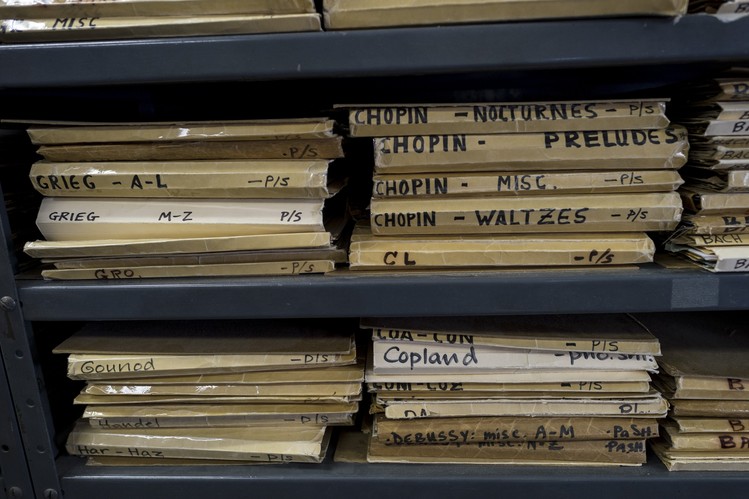
The store, on West 54th Street between Broadway and Eighth Avenue, opened in 1937 and provided the city’s musicians scores from the standard— Bach, Beethoven —to the arcane. Ms. Rogers bought it in 1978.
Frank Music is the last store in the city dedicated to selling classical sheet music, Ms. Rogers said, although other places such as the Juilliard School’s bookstore at Lincoln Center have it on their shelves.
Frank Music’s stock, which Ms. Rogers counts as hundreds of thousands of scores, was purchased by an anonymous donor as a gift for the Colburn School, a music conservatory in Los Angeles.
The school and Ms. Rogers declined to comment on financial details.
Colburn School’s president and chief executive, Sel Kardan, called Frank Music’s scores “an invaluable resource for our students and faculty for years to come.”
To the 63-year-old Ms. Rogers, nothing is more important than the arts.
“The idea that classical music is irrelevant is ridiculous,” she said, bemoaning the comparative salaries of tubists and stockbrokers. “People should be paid in terms of what they contribute to people’s well being.”
The store’s celebrity clients over the years have included pianists Emanuel Ax and Jeremy Denk, violinist Pamela Frank and cellist David Finckel.
One of Ms. Rogers’s favorite memories is a telephone call from the violinist Itzhak Perlman, asking for Kreisler scores.
The composer Bruce Adolphe, who is resident lecturer at the Chamber Music Society of Lincoln Center, described the store as a musical meeting ground.
“Frank’s Music was not just a store but a crucible,” he said, “a nexus where musicians from Suzuki beginners and their parents, to Joshua Bell, or the Brentano’s Mark Steinberg, would meet by chance.”
Can it be that nothing happened in the world of music today? I’ll be editing this post as I find items!
In the meantime, enjoy this video:
.1875 ~ The Georges Bizet opera Carmen premiered in Paris.
.1931 ~ The “Star Spangled Banner” was adopted as the American national anthem. The song was originally known as “Defense of Fort McHenry.”
.1931 ~ The first jazz album to sell a million copies was recorded. It was “Minnie The Moocher” by Cab Calloway.
.1940 ~ Artie Shaw and his orchestra recorded “Frenesi”.
.1945 ~ Bing Crosby recorded “Temptation” with John Scott Trotter’s Orchestra. He had recorded it before on October 22, 1933, with Lennie Hayton’s orchestra.
.1957 ~ Samuel Cardinal Stritch banned rock ‘n’ roll from Chicago archdiocese Roman Catholic schools.
At 90 years of age, she has recently cut back a bit on her musical engagements, but she is still the official pianist for Club 55+ and happily plays hymns and old favourites for residents in her seniors’ complex in New Glasgow.
“My parents were both great singers and we had a piano at home, so I was anxious to play. I was sent for eight lessons and that is the full extent of my musical education.”
She was nine or ten when she travelled by horse and sleigh from Iron Ore to Stellarton with an uncle who brought butter, eggs and vegetables to town to sell on Saturday mornings.
“He dropped me at Langston Miller’s on Rundle Street and that’s where I learned all the notes. After that, it was just practice. I still play a lot by ear.”
. 1974 ~ Stevie Wonder got five Grammy Awards for his album, Innervisions and his hit songs, You Are The Sunshine of My Life and Superstition.
. 1985 ~ Country singer Gary Morris hit #1 on the country charts for the first time with Baby Bye Bye, from his album, Faded Blue.
. 2003 ~ Hank Ballard, 75, the singer and songwriter whose hit The Twist ushered in a nationwide dance craze in the 1960s, died. He wrote and recorded The Twist in 1958, but it was released only on the B-side of a record. In 1959, Chubby Checker debuted his own version of the song on Dick Clark’s Philadelphia television show. It soon topped the charts and launched a dance craze that prompted the creation of other Twist songs, including Twist and Shout by the Isley Brothers and Twistin’ the Night Away by Sam Cooke. Mr. Ballard was inducted into the Rock and Roll Hall of Fame in 1990. Mr. Ballard was discovered in the early 1950s by writer-producer Johnny Otis. He was lead singer for the Royals, which changed its name to the Midnighters. Mr. Ballard, who was born John H. Kendricks in Detroit, grew up singing in church in Bessemer, Ala. At 15, he returned to Detroit and set out to form a doo-wop group while working on a Ford Motor Co. assembly line.
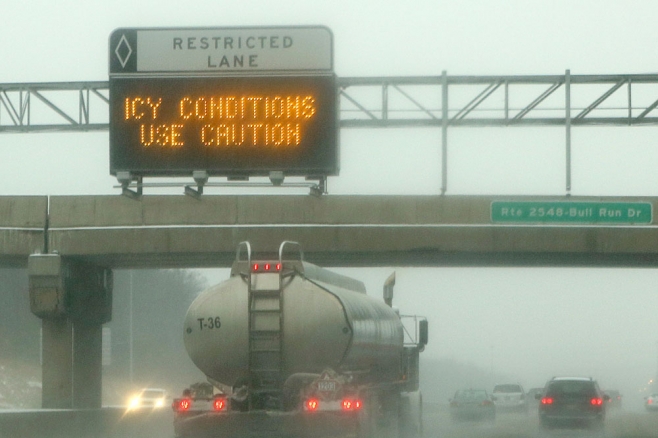
Fairfax County has just closed school again, so, technically, I’m not teaching. But it’s been too many Mondays off.
So, I leave it up to you if you want to come for lessons today or not.
Please let me know if you intend to be here today – or not.
Thanks!
My husband was out last night and said that the roads were ok but our driveway was icy. He used the last of our salt but didn’t know if it would be melted or not.
Sooner or later there WILL be another Monday piano lesson, I hope.
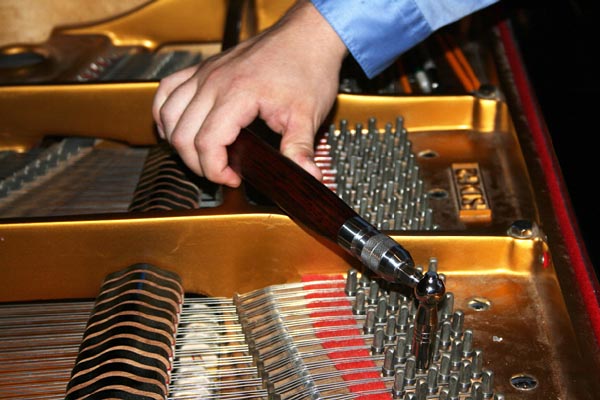
When it comes to tuning, every piano is different, even two pianos of the same style and make are different, and the humidity of the room makes a big difference, he said.
High humidity causes the sound board to swell, stretching the strings and causing the pitch to go sharp, while low humidity has the opposite effect.
In Minnesota, humidity can easily range from 80 percent in the summertime to 10-15 percent in the winter, if the home doesn’t have a humidifier. Wood-heated homes tend to be especially dry, he said.
“Pianos like it between 40 and 50 percent humidity in the house,” he said.
Even places that are supposedly “climate-controlled,” aren’t always. The heat might get turned down substantially evenings and weekends, for example.
A new piano needs a few weeks to settle into its new home before tuning, Fry said.
“If they get a new piano, generally they call us the day before it gets in the house,” he said. “It should sit in the house a couple weeks just to acclimatize it to its new surroundings … brand new pianos stretch for a while. They go out of tune quicker. The wire stretches and they settle into themselves.”
Some people think they have to let a new, or recently moved older piano, sit six months or a year before it gets tuned. That’s not true, Fry said, but it does need a few weeks.
He recommends that pianos be tuned at least once a year (he tunes his own piano once a year, even though he no longer gives lessons) and the busiest time for him is before the holidays — September through December.
“Piano-tuning is something people can put off,” he said. “We noticed a real drop in tuning when gas got over $3 a gallon. I didn’t think it would make that much of a difference, but it did.”
Fry said he is looking for some kind of work to do in the summertime when his other businesses are slow.
He doesn’t give piano or guitar lessons anymore, but does enjoy tuning all types of pianos.
“It takes me a couple of hours. I have time,” Fry said. “I’m going to do the job that I like to do, and do it right.”
. 1904 ~ Glenn Miller, American trombonist and bandleader
More information about Miller
. 1922 ~ Michael Flanders, Songwriter, comedian with the duo: Flanders and [Donald] Swann, made humorous mockery of English and American failings, died in 1975
. 1927 ~ Harry Belafonte, American calypso and folk singer, UNICEF goodwill ambassador, father of Shari Belafonte
. 1928 ~ Paul Whiteman and his orchestra recorded Ol´ Man River for Victor Records. The featured vocalist on the track was 29-year-old Paul Robeson. The song became an American classic.
. 1941 ~ FM Radio began in the U.S. when station W47NV in Nashville, TN started operations on this day. W47NV was the first commercial FM radio station to receive a license, some 20 years after its AM radio counterpart, KDKA in Pittsburgh. FM stands for ‘frequency modulation´ as opposed to ‘amplitude modulation´.
. 1941 ~ Downbeat magazine scooped the entertainment world with news that GlennMiller’s renewed contract with Chesterfield Cigarettes was worth $4,850 a week (for three 15-minute programs).
. 1944 ~ Roger Daltrey, Singer with The Who
. 1968 ~ Country music stars Johnny Cash and June Carter got married on this day. Johnny walked down the aisle knowing that his 1956 hit, Folsom PrisonBlues, was about to be redone for a June release. Cash has a daughter, Rosanne, (previous marriage) who became a country star in her own right in the 1980s.
. 1968 ~ Elton John’s first record, I’ve BeenLoving You, was released by Philips Records in England. Philips, not realizing the potential of the soon-to-be superstar, released him in 1969, just prior to his teaming with lyricist Bernie Taupin. Elton then signed a contract with Uni Records and began to turn out what would become a string of more than 50 hits over the next 25 years.
. 1973 ~ The Robert Joffrey Dance Company opened with a unique presentation in New York City. The show featured music of the Beach Boys in “Deuce Coupe Ballet”. A clever show, even if it didn’t do much to bring the masses to ballet.
. 1985 ~ A Beatles song was used for the first time in a U.S. TV commercial. The rights for Lincoln-Mercury to use the song, HELP!, cost $100,000, helping boost the fortunes of the Ford Motor Company. March has been designated as the “Music In Our Schools” month. Visit the National Association for Music Education website for exciting programmatic information.
. 2003 ~ Nadine Conner, a soprano who performed for nearly two decades at the Metropolitan Opera after singing on national radio, died. She was 96. Conner debuted at the Met in 1941 as Pamina in Mozart’s “The Magic Flute,” conducted by Bruno Walter. She performed there 249 times over 18 seasons. She won acclaim not only for her Mozart roles, including Zerlina in “Don Giovanni” and Susanna in “The Marriage of Figaro,” but also for her portrayals of Violetta in Verdi’s “La Traviata,” Mimi inPuccini’s “La Boheme,” Gilda in Verdi’s “Rigoletto,” and Rosina in Rossini’s “The Barber of Seville.” Conner began her career singing on national radio from Los Angeles, and appeared with such stars as Bing Crosby and Gordon MacRae and toured with film star Nelson Eddy. She joined a fledgling opera troupe in Los Angeles, making her debut as Marguerite in Gounod’s “Faust.” Her Met farewell, in 1960, also was in “Faust.”
. 1932 ~ Bing Crosby and the Mills Brothers teamed up to record Shine for Brunswick Records.
. 1936 ~ Fanny Brice brought her little girl character “Baby Snooks” to radio on “The Ziegfeld Follies of the Air” on CBS Radio. Miss Brice presented the character and later sang My Man on the program. She was 44 at the time, and was known as America’s “Funny Girl” long before Barbra Streisand brought her even greater fame and notoriety nearly 30 years later.
. 1964 ~ The United States was in the grip of Beatlemania! I Want to HoldYour Hand, by the lads from Liverpool, was in its 5th week at #1 on the pop charts. It stayed there until March 21, when it was replaced by She Loves You, which was replaced byCan’t Buy Me Love, which was finally replaced by Hello Dolly, by Louis Armstrong, on May 9, 1964. 14 straight weeks of #1 music by The Beatles!





 Grammy winner
