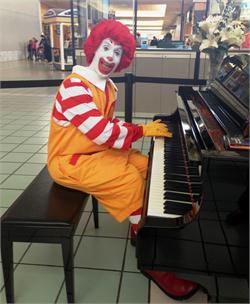
August 15 ~ Today in Music History

today


• 1890 ~Jacques Ibert, French composer and educator

• 1909 ~ Hugo Winterhalter, Orchestra leader

• 1922 ~ Lukas Foss, German-born American pianist, conductor and composer

• 1925 ~ Oscar Peterson, Canadian Jazz pianist, jazz trios, solos, played with all jazz greats, composer.  He achieved international fame with the touring “Jazz at the Philharmonic”.  His biography is Oscar Peterson: The Will to Swing

• 1925 ~ Bill Pinkney, Musician, bass with The Drifters

• 1933 ~ Bobby Helms, Singer

• 1941 ~ Don Rich, Country musician, songwriter, one of Buck Owens’ Buckaroos

• 1941 ~ Au Revoir, Pleasant Dreams was recorded by Ben Bernie and his orchestra.

• 1942 ~ Peter York, Musician, drums with Spencer Davis Group

• 1946 ~ Jimmy Webb, Grammy Award-winning songwriter

• 1961 ~ Matt Johnson, Musician, guitar, singer

• 1965 ~ 55,600 people attended a Beatles concert at Shea Stadium, New York, creating world attendance and revenue records for a pop concert.

• 1969 ~ The first day of the most famous musical event of 1969, Woodstock. It was originally called The Woodstock Music and Arts Fair and it began in Bethel, New York.

• 1969 ~ Three Dog Night (Danny Hutton, Cory Wells and Chuck Negron) were awarded a gold record for the album, Three Dog Night. Where’d the name of the group come from? In Australia, the aborigine tribes of several regions slept outside all year. As the temperatures got colder, the tribesmen would sleep with a dog to keep warm. In colder weather, they would huddle with two dogs. It must have been an extremely cold night when the group was formed!

• 1980 ~ I, Me, Mine, an autobiography by former Beatle George Harrison, went on sale.

• 1981 ~ Lionel Richie and Diana Ross hit number one on the pop music charts with their beautiful duet, Endless Love. It was a huge success for the two singers. Endless Love was number one for 9 weeks.

• 1989 ~ Many groups who had been to Woodstock had a twentieth-anniversary celebration.

August 14 ~ Today in Music History

today


1778 ~ Augustus Toplady, English hymn-writer who wrote Rock of Ages, died.

• 1868 ~ Leone Sinigaglia, Italian composer

• 1926 ~ Buddy (Armando) Greco, Singer and pianist

• 1937 ~ Brian Fennelly, American composer, pianist and conductor

• 1940 ~ Dash Crofts, Drums, mandolin and keyboard with Champs; singer is a duo with Seals and Crofts

• 1941 ~ David Crosby (Van Cortland), American rock singer, guitarist and songwriter. Performed with The Byrds as well as Crosby, Stills, Nash and Young

• 1941 ~ Connie Smith (Meadows), Singer

• 1946 ~ Larry Graham, Bassist and singer with Sly and the Family Stone as well as Graham Central Station

• 1971 ~ Elton John put the finishing touches to his Madman Across the Water LP at Trident Studios, London. Since the album’s release on Feb 2, 1972, it has sold over two million copies in the U.S. alone.

• 1981 ~ The BBC recording of the Royal Wedding of Prince Charles and Lady Diana reached number one on the album charts in Britain.

• 2000 ~ Leonard Kwan, a master of slack key guitar whose composition Opihi Moemoe is considered a classic of the genre, died at the age of 69.
Kwan began recording in 1957 and most recently recorded two albums for George Winston’s Dancing Cat Records. The second will be released in September.
Kwan also was the first slack key guitarist to publicly share his instrument tunings in an instruction book.
Hawaiian slack key, or ki ho`alu, is a unique musical style dating to the 1830s, when Spanish and Mexican cowboys arrived in the islands. Some of the guitar strings are slacked from the standard tuning and songs are played in a finger-picking style, with the thumb playing bass.
In 1960, he recorded, Slack Key, the world’s first all-instrumental slack key album.

• 2001 ~ Nicholas Orloff, a dancer and ballet teacher, died at the age of 86.
Orloff was known for his performance of the Drummer, a character he originated in David Lichine’s 1940 “Graduation Ball.”
He was a popular teacher with the Ballet Theater and other schools. He continued to teach in Manhattan schools even after suffering from a stroke three years ago.
Orloff appeared in the 1950 French film “Dream Ballerina” and on Broadway in the musical “Pipe Dream.”
He also was the ballet master of the Denver Civic Ballet in the mid- 1970s.
Born in Moscow, Orloff trained in Paris. He performed with the Ballet Russe de Monte Carlo, the Original Ballet Russe, Ballet Theater, as the American Ballet Theater was known, and the Grand Ballet du Marquis de Ceuvas.

• 2001 ~ Daniel Adrian Carlin, an Emmy-winning music editor who worked with soundtrack composers Lalo Schifrin and Ennio Morricone, died of complications from lung cancer and pulmonary fibrosis. He was 73.
Carlin edited the music for “Scorpio,” “The Outlaw Josey Wales,” “Ghost,” “Gorillas in  the Mist,” “Dead Poets Society” and “Cliffhanger.” He won a music-editing Emmy in 1987 for his work on the miniseries “Unnatural Causes.”
He was founder in 1972 of La Da Music. Now known as Segue Music, it is considered the leading film and television editing company.

This infographic of composers’ hands is painfully (and hilariously) accurate

pianist-hands


Redditor NeokratosRed  had an idea: depict the hands of great composers and pianists, according to the characteristics of their music. He shared it on the social media site, and also punted for suggestions of more. It has since received over 300,000 images views, and lots of further suggestions from fellow Redditors and piano geeks.

Whisks for Chopin’s elegant pianistic souffles, feather dusters for the gentle impressionism of Debussy, instruments of trade for the composer of the thunderous Hammerklavier sonata.

Piano, and the internet – top marks to the both of you.

via This infographic of composers’ hands is painfully (and hilariously) accurate | Classic FM.

August 13 ~ Today in Music History

today


• 1820 ~ Sir George Grove, British musicographer and educator.  Grove was editor of the Dictionary of Music and Musicians, the latest revised editions of which still carry his name

• 1860 ~ Annie Oakley born as Phoebe Anne Oakley Moses. She was a markswoman and member of Buffalo Bill Cody’s “Wild West Show” which toured America. The Irving Berlin musical, Annie Get Your Gun, was based on her life.

• 1912 ~ Jules Massenet, French composer of the operas Werther and Manon died.
More information about Massenet

• 1919 ~ George Shearing, British-born American jazz pianist and composer

• 1924 ~ The first country music record to sell one million copies reached that point on this day. It was The Prisoner’s Song, recorded by Vernon Dalhart. He became a Country Music Hall of Famer in 1981.

• 1930 ~ Don Ho, Singer

• 1930 ~ Guy Lombardo and his orchestra recorded Go Home and Tell Your Mother, on Columbia Records.

• 1948 ~ Kathleen Battle, American soprano, Metropolitan Opera diva, performed with the NY Philharmonic, Chicago Symphony, Boston Symphony, Berlin Philharmonic, Vienna Philharmonic, Orchestre de Paris

• 1949 ~ Cliff Fish, Musician, bassist with Paper Lace

• 1951 ~ Dan Fogelberg, Singer

• 1958 ~ Feargal Sharkey, Singer with The Undertones

• 2001 ~ Neil Cooper, the founder of the ROIR rock and reggae record label, died of cancer. He was 71.
Cooper started Reach Out International Records in 1979 and put out his first release – on cassette only – in 1981 by James Chance and the Contortions.
He then produced a catalog of cassettes by rock groups such as Bad Brains, Glenn Branca, Television, MC5, G.G. Allin, Johnny Thunders, and New York Dolls. ROIR’s reggae releases included Lee “Scratch” Perry, the Skatalites, Prince Far I, and Big Youth among others.
The cassette releases were a way to sidestep the artists’ exclusive contracts with other record labels. Vinyl album and compact disc versions were later issued.
Cooper also worked as an agent for MCA and Famous Artists before starting his label.

• 2003 ~ Ed Townsend, who wrote hit songs including 1958’s “For Your Love” and Marvin Gaye’s controversial “Let’s Get It On,” died at the age of 74.   Townsend had written more than 200 songs.    Nat King Cole and Etta James were among the stars who recorded Townsend’s songs. One of his first hits was “For Your Love” – which Townsend recorded himself.
Townsend also wrote and produced the Impressions’ 1974 No. 1 R&B hit “Finally Got Myself Together (I’m A Changed Man).”

Play Corvallis, Play


Play Corvallis, Play pianos are about to hit the streets, but first a giant gift to the community must be unwrapped at 6 p.m. Friday by the riverfront downtown.

“On Friday, we want to celebrate Corvallis and the citizens for being involved in music,” said Lee Eckroth, who came up with the street piano program last year. “Our reveal that day is a gift to the community and it’s pretty special.”

After the gift is opened, theme-painted pianos will start being available for free playing in various locations around town.

Eckroth was inspired to start the event after a family vacation in Boston a few years ago. He said the city had a street pianos program and his daughter, Morgan, thought it would be cool to bring that idea to Corvallis.

A mutual friend introduced Eckroth to Dave Lundahl, organizer of the Corvallis Imagination Music and Arts Festival, and the two decided to collaborate. The idea was to use both events to generate money for art and music programs in area K-12 public schools.

Eckroth said, “I put out a message to the community in February of 2014 that there was a guy looking to collect pianos. All of sudden I had 10 pianos in my garage.”

From June until the beginning of last August, Eckroth invited local residents and volunteers to use his driveway as a studio to paint whatever theme they wanted on the pianos. Themes included an all-orange piano called the Beaver Believer, or fruits and veggies, and more. One, called Happy Hands, featured a painted handprint of every volunteer. The pianos appeared outside locations such as the public library, the Oregon State University Valley Library and the downtown American Dream Pizza on Second Street.

“Last year we were amazed with what happened with the pianos,” Lundahl says. People were planning parties around the pianos, and impromptu concerts emerged from players of all different ages.

“We were giving people the opportunity to come out of their shells and express themselves,” Eckroth says.

The pianos, each with its own sponsor, will be re-released one by one between 7 a.m. and 10 p.m. every day in various locations until August 16. And like last year, when the pianos go away for the winter, they will be sent to different families to enjoy in their homes until next summer.

From http://www.gazettetimes.com/news/local/play-corvallis-play/article_694381ef-4c10-5570-9fab-490469eb4c2b.html

August 12 ~ Today in Music History

today


• 1644 ~ Heinrich Biber, Bohemian violinist and composer

OCMS   1859 ~ Katharine Lee Bates
Listen to Katharine Lee Bates’s music, America the Beautiful
Read about Katharine Lee Bates
More information about Bates


• 1919 ~ Michael Kidd (Milton Greenwald), Choreographer, dancer

• 1926 ~ Joe Jones, Singer, pianist for B.B. King

• 1927 ~ Porter Wagoner, Singer, songwriter

• 1929 ~ “Buck” (Alvis Edgar) Owens, American country-music guitarist, singer and songwriter

• 1941 ~ Jennifer Warnes, Singer

• 1944 ~ Peter Hofmann, German tenor and rock singer

• 1949 ~ Mark Knopfler, Musician, guitar, songwriter, singer with Dire Straits

• 1954 ~ Pat Metheny, Musician, jazz-guitar

• 1959 ~ Suzanne Vega, Musician, folk-guitar, singer, songwriter

• 1961 ~ Roy Hay, Musician, guitar with Culture Club

• 1966 ~ The last tour for The Beatles began at the International Amphitheater in Chicago; and John Lennon apologized for boasting that the Beatles were more popular than Jesus Christ. London’s Catholic Herald said Lennon’s comment was “arrogant … but probably true.”

• 1967 ~ Fleetwood Mac made their stage debut at the National Blues and Jazz Festival in Great Britain.

The Evolution of Music Clefs

When my students are first working with the Grand Staff, they are often confused about the placement of the various clefs.

In piano music, we generally use only the G-clef (Treble clef – not “trouble clef” as some think!) and the F-clef (Bass clef)  I try to show students how the curvy part of the G-clef wraps around the G above middle C and the F-clef looks sort of like an F marking the F below middle C.  I draw out G and F on the staff to show how these could have looked.

Originally, instead of a special clef symbol, the reference line of the staff was simply labeled with the name of the note it was intended to bear: F and C and, more rarely, G. These were the most often-used ‘clefs’ in Gregorian chant notation.  Gregorian chant developed mainly in western and central Europe during the 9th and 10th centuries, with later additions and redactions.

Over time the shapes of these letters became stylized, leading to their current versions.


August 11 ~ Today in Music History

today


• 1862 ~ Carrie Jacobs Bond, American composer

• 1919 ~ Ginette Neveu, French violinist

• 1925 ~ Mike Douglas (Dowd), TV host of The Mike Douglas Show; singer, The Music Show, Kay Kyser’s Kollege of Musical Knowledge

• 1927 ~ Raymond Leppard, British conductor and harpsichordist

• 1941 ~ Glenn Miller and his Orchestra recorded Elmer’s Tune on Bluebird Records.

• 1942 ~ Mike Hugg, Musician, drums with Chapter Three, Manfred Mann

• 1943 ~ Jim Kale, Musician, bass with The Guess Who

• 1943 ~ Guy Vallari, Singer with Regents

• 1949 ~ Eric Carmen, Musician, bass, keyboards, songwriter, singer with The Raspberries

• 1950 ~ Erik Braunn, Musician, guitar, singer with Iron Butterfly

• 1955 ~ Joe Jackson, Singer

• 1958 ~ Elvis Presley received a gold record for the hit, Hard Headed Woman. The song was featured in the movie King Creole.

• 1987 ~ Sgt. Pepper’s Lonely Hearts Club Band by The Beatles was called “the best album made during the last 20 years” by the respected music publication, Rolling Stone magazine.

• 1996 ~ Rafael Kubelik, Czech conductor, died aged 82. He made his debut with the Czech Philharmonic Orchestra in 1934 and went into exile in 1948 and made an emotional return when he conducted the opening concert of the 1990 Prague Spring music festival.

Finding The Right Teacher

NOT Mrs. O'Connor!

NOT Mrs. O’Connor!

See if a prospective teacher allows a trial lesson to test how the personalities mesh. And be sure to ask lots of questions. What’s the teacher’s background as a musician and as an instructor? What kinds of teaching materials and music does she use? How much practice time is expected for students, and does that vary by the student’s age? Does the teacher have access to student ensembles? What kinds of performance opportunities will he provide? Will the teacher allow the student to record the lesson? This can be a terrific practice aid, especially when it comes to remembering how something is supposed to sound. Does she teach any music theory or composition? What are the expectations for students and for their parents?

A good teacher can be a friendly, encouraging and inspiring presence — even when a student hits rough patches. He will point out the student’s weaknesses without being harsh or dismissive, suggest innovative ways to overcome challenges, and create engaging ways to tackle even rote activities like playing scales or honing fine motor skills. The instructor’s age and experience might or might not be a deciding factor; for example, I’m consistently impressed by the range of tricks my own child’s very youthful private teacher has up her sleeve to turn what could easily be drudgery into fun. Not to mention the huge helpings of good humor and patience she brings to her tiny charges!

Read more at Finding The Right Teacher For Your Music-Loving Kid : Deceptive Cadence : NPR.