Independence Day, commonly known as the Fourth of July, is a federal holiday in the United States commemorating the adoption of the Declaration of Independence on July 4, 1776, declaring independence from Great Britain.
Independence Day fireworks are often accompanied by patriotic songs such as the national anthem “The Star-Spangled Banner”, “God Bless America”, “America the Beautiful”, “My Country, ‘Tis of Thee”, “This Land Is Your Land”, “Stars and Stripes Forever”, and, regionally, “Yankee Doodle” in northeastern states and “Dixie” in southern states. Some of the lyrics recall images of the Revolutionary War or the War of 1812.
A bit of audio for your listening pleasure, as played by Vladimir Horowitz…
Memorial Day was originally called Decoration Day and was initiated to honor the soldiers for the Union and Confederate armies who died during the American Civil War.
Celebrations honoring Civil War heroes started the year after the war ended. The establishment of a public holiday was meant to unify the celebration as a national day of remembrance instead of a holiday celebrated separately by the Union and Confederate states. By the late 19th century, the holiday became known as Memorial Day and was expanded to include the deceased veterans of all the wars fought by American forces. In 1971, Memorial Day became a federal holiday.
The original national celebration of Decoration Day took place on 30 May 1868. When Memorial Day became a federal holiday, it was given the floating date of the last Monday in May.
This is one of my “bucket list” items, to go to the Old-Time Piano Playing Contest in Peoria, IL over Memorial Day weekend.
This video is “almost” as good as being there.
The Old-Time Music Preservation Association is staging their 41st World Championship Old-Time Piano Playing Contest this year to educate people about old-time piano music written prior to 1940.
When the World Championship Old-time Piano Playing Contest wraps up its 41st annual edition Memorial Day weekend in East Peoria IL, it will be for the last time.
More than 800 piano players from 38 states and five foreign countries have participated in the event through the years, collecting over $100,000 in prizes, but whoever wins the contest’s traveling trophy this year will get to keep it.
I guess this is one of my bucket list items that won’t be achieved.
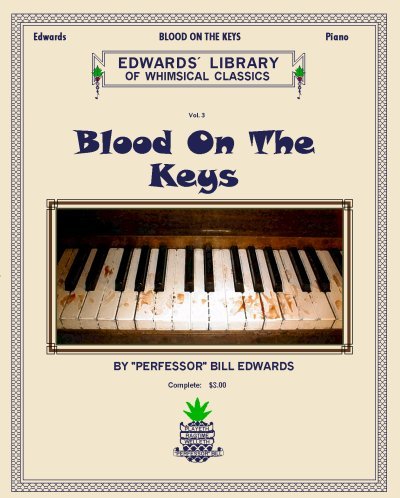
One of the “regulars”, Bill Edwards, who goes by the pseudonym “Perfessor Bill” has written a lot of ragtime music, some of which I’ve ordered. When I did, it came out that he lives relatively close so he dropped it off in person! As close as I’ll get to this event.
Bill’s website is an excellent resource for all-things ragtime. If you’re interested at all, just start digging in.
This is one of the pieces in the OCMS lending library.
The video below was recorded by my friend (Rev. Kevin Havens aka RevKev) and his band, JC Reigns. A tribute to moms for Mothers Day, for all moms in Heaven and on earth.
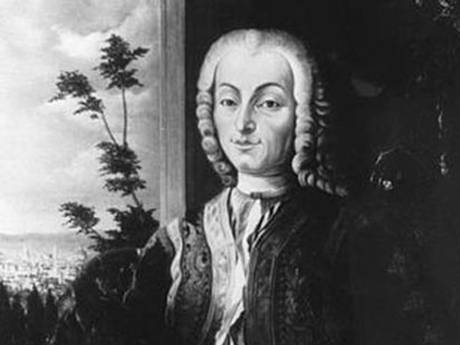
The inventor of the piano, Bartolomeo Cristofori, is celebrated in today’s Google Doodle.
Born on 4 May, 1655 in Padua, northern Italy, Cristofori initially worked making harpsichords and clavichords and was employed by Prince Ferdinando de Medici, son of the duke of Tuscany.
He is believed to have started work on what would become a piano in the 1690s and the first one is thought to have been made in 1709.
In a harpsichord the strings are plucked, so it is not possible to play the notes softer or louder. Cristofori managed to design a mechanism that transferred the pressure placed on the keys to the hammers that hit the strings.
He called his invention a “gravecembalo col piano e forte” – a clavichord with soft and loud. The name was shortened to pianoforte and then simply piano.
Francesco Mannucci, a musician at the Medici court, described one early version as “a large ‘Arpicembalo’ [the name of a type of harpsichord] by Bartolomeo Cristofori, of new invention that produces soft and loud, with two sets of strings at unison pitch, with soundboard of cypress without rose”.
Bartolomeo Cristofori di Francesco was an Italian maker of musical instruments, generally regarded as the inventor of the piano.
While other musical instrument makers had attempted to solve the same problem with the harpsichord, Cristofori’s invention is generally regarded as the first real piano.
However, the piano was not popular at first and many felt it was too difficult to play. Cristofori died largely uncelebrated for an invention that would later change the musical world in 1731 – a year before the first sheet music for the piano appeared.
It was 77 years ago this weekend that 26 men showed up at the Tulsa Club for a night of singing. They’d been invited by “Rupert Hall, Royal Keeper of the Minor Keys” and “O.C. Cash, Third Assistant Temporary Vice Chairman” of the Society for the Preservation and Propagation of Barber Shop Quartet Singing in the United States (sic), who noted:
In this age of Dictators and Government control of everything, about the only privilege guaranteed by the Bill of Rights not in some way supervised and directed, is the art of Barber Shop Quartet singing. Without doubt we still have the right of “peaceable assembly” which I am advised by competent legal authority includes quartet singing. The writers of this letter have for a long time thought that something should be done to encourage the enjoyment of this last remaining vestige of human liberty. Therefore, we have decided to hold a songfest on the Roof Garden of the Tulsa Club on Monday, April 11, at six-thirty p.m.
Easter Parade is a 1948 American musical film starring Judy Garland and Fred Astaire, featuring music by Irving Berlin, including some of Astaire and Garland’s best-known songs, such as “Easter Parade”, “Steppin’ Out with My Baby”, and “We’re a Couple of Swells”.