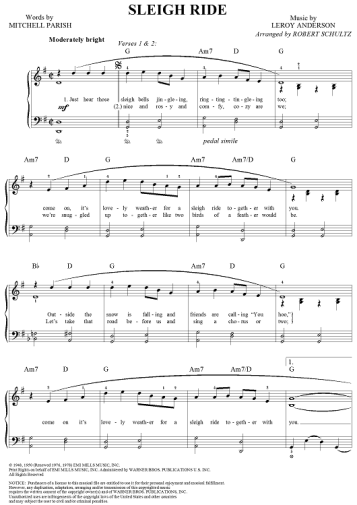
I’ve always liked Leroy Anderson’s Sleigh Ride as a secular Christmas song 🙂 It’s not technically a Christmas song since the words never mention Christmas but it’s often played now so it seems like a way to ease into the season.
Anderson had the original idea for the piece during a heatwave in July 1946; he finished the work in February 1948. Lyrics, about a person who would like to ride in a sleigh on a winter’s day with another person, were written by Mitchell Parish in 1950.
The orchestral version was first recorded in 1949 by Arthur Fiedler and The Boston Pops Orchestra. The song was a hit record and has become the equivalent of a signature song for the orchestra.
A fun arrangement has been made for piano duet. I have copies here to lend and it’s available on amazon (of course! What isn’t?)
In Scotland, and many countries with Scottish connections, St Andrew’s Day is marked with a celebration of Scottish culture with traditional Scottish food, music and dance. Schools across Scotland hold special St Andrew’s Day events and activities including art shows, Scottish country dancing, lunchtime Ceilidhs, dance festivals, storytelling, reciting and writing poems, writing tall tales, cooking traditional Scottish meals, and bagpipe-playing.
The day is also seen as the start of a season of Scottish winter festivals encompassing St Andrew’s Day, Hogmanay and Burns Night.
In Edinburgh, there is a week of celebrations, concentrating on musical entertainment and traditional ceilidh dancing. A ceilidh is a social event with couples dancing in circles or sets (groups of eight people).
In Glasgow city centre, a large shindig, or party, with traditional music and a ceilidh are held. In Dumfries, songs are performed in the Burn’s night tradition.
In Barbados Saint Andrew’s Day is celebrated as the national day of Independence in Barbados. As the patron saint of Barbados, Saint Andrew is celebrated in a number of Barbadian symbols including the cross formation of the Barbadian Coat of Arms, and the country’s national honours system which styles persons as Knights or Dames of St. Andrew.
. 1954 ~ George McArdle, Bass guitarist with Little River Band
. 1954 ~ June Pointer, Singer with The Pointer Sisters
. 1955 ~ Billy Idol (Broad), Guitarist, singer, songwriter
. 1957 ~ John Aston, Guitarist with these groups: Photons, Psychedelic Furs
. 1957 ~ Richard Barbieri, Drummer with Japan, composer
. 1968 ~ Diana Ross and The Supremes hit the #1 spot on the music charts with Love Child. The somewhat controversial tune (for the times) stayed at the top for two weeks.
. 1971 ~ ABC-TV presented Brian’s Song as the ABC Movie of the Week. The touching story was about Chicago Bears running back Brian Piccolo and his friendship with Gayle Sayers, who watched Brian die a tragic death. The theme song, Brian’s Song, was performed by Michel Legrand.
. 1974 ~ The Eagles hit, Best of My Love, was released. It would take until March 1, 1975 for it to reach the #1 spot on the top 40 charts.
. 1970 ~ Des’ree, Singer
. 1996 ~ Tiny Tim died performing Tiptoe Through the Tulips to an audience at a benefit in Minneapolis, Minnesota. He cut the song short, commenting to his wife, Miss Sue, that he felt ill. As he was making his way with Sue to her table, amidst the applause of his loyal fans, he collapsed, was taken to a Minneapolis hospital and died without regaining consciousness.
. 2017 ~ Jim Nabors, American comedian, actor and singer (Gomer Pyle, Back Home Again in Indiana), died from health complications at the age of 87
. 2019 ~ Mariss Jansons, one of today’s most respected and in-demand conductors, died t the age of 76.
Jansons had been suffering from heart disease and had canceled several concert appearances this year as a result. In October 2019, after a six-month hiatus, he returned to the podium with the Bavarian Radio Symphony Orchestra.
I have purchased a set of Christmas Shades of Sound Listening & Coloring Book for the studio.
Please let me know if you do not want your student to participate in Christmas activities and I will assign alternate activities.
Each week, I will print out some of the pages for your student and put them in his/her notebook. After listening to the music on YouTube, the student may color the pages.
After they are colored, please return them to the notebook so that there will be a complete book when finished.
If you are an adult and want to listen and color, too, just let me know and I’ll print you a set.
Get your piano students listening to great classical music!
The Shades of Sound Listening and Coloring Books are a great way to encourage students to listen to great piano and orchestral repertoire. Students of all ages will love coloring the fun pictures while listening to and learning from the music of the great composers.
This Shades of Sound Christmas edition includes 20 pieces of piano and orchestral literature for the Christmas season, from the Baroque to the Modern period. Includes background and historical information on the pieces and the composers, and a beautiful coloring page for each piece.
The Christmas Shades of Sound book includes 20 different pieces, including:
In Dulci Jubilo from the Christmas Tree Suite by Liszt
1632 ~ Jean-Baptiste Lully, Italian-born French composer
More information about Lully
1829 ~ Anton Rubinstein, Russian composer and pianist. He founded the Saint Petersburg Conservatory.
More information about Rubinstein
. 1895 ~ Joseé Iturbi, Musician, pianist, conductor of the Rochester Philharmonic Orchestra
. 1915 ~ Dick Vance, Trumpeter
. 1929 ~ Berry Gordy, Jr., Founder of Motown Records
. 1934 ~ Ethel Ennis, Singer with Benny Goodman Orchestra
. 1939 ~ Gary Troxel, Singer with The Fleetwoods
. 1940 ~ Bruce Channel, Singer
1943 ~ Randy (Randall Stuart) Newman, American pop-rock songwriter, singer and pianist
More information about Newman Grammy winner
. 1945 ~ R.B. Greaves, Singer
. 1948 ~ Beeb Birtles, Guitarist with The Little River Band
. 1949 ~ Alexander Godunov, Ballet dancer, actor
. 1949 ~ Paul Shaffer, Bandleader on Late Show with David Letterman, comedian
. 1956 ~ Holding the #1 spot on the music charts: Guy Mitchell singing Singing the Blues. The song remained at the top of the Hit Parade for 10 weeks. Here’s a bit of trivia: Ray Conniff whistled the intro to Singing the Blues.
. 1966 ~ The New Vaudeville Band received a gold record for Winchester Cathedral this day.
. 1974 ~ John Lennon appeared in concert for the last time, at NYC’s Madison Square Garden. Lennon joined Elton John to sing Whatever Gets You Through the Night as well as I Saw Her Standing There.
“The New-England Boy’s Song about Thanksgiving Day”, also known as “Over the River and Through the Wood”, is a Thanksgiving poem by Lydia Maria Child originally published in Flowers for Children, Volume 2.
Although many people sing “to grandmother’s house we go,” the original edition shows that the author’s words were “to grandfather’s house.”
This poem celebrates the author’s childhood memories of visiting her Grandfather’s House.
Over the river, and through the wood,
To grandfather’s house we go;
The horse knows the way,
To carry the sleigh,
Through the white and drifted snow.
Over the river, and through the wood,
To grandfather’s house away!
We would not stop
For doll or top,
For ‘t is Thanksgiving day.
Over the river, and through the wood,
Oh, how the wind does blow!
It stings the toes,
And bites the nose,
As over the ground we go.
Over the river, and through the wood,
With a clear blue winter sky,
The dogs do bark,
And children hark,
As we go jingling by.
Over the river, and through the wood,
To have a first-rate play—
Hear the bells ring
Ting a ling ding,
Hurra for Thanksgiving day!
Over the river, and through the wood—
No matter for winds that blow;
Or if we get
The sleigh upset,
Into a bank of snow.
Over the river, and through the wood,
To see little John and Ann;
We will kiss them all,
And play snow-ball,
And stay as long as we can.
Over the river, and through the wood,
Trot fast, my dapple grey!
Spring over the ground,
Like a hunting hound,
For ‘t is Thanksgiving day!
Over the river, and through the wood,
And straight through the barn-yard gate;
We seem to go
Extremely slow,
It is so hard to wait.
Over the river, and through the wood,
Old Jowler hears our bells;
He shakes his pow,
With a loud bow wow,
And thus the news he tells.
Over the river, and through the wood—
When grandmother sees us come,
She will say, Oh dear,
The children are here,
Bring a pie for every one.
Over the river, and through the wood—
Now grandmother’s cap I spy!
Hurra for the fun!
Is the pudding done?
Hurra for the pumpkin pie!
I’m thankful for my piano studio, my students, and my piano 🙂
When I was growing up, my dad was a minister, meaning we lived in whatever parsonage the church chose to let us live in. The one we had in Pawcatuck, CT had an upright piano that someone had put out in the sunroom. Not the best place for a piano, but I digress.
Since we had the piano already, someone – probably my mom – decided that I would take lessons. We had the organist from the Baptist church just across the river in Westerly, RI
Apparently, Clara Pashley was fondly remembered at the church (now Central Baptist Church) since she was mentioned in an article from 2010.
Miss Pashley walked to our house each week and taught me (and my mom who was always listening in) piano for the grand sum of 25 cents.
I started with Ada Richter’s classic Teaching Little Fingers to Play, which has now been morphed into the John Thompson library.
From there, it was the Michael Aaron series, and some sheet music.
There was no music store in our town, so I have no idea where any of this music came from – but I still have it all.
My parents did very well for their quarter a week investment, especially since my mom paid good attention and was able to beef up lessons she’d had as a child. Later on, she played well enough that she was church organist for a local Roman Catholic Church.
But I digress…
In those days, kids couldn’t do a whole lot of activities, so in 6th grade, I decided I wanted to be a Girl Scout. Bye, bye Clara.
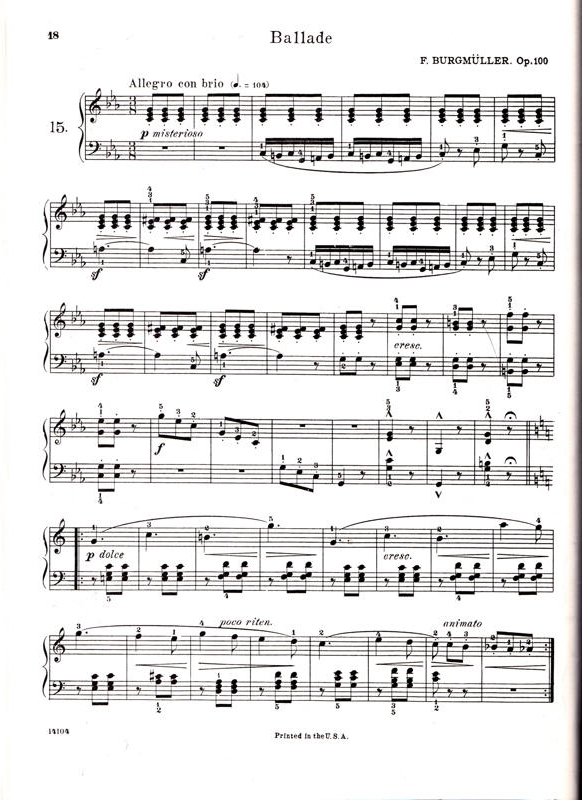
Girl Scouts didn’t last long but I did play piano in a talent show. I remember, I carefully cut Burgmüller’s Ballade out of my Michael Aaron book and made a nice construction paper cover. (I still have this, too)
I doubt that I played this well but here’s what it was supposed to sound like:
A few years intervened and moved to Springfield, MA. The parsonage piano there was in terrible shape and in the dark, never-used basement. But I decided to make it mine and cleared up the area around it and started “practicing”.
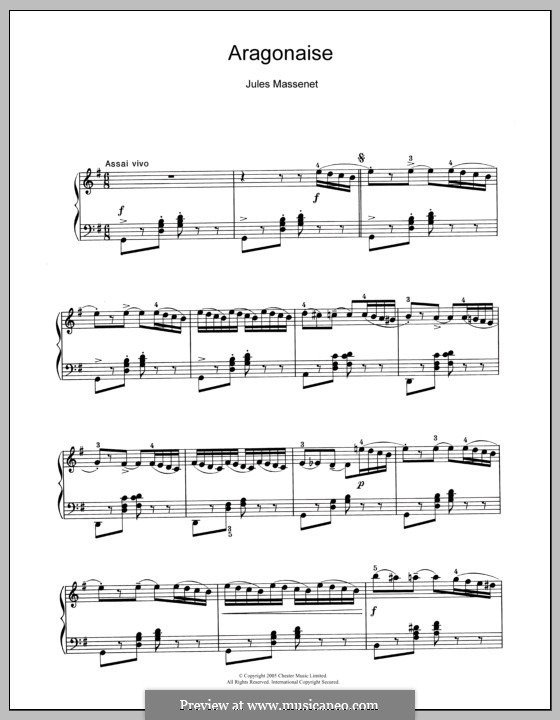
My Junior or Senior year of High School I decided I wanted to major in music in college. I decided to learn, on my own, a piano arrangement of Aragonnaise by Jules Massenet. I have no idea why or where that sheet music came from but I started working furiously on this piece.
Hopefully, at some point, it should have sounded like this:
I started pedaling (no pun intended!) my music to the Universities of Connecticut and Massachusetts and ended up at UMass Amherst since we were state residents.
Early morning gym classes (usually swimming), then wet hair traipsing across campus to music theory in winter 5 days a week. AARRGGH!
But I stuck it out.
My wonderful piano teacher, Howard Lebow, was killed in a car accident during my sophomore year and I was devastated. There will be more about him in a post on January 26, 2019 here on https://atomic-temporary-44596882.wpcomstaging.com
I took yet another break from piano lessons – but I kept playing.
After DH graduated, we moved to Milwaukee, WI for his graduate school. Besides working 2 jobs, I found time to commandeer the practice rooms at the University of Wisconsin. I also found a teacher at the Schaum School of Music. She was amazed that I had no piano at home to practice on.
When we later moved to Alexandria, VA my DH gave me a choice of new car or piano. So, I found a used piano. The owner had acquired it in a divorce and wanted it gone. Yesterday. She even paid to move it out of her apartment.
The new-to-me piano took up half our living room. When my parents came to visit, their feet we under my piano as I slept.
I found yet another new piano teacher and she is still my best friend to this day.
That piano moved to several locations before I bought a brand new Yamaha grand piano. The movers accidently brought in the wrong one and I made them return it. The people who lived in an apartment were probably unhappy when they had to return my piano and take their own new baby grand back.
I started teaching as a traveling piano teacher in Silver Spring, Maryland. I continued that in Wilmington, DE.
When we got to Fairfax, VA I decided no more traveling. Students would come to me. And so they have since 1973.
What is supposed to be our living room is filled with music books, electric keyboards, the grand piano, 2 organs, 2 violins, 2 clarinets and other musical “stuff”.
Piano playing has gotten me through the worst times of my life. Teaching has been a lifeline for me, as well.
I am so thankful for the students who have stayed with me over the years.
. 1710 ~ Wilhelm Friedemann Bach, composer, son of J.S. Bach
. 1880 ~ Lillian Russell made her vaudeville debut, in New York City.
. 1899 ~ Hoagy (Hoagland Howard) Carmichael, American jazz pianist and songwriter, singer, bandleader, attorney
. 1909 ~ Helen Hayes appeared for the first time on the New York stage. She was a member of the cast of In Old Dutch, which opened at the Herald Square Theatre.
1913 ~ Lord Benjamin Britten, British composer
Read quotes by and about Britten
More information about Britten Grammy winner
. 1925 ~ Gunther Schuller, American composer, conductor, French-horn player and educator
. 1938 ~ Bunny Berigan and his orchestra recorded Jelly Roll Blues on Victor Records. The tune became a standard for the band.
. 1943 ~ Floyd Sneed, Drummer with Three Dog Night
. 1946 ~ Aston Barrett, Musician with ‘Family Man’, bass with Bob Marley & The Wailers
. 1949 ~ Steve ‘Miami’ Van Zandt, Singer, songwriter, guitar
. 1950 ~ Tina (Martina) Weymouth, Bass with Talking Heads
. 1953 ~ Craig Hundley, Pianist with the Craig Hundley Trio
. 1955 ~ RCA paid the unheard of sum of $25,000 to Sam Phillips of Memphis, TN for the rights to the music of a truck driver from Tupelo, Mississippi: Elvis Presley. Thanks to negotiations with Elvis’ manager, Colonel Tom Parker, RCA tossed in a $5,000 bonus as well, for a pink Cadillac for Elvis’ mother.
. 1957 ~ The Miles Davis Quintet debuted with a jazz concert at Carnegie Hall in New York.
. 1965 ~ The production of Man of LaMancha, including the classic The Impossible Dream, opened in New York City for the first of 2,328 performances.
. 1975 ~ Dr. Zhivago appeared on TV for the first time. The production, including Somewhere My Love, had earned $93 million from theater tickets over ten years. NBC paid $4 million for the broadcast rights.
. 1977 ~ Tony Orlando returned to the concert stage after a self-imposed, three-month retirement following the suicide death of his good friend, Freddie Prinze. Orlando appeared in concert in San Carlos, California.
. 2001 ~ Norman Granz, the impresario who helped make jazz more accessible to the public while making the music business fairer to black performers, died in Geneva, Switzerland, of complications from cancer. He was 83. Granz owned four labels – Clef, Norgran, Verve and Pablo – and at one time or another recorded most of the major names in jazz, including Louis Armstrong, Count Basie, Duke Ellington, Ella Fitzgerald, Dizzy Gillespie, Billie Holiday, Charlie Parker and Oscar Peterson. Many historians credit him with bringing top jazz performers in integrated bands into venues across the country through a series called Jazz at the Philharmonic. Granz’s efforts also helped end a system in which white performers generally earned far more than blacks. He insisted on equality in pay, dining and accommodations for his musicians. In 1947, he told Down Beat magazine that he lost $100,000, then a sizable sum, by turning down bookings in segregated concert halls.
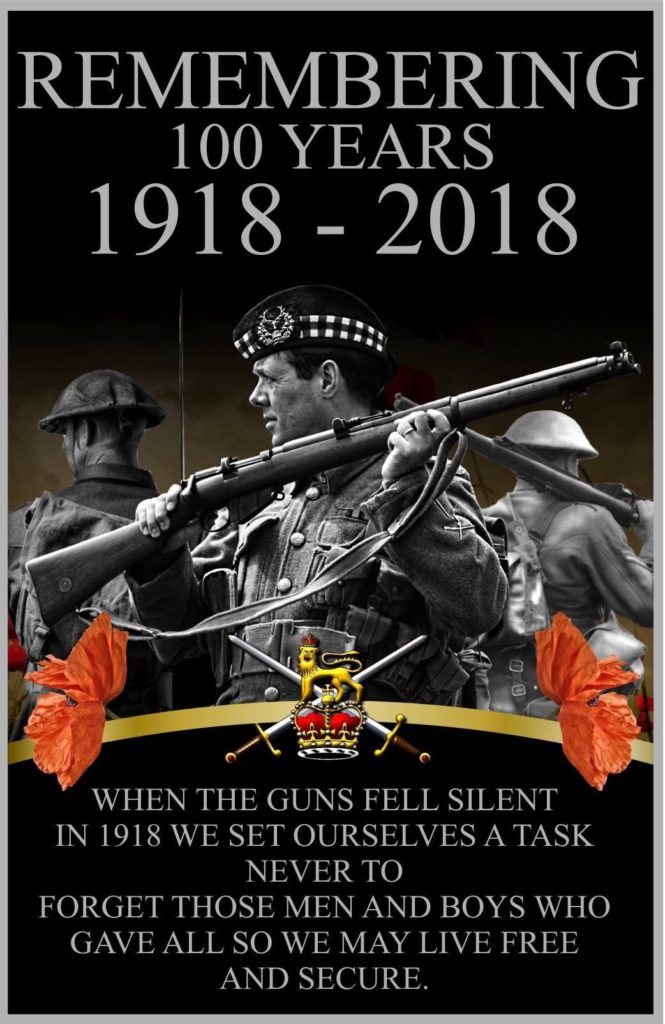
.1918 ~ This is Armistice Day or Remembrance Day or Veterans Day or Victory Day or World War I Memorial Day. The name of this special day may be different in different places throughout many nations; but its significance is the same. It was on this day, at 11 a.m., that World War I ceased. The Allied and Central Powers signed an armistice agreement at 5 a.m. in Marshal Foch’s railway car in the Forest of Compiegne, France. Even today, many still bow their heads in remembrance at the 11th hour of this the 11th day of the 11th month.
The Armistice of 11 November 1918 was the armistice that ended fighting on land, sea and air in World War I between the Allies and their opponent, Germany. Previous armistices had eliminated Bulgaria, the Ottoman Empire and the Austro-Hungarian Empire from the war.
Also known as the Armistice of Compiègne from the place where it was signed, it came into force at 11 a.m. Paris time on 11 November 1918 (“the eleventh hour of the eleventh day of the eleventh month”) and marked a victory for the Allies and a complete defeat for Germany, although not formally a surrender.
.1883 ~ Ernst Ansermet, Swiss conductor
.1927 ~ Mose Allison, American jazz pianist, trumpeter and singer
.1929 ~ Dick Clark, TV producer, host of American Bandstand, former Philadelphia DJ
.1929 ~ Andy Kirk and his orchestra recorded “Froggy Bottom” in Kansas City.
.1931 ~ Leslie Parnas, American cellist
.1932 ~ The National Broadcasting Company opened its new studios at Radio City in New York City. They celebrated with a gala program at Radio City Music Hall.
.1938 ~ Kate Smith sang God Bless America for the very first time. It would later become her signature song. Irving Berlin penned the tune in 1917 but never released it until Miss Smith sang it for the first time on her radio broadcast. Actually, the song was then 20 years old, but it had never been publicly performed before.
.1944 ~ Frank Sinatra began a long and successful career with Columbia Records.
.1964 ~ Edward Steuermann, composer, died at the age of 72. Howard Lebow, one of Mrs. O’Connor’s teachers studied under Steuermann
.1974 ~ Leonardo DiCaprio, American actor
.1979 ~ Dimitri Tiomkin passed away. He was a Russian-American film score composer and conductor.
.1992 ~ Erskine Hawkins passed away. He was an American trumpet player and big band leader.
.2000 ~ Isadore Granoff, a Ukrainian immigrant who started teaching violin lessons as a teenager and built a famed music school in Philadelphia, died in his sleep at the age of 99. Granoff taught Dizzy Gillespie, John Coltrane and others during more than a half-century at the Granoff School of Music. Granoff taught amateurs and professionals. Some of his students went on to become prominent players of classical music, jazz, swing, big band and Latin sounds. Granoff sold the school in 1970 and later stepped down from the board of directors, renouncing the new owner’s promotional tactics.
.2015 ~ Dr. Maurice Hinson died. He was one of America’s most respected authorities on piano literature. Many of the books in the OCMS library were edited by Dr. Hinson. Mrs. O’Connor took a piano pedagogy class with him several years ago and learned so much from him.
Among his outstanding achievements, he received the Lifetime Achievement Award from the Music Teachers National Association at it Washington, D.C. convention in the spring of 1994, the Outstanding Alumni Award from the University of Florida in 1990, and the Outstanding Alumni Award from the University of Michigan in the fall of 1995. Dr. Hinson has performed, lectured and given master classes worldwide. His books and editions have become classic standards in the studios of serious piano teachers and students the world over. He was awarded the Franz Liszt Medal by the Hungarian Government in 1986. Hailed as a specialist in American piano music, some of his most recent articles appear in the New Grove Dictionary of American Music in the United States.








 1632 ~ Jean-Baptiste Lully, Italian-born French composer
 Grammy winner




 MaryO'Studio