Destined to become one of the world’s greatest pianists, Vladimir Horowitz was born in 1903 in Kiev, Russia. While most young children were playing games, Vladimir was playing with the ivories. His time was well spent as he was fully capable of performing publicly by the time he was sixteen.
Within four years, the young piano virtuoso was entertaining audiences at recitals throughout Leningrad – 23 performances in one year, where he played over 200 different works of music, never repeating a composition. After Leningrad, Horowitz played in concerts in Berlin, Hamburg and Paris.
In 1928, the Russian pianist traveled to the United States to play with the New York Philharmonic Orchestra at Carnegie Hall. Arturo Toscanini chose Horowitz to perform his first solo with the New York Philharmonic. It was there that Horowitz met his bride-to-be, Toscanini’s daughter, Wanda. The two were wed in Milan in 1933. New York became Horowitz’ permanent home in 1940. He became a U.S. citizen a few years later, devoting the rest of his career to benefit performances, and helping young, aspiring artists.
His return to the concert stage in May of 1965 was a triumphant success, as was his television recital, Vladimir Horowitz at Carnegie Hall.
Just three years before his death, Vladimir Horowitz returned to his homeland to perform once again for the Russian people on April 20, 1986. They felt he had been away far too long … close to sixty years. Horowitz’s birthday
George Gershwin lived between September 26, 1898 and July 11, 1937. He is considered to be a twentieth century composer.
If you hate homework but like roller skating, you have something in common with American composer George Gershwin. Born in Brooklyn, New Yord to Russian immigrant parents, George loved to play street hockey, ‘cat’, and punch ball. He didn’t even have an interest in music until his family got him a piano when he was twelve. Nine years later he had his first hit, “Swanee”, with lyrics written by Irving Caesar. No one else in the Gershwin family was musical, but George was fascinated by music. When he heard a schoolmate play the violin, George struck up a friendship with the boym who introduced him to the world of concert music.
Gershwin’s American in Paris and Rhapsody in Blue (featured in Disney’s newly released Fantasia 2000) proved that jazz was powerful enough to combine will with symphonic music. Gershwin was only 26 years old at the time when he composed Rhapsody in Blue. No matter how you hear it, “Rhapsody in Blue” will remain the signature of one of the most influential of composers, songwriters and pianists in American music history.
His play Porgy and Bess has been produced as both a film and an opera.
None of the companies that have collected royalties on the “Happy Birthday” song for the past 80 years held a valid copyright claim to one of the most popular songs in history, a federal judge in Los Angeles ruled on Tuesday.
In a stunning reversal of decades of copyright claims, the judge ruled that Warner/Chappell never had the right to charge for the use of the “Happy Birthday To You” song. Warner had been enforcing a copyright since 1988, when it bought Birch Tree Group, the successor to Clayton F. Summy Co., which claimed the original disputed copyright.
Judge George H. King ruled that a copyright filed by the Summy Co. in 1935 granted only the rights to specific piano arrangements of the music, not the actual song.
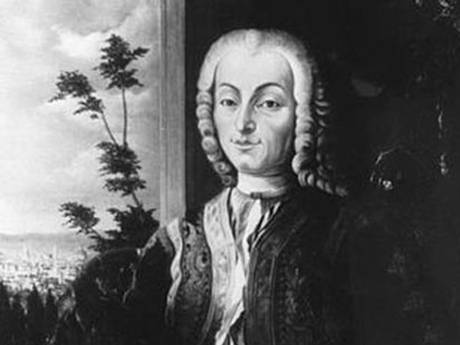
The inventor of the piano, Bartolomeo Cristofori, is celebrated in today’s Google Doodle.
Born on 4 May, 1655 in Padua, northern Italy, Cristofori initially worked making harpsichords and clavichords and was employed by Prince Ferdinando de Medici, son of the duke of Tuscany.
He is believed to have started work on what would become a piano in the 1690s and the first one is thought to have been made in 1709.
In a harpsichord the strings are plucked, so it is not possible to play the notes softer or louder. Cristofori managed to design a mechanism that transferred the pressure placed on the keys to the hammers that hit the strings.
He called his invention a “gravecembalo col piano e forte” – a clavichord with soft and loud. The name was shortened to pianoforte and then simply piano.
Francesco Mannucci, a musician at the Medici court, described one early version as “a large ‘Arpicembalo’ [the name of a type of harpsichord] by Bartolomeo Cristofori, of new invention that produces soft and loud, with two sets of strings at unison pitch, with soundboard of cypress without rose”.
Bartolomeo Cristofori di Francesco was an Italian maker of musical instruments, generally regarded as the inventor of the piano.
While other musical instrument makers had attempted to solve the same problem with the harpsichord, Cristofori’s invention is generally regarded as the first real piano.
However, the piano was not popular at first and many felt it was too difficult to play. Cristofori died largely uncelebrated for an invention that would later change the musical world in 1731 – a year before the first sheet music for the piano appeared.
It was 77 years ago this weekend that 26 men showed up at the Tulsa Club for a night of singing. They’d been invited by “Rupert Hall, Royal Keeper of the Minor Keys” and “O.C. Cash, Third Assistant Temporary Vice Chairman” of the Society for the Preservation and Propagation of Barber Shop Quartet Singing in the United States (sic), who noted:
In this age of Dictators and Government control of everything, about the only privilege guaranteed by the Bill of Rights not in some way supervised and directed, is the art of Barber Shop Quartet singing. Without doubt we still have the right of “peaceable assembly” which I am advised by competent legal authority includes quartet singing. The writers of this letter have for a long time thought that something should be done to encourage the enjoyment of this last remaining vestige of human liberty. Therefore, we have decided to hold a songfest on the Roof Garden of the Tulsa Club on Monday, April 11, at six-thirty p.m.
Franz Peter Schubert lived between 1797 and 1828. He is considered to be a romantic composer. He was an Austrian composer who was one of the greatest creators of melody and foremost writer of ‘lieder’ (German songs).
Although he only lived for 31 years, Schubert composed more than 600 songs, 22 piano sonatas and many short piano pieces. This melodic output has never been equaled either in quantity of quality. He was one of the first musicians to earn a living from the sale of his music.
Schubert’s Ave Maria was featured in the Walt Disney movie Fantasia.
What better way to get things started than with a party?
At Wolfie, that means the first worldwide event in honor of Mozart’s birthday – taking place this Tuesday, January 27th! Every musician – concert pianist or 2nd-grader – playing a score on the Wolfie app on January 27th will automatically appear on an interactive world map at www.wolfiepiano.com.
Share this special event with colleagues and inspire your students by enabling them to take part in a worldwide event that will connect them to piano players around the world! It all starts by joining the event, here.
Finally, we’d love to hear from you. You, Mozart’s ambassadors, are keeping his legacy alive and instilling the gift of music appreciation into young peoples’ lives every day.
See you on Tuesday – on the map!
~~~~~~~~ Wolfgang Amadeus Theophilus Mozart lived between 1756 and 1791. He is considered to be a classical composer. Mozart, born in Salzburg, Austria, began composing before most children go to kindergarten. By the time he was six he had played the piano and violin in public.
A Wunderkind, a prodigy of the first rank before the age of five, Mozart astounded the musical world with compositions of unsurpassed brilliance. His father Leopold had recognized his talent at the age of three and immediately set out to teach him to play the harpsichord, violin, and organ. Mozart and his sister made their debut in Munich when he was just six and traveled about Europe together, performing at courts and before royalty, always with success. While still a little child Mozart was inventing symphonies, sonatas, and his first opera. Legends abound about how Mozart could hear an entire work in his head and write everything down without making even one change.
As a child performer he was often treated as a freak. People would cover his hands as he played the piano, make him compose tunes on the spot and perform all sorts of other musical tricks.
In 1787 Mozart became court composer to Joseph II. He played for royalty, received commissions from aristocrats and in his short lifetime composed nearly a thousand masterpieces, including symphonies, operas, serenades, sonatas, concertos, masses, vocal works, and church works.
Mozart was a prolific composer writing masterpieces using every form of music, including his operas “The Marriage of Figaro” (based on a play by Pierre Beaumarchais), “Don Giovanni”, “Cosi fan tutte” and “The Magic Flute”. His mastery of instrumental and vocal forms, from symphony to concerto and opera, was unrivalled in his own time and perhaps in any other.
Composing the Requiem Mass commissioned for Count Walsegg, he felt he was writing his own requiem and he died before it was finished.
Wolfgang Amadeus Mozart, composer, died in Vienna Austria at the age of 35, penniless, on December 5th, 1791, of malignant typhus. Mozart, the precocious child prodigy, composed several pieces that are deemed central to the classical era. Though he ranked as one of the greatest musical genius, he did not live a life of affluence as none of his compositions earned him a decent commission but the world is forever enriched by such works as Eine Kleine Nachtmusik, the Symphonies No. 38 through 41 and the Coronation Mass.


 Horowitz’s birthday

 George Gershwin lived between September 26, 1898 and July 11, 1937. He is considered to be a twentieth century composer.

 Franz Peter Schubert lived between 1797 and 1828. He is considered to be a romantic composer. He was an Austrian composer who was one of the greatest creators of melody and foremost writer of ‘lieder’ (German songs).


 Wolfgang Amadeus Theophilus Mozart lived between 1756 and 1791. He is considered to be a classical composer. Mozart, born in Salzburg, Austria, began composing before most children go to kindergarten. By the time he was six he had played the piano and violin in public.

 MaryO'Studio