Don’t Give Up Because You Miss a Note!

FaeriesAireandDeathWaltz1

I have a copy of this music (Faerie’s Aire and Death Waltz) if anyone is interested in playing it!

The music above has been played:

http://youtu.be/sCgT94A7WgI

The drive you need to accomplish whatever you’re attempting—big or small—needs fuel. Instead of letting slip-ups set you back, psychologist and author John Norcross recommends you make them the fuel:

If you are learning to play the piano, you don’t give up because you miss a note. It’s not whether you slip, it’s how you respond to the slip.

Cut yourself some slack and remember that things take time and hard work. Listen to the sound of your “missed note” and let that push you forward. You missed that note yesterday, but that doesn’t mean you’ll miss it today.

via “If You’re Learning Piano, You Don’t Give Up Because You Miss a Note”.

December 24, 2016 ~ Today in Music History

today

OCMS Fairfax County Student Holiday

Christmas Music, Part 24 – O Holy Night

• 1719 ~ Johann Christoph Altnikol, German organist, bass singer, and composer. He was a son-in-law and copyist of Johann Sebastian Bach

• 1818 ~ Franz Gruber of Oberndorf, Germany, composed the music for “Silent Night” to words written by Josef Mohr. The traditional song was sung for the first time during Midnight Mass on this night.

https://youtu.be/tRq–pTnlog

• 1824 ~ Peter Cornelius, German composer and writer

• 1871 ~ Opera-goers in Cairo, Egypt were treated to Verdi’s Aida in its world premiere. The composer was commissioned to write the opera for festivities celebrating the opening of the Suez Canal

• 1887 ~ Lucrezia Bori, Spanish lyric composer

• 1893 ~ Harry Warren (Salvatore Guaragna), Composer, Song Writer’s Hall of Famer: Best Song Oscar

• 1906 ~ Professor Reginald A. Fessenden sent his first radio broadcast from Brant Rock, MA. The program included a little verse, some violin and a speech.

• 1918 ~ Zara Nelsova, Canadian-born American cellist

• 1914 ~ Ralph Marterie, ‘Caruso of the trumpet’: musician, bandleader

• 1924 ~ Carol Haney, Dancer, member of Jack Cole dance company, worked with Bob Fosse, in films

• 1928 ~ The first broadcast of The Voice of Firestone was heard. The program aired each Monday evening at 8:00. The Voice of Firestone became a hallmark in radio broadcasting. It kept its same night, time (in 1931 the start time changed to 8:30) and sponsor for its entire run. Beginning on September 5, 1949, the program of classical and semiclassical music was also seen on television.

• 1930 ~ Robert Joffrey (Khan), Choreographer with The Joffrey Ballet; died in 1988

• 1931 ~ Ray Bryant, Pianist, composer

• 1944 ~ Mike Curb, Music executive, producer, Oscar-winner

• 1944 ~ The Andrews Sisters starred in the debut of The Andrews Sisters’ Eight-To- The-Bar-Ranch on ABC radio. Patti, Maxine and LaVerne ran a fictional dude ranch. George ‘Gabby’ Hayes was a regular guest along with Vic Schoen’s orchestra. The ranch stayed in operation until 1946.

• 1945 ~ Lemmy (Ian Kilmister), Bass, singer with Motorhead

• 1946 ~ Jan Akkerman, Guitar, lute with bands: Friendship Sextet, Johnny and the Cellar Rockers

• 1951 ~ Menotti’s “Amahl and the Night Visitors”, the first opera composed for television, made its debut on NBC-TV. Amal and the Night Visitors became a Christmas classic.

https://youtu.be/Hzx-s46vjpY

• 1955 ~ The lovely Lennon Sisters debuted as featured vocalists on The Lawrence Welk Show on ABC-TV. They became regulars with Welk within a month and stayed on the show until 1968.

• 1957 ~ Ian Burden, Keyboards with Human League

• 1977 ~ The Bee Gees spent Christmas and New Year’s Eve at the top of the music charts. How Deep is Your Love became #1 this day and stayed that way for three weeks.

• 2000 ~ Felix Popper, a conductor and music administrator at the New York City Opera, died at the age of 92. Popper joined the New York City Opera in 1949 as an assistant conductor and vocal coach. By 1958 he was named music administrator, and he played an important role in guiding the opera through a period in which the house truly established itself. During this time, the company is credited with discovering important American singers such as Johanna Meier, Tatiana Troyanos, Gianna Rolandi, Faith Esham and Jane Shaulis. Popper retired from the opera in 1980 but continued to work as a consultant and vocal coach.

• 2000 ~ Longtime Detroit blues radio personality and promoter Famous Coachman died of an apparent heart attack. He was 75. Coachman was host of the weekend blues and gospel show on Detroit’s WDET for 21 years until 1997 and remained busy in the city’s music world until his death. “Everybody knew Coachman,” said JoAnn Korczynska, blues music director for WHFR at Henry Ford Community College in Dearborn. “He really did know B.B. King and John Lee Hooker. When I met John Lee Hooker, one of the first things he said to me was `How is Coachman doing?'” Coachman said he was named “Famous” because “my mother knew I would be.”

• 2000 ~ Nick Massi, an original member of the Four Seasons who handled bass vocals and vocal arrangements throughout the band’s glory days, died of cancer at the age of 73. Massi was born in Newark as Nicholas Macioci. The longtime West Orange resident performed with several bands before joining Frankie Valli in a group called the Four Lovers. By 1961, the group had evolved into the Four Seasons. Massi remained with the group until 1965, when he grew tired of touring, Valli said. Massi performed on hits such as Sherry, Big Girls Don’t Cry,Walk Like a Man and Rag Doll, which friends said was his favorite. During his tenure, the group made the Billboard Top 40 chart 17 times and toured throughout the United States and overseas, melding doo-wop vocals with a contemporary beat. They were inducted into the Rock and Roll Hall of Fame in 1990. Valli’s falsetto was the band’s trademark, but he said Massi was his musical mentor. “He could do four-part modern harmonies that would amaze musicians who had studied for years. And he did it all in his head without writing it down,” Valli said.

Hanukkah
Chanukah
Chanukah Music
Chanukah Music Lyrics

December 6, 2016 ~ Today in Music History

today

Christmas Music, Part 6 – Just In Time For Christmas

• 1877 ~ Thomas Alva Edison made the first sound recording ever by reciting and recording the nursery rhyme, “Mary had a Little Lamb”. Edison recorded sound on a cylinder, which was then rotated against a needle. The needle moved up and down in the grooves of the cylinder, producing vibrations that were amplified by a conical horn. Edison assumed that this would be useful only for office dictation purposes and not much for recording music.

• 1896 ~ Ira Gershwin (Israel Gershvin), American librettist and lyricist

OCMS 1920 ~ Dave Brubeck, American jazz pianist and composer
More information about Brubeck

• 1929 ~ Nikolaus Harnoncourt, German conductor, cellist and musicologist

• 1930 ~ Bobby Van (Bobby King Robert Stein), Actor, dancer

• 1939 ~ Steve Alaimo, Singer, actor

• 1941 ~ Helen Cornelius, Singer

• 1942 ~ Len Barry (Borrisoff), Singer, with The Dovells

• 1944 ~ Jonathan (Kenneth) King, Singer, songwriter, producer

• 1944 ~ Red Bank Boogie, Count Basie’s salute to his hometown, was recorded on Columbia Records. The tune is a tribute to Red Bank, New Jersey.

• 1948 ~ Arthur Godfrey’s Talent Scouts debuted on CBS-TV. The show ran for almost

• 10 years and the redhead introduced such talent as Pat Boone, The Chordettes, Carmel Quinn, The McGuire Sisters, Rosemary Clooney, Tony Bennett, Connie Francis, Steve Lawrence and Al Martino.

• 1956 ~ Peter Buck, Guitarist with R.E.M.

• 1956 ~ Rick (Paul) Buckler, Drummer, singer with The Jam

• 1960 ~ Eileen Farrell debuted at the Metropolitan Opera House in NYC in the title role of Gluck’s Alcestis.

• 1962 ~ Ben Watt, Guitarist, keyboard, singer with Everything but the Girl

• 1969 ~ Musician Cab Calloway turned actor as he was seen in the Hallmark Hall of Fame presentation of The Littlest Angel on NBC. The big band singer, known for such classics as Minnie the Moocher, became a movie star in The Blues Brothers (1980) with John Belushi and Dan Ackroyd.

• 1969 ~ Na Na Hey Hey Kiss Him Goodbye, by Steam, reached the #1 spot on the top 40. It stayed at the top for two weeks and was the only major hit for the group.

• 1984 ~ Two former Beatles debuted in two film releases this day. Paul McCartney’s Give My Regards to Broad Street and George Harrison’s A Private Function were finalized for theater audiences.

• 1988 ~ Roy Orbison, Singer, passed away

• 1989 ~ Sammy Fain passed away
More information about Fain

• 2000 ~ Werner Klemperer, a Jewish refugee from Nazi Germany who went on to play the inept German prison-camp commandant Col. Klink on TV’s “Hogan’s Heroes,” died of cancer at the age of 80. Klemperer fled Germany in 1935 with his father, Otto, a distinguished conductor and composer. He won two Emmy Awards for his portrayal of the monocled Col. Wilhelm Klink on the 1960s sitcom about World War II Allied prisoners of war. He was a gifted actor on both film and stage, receiving a Tony nomination in 1988 as a feature actor in a musical for his role in Hal Prince’s revival of “Cabaret.” Other Broadway roles included starring opposite Jose Ferrer in “The Insect Comedy,” and with Tallulah Bankhead in the 1955 production of “Dear Charles.” Most recently, he co-starred in Circle in the Square’s production of Chekhov’s “Uncle Vanya.” Klemperer also appeared as a narrator with nearly every major symphony orchestra in the United States. His repertoire included such works as Beethoven’s “Egmont” and “Fidelio,” Stravinsky’s “L’Histoire du Soldat” and “Oedipus Rex.” His narration of Mozart’s “The Impresario,” with the Mostly Mozart Festival Orchestra, aired on PBS’s “Live from Lincoln Center.” He also performed in various operas, including “The Sound of Music,” with the New York City Opera. He played Prince Orlofsky in “Die Fledermaus” with companies in Seattle and Cleveland.

• 2003 ~ Hans Hotter, the world’s leading Wagnerian bass-baritone of his time, died at the age of 94. The 6-foot-4 Hotter, whose career spanned half a century, was known for his booming, noble voice. He mastered such roles as Wotan in Wagner’s Ring Cycle, Gurnemanz in “Parsifal”, the title role in “The Flying Dutchman” and Hans Sachs in Die Meistersinger. He also won praise for Schubert lieder. Hotter started his operatic career in 1930, and sang in Prague and Hamburg and at the Munich Opera, where he became a leading singer in 1937. He remained with the company until 1972. He also was a member of the Vienna Opera from 1939 until

• 1970. Hotter created the role of Olivier in the world premiere of Richard Strauss“Capriccio” in 1942. According to the British newspaper The Guardian, the role of Jupiter in Strauss’s “Die Liebe der Danae” had been written for him but its premiere was disrupted when all theaters were closed after the assassination attempt on Adolf Hitler in August 1944. After the war, Hotter began a 12-year association with the Wagner family’s opera house at the Bayreuth festival in 1952. The same year, he made his Metropolitan Opera debut as the Dutchman. He also became a producer. His final production was in 1981 in Chicago of Beethoven’s “Fidelio”.

December 3, 2016 ~ Today in Music History

today

Christmas Music, Part 3 – Angels We Have Heard On High

• 1596 ~ Nicola Amati, Italian violin maker, teacher of Guarneri and Stradivari

• 1729 ~ Padre Antonio Francisco Javier Jose Soler, Spanish composer whose works span the late Baroque and early Classical music eras. He is best known for his keyboard sonatas, an important contribution to the harpsichord, fortepiano and organ repertoire.

• 1876 ~ Hermann Goetz died.  He was a German composer.

OCMS 1883 ~ Anton Webern, Austrian composer and conductor
Read quotes by and about Webern
More information about Webern

• 1907 ~ Connie (Connee) Boswell, Singer Connie or Connee (a spelling she preferred later in life), who also played several musical instruments, arranged vocals for herself and her two sisters. Although she was stricken with polio and worked from her wheelchair, she never let this get in the way of being part of her jazz-singing trio. The Boswell Sisters’ talent was quickly recognized and by the time Connee was 24 years old, the sisters were doing vaudeville, radio, playing New York’s Paramount Theatre, recording with the Dorsey Brothers: You Oughta Be in Pictures; making films and appearing on the U.S.A.’s first public TV broadcast. One thing led to another and Connie went solo, entertaining World War II troops, making films, appearing on Broadway and recording with big names like Woody Herman’s; even a duet classic with Bing Crosby: Basin Street Blues. Her musical influence spanned many generations and music styles. If you’d have asked Ella Fitzgerald, she would have told you, “They just don’t make ’em like Connee Boswell anymore.”

OCMS 1923 ~ Maria Callas (Calogeropoulous), American soprano
More information about Callas Read quotes by and about Callas

• 1925 ~ The first jazz concerto for piano and orchestra was presented at Carnegie Hall in NYC. Commissioned by Walter Damrosch, American composer George Gershwin presented Concerto In F, and was also the featured soloist playing a flugelhorn in a slow, bluesy style as one of his numbers.

• 1927 ~ Phyllis Curtin, Singer: soprano with the New York City OperaMetropolitan Opera, Vienna Staatsoper, La Scala, Teatro Colon; coordinator of Voice Dept and Opera at Yale School of Music, Dean Emerita of Boston Univ School for the Arts

• 1927 ~ Ferlin Husky (aka: Simon Crum, Terry Preston), Singer

• 1930 ~ Andy (Howard Andrew) Williams, American Emmy Award-winning entertainer, singer

• 1931 ~ Jaye P. (Mary Margaret) Morgan, Singer, performer

• 1941 ~ Johann Christian Sinding, Norwegian composer

• 1944 ~ Frank Sinatra was in the Columbia Records studio recording Old Man River.

• 1948 ~ Ozzy (John) Osbourne, Songwriter, singer

• 1949 ~ Mickey Thomas, Singer with Jefferson Starship

• 1953 ~ Kismet opened on Broadway in New York. The show ran for 583 performances.

• 1955 ~ Elvis Presley’s first release on RCA Victor Records was announced. No, it wasn’t Hound Dog or Heartbreak Hotel. The first two sides were actually purchased from Sam Phillips of Sun Records: Mystery Train and I Forgot to Remember to Forget. Elvis was described by his new record company as “The most talked about personality in recorded music in the last 10 years.”

• 1960 ~ Camelot opened at the Majestic Theatre in New York City. Richard Burton and Julie Andrews played the leading roles in the musical written by Lerner and Loewe. Robert Goulet got rave reviews for his songs, If Ever I Would Leave You, Then You May Take Me to the Fair and How to Handle a Woman, among others. Camelot had a run of 873 performances. Broadway went Hollywood in the 1967 film version of Camelot. Its run was not quite as successful.

https://youtu.be/SjIVSVGMWEk

• 1968 ~ The O’Kaysions received a gold record for Girl Watcher. The song had a promotional reprise in the 1990s as a theme for Merv Griffin’s Wheel of Fortune, with the revamped lyrics, I’m a Wheel Watcher…

• 1977 ~ After 29 weeks in the #1 position on the album charts (a record, literally…), Rumours, by Fleetwood Mac, was replaced at the top spot by the album Simple Dreams, sung by Linda Ronstadt.

• 1999 ~ Handel’s Messiah Gets Modern Makeover in Ireland

• 2000 ~ Kevin Mills, a member of the Christian rock groups Newsboys and White Heart, died after a motorcycle accident in Hollywood. He was 32. Mills, of Louisville, Ky., was a singer and bass player, his family said. He also was a member of the Screen Actors Guild and appeared on TV in “An Inconvenient Woman” in 1991. White Heart started in 1982. Newsboys, an Australian band now based near Nashville, was formed four years later. Newsboys have sold nearly 3 million records and earned three Grammy nominations on the religious rock circuit.

• 2000 ~ Washington Honored Eastwood, Baryshnikov, Others

• 2002 ~ Rich Dangel, credited with creating the opening guitar chords of garage band staple Louie Louie, died of an aneurysm at his home. He was 60. Dangel was a member of the seminal Northwest rock band the Wailers, who introduced the nation to the Northwest sound – raw, unpolished and catchy. He may be best known for coming up with the power chords that opened the Wailers’ 1961 regional hit, Louie, Louie, written by rhythm-and-blues singer Richard Berry and taken to the top of the national charts by another Northwest band, the Kingsmen from Portland, Ore. Dangel co-wrote his first chart hit, “Tall Cool One” with fellow Wailer John Greek when he was still in high school. The song resulted in the group’s first album, “The Fabulous Wailers,” a cross-country tour and a 1959 appearance on Dick Clark’s “American Bandstand.”

Cheering up Halloween: Horror Themes Re-Recorded In a Major Key Will Make You Feel All Warm And Fuzzy

Classic horror themes are ominous and generally dread-inspiring for a reason: They are written in minor keys. Find a nifty melody, go minor, and watch the goosebumps pile up. For composers, sometimes it’s almost too easy.

To prove that it’s the minor key and not the melody that is eerily accenting the work of cinema’s most murderous villains, musician/writer/filmmaker Ian Gordon re-recorded five iconic themes in major keys. What comes next will definitely not frighten you.

A quick rundown:

The X-Files theme sounds like the beginning of an inspirational journey across side-scrolling Nintendo worlds. (One where you’re searching for a magic flute.)

Halloween sounds like the side A, track one of an indie-pop outfit’s meadow-frolicking breakout record.

Saw recalls the music that scores when the football game is getting out of hand and only the underdog protagonist can bring you back.

The Exorcist sounds like a Styx breakdown.

Nightmare on Elm Street sounds like you’re at Sea World, and Shamu is doing a night show. (The ones with lasers.)

via Horror themes re-recorded in a major key will make you feel all warm and fuzzy.

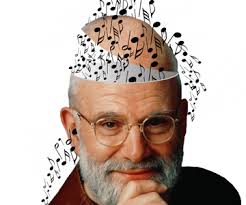
Oliver Sacks on Music

sacks-music

Writer and neurologist Oliver Sacks, who died on Sunday, August 30, 2015 at age 82, spent his life wondering on the myriad connections among biology, thought, emotion and perception.

For those of us who obsess over the how and why of music, Sacks’ work on sound and its effects on the brain – and vice versa – was particularly illuminating. His book on the subject, “Musicophilia: Tales of Music and the Brain,” remains essential reading for those who want to understand the mechanics of music.

Through bountiful research and mesmerizing case studies, Sacks addressed topics including music and amnesia, music therapy, musical prodigies and those who suffer from debilitating aural hallucinations.

Read more at Oliver Sacks & music: On brainworms, hallucinations and sonic overload – LA Times

The O’Connor Music Studio has a copy of Musicophilia: Tales of Music and the Brain if anyone would like to borrow it.


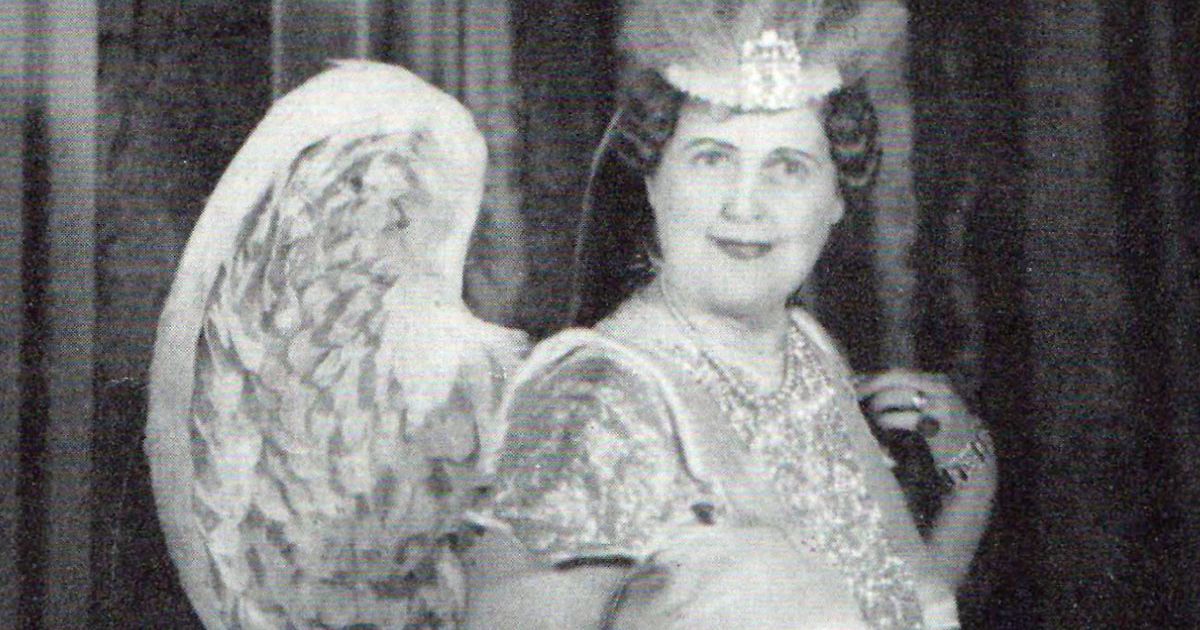
Want to Know More about Florence Foster Jenkins?

Florence-Foster-Jenkins

Meryl Streep has made her famous (again)

In the 1940s, New York socialite Florence Foster Jenkins (Meryl Streep) dreams of becoming a great opera singer. Unfortunately, her ambition far exceeds her talent. The voice Florence hears in her head is beautiful, but to everyone else it is quite lousy. Her husband St. Clair goes to extreme lengths to make sure his wife never finds out how awful she truly is. When Florence announces her plans for a concert at Carnegie Hall, St. Clair soon realizes that he’s facing his greatest challenge yet.


August 22, 2016 ~ Today in Music History

today

OCMS   1862 ~ Claude Debussy, French composer. Along with Maurice Ravel, he was one of the most prominent figures associated with Impressionist music, though he himself disliked the term when applied to his compositions.
More information about Debussy

• 1906 ~ The Victor Talking Machine Company of Camden, New Jersey began to manufacture the Victrola (record player). The hand-cranked unit, with horn cabinet, sold for $200. Records sold separately.

• 1917 ~ John Lee Hooker, American blues guitarist and singer, born in Clarksdale, Miss. He began his career in Detroit in 1948 with the release of Boogie Chillun, the biggest of his several hit records and a staple of both the blues and rock repertoires. He toured continually, and among “deep blues” artists, enjoyed an unusually successful career, appearing in concerts and on recordings with many of the leading figures in rock. He was inducted into the Rock ‘n’ Roll Hall of Fame in 1991.

OCMS  1928 ~ Karlheinz Stockhausen, German composer
More information about Stockhausen
Read quotes by and about Stockhausen

• 1926 ~ Bob Flanigan, Singer with The Four Freshmen

• 1932 ~ The British Broadcasting Corporation (BBC) began its first experimental TV broadcast in England.

• 1938 ~ Fred Astaire and Ginger Rogers appeared, dancing, on the cover of LIFE magazine, published on this day.

• 1938 ~ Count Basie recorded the classic swing tune, Jumpin’ at the Woodside, for Decca Records.

• 1942 ~ Joe Chambers, Musician: guitar, singer with The Chambers Brothers

• 1950 ~ Sam Neely, Singer

• 1960 ~ Debbi Peterson, Drummer, singer with Bangles

• 1961 ~ Roland Orzabal, Singer, guitarist

• 2002 ~ Frederick Selch, an advertising executive and magazine publisher who collected  hundreds of antique musical instruments, died at the age of 72.
Selch began collecting almost 50 years ago and owned more than 300 musical instruments by 1977.
In that year, he founded the Federal Music Society, an organization dedicated to performing music from the Colonial-Federal period. The group’s 26 players used instruments in Selch’s collection to perform in more than 70 concerts.
Selch was also the owner, editor and publisher of Ovation, a monthly magazine about classical music, from 1983 to 1989. He produced the Broadway musical “Play Me a  Country Song” in 1982, and in the past 10 years was involved in a series of American  Music Festivals at Illinois Wesleyan University.
Selch, who received a master’s degree in radio-television production from Syracuse University, worked at the J. Walter Thompson advertising agency from 1955 to 1974.
He is to be awarded a posthumous doctorate from the American Studies program at New York University.

• 2002 ~ Richard Lippold, a sculptor whose abstract works are featured at New York’s Avery Fisher Hall and at Harvard University, died. He was 87. Lippold created giant metal abstractions, many of which are suspended by wires so  they appear to be hovering or moving through space.
His piece World Tree, a 27-foot structure of straight and circular metal tubes that resembles a radio antenna, stands on the Harvard University campus.
He is also known for Ad Astra, a double spire that rises 115 feet in front of the National Air and Space Museum in Washington, and Orpheous and Apollo, a constellation of bronze bars connected by wires in the lobby of Avery Fisher Hall in Lincoln Center.
Lippold studied industrial design, piano and dance at the Art Institute of Chicago and the University of Chicago. He worked as a freelance industrial designer for several years before teaching art at the University of Michigan.
He later taught at Goddard College in Plainfield, Vt., and Hunter College in New York.

June 24 ~ Today in Music History

today

• 1572 ~ Jan Campanus, Composer

• 1724 ~ Johann Theile, German Composer, died at the age of 77

• 1746 ~ Jean Baptiste Rochefort, Composer

• 1747 ~ Johann Melchior Dreyer, Composer

• 1724 ~ Johann Paul Wessely (1762) Composer

• 1803 ~ George James Webb, Composer

• 1808 ~ Anna Caroline Oury, Composer

• 1838 ~ Lowell Cross, Composer

• 1840 ~ Louis Brassin, Composer

• 1724 ~ Thomas Carl Whitmer (1873) Composer

• 1882 ~ Joseph Joachim Raff, German opera Composer, died at the age of 60

https://youtu.be/Gzsl6gWJPuU

• 1891 ~ Ann Sheppard Mounsey, Composer, died at the age of 80

• 1900 ~ Gene Austin, Singer

• 1901 ~ Harry Partch, American composer and inventor of musical instruments

• 1904 ~ Phil Harris, American bandleader. He achieved stardom providing voices for Disney cartoons notably “The Jungle Book.”

• 1906 ~ Pierre Fournier, French cellist

• 1907 ~ Jose de Lima Siquiera, Composer

• 1908 ~ Hugo Distler, Composer

• 1909 ~ Milton Katims, American conductor and violist

• 1910 ~ Denis Dowling, Baritone

• 1913 ~ Frank Lynes, Composer, died at the age of 55

• 1920 ~ Bernhard Krol, Composer

• 1922 ~ Manny Albam, Composer, music educator at Eastman School of Music

• 1933 ~ Sissieretta Joyner Jones, “Black Patti”, American singer, died at about 64

• 1935 ~ Terry Riley, American avant-garde composer

• 1936 ~ Nandor Zsolt, Composer, died at the age of 49

• 1942 ~ Mick Fleetwood, Musician, drummer with Fleetwood Mac

• 1942 ~ Michele Lee, Singer

• 1944 ~ Jeff Beck, Singer, guitarist with The Yardbirds

• 1944 ~ John ‘Charlie’ Whitney, Musician, guitarist with Family

• 1944 ~ Rio Gebhardt, Composer, died at the age of 36

• 1945 ~ Colin Blunstone aka Neil MacArthur, Singer with The Zombies

• 1949 ~ John Illsley, Musician, bass with Dire Straits

• 1961 ~ The Beatles recorded If You Love Me Baby

• 1972 ~ I Am Woman, by Helen Reddy, was released by Capitol Records. The number one tune (December 9, 1972) became an anthem for the feminist movement. Reddy, from Australia, made her stage debut when she was only four years old. She had her own TV program in the early 1960s. Reddy came to New York in 1966 and has appeared in the films Airport 1975, Pete’s Dragon and Sgt. Pepper’s Lonely Hearts Club Band. Reddy also had four million-sellers: I Am Woman, Delta Dawn, Leave Me Alone (Ruby Red Dress) and Angie Baby. She had a total of 14 hits on the pop music charts.

• 1992 ~ Billy Joel, American pianist, singer-songwriter, and composer, received an honorary diploma from Hicksville HS at 43

• 2000 ~ British actor David Tomlinson, who starred as father George Banks in the classic 1964 musical movie “Mary Poppins”, died at the age of 83.

• 2002 ~ Dolores Gray, a Tony-winning actress and singer, died of a heart attack at her Manhattan apartment. She was 78. Gray began performing in Hollywood clubs when she was 14, and at 15 she was discovered by Rudy Vallee and given a guest spot on his national radio show. She landed her first major theater success in 1947 as Annie in “Annie Get Your Gun” in London. In 1954, she won a Tony award for best musical actress in “Carnival in Flanders.” After signing a contract with MGM in 1955, Gray began to star in musical movies, including “Kismet,” and “The Opposite Sex.” She performed alongside Gene Kelly in “It’s Always Fair Weather” and with Gregory Peck and Lauren Bacall in “Designing Women.” Gray continued to perform in clubs, on stage, and on television variety shows, including the Bell Telephone Hour. She returned to Broadway for several productions, including “Destry Rides Again,” during which the stage curtain once caught fire as she sang “Anyone Would Love You.” As the theater’s firefighters and stagehands battled the blaze backstage, Gray kept singing, and was credited with keeping the audience calm until they could evacuate the theater. The show resumed after a 40-minute intermission.

• 2002 ~ Joe Derise, a musician, cabaret artist and former big band vocalist, died. He was 76. Derise sang with Tommy Dorsey at the age of 21 and performed as a singer, guitarist and arranger with the Claude Thornhill Orchestra. He went on to form his own group, Four Jacks and a Jill, which performed around the country. Derise made several records and composed some of his own songs with the lyricist Marcia Hillman. His last major performance was at the Algonquin Hotel in New York in 1999.

May 18 in Music History

today

• 1799 ~ Pierre Beaumarchais, French playwright, died. Famed for his two comedies “The Marriage of Figaro” (Mozart used this for an opera) and “The Barber of Seville” Rossini used this for an opera).

• 1830 ~ Karl Goldmark, composer

• 1876 ~ The first issue of the first music magazine in America, Musical America, was published

• 1892 ~ Ezio Pinza, Italian bass and actor

• 1902 ~ Meredith Willson, American composer, flutist, arranger and orchestrator
More information about Willson

• 1911 ~ Gustav Mahler, Czech-born Austrian composer, died. His last word was “Mozart”.  He completed nine symphonies and several song-cycles notably “Das Lied von der Erde.”
More information about Gustav Mahler

• 1911 ~ Big Joe (Joseph Vernon) Turner, Rhythm & blues singer

• 1913 ~ Perry (Pierino Roland) Como, Grammy Award-winning American singer of popular music, 15 gold records
More information about Como

• 1919 ~ Dame Margot Fonteyne, British prima ballerina. She started her career with the London Sadler’s Wells company in 1934 and in 1962 began a legendary partnership with Rudolph Nureyev.

• 1922 ~ Kai Winding, Jazz musician: trombone

• 1948 ~ Joe Bonsall, Singer with The Oak Ridge Boys

• 1968 ~ Tiny Tim’s warbly Tiptoe Through the Tulips was released. An eventual top twenty hit, Tiptoe was a remake of a number one hit for Nick Lucas in 1929.

• 1970 ~ Opening this night in New York City was The Me Nobody Knows at the Orpheum Theatre. The musical had a run of 586 performances.

• 2002 ~ Wolfgang Schneiderhan, a violinist who began performing as a child, became a concert master at 17 and played with orchestras across Europe, died. He was 86. A child prodigy, Schneiderhan quickly rose to international fame, performing with leading ensembles, including the Vienna Symphonic Orchestra and the Philharmonic. A regular at Europe’s most important music festivals, Schneiderhan played with Wilhelm Backhaus and other well-known pianists and gave violin concerts under such legendary conductors as Bruno Walter and Wilhelm Furtwängler. Later, Schneiderhan was a teacher at the Salzburg Mozarteum and at the Vienna Academy of Music. At age 11, Schneiderhan played in Copenhagen, Denmark – his first major concert abroad. Already a distinguished interpreter of the music of Mozart and Beethoven, Schneiderhan became concert master of the Vienna Symphony Orchestra at age 17, a job he also held with the Vienna Philharmonic in 1937.

• 2003 ~ Broadway’s ‘Les Miserables’ Ended After 16 Years. The pop opera based on Victor Hugo’s 1832 novel closed after 16 years, making it the second longest-running show ever on the Great White Way. The show played 6,680 performances since opening at the Broadway Theater in 1987. Only “Cats” has played more performances on Broadway with 7,485. The last performance at the Imperial Theater included a finale featuring 300 alumni of the Broadway run. Although it is now gone from the New York stage, the show is performed around the world by touring companies and is a fixture in London’s West End.