Today we listen to Beethoven’s “Moonlight Sonata”. The real name for this work is The Piano Sonata No. 14 in C♯ minor “Quasi una fantasia”, Op. 27, No. 2. It was completed in 1801 and dedicated in 1802 to his pupil, Countess Giulietta Guicciardi
The piece is one of Beethoven’s most popular compositions for the piano, and it was a popular favorite even in his own day.
It’s in the Piano Pronto Beethoven book as well as many compilations of classical music.
Arranged for piano and orchestra
An animation
The above were all of the first movement only. Here’s the whole sonata played by Valentina Lisitsa:
• 1782 ~ Placidus Cajetan von Camerloher, Composer, died at the age of 63
• 1797 ~ Franz Schoberlechner, Composer
• 1865 ~ Robert Kahn, Composer
• 1870 ~ Josef Strauss, Austrian composer, died at the age of 42
• 1896 ~ Jean Rivier-Villemomble France, Composer
• 1898 ~ Ernest Willem Mulder, Composer
• 1898 ~ Sara Carter, Vocalist/guitarist with the Carter Family
• 1903 ~ Theodore Karyotakis, Composer
• 1906 ~ Daniel Ayala Perez, Composer
• 1915 ~ Floyd McDaniel ~ blues singer/guitarist
• 1920 ~ Isaac Stern, American concert violinist
Read quotes by and about Stern
More information about Stern
• 1920 ~ Manuel Valls Gorina, Composer
• 1921 ~ Billy Taylor, Orchestra leader on the David Frost Show
• 1922 ~ Kay Starr (Katherine Starks), Pop Singer
• 1925 ~ Lovro Zupanovic, Composer
• 1926 ~ Albert Fuller, American harpsichordist
• 1926 ~ Norman Jewison, Director of Jesus Christ, Superstar, Fiddler on the Roof
• 1927 ~ Stefan Niculescu, Composer
• 1931 ~ Leon Schidlowsky, Composer
• 1931 ~ Ted Husing was master of ceremonies for the very first CBS-TV program. The gala show featured singer Kate Smith, composer George Gershwin and New York City Mayor Jimmy Walker.
• 1935 ~ Kaye Stevens, Singer and comedienne on the Jerry Lewis Show
• 1938 ~ Anton Emil Kuerti, Composer
• 1938 ~ Paul Hindemith and Leonide Massines ballet premiered in London
• 1947 ~ Cat Stevens (Steven Demitri Georgiou) (Muslim name: Yusuf Islam), British folk-rock singer and songwriter
• 1948 ~ Donald Nichols Tweedy, Composer, died at the age of 58
• 1950 ~ Albert Riemenschneider, Composer, died at the age of 71
• 1958 ~ The last of Arthur Godfrey’s Talent Scouts programs aired on CBS-TV. Many artists got their start on Talent Scouts, including Tony Bennett, Pat Boone, The McGuire Sisters and a singer named Connie Francis, who not only sang but played the accordion, as well.
• 1969 ~ Just one day after Neil Armstrong set foot on the moon, Duke Ellington and a portion of his band performed a 10-minute composition on ABC-TV titled Moon Maiden. The work featured piano, drums, bass and vocals.
• 1973 ~ Bad, Bad Leroy Brown reached the top spot on the Billboard pop singles chart, becoming Jim Croce’s first big hit. Croce died in a plane crash two months later (September 20, 1973).
• 1976 ~ “Guys & Dolls” opened at Broadway Theater New York City for 239 performances
• 1994 ~ Dorothy Collins, Singer on Your Hit Parade, died at the age of 67
• 1995 ~ Edwin “Russell” House, Saxophonist, died at the age of 65
• 2000 ~ Iain Hamilton, the Scottish composer who turned Tolstoy’s “Anna Karenina” into an opera at the age of 78. Hamilton wrote four symphonies and dozens of orchestral and chamber works but is known best for his vocal music, which includes a cantata based on the poems of Robert Burns. “Anna Karenina” premiered at the English National Opera in 1981 to critical acclaim. His other operas include “Agamemnon”, “The Catiline Conspiracy”, based on a Ben Jonson play, and an adaptation of Peter Shaffer’s play “The Royal Hunt of the Sun”. From 1961 to 1978 he was a professor of music at Duke University in North Carolina.
• 2001 ~ Norman Hall Wright, the last surviving writer who worked on the Disney film Fantasia 2000, died at the age of 91. Wright studied at the University of Southern California before being hired by Walt Disney Productions. He started as an animator but later became a writer, producer and director. Wright developed the story of The Nutcracker Suite sequence for Fantasia 2000. He also was responsible for a sequence in Bambi. He wrote several cartoon shorts for Mickey Mouse, Donald Duck, and Goofy and also produced several Wonderful World of Disney television programs.
• 2002 ~ Gus Dudgeon, a respected music producer who worked on many of Elton John’s hit recordings, died in a car crash in western England. He was 59. Dudgeon produced Rocket Man,Goodbye Yellow Brick Road,Your Song,Daniel and Don’t Let The Sun Go Down On Me. Dudgeon also produced David Bowie’s Space Oddity and worked with other stars, including Chris Rea and Joan Armatrading. But it was his partnership with Sir Elton in the 1970s for which he will be best remembered. Dudgeon began his career in the early 1960s as a tea boy, running errands at Olympic Studios in London before joining Decca Records. He engineered the Zombies’ classic She’s Not There and the groundbreaking Blues Breakers album by John Mayall with Eric Clapton, before moving into producing.
• 2015 ~ Theodore Meir Bikel, Austrian-American actor, folk singer, musician, composer, and activist, died at the age of 91.
• 2023 ~ Tony Bennett died at the age of 96. In 1962, Bennett recorded his signature song, “I Left My Heart in San Francisco”.
National Ice Cream Day is observed each year on the 3rd Sunday in July and is a part of National Ice Cream Month. This day is a fun celebration enjoyed with a bowl, cup or cone filled with your favorite flavor of ice cream.
Thousands of years ago, people in the Persian Empire would put snow in a bowl, pour grape-juice concentrate over it and eat it as a treat. They did this when the weather was hot and used the snow saved in the cool-keeping underground chambers known as “yakhchal”, or taken from the snowfall that remained at the stop of mountains by the summer capital.
It is believed that ice cream was first introduced into the United States by Quaker colonists who brought their ice cream recipes with them. Their ice cream was sold at shops in New York and other cities during the colonial era.
Ben Franklin, George Washington and Thomas Jefferson enjoyed ice cream.
1813 -First Lady Dolley Madison served ice cream at the Inaugural Ball.
1832 – African American confectioner, Augustus Jackson, created multiple ice cream recipes as well as a superior technique to manufacture ice cream.
1843 – Philadelphian, Nancy Johnson, received the first U.S. patent for a small-scale hand-cranked ice cream freezer.
1920 – Harry Burt puts the first ice cream trucks on the streets.
HOW TO OBSERVE
Enjoy National Ice Cream Day by sharing some with your family and friends! Post on social media using #NationalIceCreamDay.
HISTORY
National Ice Cream Day is a holiday declared by President Ronald Reagan back in 1984 to promote the economic well-being of the U.S. dairy industry. It was a nod to the fact that the frozen treat is produced using nearly ten percent of U.S. dairy farmers’ milk supply.
Reagan’s proclamation also called on the people of the United States to do their duty and pay tribute to ice-cream with “appropriate ceremonies and activities.” So who are we to argue?
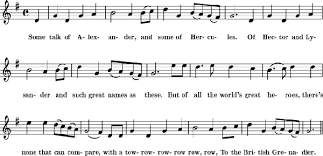
Today’s piece is called the British Grenadiers and I’ve included it because most students today haven’t heard of the piece OR know what a grenadier is. Find this in Keyboard Kickoff, Prelude and many other piano method books.
“The British Grenadiers” is a traditional marching song of British, Australian and Canadian military units whose badge of identification features a grenade. The original melody dates from the 17th century.
Some talk of Alexander, and some of Hercules
Of Hector and Lysander, and such great names as these
But of all the world’s great heroes
There’s none that can compare
With a tow, row row row, row row row
To the British Grenadiers
When e’er we are commanded to storm the palisades
Our leaders march with fuses, and we with hand grenades;
We throw them from the glacis about the enemies’ ears
With a tow, row row row, row row row
For the British Grenadiers
Then let us fill a bumper, and drink a health to those
Who carry caps and pouches, and wear the louped clothes
May they and their commanders live happy all their years
Sing tow, row row row, row row row
For the British Grenadiers
In the examples below you can hear the steady marching drumbeat.
The band of the Highlands and Lowlands plays “The British Grenadiers” at Edinburgh Castle
• 1932 ~ Nam June Paik, Korean-born American avant-guard composer
• 1938 ~ Jo Ann Campbell, Singer
• 1940 ~ Billboard magazine published its first listing of best-selling singles. 10 tunes were listed.
• 1943 ~ John Lodge, Guitar with Justin Hayward, singer with the Moody Blues
• 1944 ~ T.G. Shepherd (William Bowder), Country Singer
• 1946 ~ Kim Carnes, Grammy Award-winning singer, co-wrote the score to Flashdance
• 1946 ~ John Almond, Reeds, keyboards, vibes with Johnny Almond and the Music Machine
• 1947 ~ Carlos Santana, Mexican-born American rock guitarist
• 1958 ~ Mick McNeil, Keyboards with Simple Minds
• 1961 ~ Stop the World, I Want to Get Off opened in London. The show went to Broadway in 1962.
• 1963 ~ Dino Esposito, Singer
• 1963 ~ Ray Conniff received two gold-record awards – for the albums, Concert in Rhythm and Memories are Made of This – on Columbia Records. Conniff recorded dozens of albums of easy listening music for the label. He had been a trombonist and arranger with Bunny Berigan, Bob Crosby, Harry James, Vaughn Monroe and Artie Shaw.
• 1964 ~ Chris Cornell, Grammy Award-winning musician: drums, singer, songwriter with Soundgarden
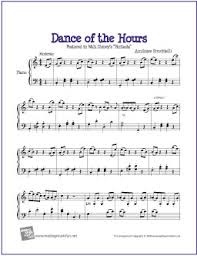
Today’s Listening assignment is Dance of the Hours by Amilcare Ponchielli. This is a short ballet and is the act 3 finale of the opera La Gioconda. It depicts the hours of the day through solo and ensemble dances. The opera was first performed in 1876 and was revised in 1880.
Later performed on its own, the Dance of the Hours was at one time one of the best known and most frequently performed ballets.
It became even more widely known after its inclusion in the 1940 Disney animated film Fantasia where it is depicted as a comic ballet featuring anthropomorphized ostriches, hippopotamuses, elephants, and alligators.
From Fantasia
Orchestral version
Ballet
Piano
Spike Jones
And, who could forget Allan Sherman’s version, Hello Muddah, Hello Fadduh?
• 1811 ~ Vincenz Lachner, German organist, conductor and composer
• 1906 ~ Klauss Egge, Norwegian composer
• 1913 ~ Charles Teagarden, trumpeter, bandleader, brother of Jack
• 1926 ~ Sue Thompson (Eva McKee), singer of Norman and Sad Movies (Make Me Cry)
• 1937 ~ George Hamilton IV, Singer
• 1939 ~ Jack Teagarden and his orchestra recorded Aunt Hagar’s Blues for Columbia Records. Teagarden provided the vocal on the session recorded in Chicago, IL.
• 1941 ~ Natalya Besamertnova, Ballet Dancer with the Bolshoi ballet
• 1942 ~ The Seventh Symphony, by Dmitri Shostakovitch, was performed for the first time in the United States by Arturo Toscanini and the NBC Symphony Orchestra.
• 1946 ~ Alan Gorrie, Rock Singer with the Average White Band
• 1947 ~ Bernie Leadon, Musician, guitar with The Eagles
• 1947 ~ Brian Harold May, Musician, guitarist, singer and songwriter with Queen, who had the 1975 UK No.1 single Bohemian Rhapsody, which returned to No.1 in 1991. Queen scored over 40 other UK Top 40 singles, and also scored the 1980 US No.1 single Crazy Little Thing Called Love. May had the solo 1992 UK No.5 single Too Much Love Will Kill You. May was made Commander of the Order of the British Empire in 2005 for ‘services to the music industry and his charity work’. May earned a PhD in astrophysics from Imperial College, London, in 2007.
• 1949 ~ Singer Harry Belafonte began recording for Capitol Records on this day. The first sessions included They Didn’t Believe Me and Close Your Eyes. A short time later, Capitol said Belafonte wasn’t “commercial enough,” so he signed with RCA Victor (for a very productive and commercial career).
• 1952 ~ Allen Collins, Musician, guitar with Lynyrd Skynyrd
• 1952 ~ “Paint Your Wagon” closed at Shubert Theater New York City after 289 performances
• 1966 ~ Frank Sinatra married actress Mia Farrow this day.
• 1963 ~ Kelly Shiver, Country Singer
• 1980 ~ Billy Joel, pianist, singer-songwriter, and composer, earned his first gold record with It’s Still Rock and Roll to Me, which reached the top of the Billboard pop music chart. He would score additional million-sellers with Just the Way You Are, My Life, Uptown Girl (for girlfriend and later, wife and supermodel Christie Brinkley) and We Didn’t Start the Fire. Joel reached the top only one other time, with Tell Her About It in 1983.
• 2000 ~ H. LeBaron Taylor, a Sony executive who pioneered the mass marketing of music rooted in black culture and fostered minority development in the corporate world, died at the age of 65 of a heart attack. He was recognized by Ebony magazine as one of the top 50 black executives in corporate America. In the 1970s, Taylor was at CBS Records, leading its Black Music Marketing department, which sold music originating in black culture and styles that sprang from it, such as blues, soul, rap and hip-hop.
• 2015 ~ Van Alexander, American composer and bandleader (A-Tisket, A-Tasket), died at the age of 100
Today’s piece is Steven Heller’s Avalanche. This may be his most recognizable piece and is a perfect study for an intermediate level pianist, with triplets, accents, pedaling and dynamic challenges to add to the excitement.
I chose this today, when it’s so hot, to remind people of snow and coldness!
• 0064 ~ Rome burned on this day – while Nero fiddled, literally.
• 1670 ~ Giovanni Battista Bononcini, Italian composer
• 1909 ~ Harriet Nelson (Hilliard) (Peggy Lou Snyder). Singer in Ozzie Nelson’s orchestra; actress in The Adventures of Ozzie and Harriet, Follow the Fleet and Rick & Dave’s mother
• 1913 ~ Red (Richard) Skelton, Emmy Award-winning comedian: The Red Skelton Show ATAS Governor’s Award, recording artist
• 1927 ~ Kurt Masur, German conductor
• 1929 ~ Screamin’ Jay (Jalacy) Hawkins Rhythm and Blues singer, pianist. I Put a Spell on You was voted one of 50 greatest songs of the 1950s by Rolling Stone magazine
• 1941 ~ Martha Reeves, American Rhythm and Blues singer with Martha and the Vandellas
• 1964 ~ The 4 Seasons reached the top spot on the record charts with Rag Doll, the group’s fourth hit to climb to the #1 position. The song stayed on top for two weeks. Other #1 hits by Frankie Valli and company include, Big Girls Don’t Cry, Walk Like a Man, and December 1963 (Oh, What a Night).
• 1968 ~ Hugh Masekela struck gold with the breezy, latin-soul instrumental Grazing in the Grass, while Gary Puckett and The Union Gap received a similar honor for the hit, Lady Willpower. Masekela, a trumpeter since age 14, saw Grazing in the Grass go to number one for two weeks (July 20/27). Grazing was his only entry on the pop music charts. The Union Gap scored three more million-sellers in the late 1960s: Woman, Woman, Young Girl and Over You. The Union Gap was formed in 1967 and named after the town of Union Gap, Washington.
• 1983 ~ Paul Simon and Art Garfunkel took to the road to begin a 19-city tour beginning in Akron, OH. It was the first tour by the popular singing duo since their success in the 1960s.
• 2001 ~ Mimi Farina, sister of folk singer Joan Baez and founder of an organization that brought free live music performances to the sick and imprisoned, died of complications related to cancer. She was 56. She founded Bread & Roses in 1974. The organization produced 500 shows annually for audiences in senior centers, psychiatric, rehabilitation and correctional facilities as well as centers for abused and neglected children. Long part of the San Francisco Bay area’s folk music elite as a singer herself, Farina drew many fellow musical luminaries to take part in performances. Her sister, Jackson Browne, Taj Mahal, Bonnie Raitt and Peter, Paul and Mary all volunteered their services to make Bread & Roses and long-running success. Farina was the youngest of three daughters and was raised a Quaker alongside siblings Joan Baez and Pauline Bryan. She learned the guitar with her sister Joan during the folk music revival of the late 1950s and frequently played the folk scene around Harvard Square in Cambridge, Mass.
• 2002 ~ Seymour Solomon, co-founder of Vanguard Records, a label that dominated American folk music with stars such as Joan Baez, died. He was 80. Solomon founded Vanguard in 1950 with his brother, Maynard. The label recorded famed artists like Odetta, Baez and Buffy Sainte-Marie. It also signed such jazz and blues legends as Mississippi John Hurt and Buddy Guy and maintained a strong classical list. From its earliest days, the Solomons took risks, signing performers like the Weavers and Paul Robeson who had been blacklisted during the McCarthy era. Starting in 1959, Vanguard recorded the Newport Folk Festival, and later recorded the Newport Jazz festival as well. Solomon and his brother sold Vanguard in 1985 to the Welk Record Group, and three years later opened Omega Classics. He later bought back Vanguard’s old classical catalog and reissued it on compact disc. Solomon had studied violin at the Juilliard School and played in the Air Corps Orchestra during World War II. After the war, he studied musicology and worked as a critic and commentator for music magazines and radio stations.
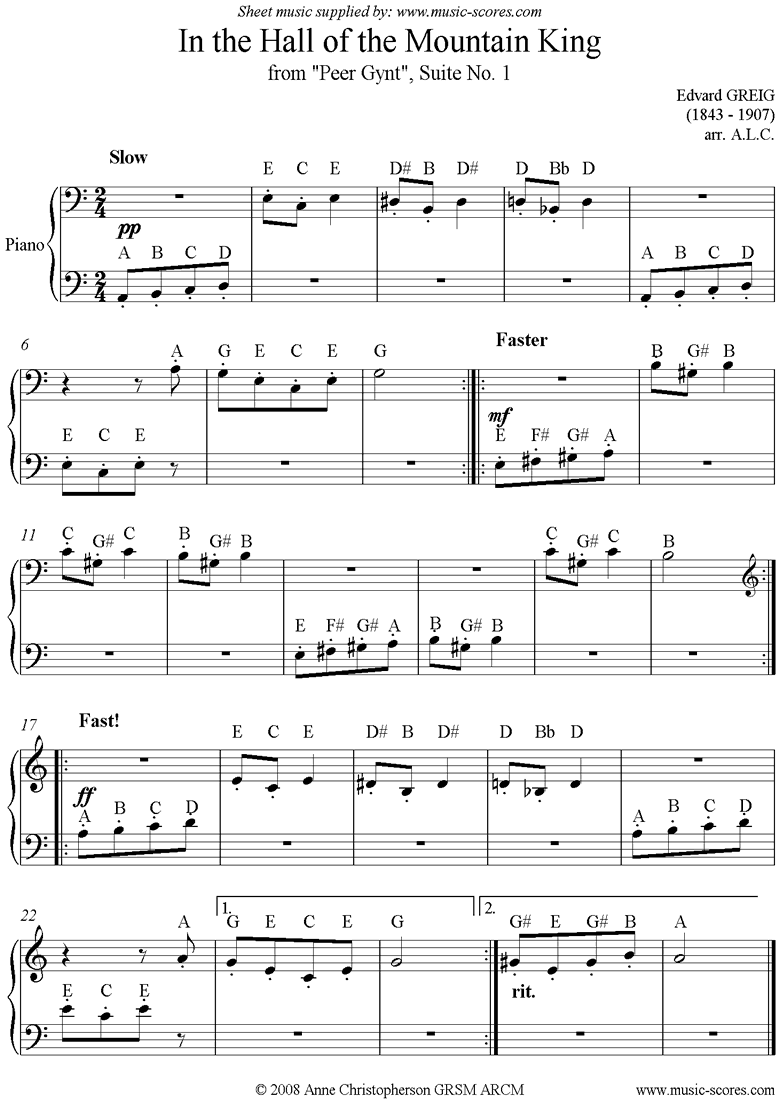
“In the Hall of the Mountain King” is a piece of orchestral music composed for the sixth scene of act 2 in Henrik Ibsen’s 1867 play Peer Gynt. It was originally part of Opus 23 but was later extracted as the final piece of Peer Gynt, Suite No. 1, Op. 46. Its easily recognizable theme has helped it attain iconic status in popular culture, where it has been arranged by many artists, including for the piano.
Borrow a copy of the sheet music from the O’Connor Music Studio. I have this arranged for piano, duet, 2-piano, simplified…
8 part vocal orchestra (plus a tiny pair of cymbals)



 Be sure your student reads and listens to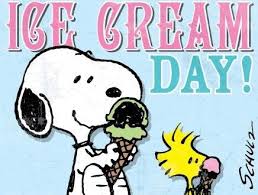





 MaryO'Studio