December 5, 2016 ~ Today in Music History

today


Christmas Music, Part 5 – Carol of the Bells

• 1687 ~ Francesco Xaverio Geminiani, Italian violinist, writer and composer

• 1791 ~ Wolfgang Amadeus Mozart, composer, died in Vienna, Austria at the age of 35. Mozart, the precocious child prodigy, composed several pieces that are deemed central to the classical era. Though he ranked as one of the greatest musical genius, he did not live a life of affluence as none of his compositions earned him a decent commission.

• 1870 ~ Vitezslav Novak, Czech composer and pedagogue

• 1901 ~ Walt Disney, Man behind many much-loved animated musicals

• 1922 ~ Don Robertson, Nashville Songwriters Association Hall of Famer, whistler

• 1930 ~ Larry Kert, Actor, singer, dancer in the West Side Story original cast, 1957

• 1932 ~ Little Richard (Pennimann), US rock ‘n roll artist, preacher

• 1936 ~ Chad Mitchell, Singer with Chad Mitchell trio

• 1936 ~ Bing Crosby took over as host of The Kraft Music Hall. Jimmy Dorsey (who would later be host, himself) led the Kraft Orchestra.

• 1945 ~ José Carreras, Spanish tenor with the New York Metropolitan Opera

• 1947 ~ Jim Messina, American rock guitarist and singer, duo of Loggins and Messina and groups: Buffalo Springfield and Poco

• 1960 ~ Les Nemes, Bass with Haircut 100

• 1960 ~ Jack Russell, Singer with Great White

• 1973 ~ Paul McCartney released Band On The Run, his fifth album since his departure from The Beatles. Two hit singles from the album – ‘Jet’ and ‘Band on the Run’ made it McCartney’s most successful album.

• 2003 ~ Avie Parton, mother of country music singer, songwriter and actress Dolly Parton, died after a long illness. She was 80. Parton was responsible for stitching the patchwork rag coat for young Dolly that the singer later recounted in the song, Coat of Many Colors. The song helped propel Dolly Parton to stardom and came to symbolize her climb from rags to riches. She also was the witness at Dolly’s secret marriage to Carl Dean in 1966 in Ringgold, Ga.

OCMS 2012 ~ Dave Brubeck, American jazz pianist and composer
More information about Brubeck

November 18, 2016 ~ Today in Music History

today

• 1307 ~ The story of William Tell shooting the apple off of his young son’s head is said to have taken place on this day. Gioachino Rossini made this story into an opera.

• 1680 ~ Birth of French-Belgian composer and flutist Jean Baptiste Loeillet in Gent. d-London, 19 JUL 1730.

• 1736 ~ Birth of German composer Carl Friedrich Christian Fasch in Zerbst. d-Berlin, August 3 1800.

• 1741  ~ George Frideric Handel arrived in Dublin at the invitation of the country of Ireland to attend current concert season. Presented numerous concerts in the Irish capital, including the first performance of his oratorio Messiah early in 1742.

• 1763 ~ Leopold Mozart and his two children, Wolfgang and Maria, arrive in Paris on their European concert tour.

• 1786 ~ Carl Maria von Weber, German composer, conductor and pianist, began the era of German romantic music
More information about von Weber

• 1838 ~ Sir William Schwenck Gilbert, British playright and librettist, best known for his comic operettas with Arthur Sullivan

• 1859 ~ Birth of Russian composer and pianist Sergei Mikhailovich Liapunov, in Yaroslavl. d-Paris, 1924.

• 1888 ~ First Performance of Peter Ilyich Tchaikovsky’s 5th Symphony, in St. Petersburg.

• 1889 ~ Amelita Galli-Curci, Opera soprano, “If not the greatest coloratura soprano of all time, she must surely be recognized as among the world’s finest examples of true operatic artistry.”

• 1891 ~ First Performance of Tchaikovsky‘s symphonic work The Voyevode in Moscow.

• 1892 ~ First concert at Carnegie Hall by the New York Philharmonic.

• 1899 ~ Eugene Ormandy (Jeno Blau), Hungarian-born American conductor of The Philadelphia Orchestra
More information about Ormandy

• 1909 ~ Johnny (John Herndon) Mercer, Academy Award-winning composer, lyricist, wrote or co-wrote over a thousand songs

• 1926 ~ Dorothy Collins (Marjorie Chandler), Singer on Your Hit Parade, sang with Benny Goodman band

• 1936 ~ Hank Ballard, Singer, songwriter with The Midniters, wrote and recorded The Twist

• 1950 ~ Graham Parker, Singer with Graham Parker and The Rumour

• 1953 ~ Herman Rarebell, Drummer with Scorpions

• 1960 ~ Kim Wilde, Singer

• 1967 ~ Lulu’s To Sir with Love, from the movie of the same name, started its fifth and final week at number one.

• 1974 ~ target=”_blank”Frank Sinatra emerged from retirement to do a TV special with dancer Gene Kelly. The show was a smash hit and revived Sinatra’s career.

• 1975 ~ John Denver received a gold record for I’m Sorry.

• 1986 ~ The Roseland Ballroom reopened in New York City. The 67-year-old home for those wanting to dance cheek to cheek featured America’s dean of society music, Lester Lanin. He played for patrons who wanted to cut a rug on the 112-by-55-foot, maple wood dance floor.

• 1999 ~ Doug Sahm passed away

• 2003 ~ First Performance of John Corigliano‘s Snapshot: Circa 1909. Elements String Quartet at Merkin Concert Hall, NYC.

• 2003 ~ Oscar-nominated composer, conductor and arranger Michael Kamen, one of Hollywood’s most sought-after musicians, died at age 55 after suffering from multiple sclerosis for several years. The native New Yorker and Juilliard School of Music Graduate was one of Hollywood’s most successful composers who worked on music for the “Lethal Weapon” series and scored “Die Hard” among many other films. In the late 1960s, he helped found the New York Rock ‘n’ Roll Ensemble, a critically acclaimed group that fused classical with pop and recorded five albums before dissolving. In the 1970s, Kamen scored ballets, served as musical director for David Bowie’s “Diamond Dogs” tour and began writing scores for film. Although he began in Hollywood working on offbeat films like “Polyester” and “Brazil,” he turned more mainstream in the 1980s, working on the “Lethal Weapon” series, “Robin Hood: Prince of Thieves,” “Mr. Holland’s Opus” and “X-Men,” plus the HBO series “Band of Brothers.” In 1991, Kamen earned his first Academy Award nomination for “(Everything I Do) I Do It for You,” the Bryan Adams pop hit from the movie, “Robin Hood: Prince of Thieves.” Co-written with Adams and Robert John “Mutt” Lange, the song received two Grammys. The three united in 1993 for “All for Love.” In 1999, Kamen conducted the orchestra which backed Metallica on their S&M project.

November 17, 2016 ~ Today in Music History

today

• 1726 ~ The first performance of J. S. Bach‘s Sacred Cantata No. 55 Ich armer Mensch, ich Sündenknecht on the 22nd Sunday following Trinity. Was part of Bach’s third annual Sacred Cantata cycle in Leipzig 1725-27

• 1848 ~ Frederic Chopin played his final piano concert at a Polish benefit ball at Guildhall in London.

• 1850 ~ Giuseppe Verdi‘s opera Stifellio was first performed at the Teatro Grande in Trieste despite difficulties with the censors which resulted in cuts and changes.

• 1861 ~ First Performance of Johannes Brahms Piano Quintet No. 1 in g, Op. 25, at a rehearsal in Hamburg, with pianist Clara Schumann.

• 1862 ~ The work noted above received its official premiere with members of the Hellmesberger Quartet; Brahms at the piano, in Vienna.

• 1870 ~ Birth of Australian composer Alfred Hill in Melbourne. d-Sydney, 30 OCT 1960.

• 1876~ The first performance of Peter Ilyich Tchaikovsky‘s March Slav in Moscow.

• 1877 ~ The first production of Gilbert and Sullivan’s opera, The Sorcerer, was presented, in London.

• 1888~ The first production of Tchaikovsky‘s Fifth Symphony in St. Petersburg.

• 1891 ~ Poland’s premier and premier ivory tickler, Ignace Jan Paderewski, made his American debut at Carnegie Hall in New York City. In later years, Paderewski, who suffered from arthritis, settled in Paso Robles, CA. The hot mineral baths located there eased his pain. He played only Steinway grand pianos custom-built to his specifications. In fact, five were made just for his use.

• 1925 ~ Sir Charles Mackerras, Australian conductor

• 1930 ~ David Amram, American composer and French-horn player

• 1938 ~ Gordon Lightfoot, Canadian folk singer, songwriter and guitarist

• 1938 ~ Orchestra leader Kay Kyser, speaking to an audience at the College of the City of New York (CCNY) told of the “inner workings and artistic features of swing music.” It marked the first of a series of lectures on swing music presented by Kyser, who went on to presentThe Kollege of Musical Knowledge on radio.

• 1941 ~ Gene Clark, Singer, guitar with The Byrds

• 1942 ~ Bob Gaudio, Singer with The Royal Teens; The Four Seasons

• 1946 ~ Martin Barre, Guitarist with Jethro Tull

• 1950 ~ Roberta Peters filled in for the lead in Mozart’s Don Giovanni, making her debut at the Metropolitan Opera in New York City. She would become one of the Met’s most famous stars.

• 1962 ~ The 4 Seasons, with Frankie Valli as lead singer, began a five-week run at the top of the tunedex with Big Girls Don’t Cry.

• 1967 ~ Ronald DeVoe, Singer with New Edition

• 1970 ~ Elton John recorded an album live, on what was WABC-FM in New York City. It marked the first time that a concert was aired live and recorded for release as aired. The LP was titled, 11/17/70.

• 1981 ~ Bob Eberly died

• 2001 ~ Jerry Jerome, a tenor sax player who was a featured soloist with the bands of Glenn Miller and Benny Goodman, died of leukemia. He was 89. One of the big names in the Big Band era, Jerome was a featured soloist with the Glenn Miller, Benny Goodman, Red Norvo and Artie Shaw orchestras. He then became a successful musical director and conductor on radio and television. Jerome also established a music business, scoring and arranging commercial jingles. Three years ago, Arbors Records released Jerome’s “Something Old, Something New.” The sequel recording, “Something Borrowed, Something Blue,” will be released in December. Born in Brooklyn, N.Y., Jerome started playing the sax while in high school. He attended the University of Alabama and went on the medical school, playing gigs at jazz clubs to earn tuition money. He joined Goodman’s orchestra at the height of its popularity in 1938. When Goodman broke up his band in 1940, Jerome joined Shaw. While with Shaw, he appeared in the film “Second Chorus,” with Fred Astaire and Burgess Meredith.

• 2003 ~ Arthur Conley, a 1960s soul singer and protege of Otis Redding’s, died at his home in the town of Ruurlo, in the eastern Netherlands. He was 57. Conley was born in Atlanta and started his recording career in 1959 as leader of the group Arthur and the Corvets. He was best known for his 1967 hit, Sweet Soul Music, which he co-wrote with Redding based on a number by Sam Cooke. Conley had several minor hits in the following two years. He moved to Europe in the early 1970s after several tours of the continent, deciding that he was “fed up with the pressure” in the United States, said Giesen. In the Netherlands, Conley appeared on television and radio, and ran an independent record label. In the last five years he was an adviser to The Original Sixties R&B and Soul Show, which sought to reproduce the sound and look of the heyday of soul.

October 27, 2016 ~ Today in Music History

today

OCMS 1782 ~ Niccolò Paganini, Italian violin virtuoso and composer
Read quotes by and about Paganini
More information about Paganini

• 1796 ~ Anton Thadäus Johann Nepomuk Stamitz, German composer

• 1908 ~ George Feyer, Pianist and entertainer, born in Budapest More about George Feyer

• 1917 ~ Jascha Heifetz made his debut at Carnegie Hall in New York City. Heifetz was a 16-year-old sensation who had played the violin since age 5.

• 1927 ~ Dominick Argento, American composer

• 1933 ~ Floyd Cramer, Pianist

• 1941 ~ Edda Moser, German soprano

• 1941 ~ Everything I Love, by Buddy Clark, was recorded this day, number 6469 on the Okeh label.

• 1943 ~ Lee (Melvin) Greenwood, CMA Male Vocalist of the Year, 1983 and 1984, sax, piano, band leader

• 1957 ~ The Crickets started a three-week run at No.1 on the UK singles chart with ‘That’ll Be The Day’. It was also a No.3 hit in the US where it went on to sell over a million. The song was inspired by a trip to the movies by Holly, Jerry Allison and Sonny Curtis in June 1956. The John Wayne film The Searchers was playing and Wayne’s frequently-used, world-weary catchphrase, “that’ll be the day” inspired the young musicians.

• 1958 ~ Simon LeBon, Singer with Duran Duran

• 1975 ~ Rocker Bruce Springsteen appeared on the cover of both TIME and Newsweek. Things were certainly going well for ‘The Boss’ that week.

• 2000 ~ Walter Berry, a bass baritone who won acclaim for his interpretations of Mozart and Strauss and was beloved by Austrians for his renditions of Schubert, died of a heart attack at the age of 71. Known for the powerful timbre of his voice, Berry was a prolific performer who sang 100 different roles in more than 1,280 appearances at the Vienna State Opera. His U.S. debut was a 1963 performance with the Metropolitan Opera in New York. His interpretations of classical lieder by fellow Austrian Franz Schubert won him his most loyal following. Austrians who rarely went to the opera loved Berry for his renditions of popular Viennese songs performed as they believed only a native- born son could. In 1989, he became a professor at the Vienna University for Music and Performing Arts.

• 2001 ~ John Roberts, a promoter of the Woodstock Music and Art Fair in 1969, died of cancer. He was 56. Roberts produced the festival concert with three others, almost by accident. The idea originally was a pitch for a television comedy show about two young venture capitalists with money but no business plans. Roberts and his partners funded the festival with Roberts’ inheritance and ticket sales. They lost $2.3 million but recovered their loss with royalties from film and album spinoffs, and held on to the profitable name and trademark symbol of a dove on the neck of a guitar. A graduate of the University of Pennsylvania, Roberts later invested in other companies, avoiding the music business. Roberts also was a championship bridge player.

• 2006 ~ Amy Winehouse released her second and final studio album Back to Black. The album spawned five singles: ‘Rehab’, ‘You Know I’m No Good’, ‘Back to Black’, ‘Tears Dry on Their Own’ and ‘Love Is a Losing Game’ and won Best Pop Vocal Album at the 50th Annual Grammy Awards. Back to Black sold 3.58 million copies in the UK alone, becoming the UK’s second best-selling album of the 21st century. Worldwide, the album has sold over 20 million copies.

October 24, 2016 ~ Today in Music History

today

1788 ~ Sarah Hale, Poet, magazine editor, wrote Mary Had a Little Lamb

• 1904 ~ Moss Hart, Tony Award-winning director of My Fair Lady (1957), playwright, married to actress Kitty Carlisle

• 1911 ~ “Sonny” Terry (Saunders Terrell), American blues singer and harmonica player

OCMS 1925 ~ Luciano Berio, Italian composer More information about Berio

• 1929 ~ George Crumb, American composer and teacher

• 1929 ~ The Rudy Vallee Show was broadcast for the first time over NBC radio. Actually, the Rudy Vallee show had several different titles over the years, all of which were referred to by the public as The Rudy Vallee Show. Megaphone-toting Rudy and his Connecticut Yankees band were mainstays on radio into the late 1940s.

• 1930 ~ J.P. (Jiles Perry) Richardson (The Big Bopper), singer, songwriter More about The Big Bopper

• 1936 ~ David Nelson, Actor, son of entertainers Ozzie and Harriet Nelson, brother of singer Ricky Nelson

• 1936 ~ Bill Wyman, Musician with The Rolling Stones, songwriter, London restaurant owner of Sticky Fingers

• 1937 ~ Santo Farina, Steel guitar with Santo & Johnny

• 1939 ~ F. Murray Abraham, Academy Award-winning actor for his portrayal of Salieri in “Amadeus” (about Mozart), 1984.

• 1939 ~ Let’s Dance was recorded on Columbia Records. It became the theme song for the band that recorded it, the Benny Goodman Band.

• 1946 ~ Jerry Edmonton, Drummer with Steppenwolf

• 1960 ~ Brenda Lee hit #1 for the second time in the year with I Want to Be Wanted. 1960 was a very good year for the young (age 15) songstress. In addition to her first #1 smash, I’m Sorry (July 18), Lee had two other songs on the charts: SweetNothin’s (#4, April 18) and That’s All You Gotta Do (#6, July 4).

• 1975 ~ Looking to name your own greatest hits album something other than Greatest Hits? Do what former Beatle John Lennon did, with his package of the best. Lennon called it, “Shaved Fish”.

• 1977 ~ Gary Busey began filming The Buddy Holly Story. The star was a ringer for the rock idol.

• 1999 ~ Phillip Glass’ “Dracula” score makes news.

• 2001 ~ Kim Gardner, a bassist who played with several bands, including the British rock group Ashton, Gardner & Dyke, died. He was 53. Gardner, born in London, joined fellow teen-age musicians Ron Wood, Ali McKenzie, Tony Munroe and Pete McDaniels to form the Thunderbirds. Shortening their name to the Birds, the band released four singles, including Leaving Here and No Good Without You Baby, both in 1965. Gardner’s next group was Ashton, Gardner & Dyke with Tony Ashton and Roy Dyke in 1968. The trio, whose albums featured a light, jazz-rock style, scored a top-three hit in Britain with Resurrection Shuffle in 1971. The group broke up a year later. Gardner also toured with Pacific Gas and Electric and other bands in the 1970s. He played bass with everyone from Eric Clapton to Bo Didley, and worked on 27 albums. Gardner also was a successful pub master and restaurateur. Gardner toured the United States regularly before settling in Los Angeles in 1973. In 1982, he started the original, 50-seat Cat & Fiddle Restaurant and Pub. Over the years, Cat & Fiddle has been a favorite destination for British rockers such as Keith Moon, Robert Plant and Rod Stewart, as well as Hollywood celebrities.

Have You Heard the Piano Puzzlers?

puzzlers


The Piano Puzzlers book is available in the O’Connor Music Studio library if you’d like to give any a try.  Piano Puzzlers as heard on American Public Media’s “Performance Today.” Includes 32 tunes with songs by Gershwin, Berlin, Arlen, Porter, Rodgers, Fats Waller, Lennon & McCartney, and others disguised in the styles of Bach, Handel, Haydn, Mozart, Beethoven, Brahms, Schubert, Schumann, Chopin, Janacek, Debussy, Ravel, Rachmaninoff, Stravinsky, Prokofiev, Bartok, and Copland.

Includes an introduction by Fred Child, host of “Performance Today” as well as background info by Bruce Adolphe. “Bruce Adolphe has taken a common musician’s party game and elevated it to high art and truly funny musical slapsticks. The Piano Puzzlers are a unique combination of extraordinary insight into the styles of many composers subtle, expert workmanship and great, great fun!”

From http://jasonmorris.blogsome.com/2008/08/08/piano-puzzlers/

If you’re a music geek (like me), I have a program for you. Now, let me be clear, to fully qualify as a music geek…you must have a fond appreciation for classical music (no, Poison, Quiet Riot, and Zepplin do not count as classical music). So, if you’re a “music geek” without an appreciation for classical music…well, I hate to burst your bubble…but, you’re not truly a music geek. Instead, you’re a music appreciator, but not a geek. So, if you just listen to indie music and scowl at anything on a label larger than Matador…don’t bother following the link I’ll provide…the fun will be lost on you…And, you probably won’t have a chance.

Every Wednesday night, on my way home from WNL, I turn on my local NPR station to listen to Piano Puzzlers on Performance Today. It’s absolutely incredible. A pianist/composer (Bruce Adolphe) takes a familiar folk or pop tune and sets it inside a classical masterpiece (or in the style of a particular composer). Sometimes it’s easy…sometimes it’s ridiculously difficult. There are days when I say, “got it” on the first pass. Then there are days when I say, “what the heck?” And, more often than not, I’m able to get either the popular/folk tune or the composer.

This is sad to admit, but there are nights when I’ll slow down on the drive home or sit in the car in the driveway to finish an episode. In fact, I get a little worked up if someone stops me after WNL…as I might miss the beginning of Piano Puzzlers (it usually hits around 8:20pm on our local station).

Take a listen to some of the archives and see if you can figure it out! It’s really cool…but probably only appreciated by music geeks (the kind of people that listen to NPR for their musical programs and not just the snipets of cool indie rock between segments on All Things Considered…which is a great show too).

Play Piano Puzzlers HERE!

July 16, 2016 ~ Today in Music History

today

• 1698 ~ Cristoph Kaldenbach, Composer, died at the age of 84

• 1725 ~ Georg Simon Lohlein, Composer

• 1728 ~ Henri Moreau, Composer

• 1729 ~ Johann David Heinichen, Composer, died at the age of 46

• 1762 ~ Jacques Hotteterre, Composer, died at the age of 87

• 1782 ~ Wolfgang Amadeus Mozart’s opera “Das Entführung aus dem Serail,” premiered in Vienna

• 1822 ~ Luigi Arditi, Violinist and composer

• 1834 ~ Carlo Angeloni, Composer

• 1855 ~ Charles Francis Abdy Williams, Composer

• 1858 ~ Eugène Ysaÿe, Belgian violinist, conductor and composer. He taught fellow violinist Yehudi Menuhin for a short period.

• 1868 ~ Louis-Francois Dauprat, Composer, died at the age of 87

• 1901 ~ Fritz Mahler, Composer

• 1909 ~ John Edward “Teddy” Buckner, Trumpeter

• 1911 ~ Ginger Rogers, Dancer


Ginger and Fred Astaire


Ginger Rogers at 92 years old, dancing with her 29 year old great-grandson. The first minute or so is a bit of a slow intro.. but stick it out, she is incredible. Most of us would love to be able to move like this at 22, let alone 92! (You do have to wonder whether she has bionic knees).

• 1912 ~ Ray Barr, American pianist on the Vincent Lopez Show

• 1916 ~ Ludwig P Scharwenka, German Composer, died at the age of 70

• 1925 ~ Cal Tjader, Vibraharpist

• 1928 ~ Bella Davidovich, Soviet-born American pianist

• 1930 ~ John Everett Watts, Composer

• 1932 ~ John Chilton, Jazz trumpeter

• 1933 ~ Sollie McElroy ~ Rhythm and Blues singer

• 1934 ~ The NBC Red radio network premiered the musical drama, Dreams Come True. It was a show about baritone singer Barry McKinley and his novelist sweetheart.

• 1936 ~ Buddy Merrill, American guitarist on the Lawrence Welk Show

• 1939 ~ William Bell, American singer

• 1940 ~ Tony Jackson, British rock bassist, vocalist with the Searchers

• 1947 ~ Tom Boggs ~ rock drummer (Box Tops)

• 1948 ~ Pinchas Zuckerman, Israeli violinist, violist and conductor

• 1948 ~ Ruben Blades, Singer

• 1949 ~ Alan “Fitz” Fitzgerald, Rock keyboardist, vocalist

• 1949 ~ Ray Major, Rock guitarist

• 1952 ~ Stewart Copeland, Drummer

• 1956 ~ Ian Curtis ~ English rock vocalist (Joy Division-Transmission)

• 1972 ~ Giorgio Nataletti, Composer, died at the age of 65

• 1972 ~ Max Zehnder, Composer, died at the age of 70

• 1981 ~ Harry Chapin, Folk vocalist, died in a car crash in New York. Chapin was 38. His hit songs included Taxi, W-O-L-D and the million seller, Cat’s in the Cradle. He was a champion of the hungry and homeless and organized a massive effort to provide food for the needy. This was his legacy to the world; his work continues by other performers.

• 1984 ~ Billy Williams, Singer in Your Show of Shows, died at the age of 73

• 1985 ~ Wayne King, Orchestra leader, Wayne King Show, died at the age of 84

• 1986 ~ Columbia Records announced that after 28 years with the label, the contract of country star Johnny Cash would not be renewed. Cash recorded 13 hits on the pop music charts from 1956 to 1976, all but four on Columbia. The others were on Sam Phillips’Memphis-based label, Sun. Cash’s biggest hit for Columbia was A Boy Named Sue in 1969.

• 1989 ~ Herbert von Karajan, Austrian conductor, died at the age of 81. He was one of the great conductors of the 20th century, dominating the post- war world of music in the concert hall, opera house and recording studio.

• 1994 ~ 3 Tenors, Placido Domingo, Luciano Pavarotti and José Carreras, perform in LA

• 1995 ~ Charles Bruck, Hungarian-French-American conductor, died at the age of 83

• 1996 ~ John Panozzo, Drummer, died at the age of 48

June 26 ~ Today in Music History

today


• 1284 ~ The Pied Piper exacted his revenge upon the German town of Hamelin this day. The townspeople had promised to pay the piper a large fee if he could rid their town the nasty rats running all over the place. He had played his trusty pipe and the rats had followed him out of town and into the River Weser. But once the rodents were eliminated, the local folks decided not to pay after all. The piper was not pleased and repaid the townspeople by playing his pipe for the children of Hamelin, just like he had done for the rats. And just like the rats, the children followed him out of town.


• 1582 ~ Johannes Schultz, Composer

• 1657 ~ Tobias Michael, Composer, died at the age of 65

• 1661 ~ Lazaro Valvasensi, Composer, died at the age of 76

• 1747 ~ Leopold Jan Antonin Kozeluh, Composer

• 1778 ~ Angelo Antonio Caroli, Composer, died at the age of 77

• 1798 ~ Eugene Godecharle, Composer, died at the age of 56

• 1823 ~ Frederick Bowen Jewson, Composer

• 1824 ~ Moritz Furstenau, Composer

• 1836 ~ Claude-Joseph Rouget de Lisle, author and composer of the Marseillaise, died

• 1870 ~ Wagner’s opera “Valkyrie” premiered in Munich

• 1874 ~ Mikhail Vladimirovich Ivanov-Boretsky, Composer

• 1875 ~ Camille Zeckwer, Composer

• 1878 ~ Albert Siklos, Composer

• 1891 ~ Heinrich Lemacher, Composer

• 1893 ~ “Big Bill” Broonzy, American blues singer and guitarist

• 1894 ~ Bill Wirges, American orchestra leader

• 1901 ~ William Busch, Composer

• 1902 ~ Antonia Brico, Conductor and pianist. Because there were so few opportunities for female conductors, she organized the Woman’s Symphony Orchestra in 1935.

• 1909 ~ “Col Tom” Parker (Dries Van Kruijk), Elvis Presley’s manager

• 1912 ~ Gustav Mahler’s 9th Symphony premiered in Vienna

• 1914 ~ Richard Maltby, Bandleader

• 1914 ~ Wolfgang Windgassen, German tenor with the Stuttgart Opera

• 1916 ~ Guiseppe Taddei, Italian baritone

• 1924 ~ Syd Lawrence, Bandleader

• 1924 ~ Ziegfeld Follies opened on Broadway

• 1928 ~ Jacob Druckman, American composer

• 1931 ~ Lucien Goethals, Composer

• 1933 ~ Claudio Abbado, Italian conductor
More information about Abbado

• 1933 ~ The Kraft Music Hall debuted. It turned out to be one of radio’s longest- running hits. The first program presented Paul Whiteman and his orchestra. SingerAl Jolson became the host of the show shortly thereafter. Several years later, crooner Bing Crosby was named the host. The Kraft Music Hall continued on NBC radio until 1949 and then on TV for many more years; the first year as Milton Berle Starring in the Kraft Music Hall, then Kraft Music Hall Presents: The Dave King Show followed by Perry Como’s Kraft Music Hall for four seasons. From 1967 on, The Kraft Music Hall featured a different host.

• 1934 ~ Dave Grusin, Composer of film scores

• 1934 ~ Luis Felipe Pires, Composer

• 1940 ~ Billy Davis, Jr., Singer with The 5th Dimension

• 1942 ~ Larry Taylor, Musician, bass with Canned Heat

• 1943 ~ John Allen Strang, Composer

• 1943 ~ Georgie Fame (Clive Powell), Singer

• 1945 ~ Barry Schrader, Composer

• 1945 ~ Erno Rapee, Composer, died at the age of 54

• 1945 ~ Nikolay Nikolayevich Tcherepnin, Composer, died at the age of 72

• 1953 ~ Ralph Ezell, American singer

• 1954 ~ Robert Davi, American opera singer/actor

• 1956 ~ Clifford Brown, American jazz trumpeter, died at the age of 25

• 1964 ~ A Hard Day’s Night was released by United Artists Records. The album featured all original material by The Beatles and became the top album in the country by July 25, 1964.

• 1965 ~ Mr. Tambourine Man, by The Byrds, reached the number one spot on the pop music charts. The song was considered by many to be the first folk-rock hit. The tune was written by Bob Dylan, as were two other hits for the group: All I Really Want to Do and My Back Pages. The group of James Roger McGinn, David Crosby, Gene Clark, Chris Hillman and Mike Clarke charted seven hits. The Byrds were inducted into the Rock and Roll Hall of Fame in 1991.

• 1966 ~ “Time for Singing” closed at Broadway Theater New York City after 41 performances

• 1971 ~ Inia Te Wiata, opera singer, died

• 1971 ~ Juan Manen, Composer, died at the age of 88

• 1971 ~ “Man of La Mancha” closed at ANTA Washington Square Theater New York City after 2329 performances

• 1972 ~ David Lichine (Lichtenstein), Russian/American choreographer, died at the age of 61

• 1973 ~ Arnold Richardson, Composer, died at the age of 59

• 1973 ~ London production of “Grease” premiered

• 1977 ~ Lou Reizner, Rock vocalist/producer, died at the age of 43

• 1977 ~ Elvis Presley sang the last performance of his career, in Indianapolis. He died two months later.

• 1981 ~ Peter Kreuder, German composer, died

• 1982 ~ André Tchaikowsy, Pianist and composer, died

• 1983 ~ Walter O’Keefe, Songwriter and TV host, died at the age of 82

• 1983 ~ “Show Boat” closed at Uris Theater New York City after 73 performances

• 1984 ~ Barbra Streisand recorded Here We Are at Last

• 1991 ~ Carmine Coppola, Composer and conductor (Godfather II), died at the age of 80

• 1994 ~ Thomas Henry Wait Armstrong, Organist, died at the age of 96

• 2001 ~ French soprano Gina Cigna, famed for singing Puccini’s “Turandot”, died at the age of 101. Born in Paris in 1900, Cigna made her stage debut at Milan’s La Scala opera house at age 27 under the name Ginette Sens. Her breakthrough came two years later when she performed in Mozart’s “Don Giovanni” at La Scala under her own name. Arturo Toscanini, the conductor, was particularly fond of Cigna’s expressive voice, which received widespread acclaim. An auto accident ended Cigna’s performing career in 1947. Until 1965, she coached opera singers in Milan, Siena and Canada.

Antonei Sergejvitch Tartarov plays Mozart

Antonei Sergejvitch Tartarov  was a fictional Russian pianist whose real name was Jean-Jacques Hauser.

He had an exceptional gift for improvisation.

On April 16, 1968 Hauser fooled an audience of 2,000 people in Zurich into thinking not only that he was a little-known Russian virtuoso (Tartarov), but that much of the improvised material in his program was composed by Beethoven, Mozart, Prokofiev, and Liszt.

Imagine when it was announced that the music the audience had just applauded as works of genius had actually been improvised on the spot by a home-grown Swiss pianist.

NYC All-Mozart Program

A repost from last year:

Tonight, we are going to Avery Fisher Hall at the Lincoln Center in New York to hear an all-Mozart program including

Piano Concerto No. 21

Symphony No. 38, Prague

Piano Concerto No. 20

And from another post:


kahane

Here’s a review of the exact same performance that we attended last night!  The same program was performed on Wednesday.

Review from the New York Times: New York Philharmonic Gives Mozart His Due

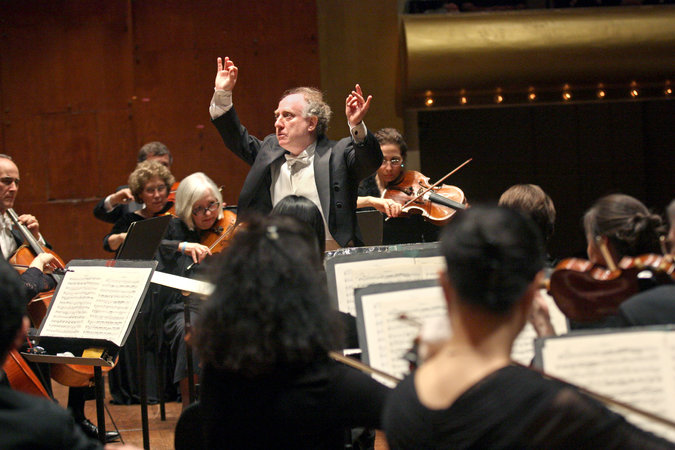
As the festival continues to evolve in directions that have less and less to do with its namesake, the Philharmonic, perhaps sensing an opportunity, offers a Mozart program of its own this week: the “Prague” Symphony and the Piano Concertos No. 20, in D minor, and No. 21, in C, with Jeffrey Kahane as guest conductor and soloist.

The “Prague” must be every opera lover’s favorite Mozart symphony. Composed in Vienna in 1786 and evidently given its premiere in Prague early the next year, it is a virtual caldron of tunes more or less shared with “Le Nozze di Figaro” (1786) and “Don Giovanni” (1787).

More than that, the symphony, played before intermission, evokes the moods and characters of those operas, especially “Don Giovanni.” Mr. Kahane treated all of that a bit matter-of-factly at Wednesday evening’s performance, with little lingering to search out lascivious byplay in dark recesses or to limn a bumbling Leporello.

So it came as a delightful surprise, after intermission, when Mr. Kahane injected the condemnatory sequence of rising and falling scales from “Don Giovanni” into his own cadenza for the first movement of the D minor Concerto. His playing was deft and virtuosic in both concertos, though his fast tempos in the outer movements of the C major resulted in some blurred scalar passages and a slightly hectic feel at times.

You might have feared a certain weightiness from the Philharmonic in Mozart, but Mr. Kahane generally drew stylish playing from a reduced band of 40 or so. The strings had a pliant quality, and the woodwinds were especially fine.

My thoughts are included on this blog post: http://maryoblog.com/2015/06/07/saturday-june-6-2015-part-2/