1632 ~ Jean-Baptiste Lully, Italian-born French composer
More information about Lully
1829 ~ Anton Rubinstein, Russian composer and pianist. He founded the Saint Petersburg Conservatory.
More information about Rubinstein
. 1895 ~ Joseé Iturbi, Musician, pianist, conductor of the Rochester Philharmonic Orchestra
. 1915 ~ Dick Vance, Trumpeter
. 1929 ~ Berry Gordy, Jr., Founder of Motown Records
. 1934 ~ Ethel Ennis, Singer with Benny Goodman Orchestra
. 1939 ~ Gary Troxel, Singer with The Fleetwoods
. 1940 ~ Bruce Channel, Singer
1943 ~ Randy (Randall Stuart) Newman, American pop-rock songwriter, singer and pianist
More information about Newman Grammy winner
. 1945 ~ R.B. Greaves, Singer
. 1948 ~ Beeb Birtles, Guitarist with The Little River Band
. 1949 ~ Alexander Godunov, Ballet dancer, actor
. 1949 ~ Paul Shaffer, Bandleader on Late Show with David Letterman, comedian
. 1956 ~ Holding the #1 spot on the music charts: Guy Mitchell singing Singing the Blues. The song remained at the top of the Hit Parade for 10 weeks. Here’s a bit of trivia: Ray Conniff whistled the intro to Singing the Blues.
. 1966 ~ The New Vaudeville Band received a gold record for Winchester Cathedral this day.
. 1974 ~ John Lennon appeared in concert for the last time, at NYC’s Madison Square Garden. Lennon joined Elton John to sing Whatever Gets You Through the Night as well as I Saw Her Standing There.
“The New-England Boy’s Song about Thanksgiving Day”, also known as “Over the River and Through the Wood”, is a Thanksgiving poem by Lydia Maria Child originally published in Flowers for Children, Volume 2.
Although many people sing “to grandmother’s house we go,” the original edition shows that the author’s words were “to grandfather’s house.”
This poem celebrates the author’s childhood memories of visiting her Grandfather’s House.
Over the river, and through the wood,
To grandfather’s house we go;
The horse knows the way,
To carry the sleigh,
Through the white and drifted snow.
Over the river, and through the wood,
To grandfather’s house away!
We would not stop
For doll or top,
For ‘t is Thanksgiving day.
Over the river, and through the wood,
Oh, how the wind does blow!
It stings the toes,
And bites the nose,
As over the ground we go.
Over the river, and through the wood,
With a clear blue winter sky,
The dogs do bark,
And children hark,
As we go jingling by.
Over the river, and through the wood,
To have a first-rate play—
Hear the bells ring
Ting a ling ding,
Hurra for Thanksgiving day!
Over the river, and through the wood—
No matter for winds that blow;
Or if we get
The sleigh upset,
Into a bank of snow.
Over the river, and through the wood,
To see little John and Ann;
We will kiss them all,
And play snow-ball,
And stay as long as we can.
Over the river, and through the wood,
Trot fast, my dapple grey!
Spring over the ground,
Like a hunting hound,
For ‘t is Thanksgiving day!
Over the river, and through the wood,
And straight through the barn-yard gate;
We seem to go
Extremely slow,
It is so hard to wait.
Over the river, and through the wood,
Old Jowler hears our bells;
He shakes his pow,
With a loud bow wow,
And thus the news he tells.
Over the river, and through the wood—
When grandmother sees us come,
She will say, Oh dear,
The children are here,
Bring a pie for every one.
Over the river, and through the wood—
Now grandmother’s cap I spy!
Hurra for the fun!
Is the pudding done?
Hurra for the pumpkin pie!
I’m thankful for my piano studio, my students, and my piano 🙂
When I was growing up, my dad was a minister, meaning we lived in whatever parsonage the church chose to let us live in. The one we had in Pawcatuck, CT had an upright piano that someone had put out in the sunroom. Not the best place for a piano, but I digress.
Since we had the piano already, someone – probably my mom – decided that I would take lessons. We had the organist from the Baptist church just across the river in Westerly, RI
Apparently, Clara Pashley was fondly remembered at the church (now Central Baptist Church) since she was mentioned in an article from 2010.
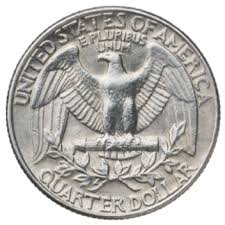
Miss Pashley walked to our house each week and taught me (and my mom who was always listening in) piano for the grand sum of 25 cents.
I started with Ada Richter’s classic Teaching Little Fingers to Play, which has now been morphed into the John Thompson library.
From there, it was the Michael Aaron series, and some sheet music.
There was no music store in our town, so I have no idea where any of this music came from – but I still have it all.
My parents did very well for their quarter a week investment, especially since my mom paid good attention and was able to beef up lessons she’d had as a child. Later on, she played well enough that she was church organist for a local Roman Catholic Church.
But I digress…
In those days, kids couldn’t do a whole lot of activities, so in 6th grade, I decided I wanted to be a Girl Scout. Bye, bye Clara.
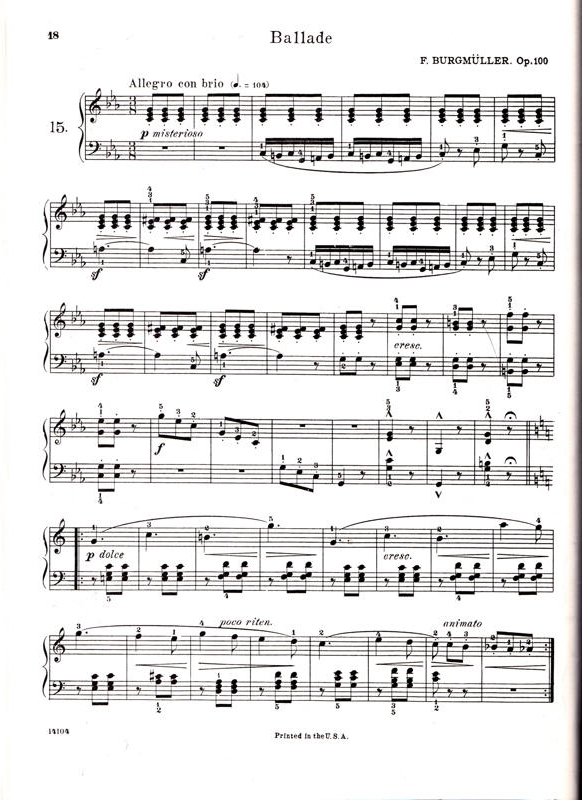
Girl Scouts didn’t last long but I did play piano in a talent show. I remember, I carefully cut Burgmüller’s Ballade out of my Michael Aaron book and made a nice construction paper cover. (I still have this, too)
I doubt that I played this well but here’s what it was supposed to sound like:
A few years intervened and moved to Springfield, MA. The parsonage piano there was in terrible shape and in the dark, never-used basement. But I decided to make it mine and cleared up the area around it and started “practicing”.
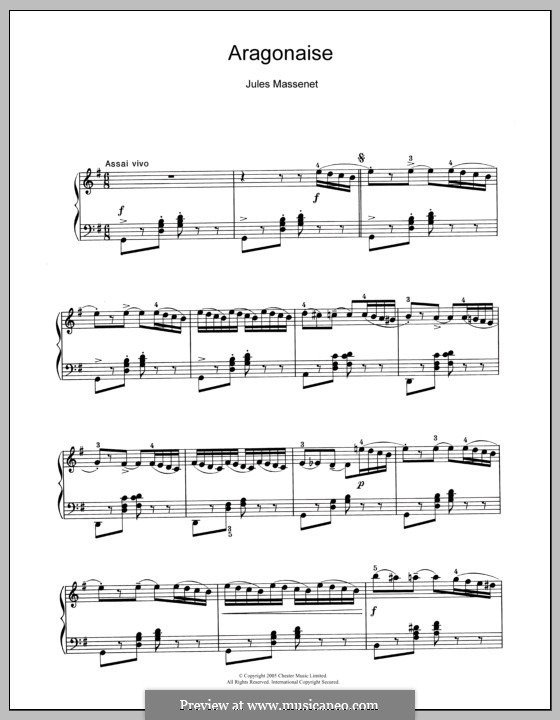
My Junior or Senior year of High School I decided I wanted to major in music in college. I decided to learn, on my own, a piano arrangement of Aragonnaise by Jules Massenet. I have no idea why or where that sheet music came from but I started working furiously on this piece.
Hopefully, at some point, it should have sounded like this:
I started pedaling (no pun intended!) my music to the Universities of Connecticut and Massachusetts and ended up at UMass Amherst since we were state residents.
Early morning gym classes (usually swimming), then wet hair traipsing across campus to music theory in winter 5 days a week. AARRGGH!
But I stuck it out.
My wonderful piano teacher, Howard Lebow, was killed in a car accident during my sophomore year and I was devastated. There will be more about him in a post on January 26, 2019 here on https://atomic-temporary-44596882.wpcomstaging.com
I took yet another break from piano lessons – but I kept playing.
After DH graduated, we moved to Milwaukee, WI for his graduate school. Besides working 2 jobs, I found time to commandeer the practice rooms at the University of Wisconsin. I also found a teacher at the Schaum School of Music. She was amazed that I had no piano at home to practice on.
When we later moved to Alexandria, VA my DH gave me a choice of new car or piano. So, I found a used piano. The owner had acquired it in a divorce and wanted it gone. Yesterday. She even paid to move it out of her apartment.
The new-to-me piano took up half our living room. When my parents came to visit, their feet we under my piano as I slept.
I found yet another new piano teacher and she is still my best friend to this day.
That piano moved to several locations before I bought a brand new Yamaha grand piano. The movers accidently brought in the wrong one and I made them return it. The people who lived in an apartment were probably unhappy when they had to return my piano and take their own new baby grand back.
I started teaching as a traveling piano teacher in Silver Spring, Maryland. I continued that in Wilmington, DE.
When we got to Fairfax, VA I decided no more traveling. Students would come to me. And so they have since 1973.
What is supposed to be our living room is filled with music books, electric keyboards, the grand piano, 2 organs, 2 violins, 2 clarinets and other musical “stuff”.
Piano playing has gotten me through the worst times of my life. Teaching has been a lifeline for me, as well.
I am so thankful for the students who have stayed with me over the years.
1471 ~ Guillaume Du Fay, French composer, died. Considered the leading composer of the early Renaissance.
More information about Du Fay
. 1750 ~ Anton Thadaus Johann Nepomuk Stamitz, composer
. 1804 ~ Sir Julius Benedict, Musician, composer
. 1813 ~ Michele Puccini, Composer
. 1867 ~ Charles (Charles-Louis-Eugèn) Koechlin, French composer. He studied under Massenet and Fauré at the Paris Conservatoire. He excelled in colorful and inventive orchestration in his symphonies, symphonic poems, choral-orchestral works (including seven based on Kipling’s Jungle Book), film music, and works inspired by Hollywood, such as the Seven Stars Symphony. He also wrote prolifically for a wide range of vocal and chamber combinations. His writings included studies of recent French music and treatises on music theory.
. 1898 ~ Nelly Steuer-Wagenaar, Dutch pianist
. 1900 ~ Leon Barzin, Belgian conductor (NY City Ballet 1948-58)
. 1904 ~ Sir Julius Benedict, German-born English conductor and composer
. 1912 ~ David Merrick (Margulois), Broadway producer of Gypsy, Hello, Dolly!,Beckett, Oliver, Fanny, Stop the World: I Want to Get Off, 42nd Street
. 1935 ~ Al Jackson, Jr., Dummer with Booker T. and the M.G.’s; Roy Milton Band
. 1935 ~ Eeny Meeny Miney Mo was recorded by Ginger Rogers and Johnny Mercer. The tune was recorded at Decca Records in Los Angeles.
. 1942 ~ Jimi (James Marshall) Hendrix, American rock guitarist, singer and songwriter
. 1944 ~ Dozy (Trevor Davies), Bass with Dave Dee, Dozy, Beaky, Mick and Tich
. 1944 ~ Eddie Rabbitt, Songwriter, Kentucky Rain for Elvis Presley; singer, his 17 albums garnered 26 #1 country hits and 8 pop hits
. 1953 ~ Boris Grebenshikov, Russian rock musician
. 1959 ~ Charlie Burchill, Guitarist with Simple Minds
. 1967 ~ The Association, a California group, earned a gold record for the hit Never My Love, on Warner Bros. Records. The group also earned worldwide fame for other hits including Windy, Cherish and Along Comes Mary.
. 1979 ~ Hilary Hahn, American violinist
. 1982 ~ The #1 song in the U.S. was former Commodore Lionel Richie’s Truly. The love song stayed at the top of the charts for two weeks. The song was his first solo hit and followed Endless Love, a duet with Diana Ross in 1981.
. 2000 ~ Walter Bailes, a member of the popular 1940s-era Grand Ole Opry duo The Bailes Brothers, died at the age of 80. Walter Bailes, a West Virginia native, and his brother Johnny were the classic Bailes Brothers duo. Brothers Kyle and Homer also performed with the group over the years in varying combinations. Walter wrote much of the group’s material, including popular songs like Dust on the Bible and I Want to be Loved. During their run on the Grand Ole Opry from 1944 to 46, they were among the show’s most popular acts. Kitty Wells, Flatt & Scruggs, and The Everly Brothers all recorded songs written by Walter Bailes. The Bailes Brothers left the Opry in 1946 and moved to Shreveport, La., where they helped launch the Louisiana Hayride radio show. They continued to occasionally perform throughout the 1950s.
. 1789 ~ Thanksgiving was celebrated nationally for the first time in the United States.
. 1915 ~ Earl Wild, American composer and pianist (Caesar’s Hour, NBC Symphony 1942)
1925 ~ Eugene Istomin, American pianist
. 1932 ~ Alan Stout, American composer
. 1933 ~ Robert Goulet (Stanley Applebaum), Singer, actor
. 1935 ~ Marian Mercer, Singer, actress
. 1938 ~ Ray Brown, Singer with The Four Freshmen
. 1938 ~ Tina Turner (Annie Bullock), American soul-rock singer, Grammy Award-winning Pop Singer of the Year, 1985; Ike Turner’s ex-wife
. 1940 ~ Xavier Cugat and his orchestra recorded Orchids in the Moonlight on the Columbia label.
. 1944 ~ Alan Henderson, Bass with Them
. 1946 ~ John McVie, Guitarist with Fleetwood Mac
. 1956 ~ Tommy Dorsey passed away at the age of 51. His records sold more than 110,000,000 copies.
. 1959 ~ Albert Ketèlbey, British composer (In a Monastery Garden), died at the age of 84
. 1963 ~ Amelita Galli-Curci passed away
. 1968 ~ Cream gave a farewell performance filmed by the BBC in London. The rock group played before a capacity crowd at Royal Albert Hall.
. 1969 ~ The Band received a gold record for the album, The Band.
. 1978 ~ Frank Rosolino passed away
. 1980 ~ “Wings Over America” premiered in New York City. The movie is about the first American tour of Paul McCartney and Wings.
. 2001 ~ Paul Hume, a music critic who once drew the ire of President Harry Truman after he panned his daughter’s recital, died of pneumonia at his home in Baltimore. Hume was 85. Hume worked for The Washington Post and built a reputation as one of the most learned critics in the nation. Classical music legends Vladimir Horowitz, Eugene Ormandy and Leonard Bernstein all held Hume in high esteem. Hume will always be remembered for his review of a recital by Truman’s daughter, Margaret, in 1950, in which he criticized her singing as flat. After reading the review, Truman wrote an angry, threatening letter to Hume. Truman’s remarks got him in hot water with the public, which felt he shouldn’t take time to joust with critics as the nation fought the Korean War. A Chicago native, Hume taught music history at Georgetown University from 1950 to 1977 and was a visiting professor at Yale University from 1975 to 1983. He wrote several books, including a study of Catholic church music and a biography of Giuseppe Verdi.
. 2003 ~ Meyer Kupferman, a prolific composer whose work ranged from contemporary classical music to opera, ballet and jazz, died. He was 77. Kupferman, a virtuoso clarinetist, taught composition and music theory at Sarah Lawrence College, where he was a staff member from 1951 to 1993. During his tenure there, he also served as chair of the music department and conducted the orchestra, chorus and chamber improvisation ensemble. In 1948 Kupferman wrote both his first piano concerto and opera. In all, he produced seven operas, 12 symphonies, nine ballets, seven string quartets, 10 concertos and hundreds of chamber works. His compositions have been performed and recorded worldwide. Kupferman also was commissioned by the Hudson Valley Philharmonic to write ‘FDR’ for the centennial of Franklin Roosevelt’s birth. The manuscript of the piece is now held by the Roosevelt Library. William Anderson, a family friend and a guitarist who performed Kupferman’s music, told the New York Times that Kupferman died of heart failure.
. 1787 ~ Franz Gruber, composer of Silent Night. The song was first performed on Christmas Eve 1818 at St Nicholas parish church in Oberndorf, a village in present-day Austria. A young priest, Father Joseph Mohr, had come to Oberndorf the year before. He had written the lyrics of the song “Stille Nacht” in 1816.
The melody was composed by Franz Xaver Gruber, schoolmaster and organist in the nearby village of Arnsdorf. Before Christmas Eve, Mohr brought the words to Gruber and asked him to compose a melody and guitar accompaniment for the Christmas Eve mass. It is unknown what inspired Mohr to write the lyrics, or what prompted him to create a new carol.
1896 ~ Virgil Thomson, American composer, conductor and music critic
Read quotes by and about Thomson
More information about Thomson
. 1924 ~ Paul Desmond, was an American jazz alto saxophonist and composer, best known for the work he did in the Dave Brubeck Quartet and for composing that group’s greatest hit, “Take Five”.
. 1925 ~ Derroll Adams, Country singer, played with Jack Elliott
. 1931 ~ Nat Adderley, Musician, cornet, mellophone, French horn, trumpet, brother of Cannonball Adderley
. 1941 ~ Percy Sledge, Singer
. 1949 ~ Rudolph, the Red-Nosed Reindeer, by Johnnie Marks, appeared on the music charts and became THE musical hit of the Christmas season. Although Gene Autry’s rendition is the most popular, 80 different versions of the song have been recorded, with nearly 20,000,000 copies sold.
. 1955 ~ Following a summer at the top of the American pop charts, Rock Around the Clock by Bill Haley and His Comets became the #1 song in Great Britain.
. 1937 ~ Music from the Raymor Ballroom in Boston, Massachusetts was beamed coast to coast on NBC radio. The special guests during this broadcast were Glenn Miller and his orchestra.
. 1937 ~ Three lovely ladies, known as The Andrews Sisters, recorded Decca record number 1562 this day. It became one of their biggest hits: Bei Mir Bist Du Schön.
. 1950 ~ The musical comedy, Guys and Dolls, from the pen of Frank Loesser, opened at the 46th Street Theatre in New York City. The show ran for 1,200 performances.
. 1958 ~ Jackie Wilson’s Lonely Teardrops was released, as was a disk by Ritchie Valens featuring Donna on one side and La Bamba on the other.
. 1958 ~ Harold Jenkins, who changed his name to Conway Twitty, got his first #1 hit on this day. It’s Only Make Believe was the most popular song in the U.S. for one week.
. 1972 ~ A Friday night show that would compete head-to-head with NBC’s Midnight Special premiered. In Concert featured Chuck Berry, Alice Cooper, Blood Sweat and Tears, Seals and Crofts and Poco. Robert W. Morgan of KHJ, Los Angeles was the offstage announcer for the ABC-TV show that was staged before a live audience. In Concert was the creation of the guy who dreamed up the fictitious group The Archies and brought fame to The Monkees: rock promoter, Don Kirshner.
. 1973 ~ Following over two years of retirement, Frank Sinatra went back to work again with a TV special on NBC titled, “Ol’ Blue Eyes is Back”. Despite the fact that the show finished third in the ratings (in a three-show race), at least one critic called the program, “The best popular music special of the year.”
. 1976 ~ The Band, appearing at the Winterland in San Francisco, announced that this was to be the group’s last public performance.
. 1985 ~ Big Joe Turner passed away
. 1991 ~ Freddie Mercury, British singer-songwriter (Queen – We are Champions), died at the age of 45
. 1993 ~ Albert Collins, passed away
. 2003 ~ Teddy Wilburn, half of the country music duo the Wilburn Brothers, died. He was 71. Wilburn and his brother, Doyle, had 30 songs on the country charts from 1955 to 1972, including the hits Hurt Her Once for Me, Trouble’s Back in Town and Roll, Muddy River. Doyle Wilburn died of cancer in 1982. Teddy Wilburn was born in the Ozark Mountain community of Hardy, Ark. He and Doyle first performed publicly at ages 6 and 5, with the Wilburn Family band. After recording on Decca records as the Wilburn Brothers, Teddy and Doyle joined the Grand Ole Opry cast. Between 1963 and 1974, the Wilburn Brothers were hosts of one of country music’s first syndicated color TV shows. In 1972 they were nominated for the Country Music Association’s Vocal Group of the Year award.
. 1585 ~ Thomas Tallis, English composer, died at the age of 80
. 1666 ~ Giuseppe Guarneri, Italian violin maker
1876 ~ Manuel de Falla, Spanish composer and conductor
More information about de Falla
. 1889 ~ The first ‘Nickel-in-the-Slot’ (jukebox) was placed in service in the Palais Royal Saloon in San Francisco, California. Juke, at the time, was a slang word for a disorderly house, or house of ill repute. The unit, developed by Louis T. Glass, contained an Edison tinfoil phonograph with four listening tubes. There was a coin slot for each tube. 5 cents bought a few minutes of music. The contraption took in $1,000 in six months!
1903 ~ Enrico Caruso, famed Italian tenor, made his debut in the United States at the Metropolitan Opera House in New York City. He sang in the role of the Duke in Rigoletto.
More information about Caruso
. 1920 ~ Herman Nieland, Dutch organist/pianist/composer
. 1924 ~ Vincent Lopez and some 40 jazz musicians presented a concert of upbeat music at the Metropolitan Opera House in NYC.
. 1928 ~ Jerry Bock, American songwriter for the musical theater
1933 ~ Krzysztof Penderecki, Polish composer and conductor
More information about Penderecki
. 1935 ~ Ethel Leginska became the first woman to write an opera and conduct it. Her original work, titled Gale, opened at the Chicago City Opera Company.
. 1938 ~ Bob Hope and Shirley Ross recorded a song for the film, The Big Broadcast of 1938. Thanks for the Memory became Decca record number 2219. It also became Hope’s theme song.
. 1955 ~ Ludovico Einaudi, Italian composer and pianist
. 1974 ~ Billy Swan reached the #1 spot on the singles charts for the first and only time. I Can Help was the most popular song in the U.S. for two weeks.
. 1710 ~ Wilhelm Friedemann Bach, composer, son of J.S. Bach
. 1880 ~ Lillian Russell made her vaudeville debut, in New York City.
. 1899 ~ Hoagy (Hoagland Howard) Carmichael, American jazz pianist and songwriter, singer, bandleader, attorney
. 1909 ~ Helen Hayes appeared for the first time on the New York stage. She was a member of the cast of In Old Dutch, which opened at the Herald Square Theatre.
1913 ~ Lord Benjamin Britten, British composer
Read quotes by and about Britten
More information about Britten Grammy winner
. 1925 ~ Gunther Schuller, American composer, conductor, French-horn player and educator
. 1938 ~ Bunny Berigan and his orchestra recorded Jelly Roll Blues on Victor Records. The tune became a standard for the band.
. 1943 ~ Floyd Sneed, Drummer with Three Dog Night
. 1946 ~ Aston Barrett, Musician with ‘Family Man’, bass with Bob Marley & The Wailers
. 1949 ~ Steve ‘Miami’ Van Zandt, Singer, songwriter, guitar
. 1950 ~ Tina (Martina) Weymouth, Bass with Talking Heads
. 1953 ~ Craig Hundley, Pianist with the Craig Hundley Trio
. 1955 ~ RCA paid the unheard of sum of $25,000 to Sam Phillips of Memphis, TN for the rights to the music of a truck driver from Tupelo, Mississippi: Elvis Presley. Thanks to negotiations with Elvis’ manager, Colonel Tom Parker, RCA tossed in a $5,000 bonus as well, for a pink Cadillac for Elvis’ mother.
. 1957 ~ The Miles Davis Quintet debuted with a jazz concert at Carnegie Hall in New York.
. 1965 ~ The production of Man of LaMancha, including the classic The Impossible Dream, opened in New York City for the first of 2,328 performances.
. 1975 ~ Dr. Zhivago appeared on TV for the first time. The production, including Somewhere My Love, had earned $93 million from theater tickets over ten years. NBC paid $4 million for the broadcast rights.
. 1977 ~ Tony Orlando returned to the concert stage after a self-imposed, three-month retirement following the suicide death of his good friend, Freddie Prinze. Orlando appeared in concert in San Carlos, California.
. 2001 ~ Norman Granz, the impresario who helped make jazz more accessible to the public while making the music business fairer to black performers, died in Geneva, Switzerland, of complications from cancer. He was 83. Granz owned four labels – Clef, Norgran, Verve and Pablo – and at one time or another recorded most of the major names in jazz, including Louis Armstrong, Count Basie, Duke Ellington, Ella Fitzgerald, Dizzy Gillespie, Billie Holiday, Charlie Parker and Oscar Peterson. Many historians credit him with bringing top jazz performers in integrated bands into venues across the country through a series called Jazz at the Philharmonic. Granz’s efforts also helped end a system in which white performers generally earned far more than blacks. He insisted on equality in pay, dining and accommodations for his musicians. In 1947, he told Down Beat magazine that he lost $100,000, then a sizable sum, by turning down bookings in segregated concert halls.


 1632 ~ Jean-Baptiste Lully, Italian-born French composer
 Grammy winner




 MaryO'Studio