I’m thankful for my piano studio, my students, and my piano 🙂 During Covid, I was especially thankful for the Internet!
When I was growing up, my dad was a minister, meaning we lived in whatever parsonage the church chose to let us live in. The one we had in Pawcatuck, CT had an upright piano that someone had put out in the sunroom. Not the best place for a piano, but I digress.
Since we had the piano already, someone – probably my mom – decided that I would take lessons. We had the organist from the Baptist church just across the river in Westerly, RI
Apparently, Clara Pashley was fondly remembered at the church (now Central Baptist Church) since she was mentioned in an article from 2010.
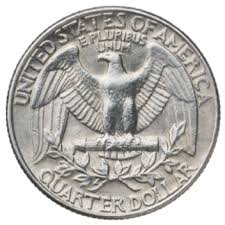
Miss Pashley walked to our house each week and taught me (and my mom who was always listening in) piano for the grand sum of 25 cents.
I started with Ada Richter’s classic Teaching Little Fingers to Play, which has now been morphed into the John Thompson library.
From there, it was the Michael Aaron series, and some sheet music.
There was no music store in our town, so I have no idea where any of this music came from – but I still have it all.
My parents did very well for their quarter a week investment, especially since my mom paid good attention and was able to beef up lessons she’d had as a child. Later on, she played well enough that she was church organist for a local Roman Catholic Church.
But I digress…
In those days, kids couldn’t do a whole lot of activities, so in 6th grade, I decided I wanted to be a Girl Scout. Bye, bye Clara.
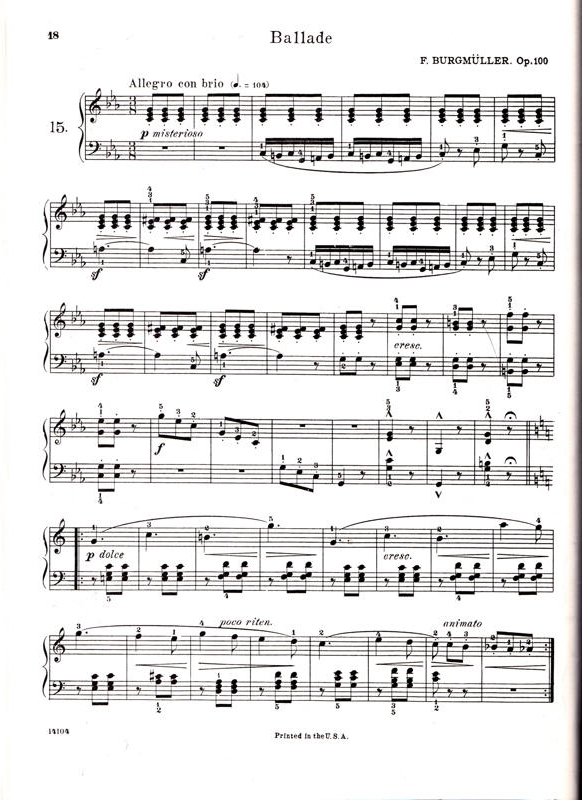
Girl Scouts didn’t last long but I did play piano in a talent show. I remember, I carefully cut Burgmüller’s Ballade out of my Michael Aaron book and made a nice construction paper cover. (I still have this, too)
I doubt that I played this well but here’s what it was supposed to sound like:
A few years intervened and moved to Springfield, MA. The parsonage piano there was in terrible shape and in the dark, never-used basement. But I decided to make it mine and cleared up the area around it and started “practicing”.
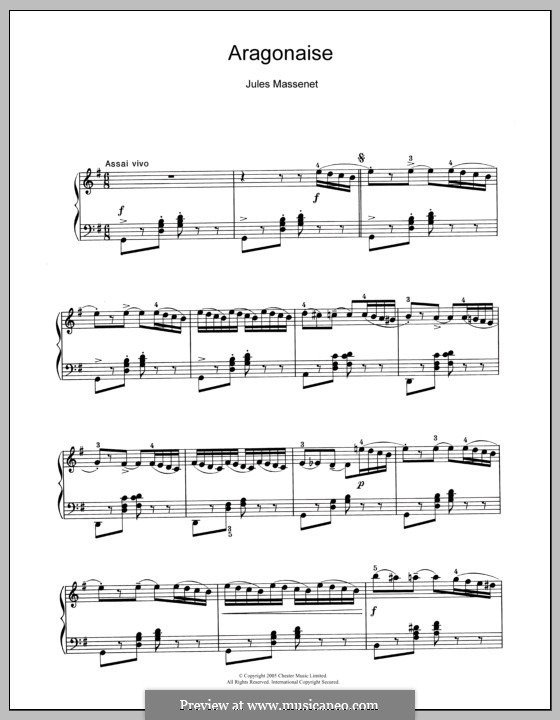
My Junior or Senior year of High School I decided I wanted to major in music in college. I decided to learn, on my own, a piano arrangement of Aragonaise by Jules Massenet. I have no idea why or where that sheet music came from but I started working furiously on this piece.
Hopefully, at some point, it should have sounded like this:
I started pedaling (no pun intended!) my music to the Universities of Connecticut and Massachusetts and ended up at UMass Amherst since we were state residents.
Early morning gym classes (usually swimming), then wet hair traipsing across campus to music theory in winter 5 days a week. AARRGGH!
But I stuck it out.
My wonderful piano teacher, Howard Lebow, was killed in a car accident during my sophomore year and I was devastated. There was more about him in a post on January 26, 2022 here on https://atomic-temporary-44596882.wpcomstaging.com
I took yet another break from piano lessons – but I kept playing.
After DH graduated, we moved to Milwaukee, WI for his graduate school. Besides working 2 jobs, I found time to commandeer the practice rooms at the University of Wisconsin. I also found a teacher at the Schaum School of Music. She was amazed that I had no piano at home to practice on.
When we later moved to Alexandria, VA my DH gave me a choice of new car or piano. So, I found a used piano. The owner had acquired it in a divorce and wanted it gone. Yesterday. She even paid to move it out of her apartment.
The new-to-me piano took up half our living room. When my parents came to visit, their feet we under my piano as I slept.
I found yet another new piano teacher and she is still my best friend to this day.
That piano moved to several locations before I bought a brand new Yamaha grand piano. The movers accidently brought in the wrong one and I made them return it. The people who lived in an apartment were probably unhappy when they had to return my piano and take their own new baby grand back.
I started teaching as a traveling piano teacher in Silver Spring, Maryland. I continued that in Wilmington, DE.
When we got to Fairfax, VA I decided no more traveling. Students would come to me. And so they have since 1973.
What is supposed to be our living room is filled with music books, electric keyboards, the grand piano, 2 organs, 2 violins, 2 clarinets, recorders, a dulcimer and other musical “stuff”.
Piano playing has gotten me through the worst times of my life. Teaching has been a lifeline for me, as well.
I am so thankful for the students who have stayed with me over the years and the new ones I have found…on the internet.
This is a family-friendly event with the little ones in mind. Adults and children are invited to walk to Jerusalem along with Jesus. There will be crafts and fun activities that will help the kids understand Easter.
Join us in The Gathering Place rain or shine! The event will run from 3:00 to 5:00 PM
Learn about the Seder, Decorate an Easter Egg, Stories of Jesus, Make a “God’s Eye”, Veggie Tales: “The Night Before Easter”, Decorate the Cross and Pray in the Garden of Gethsemane.
1803 ~ Louis-Hector Berlioz, French composer, conductor, music critic and major force in the development of musical form during the Romantic Era
More information about Berlioz
• 1876 ~ Mieczyslaw Karlowicz, Polish composer and conductor
• 1882 ~ The Bijou Theatre in Boston, MA became the first theatre to be lighted by electricity.
• 1908 ~ Elliot Cook Carter, Jr., American composer
• 1915 ~ Frank Sinatra, American singer songwriter
• 1916 ~ (Damaso) Perez Prado, Piano, organ
• 1926 ~ Willie Mae ‘Big Mama’ Thornton, Blues singer
• 1931 ~ Rita Moreno (Rosita Alverio), Dancer, Academy and Emmy Award-winning actress
• 1934 ~ Curtis Williams, Singer with The Penguins
• 1935 ~ Tom Brumley, Steel guitar with Buck Owens and the Buckaroos, Stone Canyon Band
• 1939 ~ Marlene Dietrich recorded Falling In Love Again on the Decca label.
• 1940 ~ David Gates, Guitarist, keyboard, singer with Bread
• 1944 ~ Brenda Lee (Tarpley), American singer of popular music
• 1944 ~ “The Chesterfield Supper Club” debuted on NBC radio. Perry Como, Jo Stafford and many other stars of the day shared the spotlight on the 15-minute show that aired five nights a week. The show was sponsored by Chesterfield cigarettes.
• 1952 ~ An audience of 70,000 people watched from 31 theatres as Richard Tucker starred in Carmen. The event was the first pay-TV production of an opera. Ticket prices ranged from $1.20 to $7.20.
• 1954 ~ Jermaine Jackson, Singer with The Jackson Five, brother of Michael, Janet, La Toya, Tito, Randy, Marlon and Jackie
• 1964 ~ Musician Sam Cooke died under suspicious circumstances.
• 1973 ~ Karen and Richard Carpenter received a gold record for their single, Top of the World.
• 1982 ~ Toni Basil reached the #1 one position on the pop music charts for the first time, with her single, Mickey.
• 2000 ~ Ruth Martin, a writer whose translations of both popular and obscure operas were widely used in American opera houses, died at the age of 86. Martin collaborated with her husband Thomas Martin in translating the librettos of some of the world’s most famous operas, including Mozart’sDon Giovanni and The Marriage of Figaro, as well as Puccini’sBoheme, and Bizet’sCarmen. Martin and her husband also translated some of the rarest operas, such as Offenbach’sGrand Duchess of Gerolstein, and Dvorák’sRusalka. The Martins’ translations were marked by their clarity and singability, and despite the increasing use of closed-captioning systems in major opera houses, their translations are still used widely. Martin contributed articles on opera for Opera News, Aria, and Theater Arts. She also served on the boards of the New York Federation of Music Clubs, the Liederkranz Foundation and the National Opera Foundation.
• 2001 ~ Erik Johns, who wrote the libretto for Aaron Copland’s only full-length opera, The Tender Land, died in a fire at his home in Fishkill, N.Y. He was 74. Born Horace Eugene Johnston in Los Angeles, Johns began his career in music as a dancer. He met Copland when he was 19 at a New Year’s Eve party in New York. In 1952 the two began collaborating on an opera based on Let Us Now PraiseFamous Men, a book by writer James Agee and photographer Walker Evans that describes the lives of several Southern sharecropper families during the Depression. Copland composed the music and Johns wrote the libretto, or the words. The work was originally commissioned as a television opera by NBC but was subsequently rejected by the network. The New York City Opera performed it at its premiere at City Center in April 1954 in a short two-act version. The two later added a third act.
• 2001 ~ Jose Fajardo, a Cuban flutist who was one of the most influential bandleaders in Latin music, died an aneurysm. He was 82. The Cuban native had emigrated from Cuba in 1961, when he refused a request from the Cuban government to continue a musical tour to other communist countries. During his lengthy career, Fajardo recorded more than 40 albums and performed around the world. He was credited with expanding the audience for charanga, a Cuban musical style that backs a singer with flute, violins, piano, bass and percussion. Fajardo started his first group, Fajardo y sus Estrellas, in the 1940s. He later led three bands by the same name. After moving to the United States, he founded bands in New York and Miami and began performing in new style called pachanga, featuring a slightly more assertive rhythm. Fajardo was featured on “Cuban Masters: Los Originales,” an album of performances by leading Cuban musicians that was released November 2001.
• 2002 ~ Kay Rose, the first woman to win an Academy Award for sound editing, died. She was 80. Rose won the statuette for her work on the 1984 film The River. A native of New York, Rose was recognized in March with a career achievement award from the Cinema Audio Society. The Motion Picture Sound Editors gave her a similar lifetime achievement award in 1993. In October 2002, directors George Lucas and Steven Spielberg endowed the Kay Rose Chair in the Art of Sound and Dialogue Editing at the University of Southern California’s School of Cinema-Television. The chair is the first of its kind in the country. After studying film at Hunter College, she became a civilian film apprentice for the Army Signal Corps during World War II. There, she helped create such training films as How to Erect a Double Apron Barbed Wire Fence and the John Huston documentary Report from the Aleutians. She moved to Hollywood in 1944 and found a job as an assistant to an editor at Universal studios. In 1951, she married film editor Sherman Rose. Together, they produced the 1954 sci-fi cult classic, Target Earth. They later divorced. During her five-decade career, Rose received sound editing credits on such films as The Rose,Ordinary People,On Golden Pond,The Milagro Beanfield War, The Prince of Tides,For the Boys and Speed.
• 1852 ~ Sir Charles Villiers Stanford, Irish composer and organist
• 1908 ~ David Oistrakh, Russian violinist
• 1922 ~ Oscar Pettiford, Bass, cello. He played with Charlie Barnet, Dizzy Gillespie, Duke Ellington, Woody Herman, and Stan Getz
• 1933 ~ The theme song was Hail, Hail, the Gang’s All Here and it opened the National Barn Dance. The half-hour country music and comedy show, originally heard on WLS, Chicago since 1924, moved to the NBC Blue network this night. National Barn Dance was broadcast from the Eighth Street Theater in Chicago, where the stage was transformed into a hayloft every Saturday night. The host was Joe Kelly. Uncle Ezra was played by Pat Barrett who was known to say, “Give me a toot on the tooter, Tommy,” as he started dancing. A few of the other Barn Dance characters were Arkie, the Arkansas Woodchopper; Pokey Martin; the Hoosier Hotshots; the Prairie Ramblers; cowgirl, Patsy Montana; Pat Buttram; Lulu Belle and the Cumberland Road Runners. Gene Autry and Red Foley were heard early in their careers on National Barn Dance. Although there were plenty of sponsors (Alka Seltzer, One-A-Day vitamins, Phillips Milk of Magnesia), the National Barn Dance was one of the few radio shows to charge admission!
• 1935 ~ Jill Corey (Norma Jean Speranza), Singer
• 1935 ~ Johnny Mathis, American singer of popular music
• 1935 ~ “Summertime … and the livin’ is easy.” Porgy and Bess was presented for the first time, at the Colonial Theatre in Boston. It was a flop! It was revived in 1942. It wasn’t a flop that time. It ran longer than any revival in the history of U.S. musical theater.
• 1941 ~ The Larry Clinton Orchestra recorded their version of That Solid Old Man, on Bluebird Records.
• 1942 ~ Frankie Lymon, Singer: recorded at age 14
• 1942 ~ Dewey Martin, Drummer, singer with Buffalo Springfield
• 1943 ~ Marilyn McCoo (Davis), Singer with The Fifth Dimension, TV hostess of Solid Gold from 1981 to 1984 and 1986 to 1988, TV music reporter
• 1946 ~ Sylvia Peterson, Singer with The Chiffons
• 1953 ~ Deborah Allen (Thurmond), Singer
• 1954 ~ Julie Andrews, who would later become a household name in movies, TV and on records, opened on Broadway for the first time. The future star of The Sound of Music appeared in The Boy Friend this night.
• 1976 ~ Mary Ford passed away
• 1977 ~ President Jimmy Carter designated October as the official country music month.
• 1979 ~ Clio-Danae Othoneou, Greek actress, musician and pianist
• 1989 ~ Virgil Thomson, US composer/critic (4 saints in 3 acts), died at the age of 92
• 2003 ~ Ronnie Dawson, the rock singer known as the “Blonde Bomber,” died. He was 64. Dawson was diagnosed in 2002 with throat cancer but continued to perform. One of his last gigs was an emotional performance at the Rockabilly Rave festival in England in February. He enthralled fans at the Big D Jamboree in the 1950s and at Carnegie Hall in the 1990s. Among Dawson’s songs as a teenager in the 1950s were Action Packed and I Make the Love. He was famous for live performances where he would jump from the stage, run through the audience and play his guitar while standing on a table. In the late 1950s, Dawson recast himself as an R&B artist named Snake Monroe, signed briefly with Columbia Records, and then joined the local Western swing pioneers the Light Crust Doughboys. In the 1960s, he packed the Levee Club with the Levee Singers, a folk act that appeared nationally on “The Danny Kaye Show” and “The Jimmy Dean Show.” After the Levee Singers broke up, he formed a country band, Steel Rail, and later sang television and radio jingles.
• 2003 ~ Robert LaMarchina, conductor of the Honolulu Symphony from 1967 to 1978, died. He was 75. Born in New York City, Robert LaMarchina began studying the cello at the age of 7. At 8, he made his first appearance as a solo cellist with the St. Louis Symphony. LaMarchina was 15 when famed conductor Arturo Toscanini hired him to perform with the NBC Symphony Orchestra. LaMarchina made is first appearance as a conductor in 1951 in Japan in the Fujiwara Opera’s production of “Madame Butterfly”. He later taught music at Indiana University, traveled with the Ambassadors of Opera and conducted operas on the West Coast.
. 1872 ~ Sergei Diaghilev, Russian impresario; founder of the Ballets Russes
More information about Diaghilev
. 1873 ~ Max Reger, German composer
Read quotes by and about Reger
More information about Reger
. 1900 ~ Charles-Louis Hanon, French piano pedagogue and composer, died
More about Hanon’s exercises
. 1917 ~ Dinu Lipatti, Rumanian pianist and composer
More information about Lipatti
. 1923 ~ Janine Dacosta, French pianist
. 1930 ~ Ornette Coleman, American jazz alto saxophonist and composer
More information about Coleman
. 1941 ~ Jimmy Dorsey and his orchestra recorded one of their biggest musical successes. It became one of Decca Records’ all-time greats. Green Eyes featured vocalists Helen O’Connell and Bob Eberly.
. 1946 ~ Ruth Pointer, Singer from The Pointer Sisters
. 2001 ~ Cuba-born entertainer Tony Alvarez of “El Show de Olga y Tony” died at age 85. Alvarez was best known for the television and radio programs he hosted with his wife, singer Olga Chorens. He began his career in Cuba in the 1940s as a singer and model, starring in a tango program on Channel Azul. In the 1960s, Alvarez and Chorens moved to Puerto Rico, where they began “El Show de Olga y Tony.” They later moved to New York, where they performed on WABC-TV, WPIX-TV and WNJU-TV from 1965 to 1972.
. 2001 ~ Elena Del Rubio, whose 60-year singing career with her sisters as the Del Rubio Triplets got a boost with campy covers of 1980s tunes, died of cancer. She was believed to be in her 70s. “It was a terrible blow to me,” said Milly, the only surviving sister. “Now I’m left alone.” Another triplet, Eadie, died in 1996. The sisters lived together in a mobile home overlooking the ocean. The trio that promoted itself as “3 Gals 3 Guitars 1 Birthday” performed for six decades in showcases ranging from television comedy to retirement homes. The three were in their 60s when they hit the Hollywood scene, dressed in identical miniskirts, go-go boots and big blonde hairdos. Calling themselves “song stylists,” the sisters’ diverse acts included mariachi strolling, country western music, Hawaiian-Calypso and holiday theme music.
. 2001 ~ Randall Hylton, a bluegrass performer who wrote Room at the Top of the Stairs, died in St. Thomas Hospital after suffering an aneurysm. He was 55. Hylton, who played guitar in the fingerpicking style of Chet Atkins and Merle Travis, was known for his ability to instantly write songs to fit any occasion. The 6-foot-6-inch performer also told jokes, did impersonations and could do guitar tricks, such as playing a song backward or two songs at once. Hylton’s songs were performed by more than 150 singers, including Ralph Stanley, Vern Gosdin, Mac Wiseman, Leo Kottke and Lester Flatt.
. 2001 ~ Herbie Jones, a jazz musician who worked with Duke Ellington and Billy Strayhorn, died of complications from diabetes. He was 74. Jones, a jazz trumpeter, composer, arranger and educator, toured five continents with the Ellington band. His recorded arrangements for the band were El Busto, Cootie’s Caravan, The Prowling Cat and The Opener, and he contributed to Ellington’s first and second Sacred Concerts. After leaving the Ellington band, Jones became the first director of Arts and Culture Inc., a New York City alternative school, and as a volunteer directed the Bugle Corps of the Police Athletic League in Harlem. In Ellington’s 1973 memoir, “Music Is My Mistress,” he called Jones “a great asset” to his orchestra in the 1960s. Jones often played first trumpet but rarely soloed.
. 2015 ~ Peter Katin died. He was a British classical pianist and pedagogue.
• 1930 ~ The New York Philharmonic Orchestra was first heard on the air over CBS radio from Carnegie Hall. The Sunday afternoon concerts set CBS back $15,000. Not per week, but for the entire season!
• 1935 ~ Margie Singleton, Singer, TV performer on Louisiana Hayride
• 1938 ~ Johnny Duncan, Singer
• 1938 ~ Carlo Mastangelo, Singer with Dion and The Belmonts
• 1939 ~ As long as Ted Weems’ orchestra recorded on Decca Records, so did the featured vocalist in his band, the barber from Canonsburg, PA, Perry Como. Before becoming a star in his own right, and making the move to RCA Records and NBC, ‘Mr. C.’ recorded I Wonder Who’s Kissing Her Now with Weems on Decca.
• 1943 ~ Steve Miller, Singer, songwriter with The Steve Miller Band
• 1947 ~ A small Northern California company got a major boost from Bing Crosby. The first show recorded on tape was broadcast on ABC radio. ‘Der Bingle’ was so popular, that his taped show promoted wide distribution of the new magnetic tape recorders that would become broadcast classics – the venerable Ampex 200.
• 1949 ~ Brian Connolly, Singer with The Sweet
• 1949 ~ B.W. Stevenson, Singer, songwriter
• 1950 ~ Eddie Clarke, Guitarist with Motorhead
• 1951 ~ Bob Geldof, Singer, songwriter with Boomtown Rats, organized fund-raising group: Band Aid
• 1955 ~ Leo Barnes, Musician with Hothouse Flowers
• 1962 ~ Ken Noda, American pianist and composer
• 1962 ~ The Beatles debut single ‘Love Me Do’ was released in the UK. It spent 26 weeks on the chart peaking at No.17. Beatles producer George Martin has said when ‘Love Me Do’ was released, it was the day the world changed.
• 1965 ~ Adding to his many credits, accolades and honors, Henry Mancini received a gold record for the soundtrack LP from the movie, The Pink Panther.
• 2000 ~ Singer, actor and composer Cuco Sanchez, whose six-decade career included the ranchera hits La cama de piedra and Anillo de compromiso, died of liver failure. He was 79. Sanchez, whose full name was Jose del Refugio Sanchez Saldana, recorded his first song at 13. In 1940, he was signed by Mexico’s largest media company, for which he acted in movies and television programs. Sanchez’s long career included about 200 songs, which were translated into 27 languages. Among his hits were Mi chata, Anoche estuve llorando, No soy monedita de oro, Buenas noches mi amor, Con la misma moneda, Que manera de perder, Fallaste corazon, and Oigame compadre. Sanchez also composed music for movies.
• 2003 ~ Clarence B. Cagle, a legendary pianist for the Texas Playboys, died at the age of 83. Cagle began playing violin and banjo at house parties at age 9. In 1938, Cagle moved to Coffeyville, Kan., where he played with Herb Goddard’s Oklahoma Wanderers. By then, he’d switched to playing the piano. Cagle auditioned for legendary Texas swing musician Bob Wills in 1943 in Tulsa. He got the job and performed with the Texas Playboys until Wills left for Hollywood to make Western films. Cagle stayed in Tulsa with Wills’ brother, Johnnie Lee Wills, developing his well-known “Boogie Woogie Highball.” Cagle played with him for the next 17 years. He was admitted to the Western Swing Hall of Fame in Sacramento, Calif., in 1988.
• 2014 ~ Geoffrey Holder, Trinidadian-American actor, choreographer, singer, director and painter (Annie, The Wiz), died at the age of 84
• 1812 ~ Fanny Perisiani, Italian coloratura soprano
• 1881 ~ The player piano was invented by Edward Leveaux of Sussex, England, who received a patent for it this day. There were many player piano inventions going on throughout the world during this time. Leveaux happened to be the lucky chap who received the patent England was handing out.
• 1929 ~ Leroy Van Dyke, Singer
• 1939 ~ A barber from Canonsburg (near Pittsburgh), PA, who had quite a singing voice, recorded That Old Gang of Mine with the Ted Weems Orchestra. That singer was the feature of the Weems band for many years before going solo as a radio, TV and stage star. You know him as ‘The Incomparable Mr. C.’, Perry Como. His string of hits for RCA Victor spans four decades. He was an NBC mainstay for years and years.
• 1943 ~ Is You is or is You Ain’t My Baby? was the musical question by Louis Jordan and His Tympany Five on this day on Decca Records.
• 1947 ~ James Fielder, Bass with these groups: Buffalo Springfield, Mothers of Invention and Blood, Sweat & Tears
• 1948 ~ Gordon MacRae hosted the premiere of a radio classic. The Railroad Hour debuted on ABC radio. The theme song was I’ve Been Working on the Railroad and the show was sponsored by….America’s Railroads.
• 1949 ~ John Aler, American tenor
• 1959 – Chris Lowe, Keyboards with Pet Shop Boys
• 1966 ~ It was, indeed, a Sunny Day for singer Bobby Hebb, who received a shiny gold record award for his song.
• 1970 ~ Janis Joplin died from a drug overdose. She was 27. Joplin, known for her passionate, bluesy, vocal style, was the lead singer of Big Brother and the Holding Company. She became a superstar with hits like, Down on Me, Pearl (her nickname) and Every Little Piece of My Heart; but Me and Bobby McGee was her only certified top 40 hit. The Bette Midler movie, The Rose, was based on Joplin’s life.
• 1999 ~ Art Farmer passed away
• 2000 ~ International diplomat and Newport Music Festival director David Meredith Evans died at the age of 64.
• 2001 ~ Irmgard Farden Aluli, considered the most prolific female Hawaiian composer since Queen Liliuokalani, died after suffering complications from colon cancer surgery. She was 89. Aluli, affectionately nicknamed “Aunty”, became the first living member to be inducted into the Hawaiian Music Hall of Fame in 1998. In August, the Prince Kuhio Hawaiian Civic Club honored her as a cultural living treasure. She wrote more than 200 songs, including Boy from Laupahoehoe and E maliu Mai. Aluli began performing publicly after graduating from St. Andrew’s Priory in 1929. She was a member of the Annie Kerr Trio in the 1930s. In the late 1960s, Aluli, her daughters and a niece formed the group Puamana.
• 2001 ~ Jazz guitarist John Collins, who played with Nat King Cole for over a decade, died at the age of 83. Collins was born in Montgomery, Ala., and grew up in Chicago. His mother, Georgia Gorham, was a pianist and bandleader. Collins briefly played clarinet before switching to guitar and moving to New York, where he played with prominent jazzmen such as pianist Art Tatum. Collins accompanied singer Billie Holiday and saxophonist Lester Young in the 1940s and played in bands led by Benny Carter and Fletcher Henderson. He served in the Army during World War II, and played in Army bands. Esquire magazine gave Collins its New Star award as best guitarist of 1947, his lone jazz poll honor. Collins’ 14-year association with Cole began in 1951, when he replaced guitarist Oscar Moore. Collins played with Cole until the latter’s death in 1965. Collins went on to tour Europe with his own group. He played occasionally around Southern California in the 1990s but worked mainly as a private teacher.
• 1912 ~ Gabriel Julian, original pianist of the Bobby Byrne Orchestra, arranger for Glenn Miller and founder of the Alabama Cavaliers Jazz Ensemble
• 1901 ~ The Victor Talking Machine Company was incorporated on this day. After a merger with Radio Corporation of America, RCA-Victor became the leader in phonographs and many of the records played on them. The famous Victrola phonograph logo, with Nipper the dog, and the words “His Master’s Voice”, appeared on all RCA-Victor phonographs and record labels.
• 1938 ~ Eddie (Ray Edward) Cochran, Rock and Roll Hall of Famer in 1987, singer
• 1940 ~ Alan O’Day, Songwriter, singer
• 1941 ~ Chubby Checker (Ernest Evans), American rock-and-roll singer
• 1941 ~ Ruggero Raimondi, Italian bass
• 1945 ~ Stan Kenton and his orchestra recorded Painted Rhythm for Capitol Records.
• 1946 ~ Dennis Day started his own radio show on NBC. Dennis, a popular tenor featured on The Jack Benny Show, played the same naive young bachelor he played on the Benny show. A Day in the Life of Dennis Day aired for five years.
• 1949 ~ Lindsey Buckingham, Guitarist with Fleetwood Mac
• 1954 ~ Stevie Ray Vaughan, Grammy Award-winning blues guitarist with brother Jimmie
• 1962 ~ The play, Stop the World, I Want to Get Off!, opened. Broadway welcomed Anthony Newley to the stage with many standing ovations.
• 1980 ~ ‘The Boss’, Bruce Springsteen, forgot some of the words to Born to Run before an enthusiastic opening night crowd in Ann Arbor, MI.
• 2000 ~ Benjamin Orr, the bass player of the popular 1980s group The Cars who also sang some of the band’s most popular songs, died of pancreatic cancer. He was 53. Orr, born Benjamin Orzechowski in Cleveland, formed The Cars in Boston in 1976 with fellow Ohio native Ric Ocasek. Orr sang lead vocals on several of the band’s hits, including Drive and Just What I Needed. After the band dissolved in 1986, Orr recorded a solo album, “The Lace,” which produced the hit, Stay the Night. Orr had toured with the band Orr, as well as The Voices of Classic Rock and Atlanta-based group Big People. Orr had also reunited with his former Cars mates for a documentary titled, “The Cars Live.” Rhino Home Video plans to release the production in November with part of the proceeds going to the National Pancreas Foundation.
• 2001 ~ Ed K. Smith, a Harrisburg radio icon who founded several stations and worked with entertainers from Bob Hope to Frankie Avalon, died at age 87. Smith founded AM radio station WCMB and WSFM “Sunny 99” in Pennsylvania, and eventually expanded his small radio network to stations as far away as Madison, Wis. Smith was perhaps best-known as the creator of “Junior Town”, a wildly popular variety show at Harrisburg’s Rio Theater. Those appearing on the show included singing cowboys Roy Rogers and Gene Autry, and crooner Frankie Avalon. Smith’s radio career spanned five decades. He began broadcasting while he was still in high school for WHP radio in Harrisburg. During the early 1930s he worked as an actor for serial radio programs broadcast from New York. During World War II, Smith served as a producer for armed services radio and worked with stars including Mickey Rooney, Donald O’Connor and Bob Hope.







 1803 ~ Louis-Hector Berlioz, French composer, conductor, music critic and major force in the development of musical form during the Romantic Era

 MaryO'Studio