The Piano Puzzlers book is available in the O’Connor Music Studio library if you’d like to give any a try. Piano Puzzlers as heard on American Public Media’s “Performance Today.” Includes 32 tunes with songs by Gershwin, Berlin, Arlen, Porter, Rodgers, Fats Waller, Lennon & McCartney, and others disguised in the styles of Bach, Handel, Haydn, Mozart, Beethoven, Brahms, Schubert, Schumann, Chopin, Janacek, Debussy, Ravel, Rachmaninoff, Stravinsky, Prokofiev, Bartok, and Copland.
Includes an introduction by Fred Child, host of “Performance Today” as well as background info by Bruce Adolphe. “Bruce Adolphe has taken a common musician’s party game and elevated it to high art and truly funny musical slapsticks. The Piano Puzzlers are a unique combination of extraordinary insight into the styles of many composers subtle, expert workmanship and great, great fun!”
If you’re a music geek (like me), I have a program for you. Now, let me be clear, to fully qualify as a music geek…you must have a fond appreciation for classical music (no, Poison, Quiet Riot, and Zepplin do not count as classical music). So, if you’re a “music geek” without an appreciation for classical music…well, I hate to burst your bubble…but, you’re not truly a music geek. Instead, you’re a music appreciator, but not a geek. So, if you just listen to indie music and scowl at anything on a label larger than Matador…don’t bother following the link I’ll provide…the fun will be lost on you…And, you probably won’t have a chance.
Every Wednesday night, on my way home from WNL, I turn on my local NPR station to listen to Piano Puzzlers on Performance Today. It’s absolutely incredible. A pianist/composer (Bruce Adolphe) takes a familiar folk or pop tune and sets it inside a classical masterpiece (or in the style of a particular composer). Sometimes it’s easy…sometimes it’s ridiculously difficult. There are days when I say, “got it” on the first pass. Then there are days when I say, “what the heck?” And, more often than not, I’m able to get either the popular/folk tune or the composer.
This is sad to admit, but there are nights when I’ll slow down on the drive home or sit in the car in the driveway to finish an episode. In fact, I get a little worked up if someone stops me after WNL…as I might miss the beginning of Piano Puzzlers (it usually hits around 8:20pm on our local station).
Take a listen to some of the archives and see if you can figure it out! It’s really cool…but probably only appreciated by music geeks (the kind of people that listen to NPR for their musical programs and not just the snipets of cool indie rock between segments on All Things Considered…which is a great show too).
Imagine being in a subway station memorizing the number (and perhaps names) of stops to your destination — an opera house let’s say. After you passed through the sliding train doors and entered the portal of the opera house (a couple of doors really), most likely the brain estimated each time that the usefulness, shelf life, of the information has expired, been proven correct each time and slowly diminished its recall ability. It is apparent that a narrative is easier to remember than a shopping list for the untrained memory.
Master memory is cultivated by mnemonic training — the cultivation of a multi-layered and often emotionally connected retrieval structure. Soloists are capable of remembering a tremendous amount of information based on several, mostly inexplicable and un-researched, mnemonic applications. Concert pianists, for example, can perform a 45 minute piece with 30,000 individual notes, that have to be performed in an absolutely particular order, with rhythmical and dynamic variability, passionately creating an emotional and formal narrative, from memory, live on stage.
“As with all things of value, cultivation and constant practice is key.”
And in a piece such as “Rach 3,” they also have to coordinate with a large body of musicians, also from memory. The research on the doorway effect is quite insightful and relevant for the career musician (concert pianists, for example) and the methodical pedagogue, and can be epitomized as such: The stage and the practice room must become the same room.
As with all things of value, cultivation and constant practice is key. In order to keep all that has been achieved behind the practice room door, one should attempt to create a comfortable and familiar environment in the practice room, gain authority and mastery of the music and the instrument and return to the same enjoyable and intimate environment on the stage. Imagine the door out of the practice room is the door onto the stage Matrix style. The concert performance is the tip of an iceberg — always keep that in mind and in sight.
There’s more to a song than meets the ear, as Neil deGrasse Tyson finds out when he interviews singer/songwriter/producer Josh Groban. Josh shares how he got started playing his family’s electronic Casio piano while he was still in diapers, and whether he was a science geek in school.
In studio, concert pianist and MIT Lecturer in Music, Elaine Kwon, and co-host Chuck Nice add their voices to the chorus to help us hear the science woven into the songs. You’ll learn how artists breathe life into their music, and about the qualitative difference between human generated and automated music.
Explore the importance of the acoustics of a performance space, the effect music has on people, the difference between melody and harmony, the ranges the human voice is capable of, and which was more important, Charlie Parker’s personal style or his sax.
Plus, Neil and Josh discuss “acoustic panty removers”, Chuck admits to singing first soprano in his church choir, and we find out whether Rachmaninoff really had “big hands” and what rubato means.
Pianist/composer Sergei Rachmaninov was possessed of both unusually large hands and a staggering lack of empathy when it came to writing piano music for other people. Hyung-ki Joo is by no means the first pianist to have been confounded by the mammoth chords of his Prelude in C sharp minor (Op.3, No.2).
He probably is the first to have come up with this particular solution helped by his partner in crime, violinist Aleksey Igudesman.
. 1985 ~ The long-awaited album, We Are the World, was finally released. Eight rock stars donated previously unreleased material for the LP. Three-million copies of the award-winning single of the same name had already been sold. The song, We Are the World, was number five, and moving up, on the Billboard magazine pop single’s chart this day.
. 1991 ~ Martha Graham passed away. She was an American modern dancer and choreographer.
. 2001 ~ Eva Heinitz, who fled Nazi Germany in the prime of her career as a cello performer and was one of the first professional viola da gamba players in modern times, died at the age of 94. Heinitz, a native of Berlin, soared to prominence as a brilliant, temperamental soloist with the greatest orchestras of Europe in her 20s. Initially instructed on the cello, Heinitz taught herself to play the smaller instrument and performed the Bach Passions under the direction of Wilhelm Furtwangler and Otto Klemperer, who called her the world’s best viola da gamba player. Heinitz, who once described herself as “51 percent” Jewish, fled Germany in 1933. She lived in Paris and London, moved to New York in 1939 and was hired by Fritz Reiner as a section cellist with the Pittsburgh Symphony. She came to Seattle in 1948 and was hired as faculty cellist at the University of Washington. During her 28-year tenure, she became one of the founders of the early-music revival, which brought a renewed interest in music and instruments of the 17th and 18th centuries. In 1991, her international colleagues gathered in Indiana and accorded her the title “Grande Dame du Violoncelle” – great lady of the cello.
. 2001 ~ Trinh Cong Son, Vietnam’s most beloved singer-songwriter who opposed the Vietnam War and sought postwar reconciliation, died after a long battle with diabetes at the age of 62. Dubbed the “Bob Dylan of Vietnam” by American folk singer Joan Baez for his anti-war songs, his music is still widely performed in Vietnam and in overseas Vietnamese communities. Son, who was persecuted by the South Vietnamese government in the late 1960s and early ’70s, wrote more than 600 songs. His pacifist songs about the futility of war were banned at the time, but bootleg copies circulated throughout South Vietnam and overseas. When the war ended, most of Son’s family fled overseas but he stayed. He was equally unpopular with the new Communist government for his songs about reconciliation and spent 10 years in forced labor “re-education camps.” But by the late ’80s, he regained popularity, and his songs are still performed by some of Vietnam’s biggest pop artists.
. 2001 ~ Theodore M. “Ted” McCarty, a key figure in the development of the electric guitar and former president of Gibson Guitar Co., died at the age of 91. In his 18 years as president at Gibson, McCarty transformed the Kalamazoo, Mich.-based maker of acoustic musical instruments into the purveyor of guitars to the stars. The solid-body electric guitar was considered something of a gimmick when McCarty left the Wurlitzer Co. to join Gibson in 1948. He had a degree in commercial engineering and had been an engineering designer for the military during World War II. Despite not being musically inclined, McCarty saw possibilities in the electric guitar. At Gibson, he helped bring to life the Les Paul series, named for the bluesguitarist who endorsed it, the Explorer series, widely used by both rock and country guitarists, and the radical Flying V. McCarty later bought the Bigsby Co., which manufactures vibratos for guitars. He sold the company and retired in 1999.
. 2015 ~ Cynthia Lennon, the late John Lennon’s wife from 1962-1968, has died at age 75.
. 1881 ~ Modest Mussorgsky, Russian composer, died from alcoholism. Best known for his “Pictures from an Exhibition” and the opera “Boris Godunov.”
. 1890 ~ Paul Whiteman, Bandleader, Washboard Blues, Ol’ Man River, Felixthe Cat, Heartache and Ain’t Misbehavin’
. 1903 ~ Rudolph Serkin, Austrian concert pianist: “An artist of unusual and impressive talents in possession of a crystalline technique, plenty of power, delicacy, and tone pure and full.”
“A masterly musician … a scholar of profound art without pedantry, with the loftiest conceptions of beauty, whose every thought and emotion is for the glory of his art.”
. 1939 ~ Hal Kemp and his orchestra recorded Three Little Fishies for Victor Records.
. 1942 ~ Samuel Ramey, American bass
. 1943 ~ Sergei Rachmaninov, Russian composer and virtuoso pianist, died in California; best known for his piano concertos and his Rhapsody on a themeof Paganini”.
. 1944 ~ WQXR radio in New York City, owned by The New York Times newspaper, banned singing commercials from its airwaves as of this day. Understandable, since the station has always been the classical music voice of Manhattan and there aren’t many classical singing commercials.
. 1945 ~ Chuck Portz, Bass with the The Turtles
. 1947 ~ Barry Miles, Musician: keyboardist
. 1949 ~ Milan Williams, Keyboards, drums, trombone, guitar with Commodores
. 1964 ~ Radio Caroline debuted as the first pirate radio station to broadcast off the coast of England. On this day in 1964, the combination of rock music and lively disk jockey patter played to a huge audience in Great Britain; but well out of reach of British authorities. However, that didn’t stop them from trying, albeit unsuccessfully, to shut down the radio station ship. Radio Caroline had become competition to the staid and usually dull British Broadcasting Corporation (BBC). Today, all that is different, as there is licensed radio competition throughout Great Britain. The BBC and the giant, government-owned network has caught up with the times by offering five different services to appeal to wide audiences. They are simply known as ‘Radio 1′ through ‘Radio 5′ … No ‘Zees’, ‘Qs’ or ‘Bees’, just numbers that include a rock channel, a talk channel, a nostalgia/easy listening channel, a classical/fine arts channel and a news channel.
. 1969 ~ Joe Cocker played his first American concert. He entertained fans at Billy Graham’s Fillmore East in New York City.
. 1974 ~ The group, Blue Swede, received a gold record for the single, Hooked on a Feeling.
. 1980 ~ Dick (Richard Benjamin) Haymes passed away. He was an Argentine actor and singer. He was one of the most popular male vocalists of the 1940s and early 1950s. He was the older brother of Bob Haymes, an actor, television host, and songwriter
. 1981 ~ The group, Blondie, featuring Debbie Harry, received a gold record for the tune, Rapture. At the time, the pop~rock hit was perched at the top of the pop music charts. Blondie had eight charted hits. Four of them were million sellers, beginning with their first release, Heart of Glass in 1979. Four of the eight hits were number one on the charts, as well.
. 1985 ~ Roger Waters of Pink Floyd made radio history. His Radio City Music Hall concert in New York was broadcast live using a new high-tech sound system called ‘holophonics’. It is said to have recreated the stage experience in amazing detail.
. 1986 ~ More than 6,000 radio stations of all format varieties (even Muzak) played We are the World simultaneously at 10:15 a.m. EST. The promotion became part of the biggest participatory event in history by linking a human chain of millions of people from sea to sea. Ken Kragen was the promotion genius behind the plan that raised millions of dollars and created awareness for the African famine relief project.
USA for Africa musicians
Conductor
Quincy Jones
Soloists (in order of appearance)
Lionel Richie
Stevie Wonder
Paul Simon
Kenny Rogers
James Ingram
Tina Turner
Billy Joel
Michael Jackson
Diana Ross
Dionne Warwick
Willie Nelson
Al Jarreau
Bruce Springsteen
Kenny Loggins
Steve Perry
Daryl Hall
Huey Lewis
Cyndi Lauper
Kim Carnes
Bob Dylan
Ray Charles (Also playing Piano and Keyboards)
Chorus (alphabetically)
Dan Aykroyd
Harry Belafonte
Lindsey Buckingham
Mario Cipollina
Johnny Colla
Sheila E.
Bob Geldof
Bill Gibson
Chris Hayes
Sean Hopper
Jackie Jackson
La Toya Jackson
Marlon Jackson
Randy Jackson
Tito Jackson
Waylon Jennings
Bette Midler
John Oates
Jeffrey Osborne
Anita Pointer
June Pointer
Ruth Pointer
Smokey Robinson
Band
David Paich – synthesizers, musician
Michael Boddicker – synthesizers, programming
Paulinho da Costa – percussion
Louis Johnson – bass
Michael Omartian – keyboards
Greg Phillinganes – keyboards
John Robinson – drums
. 2001 ~ Moe Koffman, one of Canada’s best known jazz musicians, died of cancer at the age of 72. Koffman, whose best known for his flute piece, Swinging Shepherd Blues, was inducted into the Canadian Music Hall of Fame. He was for decades a regular fixture at the modest Toronto jazz club, George’s Spaghetti House. Koffman, who also played saxophone and clarinet, composed and arranged many of his own pieces. A formidable break in his career came in 1948 after he won a record deal with New York’s Mainstream Records from a magazine contest. He recorded two records with the music house before moving back to Toronto. He received the Order of Canada in 1993 for his outstanding work and service to the arts.
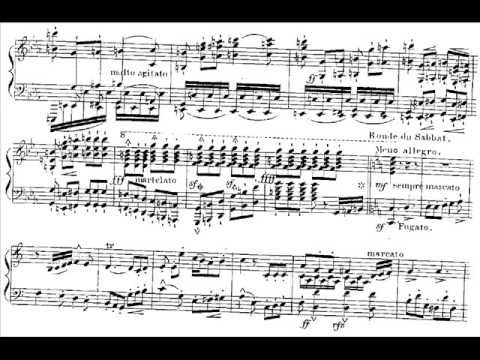
The final movement is the best known part of the symphony, thanks to its use in the Julia Roberts movie, Sleeping With The Enemy. It features a four-part structure, which Berlioz described in his own program notes from 1845 as follows:
“He sees himself at a witches’ Sabbath, in the midst of a hideous gathering of shades, sorcerers and monsters of every kind who have come together for his funeral. Strange sounds, groans, outbursts of laughter; distant shouts which seem to be answered by more shouts. The beloved melody appears once more, but has now lost its noble and shy character; it is now no more than a vulgar dance tune, trivial and grotesque: it is she who is coming to the Sabbath… Roar of delight at her arrival… She joins the diabolical orgy… The funeral knell tolls, burlesque parody of the Dies irae, the dance of the witches. The dance of the witches combined with the Dies irae.”
The Dies irae melody is one of the most-quoted in musical literature, appearing in the works of many diverse composers.
The traditional Gregorian melody has also been used as a theme or musical quotation in a number of classical compositions, notable among them:
Friday, October 9 at 8:00pm
First Baptist Church, Alexandria (2932 King Street, Alexandria, VA)
Beloved piano virtuoso and ASO favorite Thomas Pandolfi returns to play a special benefit concert this Friday. Works by Chopin, Rachmaninov, popular songs from the Great American Songbook and an original arrangement by Thomas himself. Reception immediately following with refreshments and opportunity to meet the artist.
The Piano Puzzlers book is available in the O’Connor Music Studio library if you’d like to give any a try. Piano Puzzlers as heard on American Public Media’s “Performance Today.” Includes 32 tunes with songs by Gershwin, Berlin, Arlen, Porter, Rodgers, Fats Waller, Lennon & McCartney, and others disguised in the styles of Bach, Handel, Haydn, Mozart, Beethoven, Brahms, Schubert, Schumann, Chopin, Janacek, Debussy, Ravel, Rachmaninoff, Stravinsky, Prokofiev, Bartok, and Copland.
Includes an introduction by Fred Child, host of “Performance Today” as well as background info by Bruce Adolphe. “Bruce Adolphe has taken a common musician’s party game and elevated it to high art and truly funny musical slapsticks. The Piano Puzzlers are a unique combination of extraordinary insight into the styles of many composers subtle, expert workmanship and great, great fun!”
If you’re a music geek (like me), I have a program for you. Now, let me be clear, to fully qualify as a music geek…you must have a fond appreciation for classical music (no, Poison, Quiet Riot, and Zepplin do not count as classical music). So, if you’re a “music geek” without an appreciation for classical music…well, I hate to burst your bubble…but, you’re not truly a music geek. Instead, you’re a music appreciator, but not a geek. So, if you just listen to indie music and scowl at anything on a label larger than Matador…don’t bother following the link I’ll provide…the fun will be lost on you…And, you probably won’t have a chance.
Every Wednesday night, on my way home from WNL, I turn on my local NPR station to listen to Piano Puzzlers on Performance Today. It’s absolutely incredible. A pianist/composer (Bruce Adolphe) takes a familiar folk or pop tune and sets it inside a classical masterpiece (or in the style of a particular composer). Sometimes it’s easy…sometimes it’s ridiculously difficult. There are days when I say, “got it” on the first pass. Then there are days when I say, “what the heck?” And, more often than not, I’m able to get either the popular/folk tune or the composer.
This is sad to admit, but there are nights when I’ll slow down on the drive home or sit in the car in the driveway to finish an episode. In fact, I get a little worked up if someone stops me after WNL…as I might miss the beginning of Piano Puzzlers (it usually hits around 8:20pm on our local station).
Take a listen to some of the archives and see if you can figure it out! It’s really cool…but probably only appreciated by music geeks (the kind of people that listen to NPR for their musical programs and not just the snipets of cool indie rock between segments on All Things Considered…which is a great show too).
Imagine being in a subway station memorizing the number (and perhaps names) of stops to your destination — an opera house let’s say. After you passed through the sliding train doors and entered the portal of the opera house (a couple of doors really), most likely the brain estimated each time that the usefulness, shelf life, of the information has expired, been proven correct each time and slowly diminished its recall ability. It is apparent that a narrative is easier to remember than a shopping list for the untrained memory.
Master memory is cultivated by mnemonic training — the cultivation of a multi-layered and often emotionally connected retrieval structure. Soloists are capable of remembering a tremendous amount of information based on several, mostly inexplicable and un-researched, mnemonic applications. Concert pianists, for example, can perform a 45 minute piece with 30,000 individual notes, that have to be performed in an absolutely particular order, with rhythmical and dynamic variability, passionately creating an emotional and formal narrative, from memory, live on stage.
“As with all things of value, cultivation and constant practice is key.”
And in a piece such as “Rach 3,” they also have to coordinate with a large body of musicians, also from memory. The research on the doorway effect is quite insightful and relevant for the career musician (concert pianists, for example) and the methodical pedagogue, and can be epitomized as such: The stage and the practice room must become the same room.
As with all things of value, cultivation and constant practice is key. In order to keep all that has been achieved behind the practice room door, one should attempt to create a comfortable and familiar environment in the practice room, gain authority and mastery of the music and the instrument and return to the same enjoyable and intimate environment on the stage. Imagine the door out of the practice room is the door onto the stage Matrix style. The concert performance is the tip of an iceberg — always keep that in mind and in sight.


 . 1866 ~ Ferruccio Busoni, Italian pianist and composer

 MaryO'Studio