. 1818 ~ Henry Charles Litolff, piano virtuoso, composer of Romantic music and music publisher
. 1883 ~ Herbert “Eubie” Blake, American jazz pianist, vaudevillian, songwriter and composer
More information about Blake
. 1920 ~ Oscar Brand, Folk singer, composer, music director of NBC-TV Sunday, host of Let’s Sing Out
. 1921 ~ Wilma Lee Cooper (Leary), Country singer with husband, Stoney and the group, Clinch Mountain Clan with her daughter, Carol Lee
. 1931 ~ The American opera, “Peter Ibbetson”, by Deems Taylor premiered at the Metropolitan Opera House in New York City.
. 1941 ~ The Tommy Dorsey Orchestra and Frank Sinatra teamed to record Everything Happens to Me for Victor Records in New York City.
. 1948 ~ Jimmy Greenspoon, Organist with Three Dog Night
. 1949 ~ Alan Lancaster, Bass with Status Quo
. 1959 ~ Brian Travers, Saxophone with UB40
. 1962 ~ (Troyal) Garth Brooks, American Grammy Award-winning singer: In Another’s Eyes (1998 with Trisha Yearwood), Friends in Low Places and The Thunder Rolls. His LP Ropin’ the Wind was the first LP in history to debut at #1 on Billboard’s pop and country charts, The Chase, In Pieces, Fresh Horses, Sevens, Double Live has sold over 80 million albums — second only to The Beatles.
. 1962 ~ David Bryan, Keyboards with Bon Jovi
. 1964 ~ 3,000+ fans crowded the JFK airport in New York to receive the four stars of the music sensation, The Beatles. One word summarizes the reaction to The Beatles on their first US tour: hysteria.
. 1969 ~ Tom Jones, ‘The Prince of Wales’, premiered on ABC-TV after the network acquired the rights to the singing sensation’s popular United Kingdom show. The network paid a British production company an estimated $20 million for those rights. And they cried in one of Tom’s hankies all the way to the bank.
. 1974 ~ Barry White’s Love Unlimited Orchestra received a gold record for the disco hit Love’s Theme.
. 1985 ~ New York, New York became the official anthem of the Big Apple. The announcement was made by then New York mayor, Ed “How’m I Doin’?” Koch. Frank Sinatra fans rejoiced at the honor.
. 2001 ~ Dale Evans died at the age of 88. She was an actress-singer who became “Queen of the West” by starring with husband Roy Rogers in 27 cowboy films and writing their theme song, Happy Trails.
. 2002 ~ Bert Conway, an actor and director whose 60-year career included theater, movies and television, died of heart failure. He was 87. The son of vaudeville performers, Conway was born in Orange, N.J. He had a walk- on part in the original 1937 Group Theater staging of Clifford Odets’ “Golden Boy” and later had the lead as a reform school youth in Lee Strasberg’s production of “Dance Night.” After serving in the Army in World War II, Conway went to Hollywood. He began directing plays in 1947. His work included the first interracial production of “Golden Boy” for the Negro Art Theater in Los Angeles. In 1950, he returned to New York to act in and direct plays. His work included an off-Broadway revival of “Deep Are the Roots” and appearances with Joseph Papp’s New York Shakespeare Festival. He also appeared in several road company productions, had small roles in the movies “The Three Musketeers,” “Little Big Man” and “The Arrangement,” and on TV’s “St. Elsewhere.”
. 1987 ~ The show-biz world was saddened when Liberace died at his Palm Springs, CA estate. He was 67. Lee, as he was known, was the master of Las Vegas. Hundreds of thousands flock to his museum there (operated by his brother, George) to see Liberace’s garish suits, trademark candelabra, and learn of the myths behind this hugely successful star of television, stage and concerts the world over.
More information about Liberace
. 2001 ~ James Louis “J.J.” Johnson, an influential jazz trombonist who later forged a career arranging and recording scores for motion pictures and television, died at the age of 77. The Indianapolis native, who began playing piano at age 11, was a perennial winner of “Down Beat” magazine’s reader’s poll as best trombonist. While he was praised by jazz aficionados, Johnson also made his mark in popular culture, writing and arranging music for such television shows as “Starsky and Hutch”, “Mayberry, R.F.D.” and “That Girl”. His film music credits included “Cleopatra Jones” and “Shaft.” During his long career, he performed with such jazz greats as Count Basie and Dizzy Gillespie. While touring with jazz bands during the heyday of those ensembles, he played with the Clarence Love and Snookum Russell bands. He got his first big break with the Benny Carter band in 1942.
. 1809 ~ (Jacob Ludwig) Felix Bartholdy Mendelssohn, German composer
More information about Mendelssohn
. 1900 ~ Mabel Mercer, British-born American cabaret singer
. 1904 ~ Luigi Dallapiccola, Italian composer
More information about Dallapiccola
. 1911 ~ Jehan Alain, French organist and composer
. 1928 ~ Frankie Vaughn (Abelson), Singer
. 1929 ~ Russell Arms, Singer
. 1940 ~ Angelo D’Aleo, Singer with Dion and The Belmonts
. 1941 ~ Jimmy Dorsey and his orchestra recorded the classic, Amapola, on Decca Records. Helen O’Connell and Bob Eberly joined in a vocal duet on this very famous and popular song of the Big Band era.
. 1943 ~ Eric Haydock, Bass with The Hollies
. 1947 ~ Melanie (Safka), Singer
. 1947 ~ Dave Davies, Singer, guitarist with The Kinks
. 1950 ~ Ed, Gene, Joe and Vic, The Ames Brothers, reached the #1 spot on the pop music charts for the first time, as Rag Mop became the most favorite song in the U.S. The brothers enjoyed many successes with their recording efforts.
. 1959 ~ 22-year-old Buddy Holly, 28-year-old J.P. Richardson (The Big Bopper)and 17-year-old Ritchie Valens died in an airplane crash near Mason City, Iowa. February 3rd has been remembered as ‘The Day the Music Died’ since DonMcLeanmade the line popular in his 1972 hit, “American Pie”. Buddy Holly, born Charles Hardin Holly in Lubbock, Texas, recorded That’ll Bethe Day, Peggy Sue, Oh, Boy,Maybe Baby, and others, including It Doesn’tMatter Anymore (recorded just before his death, a smash in the U.K., non top-10 in the U.S.). Buddy was inducted into the Rock and Roll Hall of Fame in 1986. A convincing portrait of the singer was portrayed by Gary Busey in The Buddy Holly Story, a made for TV movie. J.P. (Jiles Perry) Richardson was from Sabine Pass, TX. He held the record for longest, continuous broadcasting as a DJ at KTRM Radio in Beaumont, TX in
. 1956. He was on the air for 122 hours and eight minutes. In addition to his smash hit, Chantilly Lace, Richardson also penned Running Bear (a hit for Johnny Preston) plus White Lightning (a hit for country star, George Jones). Richard Valenzuela lived in Pacoima, CA (near LA) and had a role in the 1959 film, Go Johnny Go. Ritchie Valens’ two big hits were Donna and La Bamba … the last, the title of a 1987 film depiction of his life. La Bamba also represented the first fusion of Latin music and American rock. Of the three young stars who died in that plane crash, the loss of Buddy Holly reverberated the loudest over the years. But, fans of 1950s rock ‘n’ roll will agree, all three have been sorely missed.
. 1959 ~ Lol (Laurence) Tolhurst, Drummer, keyboard with The Cure
. 1964 ~ The British group, The Beatles, received its first gold record award for the single, I Want To Hold Your Hand. The group also won a gold LP award for “Meet The Beatles”. The album had been released in the United States only 14 days earlier.
. 1971 ~ Lynn Anderson received a gold record for the single, Rose Garden. The Grand Forks, ND country singer was raised in Sacramento, CA. In addition to being a singer, she was an accomplished equestrian and California Horse Show Queen in 1966.
. 2002 ~ Remo Palmier, a self-trained guitarist who was a fixture in the New York jazz scene in the 1940s, died at the age of 78, and had been suffering from leukemia and lymphoma, his wife said. Over the course of his career, Palmier played with jazz legends Charlie Parker, Billie Holiday and Dizzy Gillespie, among others. Born Remo Palmieri in the Bronx, Palmier achieved his greatest fame performing with broadcaster Arthur Godfrey on CBS, and taught Godfrey how to play the ukulele. After Godfrey retired, Palmier released his own albums, “Windflower and “Remo Palmier”. 1893 ~ Bernard Rogers, American composer
. 1912 ~ Erich Leinsdorf, Austrian-born American conductor
. 1937 ~ Glen Gray and his Casa Loma Orchestra recorded A Study in Brown, on Decca Records.
. 1941 ~ John Steel, Singer, drummer with The Animals
. 1944 ~ Florence LaRue (Gordon), Singer with The Fifth Dimension
. 1987 ~ The show-biz world was saddened when Liberace died at his Palm Springs, CA estate. He was 67. Lee, as he was known, was the master of Las Vegas. Hundreds of thousands flock to his museum there (operated by his brother, George) to see Liberace’s garish suits, trademark candelabra, and learn of the myths behind this hugely successful star of television, stage and concerts the world over.
More information about Liberace
. 2001 ~ James Louis “J.J.” Johnson, an influential jazz trombonist who later forged a career arranging and recording scores for motion pictures and television, died at the age of 77. The Indianapolis native, who began playing piano at age 11, was a perennial winner of “Down Beat” magazine’s reader’s poll as best trombonist. While he was praised by jazz aficionados, Johnson also made his mark in popular culture, writing and arranging music for such television shows as “Starsky and Hutch”, “Mayberry, R.F.D.” and “That Girl”. His film music credits included “Cleopatra Jones” and “Shaft.” During his long career, he performed with such jazz greats as Count Basie and Dizzy Gillespie. While touring with jazz bands during the heyday of those ensembles, he played with the Clarence Love and Snookum Russell bands. He got his first big break with the Benny Carter band in 1942.
. 2002 ~ Blues and jazz pianist Abie “Boogaloo” Ames died at the age of 83. Ames was born on Big Egypt Plantation in Cruger, Miss., on May 23, 1918. He began playing piano at the age of 5 and his style earned him the nickname “Boogaloo” in the 1940’s. Ames moved to Detroit as a teen-ager and started a band, touring Europe with Louis Armstrong in 1936. Ames worked at Motown Studio and befriended other great musicians like Nat King Cole and Erroll Garner. In 1980, Ames moved to Greenville, where he became a regular performer at local clubs and festivals. Cassandra Wilson’s forthcoming Blue Note CD tentatively titled “Belly of the Sun” is set to include Darkness in the Delta, a song written by Ames for the CD. Ames was named the 2001 winner of the Artist’s Achievement Award of the Governor’s Awards for Excellence in the Arts in the state of Mississippi. With his protege and 1990s musical partner Eden Brent, Ames performed at the Kennedy Center for Performing Arts in Washington, D.C., in 2000. Ames’ last public performance was in October 2001 at the E.E. Bass Cultural Center in Greenville with another former student, Mulgrew Miller.
. 2002 ~ David Stetler, a big band swing drummer who played with Benny Goodman and Spike Jones , died of pneumonia. He was 79. A Seattle native, Stetler was discovered in high school by Lunceford. With a style close to that of Gene Krupa and Jo Jones, Stetler toured the country in the 1940s but returned to Seattle after his first son was born. He backed up national acts in local performances, including many during the world’s fair in 1962.
. 2003 ~ Charlie Biddle, a leader of Montreal’s jazz scene in the 1950s and ’60s who played bass with Thelonious Monk and Charlie Parker, died after a battle with cancer. He was 76. Biddle was a native of Philadelphia who moved to Canada in 1948. Over the next five decades, the World War II veteran and former car salesman became synonymous with jazz in Montreal. Biddle opened his own club, Uncle Charlie’s Jazz Joint, in suburban Ste- Therese in 1958. He later performed in such legendary Montreal nightspots as The Black Bottom and the Penthouse, where he worked with the likes of Oscar Peterson, Art Tatum, Charlie Parker and Lionel Hampton. When there were no jobs in Montreal, Biddle played smaller Quebec cities with a group called Three Jacks and a Jill. Until recently, Biddle played four nights a week at Biddle’s Jazz and Ribs, a Montreal landmark for nearly 25 years. Coincidentally, the club closed Tuesday for planned renovations, which included erecting a wall of fame to honor Biddle and others who have played at the club. In 1979, he organized the three-day festival that some say paved the way for the renowned Montreal International Jazz Festival. News Item about Charlie Biddle
. 2003 ~ Jerome Hines, a bass vocalist who performed regularly at the Metropolitan Opera during a career that spanned more than six decades, died. He was 81. Hines spent 41 years performing at the Met, more than any other principal singer in its history. He was known for his timbral richness, as well as the research he conducted into the historical and psychological background of the roles he portrayed. During his career at the Met, he portrayed 45 characters in 39 works, including title roles in Mussorgsky’s “Boris Godunov” and Mozart’s “Don Giovanni,” and Colline in Puccini’s “La Boheme.” He gave a total of 868 performances at the Met, retiring in 1987. He went on to perform with regional opera companies and at benefits. Hines, who became a born-again Christian in the 1950s, composed his own opera, “I Am the Way,” about the life of Jesus. He sang the title role at the Met in 1968 and 93 times around the world.
. 2003 ~ Saxophonist Cornelius Bumpus, a former member of the Doobie Brothers who had performed with Steely Dan since 1993, died en route to a series of performances in California. He was 58. Bumpus began his career at age 10, playing alto saxophone in the school band in Santa Cruz, Calif. In 1966, he spent six months performing with BobbyFreeman, and joined Moby Grape in 1977, writing one tune for the “Live Grape” album. Bumpus also recorded two solo albums and toured with his own band. Since performing with The Doobie Brothers in the early 1980s, Bumpus played with a number of bands, most recently with Steely Dan, which won the “Album of the Year” Grammy for its 2000 “Two Against Nature” release. His relations with his former Doobies bandmates turned contentious in the late 1990s, when they sued him and several other musicians over their use of the Doobies name. A federal judge in 1999 ruled against Bumpus and the other musicians, ordering them not to use the name.
. 1875 ~ Fritz Kreisler, Austrian-born American violinist and virtuoso/composer Some of his best known works are Caprice Viennois, Tambourin Chinois, Liebesfreud and La Gitana
. 1901 ~ Jascha Heifetz, Russian-born American violinist
Read quotes by and about Heifetz
More information about Heifetz
. 1911 ~ Jussi Björling, Swedish tenor
. 1912 ~ Burton Lane (Levy), Composer of How Are Things in Glocca Morra, That OldDevil Moon, Look to the Rainbow, How About You, I Hear Music, Come Back toMe,On a Clear Day You Can See Forever, How Could You Believe Me?; His Broadway musicals were Finian’s Rainbow (collaboration with Yip Harburg), On a Clear Day You Can See Forever (collaboration with Alan Jay Lerner). He contributed songs to over 30 films: Babes onBroadway, Royal Wedding, Ship Ahoy, St. Louis Blues and credited with discovering Judy Garland
. 1937 ~ Tom Smothers, Entertainer, The Smothers Brothers Comedy Hour, The Smothers Brothers Show, The Steve Allen Show, Dick’s Brother
. 1937 ~ Guy Lombardo and his orchestra recorded one of Guy’s most famous tunes. Boo Hoo was waxed on Victor Records and became one of the group’s all-time great hits.
. 1942 ~ Graham Nash, Singer with Crosby, Stills, Nash and Young
. 1947 ~ Peter Lucia, Drummer with Tommy James and The Shondells
. 1949 ~ Ross Valory, Bass with Journey
. 1959 ~ The Coasters tune, Charlie Brown, was released. The tune went to #2 and stayed there for three weeks, but didn’t make it to the top spot of the charts. A catchy song (“Fee fee fi fi fo fo fum. I smell smoke in the auditorium…”), it was on the charts for a total of 12 weeks. The song at number one, preventing Charlie Brown from reaching the top, was Venus, by Frankie Avalon.
. 2001 ~ French pianist Nicole Henriot, who entered the Paris Conservatory at age 7 and went on to perform around the globe with conductor Charles Munch, died at the age of 75. Emerging on the world music scene after World War II, Henriot built her reputation on interpretations of works from Liszt to Prokofiev, and especially French composers such as Ravel, Fauré and Milhaud. She was most famous for her performances with Munch, music director of the BostonSymphony from 1949 to 1962. Munch, who died in 1968, was the uncle of Henriot’s husband. Born in 1925, Henriot won the Paris Conservatory’s first prize at age 13. During the war, Henriot gave aid to her brother, a member of the French Resistance. When Gestapo agents searched her home in 1944, she managed to destroy her brother’s secret documents but was badly beaten. After the war, Henriot became the first French pianist to appear in Britain and began an international tour that took her from Scandinavia to Egypt. She made her American debut in 1948 as a soloist with the New York Philharmonic under Munch’s direction. When Munch formed the Orchestra of Paris in 1967, Henriot was one of the fledgling orchestra’s first soloists. In the 1970s and 1980s, Henriot devoted herself to teaching, and worked at the Conservatory of Liege, Belgium, and at the Walloon Conservatory of Brussels.
. 2001 ~ Victor Norman, who founded the Eastern Connecticut Symphony Orchestra and conducted the group for three decades, died at the age of 95. Colleagues said Norman was a visionary who needed to be as skilled in politics as he was in music to keep the symphony together. “He had this idea that a symphony orchestra could be created around here, when really it had been tried several times before, never with any kind of significant success,” said Charles Frink, a New London composer who studied with Norman. Norman founded the New London Civic Orchestra in 1946. It merged with the Willimantic Orchestra in 1952 to become the Eastern Connecticut Symphony Orchestra. He stepped down from the podium in 1980. In his retirement, Norman composed music. Two of his orchestral pieces were performed by the New Britain Symphony Orchestra and the Westminster Community Orchestra in Princeton, N.J. His memoirs, “Victor Norman: A Life in Music, a Lifetime of Learning,” were published in 1999.
. 2015 ~ French piano virtuoso Aldo Ciccolini died at age 89. Born on August 15, 1925, into a musical family in Naples, Aldo Ciccolini was a child prodigy, beginning composition classes in the city’s conservatory at age nine.
Franz Peter Schubert lived between 1797 and 1828. He is considered to be a romantic composer. He was an Austrian composer who was one of the greatest creators of melody and foremost writer of ‘lieder’ (German songs).
Although he only lived for 31 years, Schubert composed more than 600 songs, 22 piano sonatas and many short piano pieces. This melodic output has never been equaled either in quantity of quality. He was one of the first musicians to earn a living from the sale of his music.
Schubert’s Ave Maria was featured in the Walt Disney movie Fantasia.
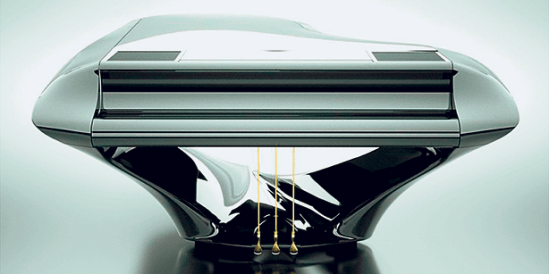
A revolutionary new piano created in Budapest by internationally acclaimed pianist Gergely Bogányi and his design team was unveiled at a press event on Jan. 20 at the Budapest Music Center and at a concert on Jan. 21 at Budapest’s historic Franz Liszt Academy.
At the press event, Bogányi performed classical selections by Bach and Debussy to show the piano’s power and lyrical capabilities; the renowned Grammy-nominated jazz pianist Gerald Clayton improvised limpid and soulful variations on Cole Porter’s “You’d Be So Nice to Come Home To,” which showed the new instrument’s vast kaleidoscope of colors and the satisfyingly muscular bass notes.
Does the world need a new piano?
Most emphatically yes, Bogányi says. “The piano was invented 300 years ago,” Bogányi told Today’s Zaman. “Although there have been modifications, there have been no major developments in piano construction in over 100 years. So I spoke to many of my colleagues about the kinds of [mechanical and physical] problems and limitations we all have to deal with, and all agreed that we needed solutions.”
What better way to get things started than with a party?
At Wolfie, that means the first worldwide event in honor of Mozart’s birthday – taking place this Tuesday, January 27th! Every musician – concert pianist or 2nd-grader – playing a score on the Wolfie app on January 27th will automatically appear on an interactive world map at www.wolfiepiano.com.
Share this special event with colleagues and inspire your students by enabling them to take part in a worldwide event that will connect them to piano players around the world! It all starts by joining the event, here.
Finally, we’d love to hear from you. You, Mozart’s ambassadors, are keeping his legacy alive and instilling the gift of music appreciation into young peoples’ lives every day.
See you on Tuesday – on the map!
~~~~~~~~ Wolfgang Amadeus Theophilus Mozart lived between 1756 and 1791. He is considered to be a classical composer. Mozart, born in Salzburg, Austria, began composing before most children go to kindergarten. By the time he was six he had played the piano and violin in public.
A Wunderkind, a prodigy of the first rank before the age of five, Mozart astounded the musical world with compositions of unsurpassed brilliance. His father Leopold had recognized his talent at the age of three and immediately set out to teach him to play the harpsichord, violin, and organ. Mozart and his sister made their debut in Munich when he was just six and traveled about Europe together, performing at courts and before royalty, always with success. While still a little child Mozart was inventing symphonies, sonatas, and his first opera. Legends abound about how Mozart could hear an entire work in his head and write everything down without making even one change.
As a child performer he was often treated as a freak. People would cover his hands as he played the piano, make him compose tunes on the spot and perform all sorts of other musical tricks.
In 1787 Mozart became court composer to Joseph II. He played for royalty, received commissions from aristocrats and in his short lifetime composed nearly a thousand masterpieces, including symphonies, operas, serenades, sonatas, concertos, masses, vocal works, and church works.
Mozart was a prolific composer writing masterpieces using every form of music, including his operas “The Marriage of Figaro” (based on a play by Pierre Beaumarchais), “Don Giovanni”, “Cosi fan tutte” and “The Magic Flute”. His mastery of instrumental and vocal forms, from symphony to concerto and opera, was unrivalled in his own time and perhaps in any other.
Composing the Requiem Mass commissioned for Count Walsegg, he felt he was writing his own requiem and he died before it was finished.
Wolfgang Amadeus Mozart, composer, died in Vienna Austria at the age of 35, penniless, on December 5th, 1791, of malignant typhus. Mozart, the precocious child prodigy, composed several pieces that are deemed central to the classical era. Though he ranked as one of the greatest musical genius, he did not live a life of affluence as none of his compositions earned him a decent commission but the world is forever enriched by such works as Eine Kleine Nachtmusik, the Symphonies No. 38 through 41 and the Coronation Mass.
When you listen to music, multiple areas of your brain become engaged and active. But when you actually play an instrument, that activity becomes more like a full-body brain workout.
What’s going on? Anita Collins explains the fireworks that go off in musicians’ brains when they play, and examines some of the long-term positive effects of this mental workout.
Practice slowly in the beginning (metronome on 60 or less). If you played it easily, and precisely with the metronome, move the tempo up one notch. Continue to practice in this way until you reach your goal speed.
Practice with various dynamics. Practice soft, loud and everything in between.
As you practice, vary the touch. Play staccato, play legato, and play two-note slurs.
Practice in different rhythms.
Try to practice Hanon Exercises in other keys, starting with the white keys (C, D, E, F, G, A, and B) and then going to the black keys (D-flat, E-flat, G-flat,A-flat, and B-flat).
And as Charles-Louis Hanon recommends it, practice his exercises by lifting the fingers high and with precision, playing each note very distinctly.


 Franz Peter Schubert lived between 1797 and 1828. He is considered to be a romantic composer. He was an Austrian composer who was one of the greatest creators of melody and foremost writer of ‘lieder’ (German songs).



 Wolfgang Amadeus Theophilus Mozart lived between 1756 and 1791. He is considered to be a classical composer. Mozart, born in Salzburg, Austria, began composing before most children go to kindergarten. By the time he was six he had played the piano and violin in public.


 MaryO'Studio