Is This Beethoven’s Last Work for Piano?

Arts-SMH


IS THIS Beethoven’s last work for piano? The Sydney musicologist Peter McCallum believes it is.

The 32 bars of handwritten musical notation caught his eye when he was studying the composer’s last sketchbook in Berlin a couple of years ago. But it has required some detective work to determine what the great composer – whose handwriting was famously chaotic – intended.

“I didn’t know it was a piano piece until I actually sat down and tried to write it out,” says McCallum. “Beethoven almost never used clefs or key signatures so you have to think about it … but once you do crack the code it’s clear.”

McCallum, who is associate professor in musicology at the University of Sydney and the Herald’s classical music critic, believes the piece was written about October 1826, just a few months before the composer died in March 1827.

“Beethoven always jotted down ideas, it was almost compulsive,” he says. “The amount of paper he covered in the last three years of his life was quite amazing. There are a lot of little ideas that crop up that don’t go anywhere. But this was more than a little idea. It actually has a right hand and a left hand and it’s got phrasing marks and staccato marks in a few places. So it’s quite clear it was a complete piece.”

Now the pianist Stephanie McCallum has used her husband’s transcription to make the first recording of the piece. Bagatelle in F minor is just 54 seconds long and is the final piece on her CD Fur Elise, Bagatelles For Piano By Ludwig Van Beethoven.

Although most of Beethoven’s sketchbooks have been studied in detail, the final sketchbook – housed in Berlin’s State Library – has attracted little attention.

Although his later works are often seen as spiritual, the fragment has a different quality, says Peter McCallum. “It’s slightly melancholy. But it’s a pleasant little thing and it’s quite easy to play. What I like about it is that a child could enjoy playing it. We could give Fur Elise a rest for a while.”

From: http://www.smh.com.au/articles/2008/09/04/1220121428067.html

Technology is key to piano

Piano-Maestro-End-Game


Piano teacher Leila Viss isn’t only about Bach, Beethoveen and Chopin. For her, it’s also about easing her students into using the iPad application “Piano Maestro.”

Viss, a piano performance and pedagogy graduate of University of Denver, first set up a studio in her home after she graduated in 1990. Ever since, she’s blossomed into a teacher who incorporates a different kind of approach in her lessons.

It all began with her mentor, Elaine Emeigh, who’s a piano teacher in Littleton.

“I wanted to continue her legacy, so I started having labs during my private lessons,” Viss said.

The Centennial resident’s students are now urged to stay for an extra 30 minutes after each lesson to spend time doing something on the computer — whether it be reviewing concepts, studying piano history or reinforcing lessons, she said.

“When I graduated, the Internet was just coming around. Now I have my own website, blog, and my whole idea of how I communicate has completely changed. It was a hassle over the years using technology; you were booting up the computer, putting in a CD-ROM, and then when the iPad came along, it made everything so much easier,” Viss said.

Her book, “The iPad Piano Studios, Keys to Unlocking the Power of Apps,” came out in 2013 and reflects her appetite for using apps to practice note names, inspire creativity and compose with her students. Viss considers herself to be a writer and also contributes to the Clavier Companion, a nationally known premiere piano magazine.

The owners of private applications company, JoyTunes, contacted Viss after reading her blog a year ago.

With more than 4 million users, the company’s apps are a hit, Viss said.

“Joytunes is changing the face of music education by transforming the way people learn music, enabling anyone to play a musical instrument,” JoyTunes head of brand Nadia Hitman said. “By combining music methodologies with the latest in gaming features and instant feedback, the learning process is significantly shortened for millions of children, adults and teachers already using the apps.”

Hitman said all of their applications recently became free for teachers and their students, and many of the apps are still available for purchase to anyone.

“Speaking on their (JoyTunes’) behalf, and mobile technology — Piano Maestro is unbelievably amazing,” Viss said. “You set it up on the piano (doesn’t have to be digital) and choose from like 2,000 songs in the library. You press play and the student follows along with the piano. After that, you get evaluated and receive immediate feedback. You can get up to three gold stars.

via Technology is key to piano | Centennialcitizen.net.

Tartarov plays in the style of Mozart

Antonei Sergejvitch Tartarov  was a fictional Russian pianist whose real name was Jean-Jacques Hauser.

He had an exceptional gift for improvisation.

On April 16, 1968 Hauser fooled an audience of 2,000 people in Zurich into thinking not only that he was a little-known Russian virtuoso (Tartarov), but that much of the improvised material in his program was composed by Beethoven, Mozart, Prokofiev, and Liszt.

Imagine when it was announced that the music the audience had just applauded as works of genius had actually been improvised on the spot by a home-grown Swiss pianist.


Studying for Exams?

study-music


Listening to music can help you while you’re studying for your exams.

This is  3.5 Hours of the Best Classical Music – Mozart, Beethoven, Bach, Chopin – Beautiful Piano, Violin & Orchestral Masterpieces by the greatest composers of all time.


May 22 ~ Today in Music History

today

• 1722 ~ Johannes Schmidlin, Composer

• 1759 ~ Gervais-François Couperin, Composer

• 1780 ~ Jan Emmanuel Dulezalek, Composer

• 1783 ~ Thomas Forbes Walmisley, Composer

• 1813 ~ (Wilhelm) Richard Wagner, German composer
Read quotes by and about Wagner
More information about Wagner

• 1820 ~ Alexander Ernst Fesca, Composer

• 1850 ~ Johann Schrammel, Composer

• 1852 ~ Emile Sauret, Composer

• 1865 ~ Enrique Morera, Composer

• 1879 ~ Eastwood Lane, Composer

• 1879 ~ Jean Emile Paul Cras, Composer

• 1884 ~ Alceo Toni, Composer

• 1885 ~ Julio Fonseca, Composer

• 1900 ~ Edwin S. Votey of Detroit, MI patented his pianola, a pneumatic piano player. The device could be attached to any piano. Batteries not included.

• 1914 ~ Sun Ra (Herman Blount), American jazz composer and keyboard player who led a free jazz big band known for its innovative instrumentation and the theatricality of its performances. He passed away in 1993.

• 1916 ~ Gordon Binkerd, Composer

• 1924 ~ Charles Aznavour, French chanteur and composer

• 1924 ~ Claude Andre Francois Ballif, French composer

• 1926 ~ Elaine Leighton, Drummer, played with Billie Holiday

• 1928 ~ Jackie (Jacqueline) Cain, Singer

• 1930 ~ Kenny Ball, Musician, trumpeter, bandleader

• 1933 ~ John Browning, American pianist
More information about Browning

• 1934 ~ Peter Nero (Nierow), Pianist

• 1950 ~ Bernie Taupin, Elton John’s lyricist

• 1966 ~ Iva Davies (1955) Guitarist, singer with Icehouse

• 1958 ~ Wedding vows were taken by rock ’n’ roll star, Jerry Lee Lewis and his thirteen- year-old cousin, Myra.

• 1965 ~ The Beatles got their eighth consecutive number one hit as Ticket to Ride rode to the top of the singles list. The song topped the charts for one week and became their eighth consecutive number one hit.

• 1966 ~ Bruce Springsteen recorded his very first song at the age of 16, along with his band, The Castilles. It was titled, That’s What You’ll Get. The song was never released.

• 2003 ~ The final manuscript of Beethoven’s Ninth Symphony, which was annotated by the composer, sold at auction for $3.47 million.

Liszt is dead, long live the piano recital

On Monday, Google’s homepage ran a picture to celebrate the 360th birthday of Bartolomeo Cristofori, inventor of the piano and keeper of instruments for the Medicis in Florence. The instrument Cristofori invented was originally called a “harpsichord with soft and loud” even though the distinction between the two is large (the harpsichord produces sound by plucking strings, the piano by striking them with a hammer). Only three of the newfangled instruments he made – all of them dating from the 1720s – survive.

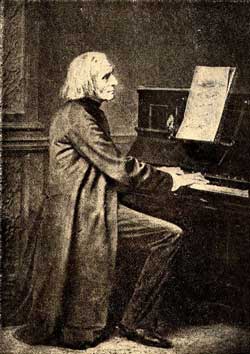
liszt-recitalMore than a century later the piano recital was devised. It was Liszt who first decided to have the whole stage to himself, and set the fashion for dispensing with the mixture of celebrities and supporting acts that had prevailed up to that time. As he wrote about his audacity to a friend: “Le concert, c’est moi!” And he called his appearance at the Hanover Square Rooms in London in June 1840 not a concert but a recital.

The composer-pianists of the day concentrated on their own works. Liszt set a marker in this regard, too, choosing music that ranged from Bach through Beethoven and up to Chopin. He set the pattern for playing from memory, and cemented the platform layout we know today by turning the then-conventional position of the instrument on the stage through 90 degrees. He was what we would now call a sex symbol as well as a star musician, and the new arrangement allowed the audience to see his impressive profile as well as to hear the instrument more clearly. The standards he set have survived without significant alteration right up to the present.

via Liszt is dead, long live the piano recital.

May 7 ~ Today in Music History

today


•  1833 ~ Johannes Brahms, German composer
More information about Brahms

• 1840 ~ Piotr Ilyich Tchaikovsky, Russian composer
Listen to Tchaikovsky’s music
Read about Tchaikovsky
Read quotes by and about Tchaikovsky
More information about Tchaikovsky

• 1919 ~ Eva (Evita) Peron, Argentina’s spiritual leader and wife of Argentina’s President, Juan Peron; actress on stage, film and radio; subject of the Broadway musical and film Evita

• 1927 ~ Elisabeth Söderström, Swedish soprano

• 1931 ~ Teresa Brewer (Breuer), Singer

• 1941 ~ Glenn Miller and his Orchestra recorded one of the great American music standards, Chattanooga Choo Choo
More information about Chattanooga Choo Choo

• 1942 ~ Felix Weingartner, Austrian conductor and composer, died; best known for his interpretations of Wagner and Beethoven.

• 1958 ~ Pianist Van Cliburn signed an artist’s contract with RCA Victor Records.

• 1966 ~ The Mamas & The Papas made the climb to the top of the Billboard pop music chart with Monday, Monday.

• 1995 ~ Ray McKinley passed away.  He was an American jazz drummer, singer, and bandleader.

• 2002 ~ Buster Brown, a tap star and choreographer who danced on stage, in films and on television, died. He was 88. Brown was one of the last surviving members of the Copasetics, a legendary group of veteran dancers who performed together. Known for his quick rhythms and charm, Brown was a mentor and teacher for a younger generation of dancers. Brown, who was born James Brown in Baltimore, began his dancing career with a trio called the Three Aces and Speed Kings. He eventually began a solo career, appearing in the Hollywood musical “Something to Shout About” in 1943. Brown toured with the bands of Count Basie, Dizzy Gillespie and Duke Ellington, and was a featured dancer in Ellington’s concerts in the 1960s. He danced in the films “The Cotton Club” and “Tap” and on two public television specials. He also performed with the original casts of the Broadway musicals “Bubbling Brown Sugar” and “Black and Blue.” Brown toured South America with the Cab Calloway Orchestra and was commissioned by the State Department to perform in several African counties. He also taught master classes throughout Europe. Beginning in 1997, Brown was master of ceremonies at a weekly Sunday tap jam at the Manhattan club Swing 46, where young and old dancers stopped by to perform. He recently received an honorary doctorate from Oklahoma City University.

April 27 ~ Today in Music History

today

. 1867 ~ Charles Gounod’s opera “Romeo et Juliette” was first performed, in Paris.

. 1894 ~ Nicholas Slonimsky, Russian-born American musicologist, musical lexicographer and composer

. 1871 ~ Sigismond Thalberg died.  He was a composer and one of the most famous virtuoso pianists of the 19th century.

. 1931 ~ Igor Oistrakh, Violinist

. 1932 ~ Maxine (Ella) Brown, Singer

. 1933 ~ Calvin Newborn, Jazz/blues guitarist, brother of piano wizard Phineas Newborn Jr.

. 1938 ~ Tommy Dorsey and his orchestra recorded I Hadn’t Anyone ’til You for Victor Records. Jack Leonard was featured as vocalist.

. 1941 ~ Judith Blegan, American soprano

. 1944 ~ Cuba Gooding, Singer

. 1947 ~ Pete Ham, Musician, guitar, piano, singer

. 1948 ~ Kate Pierson, Musician, organ, singer with the B-52s

. 1959 ~ Sheena Easton, Singer

. 1959 ~ Lloyd Price’s song, Personality, was released. Price had 10 songs that made it on the nation’s pop music charts in the 1950s through early 1960s.

. 1970 ~ Mariah Carey, Singer

. 1976 ~ Maxine Nightingale received a gold record for the single, Right Back Where We Started From. Nightingale was in the productions of Hair, Jesus Christ Superstar, Godspell and Savages in the early ’70s. Right Back Where We Started From was a number two hit for two weeks in 1976.

. 1981 ~ Former Beatle Ringo Starr married Barbara Bach at the Marylebone Registry Office in London. Paul McCartney and wife Linda, George Harrison and Harry Nilsson were in attendance.

. 1999 ~ Jazz trumpet great Al Hirt died

. 2002 ~ Classical violinist Guila Bustabo died at the age of 86. Bustabo, born in Manitowoc, Wis., in 1916, toured Europe and Asia, performing under such conductors as Herbert von Karajan and Wilhelm Furtwangler. Bustabo studied at the Juilliard School in New York before moving to Paris. During her career, she recorded concertos by Beethoven and Bruch with the Concertgebouw Orchestra in Amsterdam. Bustabo was arrested in Paris after World War II, accused of being a Nazi sympathizer because she played under conductor Willem Mengelberg. Mengelberg had been affiliated with musical associations sanctioned by the Nazi Party. The accusation against Bustabo was eventually dropped.

Piano Stores, Teachers Adapt to Decline in Interest in the Instrument

SALISBURY, Md. – Mozart, Beethoven and Chopin wouldn’t be thrilled to hear that fewer people are choosing to learn to play the piano than ever before.

At B&B Music in Salisbury, people have been shopping for pianos since they opened 60 years ago. One think you won’t see on the display floor in 2015 is a grand piano.

“We used to have actual string pianos at one time,” said store manager Mike Jarrell. “The way the economy was, it wasn’t very feasible for a lot of people. They can cost up to several thousands of dollars.”

The best year for new piano sales in the United States was 1909, when more than 364,500 were sold. Now that number has plunged to between 30,000 and 40,000 each year.

Denise Crothers is on her 36th year of teaching people young and old how to play piano. She averages about 60 students per week.

“I teach for half an hour, usually for each lesson and half of I teach them in the note because I think it’s important to still know how to read. Half of it would be like the praise and worship and learning how to chord and how to play by ear,” said Crothers. “They can play what they hear on the radio. Some of them don’t even need me anymore.”

Nationally, increased interest in sports or electronics is blamed for declining interest in learning to play the piano. Denise says lessons have evolved over the years in order to keep it fresh.

“I think it’s important for teachers to be able to apply the real world into their teaching. Not maybe strictly Classical. Classical is wonderful, you know, don’t get me wrong. I absolutely love it, but I think it’s important for them to do fun songs and stuff like that,” said Crothers.

Rather than smashing old pianos on the curb, B&B Music is adapting to suit a more tech-savvy generation.

“Our more common models are the digital style models with weighted keys so it’s more like playing a real string piano. Then you start getting into more production type keyboards which are more for making your own scores and hip-hop beats and that kind of thing. It’s more of a production opposed to performance,” said Jarrell.

Despite a national downward trend in piano purchases and lessons, those in the biz can’t stress enough how important it is.

“In the music business, you’re constantly learning. It’s a never-ending thing,” said Jarrell.

“Once you commit to something, really having the work ethic to keep going and keep learning, it’s really rewarding and that’s something I think our culture lacks sometimes, you know the ‘stick-to-it-ness’,” said Crothers.

via Piano Stores, Teachers Adapt to Decline in Interest in the Instr – WBOC-TV 16, Delmarvas News Leader, FOX 21 –.

Piano Gloves!

JoyTunes Piano Gloves

JoyTunes Piano Gloves


I thought this would surely interest all piano teachers and lovers out there – JoyTunes’ just came out with new piano teaching GLOVES!

Take a look in the clip and share it to all piano lovers everywhere.

The JoyTunes gloves, still in beta version, will turn you into Mozart in the blink of an eye! Don’t know how to play piano? These gloves will take you from 1 note to Beethoven in a flash. Our gloves allow your hands to auto magically bend and move to play any song your heart desires! Check out the video for more info.

Want to get your own pair of gloves? Purchase them here: http://www.joytunes.com/gloves