Beethoven’s first published works—his Opus No.1—were three trios for piano, violin and cello and already they show a marked advance on Haydn’s trios in the comparative interdependence of the three parts. Their freedom from Haydn’s oppressive formality looks forward to the first mature trios, the pair that comprises Opus 70, displaying all sorts of harmonic twists, thematic innovations and structural idiosyncrasies, these trios make much of the piano part and contain plenty of dramatic outbursts that are typical of Beethoven’s middle period.
Even more arresting is the first of the Opus 70 trios (1808) nicknamed ”The Ghost” because of its mysterious and haunting Largo. Its sibling boasts a cheerful bombastic finale that is the most entertaining music that Beethoven composed for this combination of instruments.
The “Archduke” Trio Opus 97 (1811) was Beethoven’s last full – scale work for piano trio and is typically conclusive. The third movement is its centre of gravity, a highly moving set of variations with the cello dominating the thematic content. It opens with a hymn-like theme and progresses to a coda which magnificently sums up the movements ideas. The finale might be less powerful than that of Opus 70 No. 2, but it nevertheless has a sweeping rhythmic power. Again, it is beyond the shadow of a doubt that Beethoven defined the piano trio form that it retained throughout the 19th century by allowing the string instruments the status of genuinely equal partners in this superlative performance.
The Piano Puzzlers book is available in the O’Connor Music Studio library if you’d like to give any a try. Piano Puzzlers as heard on American Public Media’s “Performance Today.” Includes 32 tunes with songs by Gershwin, Berlin, Arlen, Porter, Rodgers, Fats Waller, Lennon & McCartney, and others disguised in the styles of Bach, Handel, Haydn, Mozart, Beethoven, Brahms, Schubert, Schumann, Chopin, Janacek, Debussy, Ravel, Rachmaninoff, Stravinsky, Prokofiev, Bartok, and Copland.
Includes an introduction by Fred Child, host of “Performance Today” as well as background info by Bruce Adolphe. “Bruce Adolphe has taken a common musician’s party game and elevated it to high art and truly funny musical slapsticks. The Piano Puzzlers are a unique combination of extraordinary insight into the styles of many composers subtle, expert workmanship and great, great fun!”
If you’re a music geek (like me), I have a program for you. Now, let me be clear, to fully qualify as a music geek…you must have a fond appreciation for classical music (no, Poison, Quiet Riot, and Zepplin do not count as classical music). So, if you’re a “music geek” without an appreciation for classical music…well, I hate to burst your bubble…but, you’re not truly a music geek. Instead, you’re a music appreciator, but not a geek. So, if you just listen to indie music and scowl at anything on a label larger than Matador…don’t bother following the link I’ll provide…the fun will be lost on you…And, you probably won’t have a chance.
Every Wednesday night, on my way home from WNL, I turn on my local NPR station to listen to Piano Puzzlers on Performance Today. It’s absolutely incredible. A pianist/composer (Bruce Adolphe) takes a familiar folk or pop tune and sets it inside a classical masterpiece (or in the style of a particular composer). Sometimes it’s easy…sometimes it’s ridiculously difficult. There are days when I say, “got it” on the first pass. Then there are days when I say, “what the heck?” And, more often than not, I’m able to get either the popular/folk tune or the composer.
This is sad to admit, but there are nights when I’ll slow down on the drive home or sit in the car in the driveway to finish an episode. In fact, I get a little worked up if someone stops me after WNL…as I might miss the beginning of Piano Puzzlers (it usually hits around 8:20pm on our local station).
Take a listen to some of the archives and see if you can figure it out! It’s really cool…but probably only appreciated by music geeks (the kind of people that listen to NPR for their musical programs and not just the snipets of cool indie rock between segments on All Things Considered…which is a great show too).
• 1944 ~ Mick Ralphs, Guitarist with Mott the Hoople
• 1947 ~ Henri G Casadesus, French alto violist (viola d’amour) and composer, died at the age of 66
• 1948 ~ Jose Vianna da Motta, Composer, died at the age of 80
• 1955 ~ Raoul Gunsbourg, Composer, died at the age of 95
• 1961 ~ Rock ’n’ roll fans were ready for a good old-fashioned summertime as Chuck Berry’s amusement park, Berryland, opened near St. Louis, MO.
• 1962 ~ Eduardo Toldra, Composer, died at the age of 67
• 1969 ~ Stevie Wonder’sMy Cherie Amour was released by Tamla Records. The song made it to number four on the pop music charts on July 26 and stayed on the nation’s radios for eleven weeks.
• 1974 ~ William DeVaughn, a soul singer, songwriter and guitarist from Washington, DC, received a gold record for his only hit, Be Thankful for What You Got.
• 1976 ~ Ear doctors didn’t have to drum up business this day. There were plenty of walk-ins as The Who put out a total of 76,000 watts of power at 120 decibels. They played the loudest concert anyone had ever heard, making it into “The Guinness Book of World Records”.
• 1977 ~ “Beatlemania” opened at Winter Garden Theater NYC for 920 performances
• 1989 ~ First presentation of rock n roll Elvis awards
• 1994 ~ Herva Nelli, Soprano, died at the age of 85
• 1997 ~ “Once Upon a Matress,” closed at Broadhurst Theater NYC after 187 performances.
• 2002 ~ Mario Lago, an influential composer, actor and political dissident, died of lung failure. He was 90. Throughout a multifaceted career, Lago wrote more than 200 popular songs and appeared in 20 films and more than 30 telenovelas, Brazil’s version of television soap operas. He was also an active member of Brazil’s Communist Party, and was imprisoned six times during Brazil’s 1964-86 military regime. One of Lago’s most successful songs, Amelia, sang the praises of a woman happy with very little from her husband. The name came to signify a submissive woman in Brazilian slang. Lago continued acting until January, 2002 when he was hospitalized for a month with emphysema.
. 1886 ~ Enrique Granados, Spanish pianist and composer, performed his debut piano concert in Barcelona.
. 1888 ~ Sol Hurok, Impresario
1890 ~ Efram Zimbalist, Russian-born American violinist and composer
More information about Zimbalist
. 1898 ~ Paul Robeson, American bass. Known for his sympathy for Russia he had his passport revoked for many years. The song Ole Man River, whose words he changed to fit his views, became his signature song.
. 1906 ~ Antal Dorati, Hungarian-born American conductor and composer. He was the first conductor to record all of Haydn’s symphonies.
. 1932 ~ Carl Perkins, early American rock ‘n’ roll figure who originally recorded Blue Suede Shoes. Inducted into the Rock and Roll Hall of Fame in 1987
. 1940 ~ Jimmy Dorsey and his orchestra, along with singer Helen O’Connell, recorded Six Lessons from Madame La Zonga for Decca Records.
. 1950 ~ Bob Hope hosted a Star-Spangled Review on NBC-TV. Hope became the highest- paid performer for a single show on TV. The Star-Spangled Review was a musical special.
. 1970 ~ Paul McCartney sought a High Court writ to wind up the Beatles business partnership, effectively ending the group’s career.
. 1977 ~ The Swedish pop group Abba made its debut at number one on the American pop charts, as Dancing Queen became the most popular record in the U.S.
. 1988 ~ Brook Benton passed away. He was an American singer and songwriter who was popular with rock and roll, rhythm and blues, and pop music audiences.
. 2001 ~ Graziella Sciutti, an Italian soprano and opera director best known for her interpretations of Mozart, died at the age of 68. Born in Turin, northern Italy, in 1932, Sciutti made her first operatic appearance at the Aix-en-Provence Festival in France in 1951. She went on to perform under Herbert von Karajan at Milan’s La Scala. She was lead soprano at a smaller theatre at La Scala called La Piccola Scala for eight years from its inception in 1955. She became a member of the Vienna State Opera in 1960 and the following year made her debut in San Francisco in one of her most celebrated roles, as Susanna in The Marriage of Figaro. She began her directing career at Covent Garden in London and at the Glyndebourne Festival in England, where she directed and performed in Poulenc’s La Voix Humaine in 1977. She then went on to direct in Canada and for the opera companies in San Francisco, Chicago, New York, Dallas and Miami, as well as in Britain, Germany and Italy. She joined London’s Royal College of Music in the mid 1980s and continued to teach there until shortly before her death.
. 1732 ~ Franz Joseph Haydn, Austrian composer
Listen to Haydn’s music
More information about Haydn
. 1872 ~ Sergei Pavlovich Diaghilev. He was a Russian art critic, patron, ballet impresario and founder of the Ballets Russes.
. 1901 ~ John Stainer died. He was an English composer and organist whose music, though not generally much performed today, was very popular during his lifetime.
. 1935 ~ Herb Alpert, American trumpeter, bandleader (Tijuana Brass), composer, record company executive: the “A” of A&M Records
. 1937 ~ Phil Harris recorded one of his best-known songs in Los Angeles, CA. That’s What I Like About the South was recorded on a 78 RPM disk. Harris would move to TV stardom and continue as a popular vocalist during the 1950s with such hit songs as The Thing.
. 1943 ~ The show, Away We Go, was renamed. The show opened at the St. James Theatre in New York City and, thanks to the talents of stars like Alfred Drake, Joan Roberts and Howard DeSilva, it became an instant hit. The show ran for 2,248 performances, until 1948. The musical, which has grossed millions of dollars on stage and as a blockbuster movie was initially produced for the sum of $75,000. It is still legendary among musical productions – especially after it was retitled Oklahoma!
. 1944 ~ Rod Allen (Rodney Bainbridge), Bass, singer with The Fortunes
. 1944 ~ Mick Ralphs, Guitarist
. 1945 ~ Al Nichol, Guitarist, keyboards with The Turtles
. 1953 ~ Sean Hopper, Keyboards with Clover and Huey Lewis and The News
. 1959 ~ Angus Young, Guitarist with AC/DC
. 1967 ~ Jimi Hendrix burned his guitar for the first time in a public performance at Finsbury Park in London.
. 1985 ~ Tootsie’s Orchid Lounge, long a favorite of country music stars, closed its doors in Nashville, TN.
. 1699 ~ Johann Adolph Hasse, German composer, singer and teacher of music. Immensely popular in his time, Hasse was best known for his prolific operatic output, though he also composed a considerable quantity of sacred music.
. 1784 ~ François-Joseph Fetis, Belgian musicologist, composer, teacher, and influential music critic.
. 1851 ~ The Playel piano factory in Paris was destroyed by fire. Playel was the favorite of Chopin in the 19th century, and it was identified with French composers known as the impressionist musicians of the early 20th century — like Ravel and Debussy.
Pleyel was founded in 1807 by Ignaz Pleyel, a composer and music publisher who studied with Franz Joseph Haydn.
. 1867 ~ Arturo Toscanini, Italian conductor and musical director. Famed for his temper in rehearsals, he was director of La Scala and the Metropolitan opera houses. He also conducted the NBC symphony orchestra. With a career spanned 68 years, he was a cellist at age 19
Read quotes by and about Toscanini
More information on Toscanini
. 1881 ~ Béla Bartók, Hungarian composer and pianist, born. His knowledge of western musical techniques allied to the inspiration he derived from Hungarian peasant songs enabled him to become a unique musical force.
More information about Bartók
. 1913 ~ The Palace Theatre opened its doors in New York City. Ed Wynn was first on the vaudeville bill. Some 20 years later, Wynn would be named as radio’s top entertainer. He later became popular on television, as well.
. 1918 ~ Claude Debussy, French composer, died. His music, described as “musical Impressionism”, explored original avenues of expression.
. 1931 ~ Hal Kemp and his orchestra recorded Whistles, with Skinnay Ennis, for Brunswick Records. Both Kemp and Ennis sang in the Dorsey Brothers Concert Orchestra, under the direction of Dr. Eugene Ormandy (later, conductor of the Philadelphia Symphony Orchestra). The pair were part of the orchestra vocal quartet that also featured Nye Mayhew and Saxey Dowell in 1928.
. 1938 ~ Hoyt Axton, Singer, musician and songwriter. Axton’s mother, Mae Boren Axton, wrote Elvis Presley’s Heartbreak Hotel
. 1940 ~ Anita Bryant, Singer
. 1942 ~ Aretha Franklin, American soul singer, known as the “Queen of Soul” and “Lady Soul”, she won 15 Grammy Awards and was the first woman inducted into Rock andRoll Hall of Fame (1987)
. 1947 ~ Elton John (Reginald Kenneth Dwight), Entertainer
More information about John
. 1948 ~ Kelly Garrett, Actress, singer
. 1949 ~ Neil Jones, Musician with Amen Corner
. 1951 ~ Maizie Williams, Singer with Boney M
. 1966 ~ Jeff Healey, Guitarist, singer, songwriter with the Jeff Healey Band, CBC radio show: My Kind of Jazz
. 1971 ~ Tom Jones went gold with his single, She’s a Lady.
. 1972 ~ The group, America, rode to the top of the pop music charts with their LP, America, and the single (included on the LP), A Horse with NoName. A Horse With No Name would be the group’s only gold record.
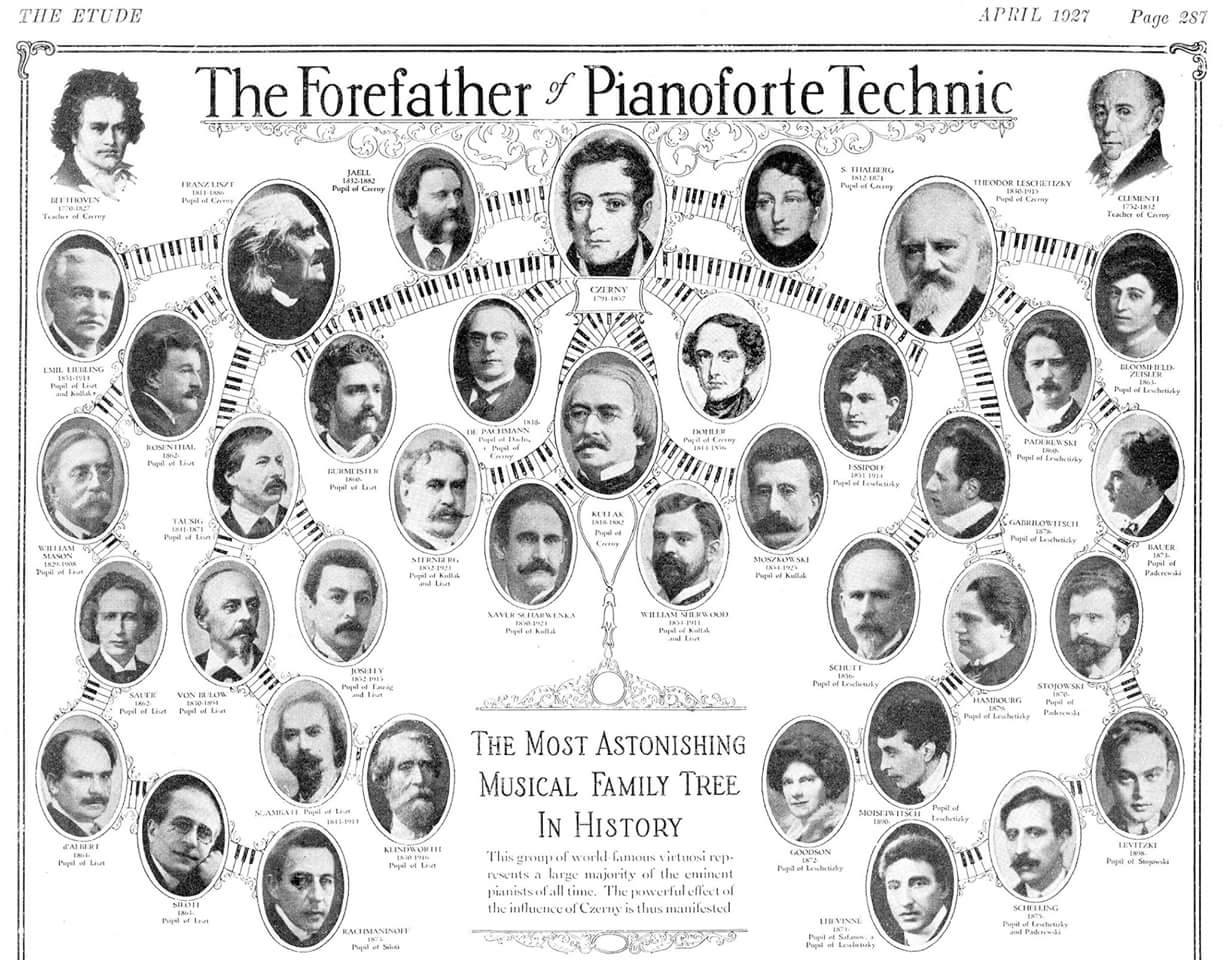
Today, in 1752, Muzio Clementi Italian pianist and composer was born.
More information about Clementi
Clementi was an Italian-born English composer, pianist, pedagogue, conductor, music publisher, editor, and piano manufacturer. Born in Rome, he spent most of his life in England.
Encouraged to study music by his father, he was sponsored as a young composer by Sir Peter Beckford who took him to England to advance his studies. Later, he toured Europe numerous times from his long-time base in London. It was on one of these occasions in 1781 that he engaged in a piano competition with Wolfgang Amadeus Mozart.
His student John Field would become a major influence on Frédéric Chopin
In 1802, Clementi and Field embarked on a European tour together. They went to Paris, Vienna and St. Petersburg.
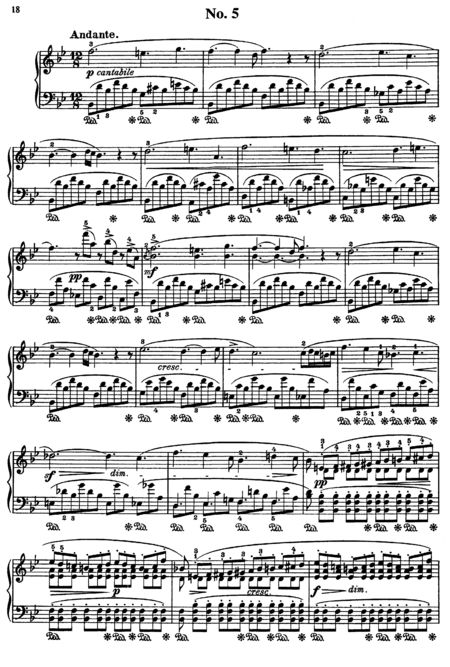
John Field adopted the French word nocturne, meaning “of the night” and became the first composer to use this term in music. He wrote a series of short studies for solo piano which had a gently romantic late-night feeling about them.
Chopin soon took up this idea and wrote 21 nocturnes.
Compare: Field’s Nocturne No. 5 in B flat major
Chopin’s Nocturne E Flat Major Op.9 No.2 played by Valentina Lisitsa
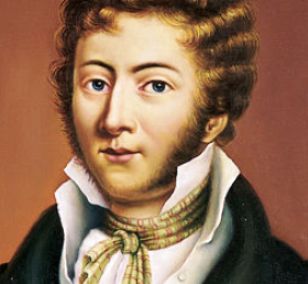
Today, in 1837, Clementi’s student John Field died. Field was an Irish pianist, composer, and teacher. He was very highly regarded by his contemporaries and his playing and compositions influenced many major composers, including Frédéric Chopin, Johannes Brahms, Robert Schumann, and Franz Liszt.
. 1926 ~ David Tudor, American pianist and composer of experimental music
. 1935 ~ Buddy Blake (Buddy Cunningham), Recording artist: recorded for Sun Records as B.B. Cunningham and Buddy Blake; record executive: Cover Record Co.,Sam Phillips’ Holiday Inn label
. 1942 ~ Harry Babbitt sang as Kay Kyser and his orchestra recorded, Who Wouldn’tLove You, on Columbia Records. The record went on to be a big hit for Kyser.
. 1947 ~ George Grantham, Drummer with Poco
. 1958 ~ The rock ‘n’ roll classic, Get a Job, by The Silhouettes, was released.
. 1958 ~ Elvis Presley got a little U.S. mail this day with greetings from Uncle Sam. The draft board in Memphis, TN ordered the King to report for duty; but allowed a 60-day deferment for him to finish the film, “King Creole”.
. 1964, The Beatles, a British rock group, released its first LP album, “Meet The Beatles“, in the US record stores. The album turned out to be a super hit and reached #1 position on music charts by early February.
. 1965 ~ John Michael Montgomery, Country singer
. 1965 ~ Alan Freed, the ‘Father of Rock ‘n’ Roll’, died in Palm Springs, CA. Freed was one of the first radio disc jockeys to program black music, or race music, as it was termed, for white audiences. In the 1950s, Freed, at WJW Radio in Cleveland, coined the phrase, “rock ‘n’ roll,” before moving to WABC in New York. He was fired by WABC for allegedly accepting payola (being paid to play records by certain artists and record companies). The 1959-1960 congressional investigation into payola made Freed the scapegoat for what was a wide spread practice. Freed, not so incidentally, died nearly penniless after the scandal was exposed.
. 2002 ~ Actress, writer and musician Carrie Hamilton, daughter of actress CarolBurnett, died of cancer. She was 38. Hamilton, whose father was the late producer Joe Hamilton, appeared in the television series “Fame” and had guest roles on other shows, including “Murder She Wrote,” “Beverly Hills 90210” and “thirtysomething.” She also starred in television movies. She and her mother collaborated on a stage version of Burnett’s best-selling memoir “One More Time.” The resulting play, “Hollywood Arms,” will have its world premiere in Chicago in April, said Burnett’s publicist, Deborah Kelman. Hamilton spoke publicly in the ’80s about her struggles with addiction and her decision to go drug-free. She starred as Maureen in the first national touring version of the musical “Rent” and wrote and directed short films through the profit-sharing production company Namethkuf. She won “The Women in Film Award” at the 2001 Latino Film Festival for her short film “Lunchtime Thomas.”
. 2002 ~ John Jackson, who went from gravedigger to one of the pre-eminent blues musicians in the country, died from kidney failure. He was 77. During his long career, Jackson played for presidents and in 68 countries. Jackson earned a living as a cook, a butler, a chauffeur and a gravedigger before his music career took off. He was playing guitar for some friends at a gas station in Fairfax in 1964 when Charles L. Perdue, who teaches folklore at the University of Virginia, pulled in to get some gas. He listened as Jackson taught a song to a mailman he knew. He and Jackson became friends, and Perdue eventually helped launch Jackson’s career by introducing him to people in the music business. The seventh son of 14 children, Jackson had just three months’ education at the first-grade level. But he earned the admiration of fans from all walks of life around the world. B.B. King, Eric Clapton, Bob Dylan, Bonnie Raitt and Pete Seeger are among the performers he has played with and befriended. Among his numerous awards is the National Endowment for the Arts’ Heritage Fellowship Award, which he received in 1986.
January 18, 1958 ~ Leonard Bernstein began presenting his television series What does music mean? The series ran for 53 programs. Some of the episodes can be found below:
Part 1 What is Classical Music?
Plot: Bernstein conducts Handel’s Water Music and cites it as an indisputable example of classical music. “Exact” is the word that best defines classical music, Bernstein says and he demonstrates with musical illustrations from Bach’s Fourth Brandenburg Concerto, Mozart’s Concerto No. 21 in C Major and The Marriage of Figaro, and Haydn’s Symphony No. 102.
The decline of classical music at the end of the eighteenth century is tied to Beethoven’s innovations and the Romantic movement, and Bernstein conducts Beethoven’s Egmont Overture.
Part 2 What is Melody?
Plot: Bernstein discusses the different forms melody can take, including tune, theme, motive, melodic line and musical phrase. He illustrates by conducting the orchestra in excerpts from Tchaikovsky, Wagner, Hindemith, and Brahms.
Part 3 What is a Mode?
Plot: Bernstein discusses scales, intervals, and tones, and analyzes several pieces, including Debussy’s Fêtes, Rimsky-Korsakov’s Scheherazade, and music from the Kinks and the Beatles, to illustrate different modes.
An excerpt from Bernstein’s ballet Fancy Free is also performed.
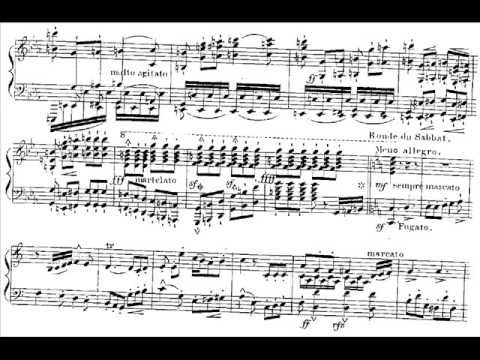
The final movement is the best known part of the symphony, thanks to its use in the Julia Roberts movie, Sleeping With The Enemy. It features a four-part structure, which Berlioz described in his own program notes from 1845 as follows:
“He sees himself at a witches’ Sabbath, in the midst of a hideous gathering of shades, sorcerers and monsters of every kind who have come together for his funeral. Strange sounds, groans, outbursts of laughter; distant shouts which seem to be answered by more shouts. The beloved melody appears once more, but has now lost its noble and shy character; it is now no more than a vulgar dance tune, trivial and grotesque: it is she who is coming to the Sabbath… Roar of delight at her arrival… She joins the diabolical orgy… The funeral knell tolls, burlesque parody of the Dies irae, the dance of the witches. The dance of the witches combined with the Dies irae.”
The Dies irae melody is one of the most-quoted in musical literature, appearing in the works of many diverse composers.
The traditional Gregorian melody has also been used as a theme or musical quotation in a number of classical compositions, notable among them:


 1890 ~ Efram Zimbalist, Russian-born American violinist and composer
 Grammy winner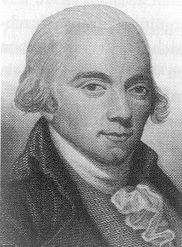


 MaryO'Studio