On Monday, Google’s homepage ran a picture to celebrate the 360th birthday of Bartolomeo Cristofori, inventor of the piano and keeper of instruments for the Medicis in Florence. The instrument Cristofori invented was originally called a “harpsichord with soft and loud” even though the distinction between the two is large (the harpsichord produces sound by plucking strings, the piano by striking them with a hammer). Only three of the newfangled instruments he made – all of them dating from the 1720s – survive.
More than a century later the piano recital was devised. It was Liszt who first decided to have the whole stage to himself, and set the fashion for dispensing with the mixture of celebrities and supporting acts that had prevailed up to that time. As he wrote about his audacity to a friend: “Le concert, c’est moi!” And he called his appearance at the Hanover Square Rooms in London in June 1840 not a concert but a recital.
The composer-pianists of the day concentrated on their own works. Liszt set a marker in this regard, too, choosing music that ranged from Bach through Beethoven and up to Chopin. He set the pattern for playing from memory, and cemented the platform layout we know today by turning the then-conventional position of the instrument on the stage through 90 degrees. He was what we would now call a sex symbol as well as a star musician, and the new arrangement allowed the audience to see his impressive profile as well as to hear the instrument more clearly. The standards he set have survived without significant alteration right up to the present.
. 1788 ~ Charles Wesley, writer of over 5,500 hymns and, with his brother John, the founder of Methodism, died.
. 1871 ~ The Royal Albert Hall in London opened
. 1878 ~ Albert Von Tilzer, Composer. He was the composer of “Take Me out to the Ball Game” among other old favorites.
More information about Von Tilzer
. 1879 ~ “Eugene Onegin”, best-known opera by Russian composer Tchaikovsky, was first performed at the Maliy Theatre in Moscow
. 1902 ~ Sir William Walton, British composer
More information about Walton
. 1906 ~ E. Power Biggs, English Organist
. 1918 ~ Pearl Mae Bailey, American jazz singer, lead in black cast of Hello Dolly
. 1936 ~ Richard Rodney Bennett, British composer
. 1947 ~ Bobby Kimball (Toteaux), Singer with Toto
. 1949 ~ Michael Brecker, Jazz musician, reeds with The Brecker Brothers
. 1951 ~ The King and I, the wonderful Rodgers and Hammerstein musical based on Margaret Langdon’s novel, Anna and the King of Siam, opened this night in 1951 on Broadway. The King and I starred Yul Brynner in the role of the King of Siam. The king who, along with his subjects, valued tradition above all else. From this day forward, the role of the King of Siam belonged to Yul Brynner and no other. Brynner appeared in this part in more than 4,000 performances on both stage and screen (the Broadway show was adapted for Hollywood in 1956). Anna, the English governess hired to teach the King’s dozens of children, was portrayed by Gertrude Lawrence. Ms. Lawrence and Mr. Brynner acted, danced and sang their way into our hearts with such memorable tunes as Getting to Know You, Shall We Dance, Hello, Young Lovers, I Whistle a HappyTune, We Kiss in a Shadow, I Have Dreamed, Something Wonderful, A Puzzlement and March of the Siamese Children. The King and I ran for a total of 1,246 outstanding performances at New York’s St. James Theatre.
. 1952 ~ Roy Henderson’s last singing performance was on this date in the role of Christus in Bach’s “St. Matthew Passion” at Southwark Cathedral, the Anglican cathedral on the south bank of the Thames in London.
. 1973 ~ Hommy, the Puerto Rican version of the rock opera Tommy, opened in New York City. The production was staged at Carnegie Hall.
. 1973 ~ After recording On the Cover of ‘Rolling Stone’, Dr. Hook finally got a group shot on the cover of Jann Wenner’s popular rock magazine. Inside, a Rolling Stone writer confirmed that members of the group (Dr. Hook and the Medicine Show) bought five copies of the magazine for their moms – just like in the song’s lyrics!
. 1980 ~ Annunzio Paolo Mantovani, Anglo-Italian conductor and arranger, died. Created the “Mantovani sound” that made him a highly successful recording artist and concert attraction.
. 1982 ~ Carl Orff, German composer of “Carmina Burana,” died.
. 1999 ~ Legendary U.S. jazz and blues singer Joe Williams died aged 80.
. 2001 ~ John Lewis, a pianist who masterminded one of the most famous ensembles in jazz, the Modern Jazz Quartet, died at the age of 80. The M.J.Q., as the quartet was known, remained mostly unchanged from the mid-1950’s to the 90’s. It began recording in 1952 with Lewis, vibraphonist Milt Jackson, bassist Percy Heath and drummer Kenny Clarke. When Clarke moved to Paris in 1955, Connie Kay replaced him and the quartet continued until Kay’s death in 1994. Lewis contributed the bulk of the group’s compositions and arrangements, including Django and Two Degrees East, Three Degrees West, and he insisted members wear tuxedos to dignify jazz as an art. He was born in LaGrange, Ill., in 1920, and grew up in Albuquerque, N.M. His entree to the jazz world came during World War II, when he met Kenny Clarke, an established drummer in the nascent bebop movement. At Clarke’s urging, Lewis moved to New York after his discharge and eventually replaced Thelonious Monk as Dizzy Gillespie’s pianist. He also performed or recorded with Charlie Parker, Lester Young and Ella Fitzgerald. In 1952 he formed the M.J.Q. with Clarke, Jackson and Heath. The quartet was a steady seller of records and concert tickets well into the 1970’s. Lewis also taught music at Harvard and the City College of New York, and in the late 1950’s helped found the Lenox School of Jazz in Massachusetts.
. 1731 ~ Johann Sebastian Bach‘s first performance of the St. Mark Passion. It was Good Friday that year.
. 1743 ~ It was the first London performance of Handel’s “Messiah”, and King King George II was in the audience. In the middle of the “Hallelujah Chorus, the King rose to his feet in appreciation of the great piece! The entire audience followed suit out of respect for the King. And so began the custom of standing during the singing of the “Hallelujah Chorus”.
More about Handel’s Messiah
. 1974 ~ Cher reached the top of the music charts as Dark Lady reached the #1 spot for a one-week stay. Other artists who shared the pop music spotlight during that time included: Terry Jacks, John Denver, Blue Swede, Elton John and MFSB.
. 1985 ~ Singer Billy Joel married supermodel Christie Brinkley in private ceremonies held in New York City.
. 1985 ~ Zoot (John Haley) Sims passed away. He was an American jazz saxophonist, playing mainly tenor and soprano.
. 1985 ~ We Are the World, by USA for Africa, a group of 46 pop stars, entered the music charts for the first time at number 21.
. 2000 ~ Ed McCurdy, a leading 1950s folk music figure whose songs were recorded by Johnny Cash, Arlo Guthrie and Joan Baez, in Halifax, Novia Scotia. He was 81.
He’s the master of harmony and counterpoint, he could effortlessly compose an amazing concerto or cantata, but what if Johann Sebastian Bach was on social media?
To celebrate the 330th anniversary of the great composer’s birth, we’ve imagined what his Facebook page might have looked like.
So sit back and enjoy the Baroque master’s status updates and life events in full Instagram, wall-post and emoticon glory.
. 1685 ~ Johann Sebastian Bach, German composer
Bach’s Toccata and Fugue in d minor (listen to it in the Listening Center) was featured in the Walt Disney movie Fantasia and the new Fantasia 2000
Listen to Bach’s music
Read quotes by and about Bach
More information about Bach Grammy winner
. 1839 ~ Modeste Mussorgsky, Russian composer
More information about Mussorgsky
. 1869 ~ Florenz Ziegfeld, Producer, Ziegfeld Follies ~ annual variety shows famous for the Ziegfeld Girls from 1907 to the 1930s
More information about Ziegfeld
. 1882 ~ Bascom (Lamar) Lunsford, Appalachian folk song writer, started first folk music festival in 1928 ~ annual Mountain Dance and Folk Festival at Asheville, N.C. He was responsible for formation of the National Clogging and Hoedown Council.
. 1921 ~ Arthur Grumiaux, Belgian violinist
. 1934 ~ Franz Schreker, Austrian composer and conductor, died
. 1935 ~ Erich Kunzel, American orchestra conductor. Called the “Prince of Pops” by the Chicago Tribune, he performed with a number of leading pops and symphony orchestras, especially the Cincinnati Pops Orchestra, which he led for 32 years.
. 1936 ~ Alexander Glazunov died. He was a Russian composer of the late Russian Romantic period, music teacher and conductor.
. 1939 ~ God Bless America, written by Irving Berlin back in 1918 as a tribute by a successful immigrant to his adopted country, was recorded by Kate Smith for Victor Records on this day in 1939. Ms. Smith first introduced the song on Armistice Day, November 11, 1938, at the New York World’s Fair. It was a fitting tribute to its composer, who gave all royalties from the very popular and emotional song to the Boy Scouts. The song became Kate Smith’s second signature after When the Moon Comes Over the Mountain and the second national anthem of the United States of America. On several occasions, it has even been suggested that the U.S. Congress enact a bill changing the national anthem to God Bless America.
. 1941 ~ Singer Paula Kelly joined Glenn Miller’s band. Her husband, also a part of the Miller organization, was one of the four singing Modernaires.
. 1955 ~ NBC-TV presented the first “Colgate Comedy Hour”. The show was designed to stop the Sunday popularity of Ed Sullivan’s “Toast of the Town” on CBS. Gordon MacRae, the Gabor sisters and Mama Gabor, in addition to a host of singers and dancers were in the opening program with the gangway of the nation’s biggest ship, the “S.S. United States” as the stage. In addition to MacRae, other hosts of the “Colgate Comedy Hour” included: Fred Allen, Donald O’Connor, Bob Hope, Eddie Cantor and Jimmy Durante.
. 1961 ~ The Beatles made their debut in an appearance at Liverpool’s Cavern Club, where they became regulars in a matter of months.
. 1963 ~ A year after opening in the Broadway show, I Can Get It for You Wholesale, Elliott Gould and Barbra Streisand tied the matrimonial knot.
. 1964 ~ Singer Judy Collins made her debut at Carnegie Hall in New York City and established herself “in the front rank of American balladeers.” She would first hit the Top 40 in 1968 with Both Sides Now, a Joni Mitchell song. Her versions of Amazing Grace and Send In the Clowns also became classics.
. 1970 ~ The Beatles established a new record. Let It Be entered the Billboard chart at number six. This was the highest debuting position ever for a record. Let It Be reached number two a week later and made it to the top spot on April 11, overshadowing Simon & Garfunkel’sBridge over Troubled Water.
. 1998 ~ Galina Ulanova, the leading ballerina at the Bolshoi Theater for nearly two decades, died aged 88.
. 2000 ~ Jean Howard, a Ziegfeld girl-turned-starlet who became known as a legendary Hollywood hostess and photographer, died at the age of 89. She wasn’t interested in becoming a film star. Instead, she came to wield power as favorite Hollywood hostess and photographer, turning her portraits into the books “Jean Howard’s Hollywood” in 1989 and “Travels With Cole Porter” in 1991.
. 2005 ~ Legendary cabaret singer Bobby Short, an icon of old-world style who played for more than three decades at New York’s Carlyle Hotel, died at the age of 80.
What’s the difference between music of the 1770s and music of the 1970s? According to The Piano Guys, just enough to create a really fantastic mash-up. And so they did.
The group’s latest music video, released on YouTube Tuesday, is the most psychedelic throwback yet to grace the interweb.
Titled “What if the 1770s collided with the 1970s? – ‘I Want You Bach,’” the four-minute video features the alter-egos of musicians Jon Schmidt (“Duke Johann van Keymeister” and “Phil”) and Steven Sharp Nelson (“Sir Reginald von Sharp” and “Scooby”) in a Bach and Jackson 5 mash-up that will make you wonder why the two centuries never met before.
Here’s what The Piano Guys had to say about their inspiration:
“What if the harpsichord from the 1770s hit headlong into the talk box from 1970s? What if J.S. Bach and Jackson 5 met up and just jammed? Would they jive? Can you dig it? These are the kind of far out questions we asked ourselves as we laid down these licks and cut this film. We decided to put together a gig with two wigs in dandy attire and two hep-cats in some funkadelic threads to see if it would fly. … Presenting … ‘I Want You Bach’ – Jackson 5’s funky ‘I Want You Back’ mashed-up with 5 illustrious themes written by J.S. Bach.”
. 1681 ~ Georg Philipp Telemann, German composer. One of the leading composers of the German Baroque, Georg Philipp Telemann was immensely prolific and highly influential. He wrote an opera at age 12, produced it at school, and sang the lead. His mother put all his instruments away and forbade further music. However, he continued to study and write in secret. He led a remarkably busy life in Hamburg, teaching, composing two cantatas for each Sunday, leading a collegium, and writing immense amounts of additional music. For two centuries musical scholars tended to look down on him by comparison with Bach, but from the midpoint of the twentieth century his reputation soared as musicologists began cataloging his immense output, uncovering masterpiece after masterpiece.
More information about Telemann
. 1727 ~ Johann Gottlieb Goldberg, German virtuoso harpsichordist, organist, and composer of the late Baroque and early Classical period
. 1804 ~ Johann Strauss, Sr., Austrian composer; “The Father of the Waltz”
Read quotes by and about Strauss
More information about Strauss
. 1864 ~ (John Luther) Casey Jones, railroad engineer, subject of The Ballad of Casey Jones, killed in train crash Apr 30, 1900
. 1879 ~ Albert Einstein, Mathematician and enthusiastic amateur violinist
Read quotes by and about Einstein
. 1885 ~ “The Mikado,’ the comic operetta by Gilbert and Sullivan, premiered at the Savoy Theater, London.
. 1912 ~ Les Brown, Bandleader, Les Brown and His Band of Renown
. 1922 ~ Les Baxter, Bandleader
. 1931 ~ Phil Phillips (Baptiste), Singer
. 1933 ~ Quincy Delight Jones, Jr., American jazz composer, trumpeter, band leader and pianist. He composed film scores, TV show themes; record producer; arranger; 25 Grammys, Grammy’s Trustees Award in 1989, Grammy’s Legends Award in 1990; Musical Director for Mercury Records, then VP; established Qwest Records
. 1934 ~ Shirley Scott, Swinging, blues-oriented organist, recorded mostly with former husband Stanley Turrentine
. 1941 ~ Years before Desi Arnaz would make the song Babalu popular on the I Love Lucy TV show, Xavier Cugat and his orchestra recorded it with Miguelito Valdes doing the vocal. The song was on Columbia Records, as was the Arnaz version years later.
. 1945 ~ Walter Parazaider, Reeds with Chicago
. 1955 ~ Boon Gould, Guitarist with Level 42
. 1958 ~ The Recording Industry Association of America (RIAA) certified the first gold record. It was Perry Como’sCatch A Falling Star on RCA Victor Records. The tune became the first to win million-seller certification, though other songs dating as far back as the 1920s may have sold a million records or more. Due to lack of a certification organization like the RIAA, they weren’t awarded the golden platter. The next three gold records that were certified after Perry Como’s million seller were the 45 rpm recordings of He’s Got the Whole World in His Hands by Laurie London, Patricia, an instrumental by the ‘Mambo King’, Perez Prado and Hard Headed Woman by Elvis Presley. The first gold-album certification went to the soundtrack of the motion picture, Oklahoma!, featuring GordonMacRae. Is there really a gold record inside the wooden frame presented to winners? Those who know say, “No.” Its a gold-leaf veneer of maybe 18 kt. gold and/or it is a record painted gold. Yes, the song earning the award is supposed to be the one making up the gold record, but this is not always the case, according to several artists who have tried to play theirs.
. 1959 ~ Elvis Presley made the album charts, but no one would have known by the title of the disk. For LP Fans Only was the first LP ever issued without the artist’s name to be found anywhere on the cover — front or back.
. 1976 ~ Busby Berkeley, U.S. director and choreographer, died. He was best known for his lavish mass choreography in the films “42nd Street,” “Gold Diggers of 1933” and “Roman Scandals.”
. 1985 ~ Bill Cosby captured four People’s Choice Awards for The Cosby Show. The awards were earned from results of a nationwide Gallup Poll. BarbaraMandrell stunned the audience by announcing that she was pregnant while accepting her second award on the show. Bob Hope won the award as All-Time Entertainer beating Clint Eastwood and Frank Sinatra for the honor.
The store, on West 54th Street between Broadway and Eighth Avenue, opened in 1937 and provided the city’s musicians scores from the standard— Bach, Beethoven —to the arcane. Ms. Rogers bought it in 1978.
Frank Music is the last store in the city dedicated to selling classical sheet music, Ms. Rogers said, although other places such as the Juilliard School’s bookstore at Lincoln Center have it on their shelves.
Frank Music’s stock, which Ms. Rogers counts as hundreds of thousands of scores, was purchased by an anonymous donor as a gift for the Colburn School, a music conservatory in Los Angeles.
The school and Ms. Rogers declined to comment on financial details.
Colburn School’s president and chief executive, Sel Kardan, called Frank Music’s scores “an invaluable resource for our students and faculty for years to come.”
To the 63-year-old Ms. Rogers, nothing is more important than the arts.
“The idea that classical music is irrelevant is ridiculous,” she said, bemoaning the comparative salaries of tubists and stockbrokers. “People should be paid in terms of what they contribute to people’s well being.”
The store’s celebrity clients over the years have included pianists Emanuel Ax and Jeremy Denk, violinist Pamela Frank and cellist David Finckel.
One of Ms. Rogers’s favorite memories is a telephone call from the violinist Itzhak Perlman, asking for Kreisler scores.
The composer Bruce Adolphe, who is resident lecturer at the Chamber Music Society of Lincoln Center, described the store as a musical meeting ground.
“Frank’s Music was not just a store but a crucible,” he said, “a nexus where musicians from Suzuki beginners and their parents, to Joshua Bell, or the Brentano’s Mark Steinberg, would meet by chance.”
Lionel Kelly, 78, may have come late to the piano – he took it up at the age of 73 – but it’s changed his life. “I first heard Mahler performed in London in the mid-50s, when he became very popular over here,” he says. “I’m currently working on a piano transcription of the Adagietta from his Symphony No. 5. It’s a beautiful piece of music, slow and passionate, and was used in Luchino Visconti’s 1971 film of Thomas Mann’s novella, Death in Venice. To be able to play Mahler now, all these years later, is a real treat.”
Kelly, formerly director of American Studies at Reading University, practises up to four hours a day. He has lessons in Reading with Janet Sherbourne, whom he describes as “an excellent, if strict, teacher”, and is not taking grades. “Janet reckons I’m somewhere between grade four and five level, but I’m just doing it for pleasure, because I want to learn and play,” he says.
Bach, Beethoven and Mozart are among other composers tackled by Kelly…
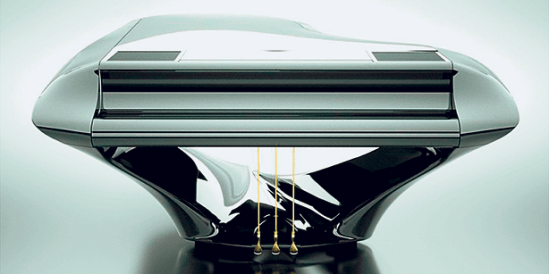
A revolutionary new piano created in Budapest by internationally acclaimed pianist Gergely Bogányi and his design team was unveiled at a press event on Jan. 20 at the Budapest Music Center and at a concert on Jan. 21 at Budapest’s historic Franz Liszt Academy.
At the press event, Bogányi performed classical selections by Bach and Debussy to show the piano’s power and lyrical capabilities; the renowned Grammy-nominated jazz pianist Gerald Clayton improvised limpid and soulful variations on Cole Porter’s “You’d Be So Nice to Come Home To,” which showed the new instrument’s vast kaleidoscope of colors and the satisfyingly muscular bass notes.
Does the world need a new piano?
Most emphatically yes, Bogányi says. “The piano was invented 300 years ago,” Bogányi told Today’s Zaman. “Although there have been modifications, there have been no major developments in piano construction in over 100 years. So I spoke to many of my colleagues about the kinds of [mechanical and physical] problems and limitations we all have to deal with, and all agreed that we needed solutions.”

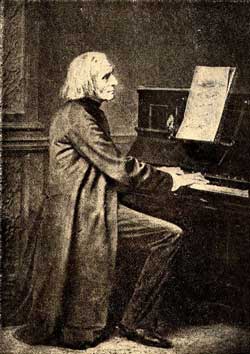 More than a century later the piano recital was devised. It was Liszt who first decided to have the whole stage to himself, and set the fashion for dispensing with the mixture of celebrities and supporting acts that had prevailed up to that time. As he wrote about his audacity to a friend: “Le concert, c’est moi!” And he called his appearance at the Hanover Square Rooms in London in June 1840 not a concert but a recital.

 Grammy winner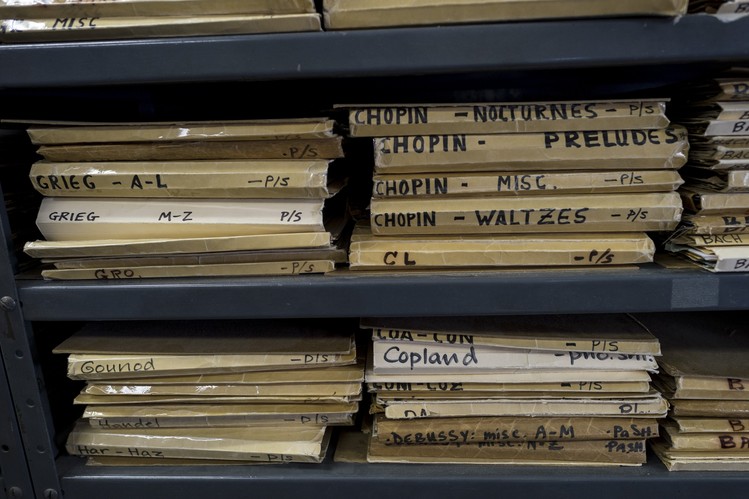

 MaryO'Studio