• 1919 ~ Eva (Evita) Peron, Argentina’s spiritual leader and wife of Argentina’s President, Juan Peron; actress on stage, film and radio; subject of the Broadway musical and film Evita
• 1927 ~ Elisabeth Söderström, Swedish soprano
• 1931 ~ Teresa Brewer (Breuer), Singer
• 1941 ~ Glenn Miller and his Orchestra recorded one of the great American music standards, Chattanooga Choo Choo
More information about Chattanooga Choo Choo
• 1942 ~ Felix Weingartner, Austrian conductor and composer, died; best known for his interpretations of Wagner and Beethoven.
• 1958 ~ Pianist Van Cliburn signed an artist’s contract with RCA Victor Records.
• 1966 ~ The Mamas & The Papas made the climb to the top of the Billboard pop music chart with Monday, Monday.
• 1995 ~ Ray McKinley passed away. He was an American jazz drummer, singer, and bandleader.
• 2002 ~ Buster Brown, a tap star and choreographer who danced on stage, in films and on television, died. He was 88. Brown was one of the last surviving members of the Copasetics, a legendary group of veteran dancers who performed together. Known for his quick rhythms and charm, Brown was a mentor and teacher for a younger generation of dancers. Brown, who was born James Brown in Baltimore, began his dancing career with a trio called the Three Aces and Speed Kings. He eventually began a solo career, appearing in the Hollywood musical “Something to Shout About” in 1943. Brown toured with the bands of Count Basie, Dizzy Gillespie and Duke Ellington, and was a featured dancer in Ellington’s concerts in the 1960s. He danced in the films “The Cotton Club” and “Tap” and on two public television specials. He also performed with the original casts of the Broadway musicals “Bubbling Brown Sugar” and “Black and Blue.” Brown toured South America with the Cab Calloway Orchestra and was commissioned by the State Department to perform in several African counties. He also taught master classes throughout Europe. Beginning in 1997, Brown was master of ceremonies at a weekly Sunday tap jam at the Manhattan club Swing 46, where young and old dancers stopped by to perform. He recently received an honorary doctorate from Oklahoma City University.
The quest to serenade the Seven Wonders continues…
A few years back we set what seemed at the time an impossible goal: to film music videos on all Seven Wonders of the World. Now we are nearly half-way there. We started by scaling the Great Wall of China, performing in feng shui fashion “Kung Fu Panda” in harmony with Chopin:
Next we paid homage to the Christ Redeemer Statue in Rio, Brazil, dedicating “Gabriel’s Oboe” (from “The Mission” soundtrack) coupled with the beloved hymn “How Great Thou Art:”
And now we present the third Wonder, Chichén Itzá.
Thus far our tradition has been to mix timeless classical music with contemporary film scores. We also love infusing local and historical culture in our arrangements. For this Wonder we wanted to stay true to this tradition while simultaneously nailing “jungle harmony,” as a famous cartoon bear once coined in…Disney’s Jungle Book! But in this decision we were confronted with an entangling challenge — to effectively blend the cacophony of Disney Jazz, classical music, Mayan heritage, all while making it epic enough to be filmed in front of a massively-historic, world-renowned stone temple!
First, it was vital that we carefully, thoughtfully pay proper respect to the “wonder” of “El Castillo,” its surrounding artifacts, and the Mayan spirit that pervades Chichén Itzá. The Mayans were an incredible people — adept astronomers, unprecedented builders, and incomparable artisans. Their ability to use architecture in an acoustic way especially impresses us. For instance, you can stand upon a step at one end of the plaza and be heard clearly on a step at the opposite end. The Mayans also used instrumental music in…read more here: http://thepianoguys.com/portfolio/jun…
Filming it in just the right vein was just as challenging. We wish to sincerely express our deepest gratitude to the National Archeology and History Institute (http://www.inah.gob.mx) and Cultur Yucatan (http://www.culturyucatan.com) for allowing us the profound privilege of filming at Chichén Itzá. Were it not for them and their warm hospitality this video shoot would not have been possible.
Steve is playing the most recent addition to his cello family, “Maya,” hand painted in Mayan hieroglyphic style by Juleez (Julie Borden) just for this video. Her uniquely creative masterpieces are only matched by her equally vibrant spirit and enthusiasm for musically influenced art. See more of her instrument artwork here: http://www.juleez.com. Thank you, Julie!
At age 104, San Marcos resident Dorothy “Dottie” Coleman is one of about 72,000 centenarians in the U.S. according to the National Center for Health Statistics in a 2014 survey.
But to anyone who knows her, she is one in a million. Ask the members of the Lake San Marcos Kiwanis Club, where she plays the piano to kick off meetings. Or ask teens from the San Marcos Youth Symphony who gave a community concert with her last December at which Coleman received a standing ovation.
“What inspires me and the Kiwanis members is how she takes each day one day at a time — the worries and anxieties that weigh others down just roll off her back,” said Jerry Mason, Lake San Marcos Kiwanis president. “Every time I am with her she uplifts my spirits.”
For her recent 104th birthday, the Lake San Marcos Kiwanis threw a party at which Coleman played the piano. She plays mostly from memory, and her favorites include pieces by Chopin and Claire de Lune along with big band hits of the 1930s and 1940s.
“Ms. Coleman’s mind is clear and her fingers still can dance on top of the keyboard,” said Hurlink Vongsachang, co-president of the San Marcos Youth Orchestra.
Coleman started playing the piano in church nearly a century ago when she was about 7. She was born April 4, 1912, and grew up in a small town in southern Pennsylvania, later attending a teacher’s college and marrying Les Coleman in 1934. The couple was married 62 years and Coleman cared for him when he was ailing in his later years until he died 20 years ago.
Coleman’s first trip to California was a cross-country car journey in a Model A Ford in the mid 1930s. Later she returned when her husband, a lieutenant colonel, was stationed at the former Fort Ord Army Base on Monterey Bay, where she and other teachers helped young soldiers work on their high school diplomas. She and her husband moved to San Marcos in 1996.
With a zest for travel, Coleman went on an African safari when she was 86 and traveled to India at 88. She started writing and publishing stories at age 91 after taking a writing class at the San Marcos Senior Center.
She lives independently and stopped driving voluntarily at age 101 when she broke her hip. She has a daughter, three grandchildren and five great grandchildren, some of whom have taken piano lessons from her.
On her birthday, Coleman said, “The best present I have is that I still have all my marbles.”
. 1699 ~ Johann Adolph Hasse, German composer, singer and teacher of music. Immensely popular in his time, Hasse was best known for his prolific operatic output, though he also composed a considerable quantity of sacred music.
. 1784 ~ François-Joseph Fetis, Belgian musicologist, composer, teacher, and influential music critic.
. 1851 ~ The Playel piano factory in Paris was destroyed by fire. Playel was the favorite of Chopin in the 19th century, and it was identified with French composers known as the impressionist musicians of the early 20th century — like Ravel and Debussy.
Pleyel was founded in 1807 by Ignaz Pleyel, a composer and music publisher who studied with Franz Joseph Haydn.
. 1867 ~ Arturo Toscanini, Italian conductor and musical director. Famed for his temper in rehearsals, he was director of La Scala and the Metropolitan opera houses. He also conducted the NBC symphony orchestra. With a career spanned 68 years, he was a cellist at age 19
Read quotes by and about Toscanini
More information on Toscanini
. 1881 ~ Béla Bartók, Hungarian composer and pianist, born. His knowledge of western musical techniques allied to the inspiration he derived from Hungarian peasant songs enabled him to become a unique musical force.
More information about Bartók
. 1913 ~ The Palace Theatre opened its doors in New York City. Ed Wynn was first on the vaudeville bill. Some 20 years later, Wynn would be named as radio’s top entertainer. He later became popular on television, as well.
. 1918 ~ Claude Debussy, French composer, died. His music, described as “musical Impressionism”, explored original avenues of expression.
. 1931 ~ Hal Kemp and his orchestra recorded Whistles, with Skinnay Ennis, for Brunswick Records. Both Kemp and Ennis sang in the Dorsey Brothers Concert Orchestra, under the direction of Dr. Eugene Ormandy (later, conductor of the Philadelphia Symphony Orchestra). The pair were part of the orchestra vocal quartet that also featured Nye Mayhew and Saxey Dowell in 1928.
. 1938 ~ Hoyt Axton, Singer, musician and songwriter. Axton’s mother, Mae Boren Axton, wrote Elvis Presley’s Heartbreak Hotel
. 1940 ~ Anita Bryant, Singer
. 1942 ~ Aretha Franklin, American soul singer, known as the “Queen of Soul” and “Lady Soul”, she won 15 Grammy Awards and was the first woman inducted into Rock andRoll Hall of Fame (1987)
. 1947 ~ Elton John (Reginald Kenneth Dwight), Entertainer
More information about John
. 1948 ~ Kelly Garrett, Actress, singer
. 1949 ~ Neil Jones, Musician with Amen Corner
. 1951 ~ Maizie Williams, Singer with Boney M
. 1966 ~ Jeff Healey, Guitarist, singer, songwriter with the Jeff Healey Band, CBC radio show: My Kind of Jazz
. 1971 ~ Tom Jones went gold with his single, She’s a Lady.
. 1972 ~ The group, America, rode to the top of the pop music charts with their LP, America, and the single (included on the LP), A Horse with NoName. A Horse With No Name would be the group’s only gold record.
. 1904 ~ Glenn Miller, American trombonist and bandleader
More information about Miller
. 1922 ~ Michael Flanders, Songwriter, comedian with the duo: Flanders and [Donald] Swann, made humorous mockery of English and American failings, died in 1975
. 1927 ~ Harry Belafonte, American calypso and folk singer, UNICEF goodwill ambassador, father of Shari Belafonte
. 1928 ~ Paul Whiteman and his orchestra recorded Ol´ Man River for Victor Records. The featured vocalist on the track was 29-year-old Paul Robeson. The song became an American classic.
. 1941 ~ FM Radio began in the U.S. when station W47NV in Nashville, TN started operations on this day. W47NV was the first commercial FM radio station to receive a license, some 20 years after its AM radio counterpart, KDKA in Pittsburgh. FM stands for ‘frequency modulation´ as opposed to ‘amplitude modulation´.
. 1941 ~ Downbeat magazine scooped the entertainment world with news that GlennMiller’s renewed contract with Chesterfield Cigarettes was worth $4,850 a week (for three 15-minute programs).
. 1944 ~ Roger Daltrey, Singer with The Who
. 1968 ~ Country music stars Johnny Cash and June Carter got married on this day. Johnny walked down the aisle knowing that his 1956 hit, Folsom PrisonBlues, was about to be redone for a June release. Cash has a daughter, Rosanne, (previous marriage) who became a country star in her own right in the 1980s.
. 1968 ~ Elton John’s first record, I’ve BeenLoving You, was released by Philips Records in England. Philips, not realizing the potential of the soon-to-be superstar, released him in 1969, just prior to his teaming with lyricist Bernie Taupin. Elton then signed a contract with Uni Records and began to turn out what would become a string of more than 50 hits over the next 25 years.
. 1973 ~ The Robert Joffrey Dance Company opened with a unique presentation in New York City. The show featured music of the Beach Boys in “Deuce Coupe Ballet”. A clever show, even if it didn’t do much to bring the masses to ballet.
. 1985 ~ A Beatles song was used for the first time in a U.S. TV commercial. The rights for Lincoln-Mercury to use the song, HELP!, cost $100,000, helping boost the fortunes of the Ford Motor Company. March has been designated as the “Music In Our Schools” month. Visit the National Association for Music Education website for exciting programmatic information.
. 2003 ~ Nadine Conner, a soprano who performed for nearly two decades at the Metropolitan Opera after singing on national radio, died. She was 96. Conner debuted at the Met in 1941 as Pamina in Mozart’s “The Magic Flute,” conducted by Bruno Walter. She performed there 249 times over 18 seasons. She won acclaim not only for her Mozart roles, including Zerlina in “Don Giovanni” and Susanna in “The Marriage of Figaro,” but also for her portrayals of Violetta in Verdi’s “La Traviata,” Mimi inPuccini’s “La Boheme,” Gilda in Verdi’s “Rigoletto,” and Rosina in Rossini’s “The Barber of Seville.” Conner began her career singing on national radio from Los Angeles, and appeared with such stars as Bing Crosby and Gordon MacRae and toured with film star Nelson Eddy. She joined a fledgling opera troupe in Los Angeles, making her debut as Marguerite in Gounod’s “Faust.” Her Met farewell, in 1960, also was in “Faust.”
. 1766 ~ Samuel Wesley, English organist and composer in the late Georgian period. Wesley was a contemporary of Mozart (1756–1791) and was called by some “the English Mozart.”
. 1771 ~ Johann Baptist Cramer, English musician of German origin. He was the son of Wilhelm Cramer, a famous London violinist and musical conductor, one of a numerous family who were identified with the progress of music during the 18th and 19th centuries.
. 1832 ~ Frederic Chopin’s first Paris concert. The musicologist Arthur Hedley has observed that “As a pianist Chopin was unique in acquiring a reputation of the highest order on the basis of a minimum of public appearances—few more than thirty in the course of his lifetime.”
. 1842 ~ Arrigo Boito, Italian composer, librettist and poet
. 1858 ~ Arnold Dolmetsch, British music antiquarian and musician
. 1932 ~ Michel Legrand, Academy Award-Winning composer for Best Original Score: Yentl in 1983, Brian’s Song, Ice Station Zebra
. 1934 ~ Renata Scotto, Italian soprano. She made her operatic debut at age 18 and is best known for performances as Violetta in La Traviata, Cio-Cio- San in Madama Butterfly, Mimi (and the occasional Musetta) in La Bohème, Lucia in Lucia di Lammermoor, Lady Macbeth in Macbeth and Francesca in Francesca da Rimini. She is also an opera director.
. 1940 ~ Frances Langford recorded one of the classic songs of all time — and one that would become a Walt Disney trademark. When You Wish Upon a Star was recorded on Decca Records during a session in Los Angeles. Many artists have recorded the song, including pop diva Linda Ronstadt (with the Nelson Riddle Orchestra in the early 1980s). One can hear the song not only on record, but as the theme in the opening credits of any Disney movie, video and TV program and those “I’m going to Disneyland/World!” commercials, too.
. 1942 ~ Paul Jones, Harmonica, singer with Manfred Mann
. 1947 ~ Lonnie Turner, Bass, singer with The Steve Miller Band
. 1964 ~ The musical, “What Makes Sammy Run”, opened in New York at the 54th Street Theatre. Making his Broadway debut in the show was Steve Lawrence. The production ran for 540 performances.
. 1985 ~ Yul Brynner reprised his role in “The King and I” setting a box office record for weekly receipts. The show took in $520,920.
. 1990 ~ Johnnie Ray died. He was an American singer, songwriter, and pianist.
. 1991 ~ Webb Pierce passed away. He was one of the most popular American honky tonk, rockabilly vocalists, guitarists of the 1950s
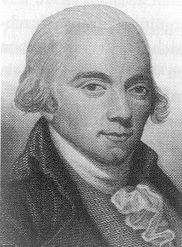
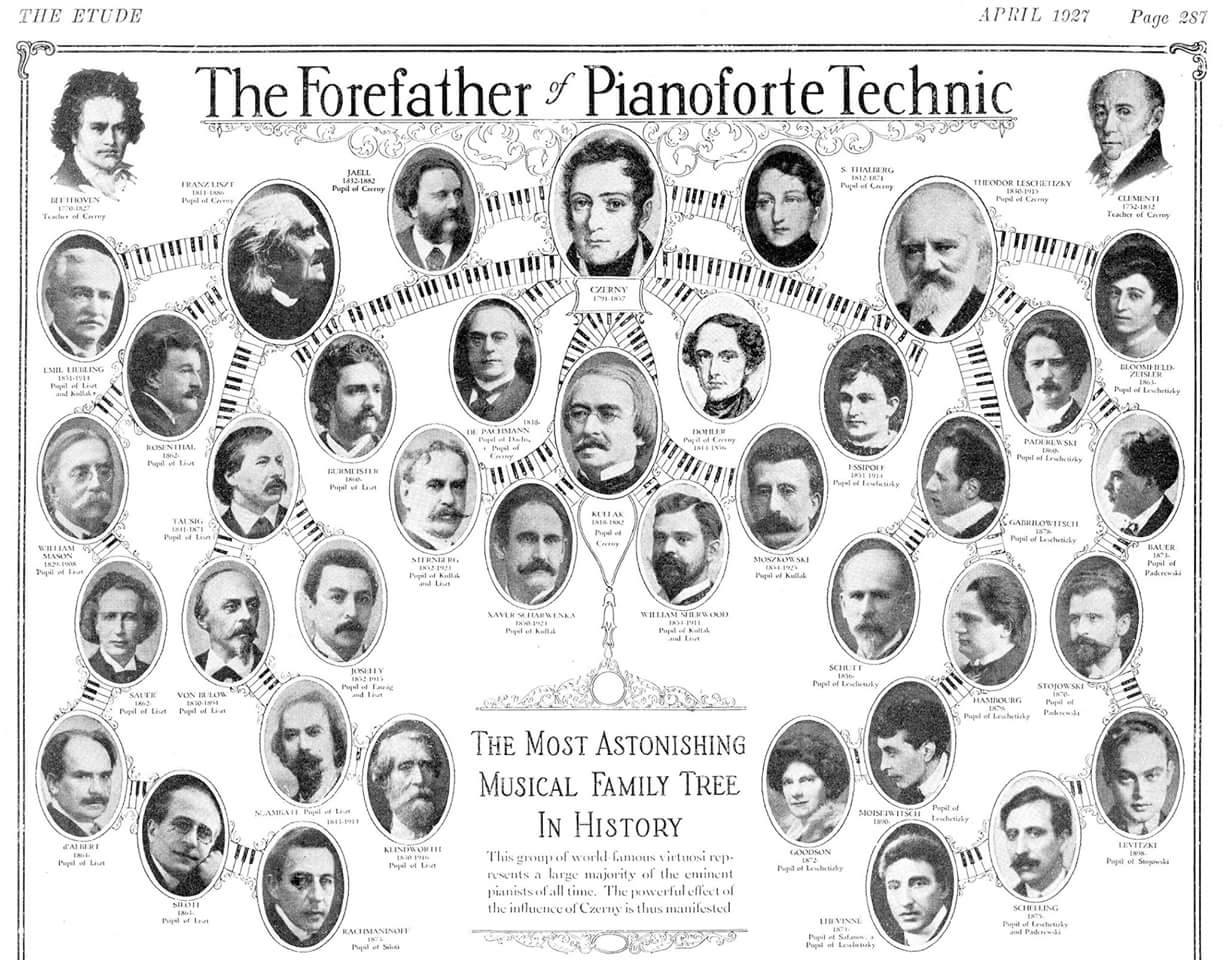
Today, in 1752, Muzio Clementi Italian pianist and composer was born.
More information about Clementi
Clementi was an Italian-born English composer, pianist, pedagogue, conductor, music publisher, editor, and piano manufacturer. Born in Rome, he spent most of his life in England.
Encouraged to study music by his father, he was sponsored as a young composer by Sir Peter Beckford who took him to England to advance his studies. Later, he toured Europe numerous times from his long-time base in London. It was on one of these occasions in 1781 that he engaged in a piano competition with Wolfgang Amadeus Mozart.
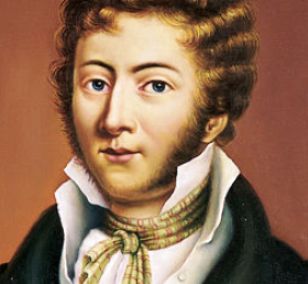
His student John Field would become a major influence on Frédéric Chopin
In 1802, Clementi and Field embarked on a European tour together. They went to Paris, Vienna and St. Petersburg.
John Field adopted the French word nocturne, meaning “of the night” and became the first composer to use this term in music. He wrote a series of short studies for solo piano which had a gently romantic late-night feeling about them.
Chopin soon took up this idea and wrote 21 nocturnes.
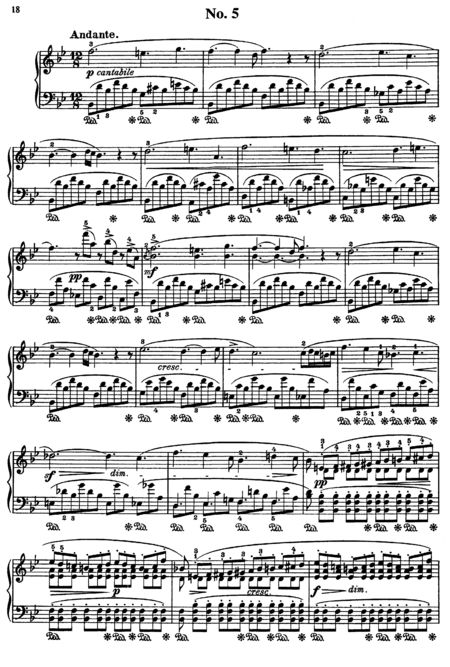
Compare: Field’s Nocturne No. 5 in B flat major
Chopin’s Nocturne E Flat Major Op.9 No.2 played by Valentina Lisitsa
Today, in 1837, Clementi’s student John Field died. Field was an Irish pianist, composer, and teacher. He was very highly regarded by his contemporaries and his playing and compositions influenced many major composers, including Frédéric Chopin, Johannes Brahms, Robert Schumann, and Franz Liszt.
• 1569 ~ Birth of German organist and composer Paul Sartorius in Nuremberg. d-28 February 1609, Innsbruck.
• 1615 ~ Birth of French violinist and composer Guillaume Dumanoir, II. He composed dance music enjoyed by Louis XIV
• 1667 ~ Death of composer Nathaniel Schnittelbach, at 34. b-1633.
• 1715 ~ Birth of composer Girolamo Abos on the island of Malta. Italian opera and church music.
• 1720 ~ Birth of Italian composer Carlo Antonio Campioni.
• 1757 ~ Birth of American composer Daniel Read, of the First New England School, and one of the primary figures in early American classical music. d-4 DEC 1836.
• 1775 ~ Death of German composer Karl Marian Paradeiser, at 28.
• 1780 ~ Birth of English composer Robert Archibald Smith.
• 1840 ~ Birth of composer Frederick Scotson Clark.
• 1848 ~ Frédéric Chopin played his final piano concert at a Polish benefit ball at Guildhall in London.
• 1850 ~ Giuseppe Verdi‘s opera Stifellio was first performed at the Teatro Grande in Trieste despite difficulties with the censors which resulted in cuts and changes.
• 1852 ~ Birth of American soprano Minnie Hauk in NYC. d-near Lucerne, 6 FEB 1929.
• 1854 ~ First Performance of Anton Rubinstein‘s Ocean Symphony in Leipzig.
• 1860 ~ Birth of Viennese harpist Edmund Scheucker.
• 1861 ~ Birth of composer Vaclav Suk.
• 1861 ~ First Performance of Johannes Brahms‘ Piano Quintet No. 1 in g, Op. 25, at a rehearsal in Hamburg, with pianist Clara Schumann.
• 1862 ~ The work noted above received its official premiere with members of the Hellmesberger Quartet; Brahms at the piano, in Vienna.
• 1870 ~ Birth of Australian composer Alfred Hill in Melbourne. d-Sydney, 30 OCT 1960.
• 1873 Birth of Swedish tenor David Karl Björling, in Harmånger parish of northern Sweden’s Hälsingland province. d. Aug. 16, 1926.
• 1873 ~ W.C. Handy, American blues composer and bandleader
More information about Handy
• 1889 ~ George S. (Simon) Kaufman, Playwright: The Cocoanuts, A Night at the Opera, with Moss Hart, The Man Who Came to Dinner, You Can’t Take It with You
• 1894 ~ Debut of opera star Enrico Caruso in Mario Morelli’s L’Amico Francesco at Naples Teatro Nuovo.
1895 ~ Paul Hindemith, German-born American composer and conductor Read quotes by and about Hindemith
More information about Hindemith
• 1908 ~ Conductor Arturo Toscanini made his debut in the United States this day. He appeared at the Metropolitan Opera House in New York, conducting Aida.
• 1931 ~ Bob Gibson, Singer, songwriter, leader of folk music movement in late ’50s, duo of Gibson and (Bob) Camp
• 1932 ~ The Palace in New York City closed its doors. It was the most famous vaudeville theatre in America. Later, it became a movie house with live performances preceding the flicks; most notably: the team of Dean Martin and Jerry Lewis in their heyday.
• 1935 ~ The Rodgers and Hart musical, Jumbo, opened in New York City for a run of 233 performances.
• 1937 ~ Bob Crosby and his orchestra recorded South Rampart Street Parade on Decca Records.
• 1945 ~ Martine Van Hammel, Ballet, American Ballet Theatre
• 1955 ~ ‘Tennessee’ Ernie Ford drove to the top spot on the record charts on this day. Sixteen Tons, where he owed his “soul to the company store…”, became the fastest-selling record in history, jumping to #1 in just 3 weeks. The tune, on Capitol Records, stayed at #1 for eight weeks.
• 1970 ~ Anne Murray received a gold record for Snowbird. She was the first Canadian recording artist to receive a gold record.
• 2000 ~ Russ Conway, a British pianist known as the “Prince Charming of Pop” who sold
More than 30 million records in the 1950s and ’60s, died at age 75. He had 17 consecutive hits in the late 1950s and early 1960s, and won a silver disc when his record Roulette topped 250,000 sales – a total rapidly equaled by three other hits, Sidesaddle, China Tea and Snow Coach. Conway’s formal piano education consisted of one lesson at age 4. He left school at 14 and got work in a lawyer’s office. But he was sent to juvenile detention for three years for taking money he found in a package. In a detention center, he found a piano to play. While doing a stint as a pianist in a club, he was discovered by choreographer Irving Davies. He went on to provide piano accompaniment to a string of singers. Soon he was composing the songs that made him famous and won him the nicknames “Prince Charming of Pop” and the “Sheik of the Keyboard.”
• 2001 ~ Blue guitarist and singer Isaac Scott, a major figure in the city’s music scene for more than a quarter century, died of complications from diabetes. He was 56. A stream of musicians paid their respects to Scott, said his ex-wife, Eloise DePoe. He was found in his apartment Nov. 4 and never regained consciousness. Scott recorded several albums, including “The Isaac Scott Band,” “Big Time Blues Man” and “High Class Woman.” He also appeared on the compilation albums “Live at the San Francisco Jazz Festival” and “Live at the Roadhouse.” Primarily a “cover artist,” Scott did not write his own songs, which hindered national recognition. But he received several local honors, including the Washington Blues Society’s Hall of Fame (1991) and lifetime-achievement (2000) awards. He also performed at last year’s opening of the Experience Music Project. Scott taught himself piano and guitar, and started out playing gospel music, once touring the West Coast with the Five Blind Boys of Mississippi. In 1974, he turned his attention to blues, with a sound flavored by his love of Seattle-born guitar legend Jimi Hendrix. Like Albert Collins, an early influence, Scott played electric guitar with his thumb instead of a pick, which contributed to his distinctive sound. He also was known for his stamina, often playing two- and three-hour sets.
• 2001 ~ Tommy Flanagan, a jazz pianist who worked with such artists as EllaFitzgerald, died of an arterial aneurysm. He was 71. Flanagan, part of his own classic jazz trio, accompanied Fitzgerald for 20 years, also acting as her musical director. He also worked for Tony Bennett. He became a celebrated figure in jazz with such trio albums as “Jazz Poet” (1989) and “Let’s” (1993). Flanagan’s trio included bassists George Mraz and Peter Washington, and drummers Kenny Washington, Lewis Nash and Albert Heath. Flanagan won the distinguished Danish Jazzpar Prize in 1993. Born in Detroit, Flanagan was the youngest of six children. He recorded “Sunset and the Mockingbird: The Birthday Concert,” live at the Vanguard in 1998. He was to appear at Iridium this holiday season.
.1944 ~ Keith Emerson, Keyboards with Emerson, Lake & Powell as well as Emerson, Lake & Palmer
.1944 ~ Chris Morris, Guitarist with Paper Lace
.1945 ~ Rick Grech, Bassist, violinist
.1950 ~ Dan Peek, Guitarist, singer with America
.1951 ~ Ronald Bell, Saxophone with Kool & The Gang
.1957 ~ Lyle Lovett, Grammy Award-winning singer, Best Male Country Vocal in 1989
.1959 ~ Eddie MacDonald, Bass with The Alarm
.1962 ~ Rick Allen, Drummer with Def Leppard
.1962 ~ Mags Furuholmen, Keyboards, singer with a-ha
.1968 ~ George Harrison’s soundtrack LP, “Wonderwall”, was released. It was the first solo album by one of The Beatles. The album was also the first on the new Apple label.
.1969 ~ Warner Brothers Records added Faces, to its roster. They fared OK, but even better when lead singer Rod Stewart stepped out to become a superstar on his own. The group’s former label, Mercury, capitalized on the fact by releasing Maggie Mae and three other Faces tunes before Stewart went solo for Warner exclusively.
.1969 ~ The last album of The Beatles reached #1 on the album chart. “Abbey Road” was the top LP for eleven nonconsecutive weeks. The final studio recordings from the group featured two songs; ‘Something’ & ‘Here Comes The Sun’. The cover supposedly contained clues adding to the ‘Paul Is Dead’ phenomenon: Paul is barefoot and the car number plate ‘LMW 281F’ supposedly referred to the fact that McCartney would be 28 if he was still alive. ‘LMW’ was said to stand for ‘Linda McCartney Weeps.’
1975 ~ Elton John’sIsland Girl hit number one on the Billboard Hot 100 chart. The song parked itself at the top of the hit heap for 3 weeks.
Franz Liszt was born in Raiding, near Ödenburg, October 22, 1811 and died in Bayreuth, July 31, 1886. He was a Hungarian composer and pianist who was a major influence during the romantic period. Liszt was an outstanding pianist at seven, composed at eight and made concert appearances at nine. In addition to being a piano virtuoso, he was also a critic, conductor, city music director, literary writer and transcriber of the works of other composers. He transcribed Beethoven’s Symphonies for the piano.
Franz Liszt began his career as the outstanding concert pianist of the century, who, along with the prodigious violinist Niccoló Paganini (1782-1840), created the cult of the modern instrumental virtuoso. To show off his phenomenal and unprecedented technique, Liszt composed a great deal of music designed specifically for this purpose, resulting in a vast amount of piano literature laden with dazzling, and other technical marvels. In this vein, Liszt composed a series of virtuosic rhapsodies on Hungarian gypsy melodies, the best-known being the all too familiar Hungarian Rhapsody no. 2. Liszt developed the rhapsody as a form of serious music. This kind of music is worlds apart from the generally more introspective, poetic music of pianist-composer Frédéric Chopin.
Liszt was wildly handsome and hugely talented. He was extremely popular in Paris during the 1830’s. It is said that women actually fainted at his piano recitals. He was the first to position the piano so that its lid reflected the sound and the audience could see his profile as he performed.
Liszt was the first to write a tone poem, which is an extended, single-movement work for orchestra, inspired by paintings, plays, poems or other literary or visual works, and attempting to convey the ideas expressed in those media through music. Such a work is Les Préludes, based on a poem in which life is expressed as a series of struggles, passions, and mysteries, all serving as a mere prelude to . . .what? The Romantic genre of the symphonic poem, as well as its cousin the concert overture, became very attractive to many later composers, including Saint-Saëns, Tchaikovsky, Dvorák, Sibelius, and Richard Strauss.
Listen to Liszt’s transcription of Meyerbeer’s Hellish Waltz from Robert du Diable, which probably caused more public commotion than any other piano piece in history.


 Grammy winner

 1830 ~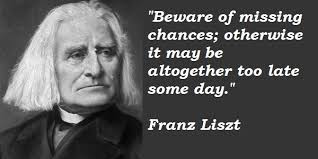


 MaryO'Studio