During the holiday period, the entire Company is immersed in activities surrounding George Balanchine’s The Nutcracker™. All 90 dancers, 62 musicians, 32 stagehands and two casts of 50 young students each from the School of American Ballet join forces to make each performance as magical as possible. Children of all ages from New York City and the nation fill the David H. Koch Theater to be captivated by the lure of Tschaikovsky’s music, Balanchine’s choreography, Karinska’s sumptuous costumes, and Rouben Ter-Arutunian’s magical sets. George Balanchine’s The Nutcracker™, based on the Alexandre Dumas pere version of E.T.A. Hoffmann’s tale, The Nutcracker and the Mouse King (1816), demands a full-scale production.
The elaborate stage elements and intricate lighting unleash the viewers’ imagination by providing visual effects that are extraordinarily grand. The most famous example is the one-ton Christmas tree that grows from a height of 12 feet to 40 feet, evoking audible gasps of disbelief from the audience at each performance. Other notable feats include the comic figure of Mother Ginger — 85 pounds and nine feet wide, the costume requires handling by three people once it is lowered by pulley over the dancer’s head — as well as the continuous flutter of the purest, crystal-shaped snowflakes (which are swept up and conserved after each performance for reuse).
While these technical achievements are wonderful fun, it is Balanchine’s choreography that sustains the ballet through two acts. Act I introduces the characters — the Stahlbaum children, Marie and Fritz, Herr Drosselmeier and his Nephew — and also begins the transition from reality into fantasy with the concluding Snowflake Waltz. Act II offers the complete transformation. We have entered the “Kingdom of the Sugarplum Fairy” and there is no turning back.
George Balanchine’s The Nutcracker™ is one of the most complex theatrical, staged ballets in the Company’s active repertory. The popularity of the ballet is immense and it provides an unforgettable spark to everyone’s holiday season.
Although the original production was not a success, the 20-minute suite that Tchaikovsky extracted from the ballet was. However, the complete Nutcracker has enjoyed enormous popularity since the late 1960s and is now performed by countless ballet companies, primarily during the Christmas season, especially in North America. Major American ballet companies generate around 40 percent of their annual ticket revenues from performances of The Nutcracker.
Tchaikovsky’s score has become one of his most famous compositions, in particular, the pieces featured in the suite.
• 1888 ~ Fritz Reiner, Hungarian-born American conductor who was the musical director of the Pittsburgh Symphony, New York Metropolitan Opera and Chicago Symphony. He died in 1963
• 1915 ~ Edith Piaf (Edith Giovanna Gassion), French chanteuse and songwriter
• 1925 ~ ‘Little’ Jimmy Dickens, Country Music Hall of Famer
• 1928 ~ Galt MacDermot, Composer
• 1935 ~ Bobby Timmons, American jazz pianist
• 1940 ~ Phil Ochs, American folk singer, songwriter and guitarist
• 1941 ~ Maurice White, Singer, drummer, founder of the group Earth, Wind & Fire
• 1944 ~ Alvin Lee, Musician with Ten Years After
• 1944 ~ Zal Yanovsky, Guitarist, singer with The Lovin’ Spoonful
• 1952 ~ Jeff Davis, Bass with Amazing Rhythm Aces
• 1952 ~ Janie Fricke, Singer, Country Music Association Female Vocalist of the Year in 1982 and 1983
• 1957 ~ Meredith Willson’sThe Music Man opened at the Majestic Theatre in New York City. The Broadway show starred Robert Preston and had a run of 1,375 shows. It also had 76 trombones and 101 cornets in the band…
• 1960 ~ Neil Sedaka’s Calendar Girl was released on RCA Victor Records. The song became Sedaka’s fourth record to make the charts. Other hits from the guy who made money off of a love song for Carole King (Oh, Carol) include The Diary, Stairway to Heaven, Bad Girl, Next Door to an Angel, Happy Birthday Sweet Sixteen, Laughter in the Rain and Breaking Up is Hard to Do.
• 1960 ~ Frank Sinatra recorded his first session with his very own record company. Frank did Ring-A-Ding-Ding and Let’s Fall in Love for Reprise Records.
• 2000 ~ Milt Hinton, a jazz bassist and photographer called “The Judge” by the jazz greats he worked with and photographed during a 70-year career, died at the age of 90. During his career, Hinton performed with almost every luminary of jazz and popular music, from Louis Armstrong, Cab Calloway, Dizzy Gillespie and John Coltrane to Bing Crosby, Frank Sinatra, Barbra Streisand and Paul McCartney. Hinton also documented his world with a camera, compiling close to 60,000 negatives depicting hundreds of jazz artists and popular musicians on the road, in the studio, backstage and at parties.
• 2001 ~ Bill Bissell, a former University of Washington marching band director who helped create “The Wave”, died in his sleep. He was 70. Bissell directed the Huskies’ band with flair, innovation and humor from 1970 until he retired in 1994. He and former Washington yell leader Robb Weller introduced “The Wave,” in which fans stand with arms raised and cheer section by section, to college football 20 years ago. Bissell directed halftime shows at 14 bowl games, including six Rose Bowls and an Orange Bowl, and was awarded a Citation of Excellence from the National Band Association in 1981.
• 2004 ~ Renata Tebaldi, Italian soprano, died at the age of 82
• 2015 ~ Kurt Masur, German conductor (New York Philharmonic), died at the age of 88
Johnny Marks (November 10, 1909 – September 3, 1985) was an American songwriter. Although he was Jewish, he specialized in Christmas songs and wrote many holiday standards, including
“Rudolph, the Red-Nosed Reindeer” (a hit for Gene Autry and others)
“Rockin’ Around the Christmas Tree” (a hit for Brenda Lee)
“A Holly Jolly Christmas” (recorded by the Quinto Sisters and later by Burl Ives)
• 1926 ~ Benny Goodman played a clarinet solo. This was not unusual for Benny except that it was his first time playing solo within a group recording session. Goodman was featured with Ben Pollack and His Californians on He’s the Last Word.
• 1930 ~ Peter Warlock [Philip Heseltine], British composer and music critic, died of a probable suicide at the age of 36
• 1936 ~ Tommy Steele (Hicks), Singer, actor
• 1937 ~ Art Neville, Keyboards, percussion, singer with The Neville Brothers
• 1937 ~ Nat Stuckey, Country singer, songwriter
• 1939 ~ Eddie Kendricks, Singer with The Temptations
• 1942 ~ Paul Butterfield, American blues singer and harmonica player with Paul Butterfield Blues Band
• 1943 ~ Dave Dee (Harmon), Tambourine, singer, record promoter
• 1955 ~ Carl Perkins wrote Blue Suede Shoes. Less than 48 hours later, he recorded it at the Sun Studios in Memphis. The tune became one of the first records to be popular simultaneously on rock, country and rhythm & blues charts.
• 1958 ~ Mike Mills, Bass with R.E.M
• 1961 ~ Sarah Dallin, Singer with Bananarama
• 1969 ~ Tiny Tim (Herbert Buchingham Khaury) married Miss Vickie (Victoria Budinger) on The Tonight Show starring Johnny Carson. This is the Tiny Tim of the falsetto version of Tiptoe Through the Tulips fame. The NBC-TV program earned the second-highest, all-time audience rating; second only to Neil Armstrong’s walking on the moon. Mr. Tiny Tim and Miss Vickie had a daughter, Tulip. Then in 1977 they stopped tiptoeing together.
• 1969 ~ Chicago Transit Authority became a gold record for the group of the same name (they later changed their name to Chicago). When the album was released by Columbia Records, it marked the first time an artist’s debut LP was a double record.
• 1970 ~ The Beach Boys played to royalty at Royal Albert Hall in London. Princess Margaret was in attendance and shook the royal jewelry to such classics as Good Vibrations, I Get Around and Help Me, Rhonda.
• 1977 ~ Elvis Costello, making a rare TV appearance, agreed to perform on NBC’s Saturday Night Live.
• 1978 ~ Don Ellis passed away
• 1999 ~ Rex Allen passed away
• 2004 ~ Johnnie Carl, Crystal Cathedral Orchestra conductor, took his life. Mr. Carl has been in the employment of the Crystal Cathedral for nearly 30 years and was internationally renowned as a conductor and as a composer and arranger of over 3,500 musical pieces. He was 57 years old.
• 2018 ~ Galt MacDermot, Canadian musician and composer (Hair), died at the age of 89
• 2018 ~ Raven Wilkinson, American ballerina, first African American woman to dance with a major ballet company, died at the age of 83
“Good King Wenceslas” is a popular Christmas carol that tells a story of Good King Wenceslas braving harsh winter weather to give alms to a poor peasant on the Feast of Stephen (the second day of Christmas, December 26). During the journey, his page is about to give up the struggle against the cold weather, but is enabled to continue by following the king’s footprints, step for step, through the deep snow. The legend is based on the life of the historical Saint Wenceslaus I, Duke of Bohemia or Svatý Václav in Czech (907–935).
In 1853, English hymn writer John Mason Neale wrote the “Wenceslas” lyrics, in collaboration with his music editor Thomas Helmore, and the carol first appeared in Carols for Christmas-Tide, 1853. Neales’ lyrics were set to a tune based on a 13th century spring carol “Tempus adest floridum” (“The time is near for flowering”) first published in the 1582 Finnish song collection Piae Cantiones.
Good King Wenceslas looked out
On the feast of Stephen
When the snow lay round about
Deep and crisp and even
Brightly shone the moon that night
Though the frost was cruel
When a poor man came in sight
Gath’ring winter fuel
“Hither, page, and stand by me
If thou know’st it, telling
Yonder peasant, who is he?
Where and what his dwelling?”
“Sire, he lives a good league hence
Underneath the mountain
Right against the forest fence
By Saint Agnes’ fountain.”
“Bring me flesh and bring me wine
Bring me pine logs hither
Thou and I will see him dine
When we bear him thither.”
Page and monarch forth they went
Forth they went together
Through the rude wind’s wild lament
And the bitter weather
“Sire, the night is darker now
And the wind blows stronger
Fails my heart, I know not how,
I can go no longer.”
“Mark my foteps, my good page
Tread thou in them boldly
Thou shalt find the winter’s rage
Freeze thy blood less coldly.”
In his master’s steps he trod
Where the snow lay dinted
Heat was in the very sod
Which the Saint had printed
Therefore, Christian men, be sure
Wealth or rank possessing
Ye who now will bless the poor
Shall yourselves find blessing
1882 ~ Zoltán Kodály, Hungarian composer and collector of folk songs
More information on Kodály
• 1893 ~ Antonin Dvorák attended the first performance of his New World Symphony at Carnegie Hall in New York City.
• 1899 ~ Sir Noel Coward, British composer of musical comedies, actor and producer
• 1905 ~ Sime Silverman published the first issue of Variety, the weekly showbiz magazine. The first issue was 16 pages in length and sold for a nickel. Variety and Daily Variety are still going strong.
• 1907 ~ Eugene H. Farrar became the first singer to broadcast on radio. He sang from the Brooklyn Navy Yard in New York. The song was Do You Really Want to Hurt Me?
• 1940 ~ Bob Crosby and his Bobcats backed up brother Bing as San Antonio Rose was recorded on Decca Records.
• 1960 ~ Lucille Ball took a respite from her weekly TV series to star in the Broadway production of Wildcat, which opened at the Alvin Theatre in New York City. The show ran for 171 performances.
• 1967 ~ The Lemon Pipers released Green Tambourine on an unsuspecting psychedelic world this day. The tune made #1 on February 3, 1968.
• 1971 ~ Melanie (Safka) received a gold record for the single, Brand New Key, about roller skates and love and stuff like that. This one made it to #1 on Christmas Day, 1971.
• 1971 ~ Don McLean’s eight-minute-plus (8:32) version of American Pie was released. It became one of the longest songs with some of the most confusing (pick your favorite interpretation) lyrics to ever hit the pop charts. American Pie hit #1 on January 15, 1972.
• 1972 ~ Paul McCartney’s single, Hi, Hi, Hi, was released. It peaked at #10 on the top tune tabulation (February 3, 1973).
• 2003 ~ Singer and guitarist Gary Stewart, who had a No. 1 country hit in 1975 with She’s Actin’ Single (I’m Drinkin’ Doubles), died of an apparently self-inflicted gunshot wound. He was 58. A native of Letcher County, Ky., Stewart was a compelling songwriter and performer of guitar-driven, honky-tonk country. His last album, Live at Billy Bob’s Texas, was released in 2003. Besides the 1975 chart-topper, his hits included Drinkin’ Thing and Out of Hand. He worked with Southern rock greats Dickie Betts and Gregg Allman of The Allman Brothers Band on the 1980 album Cactus and a Rose.
• 2017 ~ Z’ev, a percussionist, performer, composer, instrument builder, visual artist, poet and theorist who explored visceral and mystical dimensions of sound — becoming a pioneer of industrial music along the way — died in Chicago, where he lived. He was 66.
• 2017 ~ Keely Smith, American jazz and popular music singer (Mrs. Louis Prima), died from heart failure at the age of 89
“We Three Kings”, also known as “We Three Kings of Orient Are” or “The Quest of the Magi”, is a Christmas carol written by the Reverend John Henry Hopkins, Jr., who wrote both the lyrics and the music.
We three kings of Orient are
Bearing gifts we traverse afar
Field and fountain, moor and mountain
Following yonder star
O Star of wonder, star of night
Star with royal beauty bright
Westward leading, still proceeding
Guide us to thy Perfect Light
Born a King on Bethlehem’s plain
Gold I bring to crown Him again
King forever, ceasing never
Over us all to reign
O Star of wonder, star of night
Star with royal beauty bright
Westward leading, still proceeding
Guide us to Thy perfect light
Frankincense to offer have I
Incense owns a Deity nigh
Prayer and praising, all men raising
Worship Him, God most high
O Star of wonder, star of night
Star with royal beauty bright
Westward leading, still proceeding
Guide us to Thy perfect light
Myrrh is mine, its bitter perfume
Breathes of life of gathering gloom
Sorrowing, sighing, bleeding, dying
Sealed in the stone-cold tomb
O Star of wonder, star of night
Star with royal beauty bright
Westward leading, still proceeding
Guide us to Thy perfect light
Glorious now behold Him arise
King and God and Sacrifice
Alleluia, Alleluia
Earth to heav’n replies
O Star of wonder, star of night
Star with royal beauty bright
Westward leading, still proceeding
Guide us to Thy perfect light
From Mannheim Steamroller, Chip Davis gives this song an “Arabian Nights” feel. A classic song that tells the story of the Gentiles who were quicker to recognize the significance of Christ’s birth than were His own people. Enjoy, and Merry Christmas!
• 1939 ~ One of the most celebrated motion pictures of all time, Gone with the Wind, starring Vivien Leigh and Clark Gable was premiered in Atlanta to critical acclaim. The picture ran for close to four hours.
• 1941 ~ A musical standard was recorded this day on Victor Records. Lena Horne sang the torch classic that became her signature: Stormy Weather. “Don’t know why there’s no sun up in the sky. Stormy weather…”
• 1942 ~ Dave Clark, British rock drummer and singer
• 1943 ~ Fats (Thomas Wright) Waller died at the age of 39 from pneumonia. He was an American jazz pianist, organist, composer, singer, and comedic entertainer, whose innovations to the Harlem stride style laid the groundwork for modern jazz piano
• 1944 ~ Glenn Miller passed away when his plane disappeared over the English Channel. Major Glenn Miller was on his way to lead his Air Force Band in a Christmas concert.
• 1954 ~ Davy Crockett, Indian Fighter was featured on Walt Disney’s TV series for the first time. Crockett was played by Fess Parker. It wasn’t long before the Davy Crockett craze brought a new number one song to the pop music charts. “Davy, Davy Crockett, king of the wild frontier.”
• 1962 ~ The first record album to poke fun at a U.S. President became the #1 LP in the country. Vaughn Meader’sThe First Family made the humorist a household word. The album stayed at #1 for three months.
• 1984 ~ Jan Peerce passed away
• 1986 ~ Violinist Isaac Stern arrived in a horse-drawn carriage to cut the ribbon for the renovated Carnegie Hall in New York City.
• 1986 ~ Kenny Rogers cut himself a deal with the Dole Food Company. The singer became the highest-paid celebrity pitchman, ‘doling’ out nice words about pineapple and other Dole products for 17 million dollars.
• 2000 ~ Revered conjunto musician Valerio Longoria, who taught accordion to children in San Antonio for many years, died at the age of 76. Musicians and friends remembered the master accordionist as an innovator and influential stylist of conjunto music, a Texas-based rhythm fueled by the accordion and the bajo sexto, a 12-string Spanish bass guitar. As a teenager, Longoria played weddings and parties in Harlingen. In 1942, he was drafted into the U.S. Army and at the end of World War II was stationed in Germany, where he managed to get an accordion and play in nightclubs. In 1945, he moved to San Antonio, where he began recording for Corona Records. Longoria was among the first inductees into the Tejano Conjunto Music Hall of Fame in 1982, and in 1986 he received the National Heritage Award, the nation’s highest honor for folk artists.
• 2001 ~ Rufus Thomas, a musician whose Bear Cat helped Sun Records get its start and whose Funky Chicken gave a boost to the Stax Label, died at the age of 84. Rufus Thomas was best known for novelty dance recordings like Walking the Dog,Do the Funky Chicken and Push and Pull. He began tap dancing on the streets of Memphis for tips and performed in amateur shows in high school. In the 1940s, Thomas ran his own Beale Street amateur show that attracted B.B. King, Bobby “Blue” Bland and many other performers who went on to become famous. In his declining years, Thomas took on the title of Beale Street ambassador and liked to refer to himself as the world’s oldest teenager. In 1953, Thomas recorded Bear Cat, an answer to Big Mama Thornton’s Hound Dog, and it became Sun Record’s first hit. That was before Elvis Presley arrived on the scene to become Sun’s undisputed star. Thomas complained in later years that Sun’s black artists were pushed aside after Presley’s success. In the 1960s, Thomas became one of the founding performers for Stax Records, which created what came to be known as “the Memphis sound,” with performers like Isaac Hayes, Otis Redding and Sam and Dave.
• 2002 ~ John Crosby, founder and longtime former general director of the Santa Fe Opera, died in Rancho Mirage, Calif., after a brief illness. He was 76. Crosby founded the Santa Fe Opera in 1957 and was its general director until his retirement at the end of the 2000 season. After his military service during World War II, Crosby majored in music theory at Yale and studied under composer Paul Hindemith, whom Crosby later brought to Santa Fe for the 1961 U.S. premiere of Hindemith’s opera News of the Day. Crosby also had worked as a Broadway arranger and studied at Columbia University in New York before making his move to found an opera company in Santa Fe. With $200,000 in financing from his father, Crosby purchased a ranch seven miles north of Santa Fe and oversaw construction of a 480-seat, open-air theater. The inaugural performance July 3, 1957, was Puccini’sMadama Butterfly. With the participation of Igor Stravinsky, early Santa Fe seasons gained world attention. Stravinsky brought music to the 1957 through 1963 seasons. His last night as both conductor and general director was Aug. 24, 2000, when he led Richard Strauss’Elektra. Former President Bush presented Crosby a National Medal of Arts in 1991. He also received an Officer’s Cross of the Federal German Order of Merit in 1992 for his service to German music.
• 2002 ~ Rick Chase, a morning radio personality for KWIN-FM of Stockton, was found dead in his apartment. He was 45. Chase was best known for his work at KMEL-FM in San Francisco from 1986 to 1998. He also worked at KFRC-FM and KITS-FM in the Bay Area, KNVQ-FM in Reno and KZZO-FM in Sacramento. Chase, a 20-year radio veteran known to his listeners for his bombastic on-air personality, had worked at KWIN for two years.
• 2002 ~ Washington, DC Area: The storied history and sweeping skyline of US Airways Arena ended in a billowing cloud of dust Sunday morning as technicians reduced it to rubble with hundreds of pounds of dynamite. Almost 200 people, some of whom grew up watching sports and cultural events at the arena, gathered hundreds of yards away in the chill morning to say goodbye to the piece of 20th-century Washington’s history just outside the Capital Beltway. A shopping center will replace it. The arena began life in 1973 as the Capital Centre, a state-of-the-art architectural gem. In the ensuing decades, it housed the Washington Bullets basketball team and the Washington Capitals hockey team and held concerts by Elvis Presley, Michael Jackson, Frank Sinatra, the Rolling Stones, Luciano Pavarotti. “I remember seeing the Washington Bullets when they were really good and the Caps when they were really bad, as well as Prince and Tina Turner,” said Stewart Small, who grew up near the arena and now lives in Alexandria, Va. “I know it’s not Ebbets Field, but it had a lot of memories for me.” Crews used about 400 pounds of dynamite at 500 locations to do the job. In just over 15 seconds, the stadium that took 15 months to build caved into a cloud of light brown dust. Some in the crowd cheered, but most were silent. A few were teary-eyed as dust soared above where the 18,000-seat arena had stood. The arena opened Dec. 2, 1973, to a sellout crowd that watched the Bullets beat the Seattle SuperSonics 98-96. It has had no regular clients since the NBA Bullets, now Wizards, and the NHL Capitals moved to the MCI Center downtown.
The First Nowell (also written The First Noël) is a traditional classical English carol, most likely from the 18th century, although possibly earlier.
The word Noel comes from the French word Noël meaning “Christmas”, from the Latin word natalis “birthday”.
The melody is unusual among English folk melodies in that it consists of one musical phrase repeated twice, followed by a refrain which is a variation on that phrase. All three phrases end on the third of the scale.
The first Noel the angel did say
Was to certain poor shepherds in fields as they lay;
In fields where they lay tending their sheep,
On a cold winter’s night that was so deep.
Refrain
Noel, Noel, Noel, Noel, Born is the King of Israel.
They lookèd up and saw a star
Shining in the east, beyond them far;
And to the earth it gave great light,
And so it continued both day and night.
Refrain
And by the light of that same star
Three Wise Men came from country far;
To seek for a King was their intent,
And to follow the star wherever it went.
Refrain
This star drew nigh to the northwest,
Over Bethlehem it took its rest;
And there it did both stop and stay,
Right over the place where Jesus lay.
Refrain
Then did they know assuredly
Within that house the King did lie;
One entered it them for to see,
And found the Babe in poverty.
Refrain
Then entered in those Wise Men three,
Full reverently upon the knee,
And offered there, in His presence,
Their gold and myrrh and frankincense.
Refrain
Between an ox stall and an ass,
This Child truly there He was;
For want of clothing they did Him lay
All in a manger, among the hay.
Refrain
Then let us all with one accord
Sing praises to our heavenly Lord;
That hath made Heaven and earth of naught,
And with His blood mankind hath bought.
Refrain
If we in our time shall do well,
We shall be free from death and hell;
For God hath prepared for us all
A resting place in general.
Refrain
The University of Utah Singers performed “The First Noel” arr. by Dan Forrest live in concert, December 11th & 12th, 2009 in Libby Gardner concert hall under the direction of Dr. Brady Allred.
• 1911 ~ “Spike” (Lindley Armstrong) Jones, American drummer, bandleader of satiric music
• 1913 ~ Dan Dailey, Singer, dancer, actor
• 1914 ~ Rosalyn Tureck, American pianist and harpsichordist
• 1920 ~ Clark Terry, Trumpet, flugelhorn with Lionel Hampton, Count Basie, Duke Ellington, Quincy Jones
• 1928 ~ America’s original Funny Girl, Fanny Brice, recorded If You Want the Rainbow, a song from the play, My Man, on Victor Records.
• 1932 ~ Abbe Lane (Lassman), Singer, glamour actress, photographed in a bathtub filled with coffee, bandleader Xavier Cugat’s ex-wife
• 1936 ~ You Can’t Take It with You opened at the Booth Theatre in New York City.
• 1946 ~ Patty Duke, US film actress
• 1947 ~ Christopher Parkening, American guitarist
• 1953 ~ Fred Allen returned from semi-retirement to narrate Prokofiev’s classic, Peter and the Wolf, on the Bell Telephone Hour on NBC radio.
• 1963 ~ Singer Dinah Washington died in Detroit.
• 1970 ~ George Harrison received a gold record for his single, My Sweet Lord.
• 1983 ~ The musical biography of Peggy Lee opened at the Lunt-Fontanne Theatre in New York City. The show was titled Peg.
• 1984 ~ The Cotton Club opened around the U.S. There were nine classic songs by Duke Ellington on the soundtrack of the movie.
• 1990 ~ Opera lovers were turned into couch potatoes. For four evenings, starting on this day, they watched and listened to an unabridged telecast of Richard Wagner’s marathon-length opera The Ring.
• 2001 ~ Conte Candoli, a Trumpet player and staple of The Tonight Show band during Johnny Carson’s era, died of cancer. He was 74. Candoli was recognized for developing a musical style based on Dizzy Gillespie’s bebop playing, with a touch of Miles Davis and Clifford Brown. The Indiana-born Candoli, grew up surrounded by musical instruments and influences. His father, a factory worker, played the trumpet and wanted Candoli and his brother Pete to become musicians. At 16, he worked in Woody Herman’s orchestra during summer vacations. While playing in California, Candoli began his association with the then New York-based Tonight Show. In 1972, when Carson moved the show to Burbank, Candoli joined the band. He left when Carson retired in 1992.




 1894 ~ Arthur Fiedler, American violinist and conductor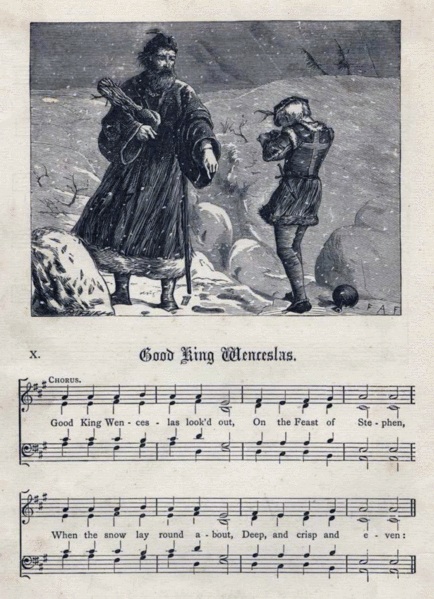
 Grammy winner



 MaryO'Studio