January 31 in Music History

today

. 1759 ~ François Devienne, French composer and professor of flute

. 1797 ~ Franz Peter Schubert, Austrian composer
Read quotes by and about Schubert
More information about Schubert

. 1798 ~ Carl Gottlieb Reissiger, German Kapellmeister and composer

. 1882 ~ Anna Pavlova, Russian ballerina and choreographer

. 1892 ~ Eddie Cantor (Iskowitz), Entertainer, ‘banjo eyes’ Some of his hits were: If You Knew Susie like I Know Susie, Alabamy Bound, Dinah, Ida, Makin’ Whoopee and Ma He’s Makin’ Eyes at Me

. 1906 ~ Benjamin Frankel, British composer

. 1921 ~ Mario Lanza, Opera singer. Some of his non-operatic songs were Be My Love, The Loveliest Night of the Year and Because You’re Mine

. 1923 ~ Carol Channing, Broadway entertainer and Tony Award-winning actress in shows such as Hello, Dolly! (1964) and Thoroughly Modern Millie

. 1934 ~ Ron Weatherburn, jazz pianist

. 1936 ~ “The Green Hornet” was introduced by its famous theme song, The Flight of the Bumble Bee, originally by Rachmaninoff. The radio show was first heard on WXYZ radio in Detroit, MI on this day. The show stayed on the air for 16 years. “The Green Hornet” originated from the same radio station where “The Lone Ranger” was performed.

. 1937 ~ Phillip Glass, American composer of minimalist music
More information about Glass

. 1946 ~ Terry Kath, Guitarist with Chicago

. 1951 ~ Harry Wayne Casey, Keyboards, singer with KC and the Sunshine Band

. 1951 ~ Phil Collins, British rock drummer, songwriter and singer

. 1951 ~ Phil Manzanera (Targett-Adams), Guitarist with Roxy Music

. 1955 ~ Electronics pioneer RCA demonstrated the first music synthesizer that could electronically play musical sounds.

. 1960 ~ Julie Andrews, Henry Fonda, Rex Harrison and Jackie Gleason, appeared in a two-hour TV special titled, The Fabulous ’50s. 1961 ~ Lloyd Cole, Guitarist, singer with Lloyd Cole and The Commotions Dial Records founder Ross Russell died. He released 78-rpm recordings of Charlie Parker on his small jazz label and wrote a biography of Parker in 1973 called “Bird Lives! The High Life and Hard Times of Charlie (Yardbird) Parker”.

. 1976 ~ ABBA knocked Queen from the UK No.1 position on the UK singles chart with ‘Mamma Mia.’ Queen’s single ‘Bohemian Rhapsody’ had enjoyed a nine week run at the top of the charts, by coincidence, Queen’s single contains the famous “mamma mia, mamma mia, mamma mia let me go” line.

. 1981~ Justin Timberlake, singer with *NSYNC who had the 2000 US No.1 single ‘It’s Gonna Be Me’ and the 1999 UK No.5 single ‘I Want You Back’. As a solo artist scored the 2003 UK No.2 & US No.3 single ‘Cry Me A River’. His second solo album ‘FutureSex/LoveSounds’ was released in 2006 with the US No.1 hit singles ‘SexyBack’, ‘My Love’ and ‘What Goes Around… Comes Around.’ With his first two albums, Timberlake has sold over fourteen million albums worldwide. Timberlake has his own record label called Tennman Records. He also has an acting career, having starred in films such as The Social Network, Bad Teacher and Friends with Benefits.

. 1982 ~ Sandy Duncan of Tyler, Texas gave her final performance as Peter Pan in Los Angeles, CA. The actress completed 956 performances without missing a show. She flew a total of 261.5 miles while on stage.

. 1985 ~ John Fogerty, former leader of Creedence Clearwater Revival, returned to the A&M recording studios in Hollywood, CA to give his first ‘live’ performance in 14 years. Actually, Fogerty performed in a video called Rock and Roll Girls.

. 1987 ~ Madonna’s record, Open Your Heart, moved to the #2 spot on the pop charts (right behind At This Moment by Billy Vera and The Beaters). A week later, Open Your Heart became Madonna’s fifth #1 hit since 1983. She had 11 consecutive singles in the Top 10, the most for any female artist of the rock era.

. 1995 ~ George Abbott, Director, passed away.

. 2002 ~ Evelyn Scott, the city’s first female disc jockey who later played a tough- talking tavern keeper on the television soap opera “Peyton Place,” died at the age of 86. Born in Brockton, Mass., Scott moved to Los Angeles and landed a job as a disc jockey on radio station KMPC. She later was hired as a singing DJ on KHJ’s “Rise and Shine” morning show. She began acting in theater companies and eventually landed small roles in films such as “Wicked Woman,” “The Green-Eyed Blonde” and “I Want to Live.” She may be best remembered as saloon keeper Ada Jacks in the soap “Peyton Place,” which showed the extramarital affairs and other dark secrets of the residents of a small New England town. Scott played the role from 1965 to 1969, and then reprised the role on “Return to Peyton Place” from 1972 to 1974. She also came back for the 1985 television movie “Peyton Place: The Next Generation.” Scott appeared in episodes of other TV shows including “Bonanza,” “Gunsmoke” and “Perry Mason.” After she retired from acting, she dedicated her time to helping the homeless and served as a board member of Portals House Inc., a center for mentally ill people.

. 2004 ~ Roberto Ocasio, a versatile musician and band leader of Latin Jazz Project, died in a car accident. He was 49. Ocasio performed more than 250 times last year, mostly in Cleveland. He has shared stages with such other Latino musicians as Eddie Palmieri and Nestor Torres. His band played venues from street festivals to Cleveland’s Severance Hall. Ocasio played the piano and six other instruments. He earned a degree in composition and arranging from the Berklee College of Music in Boston. He formed Latin Jazz Project in 1997. Ocasio composed and arranged the band’s music, a repertoire ranging from original pieces to rock tunes and American standards with his own twist. He performed songs in Spanish and English.

January 28 in Music History

today

. 1722 ~ Johann Ernst Bach, German composer of the Bach family

. 1791 ~ Ferdinand Herold, French composer

. 1887 ~ Artur Rubinstein, Polish-born American pianist, played solo for the Berlin Symphony at the age of 12.
Read quotes by and about Rubinstein
More information about Rubinstein

. 1904 ~ Enrico Caruso signed his first contract with Victor Records. He had debuted at the Metropolitan Opera just two months before.

. 1927 ~ Ronnie Scott (Schatt), Jazz musician: tenor sax, bandleader, jazz club owner in London

. 1927 ~ Twenty years before the famous record by Art Mooney was recorded, Jean Goldkette and his dancing orchestra recorded, I’m Looking Over a Four-Leaf Clover. Though the name of the bandleader may not be so famous, two of his sidemen on this Victor recording session certainly were: Big band fans know Bix Beiderbecke and Joe Venuti.

. 1929 ~ Acker (Bernard) Bilk, Clarinetist, composer

. 1935 ~ Mikhail Mikhaylovich Ippolitov-Ivanov, Russian composer, died at the age of 75

. 1938 ~ Bill Phillips, Country singer

. 1940 ~ “Beat the Band” made its debut on NBC radio. The band was that of Ted Weems and his 14-piece orchestra, who were joined by Elmo ‘The Whistling Troubadour’ Tanner, Harry Soskind and Country Washington. One other star of the show was a barber from Pittsburgh, PA (nearby Canonsburg, actually), who would record many hits for RCA Victor from 1943 right through the dawn of the 1970s. His name was Perry Como. Beat the Band was a funky show where listeners’ questions were selected in the hopes of stumping the band. If a listener’s question was chosen, he or she received $10. The questions were posed as riddles: What song title tells you what Cinderella might have said if she awoke one morning and found that her foot had grown too large for her glass slipper? If the band played the correct musical answer, Where Oh Where Has My Little Dog Gone?, the listener lost.

. 1943 ~ Dick Taylor, Bass, guitar with The Pretty Things

. 1944 ~ John Tavener, British avant-garde composer
More information about Tavener

. 1944 ~ Brian Keenan, Drummer with groups Manfred Mann and The Chambers Brothers

. 1948 ~ Mikhail Nikolayavich Baryshnikov, Russian-born American ballet dancer Washington Honored Eastwood, Baryshnikov, Others

. 1959 ~ Dave Sharp, Guitarist with The Alarm

. 1956 ~ Elvis Presley made his first appearance on national television. No, he didn’t appear on some teenage dance show; but rather, “The Dorsey Brothers Show”, starring Tommy and Jimmy. Elvis sang Blue Suede Shoes and Heartbreak Hotel. He was backed by the instruments of the Dorsey band.

. 1968 ~ Sarah McLauchlan, Singer

. 1985 ~ 45 of the world’s top recording artists were invited to an all-night recording session at the A&M studios in Los Angeles. As each of the artists walked through the studio door, they were greeted by a hand-lettered sign — put there by Lionel Richie. It simply said, “Check your ego at the door.” The session started at 10 p.m. with producer Quincy Jones conducting. At 8 o’clock the following morning, the project, “USA for Africa”, spearheaded by promoter, Ken Kragen, was recorded and mixed. The resulting song, We Are the World, featuring Michael Jackson, Cyndi Lauper, Kenny Rogers, Dolly Parton, Sting, Harry Belafonte, Diana Ross, Paul Simon and many others became the top song in the U.S. on April 13, 1985.

. 2002 ~ Michael Hammond, who became chairman of the National Endowment for the Arts just a week earlier, died apparently of natural causes. He was 69. A native of Kenosha, Wis., the conductor and composer had been dean of the School of Music at Rice University in Houston when President Bush nominated him to lead the federal agency that decides grants for the arts. After being confirmed by the Senate on Dec. 20, 2001, Hammond had assumed the post Jan. 22, 2002, and was still in the process of moving to Washington. A student of music and medicine, Hammond’s interests included music from Southeast Asia, the Renaissance and medieval times and the intersection between music and neuroscience. He received a Rhodes scholarship to study philosophy, psychology and physiology at Oxford University. He also studied Indian philosophy and music at Dehli University in India. In 1968, he left his post as director of the Wisconsin Conservatory of Music in Milwaukee to become the founding dean of music at the State University of New York at Purchase. He later served as president of the school, until he left for Rice’s Shepherd School of Music in 1986. All the while, he retained his interest in medicine, teaching neuroanatomy and physiology at Marquette Medical School and at the University of Wisconsin. Hammond also served as the founding rector of the Prague Mozart Academy in the Czech Republic, now the European Mozart Academy, was on the board of the Houston Symphony, and was vice chairman of the board of Interlochen Center for the Arts in Michigan.

. 2002 ~ Steve Caldwell, who sang and played saxophone for the Swingin’ Medallions at the time of the band’s 1966 hit Double Shot (of My Baby’s Love), died of pancreatic cancer. He was 55. Caldwell was with the group from 1963 to 1969. After getting his master’s degree in chemistry at the University of South Carolina, he returned to his native Atlanta and ran the Norell temporary staffing agency until starting his own company in 1976. His wife, Lynn Caldwell, said he raised $1 million for charity through World Methodist Evangelism.

January 27 in Music History

today

. 1629 ~ Hieronymus Praetorius, composer, died at the age of 68

. 1731 ~ Bartolomeo Cristofori, Italian instrument maker – considered the inventor of the piano, died at the age of 75

. 1756 ~ Wolfgang Amadeus Mozart, Austrian composer, pianist
Listen to Mozart’s music
Read quotes by and about Mozart
More information about Mozart
Happy Birthday, Mozart!


. 1823 ~ Edouard Lalo, French composer

. 1885 ~ Jerome Kern, American songwriter and composer of musical comedies He was known as the father of the American musical, composing Show Boat, Ol’ Man River, Smoke Gets in Your Eyes, Lovely to Look At, The Way You Look Tonight and The Last Time I Saw Paris

. 1895 ~ Harry Ruby (Rubinstein), Musician and composer

. 1901 ~ Giuseppe Verdi, Italian composer, died at the age of 77. He was an Italian operatic composer, the leading figure of Italian music in the nineteenth century and made important contributions to the development of opera.
More information about Verdi

. 1905 ~ John Schaum, Pianist, composer and music educator. Schaum began his career as a piano teacher in the late 1920s. In 1933 he founded the Schaum Piano School in Milwaukee. About the same time he began to compose piano music for teaching purposes. He also founded the first company to produce award stickers specifically for music students. Always on the lookout for better materials for his students, Schaum eventually decided to create his own books, beginning in 1941 with Piano Fun for Boys and Girls, which he later revised as the first in a series of nine piano method books that became the Schaum Piano Course, completed in 1945. These books are still widely used today.

. 1916 ~ Milt (Milton W.) Raskin, Pianist, composer and arranger

. 1918 ~ Skitch Henderson, Conductor of the Tulsa Symphony Orchestra, bandleader, musical director of NBC-TV’s The Tonight Show with Steve Allen and Johnny Carson

. 1948 ~ Mikhail Baryshnikov, Bolshoi ballet dancer, defected to U.S.

. 1961 ~ Leontyne Price made her debut at the Metropolitan Opera House in New York City. She sang in the role of Leonora in “Il Trovatore”. Price was only the seventh black singer to make a debut at the Met. Marian Anderson was the first (1955).

. 1968 ~ The Bee Gees played their first American concert, as a group. They earned $50,000 to entertain at the Anaheim Convention Center in California. This is identical to what The Beatles were paid to perform at the Hollywood Bowl a few years earlier.

. 1968 ~ Otis Redding’s (Sittin’ On) The Dock of the Bay was released on this day, seven weeks after the singer’s death. It became #1 on March 16, 1968 and remained at the top spot for a month. Redding began his recording career in 1960 with Johnny Jenkins and The Pinetoppers (on Confederate Records). He sang duet with Carla Thomas and had 11 chart hits. Redding of Dawson, GA was killed in a plane crash at Lake Monona near Madison, WI. Four members of the Bar-Kays were also killed in the crash. The Dock of the Bay, his only number one song, was recorded just three days before his death.

. 1973 ~ Mr and Mrs O got married 🙂
Read more here.

. 1982 ~ “Joseph & the Amazing Dreamcoat” opened at the Royale NYC for 747 performances

. 1984 ~ Michael Jackson’s hair caught on fire during the filming of a Pepsi commercial in Los Angeles. Pyrotechnics did not operate on cue, injuring the singer. Jackson was hospitalized for a few days and fans from around the world sent messages of concern.

January 24 in Music History

compliment


National Compliment Day.  Give an extra compliment on National Compliment Day which is observed annually on January 24. A compliment has a powerful effect. It can instill confidence in a child, or validate someone’s hard work.

The OCMS has sticker pages you can put in your student’s music or notebooks to remind him or her how well you think they’re doing.

Always find something to praise in your student’s practice and playing.  You’ll see that it makes a world of difference.

. 1776 ~ Ernst Theodor Amadeus Hoffmann, composer

. 1883 ~ Friedrich von Flotow, German baron/composer, died at the age of 70
More information about Flotow


. 1913 ~ Norman Dello Joio, American composer
More information about Dello Joio

. 1919 ~ Leon Kirchner, American composer and pianist

. 1925 ~ Maria (Betty Marie) Tallchief, Prima ballerina: Ballet Russe de Monte Carlo, New York City Ballet; formed ballet troupe and school (1974) which became Chicago City Ballet in 1980, wife of choreographer George Balanchine

http://youtu.be/2F0caHz7A6Y

. 1936 ~ Jack Scott (Scafone), Singer

. 1936 ~ Benny Goodman and his orchestra recorded one of the all-time greats, Stompin’ at the Savoy, on Victor Records. The song became such a standard, that, literally, hundreds of artists have recorded it, including a vocal version by Barry Manilow. The ‘King of Swing’ recorded the song in a session at the Congress Hotel in Chicago.

. 1937 ~ Bobby Scott, Singer, pianist, songwriter

. 1939 ~ Doug Kershaw, Cajun fiddle, songwriter, singer

. 1941 ~ Neil Diamond, American pop-rock singer and songwriter

. 1941 ~ Ray Stevens, Singer and entertainer

. 1942 ~ Abie’s Irish Rose was first heard on NBC radio this day as part of “Knickerbocker Playhouse”. The program was a takeoff on the smash play from Broadway that ran for nearly 2,000 performances. Sydney Smith played the part of Abie. Rosemary Murphy was played by Betty Winkler.

. 1973 ~ ‘Little’ Donny Osmond, of the famed Osmond Brothers/Family, received a gold record for his album, “Too Young”. When he played the gold-plated disc on his Mickey Mouse phonograph, all he heard was Ben by ‘little’ Michael Jackson, a competitor in the ‘Kids Who Sing Really High Awards’ battle.

. 2006 ~ Fayard Nicholas, American tap dancer, one-half of The Nicholas Brothers and actor (The Five Heartbeats), died of pneumonia and complications from a stroke at the age of 91.

Children: don’t try this at home – never, ever dance on a piano!


Leonard Bernstein: What Does Music Mean?

On January 18, 1958 Leonard Bernstein began presenting his television series What does music mean?  The series ran for 53 programs.  Some of the episodes can be found below:

Part 1 What is Classical Music?

Plot: Bernstein conducts Handel’s Water Music and cites it as an indisputable example of classical music. “Exact” is the word that best defines classical music, Bernstein says and he demonstrates with musical illustrations from Bach’s Fourth Brandenburg Concerto, Mozart’s Concerto No. 21 in C Major and The Marriage of Figaro, and Haydn’s Symphony No. 102.

The decline of classical music at the end of the eighteenth century is tied to Beethoven’s innovations and the Romantic movement, and Bernstein conducts Beethoven’s Egmont Overture.

https://youtu.be/rxwWlQNGeKE


Part 2 What is Melody?

Plot: Bernstein discusses the different forms melody can take, including tune, theme, motive, melodic line and musical phrase. He illustrates by conducting the orchestra in excerpts from Tchaikovsky, Wagner, Hindemith, and Brahms.

https://youtu.be/O09V4NQkOKI


Part 3 What is a Mode?

Plot: Bernstein discusses scales, intervals, and tones, and analyzes several pieces, including Debussy’s Fêtes, Rimsky-Korsakov’s Scheherazade, and music from the Kinks and the Beatles, to illustrate different modes.

An excerpt from Bernstein’s ballet Fancy Free is also performed.

https://youtu.be/k5dWEPXF_ZU


January 17 in Music History

today

. 1712 ~ John Stanley, English composer and organist

. 1728 ~ Johann Gottfried Muthel, German composer and noted keyboard virtuoso

. 1734 ~ François-Joseph Gossec, Belgian composer
More information about Gossec

. 1750 ~ Tomaso Albinioni, Italian composer (Adagio in G Minor), died at the age of 78

. 1876 ~ The saxophone was played by Etta Morgan at New York City’s Olympic Theatre. The instrument was little known at the time in the United States.

. 1913 ~ Vido Musso, Reed instruments, played with Benny Goodman, bandleader: Stan Kenton was his pianist

. 1917 ~ Ulysses Simpson Kay, US composer, born in Tucson, Arizona (d. 1995)

. 1920 ~ George Handy (George Joseph Hendleman), Pianist, composer, arranger for the Boyd Raeburn band, Alvino Rey band, Paramount Studios

. 1922 ~ Betty White, Emmy Award-winning actress on The Mary Tyler Moore Show, singer

http://youtu.be/IcFAMG8cOWg

. 1926 ~ Moira Shearer, Ballerina

. 1927 ~ Eartha Kitt, Singer. Kitt’s birth certificate listing her actual birthdate as 1/17/27 was found in 1997. She has celebrated her birthday as Jan. 26 (1928) all of her life and says, “It’s been the 26th of January since the beginning of time and I’m not going to change it and confuse my fans.”

. 1941 ~ Gene Krupa and his band recorded the standard, Drum Boogie, on Okeh Records. The lady singing with the boys in the band during the song’s chorus was Irene Daye.

. 1944 ~ Chris Montez, Singer

. 1948 ~ Mick Taylor, Singer, rhythm guitar with The Rolling Stones

. 1955 ~ Steve Earle, Songwriter, singer, guitar

. 1956 ~ Paul Young, Singer

. 1959 ~ Susanna Hoffs, Singer, guitar with The Bangles

. 1960 ~ John Crawford, Singer, bass with Berlin

. 1969 ~ Lady Samantha, one of the very first recordings by Reginald Kenneth Dwight (aka Elton John), was released in England on Philips records. The song floundered, then bombed. The rock group, Three Dog Night, however, recorded it for an album.

. 2001 ~ Pianist and singer Emma Kelly, the “Lady of 6,000 Songs” made famous by the book “Midnight in the Garden of Good and Evil,” died from a liver ailment at the age of 82. Kelly’s nightclub act, in which she tapped her vast repertoire of American popular standards five nights a week until she became ill a month ago, was a must-see for Savannah tourists itching to meet a real-life character from author John Berendt’s Southern Gothic best seller. Though the book helped her book performances from New York to Switzerland, Kelly continued to crisscross south Georgia to play church socials and high school graduations, Kiwanis luncheons and wedding receptions. Berendt devoted an entire chapter to Kelly in the 1994 book, describing her as a teetotaling Baptist who would play smoky cocktail lounges Saturday nights and Sunday school classes the next morning. Kelly performed at her own nightclub, Emma’s, in Savannah, for five years in the late 1980s. She then bounced between lounges near the downtown riverfront. She also independently recorded three albums, the last of which were released posthumously, her son said.

. 2001 ~ Jazz musician, composer and conductor Norris Turney, who played alto sax and flute with the Duke Ellington Orchestra and led the Norris Turney Quartet, died of kidney failure at the age of 79. Turney recorded with a number of bands over the years, and toured with Billy Eckstine, Ray Charles and others. He was an original member of the Lincoln target=”_blank”Center Jazz Orchestra directed by Wynton Marsalis. Turney’s lone CD as a band leader, “Big, Sweet ‘N Blue,” was warmly received by jazz critics.

. 2002 ~ Edouard Nies-Berger, the veteran organist and protege of Albert Schweitzer, died at the age of 98. Nies-Berger, who played with the New York Philharmonic, was a native of Strasbourg in Alsace. His father, a church organist, was an associate of Schweitzer. The doctor, philosopher and Nobel laureate was pastor of a nearby church where the teen- age Nies-Berger played occasionally. Nies-Berger moved to New York in 1922 and for the next 15 years played the organ in houses of worship across the country. By the mid-’30s he settled in Los Angeles and performed in the soundtracks of several films, including “The Bride of Frankenstein” and “San Francisco.” He returned to Europe in 1937 to study conducting with Bruno Walter in Salzburg, Austria. After conducting for two years in Latvia and Belgium he returned to the United States. He was named organist of the New York Philharmonic, where he played under the direction of such conductors as Walter, George Szell and Leonard Bernstein. Nies-Berger was reunited with Schweitzer in 1949, when the humanitarian visited the United States. For six years they collaborated on the completion of Schweitzer’s edition of the organ music of Johann Sebastian Bach. After serving at St. Paul’s in Richmond, Nies-Berger returned to Europe for several years to perform as a recitalist and write several books, including a memoir of Schweitzer. In 1991 he was awarded the gold medal of the Art Institute of Alsace, and in 1993 was named a knight of the arts and letters by the French Ministry of Education and Culture.

. 2013 ~ Lizbeth Webb, English soprano, died at the age of 86

January 15 in Music History

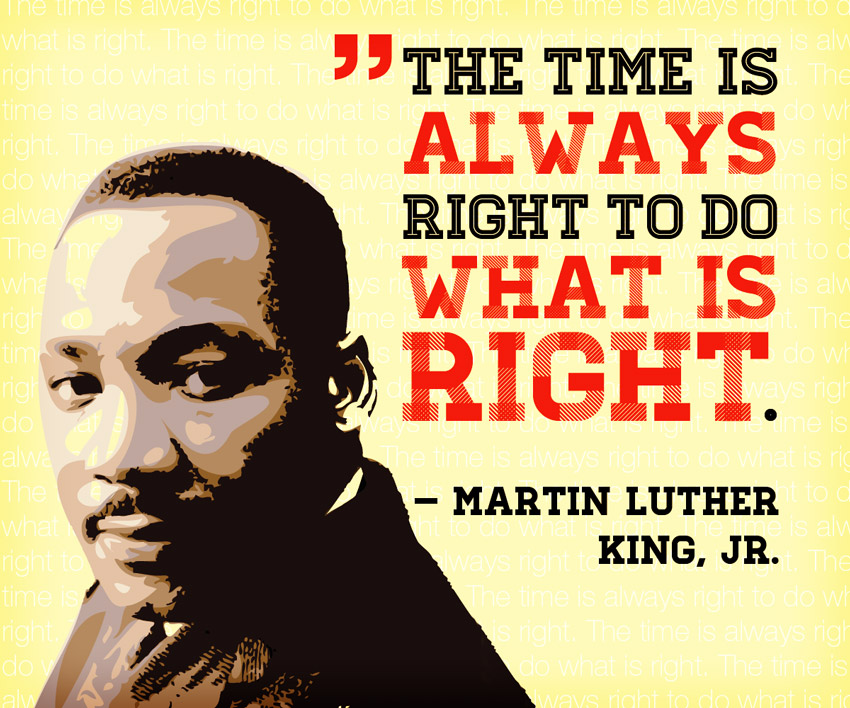
martin-luther-king


Martin Luther King, Jr Day.

. 1775 ~ Giovanni Battista Sammartini, composer, died

. 1890 ~ Premiere of The Sleeping Beauty, ballet by Pyotr Il’yich Tchaikovsky. After the less-than-promising 1877 debut of Swan Lake, marred by a largely amateur production, over a decade lapsed before the composer was commissioned by the Director of the Imperial Theatres in St. Petersburg to supply music for a ballet on the Perrault fairy tale, The Sleeping Beauty. Tchaikovsky threw himself arms-deep into the project. Not only was the composer again on happy turf, he was currently in a state of delight by the occasional presence of a three-year old little girl; children seemed to tap a joyful vein in Tchaikovsky. The little girl’s proximity fed a spirit of fantasy which transmitted to this most lighthearted of the composer’s scores. Most musicologists and historians concede that Sleeping Beauty is the most perfectly wrought of Tchaikovsky’s three ballet scores, classic in its restraint, yet possessing the right amount of color and panache to render it pure Tchaikovsky; its waltz remains a Pops favorite.

http://youtu.be/9sr8cBab_eo

. 1896 ~ Alexander Scriabin made his European debut as a pianist at the Salle Erard in Paris

. 1904 ~ Ellie Sigmeister, Classical composer

. 1905 ~ Weldon Leo ‘Jack’ Teagarden, died of pneumonia
More information about Teagarden

. 1909 ~ Gene Krupa, American Jazz bandleader and drummer

. 1925 ~ Ruth Slenczynska, pianist, born in Sacramento, California

. 1941 ~ Captain Beefheart (Don Van Vliet), Singer with Captain Beefheart & His Magic Band, artist

. 1942 ~ Kenny Sargent vocalized with the Glen Gray Orchestra on Decca Records’ It’s the Talk of the Town.

. 1948 ~ Ronnie Van Zandt, Singer, songwriter with Lynyrd Skynyrd

. 1951 ~ Charo (Maria Rosario Pilar Martinez Molina Baeza), ‘The Hootchy Cootchy Girl’, actress, singer, wife of Xavier Cugat

. 1951 ~ Martha Davis, Singer with The Motels

. 1959 ~ Peter Trewavas, Bass with Marillion

. 1964 ~ The soundtrack album of the musical, “The King and I”, starring Yul Brynner, earned a gold record.

. 1967 ~ Ed Sullivan told the Rolling Stones to change the lyrics and the title to the song, Let’s Spend the Night Together, so it became Let’s Spend Some Time Together.

. 1972 ~ Elvis Presley, who was also censored from the waist down by Ed Sullivan, reportedly drew the largest audience for a single TV show to that time. Elvis presented a live, worldwide concert from Honolulu on this day.

. 1987 ~ Ray Bolger died.  He was an American entertainer of vaudeville, stage and actor, singer and dancer best known for his portrayal of the Scarecrow in The Wizard of Oz.

https://youtu.be/ctDf2_R2MVw

. 1993 ~ Sammy Cahn passed away.  He was an was an American lyricist, songwriter and musician.

Christmas Music: Tchaikovsky’s Nutcracker

nutcracker

A few years ago, we went to see Tchaikovsky’s Nutcracker

From http://www.nycballet.com/Ballets/N/George-Balanchine-s-The-Nutcracker.aspx

During the holiday period, the entire Company is immersed in activities surrounding George Balanchine’s The Nutcracker. All 90 dancers, 62 musicians, 32 stagehands and two casts of 50 young students each from the School of American Ballet join forces to make each performance as magical as possible. Children of all ages from New York City and the nation fill the David H. Koch Theater to be captivated by the lure of Tschaikovsky’s music, Balanchine’s choreography, Karinska’s sumptuous costumes, and Rouben Ter-Arutunian’s magical sets. George Balanchine’s The Nutcracker, based on the Alexandre Dumas pere version of E.T.A. Hoffmann’s tale, The Nutcracker and the Mouse King (1816), demands a full-scale production.

The elaborate stage elements and intricate lighting unleash the viewers’ imagination by providing visual effects that are extraordinarily grand. The most famous example is the one-ton Christmas tree that grows from a height of 12 feet to 40 feet, evoking audible gasps of disbelief from the audience at each performance. Other notable feats include the comic figure of Mother Ginger — 85 pounds and nine feet wide, the costume requires handling by three people once it is lowered by pulley over the dancer’s head — as well as the continuous flutter of the purest, crystal-shaped snowflakes (which are swept up and conserved after each performance for reuse).

While these technical achievements are wonderful fun, it is Balanchine’s choreography that sustains the ballet through two acts. Act I introduces the characters — the Stahlbaum children, Marie and Fritz, Herr Drosselmeier and his Nephew — and also begins the transition from reality into fantasy with the concluding Snowflake Waltz. Act II offers the complete transformation. We have entered the “Kingdom of the Sugarplum Fairy” and there is no turning back.

George Balanchine’s The Nutcracker™ is one of the most complex theatrical, staged ballets in the Company’s active repertory. The popularity of the ballet is immense and it provides an unforgettable spark to everyone’s holiday season.

https://youtu.be/_Ofysvpgv7o

Although the original production was not a success, the 20-minute suite that Tchaikovsky extracted from the ballet was. However, the complete Nutcracker has enjoyed enormous popularity since the late 1960s and is now performed by countless ballet companies, primarily during the Christmas season, especially in North America. Major American ballet companies generate around 40 percent of their annual ticket revenues from performances of The Nutcracker.

Tchaikovsky’s score has become one of his most famous compositions, in particular the pieces featured in the suite.


April 25 ~ This Day in Music History

today

. 1906 ~ John Knowles Paine died.  He was the first American-born composer to achieve fame for large-scale orchestral music.

. 1913 ~ Earl Bostic, Saxophonist, bandleader

. 1915 ~ Italo Tajo, Italian bass

. 1915 ~ Sal Franzella, Jazz musician, alto sax, clarinet

. 1918 ~ Ella Fitzgerald, American Grammy Award-winning singer (12), jazz and popular music. She was discovered at age 16 at an amateur night at the Apollo Theater in Harlem, and went on to work with Louis Armstrong, Duke Ellington and Count Basie.

. 1923 ~ Albert King, American blues singer and guitarist

. 1923 ~ Melissa Hayden (Mildred Herman), Ballerina with the New York City Ballet

. 1926 ~ Arturo Toscanini conducted the first performance of Giacomo Puccini’s opera “Turandot” at La Scala, Milan.

. 1932 ~ Gator (Willis) Jackson, Composer, tenor sax, invented the gator horn

. 1933 ~ Jerry Leiber, Record producer with Mike Stoller

. 1945 ~ Stu Cook, Bass with Creedence Clearwater Revival

. 1945 ~ Bjorn Ulvaeus, Musician, guitar, singer with Abba

. 1946 ~ The popular Jimmy Lunceford Orchestra recorded Cement Mixer for Majestic records, tapes and CDs this day. Well, not tapes and CDs. We were still listening to 78s back then … thick, heavy ones, at that.

. 1956 ~ The rock ‘n roll legend, Elvis Presley’s Heartbreak Hotel went No.1.

. 1970 ~ DJs around the U.S. played the new number one song, ABC, quite often, as the Jackson 5 reached the number one spot in pop music for two weeks. ABC was the second of four number one songs in a row for the group from Gary, IN. I Want You Back was their first. ABC was one of 23 hits for Michael, Tito, Jackie, Jermaine and Marlon. ABC was knocked out of first place by The Guess Who and their hit, American Woman.

. 1973 ~ The group, The Sweet, received a gold record for the hit Little Willy. The English rocker band recorded four hits in addition to their first million- seller, Ballroom Blitz, Fox on the Run, Action and Love is like Oxygen. Little Willy was a top-three hit, while the group’s other gold record winner, Fox on the Run made it to the top five.

. 2000 ~ David Merrick, one of Broadway’s most flamboyant and successful theatrical producers who created “Gypsy,” “Hello, Dolly!” and “42nd Street,” died in London at the age of 88. During his long career as arguably Broadway’s most successful producer, Merrick won all the major theatrical awards, including 10 Tony Awards just for “Hello, Dolly!” He was best-known for his musicals but he produced many non-musicals as well.

February 28 ~ This Day in Music History

today

. 1876 ~ John Alden Carpenter, American composer

. 1882 ~ Geraldine Farrar, American soprano

. 1890 ~ Vasalav Nijinsky, Ballet dancer

. 1903 ~ Vincente Minnelli (Lester Anthony Minnelli), Director, Judy Garland’s husband and Liza Minnelli’s father

. 1915 ~ Lee Castle (Castaldo), Trumpet, bandleader, led Jimmy Dorsey’s band during time of smash hit, So Rare

. 1926 ~ Seymour Shifrin, American composer

. 1930 ~ Ted Lewis and his orchestra recorded On the Sunny Side of the Street for Columbia Records on this day. Mr. Lewis was heard as the featured vocalist as well, on the tune that has been recorded hundreds of times and is an American music standard.

. 1939 ~ Tommy Tune, Tony Award-winning dancer, actor, director of musical theater

. 1942 ~ Brian Jones (Lewis Hopkin-Jones), Singer, rhythm guitar with The Rolling Stones

. 1948 ~ Bernadette Peters, Singer and actress

. 1959 ~ Cash Box magazine, a trade publication for the music/radio industry, began using a red ‘bullet’ on its record charts to indicate those records that have the strongest upward movement each week. The phrase, “Number one with a bullet” designates those hits that have reached the pinnacle of statistical chartdom. To be so means to be at the top of the list and still climbing higher.

. 1960 ~ Dmitri Capyrin, Russian composer of contemporary classical music.

. 1966 ~ The famous Cavern Club in Liverpool, England closed because of financial difficulties. During its peak of success, the club was best known as the home of The Beatles.

. 1968 ~ Frankie Lymon passed away.  He was an American rock and roll/rhythm and blues singer and songwriter.

. 1984 ~ It was Michael Jackson Night at the Grammy Awards in Los Angeles. He set a record for most wins by taking home eight of the gramophone statuette honors. He broke the previous record of six awards set by Roger Miller in 1965. The reason: the biggest selling album of all time, Thriller, which sold more than 35-million copies around the world soon after its release in 1983.

. 1993 ~ Ruby Keeler passed away.  She was a Canadian-born American actress, dancer and singer most famous for her on-screen coupling with Dick Powell in a string of successful early musicals at Warner Brothers, particularly 42nd Street.