January 24: On This Day in Music

compliment


National Compliment Day.  Give an extra compliment on National Compliment Day which is observed annually on January 24. A compliment has a powerful effect. It can instill confidence in a child, or validate someone’s hard work.

The OCMS has sticker pages you can put in your student’s music or notebooks to remind him or her how well you think they’re doing.

Always find something to praise in your student’s practice and playing.  You’ll see that it makes a world of difference.

. 1776 ~ Ernst Theodor Amadeus Hoffmann, composer

. 1883 ~ Friedrich von Flotow, German baron/composer, died at the age of 70
More information about Flotow


. 1913 ~ Norman Dello Joio, American composer

. 1919 ~ Leon Kirchner, American composer and pianist

. 1925 ~ Maria (Betty Marie) Tallchief, Prima ballerina: Ballet Russe de Monte Carlo, New York City Ballet; formed ballet troupe and school (1974) which became Chicago City Ballet in 1980, wife of choreographer George Balanchine

. 1936 ~ Jack Scott (Scafone), Singer

. 1936 ~ Benny Goodman and his orchestra recorded one of the all-time greats, Stompin’ at the Savoy, on Victor Records. The song became such a standard, that, literally, hundreds of artists have recorded it, including a vocal version by Barry Manilow. The ‘King of Swing’ recorded the song in a session at the Congress Hotel in Chicago.

. 1937 ~ Bobby Scott, Singer, pianist, songwriter

. 1939 ~ Doug Kershaw, Cajun fiddle, songwriter, singer

. 1941 ~ Neil Diamond, American pop-rock singer and songwriter

. 1941 ~ Ray Stevens, Singer and entertainer

. 1942 ~ Abie’s Irish Rose was first heard on NBC radio this day as part of “Knickerbocker Playhouse”. The program was a takeoff on the smash play from Broadway that ran for nearly 2,000 performances. Sydney Smith played the part of Abie. Rosemary Murphy was played by Betty Winkler.

. 1973 ~ ‘Little’ Donny Osmond, of the famed Osmond Brothers/Family, received a gold record for his album, “Too Young”. When he played the gold-plated disc on his Mickey Mouse phonograph, all he heard was Ben by ‘little’ Michael Jackson, a competitor in the ‘Kids Who Sing Really High Awards’ battle.

. 2006 ~ Fayard Nicholas, American tap dancer, one-half of The Nicholas Brothers and actor (The Five Heartbeats), died of pneumonia and complications from a stroke at the age of 91.

Children: don’t try this at home – never, ever dance on a piano!


Composers ~ H

Halle

Adam de la Halle, also known as Adam le Bossu (“Adam the Hunchback’) lived from around 1237 to around 1286. He was a poet and composer, born in Arras, France. He was court poet and musician to Robert II of Artois, and followed him to Naples in 1283. He was the originator of French comic opera, with Le Jeu de Robin et de Marion, and the partly autobiographical composition Jeu de la fuelle (Play of the Greensward). He also wrote poems in mediaeval verse forms.

Hamlisch

Marvin Hamlisch, American pianist, composer and arranger of popular music. He helped revitalize Ragtime with his musical arrangements in the movie, The Sting.

Hammerstein

1895 – Oscar (Greeley Clendenning) Hammerstein II lived from 1895 until 1960. He was a lyricist and songwriter with Richard Rodgers. Some of their best known musicals are Oklahoma!, Carousel, South Pacific, The King and I, Flower Drum Song and Sound of Music.

Handel

George Frederick Handel lived between 1685 and 1759. He is considered to be an important baroque composer. Handel had a lot in common with Bach. They were both born in Germany, the same year and both were organists and composers. Handel moved to England and spent 40 years there. While he was there he began writing music for the British royal family and he directed and composed operas as director of the Academy of Music.

“Largo” is a musical term for “very slow” and it is also the title of Handel’s most famous single melody. Largo is from an opera called Xerxes about a Persian king with that name and had it’s premiere in London in 1738.

Handel’s nickname was “The Thunderbolt”, given to him by Mozart because he composed so much music.

One of Handel’s most popular works is The Sarabande from Suite Number 11 since it was made popular in the 1975 Stanley Kubrick movie Barry Lyndon, based on the novel by Thackery. This sarabande is part of a dance suite. Suites such as this were very popular with amateur players during Handel’s day.

He is most famous for the Messiah. This oratorio, composed in 1742, brought the entire baroque tradition to its climax. Handel’s enormous work included over 40 operas, about 20 oratorios, cantatas, sacred music, and orchestral, instrumental, and vocal works.

Handy

W. C. Handy was known as the Father of the Blues. His compositions “Memphis Blues” (1912) and “St. Louis Blues” (1914) made the blues popular in the United States.

Hanson, Howard

Howard Hanson lived from 1896 until 1981. He was a composer, conductor, educator; born in Wahoo, Nebraska. He studied and taught in the U.S.A. before winning the Rome Prize in 1921. He returned from Italy in 1924 to become director of the Eastman School of Music in Rochester, N.Y., remaining there until retirement in 1964. His compositions, including seven symphonies and the opera Merry Mount (1934), typically reflect both his Swedish family background and a conservative, Romantic spirit. He was also an important conductor and promoter of American composers, both conservative and innovative.

Hanson, Raymond

Raymond Hanson lived from 1913 until 1976. He was a composer and teacher, born in Sydney, New South Wales, Australia. He studied at the New South Wales Conservatory, to which he returned to lecture from 1948 until his death. His Trumpet Concerto is well known, and was one of the first Australian recordings to be released internationally. Other works include operas, a ballet, a symphony, four concertos, chamber music, and film scores.

Hanson-Dyer, Louise Berta Mosson

Louise Berta Mosson Hanson-Dyer lived from 1884 until 1962. She was a music publisher and patron, born in Melbourne, Victoria, Australia. She studied in Edinburgh and at the Royal College of Music, London, and became the centre of Melbourne’s musical life, helping establish the British Music Society there in 1921. She established Editions du Oiseau-Lyre, a music-publishing business in Paris in 1927, which set a new standard of music printing, and she became a leader in the revival of early music. Later resident in France, she maintained her links with Australia, and published the works of leading Australian composers. Her considerable Australian estate was left to Melbourne University for music research.

Hart

Lorenz Hart was born in New York City and lived from 1895 until 1943. He was a lyricist;. He studied journalism and wrote poetry at Columbia University and translated plays for the Shuberts before meeting composer Richard Rodgers in 1918. They collaborated on four songs for Poor Little Ritz Girl (1920) and did their first complete score for The Garrick Gaities (1925).

During the next 18 years they collaborated on a string of successful Broadway and Hollywood musicals–among them On Your Toes (1936), The Boys from Syracuse (1938), and Pal Joey (1940). Although they created many popular songs, including “With a Song in My Heart” (1929), “Blue Moon” (1934), and “My Funny Valentine” (1937), Hart’s show lyrics were distinguished by their clever wordplay, intricate internal rhymes, and often sardonic attitude.

Haydn

Joseph Haydn lived between 1732 and 1809 and was born in Austria. He is considered to be a classical composer. Haydn was born in Rohrau, Austria and is often called the father of the modern symphony. Most of his career was spent conducting an orchestra and composing music for a rich Hungarian family, the Esterházys, who not only maintained a magnificent palace in Eisenstadt, but kept a string quartet and an entire opera company in residence.

Haydn created the form of the classical symphony and string quartet as we know them today. He became one of the most important figures in the development of Classical music during the eighteenth century.

Haydn wrote 104 symphonies, more than 40 piano sonatas, over 20 operas, many string quartets, trios, masses and songs.

The Creation is one of his oratorios and has been compared to Handel’s Messiah.

Henderson

Roy Henderson was a baritone famed for his performances of Frederick Delius’ works and a teacher of Kathleen Ferrier. When he died Thursday March 11, 2000, he was 100.

Henderson learned to sing while serving with the Artists Rifles during World War I.

He studied at the Royal Academy of Music, and got his first major break in 1925 in a performance of Delius’ “Mass of Life,” which he sang at short notice at a Royal Philharmonic concert.

From then on, Henderson was regarded as the ideal Delius baritone. He sang on the first recording of Delius’ “Sea Drift” and in the premiere of “Idyll.”

He also performed all the Elgar oratorios and choral works, and sang Count Almaviva in “The Marriage of Figaro” at the 1934 opening night of the Glyndebourne summer opera festival.

Henderson’s last singing performance was on March 29, 1952 in the role of Christus in Bach’s “St. Matthew Passion” at Southwark Cathedral, the Anglican cathedral on the south bank of the Thames in London.

Henderson met Ferrier in 1942,and she later asked Henderson to teach her. She went on to become one of Britain’s renowned voices of the century.

Hill

Mildred Hill, born in 1859, American organist and pianist, composer of “Happy Birthday”. When it was granted a copywrite in 1893, it’s original title was “Goodmorning to All”.

Hindemith

Paul Hindemith lived from 1895 until 1963. He was a German composer who used many techniques of composition from the 1700’s therefore, bringing a neoclassical element to contemporary music.

Holst

Gustav Theodore Holst, English Composer, was born in Cheltenham, England in 1874 and died in London in 1934. He was of the same era as Elgar, but, like Pachelbel, is really only famous for one piece, his Planets’ Suite. This is a series of seven “movements”, one for each of the non~Earth planets known in Holst’s day (i.e., all of the planets but Earth and Pluto). The music reflects the character of the Greco-Roman divinity associated with each planet, with the opening Mars, Bringer of War, being a ferocious, menacing portrait indeed.

One of the themes to Jupiter was subsequently used as the basis for rather a patriotic hymn (I vow to thee my country), in much the same way as one of Elgar’s Pomp and Circumstance marches was turned into Land of Hope and Glory.

Horowitz

Destined to become one of the world’s greatest pianists, Vladimir Horowitz was born in 1903 in Kiev, Russia. While most young children were playing games, Vladimir was playing with the ivories. His time was well spent as he was fully capable of performing publicly by the time he was sixteen.

Within four years, the young piano virtuoso was entertaining audiences at recitals throughout Leningrad – 23 performances in one year, where he played over 200 different works of music, never repeating a composition. After Leningrad, Horowitz played in concerts in Berlin, Hamburg and Paris.

In 1928, the Russian pianist traveled to the United States to play with the New York Philharmonic Orchestra at Carnegie Hall. Arturo Toscanini chose Horowitz to perform his first solo with the New York Philharmonic. It was there that Horowitz met his bride-to-be, Toscanini?s daughter, Wanda. The two were wed in Milan in 1933. New York became Horowitz? permanent home in 1940. He became a U.S. citizen a few years later, devoting the rest of his career to benefit performances, and helping young, aspiring artists.

His return to the concert stage in May of 1965 was a triumphant success, as was his television recital, Vladimir Horowitz at Carnegie Hall.

Just three years before his death, Vladimir Horowitz returned to his homeland to perform once again for the Russian people on April 20, 1986. They felt he had been away far too long … close to sixty years.

Horn

Paul Horn was born in 1930. He is a composer, jazz musician, playing reeds. SOme of his most famous works are: Green Jelly Beans, Dancing Children, Inside [recorded in Taj Mahal]. His TV documentary was The Story of a Jazz Musician.

Hovhaness

Alan Hovhaness, (1911 until 2000) was a a prolific composer who melded Western and Asian musical styles.

Hovhaness wrote more than 400 pieces, including at least nine operas, two ballets, more than 60 symphonies, and more than 100 chamber pieces.

His works include “Lousadzak” (1944), for piano and orchestra; “Wind Drum” (1962), a music-dance drama; “And God Created the Great Whales” (1970); and “The Way of Jesus” (1974), a folk mass.

His early compositions were thoroughly Western. But the influences of Eastern musical styles became more evident after he attended Bohuslav Martinu’s master class in composition in 1942 at the Berkshire Music Center at Tanglewood.

Hovhaness was the first Western composer asked to write music for an orchestra comprised entirely of Indian instruments. He served for six months as composer-in-residence at the University of Hawaii and became a composer-in-residence with the Seattle Symphony in 1966.

Howe

Julia Ward Howe was a U.S. author and lecturer best known for her “Battle Hymn of the Republic.” In 1843 she married Samuel Gridley Howe of Boston, reformer and teacher of the blind. The “Battle Hymn”, composed to the rhythm of the folksong “John Brown’s Body”, was first published in The Atlantic Monthly in February 1862.

Huang

Dr. Hao Huang was a Leonard Bernstein Music scholarship recipient at Harvard University (AB cum laude), a piano scholarship Master’s student at the Juilliard School (MM in piano performance), and a Graduate Council Fellow at the State University of New York at Stony Brook (DMA). He has studied with Seymour Bernstein, Leon Fleisher, Claude Frank, Beveridge Webster and Gilbert Kalish. He is currently a piano professor at Scripps College and the Claremont Graduate School, and has taught at the Hochschule fur Musik “Franz Liszt” in Weimar and the School of Music at Converse College.


January 17 ~ On This Day in Music

today

. 1712 ~ John Stanley, English composer and organist

. 1728 ~ Johann Gottfried Muthel, German composer and noted keyboard virtuoso

. 1734 ~ François-Joseph Gossec, Belgian composer
More information about Gossec

. 1750 ~ Tomaso Albinoni, Italian composer (Adagio in G Minor), died at the age of 78

. 1876 ~ The saxophone was played by Etta Morgan at New York City’s Olympic Theatre. The instrument was little known at the time in the United States.

. 1913 ~ Vido Musso, Reed instruments, played with Benny Goodman, bandleader: Stan Kenton was his pianist

. 1917 ~ Ulysses Simpson Kay, US composer, born in Tucson, Arizona (d. 1995)

. 1920 ~ George Handy (George Joseph Hendleman), Pianist, composer, arranger for the Boyd Raeburn band, Alvino Rey band, Paramount Studios

. 1922 ~ Betty White, Emmy Award-winning actress on The Mary Tyler Moore Show, singer

https://youtu.be/EZlOH1gt2O0

. 1926 ~ Moira Shearer, Ballerina

. 1927 ~ Eartha Kitt, Singer. Kitt’s birth certificate listing her actual birthdate as 1/17/27 was found in 1997. She has celebrated her birthday as Jan. 26 (1928) all of her life and says, “It’s been the 26th of January since the beginning of time and I’m not going to change it and confuse my fans.”

. 1938 ~The first jazz concert is performed at Carnegie Hall. Benny Goodman and his orchestra performed at this iconic New York City venue and the event included guests like Count Basie and other popular names of the day. It gave the genre credibility as a legitimate musical preference.

https://youtu.be/5BIj_SAlvuE

. 1941 ~ Gene Krupa and his band recorded the standard, Drum Boogie, on Okeh Records. The lady singing with the boys in the band during the song’s chorus was Irene Daye.

. 1944 ~ Chris Montez, Singer

. 1948 ~ Mick Taylor, Singer, rhythm guitar with The Rolling Stones

. 1955 ~ Steve Earle, Songwriter, singer, guitar

. 1956 ~ Paul Young, Singer

. 1959 ~ Susanna Hoffs, Singer, guitar with The Bangles

. 1960 ~ John Crawford, Singer, bass with Berlin

. 1969 ~ Lady Samantha, one of the very first recordings by Reginald Kenneth Dwight (aka Elton John), was released in England on Philips records. The song floundered, then bombed. The rock group, Three Dog Night, however, recorded it for an album.

. 2001 ~ Pianist and singer Emma Kelly, the “Lady of 6,000 Songs” made famous by the book “Midnight in the Garden of Good and Evil,” died from a liver ailment at the age of 82. Kelly’s nightclub act, in which she tapped her vast repertoire of American popular standards five nights a week until she became ill a month ago, was a must-see for Savannah tourists itching to meet a real-life character from author John Berendt’s Southern Gothic best seller. Though the book helped her book performances from New York to Switzerland, Kelly continued to crisscross south Georgia to play church socials and high school graduations, Kiwanis luncheons and wedding receptions. Berendt devoted an entire chapter to Kelly in the 1994 book, describing her as a teetotaling Baptist who would play smoky cocktail lounges Saturday nights and Sunday school classes the next morning. Kelly performed at her own nightclub, Emma’s, in Savannah, for five years in the late 1980s. She then bounced between lounges near the downtown riverfront. She also independently recorded three albums, the last of which were released posthumously, her son said.

. 2001 ~ Jazz musician, composer and conductor Norris Turney, who played alto sax and flute with the Duke Ellington Orchestra and led the Norris Turney Quartet, died of kidney failure at the age of 79. Turney recorded with a number of bands over the years, and toured with Billy Eckstine, Ray Charles and others. He was an original member of the Lincoln Center Jazz Orchestra directed by Wynton Marsalis. Turney’s lone CD as a bandleader, “Big, Sweet ‘N Blue,” was warmly received by jazz critics.

. 2002 ~ Edouard Nies-Berger, the veteran organist and protege of Albert Schweitzer, died at the age of 98. Nies-Berger, who played with the New York Philharmonic, was a native of Strasbourg in Alsace. His father, a church organist, was an associate of Schweitzer. The doctor, philosopher and Nobel laureate was pastor of a nearby church where the teenage Nies-Berger played occasionally. Nies-Berger moved to New York in 1922 and for the next 15 years played the organ in houses of worship across the country. By the mid-’30s he settled in Los Angeles and performed in the soundtracks of several films, including “The Bride of Frankenstein” and “San Francisco.” He returned to Europe in 1937 to study conducting with Bruno Walter in Salzburg, Austria. After conducting for two years in Latvia and Belgium he returned to the United States. He was named organist of the New York Philharmonic, where he played under the direction of such conductors as Walter, George Szell and Leonard Bernstein. Nies-Berger was reunited with Schweitzer in 1949, when the humanitarian visited the United States. For six years they collaborated on the completion of Schweitzer’s edition of the organ music of Johann Sebastian Bach. After serving at St. Paul’s in Richmond, Nies-Berger returned to Europe for several years to perform as a recitalist and write several books, including a memoir of Schweitzer. In 1991 he was awarded the gold medal of the Art Institute of Alsace, and in 1993 was named a knight of the arts and letters by the French Ministry of Education and Culture.

. 2013 ~ Lizbeth Webb, English soprano, died at the age of 86

Leonard Bernstein: What Does Music Mean?

On January 18, 1958 Leonard Bernstein began presenting his television series What does music mean?  The series ran for 53 programs.  Some of the episodes can be found below:

Part 1 What is Classical Music?

Plot: Bernstein conducts Handel’s Water Music and cites it as an indisputable example of classical music. “Exact” is the word that best defines classical music, Bernstein says and he demonstrates with musical illustrations from Bach’s Fourth Brandenburg Concerto, Mozart’s Concerto No. 21 in C Major and The Marriage of Figaro, and Haydn’s Symphony No. 102.

The decline of classical music at the end of the eighteenth century is tied to Beethoven’s innovations and the Romantic movement, and Bernstein conducts Beethoven’s Egmont Overture.


Part 2 What is Melody?

Plot: Bernstein discusses the different forms melody can take, including tune, theme, motive, melodic line and musical phrase. He illustrates by conducting the orchestra in excerpts from Tchaikovsky, Wagner, Hindemith, and Brahms.


Part 3 What is a Mode?

Plot: Bernstein discusses scales, intervals, and tones, and analyzes several pieces, including Debussy’s Fêtes, Rimsky-Korsakov’s Scheherazade, and music from the Kinks and the Beatles, to illustrate different modes.

An excerpt from Bernstein’s ballet Fancy Free is also performed.

January 15 ~ On This Day in Music

. 1775 ~ Giovanni Battista Sammartini, composer, died

. 1890 ~ Premiere of The Sleeping Beauty, ballet by Pyotr Il’yich Tchaikovsky. After the less-than-promising 1877 debut of Swan Lake, marred by a largely amateur production, over a decade elapsed before the composer was commissioned by the Director of the Imperial Theatres in St. Petersburg to supply music for a ballet on the Perrault fairy tale, The Sleeping Beauty. Tchaikovsky threw himself arms-deep into the project. Not only was the composer again on happy turf, but he was also currently in a state of delight by the occasional presence of a three-year-old little girl; children seemed to tap a joyful vein in Tchaikovsky. The little girl’s proximity fed a spirit of fantasy that transmitted to this most lighthearted of the composer’s scores. Most musicologists and historians concede that Sleeping Beauty is the most perfectly wrought of Tchaikovsky’s three ballet scores, classic in its restraint, yet possessing the right amount of color and panache to render it pure Tchaikovsky; its waltz remains a Pops favorite.

. 1896 ~ Alexander Scriabin made his European debut as a pianist at the Salle Erard in Paris

. 1904 ~ Ellie Sigmeister, Classical composer

. 1905 ~ Weldon Leo ‘Jack’ Teagarden, died of pneumonia
More information about Teagarden

. 1909 ~ Gene Krupa, American Jazz bandleader and drummer

. 1919 ~ Pianist and statesman Ignace Paderewski became the first premier of Poland

. 1925 ~ Ruth Slenczynska, pianist, born in Sacramento, California

. 1941 ~ Captain Beefheart (Don Van Vliet), Singer with Captain Beefheart & His Magic Band, artist

. 1942 ~ Kenny Sargent vocalized with the Glen Gray Orchestra on Decca Records’ It’s the Talk of the Town.

. 1944 ~ Duke Ellington and His Famous Orchestra took the song “Do Nothin’ Till You Hear From Me” to the top of the charts. It was there for eight weeks before being knocked out off the top.

. 1948 ~ Ronnie Van Zandt, Singer, songwriter with Lynyrd Skynyrd

. 1951 ~ Charo (Maria Rosario Pilar Martinez Molina Baeza), ‘The Hootchy Cootchy Girl’, actress, singer, wife of Xavier Cugat

. 1951 ~ Martha Davis, Singer with The Motels

. 1959 ~ Peter Trewavas, Bass with Marillion

. 1964 ~ The soundtrack album of the musical, “The King and I”, starring Yul Brynner, earned a gold record.

. 1967 ~ Ed Sullivan told the Rolling Stones to change the lyrics and the title to the song, Let’s Spend the Night Together, so it became Let’s Spend Some Time Together.

. 1972 ~ Elvis Presley, who was also censored from the waist down by Ed Sullivan, reportedly drew the largest audience for a single TV show to that time. Elvis presented a live, worldwide concert from Honolulu on this day.

. 1972 ~ “American Pie” by Don McLean hit #1 on the pop charts

. 1987 ~ Ray Bolger died.  He was an American entertainer of vaudeville, stage and actor, singer and dancer best known for his portrayal of the Scarecrow in The Wizard of Oz.

. 1993 ~ Sammy Cahn passed away.  He was an American lyricist, songwriter and musician.

. 2018 ~ Edwin Hawkins, American gospel musician, choirmaster and composer (Oh Happy Day), died of pancreatic cancer at the age of 74

. 2019 ~ Carol Elaine Channing died at the age of 98. She was an American actress, singer, dancer and comedian. Notable for starring in Broadway and film musicals, her characters typically radiate a fervent expressiveness and an easily identifiable voice, whether singing or for comedic effect.

Composers – D


Dallapiccola

Luigi Dallapiccola was an Italian composer known for his lyrical twelve-tone compositions.

Debussy

Claude Debussy lived between 1862 and 1918. He is considered to be a impressionistic composer, because he tried to capture the mood of the action instead of the action itself, and was known as the Father of Impressionistic Music. Debussy’s work influenced another Impressionistic composer, Maurice Ravel.

The French Impressionistic painters like Auguste Renoir were painting at the same time that Debussy was composing and that influenced his music. “Clair de Lune” is a famous example of this as it creates the feeling of rippling water.

Debussy liked to create tonal “impressions” rather than conventional melodies. “Rêverie” was one of his first successes, although the critics of the 1890’s said things like “strangeness”, “dissonance”, “ugliness” and “difficulties” about it, missing the fragile loveliness and vague shimmer which were stylistic innovations.

Debussy was playing piano and composing by the time he was 12.

DeForest

Lee DeForest was born in 1873 in Council Bluffs, Iowa. We’re sure his parents had big plans for him; but they could never have realized how their son, Lee, would change the world.

DeForest seemed to be a born inventor. He held patents for hundreds of different items including the photoelectric cell and the surgical radio knife. But none had as much impact on the world as his invention of the electron tube, specifically the triode, a three element vacuum tube, which later became the audion tube ~~ possibly the most significant invention that made radio possible.

Wireless radio broadcasting was unthinkable in the early 1900s and DeForest was considered a fraud. He was arrested for selling stock to underwrite the development of his invention, which no one believed would work. He was forced into selling the rights to his patent to American Telephone and Telegraph for $500,000; considered by most to be foolish of AT&T. The rest is history.

Lee DeForest’s 1950 autobiography is called “Father of Radio”.

Delius

Frederick Delius was born in Bradford, England. His father owned a wool company and hoped that his son would follow a career in business. Delius, however, wanted to study music. In 1884, he left England for Florida, where he worked on a plantation as an orange grower. Delius proved to be a failure as an orange grower, and began supporting himself as a musician. During 1886 – 1887, he composed Florida Suite.

Des Prez

Josquin Des Prez was born around 1440 and he died: August 27, 1521 in Cond?-sur-l-Escaut, France.

He was a French/Franco-Flemish composer and generally acknowledged as the greatest composer of the High Renaissance.

Martin Luther, who had a good knowledge of music, said of Josquin Desprez, “he alone is the master of the notes, they have to do as he bids them.” Indeed, Josquin was acknowledged by nearly all his contemporaries as the greatest composer of his time. If so, he stands as the first among many great musicians, for the composers of what we often term the Netherlands School created one of the richest periods in Western musical history. His contemporaries — including Antoine Brumel (c.1460-c.1515), Pierre de la Rue (c.1460-1518) and Loyset Comp?re (c.1445-1518) — and the previous generation — led by Johannes Ockeghem (c.1410-1497) — created a style of music that can rightly be compared to the art of Leonardo da Vinci and Michelangelo.

As for Josquin himself, we know surprisingly little of his early life. We know that in the 1470s he began service in the court of Cardinal Ascanio Sforza, and that by 1489 he was a member of the papal choir in Rome. But we know nothing of his early training, or even when he came to Italy (it was believed that he came in 1459 as a choirboy in the Milan cathedral, but it seems that this was a case of mistaken identity). Later in his life he served Duke Ercole d’Este in Ferrara, and possibly King Louis XII of France. The final years of his life were spent in the town of Cond?-sur-l’Escaut in northern France (possibly his birthplace). The rest of his biography is still subject to scholarly speculation.

What we do know is just what Josquin’s contemporaries knew: that he created wonderful music. What stands out most in this music is his care for the words. This is seen in part by the way he uses imitation to allow each voice to present the text before the texture becomes too dense to be clear. He also made use of homophonic textures to give the text an added clarity. Some of his works, especially his Masses, use the older cantus firmus technique. Here he uses the borrowed melody to create a huge scaffolding upon which he constructs the other melodies. Some of these pieces display a high level of technical complexity. At the same time, he could create pieces of marvelous simplicity and elegance, as he did so often in his motets and chansons.

Musical Examples:

  • Inviolata, integra et casta es Maria
  • Miserere mei, Deus
  • Missa “La sol fa re mi” (Agnus Dei II)
  • Tu solus, qui facis mirabilia

Works:

  • Sacred works, including 18 masses (Missa “La sol fa re mi”, 2 L’homme arm?
  • Masses, Missa “Pange lingua”), more than 100 motets
  • Secular works, including nearly 70 French chansons and settings of German,
    Spanish and Italian texts

Diaghilev

Sergei Pavlovich Diaghilev lived from 1872 until 1929. He was a ballet impresario, born in Novgorod, Russia. Diaghilev obtained a law degree, but was preoccupied with the arts. In 1898 he became editor of Mir Iskousstva (World of Art), and during the next few years arranged exhibitions and concerts of Russian art and music. His permanent company was founded in 1911, and remained perilously in existence for 20 years, triumphantly touring Europe. Many of the great dancers, composers, and painters of his period contributed to the success of his Ballets Russes. He also encouraged several major choreographers (eg Fokine, Nijinsky, Balanchine), and gave them opportunities for artistic collaboration.

Dispeker

Thea Dispeker molded operatic talent from Lauritz Melchior to Richard Leech and lived to be 97 years old.

Dispeker owned a classical music artists agency for more than 50 years. In her career, she influenced musicians such as Richard Tucker, Judith Blegen, Roberta Peters and Pablo Casals, among others.

In 1947, she helped found the Little Orchestra Society for children’s concerts and went into business for herself.

Even in her 80s and 90s, Dispeker continued to seek out young singers and musicians to promote. Her portfolio also included the Swedish baritone Hakan Hagegard.

Her agency, Thea Dispeker Inc., received an International Society for the Performing Arts Foundation award of merit in 1997, its 50th anniversary year.

Dittersdorf

Carl Ditters von Dittersdorf lived from 1739 until 1799. He was a composer and violinist. He had composition lessons from Giuseppe Bonno in his native Vienna and served as a violinist in the orchestra of the Prince of Sachsen-Hildburghausen, followed by a position in the imperial theatre. There followed a period as Kapellmeister to the Bishop of Grosswardein, where, in 1762, he succeeded Michael Haydn. In 1769 he became Kapellmeister to the Prince-Bishop of Breslau, at this period acquiring the patent of nobility that added to the name of Ditters the honorific von Dittersdorf. Conditions in Johannisberg, the seat of the Prince-Bishop, deteriorated in the political circumstances of the time, and on the death of his employer in 1795, he moved with his family to join the household of a nobleman in Bohemia.

Dohnányi

Ernő Dohnányi lived from 1877 until 1960. He was born in Poszony (now Bratislava) in 1877 and opted for further musical study in Budapest rather than, more conventionally, in Vienna, setting an example that was followed by his younger contemporary Bartok. He played a leading part in forming the musical culture of Hungary, although there were difficulties with the regime that replaced the first republican government of the country. Due to his overt opposition to the association of Hungary with National Socialist Germany, he found it necessary to spend his final years in America, dying in New York in 1960.

As a composer Dohnányi was versatile, continuing existing traditions of music, while as a pianist he enjoyed international fame.

Domingo

Opera king Plácido Domingo
joins the Global Music Network and serves up an aria for online listeners. Live events and interviews, along with jazz and classical clips.

Donizetti

Gaetano Donizetti was born in in Bergamo, November 29, 1797 and died in Bergamo, April 8, 1848.

Inheriting the bel canto tradition from Rossini, Donizetti’s operas are today mostly admired for their many attractive melodies and fine ensembles. Although he composed over seventy operas, only a handful have remained in the general repertory, but those are generally regarded as outstanding examples of the Italian Bel Canto period. Donizetti’s most famous opera is surely Lucia di Lammermoor, based on a novel by Sir Walter Scott. The plot concerns a young girl who is tricked by her brother into thinking her lover has been unfaithful to her and forces her into a marriage of political convenience. During the wedding scene, Lucia’s lover makes an unexpected entrance, and all the protagonists give vent to their varied emotions in the celebrated Sextet from Lucia di Lammermoor. As was popular in Italian opera of the time, Lucia then goes mad, giving the prima donna an opportunity to display great acting and vocal skill in an extended scena.

The Italian operatic tradition was continued and taken to sublime heights later in the nineteenth century in the works of Giuseppe Verdi.

Dowland

John Dowland lived from 1562 until 1626. He was an English composer, singer and lutenist who wrote about 90 works for the Renaissance lute, several psalm harmonizations and many sacred songs.

Driggo

Riccardo Drigo was born and educated in Padua but he spent most of his life – from 1878 until 1915 – among Russian royalty as conductor ot the Marinsky Theater. He lived from 1846 until 1930.

Du Fay

Guillaume Du Fay was born on August 5, 1397(?) in Cambrai, France and died on November 27, 1474 in Cambrai, France. He was a French composer and was considered the leading composer of the early Renaissance.

The fifteenth century saw the rise of a new musical style, one in which harmonies began to center on full triads and the setting of the text became an important concern to composers. Guillaume Du Fay is one of the most important figures in the transition from the medieval to Renaissance style, which took place mainly among composers associated with the rich court of Burgundy. For this reason, Du Fay and his contemporaries are usually referred to as the “Burgundian School.”

Guillaume Du Fay probably received his early musical training in the cathedral choir at Cambrai, in northern France. But his career took a decidedly international turn early on. By the age of twenty-five he had gone to Italy. During his years there, he worked for courts in Pesaro, Ferrara and sang in the Papal choir in Rome. During that time he also earned a degree in canon law, probably at the University of Bologna. He spent the latter part of his life back at the cathedral in Cambrai. Du Fay wrote both sacred and secular music; he is perhaps best known for his cantus firmus Masses. Before he died, he composed a Requiem Mass (now lost) to be sung at his funeral, and asked that four of the best singers from the cathedral sing his motet Ave regina caelorum (Hail, Queen of Heaven) to him on his deathbed.

Du Fay’s music set the tone for the Renaissance (one scholar credits him with defining the “central style” of the period). His triad-based harmonies and arching melodies create a pleasant balance of melody and harmony. In his sacred music, he changed the overall sound by a more regular use of four-voice textures. At the same time, we can still find the medieval concern with structure and isorhythm in his sacred music, especially his cantus firmus Masses.

Sacred works including at least 7 complete Mass settings, numerous Mass movements and pairs, 30 motets and 60 other sacred works (hymns, etc.)
Secular works including more than 50 rondeaux, 10 ballades, 4 virelais, 15 other works.

Dukas

Paul Dukas’ The Sorcerer’s Apprentice was featured in the Walt Disney movie Fantasia and Fantasia 2000.

Dvorák

Antonín Dvorák’s piece, “Humoresque” became one of the most famous pieces ever written nearly overnight. It was later discovered that this could be played simultaneously with Steven Foster’s “Way Down Upon the Swanee River”.

Dvorák, a native of Bohemia, traveled in the United States in 1892 and found American music to be “magical” and “spacious”. When Dvorák visited the United States, he encouraged American composers to use their native music. He himself incorporated folk melodies into 19th century Romantic music. His compositions include Slavonic Dances, Fifth Symphony, The Water Nymph, Carnival, Gypsy Melodies.

Dvorák lived from 1841 until 1904.

April 25: On This Day in Music

today

. 1906 ~ John Knowles Paine died.  He was the first American-born composer to achieve fame for large-scale orchestral music.

. 1913 ~ Earl Bostic, Saxophonist, bandleader

. 1915 ~ Italo Tajo, Italian bass

. 1915 ~ Sal Franzella, Jazz musician, alto sax, clarinet

. 1918 ~ Ella Fitzgerald, American Grammy Award-winning singer (12), jazz and popular music. She was discovered at age 16 at an amateur night at the Apollo Theater in Harlem, and went on to work with Louis Armstrong, Duke Ellington and Count Basie.

. 1923 ~ Albert King, American blues singer and guitarist

. 1923 ~ Melissa Hayden (Mildred Herman), Ballerina with the New York City Ballet

. 1926 ~ Arturo Toscanini conducted the first performance of Giacomo Puccini’s opera “Turandot” at La Scala, Milan.

. 1932 ~ Gator (Willis) Jackson, Composer, tenor sax, invented the gator horn

. 1933 ~ Jerry Leiber, Record producer with Mike Stoller

. 1945 ~ Stu Cook, Bass with Creedence Clearwater Revival

. 1945 ~ Bjorn Ulvaeus, Musician, guitar, singer with Abba

. 1946 ~ The popular Jimmy Lunceford Orchestra recorded Cement Mixer for Majestic records, tapes and CDs this day. Well, not tapes and CDs. We were still listening to 78s back then … thick, heavy ones, at that.

. 1952 ~ Ketil Bjørnstad, Norwegian pianist

. 1956 ~ The rock ‘n roll legend, Elvis Presley’s Heartbreak Hotel went No.1.

. 1970 ~ DJs around the U.S. played the new number one song, ABC, quite often, as the Jackson 5 reached the number one spot in pop music for two weeks. ABC was the second of four number one songs in a row for the group from Gary, IN. I Want You Back was their first. ABC was one of 23 hits for Michael, Tito, Jackie, Jermaine and Marlon. ABC was knocked out of first place by The Guess Who and their hit, American Woman.

. 1973 ~ The group, The Sweet, received a gold record for the hit Little Willy. The English rocker band recorded four hits in addition to their first million-seller, Ballroom Blitz, Fox on the Run, Action and Love is like Oxygen. Little Willy was a top-three hit, while the group’s other gold record winner, Fox on the Run made it to the top five.

. 2000 ~ David Merrick, one of Broadway’s most flamboyant and successful theatrical producers who created “Gypsy,” “Hello, Dolly!” and “42nd Street,” died in London at the age of 88. During his long career as arguably Broadway’s most successful producer, Merrick won all the major theatrical awards, including 10 Tony Awards just for “Hello, Dolly!” He was best-known for his musicals but he produced many non-musicals as well.

. 2007 ~ Bobby “Boris” Pickett, American singer-songwriter (Monster Mash), died from leukemia at the age of 69

February 28: On This Day in Music

today

. 1876 ~ John Alden Carpenter, American composer

. 1882 ~ Geraldine Farrar, American soprano

. 1890 ~ Vasalav Nijinsky, Ballet dancer

. 1903 ~ Vincente Minnelli (Lester Anthony Minnelli), Director, Judy Garland’s husband and Liza Minnelli’s father

. 1915 ~ Lee Castle (Castaldo), Trumpet, bandleader, led Jimmy Dorsey’s band during time of smash hit, So Rare

. 1926 ~ Seymour Shifrin, American composer

. 1930 ~ Ted Lewis and his orchestra recorded On the Sunny Side of the Street for Columbia Records on this day. Mr. Lewis was heard as the featured vocalist as well, on the tune that has been recorded hundreds of times and is an American music standard.

. 1939 ~ Tommy Tune, Tony Award-winning dancer, actor, director of musical theater

. 1942 ~ Brian Jones (Lewis Hopkin-Jones), Singer, rhythm guitar with The Rolling Stones

. 1948 ~ Bernadette Peters, Singer and actress

. 1959 ~ Cash Box magazine, a trade publication for the music/radio industry, began using a red ‘bullet’ on its record charts to indicate those records that have the strongest upward movement each week. The phrase, “Number one with a bullet” designates those hits that have reached the pinnacle of statistical chartdom. To be so means to be at the top of the list and still climbing higher.

. 1960 ~ Dmitri Capyrin, Russian composer of contemporary classical music.

. 1966 ~ The famous Cavern Club in Liverpool, England closed because of financial difficulties. During its peak of success, the club was best known as the home of The Beatles.

. 1968 ~ Frankie Lymon passed away.  He was an American rock and roll/rhythm and blues singer and songwriter.

. 1984 ~ It was Michael Jackson Night at the Grammy Awards in Los Angeles. He set a record for most wins by taking home eight of the gramophone statuette honors. He broke the previous record of six awards set by Roger Miller in 1965. The reason: the biggest selling album of all time, Thriller, which sold more than 35-million copies around the world soon after its release in 1983.

. 1993 ~ Ruby Keeler passed away.  She was a Canadian-born American actress, dancer and singer most famous for her on-screen coupling with Dick Powell in a string of successful early musicals at Warner Brothers, particularly 42nd Street.

. 2019 ~ André Previn, German-American pianist, conductor, and composer died at the age of 89. Previn won four Academy Awards for his film work and ten Grammy Awards for his recordings (and one more for his Lifetime Achievement).

February 21: On This Day in Music

today

. 1791 ~ Carl Czerny, Austrian pianist and composer whose vast musical production amounted to over a thousand works. His books of studies for the piano are still widely used in piano teaching.
More information on Czerny

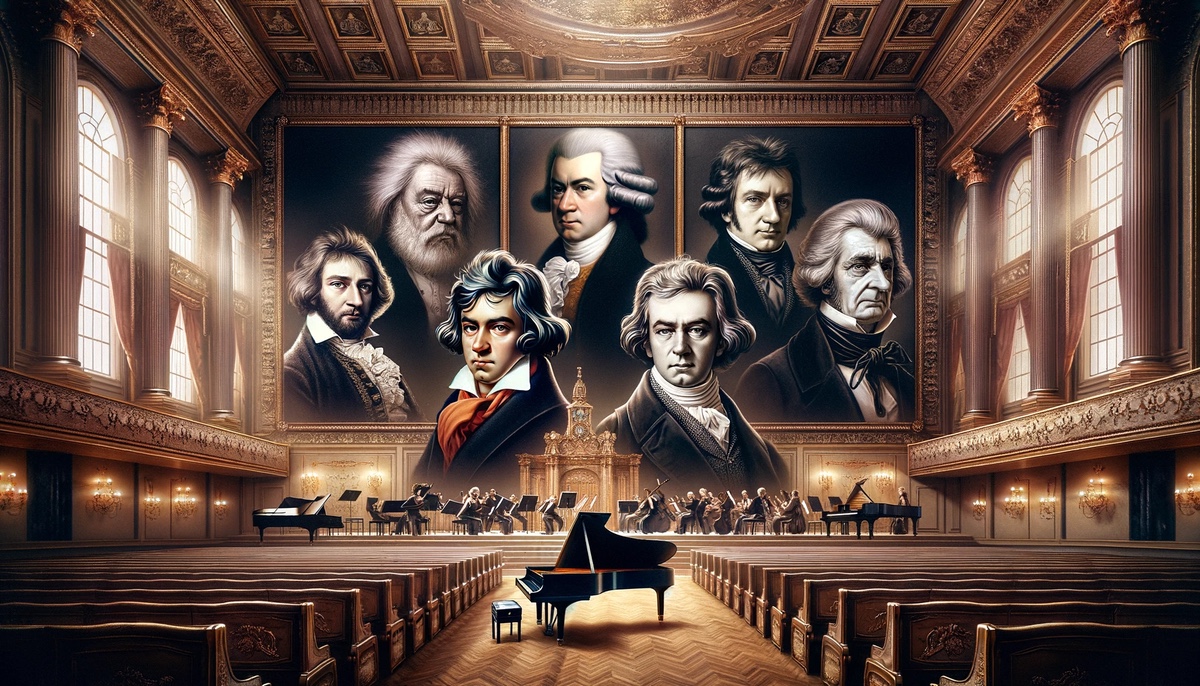
Czerny is in the center top of this image. He influenced many!

Czerny is in the center top of this image. He influenced many!


. 1836 ~ Léo Delibes, French composer of ballets, operas, and other works for the stage.
More information on Delibes

http://youtu.be/DFe1N5KQyQU

. 1893 ~ Andrés Segovia, Spanish guitarist
More information on Segovia

http://youtu.be/eBQfHJA2Lng

. 1933 ~ Nina Simone, American jazz and soul singer

. 1943 ~ David Geffen, Tony Award-winning producer of Cats in 1983, M Butterfly in 1988, “Miss Saigon”, Beetlejuice and Risky Business. Also a record executive: Geffen Records and a partner in Dreamworks film production company with Jeffrey Katzenberg and Steven Spielberg.

. 1944 ~ New York City Opera, first performance

. 1958 ~ Mary Chapin Carpenter, Grammy Award-winning singer

. 1982 ~”Ain’t Misbehavin'” closed at Longacre Theater in New York City after 1604 performances

. 1990 ~ “The Batman Theme” by Danny Elfman won Grammy Award for Best Instrumental Composition at 32nd Annual Grammy Awards

. 1991 ~ Dame Margot Fonteyn died. She is widely regarded as one of the greatest classical ballet dancers of all time.

http://youtu.be/qG7JvpPGdEU

. 2015 ~ Clark Terry died.   He was an American swing and bebop trumpeter, a pioneer of the flugelhorn in jazz, educator, and NEA Jazz Masters inductee. He played with Charlie Barnet (1947), Count Basie (1948–1951), Duke Ellington (1951–1959) and Quincy Jones (1960).

Terry’s career in jazz spanned more than seventy years and he is among the most recorded of jazz musicians.

. 2017 ~ Stanislaw Skrowaczewski, Polish-born classical conductor and composer, died at the age of 93

. 2019 ~ Peter Tork, a musician who became a teeny-bopper sensation as a member of The Monkees, the wisecracking, made-for-TV pop group that imitated and briefly outsold The Beatles, has died at the age of 77.

February 12: On This Day in Music

today

. 1728 ~ Mysterious priest-composer Agostino Steffani died.

. 1760 ~ Jan Ladislav Dussek, Czech composer and pianist.  Along with his friend, famed piano maker John Broadwood, Dussek made important design improvements to the piano, allowing for the more dynamic style of playing that his highly original compositions required. Beethoven himself later used a Broadwood piano with Dussek’s innovations. This helped pave the way for Romanticism and Dussek’s influence on Beethoven’s piano writing has been well documented.

Dussek’s Piano Sonata Op. 77 in F minor (“L’invocation”), from 1812, is the last work he ever composed, and he saved the best for last. This is a neglected masterpiece that foreshadows Schubert, Chopin, Schumann, and Brahms.

. 1881 ~ Anna (Pavlovna) Pavlova, Russia’s premier ballerina

. 1894 ~ Hans von Bülow, German pianist and composer died (b. 1830)
More about von Bulow

. 1898 ~ Roy Harris, American composer

. 1904 ~ Ted Mack (William Maguiness), TV host of The Original Amateur Hour, The Ted Mack Family Hour

. 1914 ~ (Gordon) Tex Beneke, Bandleader, singer, tenor sax in the Glenn Miller Orchestra

, 1915 ~ Charles Emile Waldteufel, composer, died at the age of 77

. 1918 ~ All theatres in New York City were shut down in an effort to conserve coal.

. 1923 ~ Mel Powell, American jazz pianist and composer. One of his works is Mission to Moscow for Benny Goodman. He was also Dean of Music at California Institute of Arts.

. 1923 ~ Franco Zeffirelli, Italian director and producer of opera, theatre, film and television

. 1924 ~ Bandleader Paul Whiteman presented his unique symphonic jazz at the Aeolian Hall in New York City. The concert marked the first public performance of George Gershwin’s Rhapsody in Blue. The composer, himself, was at the piano this night. Distinguished guests included John Philip Sousa and Jascha Heifetz.

. 1935 ~ Gene McDaniels (Eugene Booker McDaniels), Singer

. 1939 ~ Ray Manzarek, Keyboards with The Doors

. 1942 ~ Mildred Bailey recorded More Than You Know on Decca Records.

. 1948 ~ Joe Schermie, Bass with Three Dog Night

. 1949 ~ “Annie Get Your Gun” closed at the Imperial Theater in New York City after 1147 performances


. 1964 ~ The Beatles played two concerts at Carnegie Hall in New York City, concluding a very successful American tour.

. 1968 ~ Singer and famed guitarist, Jimi Hendrix, received an honorary high school diploma from Garfield High School in Seattle, WA, where he had dropped out at the age of 14.

. 1972 ~ Al Green’s Let’s Stay Together knocked American Pie out of the top spot on the music charts. The record stayed at the top for one week, before giving way to Nilsson’s Without You. Green returned to his gospel roots in 1980 and is a minister in Memphis, TN. Green recorded 14 hit songs with six of them making it to the Top 10.

. 1976 ~ Sal Mineo, singer, died

. 1983 ~ Eubie Blake, US ragtime-composer/pianist (Memories of You), died at the age of 96

. 2011 ~ Elizabeth “Betty” Garrett, American actress, comedian, singer and dancer (All in the Family), died of an aortic aneurysm at the age of 91