I’m thankful for my piano studio, my students, and my piano 🙂 During Covid, I was especially thankful for the Internet!
When I was growing up, my dad was a minister, meaning we lived in whatever parsonage the church chose to let us live in. The one we had in Pawcatuck, CT had an upright piano that someone had put out in the sunroom. Not the best place for a piano, but I digress.
Since we had the piano already, someone – probably my mom – decided that I would take lessons. We had the organist from the Baptist church just across the river in Westerly, RI
Apparently, Clara Pashley was fondly remembered at the church (now Central Baptist Church) since she was mentioned in an article from 2010.
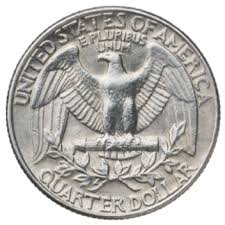
Miss Pashley walked to our house each week and taught me (and my mom who was always listening in) piano for the grand sum of 25 cents.
I started with Ada Richter’s classic Teaching Little Fingers to Play, which has now been morphed into the John Thompson library.
From there, it was the Michael Aaron series, and some sheet music.
There was no music store in our town, so I have no idea where any of this music came from – but I still have it all.
My parents did very well for their quarter a week investment, especially since my mom paid good attention and was able to beef up lessons she’d had as a child. Later on, she played well enough that she was church organist for a local Roman Catholic Church.
But I digress…
In those days, kids couldn’t do a whole lot of activities, so in 6th grade, I decided I wanted to be a Girl Scout. Bye, bye Clara.
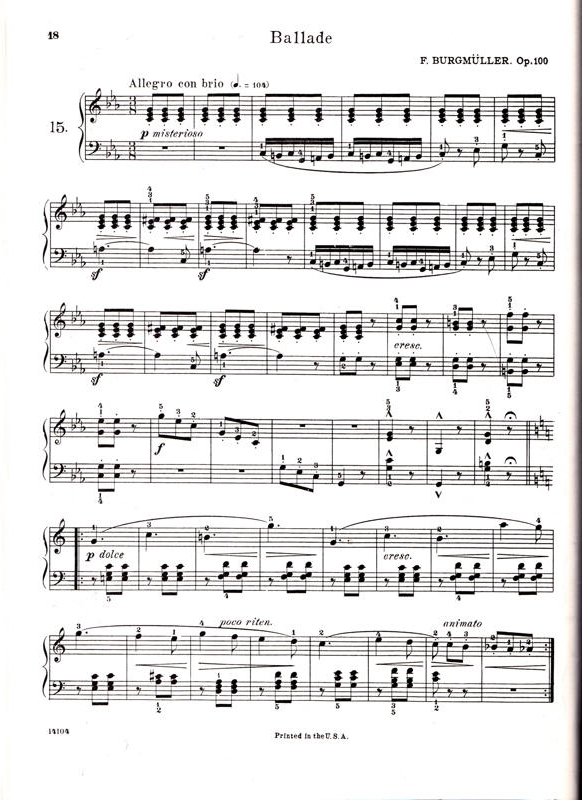
Girl Scouts didn’t last long but I did play piano in a talent show. I remember, I carefully cut Burgmüller’s Ballade out of my Michael Aaron book and made a nice construction paper cover. (I still have this, too)
I doubt that I played this well but here’s what it was supposed to sound like:
A few years intervened and moved to Springfield, MA. The parsonage piano there was in terrible shape and in the dark, never-used basement. But I decided to make it mine and cleared up the area around it and started “practicing”.
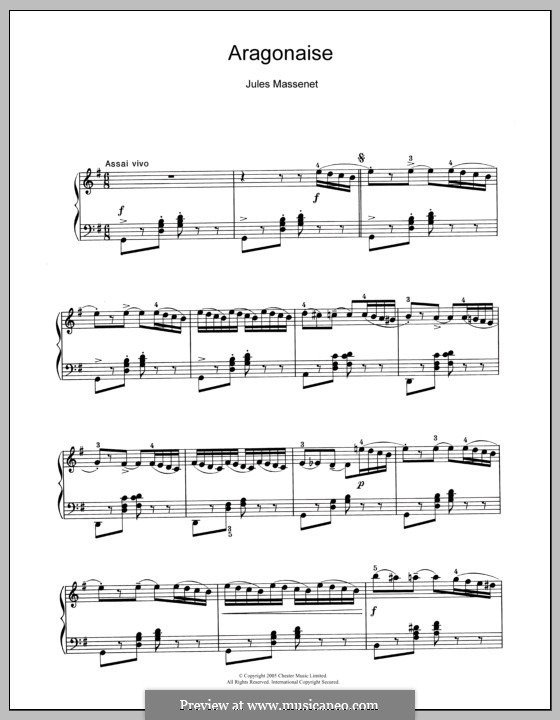
My Junior or Senior year of High School I decided I wanted to major in music in college. I decided to learn, on my own, a piano arrangement of Aragonaise by Jules Massenet. I have no idea why or where that sheet music came from but I started working furiously on this piece.
Hopefully, at some point, it should have sounded like this:
I started pedaling (no pun intended!) my music to the Universities of Connecticut and Massachusetts and ended up at UMass Amherst since we were state residents.
Early morning gym classes (usually swimming), then wet hair traipsing across campus to music theory in winter 5 days a week. AARRGGH!
But I stuck it out.
My wonderful piano teacher, Howard Lebow, was killed in a car accident during my sophomore year and I was devastated. There was more about him in a post on January 26, 2022 here on https://atomic-temporary-44596882.wpcomstaging.com
I took yet another break from piano lessons – but I kept playing.
After DH graduated, we moved to Milwaukee, WI for his graduate school. Besides working 2 jobs, I found time to commandeer the practice rooms at the University of Wisconsin. I also found a teacher at the Schaum School of Music. She was amazed that I had no piano at home to practice on.
When we later moved to Alexandria, VA my DH gave me a choice of new car or piano. So, I found a used piano. The owner had acquired it in a divorce and wanted it gone. Yesterday. She even paid to move it out of her apartment.
The new-to-me piano took up half our living room. When my parents came to visit, their feet we under my piano as I slept.
I found yet another new piano teacher and she is still my best friend to this day.
That piano moved to several locations before I bought a brand new Yamaha grand piano. The movers accidently brought in the wrong one and I made them return it. The people who lived in an apartment were probably unhappy when they had to return my piano and take their own new baby grand back.
I started teaching as a traveling piano teacher in Silver Spring, Maryland. I continued that in Wilmington, DE.
When we got to Fairfax, VA I decided no more traveling. Students would come to me. And so they have since 1973.
What is supposed to be our living room is filled with music books, electric keyboards, the grand piano, 2 organs, 2 violins, 2 clarinets, recorders, a dulcimer and other musical “stuff”.
Piano playing has gotten me through the worst times of my life. Teaching has been a lifeline for me, as well.
I am so thankful for the students who have stayed with me over the years and the new ones I have found…on the internet.
It’s not too late to have your students play JoyTunes movie-themed Summer Camp! Summer Camp songs are a great way to play fun songs over the break, as to not lose momentum come fall.
“A Whole New World” from ‘Aladdin’ is the last Summer Camp song of the season.
Available in 3 versions, keep your students playing all summer long!
All songs can be found in the “Summer Camp” category in the Library.
Will it be your student that wins an Amazon gift card for being the top player of the week?
Take a bow, Alon Kaplan, for creating the first fun Summer Camp song, Disney hit “We Don’t Talk About Bruno”
Available in three versions, it can be found in the new ‘Summer Camp’ category in the Library or tap the button on the main menu.
Tune in each week to see which other free songs will be released in Summer Camp to keep your students sharp. And remember, every 3-star performance gives your students the chance to win an Amazon Gift Card. Enjoy!
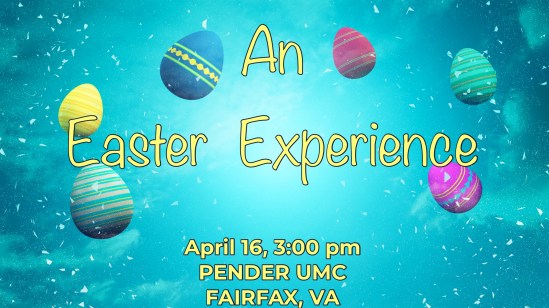
This is a family-friendly event with the little ones in mind. Adults and children are invited to walk to Jerusalem along with Jesus. There will be crafts and fun activities that will help the kids understand Easter.
Join us in The Gathering Place rain or shine! The event will run from 3:00 to 5:00 PM
Learn about the Seder, Decorate an Easter Egg, Stories of Jesus, Make a “God’s Eye”, Veggie Tales: “The Night Before Easter”, Decorate the Cross and Pray in the Garden of Gethsemane.
1803 ~ Louis-Hector Berlioz, French composer, conductor, music critic and major force in the development of musical form during the Romantic Era
More information about Berlioz
• 1876 ~ Mieczyslaw Karlowicz, Polish composer and conductor
• 1882 ~ The Bijou Theatre in Boston, MA became the first theatre to be lighted by electricity.
• 1908 ~ Elliot Cook Carter, Jr., American composer
• 1915 ~ Frank Sinatra, American singer songwriter
• 1916 ~ (Damaso) Perez Prado, Piano, organ
• 1926 ~ Willie Mae ‘Big Mama’ Thornton, Blues singer
• 1931 ~ Rita Moreno (Rosita Alverio), Dancer, Academy and Emmy Award-winning actress
• 1934 ~ Curtis Williams, Singer with The Penguins
• 1935 ~ Tom Brumley, Steel guitar with Buck Owens and the Buckaroos, Stone Canyon Band
• 1939 ~ Marlene Dietrich recorded Falling In Love Again on the Decca label.
• 1940 ~ David Gates, Guitarist, keyboard, singer with Bread
• 1944 ~ Brenda Lee (Tarpley), American singer of popular music
• 1944 ~ “The Chesterfield Supper Club” debuted on NBC radio. Perry Como, Jo Stafford and many other stars of the day shared the spotlight on the 15-minute show that aired five nights a week. The show was sponsored by Chesterfield cigarettes.
• 1952 ~ An audience of 70,000 people watched from 31 theatres as Richard Tucker starred in Carmen. The event was the first pay-TV production of an opera. Ticket prices ranged from $1.20 to $7.20.
• 1954 ~ Jermaine Jackson, Singer with The Jackson Five, brother of Michael, Janet, La Toya, Tito, Randy, Marlon and Jackie
• 1964 ~ Musician Sam Cooke died under suspicious circumstances.
• 1973 ~ Karen and Richard Carpenter received a gold record for their single, Top of the World.
• 1982 ~ Toni Basil reached the #1 one position on the pop music charts for the first time, with her single, Mickey.
• 2000 ~ Ruth Martin, a writer whose translations of both popular and obscure operas were widely used in American opera houses, died at the age of 86. Martin collaborated with her husband Thomas Martin in translating the librettos of some of the world’s most famous operas, including Mozart’sDon Giovanni and The Marriage of Figaro, as well as Puccini’sBoheme, and Bizet’sCarmen. Martin and her husband also translated some of the rarest operas, such as Offenbach’sGrand Duchess of Gerolstein, and Dvorák’sRusalka. The Martins’ translations were marked by their clarity and singability, and despite the increasing use of closed-captioning systems in major opera houses, their translations are still used widely. Martin contributed articles on opera for Opera News, Aria, and Theater Arts. She also served on the boards of the New York Federation of Music Clubs, the Liederkranz Foundation and the National Opera Foundation.
• 2001 ~ Erik Johns, who wrote the libretto for Aaron Copland’s only full-length opera, The Tender Land, died in a fire at his home in Fishkill, N.Y. He was 74. Born Horace Eugene Johnston in Los Angeles, Johns began his career in music as a dancer. He met Copland when he was 19 at a New Year’s Eve party in New York. In 1952 the two began collaborating on an opera based on Let Us Now PraiseFamous Men, a book by writer James Agee and photographer Walker Evans that describes the lives of several Southern sharecropper families during the Depression. Copland composed the music and Johns wrote the libretto, or the words. The work was originally commissioned as a television opera by NBC but was subsequently rejected by the network. The New York City Opera performed it at its premiere at City Center in April 1954 in a short two-act version. The two later added a third act.
• 2001 ~ Jose Fajardo, a Cuban flutist who was one of the most influential bandleaders in Latin music, died an aneurysm. He was 82. The Cuban native had emigrated from Cuba in 1961, when he refused a request from the Cuban government to continue a musical tour to other communist countries. During his lengthy career, Fajardo recorded more than 40 albums and performed around the world. He was credited with expanding the audience for charanga, a Cuban musical style that backs a singer with flute, violins, piano, bass and percussion. Fajardo started his first group, Fajardo y sus Estrellas, in the 1940s. He later led three bands by the same name. After moving to the United States, he founded bands in New York and Miami and began performing in new style called pachanga, featuring a slightly more assertive rhythm. Fajardo was featured on “Cuban Masters: Los Originales,” an album of performances by leading Cuban musicians that was released November 2001.
• 2002 ~ Kay Rose, the first woman to win an Academy Award for sound editing, died. She was 80. Rose won the statuette for her work on the 1984 film The River. A native of New York, Rose was recognized in March with a career achievement award from the Cinema Audio Society. The Motion Picture Sound Editors gave her a similar lifetime achievement award in 1993. In October 2002, directors George Lucas and Steven Spielberg endowed the Kay Rose Chair in the Art of Sound and Dialogue Editing at the University of Southern California’s School of Cinema-Television. The chair is the first of its kind in the country. After studying film at Hunter College, she became a civilian film apprentice for the Army Signal Corps during World War II. There, she helped create such training films as How to Erect a Double Apron Barbed Wire Fence and the John Huston documentary Report from the Aleutians. She moved to Hollywood in 1944 and found a job as an assistant to an editor at Universal studios. In 1951, she married film editor Sherman Rose. Together, they produced the 1954 sci-fi cult classic, Target Earth. They later divorced. During her five-decade career, Rose received sound editing credits on such films as The Rose,Ordinary People,On Golden Pond,The Milagro Beanfield War, The Prince of Tides,For the Boys and Speed.
Kids will have the opportunity to walk along with Joseph and Mary from Nazareth to Bethlehem. They’ll complete a census with the Roman guard before they meet Mary and Elizabeth to grind some grain and sew a quilt square, help Joseph in his carpentry shop, and visit the manger scene to take a photo with Mary, Joseph, baby Jesus, and the animals in the stable.
Children can also create their own ornament and draw a picture to remember the Nativity scene. This is an excellent way for preschool and elementary age children to develop memories of Christmas. Moms and Dads will want to tag along, rather than dropping kids off, as children walk through the journey at their own pace.






 1803 ~ Louis-Hector Berlioz, French composer, conductor, music critic and major force in the development of musical form during the Romantic Era
 MaryO'Studio