Finding The Right Teacher For Your Music-Loving Kid: Deceptive Cadence

NOT Mrs. O'Connor!

NOT Mrs. O’Connor!

See if a prospective teacher allows a trial lesson to test how the personalities mesh. And be sure to ask lots of questions. What’s the teacher’s background as a musician and as an instructor? What kinds of teaching materials and music does she use? How much practice time is expected for students, and does that vary by the student’s age? Does the teacher have access to student ensembles? What kinds of performance opportunities will he provide? Will the teacher allow the student to record the lesson? This can be a terrific practice aid, especially when it comes to remembering how something is supposed to sound. Does she teach any music theory or composition? What are the expectations for students and for their parents?

A good teacher can be a friendly, encouraging and inspiring presence — even when a student hits rough patches. He will point out the student’s weaknesses without being harsh or dismissive, suggest innovative ways to overcome challenges, and create engaging ways to tackle even rote activities like playing scales or honing fine motor skills. The instructor’s age and experience might or might not be a deciding factor; for example, I’m consistently impressed by the range of tricks my own child’s very youthful private teacher has up her sleeve to turn what could easily be drudgery into fun. Not to mention the huge helpings of good humor and patience she brings to her tiny charges!

Read more at Finding The Right Teacher For Your Music-Loving Kid : Deceptive Cadence : NPR.
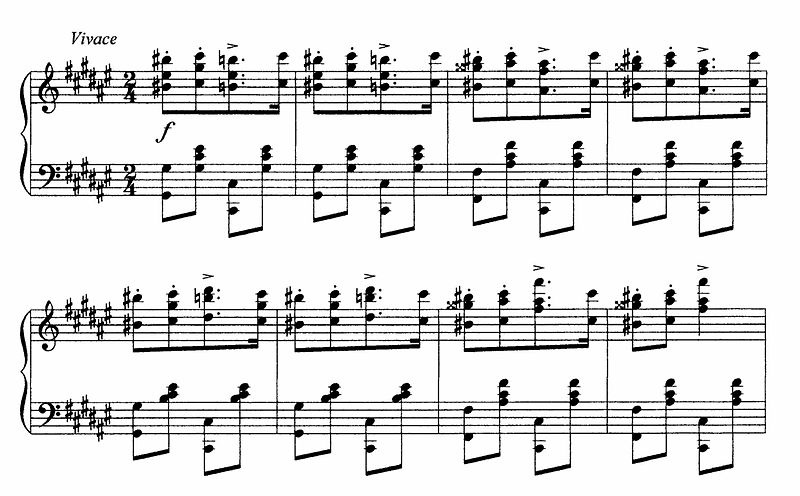
Franz Liszt’s “Hungarian Rhapsody no. 2 in c-sharp minor”

liszt


Hungarian Rhapsody No. 2, S.244/2, is the second in a set of 19 Hungarian Rhapsodies by composer Franz Liszt, and is by far the most famous of the set. Few other piano solos have achieved such widespread popularity, offering the pianist the opportunity to reveal exceptional skill as a virtuoso, while providing the listener with an immediate and irresistible musical appeal.

In both the original piano solo form and in the orchestrated version this composition has enjoyed widespread use in animated cartoons. Its themes have also served as the basis of several popular songs.

It is probable that you have heard this piece of music somewhere at one time or another because it is perhaps the most prominent piece of classical (romantic, actually) music featured in animated cartoons across the years.

Now, let the anvils fall and dynamite explode!


And, in real life, Valentina Lisitsa plays Liszt’s Hungarian Rhapsody No. 2

Are You Moving this Summer?

Many homeowners don’t realize that there are movers available to them who specialize in the transportation and storage of pianos. A piano is a delicate instrument and not something you want to take risks with. By trusting this major job to a piano mover, you can rest easy knowing that one of the most valuable items in your home is being transported with the care it deserves.

But It Weighs 1500 Pounds. How Delicate Can It Be? 

pianomovingThis is exactly where many homeowners go wrong. Sure, that piano in your living room is heavy enough to throw out the backs of four or five of your best buddies as you wrestle it out the door and up into the truck, but don’t let that fool you. Despite its bulky appearance, it is also a precision musical instrument with over 1000 moving parts and 200 finely-tuned strings, any number of which can be damaged and require repair if your piano isn’t handled properly in a move.

Your Piano Mover Understands Pianos

These intricate inner workings of a piano are exactly why hiring an expert in piano moving is so important. These professionals understand pianos and moving them, from the safest way to lift and twist a standard upright piano to get it out the door, to how to properly disassemble a grand piano and transport it without causing any damage. And even more importantly, a piano mover understands that when your piano is delivered to your new home, you expect to be able to sit down and play it right away. It’s why many piano movers keep tuners and repairmen on staff, and why the rest will have a trusted list of professionals available on request if you need it.


From: http://www.homeadvisor.com/article.show.Don-t-Take-Risks-Moving-Your-Piano-Hire-an-Expert.14222.html#ixzz39Gny25qc

Note values

FaeriesAireandDeathWaltz1


I have copies of the above sheet music in the music studio, if anyone wants to play this!


Having trouble counting various note values?

In music notation, a note value indicates the relative duration of a note, using the color or shape of the note head, the presence or absence of a stem, and the presence or absence of flags/beams/hooks/tails.

A rest indicates a silence of an equivalent duration.


Read the article at  Note values.

J.S. Bach’s Ornament Table

The following ornament table is a transcription of the one appearing in the Clavier-Büchlein vor Wilhelm Friedemann Bach, written by Johann Sebastian Bach for the keyboard instruction of his eldest son.

A scan of the original manuscript appears at Dave’s J.S. Bach Page.

The German title translates as “Explanation of various signs, showing how to play certain ornaments correctly.”{1} Bach gives the sign for each ornament on the upper of the paired staves, while the lower shows its execution directly beneath.

(This blog has) simply modernized the clefs in my transcription, since Bach’s manuscript uses soprano clefs, as several composers continued to do throughout the 18th century in place of the treble clef now used in all keyboard music.

After the transcription graphic showing the table, there appear clickable buttons which are keyed to AU sound files; you can click on any of the ornaments and hear a sound file play its execution.


ornaments

Read the original blog post with the ornament table and listening files at J.S. Bach’s Ornament Table.

The Studio Painting is Done!

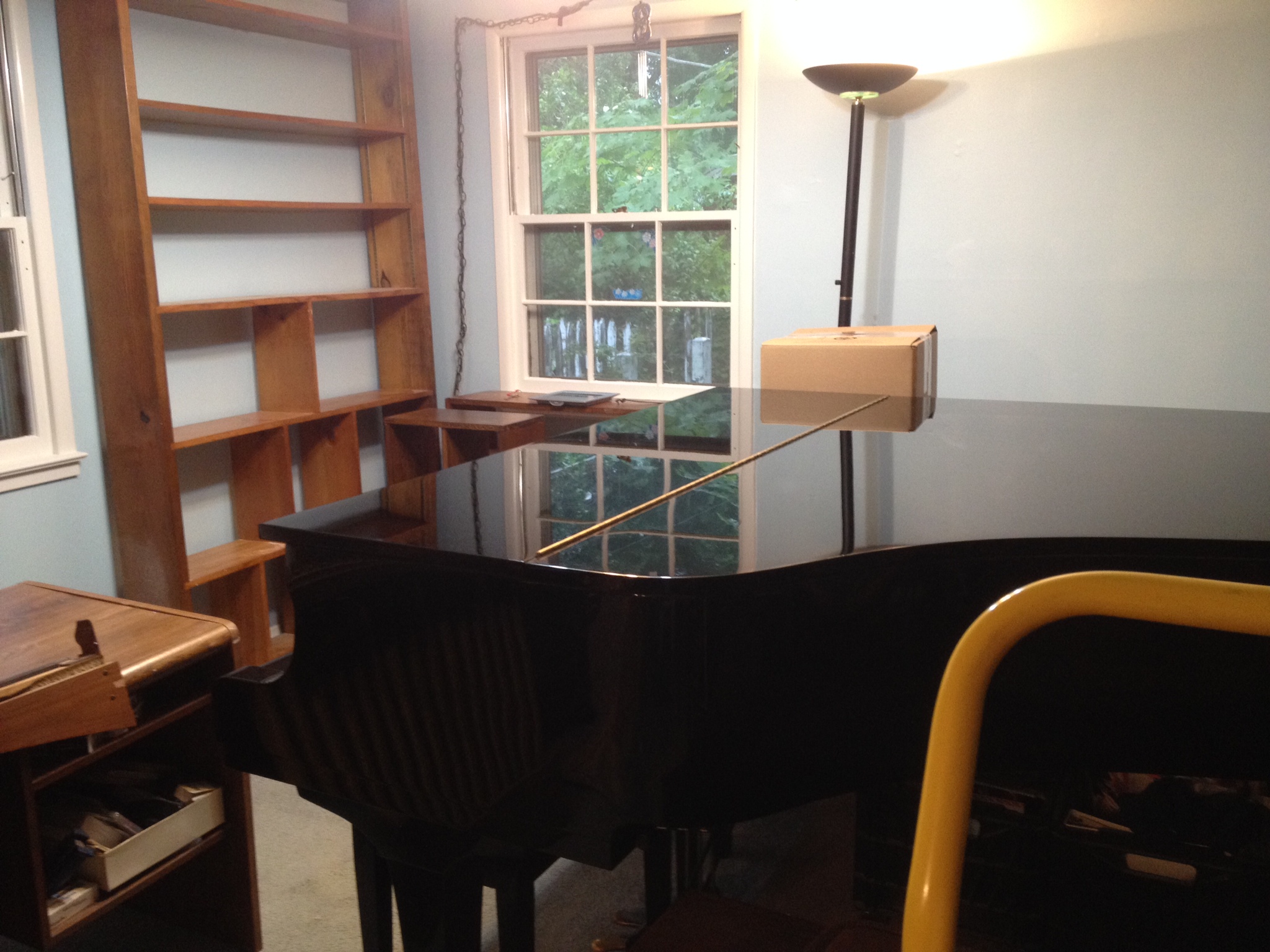
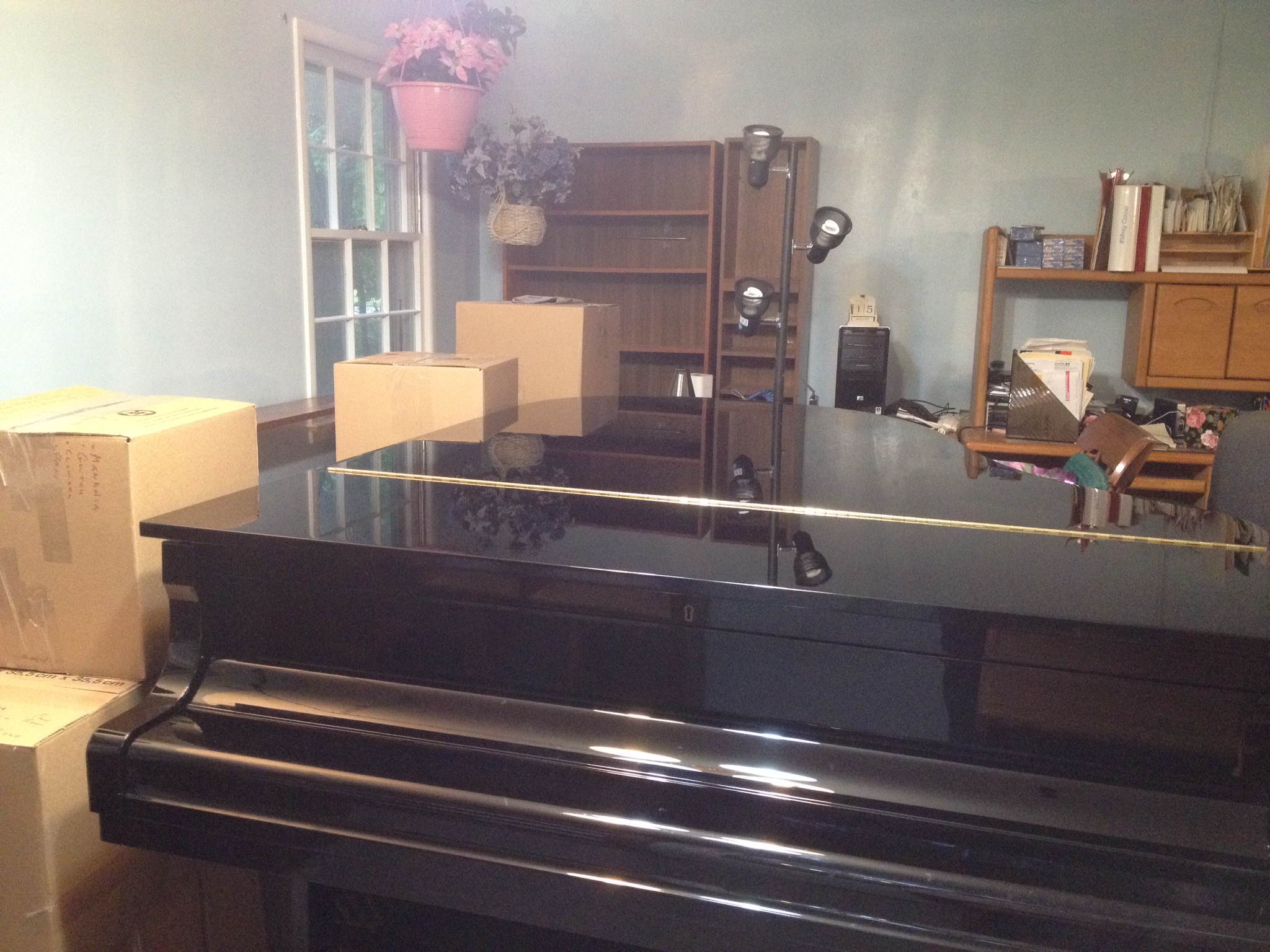
photo 1photo 2


Now, it’s time to start putting the furniture back where it goes, although I think I’m leaving the piano more in the center of the room for now.  It shows the piano off better and I’ll have a place to put the digital keyboard against the wall and closer to the piano.

After a lot of thought, the organs will stay in their respective places next to each other but the music for them will be moving nearer to them.

Then putting all the other books away.  I have an iPad app which is a database that adds items by taking pictures of their barcodes.  Hopefully, this will help organize some of my books.

It won’t be done by Monday but it will be done enough for teaching purposes!


Practising the Piano – The Myth of the Instant Fix

When they make a mistake they hack away at it until it finally yields, and simply move on. What they have actually practised is getting it wrong three or four times in a row and right on the fifth attempt. What, then, are the chances of getting it right the first time in the context of the flow of the piece?

via Practising the Piano – The Myth of the Instant Fix.

NO Piano Lessons Monday July 14!

The studio is just about cleared out and most things moved to the center of the room so that the painters can start painting Tuesday morning.

I had planned on teaching Monday, but with everything moved, it is far too difficult (but not impossible!) to get to the piano.

Painting is supposed to take only two days so it should be done on Wednesday (or Thursday!) and completely dry before the next lessons.

Thanks for your understanding and keep practicing! Next lesson, the studio will be a pretty blue color 🙂

Thanks,


maryOivoryandroses

Happy Fourth of July!

july4-eisenhower


Independence Day, commonly known as the Fourth of July, is a federal holiday in the United States commemorating the adoption of the Declaration of Independence on July 4, 1776, declaring independence from Great Britain.

Independence Day fireworks are often accompanied by patriotic songs such as the national anthem “The Star-Spangled Banner”, “God Bless America”, “America the Beautiful”, “My Country, ‘Tis of Thee”, “This Land Is Your Land”, “Stars and Stripes Forever”, and, regionally, “Yankee Doodle” in northeastern states and “Dixie” in southern states. Some of the lyrics recall images of the Revolutionary War or the War of 1812.


A bit of audio for your listening pleasure, as played by Vladimir Horowitz…