The American Fotoplayer is a type of photoplayer developed by the American Fotoplayer Company between the years of 1912 and 1925. The Fotoplayer is a type of player piano specifically developed to provide music and sound effects for silent movies.
…
The appeal of the Fotoplayer to theatre owners was the fact that it took no musical skill to operate. The Fotoplayer would play the piano and pipe organ mechanically using an electric motor, an air pump, and piano rolls while the user of the Fotoplayer would follow the onscreen action while pulling cords, pushing buttons, and pressing pedals to produce relatable sounds to what was occurring onscreen. These actions could create sounds such as a steamboat whistle, a bird chirp, wind, thunder, a telephone bell, as well as many others. On Fotoplayers specifically, most effects were created using leather cords with wooden handles on the ends which the effects were directly connected to. For example, the steamboat whistle sound effect was created using a household bellows with a whistle at the end. Pulling the cord compressed the bellows, delivering a gust of air into the whistle. Creating a drum roll on the other hand was a bit more complicated. A clockwork device was needed to time the strikes of the drum which required constant winding.
• 1763 ~ An instrument named the spinet was mentioned in The Boston Gazette newspaper on this day. John Harris made the spinet, a small upright piano with a three to four-octave range. There is no verifiable evidence to support the rumor that a man named Spinetti made the first spinet.
• 1809 ~ The Theatre Royal at Covent Garden re-opened after being destroyed by fire the year before. The Theatre Royal at Covent Garden began in Bow Street in 1732. It was designed by E.M. Barry in classical style. He also built for the theatre’s management the Floral Hall next door in glass and iron, meant to be a straightforward rival to the Bedford’s flower market. Both of Barry’s buildings are now part of the rebuilt Royal Opera House at Covent Garden complex.
• 1838 ~ Emil Scaria, Austrian bass-baritone
• 1899 ~ Scott Joplin was granted copyright for his “Maple Leaf Rag”, the most famous ragtime composition, by the US Copyright Office
• 1910 ~ Josef Tal, Polish-born Israeli composer and pianist
• 1917 ~ The Honolulu Ad Club registered a patent for the ukulele.
• 1927 ~ The Columbia Broadcasting System was born on this day, although its rival, NBC, had been on the air for some time. The Tiffany Network, as CBS was called, broadcast an opera, The King’s Henchman, as its first program. William S. Paley put the network together, purchasing a chain of 16 failing radio stations. The controlling interest cost between $250,000 and $450,000. The following year, the 27-year-old Paley became President of CBS. It only took one more year for him to profit 2.35 million dollars as the network grew to over 70 stations. In 1978 Paley received the First Annual ATAS (Academy of Television Arts and Sciences) Governor’s Award as Chairman of the Board of CBS.
• 1929 ~ Teddi King, Singer
• 1933 ~ Jimmie Rodgers, Singer
• 1939 ~ Frankie (Frances) Avalon (Avellone), American rock-and-roll singer
• 1947 ~ Country singers Ernest Tubb and Roy Acuff performed at Carnegie Hall in New York City. It was the first country show for the NYC venue.
• 1948 ~ The Original Amateur Hour returned to radio on ABC, two years after the passing of the program’s originator and host, Major Bowes. Bowes brought new star talent into living rooms for 13 years. Ted Mack, the new host, had also started a TV run with The Original Amateur Hour on the DuMont network in January of 1948.
• 1949 ~ Kerry Livgren, Guitar, keyboards with Kansas
• 1952 ~ Dee Dee Ramone (Douglas Colvin), Drummer with The Ramones
• 1955 ~ What had been The Toast of the Town on CBS Television (since 1948) became The Ed Sullivan Show. This “rilly big shew” remained a mainstay of Sunday night television until June 6, 1971. Sullivan was a newspaper columnist/critic before and during the early years of this pioneering TV show.
• 1957 ~ The Big Record, hosted by ‘the singing rage’, Miss Patti Page, debuted on CBS-TV. The Big Record was a live musical showcase featuring established artists singing their big songs. The Big Record lasted one big season.
• 1962 ~ Joanne Catherall, Singer with Human League
• 1967 ~ Ricky Bell, Singer with New Edition
• 1969 ~ Tiptoeing through late night TV, Tiny Tim announced his engagement to Miss Vicki Budinger. Johnny Carson, host of The Tonight Show, was so enthralled with the falsetto-voiced singer that he invited the couple to get married on the show. They did on December 17, 1969 and TV history was made.
• 1970 ~ Rock radio mourned the loss of rock music legend, Jimi Hendrix. He died at age 27 of an overdose of sleeping pills. His Purple Haze and Foxy Lady became anthems for a generation at war in Vietnam.
• 1985 ~ “Song & Dance” opened at Royale Theater NYC for 474 performances
The manuscript of Mozart’s A major piano sonata K331 has been discovered in Budapest. Having spent the majority of its life in the Budapest’s National Széchényi Library for decades, the coveted manuscript was rediscovered by Haydn scholar Balazs Mikusi.
The piece was composed in 1783 and contains Mozart’s most popular jam, “Turkish March,” which has become a piano lesson staple all over the world.
Although, unfortunately, Mikusi can’t say how or when these pages found their way to Hungary; they reveal subtle differences from the published editions of the sonata. The key variances are seen in the phrasing, dynamics and occasionally the notes themselves.
“It is very rare that a Mozart manuscript pops up. Moreover the A Major Sonata had no known manuscript, so it is a really big discovery,” he said.
The library has only released teasing images of the manuscript, nothing more.
• 1884 ~ Charles Tomlinson Griffes, American composer
• 1923 ~ Hank (Hiram) Williams, Sr., American country-western singer and songwriter. He was the first country musician whose music crossed over into pop and he wrote 125 compositions
• 1926 ~ Bill Black, Bassist with Bill Black Combo, played in Elvis Presley band, backup for Elvis
• 1929 ~ Sil Austin, Tenor saxophone, composer
• 1931 ~ RCA Victor began demonstrating a very early version of the long-playing (LP), 33~1/3 RPM phonograph record. It would be another 17 years before RCA rival Columbia would begin mass production of the LP.
• 1940 ~ LaMont McLemore, Singer with The 5th Dimension
• 1950 ~ Fee Waybill (John Waldo), Singer with The Tubes
• 1952 ~ Frank Sinatra sang at his final session with Mitch Miller and Columbia Records.
• 1955 ~ The Perry Como Show moved to Saturday nights on NBC~TV. Soon, U.S.A. audiences would “Sing along with me … I’m on my way to the stars…” with the incomparable Mr. C. Como’s hourlong variety show replaced his three-times-per-week, 15-minute show, which had been on the air since 1948. The new version of The Perry Como Show soon became Saturday’s highest-rated TV program, beating CBS competitor Jackie Gleason.
• 1955 ~ Capitol Records released Magic Melody, Part Two. The tune consists only of the last two notes of the musical phrase, “Shave and a haircut, two bits,” making it the shortest tune ever to be released.
• 1973 ~ Hugo Winterhalter passed away. He was an American easy listening arranger and composer.
• 2002 ~ Michael “Dodo” Marmarosa, a jazz pianist who played with luminaries like Dizzy Gillespie, Tommy Dorsey and Buddy Rich in the 1940s before a military stint derailed his music career, died of a heart attack. He was 76. Marmarosa died at the Veterans Administration Medical Center in Pittsburgh, where he lived the past few years, playing the piano and organ for other residents and guests. Marmarosa joined the Johnny “Scat” Davis Orchestra at age 15 in 1941. He then played with Gene Krupa’s band, Charlie Barnet’s big band, where he recorded “The Moose” and “Strollin”, and played with the great Gillespie. He played in Dorsey’s band in 1944, which included Buddy DeFranco, Sidney Block and Buddy Rich. And later that same year, Marmarosa joined Artie Shaw’s band. In 1947 Marmarosa was selected by Esquire magazine as one of the nation’s top jazz artists. Marmarosa disappeared from public view in the early 1950s after a series of personal tragedies and a stint in the Army.
• 2009 ~ Leon Kirchner, American classical composer (Pulitzer Prize for Music 1967), died at the age of 90
• 2015 ~ David Willcocks, English conductor and composer (Kings College Choir), died at the age of 95
We have established that regular practice routines will not happen without proactive piano parents. So, how can parents be proactive practice assistants even if they have never touched a piano?
Day 4. The Lead Vocalist: Most people are not too comfortable with breaking out into song in public, but they will happily sing in front of their own children. Parents of your littlest piano students should be encouraged to sing along with song lyrics. Just make sure that the sing-alongs happen with songs their children already know quite well. Sing-alongs do not work when a song is first being learned.
• 1887 ~ Nadia Boulanger, French composition teacher
More information about Boulanger
• 1915 ~ Cy Walter, pianist (3’s Company)
• 1920 ~ Enrico Caruso made his last recording for Victor Records in Camden, NJ.
• 1925 ~ Charlie Byrd, Guitarist, played with Stan Getz
• 1925 ~ “B. B.” (Riley B.) King, American blues singer and guitarist, Grammy Lifetime Achievement Award in 1987
• 1934 ~ George Chakiris, Academy Award-winning actor, dancer in West Side Story (1961)
• 1938 ~ Tommy Dorsey and his orchestra recorded the swing classic Boogie Woogie for Victor Records.
• 1941 ~ CBS radio debuted The Arkansas Traveler. The program was later renamed The Bob Burns Show. Burns played a very strange musical instrument called the ‘bazooka’. The U.S. Army chose the name to identify its rocket launcher because it looked so much like Burns’ bazooka.
• 1943 ~ Bernie Calvert, Bass with The Hollies and also The Dolphins
• 1944 ~ Betty Kelly, Singer with Martha and the Vandellas
• 1948 ~ Kenny Jones, Drummer with Small Faces, Faces and also The Who
• 1950 ~ David Bellamy, Singer with a duo called The Bellamy Brothers, songwriter
• 1963 – Richard Marx, Singer, songwriter
• 1963 ~ She Loves You was recorded by The Beatles the Swan label. It was the first record recorded by The Beatles; but the second single by the ‘Fab Four’ to hit #1. I Want to Hold Your Hand, was the group’s first #1 song and million seller (on Capitol). It beat She Loves You to the top spot by just a few weeks. Other Beatles hits were also recorded on Capitol (Capitol had rejected She Loves You) and Swan labels; but the Beatles liked variety, so add these record companies to the Beatles list of recording labels: Vee-Jay, MGM, Tollie, United Artists, Atco, E.M.I., Parlaphone and Apple.
• 1964 ~ Shindig premiered on ABC-TV. The program had go-go girls and the biggest rock bands of the day in a dance party environment. Regulars were Jimmie O’Neill and the Shindig Dancers. The first show featured Sam Cooke, The Everly Brothers, The Righteous Brothers, The Wellingtons, Bobby Sherman and comic Alan Sues.
• 1965 ~ San Francisco’s Grace Cathedral became the site of the first concert of sacred music presented by Duke Ellington.
• 1965 ~ The Dean Martin Show debuted on NBC~TV. It was a weekly variety show that continued on the network for nine years. Regulars over the years were The Goldiggers, Ken Lane, The Ding-a-Ling Sisters, Tom Bosley, Dom DeLuise, Nipsey Russell, Rodney Dangerfield and Les Brown and His Band. The theme song? Everybody Loves Somebody.
• 1977 ~ Celebrated soprano Maria Callas died in Paris at the age of 53.
• 1994 ~ Bernie Lazaroff Leighton, pianist, died at the age of 73
• 2000 ~ Israeli conductor David Shallon died in Tokyo after suffering an asthma attack at the age of 49. Shallon was born in Tel Aviv and studied violin, viola and horn.
• 2000 ~ Valeriu Stelian, a folk singer who inspired anti-communist protesters a decade ago, died of cancer at the age of 47. Shortly after the 1989 anti-communist uprising, Stelian began singing at University Square in downtown Bucharest for students who protesting the presence of former communists in government. Six weeks after the uprising, coal miners descended on Bucharest at the behest of the government and beat up the students. Six people died in the melee and the protest harmed Romania’s image to such a degree that many young Romanians emigrated, believing democracy would never come to the Balkan country. “Oh God, come here to see what has become of people”, went the lyrics of one of Stelian’s songs composed in 1973 and played to film footage of people who had died during the uprising. During his career, Stelian toured the former Soviet Union, Norway, Poland, Bulgaria, Hungary, France, England and the United States. He also set up some recording studios in Romania.
• 1930 ~ Hoagy Carmichael recorded Georgia on My Mind on the Victor label. Georgia on My Mind has been the official state song of Georgia since 1922. The song has been recorded by many artists over the years.
• 1934 ~ NBC radio presented The Gibson Family to American audiences. The program was the first musical comedy to be broadcast. The show originated from the studios of WEAF in New York City.
• 1940 ~ Jimmy Gilmer, Singer with Jimmy Gilmer and the Fireballs
• 1941 ~ Les (William) Braid, Bass, organ with The Swinging Blue Jeans
• 1945 ~ Jessye Norman, American soprano
• 1955 ~ Betty Robbins (Mrs. Sheldon Robbins) became the first woman cantor at services held at Temple Avodah in Oceanside, Long Island, New York.
• 1962 ~ The Four Seasons earned their first #1 hit with “Sherry”. In the next six months, the Four Seasons would earn two more #1 hits with “Big Girls Don’t Cry” and “Walk Like A Man,” making them the only American group ever to earn three consecutive #1 hits.
• 1980 ~ The Elephant Man made its debut on Broadway with rock singer David Bowie in his acting debut.
• 2001 ~ Billy Hilfiger, a musician and younger brother of fashion mogul Tommy Hilfiger, died after a lengthy battle with cancer. He was 45. Hilfiger worked as a landscape architect in New York City but was best known as an avid guitarist. He played with former members of the rock band Blue Oyster Cult and with another brother, Andy Hilfiger, among others.
What’s so neat about the Wing and Sons Piano? Check out the five (yes, 5!) pedals. Most pianos have 3, or sometimes 2 pedals.
Established in 1868, the Wing & Son Piano Company quickly became a masterclass in innovative marketing! Originally launched as Doan, Wing & Cushing, the company manufactured the usual square grand and upright pianos like many of its competitors. But in 1873, when Frank L. Wing took the reins and incorporated the business as Wing & Son Piano Company, things started to change – and fast!
Frank L. Wing believed that a piano should be more than just an instrument; it should bring the richness of an entire orchestra into the home. To fulfill this vision, Wing & Son introduced an exciting innovation: the 5-pedal mechanism. Unlike standard pianos, these pedals could imitate the sounds of various string instruments, including the mandolin, guitar, zither, harp, and banjo. This feature gave their pianos an edge, allowing players to explore new musical depths. The pedals, labeled Mandolin, Orchestra, Expression, Soft, and Forte, made these instruments a hit with musicians who wanted more than just a standard piano sound.
But it wasn’t just the piano’s features that made Wing & Son stand out—it was Frank Wing’s marketing genius. Rather than relying on expensive showrooms or high-pressure sales tactics, Wing & Son took a unique approach. They published beautifully illustrated catalogs titled “The Book of Complete Information About Pianos.” These catalogs were designed to educate the average person on how pianos were made, demystifying the manufacturing process. Once the reader felt like a piano expert, the catalogs skillfully highlighted why Wing & Son pianos were superior. This soft-sell strategy worked wonders!
By selling directly from these lavish catalogs, Wing & Son eliminated the need for showrooms, keeping their prices competitive. They also offered free trials and flexible financing, making their pianos accessible to a broader audience—especially in rural areas, where the nearest piano showroom was often miles away.
Unfortunately, like many businesses, Wing & Son couldn’t withstand the economic downturn of the Great Depression, and by 1931, the company seemed to have faded away. But for decades, Wing & Son was at the forefront of both piano innovation and clever marketing, proving that a little creativity can go a long way in making a business sing.
• 1741 ~ George Frederick Handel completed his The Messiah. It took the composer just 23 days to complete the timeless musical treasure which is still very popular during the Christmas holiday season.
• 1814 ~ Francis Scott Key, an attorney in Washington, DC, was aboard a warship that was bombarding Fort McHenry (an outpost protecting the city of Baltimore, MD). Key wrote some famous words to express his feelings. Those words became The Star-Spangled Banner, which officially became the U.S. national anthem by an act of Congress in 1931.
The poem, originally titled “The Defence of Fort M’Henry,” was written after Key witnessed the Maryland fort being bombarded by the British during the War of 1812. Key was inspired by the sight of a lone U.S. flag still flying over Fort McHenry at daybreak, as reflected in the now-famous words of the “Star-Spangled Banner”: “And the rocket’s red glare, the bombs bursting in air, Gave proof through the night that our flag was still there.”
• 1888 ~ Michael Haydn (1737) Austrian composer
• 1760 ~ Luigi Cherubini, Italian composer
More information about Cherubini
• 1910 ~ Lehman Engel, American composer, conductor and writer
• 1927 ~ Gene Austin waxed one of the first million sellers. He recorded his composition, My Blue Heaven, for Victor Records.
• 1941 ~ Priscilla Mitchell, Singer
• 1946 ~ Pete Agnew, Bass, singer with Nazareth
• 1947 ~ Jon ‘Bowzer’ Bauman, Singer with Sha Na Na
• 1950 ~ Paul Kossoff, Guitarist with Free
• 1954 ~ Barry Cowsill, Singer with The Cowsills
• 1959 ~ Morten Harket, Singer with a-ha
• 1964 ~ Mary Howe, American composer and pianist (Sand), died at the age of 82
• 1973 ~ Donny Osmond received a gold record for his hit single, The Twelfth of Never. The song, released in March of 1973, was one of five which turned gold for the young Osmond. His other solo successes were Sweet & Innocent, Go Away Little Girl, Hey Girl and Puppy Love.
• 1985 ~ The first MTV Video Music Awards were presented at Radio City Music Hall in New York City. The Cars won Best Video honors for You Might Think and Michael Jackson won Best Overall Performance and Choreography for his Thriller video.
• 2002 ~ Jazz saxophonist and bandleader Paul Williams, whose 1949 Rhythm and Blues hit, The Huckle-Buck, was covered by Frank Sinatra, died, at the age of 87. Williams scored one of the first big hits of the R&B era in 1949 with The Huckle-Buck, based on Charlie Parker’s “Now’s the Time.” It was the biggest-selling record in the Savoy label’s 60-year history, topping the R&B charts for 14 weeks, and spawned vocal versions by Sinatra and others. The Huckle-Buck was one of three Top 10 and five Top 20 R&B hits Williams scored for Savoy in 1948 and 1949. Other Top 10 hits were 35-30 in 1948 and Walkin’ Around in 1949. Williams was later part of Atlantic Records’ house band in the ’60s and directed the Lloyd Price and James Brown orchestras until 1964. After leaving the music business temporarily, he opened a booking agency in New York in 1968. Born July 13, 1915, in Birmingham, Alabama, Williams played with Clarence Dorsey in 1946, and then made his recording debut with King Porter in 1947 for Paradise before forming his own band later that year. Saxophonists Noble “Thin Man” Watts and Wild Bill Moore, trumpeter Phil Guilbeau, and vocalists Danny Cobb, Jimmy Brown, Joan Shaw, and Connie Allen were among Williams’ band members.
• 2009 ~ Patrick Swayze, American actor, dancer, and songwriter (Dirty Dancing), died at the age of 57
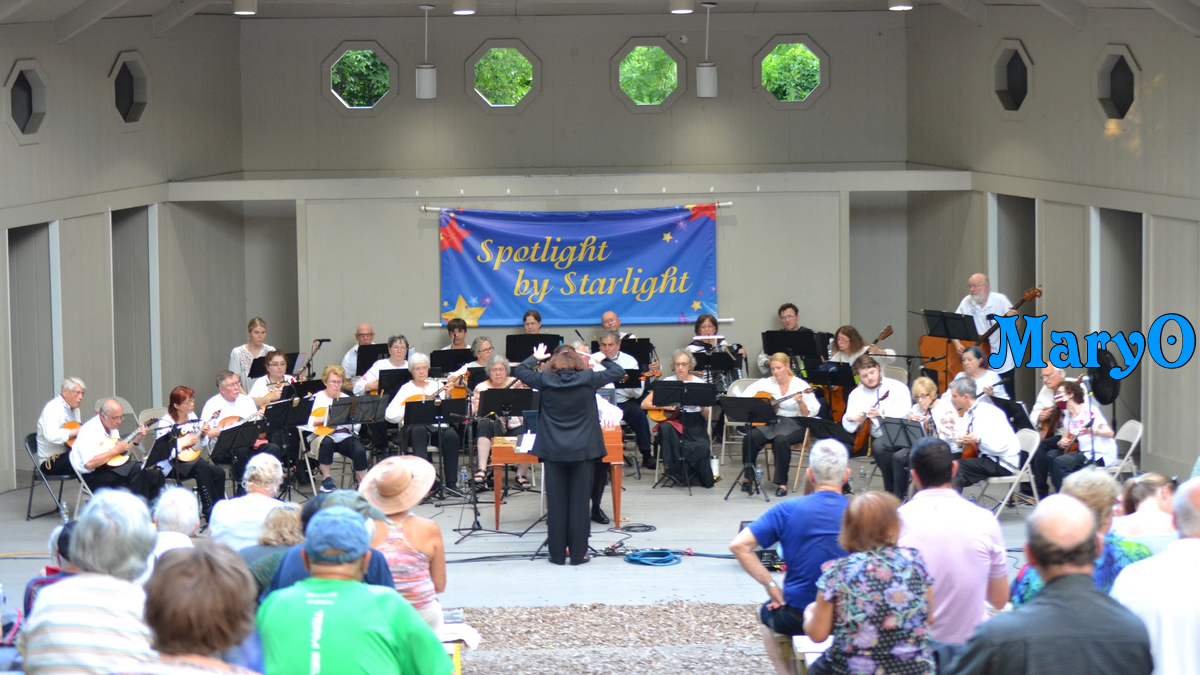
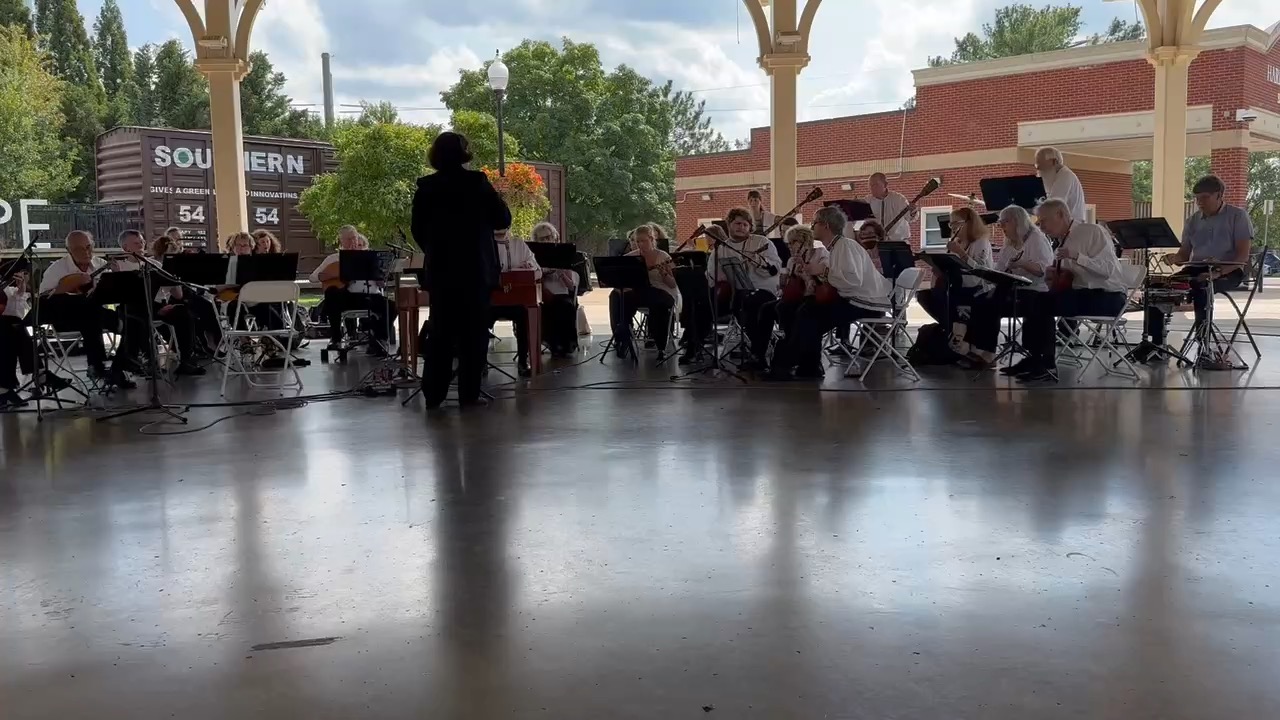
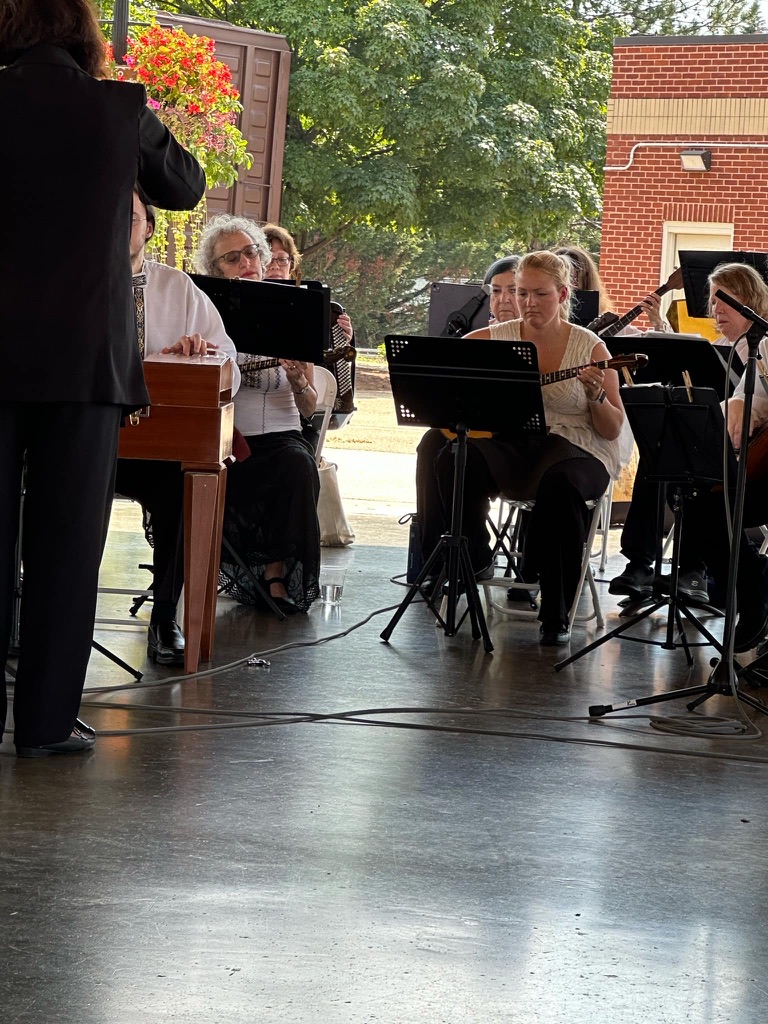
After taking July off, we are excited about our concert at the Harris Pavilion in Manassas on September 28 at 4pm. It’s in Old Town, under the pavilion at the train station.
This “Sunday Funday” concert is one of our favorite events, and it occurs rain or shine!





 MaryO'Studio