Night on Bald Mountain refers to a series of compositions by Modest Mussorgsky (1839–1881). Inspired by Russian literary works and legend, Mussorgsky composed a “musical picture”, St. John’s Eve on Bald Mountain on the theme of a witches’ sabbath occurring on St. John’s Eve, which he completed on that very night, June 23, in 1867.
Get a free copy of the sheet music at IMSLP or buy it on amazon.com.
From Disney’s Fantasia
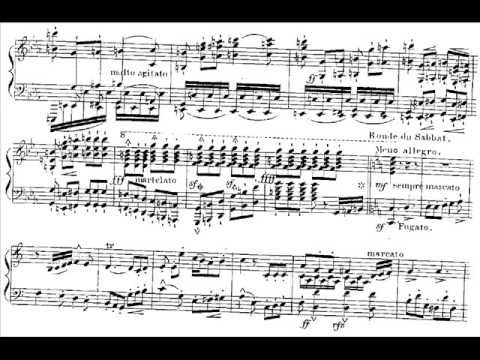
Piano version transcribed for solo piano by Konstantin Chernov (1865-1937).
The Ludwig Symphony Orchestra, conducted by Maestro Thomas Ludwig
• 1813 ~ Franz Schubert, age 12, finished his first symphony, The Symphony in D Major
More information about Schubert
• 1896 ~ Howard Hanson, American composer, educator and conductor
More information about Hanson
• 1909 ~ Josef Gingold, Russian-born American violinist
• 1936 ~ Charlie Daniels, American CMA Award-winning musician (1979), guitar, fiddle, singer with Charlie Daniels Band
• 1941 ~ Curtis Lee, Singer
• 1941 ~ Hank Marvin (Brian Rankin), Guitarist with The Shadows
• 1945 ~ Wayne Fontana (Glyn Ellis), Singer with The Mindbenders
• 1948 ~ Telma Hopkins, Singer with Dawn
• 1955 ~ A local kid from Lubbock, TX opened a concert for Marty Robbins and Elvis Presley. In the audience was a youngster by the name of Scott Davis. He would later become a superstar. We know him as Mac Davis. The kid who opened the concert was Buddy Holly.
• 1957 ~ After a show at the Pan Pacific Auditorium in Los Angeles, local police told Elvis Presley that he was not allowed to wiggle his hips onstage, the local press also ran headlines saying Elvis would have to clean up his act. The next night, the Los Angeles Vice Squad filmed his entire concert, to study his performance.
• 1961 ~ Brian Epstein, a record store owner in London, was asked by a customer for a copy of the record, My Bonnie, by a group known as The Silver Beatles. He didn’t have it in stock so he went to the Cavern Club to check out the group. He signed to manage them in a matter of days and renamed them The Beatles.
• 1965 ~ Earl Bostic, American jazz alto saxophonist and a pioneer of the post-war American rhythm and blues style, passed away
• 1980 ~ Annette Funicello, Cubby O’Brien, Tommy Cole, Sherry Alberoni and Dickie Dodd joined other Mouseketeers wearing black ears and white shirts on a sound stage in Burbank, CA. They were celebrating the 25th anniversary of the Mickey Mouse Club. The five special events each week were:
Fun with Music Day on Monday
Guest Star Day on Tuesday
Anything Can Happen Day on Wednesday
Circus Day on Thursday
Talent Roundup Day on Friday
• 2003 ~ Oliver Sain, a saxophonist whose work was later recorded by artists from Loretta Lynn to Sean “P. Diddy” Combs, died of bone cancer. He was 71. Sain was a musician, songwriter and producer, known for his performances on songs like Bus Stop and Feel Like Dancing in the 1970s. He performed as recently as the previous night, his wife said. Sain’s work was sampled by Combs on his “No Way Out” CD and recorded by artists including the Allman Brothers Band, Chaka Khan and Ry Cooder. Sain grew up in Dundee, Miss., where he became known for his saxophone playing. He moved to St. Louis in 1959 and opened a recording studio in the city in the next decade.
• 2008 ~ A statue honoring AC/DC’s Bon Scott was unveiled at the Fremantle Fishing Boat Harbour in Western Australia. Although born in Scotland, Scott grew up in Fremantle after his family emigrated to Australia in 1952. Bon started out his newfound Australian life in Melbourne, his family lived in the suburb of Sunshine for 4 years before moving to Fremantle. Scott was born in 1946 died on 20th February 1980. He is buried in Fremantle Cemetery.
• 2018 ~ Richard GIll died at the age of 76. He was an Australian conductor of choral, orchestral and operatic works, who has been involved in music training and education.
The Funeral March of a Marionette (Marche funèbre d’une marionnette) is a short piece by Charles Gounod. It was written in 1872 for solo piano and orchestrated in 1879. It is perhaps best known as the theme music for the television program Alfred Hitchcock Presents, which originally aired from 1955 to 1965.
In 1871-72, while residing in London, Gounod started to write a suite for piano called “Suite Burlesque”. After completing one movement, the Funeral March of a Marionette, he abandoned the suite and had the single movement published by Goddard & Co. In 1879 he orchestrated the piece. The instrumentation is: piccolo, flute, 2 oboes, 2 clarinets in A, 2 bassoons, 2 horns in D, 2 trumpets in A, 3 trombones, ophicleide, timpani, bass drum, triangle, strings. The work is in the key of D minor, with a central section in D major. Various arrangements by other hands exist.
There is a program underlying the Funeral March of a Marionette: The Marionette has died in a duel. The funeral procession commences (D minor). A central section (D major) depicts the mourners taking refreshments, before returning to the funeral march (D minor).
The score contains the following inscriptions in appropriate places:
La Marionnette est cassée!!! (The Marionette is broken!!!)
Murmure de regrets de la troupe (Murmurs of regret from the troupe)
Le Cortège (The Procession)
Ici plusieurs des principaux personnages de la troupe s’arrêtent pour sa rafrâichir (Here many of the principal personages stop for refreshments)
Retour a la maison (Return to the house). (Wikipedia)
Download this music in several versions from IMSLP. Click on Arrangements and Transcriptions. There are also some arrangements for piano at the O’Connor Music Studio.
On Alfred Hitchcock:
From Faber Piano Adventures Performance Book Level 3B No.7 (Also available in the OCMS Library):
• 1796 ~ Anton Thadäus Johann Nepomuk Stamitz, German composer
• 1908 ~ George Feyer, Pianist and entertainer, born in Budapest
• 1917 ~ Jascha Heifetz made his debut at Carnegie Hall in New York City. Heifetz was a 16-year-old sensation who had played the violin since age 5.
• 1927 ~ Dominick Argento, American composer
• 1933 ~ Floyd Cramer, Pianist
• 1941 ~ Edda Moser, German soprano
• 1941 ~ Everything I Love, by Buddy Clark, was recorded this day, number 6469 on the Okeh label.
• 1943 ~ Lee (Melvin) Greenwood, CMA Male Vocalist of the Year, 1983 and 1984, sax, piano, bandleader
• 1957 ~ The Crickets started a three-week run at No.1 on the UK singles chart with ‘That’ll Be The Day’. It was also a No.3 hit in the US where it went on to sell over a million. The song was inspired by a trip to the movies by Holly, Jerry Allison and Sonny Curtis in June 1956. The John Wayne film The Searchers was playing and Wayne’s frequently-used, world-weary catchphrase, “that’ll be the day” inspired the young musicians.
• 1958 ~ Simon LeBon, Singer with Duran Duran
• 1960 ~ Singer Ben E. King recorded “Spanish Harlem” & “Stand By Me”
• 1975 ~ Rocker Bruce Springsteen appeared on the cover of both TIME and Newsweek. Things were certainly going well for ‘The Boss’ that week.
• 2000 ~ Walter Berry, a bass-baritone who won acclaim for his interpretations of Mozart and Strauss and was beloved by Austrians for his renditions of Schubert, died of a heart attack at the age of 71. Known for the powerful timbre of his voice, Berry was a prolific performer who sang 100 different roles in more than 1,280 appearances at the Vienna State Opera. His U.S. debut was a 1963 performance with the Metropolitan Opera in New York. His interpretations of classical lieder by fellow Austrian Franz Schubert won him his most loyal following. Austrians who rarely went to the opera loved Berry for his renditions of popular Viennese songs performed as they believed only a native- born son could. In 1989, he became a professor at the Vienna University for Music and Performing Arts.
• 2001 ~ John Roberts, a promoter of the Woodstock Music and Art Fair in 1969, died of cancer. He was 56. Roberts produced the festival concert with three others, almost by accident. The idea originally was a pitch for a television comedy show about two young venture capitalists with money but no business plans. Roberts and his partners funded the festival with Roberts’ inheritance and ticket sales. They lost $2.3 million but recovered their loss with royalties from film and album spinoffs, and held on to the profitable name and trademark symbol of a dove on the neck of a guitar. A graduate of the University of Pennsylvania, Roberts later invested in other companies, avoiding the music business. Roberts also was a championship bridge player.
• 2006 ~ Amy Winehouse released her second and final studio album Back to Black. The album spawned five singles: ‘Rehab’, ‘You Know I’m No Good’, ‘Back to Black’, ‘Tears Dry on Their Own’ and ‘Love Is a Losing Game’ and won Best Pop Vocal Album at the 50th Annual Grammy Awards. Back to Black sold 3.58 million copies in the UK alone, becoming the UK’s second best-selling album of the 21st century. Worldwide, the album has sold over 20 million copies.
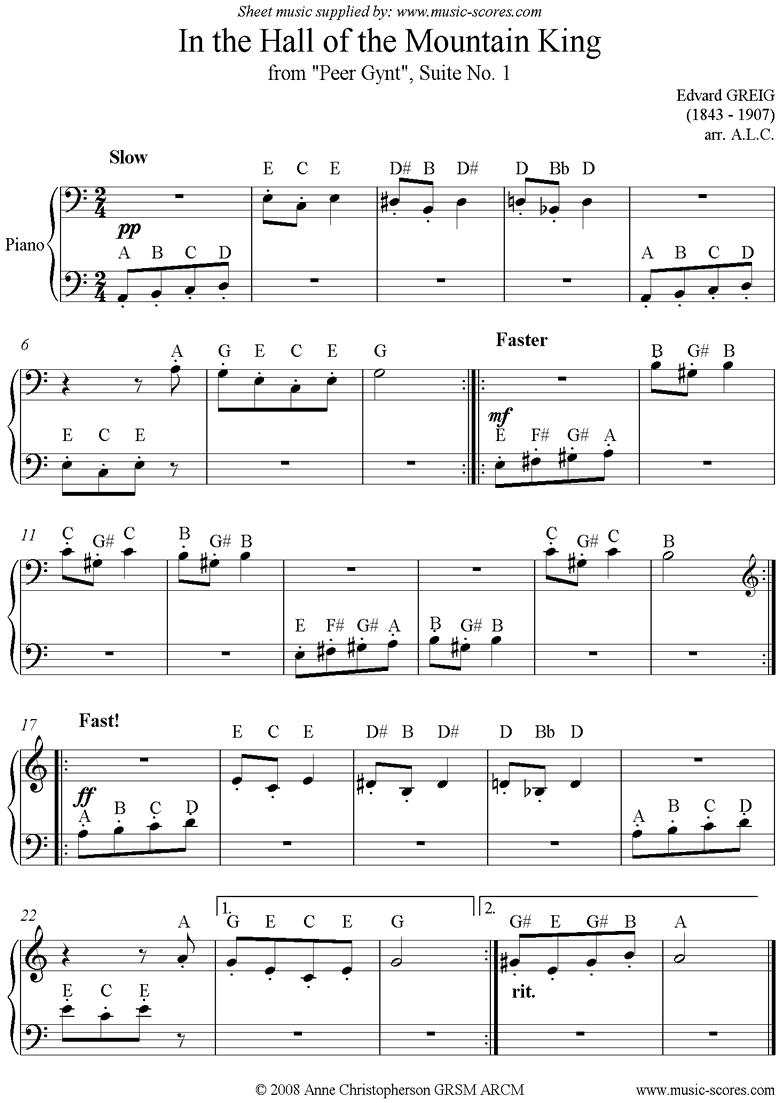
“In the Hall of the Mountain King” is a piece of orchestral music composed for the sixth scene of act 2 in Henrik Ibsen’s 1867 play Peer Gynt. It was originally part of Opus 23 but was later extracted as the final piece of Peer Gynt, Suite No. 1, Op. 46. Its easily recognizable theme has helped it attain iconic status in popular culture, where it has been arranged by many artists, including for the piano.
Borrow a copy of the sheet music from the O’Connor Music Studio. I have this arranged for piano, duet, 2-piano, simplified…
8 part vocal orchestra (plus a tiny pair of cymbals)
The Jordan Kitt’s Music Community Concert Series presents another exceptional event featuring internationally acclaimed local pianists Nikita Fitenko and Katerina Zaitseva along with Italian instrumentalists and recording artists Lucia Margherita Marino (clarinet) and Tamara Bairo (viola) in a chamber music recital.
The program includes the beloved Mozart “Kegelstatt” K.488 Trio for Clarinet, Viola, and Piano as well as other chamber music works by Teleman and Poulenc.
Nikita Fitenko, D.M.A., is a Yamaha Artist and Chair of the Music Performance Department at the Rome School of Music, Drama, and Art (Catholic University of America).
Katerina Zaitseva, D.M.A., is on the piano faculty at Levine Music. Lucia Margherita Marino and Tamara Bairo are members of the Turin Philharmonic Orchestra and are currently on tour in the United States.
For more information, call (703) 573-6070
Jordan Kitt’s Music, 8500 Lee Highway, Fairfax, VA 22031
1685 ~ Domenico Scarlatti, Italian composer and harpsichordist
More information about Scarlatti
• 1898 ~ Beryl Rubinstein, American pianist and composer
• 1911 ~ Mahalia Jackson, American soul and gospel singer
• 1913 ~ Charlie Barnet, Saxophonist, bandleader, his autobiography is Those Swinging Years
• 1934 ~ Cole Porter recorded his own composition titled, You’re the Top, from the show “Anything Goes”, on Victor.
• 1935 ~ A talented twelve-year-old sang on Wallace Beery’s NBC radio show on NBC. Judy Garland delighted the appreciative audience. The young girl would soon be in pictures and at the top of stardom. It would be only four years before Ms. Garland (George Jessel gave her the name, thinking it would be better than her own, Frances Gumm) captured the hearts of moviegoers everywhere with her performance as Dorothy in “The Wizard of Oz”.
• 1944 ~ Michael Piano, Singer with The Sandpipers
• 1946 ~ Keith Hopwood, Singer, guitarist with Herman’s Hermits
• 1952 ~ NBC~TV premiered Victory at Sea. The show was the first documentary film series to gain wide acceptance. Richard Rodgers wrote the score and Robert Russell Bennett orchestrated it. No Other Love, adapted from one of the songs in the score, became a hit for Perry Como in the summer of 1953.
• 1953 ~ Keith Strickland, Drummer with The B-52s
• 1956 ~ Walter Gieseking, German pianist/composer, died at the age of 60
• 1962 ~ The Rolling Stones consisting of Keith Richard, Mick Jagger, Brian Jones, pianist Ian Stewart and drummer Tony Chapman recorded their first demo tape at Curly Clayton Studios in Highbury, London. They recorded three songs, Jimmy Reed’s ‘Close Together’, Bo Diddley’s ‘You Can’t Judge A Book By The Cover’ and Muddy Waters’ ‘Soon Forgotten.’
• 1965 ~ The Beatles received MBE medals from the Queen of England, as they became Members of the British Empire. Ceremonies were held at Buckingham Palace. John Lennon returned his medal four years later in protest of Britain’s involvement in the Nigerian Civil War.
• 1971 ~ Memphis minister Al Green received a gold record for his single, Tired of Being Alone.
• 1984 ~ Barbra Streisand won multiplatinum certification for three albums that reached the four-million-dollar sales mark. “Greatest Hits, Vol. II”, “Guilty”, and “A Star is Born” (with Kris Kristofferson) were honored.
• 2001 ~ Laszlo Halasz, the first music director of the New York City Opera, died at the age of 96. Halasz became the opera’s first director in 1943. During his eight-year tenure, the New York City Opera became an important training ground for young singers. The company also became an important venue for new works. Born in Hungary, Halasz studied at the Liszt Academy in Budapest, where his teachers included Béla Bartók, Ernst von Dohnanyi, Leo Weiner and Zoltán Kodály. He made his professional debut as a pianist in 1928, but in 1931 decided to focus on conducting. He came to New York in 1936, and when the New York City Opera was formed in the fall of 1943, Halasz was appointed its music director. The company’s first season included productions of Puccini’s “Tosca,” Flotow’s “Martha” and Bizet’s “Carmen” Halasz conducted the company’s first American premiere, Strauss’ “Ariadne auf Naxos,” in 1946, and the opera’s first world premiere, of William Grant Still’s “Troubled Island,” with a libretto by Langston Hughes. But the opera’s board was uneasy with Halasz’s ventures into modern opera. When the board insisted in 1951 that Halasz submit his repertory plans for approval, he resigned. The board ultimately relented, but when Halasz became involved in union disputes later that year, the board fired him. After leaving City Opera, Halasz began a second career as a record producer. He also conducted opera at houses in Frankfurt, Barcelona, Budapest, London and South America. As a teacher, he was on the conducting faculty at the Peabody Conservatory, in Baltimore, and the Eastman School of Music, in Rochester, N.Y.
• 2001 ~ Herbert Weissenstein, a consultant who specialized in classical music, died at the age of 56. Weissenstein began his career in 1970 as public relations director for the Baltimore Symphony Orchestra. He moved on to the New York Philharmonic and in 1979 became director of development and strategic planning at Carnegie Hall. In 1984, he founded H.F. Weissenstein & Co., which specialized in consulting, directing seminars, and publishing articles in the fields of management and development. His clients included the Electronic Media Forum, the Folksbiene Yiddish Theater, the Manhattan Theater Club, the International Organization for the Transition of Professional dancers and the Brooklyn Botanic Garden.
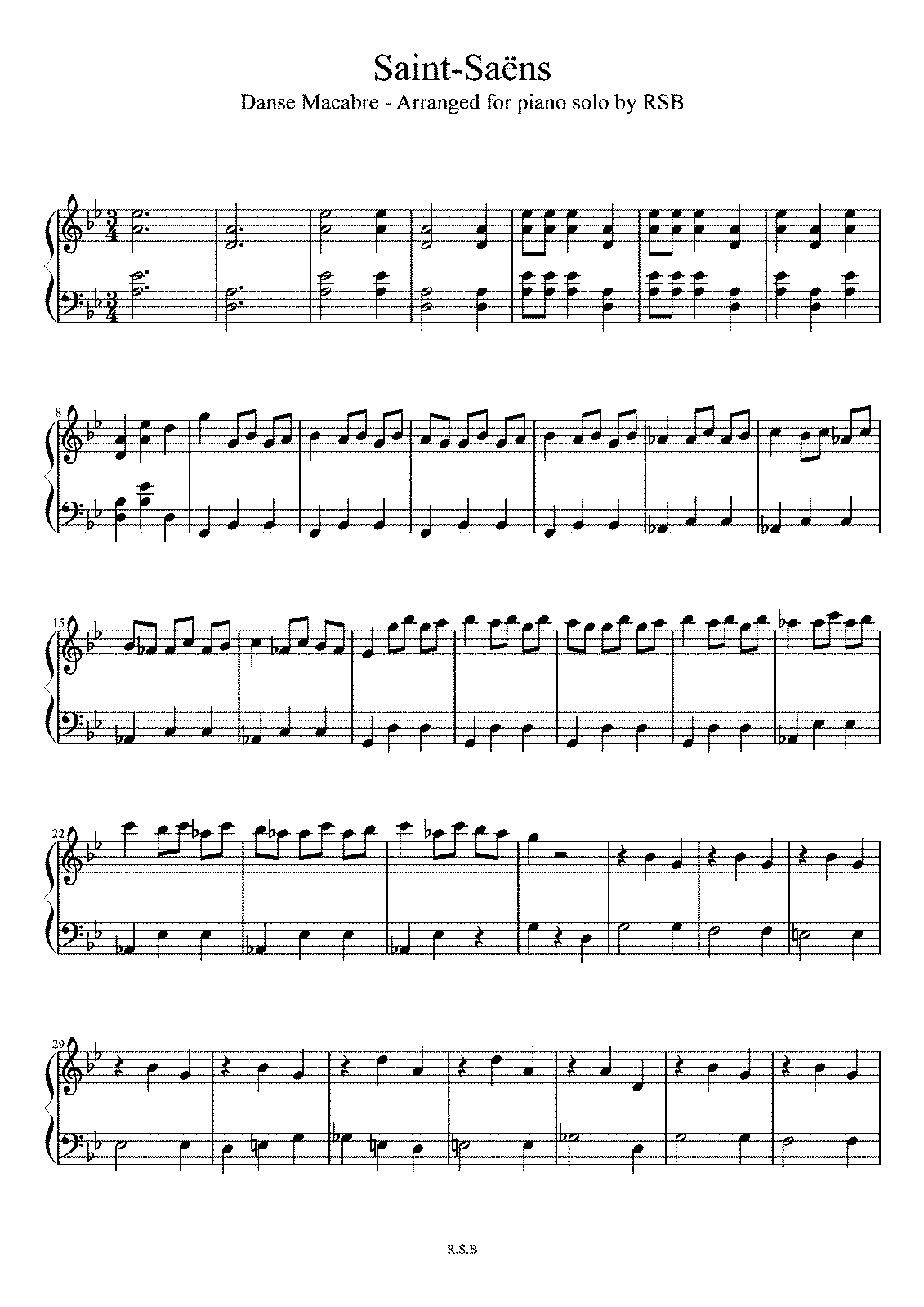
Danse macabre, Op. 40, is a tone poem for orchestra, written in 1874 by French composer Camille Saint-Saëns. It started out in 1872 as an art song for voice and piano with a French text by the poet Henri Cazalis, which is based on an old French superstition. In 1874, the composer expanded and reworked the piece into a tone poem, replacing the vocal line with a solo violin.
Get a free copy of the sheet music at IMSLP (Look for Arrangements and Transcriptions) or borrow a copy from the O’Connor Music Studio. I have this arranged for organ, piano, duet, simplified…
Amazon has a great Dover edition for solo piano. This splendid compilation features a variety of the composer’s best piano works, all reproduced from authoritative sources. Taking its title from the popular orchestral work “Danse Macabre” (presented here in the brilliant arrangement by Liszt), this collection also includes “Allegro appassionato,” “Album” (consisting of six pieces), “Rhapsodie d’Auvergne,” “Theme and Variations,” plus six etudes, three waltzes, and six etudes for left hand alone.
1825 ~ Johann Strauss, Jr. (1825) Austrian composer, “The Waltz King”
1838 ~ Georges Bizet, French composer
More information about Bizet
• 1875 ~ The first performance of the Piano Concerto No. 1 by Pyotr Ilyich Tchaikovsky was given in Boston, Massachusetts with Hans von Bülow as soloist
• 1912 ~ Minnie Pearl (Sarah Ophelia Colley), Grand Ole Opry singer, CMA Hall of Fame, comedienne
• 1924 ~ Billy Barty, Comedian on The Spike Jones Show
• 1926 ~ Jimmy Heath, Musician, reeds with the Heath Brothers, bandleader
• 1927 ~ Barbara Cook, Tony Award-winning actress, singer in “The Music Man” in 1957, “Flahooley”, “Oklahoma”, “Carousel”, “Plain and Fancy”, “Candide”, “The Gay Life”, “She Loves Me”, “Any Wednesday”, “Funny Girl”, “The Gershwin Years”
• 1937 ~ Jeanne (Gloria) Black, Singer
• 1940 ~ “Cabin in the Sky” opened for the first of 256 shows. Taking a Chance on Love is the one big hit that came from the musical.
• 1941 ~ Helen Reddy, Singer
• 1943 ~ Benny Carter and his orchestra recorded Poinciana on the Capitol label. The real title, incidentally, is Poinciana (Song of the Tree).
• 1944 ~ Jon Anderson, Singer, solo and duo called Jon and Vangelis
• 1944 ~ Taffy Danoff (Nivert), Singer with Starland Vocal Band
• 1948 ~ Glenn Tipton, Guitarist with Judas Priest
• 1951 ~ Ransom Wilson, American flutist and conductor
• 1956 ~ Mathias Jabs, Guitarist with Scorpions
• 1964 ~ “And now, rrrrright here on this stage….” The Rolling Stones were introduced to American audiences on The Ed Sullivan Show on CBS-TV.
• 1969 ~ Canada’s The Guess Who got a gold record for the single, Laughing.
1971 ~ Midori (Goto), Japanese violinist
More information on Midori
• 1974 ~ The single, Skin Tight, by The Ohio Players, went gold on this day.
• 1984 ~ John Cougar Mellencamp reached the two-million-dollar sales mark with his album, “Uh-Huh”.
• 1984 ~ Country group Alabama went to the three-million-dollar mark with two albums this day with Feels So Right and Mountain Music.
• 2000 ~ Don Brooks, a studio musician who played the harmonica with Harry Belafonte, Ringo Starr, the Bee Gees and Yoko Ono’s band, died of leukemia at the age of 53. Brooks, who was raised in Texas, first picked up the harmonica after hearing an album by bluesman Sonny Terry. He played in Dallas coffee shops in the 1960s and moved to New York in 1967, joining a Greenwich Village folk scene that included David Bromberg and John Hammond Jr. In 1973, he joined singer Waylon Jennings’s band and helped create the sound known as outlaw country music. Brooks recorded with Belafonte, Starr, Billy Joel, Cyndi Lauper, Carly Simon, Diana Ross and Bette Midler, among others. He also played with groups such as the Bee Gees, the Talking Heads and Yoko Ono and the Plastic Ono Band. He was a musician on Broadway in “Big River” (1985) and “The Gospel at Colonus” (1988), and he worked on the soundtrack for the television documentary “The Civil War.”
The final movement is the best known part of the symphony, thanks to its use in the Julia Roberts movie, Sleeping With The Enemy. It features a four-part structure, which Berlioz described in his own program notes from 1845 as follows:
“He sees himself at a witches’ Sabbath, in the midst of a hideous gathering of shades, sorcerers and monsters of every kind who have come together for his funeral. Strange sounds, groans, outbursts of laughter; distant shouts which seem to be answered by more shouts. The beloved melody appears once more, but has now lost its noble and shy character; it is now no more than a vulgar dance tune, trivial and grotesque: it is she who is coming to the Sabbath… Roar of delight at her arrival… She joins the diabolical orgy… The funeral knell tolls, burlesque parody of the Dies irae, the dance of the witches. The dance of the witches combined with the Dies irae.”
The Dies irae melody is one of the most-quoted in musical literature, appearing in the works of many diverse composers.
The traditional Gregorian melody has also been used as a theme or musical quotation in a number of classical compositions, notable among them:


 1782 ~