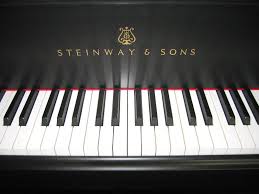
Steinway Place, Queens, New York, 11105. steinway.com or 718-721-2600.
It all begins with bare wood, rough and fragrant.
Skilled craftsmen then use muscle, fine motor skills and magic to transform simple planks into magnificent instruments. In the bridge-notching process, the “bellymen” use tools they’ve constructed themselves, the better to execute this highly skilled operation.
Alaskan Sitka Spruce becomes a soundboard, with ribs of Sugar Pine.
Eighty-eight keys, 88 hammers, more than 230 strings — all are carefully created, installed and tested in every piano.
All in all, it takes about 11 months to make a Steinway grand piano.
Steinway & Sons has been located in the same spot in the Astoria section of Queens since the early 1870s. Founded in 1853 in a loft on Varick Street in Manhattan, the company’s reputation grew quickly, and the company needed space to expand their operations.
Factory tours are offered from September through the end of June. (Factory tours are not available in July and August.) Tours are scheduled from 9:30 a.m. to noon on Tuesdays, for a maximum of 15 people.
Needless to say, tours fill up quickly and must be booked in advance. Steinway currently has no openings for the rest of 2017 and is not yet taking reservations for 2018. Plan way ahead, and check for updates by emailing tours@steinway.com or by calling 718-721-2600.
Picture a seven-foot grand piano in a studio. The lid’s missing, so you can see all the strings. Researchers suspend a rod embedded with 32 microphones over the piano’s body.
“We played this middle C at a very soft level, a medium level, and a very loud level,” says Agnieszka Roginska, a professor in NYU’s music technology program. She says using a pianist to play middle C over and over wouldn’t be scientific. So they’re using a disklavier, a fancy player piano triggered by electronics. “So we could hit the same note, with the same velocity, thousands of times,” she says.
They’d record the piano in one spot. Then move the microphones eight inches. Record the note. Move the mics again. Record the note. Over and over and over, until they reach the back of the piano. At the end, they get “what is basically a very dense acoustical scan of the radiation pattern of the grand piano,” Roginska says.
• 1655 ~ Bartolomeo Cristofori, Italian instrument maker, inventor of the piano. He was credited with designing the first pianoforte, which he called “the harpsichord that plays soft and loud”.
More information about Cristofori
• 1886 ~ The first practical phonograph, better known as the gramophone, was patented.
• 1920 ~ The Symphony Society of New York presented a concert at the Paris Opera House. It was the first American orchestra to make a European tour.
• 1928 ~ Maynard Ferguson, Canadian jazz trumpeter and bandleader
• 1930 ~ Roberta Peters (Peterman), American soprano, Metropolitan Opera, Jewish Cultural Achievement Awards in Performing Arts in 1997.
• 1931 ~ Ed Cassidy, Drummer
• 1945 ~ June Christy sang with the Stan Kenton band on one of the most famous of all big band hits, Tampico.
• 1951 ~ Jackie (Sigmund) Jackson, Singer with The Jackson Five
• 1956 ~ Gene Vincent and his group, The Blue Caps, recorded Be-Bop-A Lula for Capitol Records in Los Angeles. Interesting note: Vincent had written the tune only three days before he auditioned in a record company talent search that won him first place. The record was rush-released just two days later and became a rock and roll classic.
• 1959 ~ Randy Travis (Traywick), Singer
• 1996 ~ Alanis Morissette started a six-week run at No.1 on the UK album chart with Jagged Little Pill. The record produced six successful singles, including ‘You Oughta Know’, ‘Ironic’, ‘You Learn’, ‘Hand in My Pocket’, and ‘Head over Feet’. Do you have a favorite track from the album?
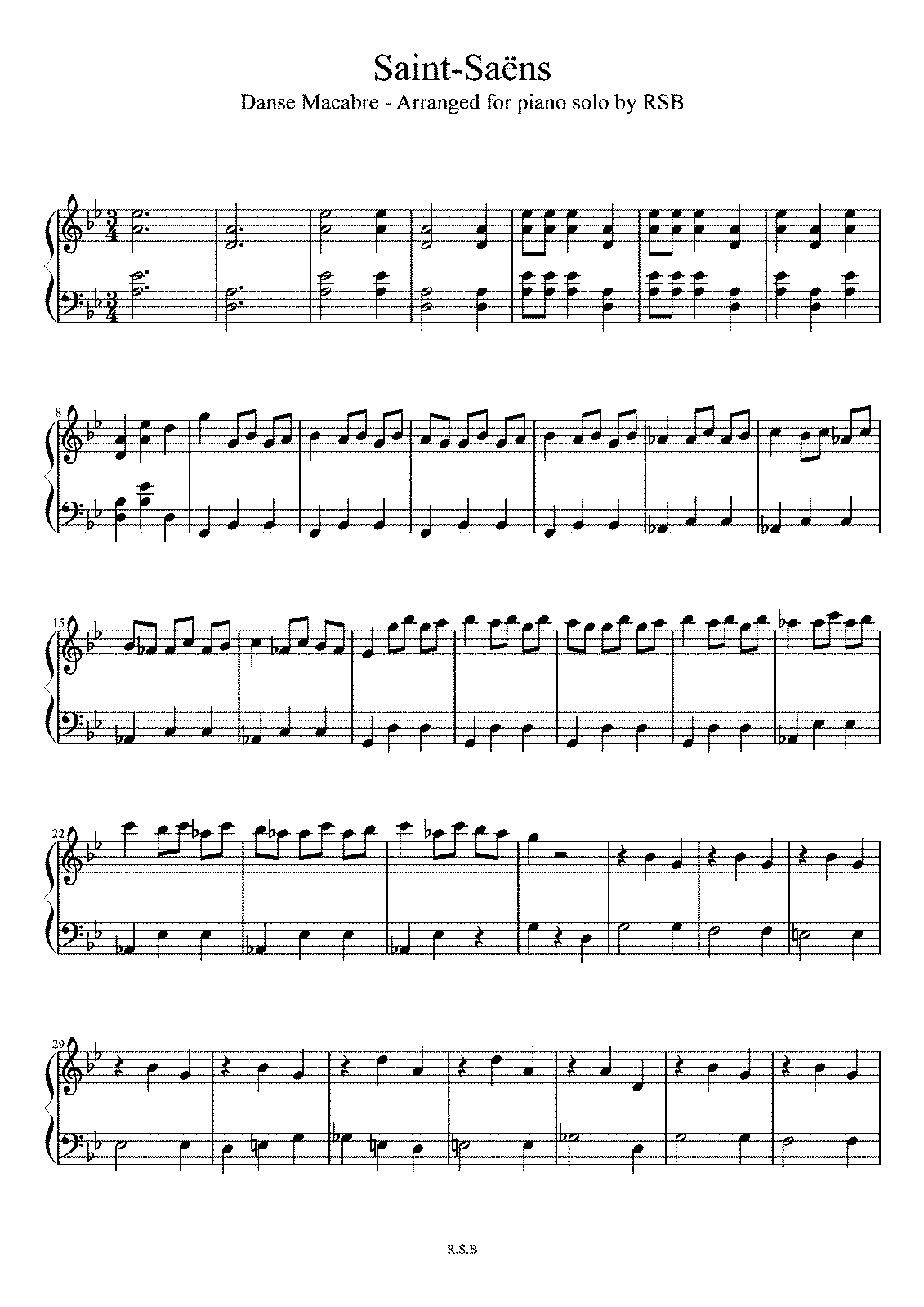
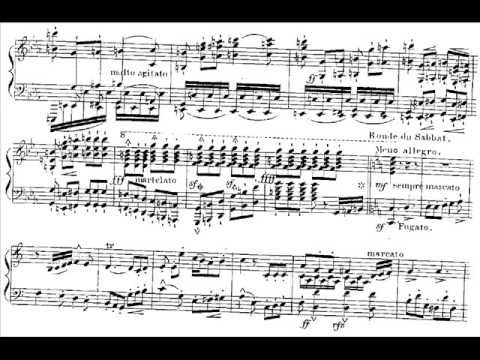
Danse macabre, Op. 40, is a tone poem for orchestra, written in 1874 by French composer Camille Saint-Saëns. It started out in 1872 as an art song for voice and piano with a French text by the poet Henri Cazalis, which is based on an old French superstition. In 1874, the composer expanded and reworked the piece into a tone poem, replacing the vocal line with a solo violin.
Get a free copy of the sheet music at IMSLP (Look for Arrangements and Transcriptions) or borrow a copy from the O’Connor Music Studio. I have this arranged for organ, piano, duet, simplified…
Amazon has a great Dover edition for solo piano. This splendid compilation features a variety of the composer’s best piano works, all reproduced from authoritative sources. Taking its title from the popular orchestral work “Danse Macabre” (presented here in the brilliant arrangement by Liszt), this collection also includes “Allegro appassionato,” “Album” (consisting of six pieces), “Rhapsodie d’Auvergne,” “Theme and Variations,” plus six etudes, three waltzes, and six etudes for left hand alone.
The final movement is the best known part of the symphony, thanks to its use in the Julia Roberts movie, Sleeping With The Enemy. It features a four-part structure, which Berlioz described in his own program notes from 1845 as follows:
“He sees himself at a witches’ Sabbath, in the midst of a hideous gathering of shades, sorcerers and monsters of every kind who have come together for his funeral. Strange sounds, groans, outbursts of laughter; distant shouts which seem to be answered by more shouts. The beloved melody appears once more, but has now lost its noble and shy character; it is now no more than a vulgar dance tune, trivial and grotesque: it is she who is coming to the Sabbath… Roar of delight at her arrival… She joins the diabolical orgy… The funeral knell tolls, burlesque parody of the Dies irae, the dance of the witches. The dance of the witches combined with the Dies irae.”
The Dies irae melody is one of the most-quoted in musical literature, appearing in the works of many diverse composers.
The traditional Gregorian melody has also been used as a theme or musical quotation in a number of classical compositions, notable among them:
The Funeral March of a Marionette (Marche funèbre d’une marionnette) is a short piece by Charles Gounod. It was written in 1872 for solo piano and orchestrated in 1879. It is perhaps best known as the theme music for the television program Alfred Hitchcock Presents, which originally aired from 1955 to 1965.
In 1871-72, while residing in London, Gounod started to write a suite for piano called “Suite Burlesque”. After completing one movement, the Funeral March of a Marionette, he abandoned the suite and had the single movement published by Goddard & Co. In 1879 he orchestrated the piece. The instrumentation is: piccolo, flute, 2 oboes, 2 clarinets in A, 2 bassoons, 2 horns in D, 2 trumpets in A, 3 trombones, ophicleide, timpani, bass drum, triangle, strings. The work is in the key of D minor, with a central section in D major. Various arrangements by other hands exist.
There is a program underlying the Funeral March of a Marionette: The Marionette has died in a duel. The funeral procession commences (D minor). A central section (D major) depicts the mourners taking refreshments, before returning to the funeral march (D minor).
The score contains the following inscriptions in appropriate places:
La Marionnette est cassée!!! (The Marionette is broken!!!)
Murmure de regrets de la troupe (Murmurs of regret from the troupe)
Le Cortège (The Procession)
Ici plusieurs des principaux personnages de la troupe s’arrêtent pour sa rafrâichir (Here many of the principal personages stop for refreshments)
Retour a la maison (Return to the house). (Wikipedia)
Download this music in several versions from IMSLP. Click on Arrangements and Transcriptions. There are also some arrangements for piano at the O’Connor Music Studio.
On Alfred Hitchcock:
From Faber Piano Adventures Performance Book Level 3B No.7 (Also available in the OCMS Library):
• 1812 ~ Fanny Perisiani, Italian coloratura soprano
• 1881 ~ The player piano was invented by Edward Leveaux of Sussex, England, who received a patent for it this day. There were many player piano inventions going on throughout the world during this time. Leveaux happened to be the lucky chap who received the patent England was handing out.
• 1929 ~ Leroy Van Dyke, Singer
• 1939 ~ A barber from Canonsburg (near Pittsburgh), PA, who had quite a singing voice, recorded That Old Gang of Mine with the Ted Weems Orchestra. That singer was the feature of the Weems band for many years before going solo as a radio, TV and stage star. You know him as ‘The Incomparable Mr. C.’, PerryComo. His string of hits for RCA Victor spans four decades. He was an NBC mainstay for years and years.
• 1943 ~ Is You is or is You Ain’t My Baby? was the musical question by Louis Jordan and His Tympany Five on this day on Decca Records.
• 1947 ~ James Fielder, Bass with these groups: Buffalo Springfield, Mothers of Invention and Blood, Sweat & Tears
• 1948 ~ Gordon MacRae hosted the premiere of a radio classic. The Railroad Hour debuted on ABC radio. The theme song was I’ve Been Working on the Railroad and the show was sponsored by….America’s Railroads.
• 1949 ~ John Aler, American tenor
• 1959 – Chris Lowe, Keyboards with Pet Shop Boys
• 1966 ~ It was, indeed, a Sunny Day for singer Bobby Hebb, who received a shiny gold record award for his song.
• 1970 ~ Janis Joplin died from a drug overdose. She was 27. Joplin, known for her passionate, bluesy, vocal style, was the lead singer of Big Brother and the Holding Company. She became a superstar with hits like, Down on Me, Pearl (her nickname) and Every Little Piece of My Heart; but Me and Bobby McGee was her only certified top 40 hit. The Bette Midler movie, The Rose, was based on Joplin’s life.
• 2000 ~ International diplomat and Newport Music Festival director David Meredith Evans died at the age of 64.
• 2001 ~ Irmgard Farden Aluli, considered the most prolific female Hawaiian composer since Queen Liliuokalani, died after suffering complications from colon cancer surgery. She was 89. Aluli, affectionately nicknamed “Aunty”, became the first living member to be inducted into the Hawaiian Music Hall of Fame in 1998. In August, the Prince Kuhio Hawaiian Civic Club honored her as a cultural living treasure. She wrote more than 200 songs, including Boy from Laupahoehoe and E maliuMai. Aluli began performing publicly after graduating from St. Andrew’s Priory in 1929. She was a member of the Annie Kerr Trio in the 1930s. In the late 1960s, Aluli, her daughters and a niece formed the group Puamana.
• 2001 ~ Jazz guitarist John Collins, who played with Nat King Cole for over a decade, died at the age of 83. Collins was born in Montgomery, Ala., and grew up in Chicago. His mother, Georgia Gorham, was a pianist and bandleader. Collins briefly played clarinet before switching to guitar and moving to New York, where he played with prominent jazzmen such as pianist ArtTatum. Collins accompanied singer Billie Holiday and saxophonist Lester Young in the 1940s and played in bands led by Benny Carter and FletcherHenderson. He served in the Army during World War II, and played in Army bands. Esquire magazine gave Collins its New Star award as best guitarist of 1947, his lone jazz poll honor. Collins’ 14-year association with Cole began in 1951, when he replaced guitarist Oscar Moore. Collins played with Cole until the latter’s death in 1965. Collins went on to tour Europe with his own group. He played occasionally around Southern California in the 1990s but worked mainly as a private teacher.
It will be fun watching your child improve their piano skills all while having fun using Piano Maestro in lessons each week!
As your child’s teacher (or YOUR teacher!), I’m looking forward to seeing the progress they will make when they start using it at home each day. This guide will help you understand how this app will benefit your child and how to get it set up on your own iPad.
Overview What is Piano Maestro?
Piano Maestro is the ultimate piano practice tool that will have students quickly playing their favorite classical, pop, rock, TV and video game songs and themes. It is available in the App Store and works on the iPad.
What skills does it improve?
• Note reading
• Sight reading
• Rhythm
• Inner pulse
• Confidence
What makes it so fun?
• Upbeat background tracks
• Stunning graphics
• Instant rewards and feed back
• Satisfaction of playing REAL music
It works with an acoustic piano?
Yes! Your child practices on your real acoustic or digital piano. Piano Maestro listens from the iPad’s built in microphone. No wires needed.
I’m already paying for lessons and books. What value does this add?
Sometimes I wish I could be there with your child to encourage them to keep practicing daily. I’m sure it’s not always easy, as unforeseen challenges will arise.
Since our time each week is just too short, this app will give me eyes on the ground and it will keep them practicing longer and improving more quickly.
How will it be used in lessons?
I will spend a few minutes of each lesson helping your child master a couple of new songs all while having fun! I will also teach them how to use the practice options at home.
At the end of the lesson, we will choose Home Challenge assignments within the app that will show up in your account at home. I’ll get updates when progress is made.
Getting Started
Wow, this sounds awesome. Now, how do I get started?
1) Download Piano Maestro on your iPad from the AppStore
2) Create a JoyTunes account with a parent’s email, under which, you can have multiple profiles for each member of the family.
3) Create a profile for each family member (that means you too Mom and Dad!) inside the Parent/Teacher zone (top right hand corner of main screen)
4) Connect to your teacher, me! After creating a profile in the “profiles” tab of the parent/teacher zone, select the student’s profile and click “connect to teacher.” Once I approve connection to your child, they will receive full access to all content for FREE! I will then also begin receiving weekly progress reports.
5) Start Playing – I will now start assigning you homework, meanwhile get started on Journey Mode.
When you connect to the O’Connor Music Studio, Piano Maestro is available for as long as you study here.
Pianist and composer Sonya Belousova is celebrating 30 years of Super Mario Bros. with an epic piano medley on the world’s coolest piano.
YouTube channel Player Piano had Belousova play the tribute to the late Nintendo president Satoru Iwata on a piano styled after a classic Nintendo Entertainment System. While the medley is good, it’s the amazingly detailed piano that stands out.
The bench looks like a Nintendo controller, while the piano itself is modeled after the console. It comes complete with power and reset buttons as well as connection cords. The flip top door can cover the keys, which Belousova appropriately takes the time to blow on at the end!
Let’s face it. Most kids don’t want to practice the piano. And if they do find the time to practice, it’s usually because their parent kept nagging them. How frustrating!
Piano teachers are frustrated too. It’s nearly impossible to teach students new concepts when they don’t understand the old ones–all because of a lack of practice.
If you’re a parent in this situation, I have just the solution you’re looking for.
In this upbeat book, I share all the tips I’ve discovered in my 14 years of teaching piano. You’ll learn fun, practical ways to get your kids to the keyboard.
But this easy-to-read guide goes one step further. I’ll show you simple ways to encourage better quality practice. Even if you’ve never had a music lesson in your life!
I wrote this book for kids of all ages. There are creative ideas for elementary students and also a section for teens.
There’s even a section for what to do if your child wants to stop taking piano lessons. That’s right, there is hope and my book will show you exactly how to get them interested in piano again.
Don’t be the kind of parent who sits on the sidelines waiting until their child wants to practice. Piano lessons are too expensive for you to let another “no-practice” day go by.
This book is your answer to get your child to the keyboard, have good quality practice and develop a life-long love of music.





 MaryO'Studio