Founded in Manhattan in 1853, Steinway & Sons is widely considered to be one of the greatest piano makers in the world. Its grand pianos grace the world’s grandest stages and are played by the best pianists.
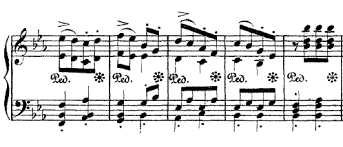
These are some examples of pedal marks in piano music:
An older style of pedaling. The symbols can be between or below the staves.
This type of pedaling is more commonly used today.
Another type of pedaling
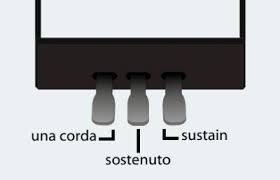
Pedals on a grand piano:
There are two standard foot pedals on the piano: on the left side is the una corda pedal and on the right side is the sustain (damper) pedal.
The middle sostenuto pedal is only standard on the American grand piano, and is very rarely used.
With pedals, the pianist can add resonance and color to the music and thereby bring out its inherent emotion. At the same time, over-pedaling or improper pedaling can drown the listener and the performer in a miasma of overlapping sounds.
This pedal has various names. It is sometimes called the damper pedal (because it lifts all the dampers inside the piano), or the forte pedal (because the result of lifting all the dampers is a fuller sound), or the tre corde pedal (because it allows the three strings of each key to vibrate), or the sustaining pedal (because when you depress it the note will continue to sound even if you take your fingers off the keys).
Damper Pedaling Guidelines
Here are some guidelines pedaling. As with everything in art, they can be ignored under certain circumstances.
Avoid pedaling notes that move in a stepwise or scalar pattern. Adjacent notes are dissonant, and when pedaled, they sound smudged.
Do pedal notes that skip and form a nice harmony.
Change your pedal (i.e., lift it up and put it down again) at each change of harmony.
Avoid pedaling through rests (i.e., silence), at ends of phrases (at which point we would need to breathe and that split second of silence takes care of that), or staccato notes—although this is commonly ignored, because we actually can hear the disconnection through the pedal. This is why we do not depend on the pedal to achieve a beautiful legato.
Keep your heel planted firmly on the floor, and pedal with either toes or the ball of foot, depending on your shoe size.
There are several manipulations possible with the damper pedal, each affecting the sound slightly differently.
Syncopated Pedaling
For the cleanest sound, the syncopated (or legato) pedal will give you the most control. This is an action where the foot is put down immediately after the note is played. This may take some getting used to, but you can practice it by playing a C scale.
Play C, and then lower the damper pedal.
Hold the pedal down until you are just about ready to play the D.
As the D’s finger goes down, the foot goes up, and then down again immediately after the D is struck.
The sound is clean. Continue up the scale the same way.
As an experiment, try putting the pedal down as you play a note, and notice the difference in the sound. Since the damper pedal lifts all the dampers, when you strike the D, not only are the three strings of that note free to vibrate but so do all the other strings vibrate sympathetically. You have a sound that is full of overtones.
There are times when you will want that effect and so will keep your foot down until the accumulated sound needs to breathe.
You can practice the syncopated pedal away from the piano by sitting on the bench or a chair and lifting your right knee at exactly the same time as your right hand goes down to tap the rising knee. This is the same action at the keyboard. The foot goes up when the hand goes down and then returns to the pedal.
Partial Pedals
There are half and quarter pedals too, which are used when you don’t want full vibrato. Rather than depressing the pedal all the way down, you lower your foot halfway so that the dampers are lifted only slightly off the strings, without allowing them to vibrate fully.
The quarter pedal gives even just a hint of pedal. It will take a while to feel these various distances on your piano. Also, you will find that each piano has its own pedal feel, which you must get used to before attempting to perform on that instrument.
Flutter Pedal
Then there are times, usually in scale passages, where touches of pedal can be very appealing and then the foot goes up and down rapidly and shallowly, and that is called the “flutter” pedal.
Choosing the Pedaling
The different types of damper pedaling techniques are for you, the pianist, to decide. But what determines which choice you will make?
Two things will control that: your very important ear, and your understanding of the music—the composer and the era in which the music was composed.
Your pedaling approach following the composer’s style depends on your knowledge of what instruments were available during the composer’s lifetime and how the pedal or lack of pedals would have made the music sound. This way, your interpretation will have authenticity.
Position of the Sustain Pedal:
Right pedal
The Sustain Pedal is Played With:
Right foot
Also Called:
Damper pedal, forte pedal, loud pedal
Effects of the Sustain Pedal:
The sustain pedal allows all of the notes on the piano to resonate after the keys have been lifted, for as long as the pedal is depressed. It creates a legato effect, forcing all of the notes to echo and overlap.
History of the Sustain Pedal:
The sustain pedal was originally operated by hand, and an assistant was required to operate it until the knee lever was created. The creators of the sustain foot pedal are unknown, but it is believed to have been invented around the mid-1700s.
Use of the sustain was uncommon until the Romantic Period, but is now the most commonly used piano pedal.
How the Sustain Pedal Works:
The sustain pedal lifts the dampers off of the strings, allowing them to vibrate until the pedal is released.
Sustain Pedal Marks:
In piano notation, use of the sustain pedal begins with Ped., and ends with a large asterisk.
Variable pedal marks, seen as __/_/__, are placed under notes, and define the precise pattern in which the sustain pedal is depressed and released.
Horizontal lines show when the sustain pedal is depressed.
Diagonal lines indicate a quick, temporary release of the sustain pedal.
Position of the Una Corda Pedal:
Left pedal
The Una Corda is Played With:
Left foot
Also Called:
Soft pedal, “piano” pedal
Effects of the Una Corda Pedal:
The una corda pedal is used to enhance the timbre of softly played notes, and exaggerate a low volume. The soft pedal should be used with notes that are already played softly, and will not produce the desired effect on louder notes.
History of the Una Corda Pedal:
The una corda was the first mechanism to modify the piano’s sound, and was originally operated by hand. It was invented in 1722 by Bartolomeo Cristofori, and quickly became a standard addition to the piano.
How the Una Corda Pedal Works:
Most treble keys are attached to two or three strings. The una corda shifts the strings so that the hammers only strike one or two of them, creating a softened sound.
Some bass keys are only attached to one string. In this case, the pedal creates a shift so that the hammer strikes on a lesser-used portion of the string.
Una Corda Pedal Marks:
In piano notation, use of the soft pedal begins with the words una corda (meaning “one string”), and is released by the words tre corde (meaning “three strings”).
Interesting Facts About the Una Corda Pedal:
Most upright pianos use a “piano” pedal instead of a true una corda pedal. The piano pedal moves the hammers closer to the strings, preventing them from striking with full force
Position of the Sostenuto Pedal:
Usually the middle pedal, but is often omitted.
The Sostenuto is Played With:
Right foot
Originally Called:
Tone-sustaining pedal
Effects of the Sostenuto Pedal:
The sostenuto pedal allows certain notes to be sustained while other notes on the keyboard are unaffected. It is used by hitting the desired notes, then depressing the pedal. The selected notes will resonate until the pedal is released. This way, sustained notes can be heard alongside notes played with a staccato effect.
History of the Sostenuto Pedal:
The sostenuto pedal was the last addition to the modern piano. Boisselot & Sons first showcased it in 1844, but the pedal didn’t gain popularity until Steinway patented it in 1874. Today, it’s primarily found on American grand pianos, but is not considered a standard addition since it is very rarely used.
How the Sostenuto Pedal Works:
When the sostenuto pedal is depressed, it keeps the dampers off the selected strings, allowing them to resonate while the rest of the keys’ dampers remain down.
Sostenuto Pedal Marks:
In piano music, use of the sostenuto pedal begins with Sost. Ped., and ends with a large asterisk. Notes meant to be sustained are sometimes marked by hollow, diamond-shaped notes, but there are no strict rules for this pedal since it is hardly ever used.
Interesting Facts About the Sostenuto Pedal:
Sostenuto is Italian for “sustaining,” although this incorrectly describes the pedal’s function.
On some pianos, the sostenuto pedal only affects the bass notes.
The middle pedal is sometimes built as a “practice rail” pedal instead of a sostenuto. A practice rail muffles notes with felt dampers, allowing for quiet play.
Sostenuto pedal markings are rarely seen in sheet music, but can be found in the works of Claude Debussy.
I’m thankful for my piano studio, my students, and my piano 🙂
When I was growing up, my dad was a minister, meaning we lived in whatever parsonage the church chose to let us live in. The one we had in Pawcatuck, CT had an upright piano that someone had put out in the sunroom. Not the best place for a piano, but I digress.
Since we had the piano already, someone – probably my mom – decided that I would take lessons. We had the organist from the Baptist church just across the river in Westerly, RI
Apparently, Clara Pashley was fondly remembered at the church (now Central Baptist Church) since she was mentioned in an article from 2010.
Miss Pashley walked to our house each week and taught me (and my mom who was always listening in) piano for the grand sum of 25 cents.
I started with Ada Richter’s classic Teaching Little Fingers to Play, which has now been morphed into the John Thompson library.
From there, it was the Michael Aaron series, and some sheet music.
There was no music store in our town, so I have no idea where any of this music came from – but I still have it all.
My parents did very well for their quarter a week investment, especially since my mom paid good attention and was able to beef up lessons she’d had as a child. Later on, she played well enough that she was church organist for a local Roman Catholic Church.
But I digress…
In those days, kids couldn’t do a whole lot of activities, so in 6th grade, I decided I wanted to be a Girl Scout. Bye, bye Clara.
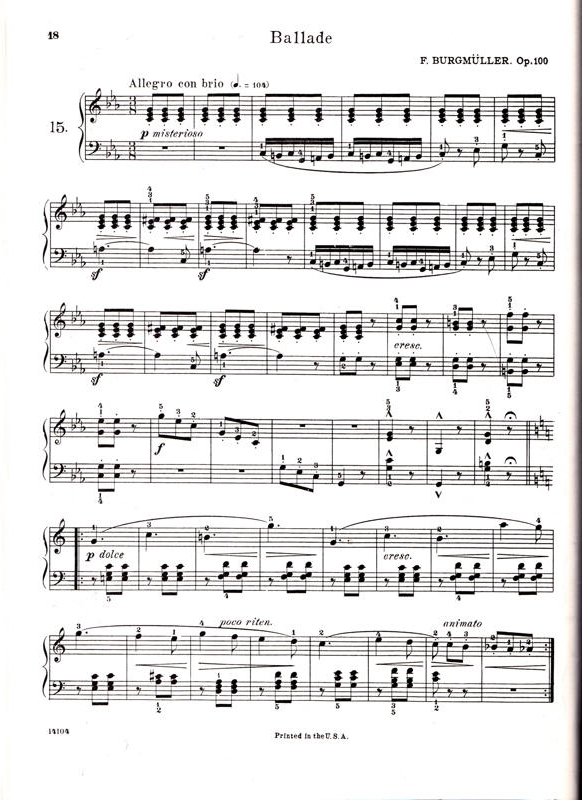
Girl Scouts didn’t last long but I did play piano in a talent show. I remember, I carefully cut Burgmüller’s Ballade out of my Michael Aaron book and made a nice construction paper cover. (I still have this, too)
I doubt that I played this well but here’s what it was supposed to sound like:
A few years intervened and moved to Springfield, MA. The parsonage piano there was in terrible shape and in the dark, never-used basement. But I decided to make it mine and cleared up the area around it and started “practicing”.
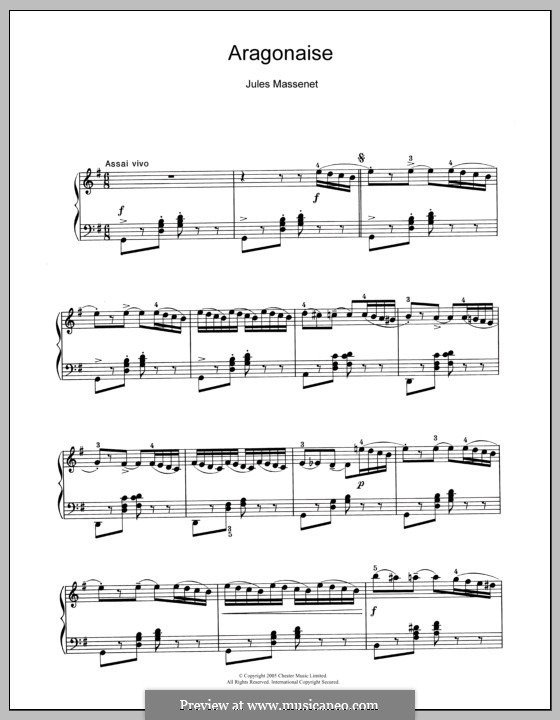
My Junior or Senior year of High School I decided I wanted to major in music in college. I decided to learn, on my own, a piano arrangement of Aragonnaise by Jules Massenet. I have no idea why or where that sheet music came from but I started working furiously on this piece.
Hopefully, at some point, it should have sounded like this:
I started pedaling (no pun intended!) my music to the Universities of Connecticut and Massachusetts and ended up at UMass Amherst since we were state residents.
Early morning gym classes (usually swimming), then wet hair traipsing across campus to music theory in winter 5 days a week. AARRGGH!
But I stuck it out.
My wonderful piano teacher, Howard Lebow, was killed in a car accident during my sophomore year and I was devastated. There will be more about him in a post on January 26, 2019 here on https://atomic-temporary-44596882.wpcomstaging.com
I took yet another break from piano lessons – but I kept playing.
After DH graduated, we moved to Milwaukee, WI for his graduate school. Besides working 2 jobs, I found time to commandeer the practice rooms at the University of Wisconsin. I also found a teacher at the Schaum School of Music. She was amazed that I had no piano at home to practice on.
When we later moved to Alexandria, VA my DH gave me a choice of new car or piano. So, I found a used piano. The owner had acquired it in a divorce and wanted it gone. Yesterday. She even paid to move it out of her apartment.
The new-to-me piano took up half our living room. When my parents came to visit, their feet we under my piano as I slept.
I found yet another new piano teacher and she is still my best friend to this day.
That piano moved to several locations before I bought a brand new Yamaha grand piano. The movers accidently brought in the wrong one and I made them return it. The people who lived in an apartment were probably unhappy when they had to return my piano and take their own new baby grand back.
I started teaching as a traveling piano teacher in Silver Spring, Maryland. I continued that in Wilmington, DE.
When we got to Fairfax, VA I decided no more traveling. Students would come to me. And so they have since 1973.
What is supposed to be our living room is filled with music books, electric keyboards, the grand piano, 2 organs, 2 violins, 2 clarinets and other musical “stuff”.
Piano playing has gotten me through the worst times of my life. Teaching has been a lifeline for me, as well.
I am so thankful for the students who have stayed with me over the years.
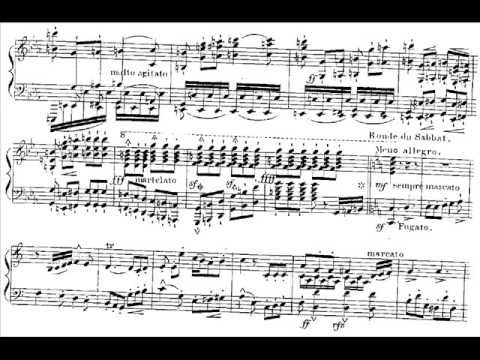
The final movement is the best known part of the symphony, thanks to its use in the Julia Roberts movie, Sleeping With The Enemy. It features a four-part structure, which Berlioz described in his own program notes from 1845 as follows:
“He sees himself at a witches’ Sabbath, in the midst of a hideous gathering of shades, sorcerers and monsters of every kind who have come together for his funeral. Strange sounds, groans, outbursts of laughter; distant shouts which seem to be answered by more shouts. The beloved melody appears once more, but has now lost its noble and shy character; it is now no more than a vulgar dance tune, trivial and grotesque: it is she who is coming to the Sabbath… Roar of delight at her arrival… She joins the diabolical orgy… The funeral knell tolls, burlesque parody of the Dies irae, the dance of the witches. The dance of the witches combined with the Dies irae.”
The Dies irae melody is one of the most-quoted in musical literature, appearing in the works of many diverse composers.
The traditional Gregorian melody has also been used as a theme or musical quotation in a number of classical compositions, notable among them:
There will be $1.6 million worth of piano on stage at the City Recital Hall on Friday night. With their legs and lids removed for transport, eight Steinway grand pianos will be trucked to the venue.
There they will be reassembled on stage and tuned, ready for eight of Australia’s finest classical pianists.
In The Steinway Spectacular 16 hands and 80 fingers will play some of classical music’s greatest hits.
Conducted by Guy Noble, the pianists will work as an ensemble to perform works by composers such as Ravel, Saint-Saens and George Gershwin. ”It’s a very large affair,” says Noble. ”Logistically, it’s a nightmare.” The piano technician Ara Vartoukian will spend hours tuning the instruments.
For past concerts in Melbourne the process sometimes took all night. ”The pianos all, in essence, sound the same, so they have to be absolutely in tune with each other.”
Even after the most careful tuning, things can go awry.
The pianists – Anthony Halliday, Roger Heagney, Clemens Leske, Tamara Smolyar, Mikhail Solovei, Evgeny Ukhanov, Gerard Willems and Alexey Yemtsov – usually perform as soloists. Every now and again, Noble says, one of them ”goes rogue”.
”One will suddenly break out and play their own thing,” he says. ”I have to herd them back into the pride, glaring at them with eyes of death. It’s one of the hardest things I’ve ever had to conduct. It’s like herding cats.”
There is no repertoire for an ensemble of pianists, so Noble has created new arrangements.
His favourite is a rendition of the children’s staple Chopsticks. ”That just goes wild,” he says.
The segment titled So You Think You Can Play Scales is also a crowd pleaser. ”It’s like Piano Idol. People get voted off if they go off the rails.”
Other pieces will feature the organist Calvin Bowman and the soprano Shu-Cheen Yu. Bowman, who usually plays above the stage in a loft, will join the other performers on stage on an electronic organ.
”It’s a relief for him to be down on stage because he suffers terribly from vertigo,” Noble says. ”He’s been terrified in organ lofts all over Australia.”
More boisterous extravaganza than a recital for purists, the performance will appeal to an eclectic crowd.
”We get classical music lovers, as well as people who are just curious. It’s pure fun and enjoyment.”
The Steinway Spectacular is at the City Recital Hall on Friday.
Pianist and composer Sonya Belousova celebrated 30 years of Super Mario Bros. with an epic piano medley on the world’s coolest piano.
YouTube channel Player Piano had Belousova play the tribute to the late Nintendo president Satoru Iwata on a piano styled after a classic Nintendo Entertainment System. While the medley is good, it’s the amazingly detailed piano that stands out.
The bench looks like a Nintendo controller, while the piano itself is modeled after the console. It comes complete with power and reset buttons as well as connection cords. The flip top door can cover the keys, which Belousova appropriately takes the time to blow on at the end!
The American Fotoplayer is a type of photoplayer developed by the American Fotoplayer Company between the years of 1912 and 1925. The Fotoplayer is a type of player piano specifically developed to provide music and sound effects for silent movies.
…
The appeal of the Fotoplayer to theatre owners was the fact that it took no musical skill to operate. The Fotoplayer would play the piano and pipe organ mechanically using an electric motor, an air pump, and piano rolls while the user of the Fotoplayer would follow the onscreen action while pulling cords, pushing buttons, and pressing pedals to produce relatable sounds to what was occurring onscreen. These actions could create sounds such as a steamboat whistle, a bird chirp, wind, thunder, a telephone bell, as well as many others. On Fotoplayers specifically, most effects were created using leather cords with wooden handles on the ends which the effects were directly connected to. For example, the steamboat whistle sound effect was created using a household bellows with a whistle at the end. Pulling the cord compressed the bellows, delivering a gust of air into the whistle. Creating a drum roll on the other hand was a bit more complicated. A clockwork device was needed to time the strikes of the drum which required constant winding.
Steinway Place, Queens, New York, 11105. steinway.com or 718-721-2600.
It all begins with bare wood, rough and fragrant.
Skilled craftsmen then use muscle, fine motor skills and magic to transform simple planks into magnificent instruments. In the bridge-notching process, the “bellymen” use tools they’ve constructed themselves, the better to execute this highly skilled operation.
Alaskan Sitka Spruce becomes a soundboard, with ribs of Sugar Pine.
Eighty-eight keys, 88 hammers, more than 230 strings — all are carefully created, installed and tested in every piano.
All in all, it takes about 11 months to make a Steinway grand piano.
Steinway & Sons has been located in the same spot in the Astoria section of Queens since the early 1870s. Founded in 1853 in a loft on Varick Street in Manhattan, the company’s reputation grew quickly, and the company needed space to expand their operations.
Factory tours are offered from September through the end of June. (Factory tours are not available in July and August.) Tours are scheduled from 9:30 a.m. to noon on Tuesdays, for a maximum of 15 people.
Needless to say, tours fill up quickly and must be booked in advance. Steinway currently has no openings for the rest of 2017 and is not yet taking reservations for 2018. Plan way ahead, and check for updates by emailing tours@steinway.com or by calling 718-721-2600.
Picture a seven-foot grand piano in a studio. The lid’s missing, so you can see all the strings. Researchers suspend a rod embedded with 32 microphones over the piano’s body.
“We played this middle C at a very soft level, a medium level, and a very loud level,” says Agnieszka Roginska, a professor in NYU’s music technology program. She says using a pianist to play middle C over and over wouldn’t be scientific. So they’re using a disklavier, a fancy player piano triggered by electronics. “So we could hit the same note, with the same velocity, thousands of times,” she says.
They’d record the piano in one spot. Then move the microphones eight inches. Record the note. Move the mics again. Record the note. Over and over and over, until they reach the back of the piano. At the end, they get “what is basically a very dense acoustical scan of the radiation pattern of the grand piano,” Roginska says.










 MaryO'Studio