April 15 ~ Today in Music History

today
. 1452 ~ Leonardo da Vinci, Italian musician, painter, sculptor, engineer, mathematician, scientist and what-not

. 1651 ~ Domenico Gabrieli, Italian composer and cellist

OCMS 1894 ~ Bessie Smith, American blues, jazz and vaudeville singer
More information about Smith

. 1920 ~ Jim Timmens, Grammy Award-winning composer: Aren’t You Glad You’re You in 1995, Best Recording For Children, jazz musician, musical director of New York’s Radio City Music Hall

. 1923 ~ Dr. Lee DeForest’s Phonofilm, the first sound-on-sound film, motion picture, was demonstrated for a by-invitation-only audience at the Rivoli Theatre in New York City. The guests saw The Gavotte, a man and woman dancing to old-time music and The Serenade, four musicians who played on wind, percussion and string instruments.

OCMS 1924 ~ Neville Marriner, British violinist and conductor

. 1927 ~ Serge Koussevitsky directed the Boston Symphony Orchestra in the first performance of Frederick Converse’s symphony, Flivver Ten Million, a salute to the ‘Tin Lizzie’ automobile.

. 1930 ~ Herb Pomeroy, Musician: trumpet, teacher at Berklee in Boston, bandleader, directed radio Malaysia Orchestra

. 1933 ~ Roy Clark, Musician, guitar, banjo, CMA Entertainer of the Year in 1973, country singer, Comedian of the Year in 1970, 1971 and 1972


. 2015 ~ Tax Day!

April 14 ~ Today in Music History

today


. 1759 ~ George Frideric Handel, organist, violinist and composer, died. Among his best known oratorios are “Saul,” “Israel in Egypt” and the “Messiah”.

. 1900 ~ Salvatore Baccaloni, Opera singer

. 1922 ~ Soprano Jeanette Vreeland sang the first radio concert from an airplane as she flew over New York City.

. 1922 ~ Ali Akbar Khan, Indian composer and maestro sarod player

. 1924 ~ Shorty Rogers (Milton Rajonsky), Musician: trumpet, bandleader, songwriter, composer, arranger

. 1933 ~ Buddy Knox, Singer

. 1933 ~ Morton Subotnick, American composer of experimental music

. 1935 ~ Loretta Lynn, American country-music singer, songwriter and guitarist, first woman to earn the CMA’s Entertainer of the Year award; named ACM Artist of the Decade in 1979

. 1941 ~ Hildegarde recorded the standard Darling Je Vous Aime Beaucoup on Decca Records. Hildegarde was the elegant singer with the long white gloves who was accompanied by the Harry Sosnik Orchestra. It took another 14 years, but Nat ‘King’ Cole turned the song into an even bigger hit, landing at number 7 on the pop music charts.

. 1951 ~ Julian Lloyd Webber, British cellist

. 1958 ~ Pianist Van Cliburn was presented on national TV for the first time on NBC’s The Tonight Show with Jack Paar.

. 1958 ~ Laurie London reached the top spot on the music charts with He’s Got theWhole World in His Hands, knocking Perry Como’s Catch a Falling Star down a peg or two.

. 1960 ~ The musical Bye Bye Birdie opened at the Martin Beck Theatre in New York City. Chita Rivera and Dick Van Dyke starred in the Broadway show which ran for 607 performances.

. 1967 ~ Herman’s Hermits, featuring lead singer Peter Noone, went gold with the single, There’s a Kind of Hush. It was a two-sided hit, with the flip-side, No Milk Today, also receiving considerable play. Hush, however, was a top five song, while the ‘B’ side just made it into the top 40 at number 35.

. 1995 ~ Burl Ives, Oscar-winning actor and singer whose gentle voice helped popularize American folk music, died. He played powerful dramatic roles in movies including “The Big Country,” for which he won an Academy Award for best supporting actor, and “Cat on a Hot Tin Roof.”

April 13 ~ Today in Music History

today

. 1377 ~ Guillaume de Machaut died. French poet and musician. Composer of monophonic and polyphonic music. Leading representative of the Ars nova tradition
More information about Machaut

. 1742 ~ Handel’s Messiah premier in Dublin

. 1810 ~Félicien-César David, French composer

. 1816 ~ Sir William Sterndale Bennett, British pianist, conductor and composer

. 1906 ~ Bud (Lawrence) Freeman, Jazz musician, tenor sax

. 1917 ~ Howard Keel, American singer and actor, born as Harold Clifford Leek. He appeared in singing and acting roles in films from 1948-68 and also appeared on TV in “Dallas.”

. 1928 ~ Teddy Charles, Vibraphonist, songwriter

. 1940 ~ Lester Chambers, Singer, musician, played harmonica

. 1941 ~ Margaret Price, British soprano

. 1944 ~ Jack Casady, Musician, KBC Band, Hot Tuna, Jefferson Airplane

. 1946 ~ Al Green, Singer, songwriter

. 1951 ~ Peabo Bryson, Singer

. 1958 ~ Van Cliburn of Kilgore, TX earned first prize in the Soviet Union’s Tchaikovsky International Piano Contest in Moscow.

. 1961 ~ Carnival opened on Broadway at the Imperial Theatre in New York City. Anna Maria Alberghetti starred in the musical which ran for 719 performances.

. 1963 ~ Jack Cassidy and Barbara Cook starred in She Loves Me, which opened at the O’Neill Theatre in New York City. The Broadway musical ran for 189 performances.

. 1980 ~ Broadway’s longest-running musical closed after eight years. Grease ran for 3,388 performances and earned $8 million. Though the-longest running musical on the Great White Way at the time, Grease was also the third longest-running Broadway show. Other shows in the top five included: The Defiant Ones and Life with Father, Oh! Calcutta, A Chorus Line and Fiddler on the Roof.

. 1985 ~ The Grand Ole Opry, a radio staple from Nashville for 60 years, came to TV. The Nashville Network presented the country music jamboree to some 22-million homes across the U.S.

April 12 ~ Today in Music History

today

. 1684 ~ Niccolo Amati, member of a family of violin makers in Cremona, Italy, died.

. 1904 ~ Lily (Alice) Pons, Singer

. 1905 ~ The Hippodrome opened in New York City with the gala musical revue, A Yankee Circus on Mars.

. 1913 ~ Lionel Hampton, American jazz vibraphonist, pianist, drummer and bandleader; played with Benny Goodman and recorded with Louis Armstrong. He was responsible for introducing the vibraphone into jazz.

. 1914 ~ George Bernard Shaw’s play “Pygmalion” opened in London with Mrs. Patrick Campbell as Eliza Doolittle and Sir Herbert Tree as Professor Higgins. This would later become the musical My Fair Lady by Lerner and Loewe.

. 1916 ~ Russ Garcia, Musician, composer, orchestra leader

. 1931 ~ Billy (Richard) Vaughn, Musician, orchestra leader, music director

. 1932 ~ Tiny Tim (aka Darry Dover, Larry Love) (Herbert Khaury), Ukulele playing, falsetto singer, best known for Tiptoe Through the Tulips

. 1933 ~ Monserrat Caballé (1933) Spanish opera singer and a leading Verdi and Donizetti soprano

. 1938 ~ Fedor Chaliapin, foremost Russian operatic bass singer and one of opera’s greatest performers, died.

. 1939 ~ One of the classic theme songs of the Big Band era was recorded for Decca. Woody Herman’s orchestra recorded Woodchopper’s Ball.

. 1940 ~ Herbie Hancock, Oscar-winning American jazz/fusion musician, pianist and composer

. 1950 ~ David Cassidy, Singer

OCMS 1954 ~ Bill Haley and His Comets recorded Rock Around the Clock for Decca Records. The song was recorded at the Pythian Temple, “a big, barnlike building with great echo,” in New York City. “Rock Around the Clock” was formally released a month later. It sold an estimated 25 million copies worldwide, making it the second biggest-selling single at the time behind Bing Crosby White Christmas
More information about Rock Around the Clock

. 1999 ~ BoxCar Willie, Country singing star, who blended a mellow voice with a rough- hewn hobo persona, died. He was 67.

Happy Birthday to… US! | Barbershop HQ

BarbershopQuartet

It was 77 years ago this weekend that 26 men showed up at the Tulsa Club for a night of singing. They’d been invited by “Rupert Hall, Royal Keeper of the Minor Keys” and “O.C. Cash, Third Assistant Temporary Vice Chairman” of the Society for the Preservation and Propagation of Barber Shop Quartet Singing in the United States (sic), who noted:

In this age of Dictators and Government control of everything, about the only privilege guaranteed by the Bill of Rights not in some way supervised and directed, is the art of Barber Shop Quartet singing. Without doubt we still have the right of “peaceable assembly” which I am advised by competent legal authority includes quartet singing. The writers of this letter have for a long time thought that something should be done to encourage the enjoyment of this last remaining vestige of human liberty. Therefore, we have decided to hold a songfest on the Roof Garden of the Tulsa Club on Monday, April 11, at six-thirty p.m.

Read more:  Happy Birthday to… US! | Barbershop HQ.

April 11 ~ Today in Music History

today


1819 ~ Sir Charles Halle, German-born British pianist and conductor He settled in Manchester after being driven to England by the 1848 Revolution and in 1858 founded the famous Halle Orchestra.

. 1916 ~ Alberto Ginastera, Argentinian composer

. 1932 ~ Joel Grey, Entertainer

. 1938 ~ Kurt Moll, German bass

. 1938 ~ O.C. Cash founded SPEBSQS (The Society for the Preservation of Barbershop-Quartet Singing)

. 1956 ~ Elvis Presley reached the top spot on the Billboard music chart with his first double-sided hit. The disk featured Heartbreak Hotel and I Was the One. The RCA Victor record stayed at number one for eight weeks. Elvis also made the country and R&B charts, as well.

. 1961 ~ Bob Dylan made his professional singing debut in Greenwich Village’s Gerde’s Folk City. He sang Blowin’ in the Wind.

Piano Stores, Teachers Adapt to Decline in Interest in the Instrument

SALISBURY, Md. – Mozart, Beethoven and Chopin wouldn’t be thrilled to hear that fewer people are choosing to learn to play the piano than ever before.

At B&B Music in Salisbury, people have been shopping for pianos since they opened 60 years ago. One think you won’t see on the display floor in 2015 is a grand piano.

“We used to have actual string pianos at one time,” said store manager Mike Jarrell. “The way the economy was, it wasn’t very feasible for a lot of people. They can cost up to several thousands of dollars.”

The best year for new piano sales in the United States was 1909, when more than 364,500 were sold. Now that number has plunged to between 30,000 and 40,000 each year.

Denise Crothers is on her 36th year of teaching people young and old how to play piano. She averages about 60 students per week.

“I teach for half an hour, usually for each lesson and half of I teach them in the note because I think it’s important to still know how to read. Half of it would be like the praise and worship and learning how to chord and how to play by ear,” said Crothers. “They can play what they hear on the radio. Some of them don’t even need me anymore.”

Nationally, increased interest in sports or electronics is blamed for declining interest in learning to play the piano. Denise says lessons have evolved over the years in order to keep it fresh.

“I think it’s important for teachers to be able to apply the real world into their teaching. Not maybe strictly Classical. Classical is wonderful, you know, don’t get me wrong. I absolutely love it, but I think it’s important for them to do fun songs and stuff like that,” said Crothers.

Rather than smashing old pianos on the curb, B&B Music is adapting to suit a more tech-savvy generation.

“Our more common models are the digital style models with weighted keys so it’s more like playing a real string piano. Then you start getting into more production type keyboards which are more for making your own scores and hip-hop beats and that kind of thing. It’s more of a production opposed to performance,” said Jarrell.

Despite a national downward trend in piano purchases and lessons, those in the biz can’t stress enough how important it is.

“In the music business, you’re constantly learning. It’s a never-ending thing,” said Jarrell.

“Once you commit to something, really having the work ethic to keep going and keep learning, it’s really rewarding and that’s something I think our culture lacks sometimes, you know the ‘stick-to-it-ness’,” said Crothers.

via Piano Stores, Teachers Adapt to Decline in Interest in the Instr – WBOC-TV 16, Delmarvas News Leader, FOX 21 –.

April 10 ~ Today in Music History

today


. 1864 ~ Eugen d’Albert, British-born German pianist and composer

. 1885 ~ Sigmund Spaeth, American music scholar

. 1921 ~ Martin Denny, Composer, arranger, pianist

OCMS 1930 ~ Claude Bolling, French jazz pianist and composer
More information about Bolling

. 1927 ~ Ballet Macanique was presented for the first time at Carnegie Hall in New York City. This was the first symphonic work that called for an airplane propeller and other mechanical contraptions not normally associated with the ballet.

. 1953 ~ Eddie Fisher was discharged from the Army and arrived home to a nice paycheck of $330,000 in record royalties. Fisher sold 7 million records for RCA Victor while on furloughs. Anytime was just one of several hits recorded during his stint in the Army.

. 1970 ~ Officially resigning from The Beatles, Paul McCartney disbanded the most influential rock group in history at a public news conference. The Beatles hit, Let It Be, was riding high on the pop charts. The last recording for the group, The Long and Winding Road (also from the documentary film Let It Be), would be number one for two weeks beginning on June 13, bringing to a close one of contemporary music’s greatest dynasties.

April 9 ~ Today in Music History

today

. 1886 ~ Enrique Granados, Spanish pianist and composer, performed his debut piano concert in Barcelona.

. 1888 ~ Sol Hurok, Impresario

OCMS 1890 ~ Efram Zimbalist, Russian-born American violinist and composer
More information about Zimbalist

. 1898 ~ Paul Robeson, American bass. Known for his sympathy for Russia he had his passport revoked for many years. The song Ole Man River, whose words he changed to fit his views, became his signature song.

. 1906 ~ Antal Dorati, Hungarian-born American conductor and composer. He was the first conductor to record all of Haydn’s symphonies.

. 1916 ~ Julian Dash, Jazz musician, tenor sax

. 1928 ~ Tom Lehrer, Songwriter

. 1932 ~ Carl Perkins, early American rock ‘n’ roll figure who originally recorded Blue Suede Shoes. Inducted into the Rock and Roll Hall of Fame in 1987

. 1940 ~ Jimmy Dorsey and his orchestra, along with singer Helen O’Connell, recorded Six Lessons from Madame La Zonga for Decca Records.

. 1950 ~ Bob Hope hosted a Star-Spangled Review on NBC-TV. Hope became the highest- paid performer for a single show on TV. The Star-Spangled Review was a musical special.

. 1970 ~ Paul McCartney sought a High Court writ to wind up the Beatles business partnership, effectively ending the group’s career.

. 1977 ~ The Swedish pop group Abba made its debut at number one on the American pop charts, as Dancing Queen became the most popular record in the U.S.

. 1988 ~ Brook Benton passed away.  He was an American singer and songwriter who was popular with rock and roll, rhythm and blues, and pop music audiences.

. 2001 ~ Graziella Sciutti, an Italian soprano and opera director best known for her interpretations of Mozart, died at the age of 68. Born in Turin, northern Italy, in 1932, Sciutti made her first operatic appearance at the Aix-en-Provence Festival in France in 1951. She went on to perform under Herbert von Karajan at Milan’s La Scala. She was lead soprano at a smaller theatre at La Scala called La Piccola Scala for eight years from its inception in 1955. She became a member of the Vienna State Opera in 1960 and the following year made her debut in San Francisco in one of her most celebrated roles, as Susanna in The Marriage of Figaro. She began her directing career at Covent Garden in London and at the Glyndebourne Festival in England, where she directed and performed in Poulenc’s La Voix Humaine in 1977. She then went on to direct in Canada and for the opera companies in San Francisco, Chicago, New York, Dallas and Miami, as well as in Britain, Germany and Italy. She joined London’s Royal College of Music in the mid 1980s and continued to teach there until shortly before her death.

Handmade instrument donated to Black Hills State

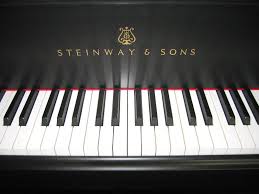
steinway-new

A Steinway Model-B is the new addition to Black Hills State’s Meier Recital Hall.

The nearly $100,000 piano was fully funded by donations, including Rachel Headley, the Science, Technology, Engineering & Mathematics liaison to Academic Affairs at BHSU.

The university donors purchased the 7-foot handmade instrument from Black Hills Piano Gallery in Rapid City.

Gallery owner Tony Thomas believes the Meier Recital Hall is the perfect home for a Steinway.

“That hall cries for the best possible sound,” he said. “The Meier Hall is just a wonderful hall and they have a great faculty to provide good instruction to the students there.”

Thomas, a musician himself, understands the decision of purchasing a top-of-the-line instrument.

“Anytime you have a good hall that provides that kind of acoustics, Steinway is the choice of 98 percent of concert artists on stage. That’s the sound that they want to hear. You can head all of the textures of tunes, it’s beautiful.”

Black hills state received the handcrafted piano Monday afternoon, with an unveiling ceremony planned for that evening.

via Handmade instrument donated to Black Hills State | KOTATV.com Rapid City, Black Hills, So Dak. Gillette Sheridan KOTA Territory News.