September 1: Today in Music History

• 1653 ~ Johann Pachelbel, German composer and organist
More information about Pachelbel

• 1887 ~ Emile Berliner filed for a patent for his invention of the lateral-cut, flat-disk gramophone. We know it better as the record player. Emile got the patent, but Thomas Edison got the notoriety for making it work and making music with his invention.

• 1854 ~ Engelbert Humperdinck, German opera composer
Read quotes by and about Humperdinck
More information about Humperdinck

• 1931 ~ Boxcar Willie (Lecil Martin), ‘The Singing Hobo’: songwriter, singer

• 1933 ~ Conway Twitty (Harold Lloyd Jenkins), Songwriter, CMA Male Vocalist of the
Year in 1975, Grammy Award-winner with Loretta Lynn, owns booking agency, music publishing company, Twitty Burgers, Twitty City theme park

• 1935 ~ Seiji Ozawa, Japanese conductor
More information about Ozawa

• 1940 ~ Dave White (Tricker), Singer, songwriter with Danny & The Juniors

• 1944 ~ Leonard Slatkin, Grammy Award-winning orchestra director of the St. Louis Symphony Orchestra and National Symphony Orchestra

• 1946 ~ Barry Gibb, Musician, rhythm guitar, songwriter, singer with The Bee Gees

• 1946 ~ Greg Errico, Drummer with Sly and The Family Stone

• 1955 ~ Bruce Foxton, Guitar with 100 Men and The Jam

• 1957 ~ Gloria Estefan (Gloria Maria Milagrosa Fajardo), ‘Queen of Latin Pop’, Grammy Award-winning singer

• 1960 ~ When Oscar Hammerstein II died, the musical theater lost an outstanding composer. To honor the man and his music, every New York theater turned off its lights on this night in 1960.

• 1972 ~ The O’Jays received a gold record for Back Stabbers. It was the first hit for the group from Canton, OH. The O’Jays would place nine more hits on the pop and R&B charts. Five of them were gold record winners: Love Train, I Love Music, Use ta Be My Girl, For the Love of Money and Put Your Hands Together.

• 1977 ~ Singer Debbie Harry (of Blondie) signed a recording deal with Chrysalis Records. Chrysalis bought the group’s private stock label for $500,000. With the high visibility of the former Playboy Bunny, it was difficult to think of Blondie as a band, and not just Debbie Harry.

• 1982 ~ Clifford M Curzon, England, pianist, died at the age of 75

• 2001 ~ Sil Austin, a jazz artist who recorded more than 30 albums and the Top 40 hits Slow Walk, My Mother’s Eyes, and his signature song, Danny Boy, died of prostate cancer. He was 71. Austin taught himself how to play the tenor saxophone when he was 12. Four years later, he played Danny Boy on the Ted Mack Amateur Hour, a performance that caught the attention of Mercury Records. Austin performed all over Europe and Asia, usually traveling with his wife, the Rev. Vernice Austin.

• 2023 ~ James William Buffett (December 25, 1946 – September 1, 2023) was an American singer-songwriter, musician, author, and businessman. He was best known for his music, which often portrays an “island escapism” lifestyle. Jimmy Buffett was one of the world’s richest musicians, with a net worth of $1 billion as of 2023.


Vivaldi’s Spring ~ From Piano Maestro

vivaldi


Vivaldi, one of the greatest baroque composers, has a very interesting story. He ran an orphanage in the 18th century in Italy that became famous all over the western world for its musically talented children. A lot of his pieces were written for specific children in his school. Vivaldi learned the violin from his father, and was trained as a priest. He was nicknamed “the red priest” for his red hair and was apparently somewhat sure of himself, having claimed once he can compose a concerto faster than it can be copied.

Vivaldi wrote over 500 pieces, most of which are lost today. He is considered one of the greatest musical landmarks in history, having inspired many composers that followed him, including J.S.Bach and others.

Other fun facts about Vivaldi can be found here.

Vivaldi’s Spring is available on Piano Maestro, which is available to my students free of charge.

More Music Opportunities

Calling All Musicians: Join Pender’s Vibrant Music Ministry!

Are you passionate about music? Do you feel called to share your musical gifts in a community of faith? Pender is seeking talented musicians to join our vibrant Music Ministry team and contribute to our uplifting and spiritually enriching worship services!

What We’re Looking For:

  • Instrumentalists: Whether you shine on the strings, whisper with the woodwinds, or resonate with the brass, we need your skills to fill our sanctuary with harmonious sounds.
  • Vocalists: Sopranos, altos, tenors, and basses—lend your voices to help lead our congregation in song and praise.
  • Handbells: We will teach you to play during our services and special events.

Why Be a Part of the Pender Music Ministry?

  • Community Impact: Through your music, you can touch the hearts of our congregation and inspire joy and contemplation in our weekly gatherings.
  • Spiritual Growth: Participate in a ministry that not only serves others but also nurtures your own faith and connection to the divine.
  • Musical Development: Collaborate with experienced musicians and vocalists that will help you hone your craft and explore new musical opportunities.

Get Involved:

  • Rehearsals: We meet weekly to practice and prepare, ensuring every service is both spiritually and musically fulfilling.
  • Sunday Services: Be a part of our regular worship schedule and special holiday performances that highlight the church calendar.
  • Community Outreach: Occasionally, our music ministry participates in local events and services, expanding our impact beyond the church walls.

If you’re excited about making a joyful noise unto the Lord and enhancing our worship experiences, we would love to hear from you! Contact our Patrick King, our Music Director today to learn more about how you can get involved.

Let your talent soar in a place where music meets ministry, and together, we’ll create beautiful worship experiences that resonate with all who attend. Join us and be a key note in our melody of faith!

August 31: Today in Music History

today

• 1834 ~ Amilcare Ponchielli, Italian composer
More information about Ponchielli

• 1903 ~ Arthur (Morton) Godfrey, Ukulele playing, TV/radio entertainer

• 1918 ~ Alan Jay Lerner, American lyricist for the musical theater
Read quotes by and about Lerner
More information about Lerner

• 1930 ~ Dudley “Big Tiny” Little Jr, American pianist on the Lawrence Welk Show

• 1939 ~ Jerry Allison, Drummer with The Crickets

• 1939 ~ Frank Sinatra recorded All or Nothing at All with the Harry James Band. The tune failed to become a hit until four years later – after Ol’ Blue Eyes had joined the Tommy Dorsey Orchestra.

• 1945 ~ Itzhak Perlman, Israeli-born American violinist, recorded with André Previn and Scott Joplin

• 1945 ~ Van Morrison, Songwriter, singer with Them

• 1955 ~ Anthony Thistlethwaite, Saxophone with The Waterboys

• 1957 ~ Glenn Tilbrook, Guitar, singer, songwriter with Squeeze

• 1959 ~ Tony DeFranco, Singer with The DeFranco Family

• 1970 ~ Debbie Gibson, Singer

• 1976 ~ A judge ruled that George Harrison was guilty of copying from the songHe’s So Fine (a 1963 Chiffons hit). The judge said that the chorus to Harrison’s My Sweet Lord was identical to He’s So Fine and it eventually (appeals went on for about five years) cost the former Beatle over half a million dollars.

• 1987 ~ This day saw the largest preorder of albums in the history of CBS Records. 2.25 million copies of Michael Jackson’s Bad album were shipped to record stores. The LP followed in the tracks of the Jackson album, Thriller, the biggest Jackson-seller of all time (35 million copies sold). The Bad album was successful but sold only 13 million copies.

• 2002 ~ Lionel Hampton, American Jazz vibraphone player and actor, died at the age of 94

• 2016 ~ Jacques Leduc, Belgian composer, died at the age of 84

August 30: Today in Music History

today

• 1842 ~ (Victor) Alphonse Duvernoy, French pianist and composer. His works include operas, various pieces for piano and orchestra, chamber music, songs and piano music (including a set of 100 studies).

• 1853 ~ Percy Goetschius, American music teacher and critic

• 1919 ~ Kitty Wells (Muriel Ellen Deason),‘The Queen of Country Music’, Country Music Hall of Fame, married to Johnny Wright

• 1922 ~ Regina Resnik, American mezzo-soprano

• 1922 ~ The New Orleans Rhythm Kings recorded Tiger Rag, one of the most familiar ragtime jazz tunes ever. It was released on the General record label.

• 1935 ~ John Phillips, Singer with The Mamas & The Papas, actress MacKenzie Phillips’ father

• 1941 ~ John McNally, Singer, guitarist with The Searchers

• 1945 ~ Van Morrison, Irish blues-rock singer, songwriter and instrumentalist

• 1968 ~ The Beatles recorded their first songs for their own Apple label. The initial session included the big hits Revolution and Hey Jude.

• 1968 ~ The stars came out for charity as John and Yoko Lennon hosted the One on One concert in New York’s Madison Square Garden. Among the music greats appearing were Stevie Wonder and Roberta Flack. Over $250,000 was raised to aid mentally retarded children.

• 1984 ~ Beatles fans paid $271,180 dollars for memorabilia at an auction in London, England. An unpublished manuscript by John Lennon brought the largest amount – $23,056. A snare drum belonging to Ringo Starr brought $1,440.

August 29: Today in Music History

today

• 1920 ~ Charlie Parker, American jazz alto saxophonist
Read quotes by and about Parker
More information about Parker

• 1924 ~ Dinah Washington (Ruth Lee Jones), Singer, Lionel Hampton’s band from 1943 to 1946

• 1928 ~ Thomas Stewart, American baritone

• 1942 ~ Sterling Morrison, Bass, guitar, singer with The Velvet Underground

• 1943 ~ Paul Whiteman Presents, a summertime radio replacement show, was heard for the last time. The hostess for the show was Dinah Shore. Whiteman’s 35-piece orchestra serenaded listeners on the NBC radio network. Whiteman’s well~known theme song was Rhapsody in Blue, composed by George Gershwin.

• 1946 ~ Ella Fitzgerald and The Delta Rhythm Boys recorded It’s a Pity to Say Goodnight on Decca Records. The song turned out to be one of Lady Ella’s most popular.

• 1958 ~ Michael Jackson, American rock singer

• 1964 ~ Roy Orbison’s Oh, Pretty Woman was released. It hit number one (for 3 weeks) on September 26th and became the biggest of his career.  The title was inspired by Orbison’s wife Claudette interrupting a conversation to announce she was going out; when Orbison asked if she was okay for cash, his co-writer Bill Dees interjected: “A pretty woman never needs any money.”   Oh, Pretty Woman was Orbison’s second #1 hit. The other was Running Scared on 6/05/61.

• 1966 ~ The Beatles performed at Candlestick Park in San Francisco, CA. It was the group’s last live appearance before they disbanded in 1970.

• 1986 ~ The former American Bandstand studio, at the original home of WFIL-TV in Philadelphia, PA, was placed on the National Register of Historic Places. The studio is located at 4548 Market Street. We expect that any day now, Bandstand host Dick Clark will also be placed on the National Register.

• 2018 ~ Paul Taylor, American dancer and choreographer (Paul Taylor Dance Company), died at the age of 88.

August 28: Today in Music History

• 1826 ~ Walter Cecil Macfarren, English pianist and composer, born in London

• 1850 ~ Wagner’s opera, Lohengrin, was performed for the first time.

• 1894 ~ Karl Böhm, Austrian conductor

• 1913 ~ Richard Tucker, American tenor
More information about Tucker

• 1924 ~ Dinah Washington, American rhythm-and-blues singer. She popularized many, many great songs, including What a Diff’rence a Day Makes, Unforgettable, and several hits with Brook Benton.

• 1925 ~ Billy (William Wayne) Grammer, Singer

• 1925 ~ Donald O’Connor, American dancer, singer and actor.

• 1931 ~ You Rascal You was recorded by Henry Allen, with the Luis Russell Band, for the Victor label.

• 1939 ~ Clem Cattini, Drummer with Tornados

• 1948 ~ Daniel Seraphine, Drummer with Chicago

• 1951 ~ Wayne Osmond, Singer with The Osmond Brothers

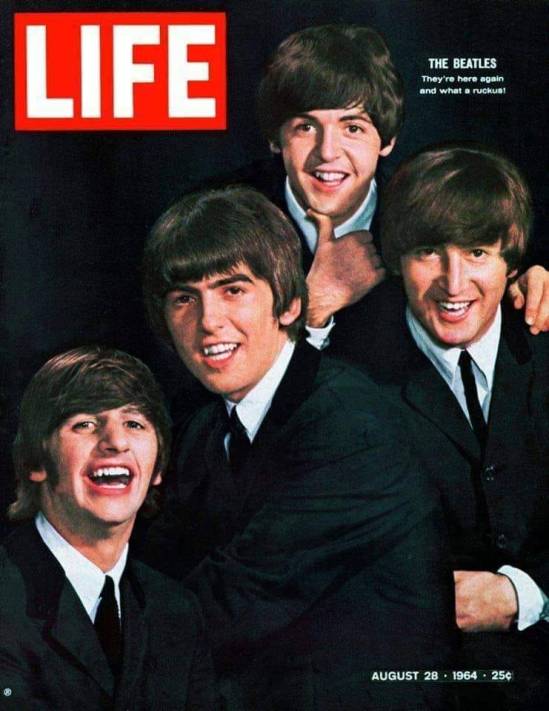
• 1964 ~ The Beatles appeared on the cover of LIFE magazine, only 6 months after they were first on the Ed Sullivan Show.

• 1965 ~ Shania Twain (Eilleen Regina Edwards), Grammy Award-winning singer

• 1984 ~ The Jacksons’ Victory Tour broke the record for concert ticket sales. The group surpassed the 1.1 million mark in only two months.

• 2002 ~ Kay Gardner, whose last musical work with the Bangor Symphony Orchestra memorialized the Sept. 11 terrorist attacks, died of a heart attack. She was in her early 60s.
On hearing of her death, symphony officials scheduled Gardner’s work, “Lament for Thousand,” for the orchestra’s season-opening concert Oct. 13 at the Maine Center for the Arts in Orono.
Gardner was a pianist, flutist and conductor who performed in 46 states and several countries.
More than 20 years ago, she sued the Bangor Symphony, unsuccessfully, for sex discrimination after she had applied for a conducting position and learned that orchestra members had been asked how they felt about working with a female conductor.
In 2000, she was the guest conductor for a 40-member orchestra of women from the Bangor Symphony, playing a repertoire written by women.
Gardner studied music at the University of Michigan and at the State University of New York at Stony Brook. In 1972, she helped found a feminist and openly lesbian women’s band, Lavender Jane.

August 27: Today in Music History

today

• 1521 ~ Josquin Desprez, French/Franco-Flemish composer, died. Generally acknowledged as the greatest composer of the High Renaissance.
More information about Desprez

• 1886 ~ Eric Coates, British composer and violist
More information about Coates

• 1889 ~ Charles G. Conn of Elkhart, IN patented the metal clarinet. More than 100 years later the name, Conn, still represents one of the most popular musical instrument names, especially for clarinets.

• 1909 ~ Lester Willis “Prez” Young, American jazz tenor and saxophonist

• 1927 ~ Jimmy ‘Cajun’ Newman, Singer

• 1937 ~ Tommy (Adrian) Sands, Singer

• 1939 ~ Singer Allan Jones recorded I’m Falling in Love with Someone on Victor Records.

• 1942 ~ Daryl Dragon, Grammy Award-winning musician, songwriter, duo in The Captain and Tennille

• 1944 ~ Barry Conyngham, Australian composer

• 1944 ~ Tim Bogert, Bass with these groups: Showmen, Cactus, Vanilla Fudge

• 1949 ~ Jeff Cook, Singer, guitar with Alabama

• 1953 ~ Alex Lifeson, Guitarist with Rush

• 1970 ~ The Troubadour in Los Angeles, CA was the venue of singer Elton John’s first concert appearance in America and a record company executive for UNI records (a division of MCA) signed Elton to a recording contract.

• 1984 ~ The Menetta Lane Theatre in Greenwich Village opened. It was the first new off-Broadway theatre to be built in 50 years in New York City. The ribbon cutting was done by “America’s First Lady of the Stage”, Helen Hayes.

• 1990 ~ Stevie Ray Vaughan, killed in helicopter crash

Music and Mathematics: The Fibonacci sequence

fibonacci-numbers


Life very often throws some curious coincidences my way. Just as I was preparing a presentation for architecture students at the Goa College of Architecture on ‘Architecture and Music’ and looking at the relationship of the Fibonacci sequence to music, what should appear in my newsfeed but the announcement of the famed piano firm Steinway and Sons unveiling its 600,000th piano, incorporating the iconic Fibonacci spiral in its design.

The veneer of the “Fibonacci” piano features the eponymous spiral made from six individual logs of Macassar Ebony, “creating a fluid design that represents the geometric harmony found in nature.”

In the words of designer Frank Pollaro, who spent over 6000 work-hours over four years in its creation: “Designing Steinway & Sons’ 600,000th piano was an honour and a challenge.  To me, knowing that this piano would become part of history meant that it had to be more than just a beautiful design, but also needed to visually convey a deeper message…as I considered the number 600,000, the Fibonacci spiral came to mind.  The way in which it continues to grow but stay true to its form is very much like Steinway and Sons over these many years. Combining the universal languages of music and mathematics suddenly made perfect sense.”

Mind you, 600,000 is not a number in the Fibonacci sequence; I checked. 600,000 is between the 29th and 30th numbers in the Fibonacci series, which are 514,229 and 832,040 respectively. But Pollaro was nevertheless highlighting an interesting relationship between music and mathematics.

Named after the Italian mathematician Leonardo Fibonacci (c. 1170- c. 1250) who brought the Indian-Arabic numeral system to Europe, the Fibonacci series appear in nature and in music, and finds application in architecture and in instrument design, much before the Fibonacci Steinway.

The basic ideas of the Fibonacci progression are contained in the writings of Indian scholar Pingala (300-200 BC) in his treatise on Sanskrit prosody.

The Fibonacci numbers have the following integer sequence:  0, 1, 1, 2, 3, 5, 8, 13, 21, 34, 55, 89, 144, 233, 377, 610, 987 and onward. Each added number is the sum of two previous numbers before it.

In nature, the Fibonacci sequence underpins phyllotaxis (arrangement of leaves on a stem), branching in trees, fruit sprouts of a pineapple among many other examples, and even the shape of the human external ear, and the cochlear apparatus of the inner ear.

It can be applied to the western musical scale as well, with the caveat that the  starting note one makes the measurement from (or the ‘root’ note) is designated as 1 and not 0. By this token, there are 13 notes in a scale through its octave. There are 8 notes in a diatonic scale (hence the top note is called an ‘oct’ave).  The 5th and 3rd notes create the basic foundation of musical chords. All these are Fibonacci numbers.

The very notes in the scale are based on natural harmonics created by ratios of frequencies. Ratios found in the first seven numbers of the Fibonacci series (0, 1, 1, 2, 3, 5, 8) are related to key frequencies of musical notes. Thus if we take an arbitrary frequency of 440 Hz, the root note has a ratio of 1/1, but the octave above it has a frequency of 880 Hz (2/1 of 440); a fifth above has a frequency of 660 Hz (3/2 of 440), and so on for other notes in the scale.

In last Sunday’s article, I had mentioned the ‘golden proportion’ or phi, which underpins the proportions of the Parthenon temple in the Acropolis in Athens, Greece.  This ‘golden ratio’ (also called the ‘golden section’, ‘golden mean’ or the ‘divine proportion’) of 1:1618 or 0.618 has influenced composition in painting and photography, prompting the notion of dividing a canvas into thirds vertically and horizontally, and to position a subject of interest ‘about one-third’ of the way across instead of in the centre.

This ‘golden ratio’ can be obtained by dividing a Fibonacci number (in the higher reaches, not the first few) by its immediate predecessor. The quotient approximates phi (φ). Thus 987/610= 1.61803, and its inverse is 0.618.

The climax or high point of many songs and other compositions is often found at the ‘phi’ (φ) point (61.8 per cent) of the work. We have seen this to be true in the first movement of

S. Bach’s G minor sonata for solo violin.

In many compositions in sonata form, the addition of a coda causes the recapitulation (the return of the original idea that started the work) to begin at the 61.8 per cent point.

The legendary violin maker Antonio Stradivari seemed to be aware of the ‘golden section’ and used it in the placement of the f-holes on his violins. The proportions of the violin conform to the ratios of ‘phi’ (φ). The spiral of a violin scroll also obeys the Fibonacci progression.

Isn’t it amazing, how the visual and aural world, indeed nature itself can all be unified by the same mathematical sequence?[NT]

From http://www.goacom.com/entertainment/28277-music-and-mathematics-the-fibonacci-sequence