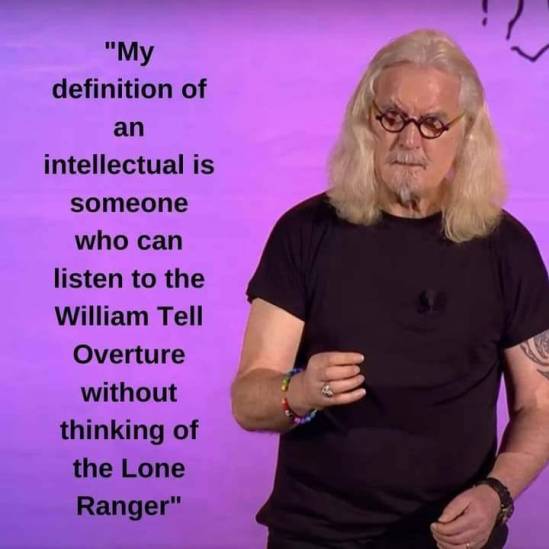
Today, we’ll be listening to the end of the William Tell Overture by Gioachino Rossini. This piece, originally the overture to an opera, has been arranged for piano and is in several method books, including Piano Pronto Movements 1 and 2. It’s also in Bastien Book 4 and Piano Maestro.
The original story
Maybe your grandparents watched the original Lone Ranger
Or you saw the newer Lone Ranger with Johnny Depp
Here’s the entire William Tell Overture played by an orchestra
Piano Solo
Franz Liszt made a really hard version for piano solo. See if you can follow along!
Piano Duet (1 piano, 4 hands)
Piano Duet arranged by Louis Moreau Gottschalk
Piano Duo (2 pianos, 8 hands)
Piano Quartet (4 pianos, 16 hands)
For pipe organ
For synthesizer
And then things get nuts with cartoons. Lots of cartoons used this music. Here are Mickey Mouse and friends
And Spike Jones
Handbells…
Poor Rossini – I think he’d have a fit if he knew how is music was being used.
Today’s listening assignment is Can-can from “Orpheus in the Underworld” by Jacques Offenbach. This piece is very often in early method books because of the descending C Major scale. Can you find it?
The can-can (or cancan as in the original French) is a high-energy, physically demanding dance that became a popular music hall dance in the 1840s, continuing in popularity in French cabaret to this day. Originally danced by both sexes, it is now traditionally associated with a chorus line of female dancers. The main features of the dance are the vigorous manipulation of skirts and petticoats, along with high kicks, splits, and cartwheels.
Many composers have written music for the cancan. Today’s selection is the most famous of these.
A ‘follow-along” video. This key has 6 flats, so the scale will be in what key?
Flute ensemble:
The original, for full orchestra
An animation
A dog barking the can-can?
Find this in many student books including Piano Pronto: Movement 1
Joseph Haydn’s music contains many jokes, and the Surprise Symphony includes probably the most famous of all: a sudden very loud (fortissimo chord) at the end of the otherwise soft (piano) opening theme in the variation-form second movement. The music then returns to its original quiet dynamic, as if nothing had happened, and the ensuing variations do not repeat the joke. (In German it is commonly referred to as the Symphony “mit dem Paukenschlag”—”with the kettledrum stroke”).
In Haydn’s old age, his biographer George August Griesinger asked him whether he wrote this “surprise” to awaken the audience. Haydn replied:
No, but I was interested in surprising the public with something new, and in making a brilliant debut, so that my student Pleyel, who was at that time engaged by an orchestra in London (in 1792) and whose concerts had opened a week before mine, should not outdo me. The first Allegro of my symphony had already met with countless Bravos, but the enthusiasm reached its highest peak at the Andante with the Drum Stroke. Encore! Encore! sounded in every throat, and Pleyel himself complimented me on my idea.
The first time I saw this video during a piano lesson, both my students and I were surprised, too!
The melody is pretty basic and sometimes used to teach skips. I remember having it in one of my first books with words similar to See the Happy Little Frog, Hopping now from Log to Log.
Here’s a piano version.
Can you find the “surprise” indicated by the sforzando? Hint. It looks like this: Sforzando is one of those Italian words you get to learn in music and means a strong, sudden accent on a note or chord. Sforzando literally means subito forzando (fz), which translates to “suddenly with force.”
There’s some information about Haydn and this symphony in this video.
Beethoven’s Wig added some words
For 2 pianos, 8 hands. They’ve added their own surprise around minute 3.
Today, we’ll be listening to the end of the William Tell Overture by Gioachino Rossini. This piece, originally the overture to an opera, has been arranged for piano and is in several method books, including Piano Pronto Movements 1 and 2. It’s also in Bastien Book 4 and Piano Maestro.
The original story
Maybe your grandparents watched the original Lone Ranger
Or you saw the newer Lone Ranger with Johnny Depp
Here’s the entire William Tell Overture played by an orchestra
Piano Solo
Franz Liszt made a really hard version for piano solo. See if you can follow along!
Piano Duet (1 piano, 4 hands)
Piano Duet arranged by Louis Moreau Gottschalk
Piano Duo (2 pianos, 8 hands)
Piano Quartet (4 pianos, 16 hands)
For pipe organ
For synthesizer
And then things get nuts with cartoons. Lots of cartoons used this music. Here are Mickey Mouse and friends
And Spike Jones
Handbells…
Poor Rossini – I think he’d have a fit if he knew how is music was being used.
I’m sure many have you have learned Twinkle, Twinkle Little Star by now. Did you know its’ the same melody as the ABC Song? You know…
Don’t believe it? Sing them both in your head or out loud.
The French melody first appeared in 1761, and has been used for many children’s songs, such as “Twinkle, Twinkle, Little Star”, “Baa, Baa, Black Sheep” and the “Alphabet Song”.
This is one of the first pieces a student learns in piano methods, since it has them reach just a bit outside their accustomed hand position on the word “little”.
I try to remember to let students know that Wolfgang Amadeus Mozart composed a set of twelve variations on the theme “Ah, vous dirai-je, Maman” for the piano and it started as the same basic Twinkle tune.
The sheet music is available at the O’Connor Music Studio if you want to borrow it or download it here about 1/3 of the way down the page under “Scores”.
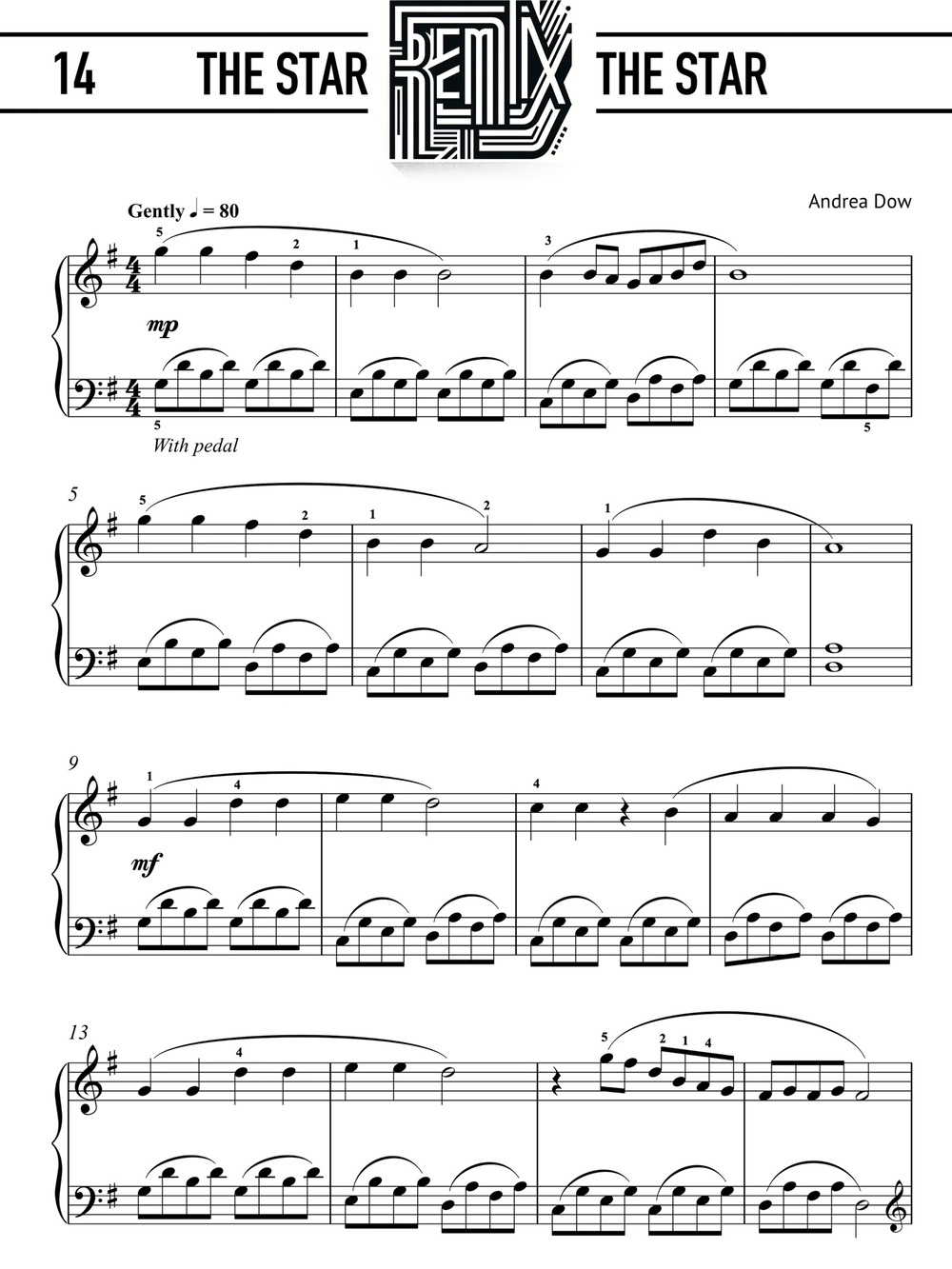
Students in Wunderkeys may play this version from Remix: Teen Hits from Kids Tunes:
I always enjoy these graphical scores. Watch the colors as the melody gets more and more complex:
Today, we start with Spring from the Four Seasons by Vivaldi. Many OCMS students have played this already in one of their Piano Pronto books. It’s also available in Piano Maestro.
If you have it in your piano book, today would be a great day to review it. (HINT – there might be a quick review at your next lesson!)
Vivaldi was born in Venice, Italy, March 4, 1678 and spent most of his life there. His father taught him to play the violin, and the two would often perform together.
He taught at an orphanage for girls and wrote a lot of music for the girls to play. People came from miles around to hear Vivaldi’s talented students perform the beautiful music he had written.
Many people think Vivaldi was the best Italian composer of his time. He wrote concertos, operas, church music and many other compositions. In all, Antonio wrote over 500 concertos.
His most famous set of concertos is The Four Seasons which is a group of four violin concerti. Each of which gives a musical expression to a season of the year. They were written about 1721 and were published in 1725 in Amsterdam.
Here’s a piano version similar to the one in Movement 1 but in a different key.
Students in Wunderkeys may get this version:
And the original with Itzhak Perlman playing and conducting!
Want to play a version of this but aren’t using these books? Just ask!
Today’s listening assignment is Can-can from “Orpheus in the Underworld” by Jacques Offenbach. This piece is very often in early method books because of the descending C Major scale. Can you find it?
The can-can (or cancan as in the original French) is a high-energy, physically demanding dance that became a popular music hall dance in the 1840s, continuing in popularity in French cabaret to this day. Originally danced by both sexes, it is now traditionally associated with a chorus line of female dancers. The main features of the dance are the vigorous manipulation of skirts and petticoats, along with high kicks, splits, and cartwheels.
Many composers have written music for the cancan. Today’s selection is the most famous of these.
A ‘follow-along” video. This key has 6 flats, so the scale will be in what key?
Flute ensemble:
The original, for full orchestra
An animation
A dog barking the can-can?
Find this in many student books including Piano Pronto: Movement 1
Joseph Haydn’s music contains many jokes, and the Surprise Symphony includes probably the most famous of all: a sudden very loud (fortissimo chord) at the end of the otherwise soft (piano) opening theme in the variation-form second movement. The music then returns to its original quiet dynamic, as if nothing had happened, and the ensuing variations do not repeat the joke. (In German it is commonly referred to as the Symphony “mit dem Paukenschlag”—”with the kettledrum stroke”).
In Haydn’s old age, his biographer George August Griesinger asked him whether he wrote this “surprise” to awaken the audience. Haydn replied:
No, but I was interested in surprising the public with something new, and in making a brilliant debut, so that my student Pleyel, who was at that time engaged by an orchestra in London (in 1792) and whose concerts had opened a week before mine, should not outdo me. The first Allegro of my symphony had already met with countless Bravos, but the enthusiasm reached its highest peak at the Andante with the Drum Stroke. Encore! Encore! sounded in every throat, and Pleyel himself complimented me on my idea.
The first time I saw this video during a piano lesson, both my students and I were surprised, too!
The melody is pretty basic and sometimes used to teach skips. I remember having it in one of my first books with words similar to See the Happy Little Frog, Hopping now from Log to Log.
Here’s a piano version.
Can you find the “surprise” indicated by the sforzando? Hint. It looks like this: Sforzando is one of those Italian words you get to learn in music and means a strong, sudden accent on a note or chord. Sforzando literally means subito forzando (fz), which translates to “suddenly with force.”
There’s some information about Haydn and this symphony in this video.
and this one
Beethoven’s Wig added some words
For 2 pianos, 8 hands. They’ve added their own surprise around minute 3.
Today, we’ll be listening to the end of the William Tell Overture by Gioachino Rossini. This piece, originally the overture to an opera, has been arranged for piano and is in several method books, including Piano Pronto Movements 1 and 2. It’s also in Bastien Book 4 and Piano Maestro.
The original story
Maybe your grandparents watched the original Lone Ranger
Or you saw the newer Lone Ranger with Johnny Depp
Here’s the entire William Tell Overture played by an orchestra
Piano Solo
Franz Liszt made a really hard version for piano solo. See if you can follow along!
Piano Duet (1 piano, 4 hands)
Piano Duet arranged by Louis Moreau Gottschalk
Piano Duo (2 pianos, 8 hands)
Piano Quartet (4 pianos, 16 hands)
For pipe organ
For synthesizer
And then things get nuts with cartoons. Lots of cartoons used this music. Here are Mickey Mouse and friends
And Spike Jones
Handbells…
Poor Rossini – I think he’d have a fit if he knew how is music was being used.
I’m sure many have you have learned Twinkle, Twinkle Little Star by now. Did you know its’ the same melody as the ABC Song? You know…
Don’t believe it? Sing them both in your head or out loud.
The French melody first appeared in 1761, and has been used for many children’s songs, such as “Twinkle, Twinkle, Little Star”, “Baa, Baa, Black Sheep” and the “Alphabet Song”.
This is one of the first pieces a student learns in piano methods, since it has them reach just a bit outside their accustomed hand position on the word “little”.
I try to remember to let students know that Wolfgang Amadeus Mozart composed a set of twelve variations on the theme “Ah, vous dirai-je, Maman” for the piano and it started as the same basic Twinkle tune.
The sheet music is available at the O’Connor Music Studio if you want to borrow it or download it here about 1/3 of the way down the page under “Scores”.
I always enjoy these graphical scores. Watch the colors as the melody gets more and more complex:




 MaryO'Studio