New for Fall: LIstening and Coloring Pages


I have just purchased a set of Shades of Sound Listening & Coloring Book: Halloween for the studio.

Each week, I will print out some of the pages for your student and put them in his/her notebook.  After listening to the music on YouTube, the student may color the pages.

After they are colored, please return them to the notebook so that there will be a complete book when finished.

If you are an adult and want to listen and color, too, just let me know and I’ll print you a set.

From the website:

The Shades of Sound Listening and Coloring Books are a great way to encourage students to listen to great piano and orchestral repertoire. Students of all ages will love coloring the fun pictures while listening to and learning from the music of the great composers.

This Shades of Sound Halloween edition includes 13 spooky pieces of piano and orchestral literature, ranging from the Baroque to the Modern period. By spending just 5-10 minutes per day listening for just a few days per week, students can listen to and complete the whole book in a few weeks.

Aspiring pianists need to know the literature, hear the greats perform, and be inspired and excited by the great music that is available! Just as writers need to read, read, read, pianists need to listen! Through this fun curriculum, students will learn about the musical periods and the great composers and their works. Listening repertoire selected includes selections from the standard solo piano literature, as well as solo piano and orchestra literature and orchestral works.

My hope is that students can add just 5-10 minutes of listening per day to their normal practicing. Listening to great music will change their understanding of music and will vastly increase their music history knowledge. It will excite and inspire them, encourage further study and listening, give them new pieces to add to their own repertoire wish list, infuse more great music into their lives, homes and families, and will boost their musicianship and expression to the next level.

The Halloween Shades of Sound book includes 13 different pieces, including:

  • Totentanz by Liszt
  • Le Cimetiere, from Clairs de Lune by Abel Decaux
  • Graceful Ghost Rag by William Bolcom
  • Night on Bald Mountain by Mussorgsky/Rimsky-Korsakov
  • Tarantelle, from Music for Children Op. 65 No. 4 by Prokofiev
  • Tarantella by Albert Pieczonka
  • In the Hall of the Mountain King by Grieg
  • Toccata and Fugue in D minor, BWV 565 by Bach
  • Funeral March, from Piano Sonata No. 2 in B-flat minor by Chopin
  • Danse Macabre by Saint-Saens
  • The Banshee by Henry Cowell
  • Scarbo, from Gaspard de la nuit by Ravel
  • The Sorcerer’s Apprentice by Paul Dukas

Students may use The Playful Piano – Halloween Listening YouTube playlist to listen along with their book using quality recordings. The playlist is ordered to go right along with the book, and also includes 5 extra pieces (some pages include optional “Further Listening” examples students may listen to).


Happy Birthday, George Gershwin!

George GershwinGeorge Gershwin lived between September 26, 1898 and July 11, 1937. He is considered to be a twentieth century composer.

If you hate homework but like roller skating, you have something in common with American composer George Gershwin. Born in Brooklyn, New Yord to Russian immigrant parents, George loved to play street hockey, ‘cat’, and punch ball. He didn’t even have an interest in music until his family got him a piano when he was twelve. Nine years later he had his first hit, “Swanee”, with lyrics written by Irving Caesar. No one else in the Gershwin family was musical, but George was fascinated by music. When he heard a schoolmate play the violin, George struck up a friendship with the boym who introduced him to the world of concert music.

Gershwin’s American in Paris and Rhapsody in Blue (featured in Disney’s newly released Fantasia 2000) proved that jazz was powerful enough to combine will with symphonic music. Gershwin was only 26 years old at the time when he composed Rhapsody in Blue. No matter how you hear it, “Rhapsody in Blue” will remain the signature of one of the most influential of composers, songwriters and pianists in American music history.

His play Porgy and Bess has been produced as both a film and an opera.


September 4 ~ This Day in Music History

OCMS1824 ~ Anton Bruckner, Austrian composer and organist
More information about Bruckner
Read quotes by and about Bruckner

OCMS 1892 ~ Darius Milhaud, French composer
More information about Milhaud

• 1905 ~ Meade “Lux” Lewis, American jazz pianist

• 1907 ~ Edvard Grieg passed away
More information about Grieg

• 1928 ~ Wingy Manone recorded Downright Disgusted for Vocalion Records. Playing drums for Wingy was a young sideman named Gene Krupa.

• 1930 ~ Mitzi Gaynor (Franchesca Mitzi Marlene de Charney von Gerber), Singer, dancer, actress

• 1942 ~ Merald ‘Bubba’ Knight, Singer with Gladys Night and the Pips

• 1944 ~ Gene Parsons, Drummer with The Byrds

• 1946 ~ Gary Duncan (Grubb), Musician, guitar with Quicksilver Messenger Service

• 1946 ~ Greg Elmore, Musician, drums with Quicksilver Messenger Service

• 1950 ~ Ronald LaPread, Bass with Commodores

• 1951 ~ Martin Chambers, Drummer with The Pretenders

• 1959 ~ Mack the Knife was banned from radio – at least from WCBS Radio in New York
City. Teenage stabbings in the city had people pretty uptight; therefore, the ban.

• 1971 ~ The Lawrence Welk Show was seen for the last time on ABC~TV. ABC felt the show attracted “too old an audience … not good for attracting advertisers.” Syndication allowed the champagne music to continue until 1982 as a weekly favorite for millions of people. Welk charted a half-dozen tunes on the pop music charts between 1956 and 1961, including the number one song, Calcutta, in 1960.
More information about Welk

• 1982 ~ After six weeks, Eye of the Tiger, by Survivor, dropped out of the top spot on the music charts. The song, from the movie, Rocky III, dropped all the way to number 2 (for two weeks), then to number 3 for one week and to number 4 for two weeks before starting to fade. That’s what we call a hit, folks! It was the group’s biggest, earning them a platinum record.

• 2001 ~ Robert Pagent, a dancer and choreographer who appeared in the original productions of Oklahoma! and Carousel died at the age of 87. Born Robert Weisser in Pittsburgh, Pagent began his career in European classical ballet troupes in the 1930s. In 1942 he adopted the stage name Robert Pagent and was square-dance caller in the premier of Agnes de Mille’s cowboy-themed ballet, Rodeo. It was the start of a long friendship and collaboration with DeMille and choreographer Jerome Robbins. The following year he replaced an injured dancer in the original cast of Oklahoma! a night after its opening. Two years later he appeared in the premiere of Carousel. Pagent was a choreographer for television in the 1950s and 60s, including the Miss America Pageant. He staged Rudolph Nureyev’s first U.S. television appearance.

• 2003 ~ Susan Chilcott, one of Britain’s leading opera singers, died. She was 40. Chilcott, a soprano, had performed across Europe and with the Metropolitan Opera in New York City. Chilcott made her Royal Opera House debut in Covent Garden June 2003 to glowing reviews, playing Lisa in Tchaikovsky’s “Queen Of Spades” oppositePlacido Domingo.

• 2003 ~ Tibor Varga, a conductor and violinist known for his teaching and for his performances of Béla Bartók and other modern masters, died. He was 82. Varga was born in Hungary and made his public debut with Mendelssohn’s E minor concerto when he was 10. He began touring in Europe while a teenager and studied in Budapest and in Berlin. After World War II he performed widely as a violin virtuoso. In 1947 he moved to England, where he obtained British citizenship. He founded the Tibor Varga Chamber Orchestra in Detmold, Germany, in 1954, then moved to Switzerland, where he was based the rest of his life. He continued to conduct the Detmold-based orchestra until 1988. His repertoire covered baroque, classical and romantic works, but he was best known for his performances of modern composers including Stravinsky, Schoenberg and Berg.

July 4 ~ This Day in Music History

Happy Fourth!

On July 4, 1776 the Continental Congress adopted the Declaration of Independence. This declaration announced to the world that the 13 colonies would no longer be held by British rule. Today Americans celebrate by the flying of a flag, cooking at home (usually a cookout, also known as a barbecue), and watching a brilliant fireworks display.

• 1826 ~ Stephen Foster, American composer of songs
More information about Foster

• 1832 ~ It was on this day that America was sung in public for the first time — at the Park Street Church in Boston, MA. Dr. Samuel Francis Smith wrote the words, borrowing the tune from a German songbook. Ironically, and unknown to Dr. Smith at the time, the melody is the same as the British national anthem.

• 1895 ~ America the Beautiful, the famous song often touted as the true U.S. national anthem, was originally a poem written by Katherine Lee Bates. The Wellesley College professor’s poem was first published this day in the Congregationalist, a church newspaper.

• 1898 ~ Michael Aaron, Piano Educator

• 1900 ~ Louis “Satchmo” Armstrong, American jazz trumpeter, singer and bandleader Read quotes by and about Armstrong
More information about Armstrong

• 1909 ~ Alec Templeton, Pianist

• 1911 ~ Mitch Miller, American conductor, oboist, record company executive, producer, arranger for the Sing Along with Mitch LPs and TV show

• 1937 ~ Ray Pillow, Singer

• 1938 ~ Bill Withers, Grammy Award-winning songwriter, singer

• 1942 ~ The Irving Berlin musical, This is the Army, opened at New York’s Broadway Theatre. Net profits of the show were $780,000.

• 1943 ~ Al ‘Blind Owl’ Wilson, Musician, guitarist, harmonica, singer with Canned Heat

• 1943 ~ The Rhythm Boys, Bing Crosby, Al Rinker and Harry Barris, were reunited for the first time since the 1930s on Paul Whiteman Presents on NBC radio.

• 1948 ~ Jeremy Spencer, Musician, guitarist with Fleetwood Mac

• 1955 ~ John Waite, Singer

• 1958 ~ Kirk Pengily, Rock Musician

• 1985 ~ A crowd, estimated at one million, gathered in Philadelphia to celebrate the 209th anniversary of America’s independence. The Beach Boys were joined by Mr. T. on drums to really add some fireworks to the festivities. The Oak Ridge Boys, Joan Jett and Jimmy Page joined in the celebration.

• 1999 ~ Ronny Graham passed away

• 2001 ~ Maceo Anderson, a tap dancer and founding member of the Four Step Brothers, died in Los Angeles at the age of 90. The group tap danced all over the world, performing for the queen of England and the emperor of Japan. The Four Step Brothers also performed at Radio City Music Hall. The group started as a trio. In the mid-1920s, the group performed at the Cotton Club with Duke Ellington, who wrote The Mystery Song for them. Anderson began dancing as a child in the South. When he was six, he and his mother moved to a basement apartment in Harlem. He taught tap dance at his own school in Las Vegas and across the country until 1999.


Happy Fourth!

july4-eisenhower

Independence Day, commonly known as the Fourth of July, is a federal holiday in the United States commemorating the adoption of the Declaration of Independence on July 4, 1776, declaring independence from Great Britain.

Independence Day fireworks are often accompanied by patriotic songs such as the national anthem “The Star-Spangled Banner”, “God Bless America”, “America the Beautiful”, “My Country, ‘Tis of Thee”, “This Land Is Your Land”, “Stars and Stripes Forever”, and, regionally, “Yankee Doodle” in northeastern states and “Dixie” in southern states. Some of the lyrics recall images of the Revolutionary War or the War of 1812.

A bit of audio for your listening pleasure, as played by Vladimir Horowitz…

May 29 ~ This Day in Music History

memorial-day

• 1680 ~ Abraham Megerle, Composer, died at the age of 73

• 1680 ~ Luca Fumagalli (1837) Composer

• 1730 ~ William Jackson, Composer

• 1731 ~ Orazio Mei, Composer

• 1741 ~ Johann Gottfried Krebs, Composer

• 1750 ~ Giuseppe Porsile, Composer, died at the age of 70

• 1753 ~ Joseph Haydn’s “Krumme Teufel,” premiered

• 1791 ~ Pietro Romani, Composer

• 1833 ~ William Marshall, Composer, died at the age of 84

• 1860 ~ Isaac Albéniz, Spanish composer
More information about Albéniz

• 1843 ~ Emile Pessard, Composer

• 1862 ~ Franciszek Wincenty Mirecki, Composer, died at the age of 71

• 1881 ~ Frederik Septimus Kelly, Composer

• 1883 ~ William Beatton Moonie, Composer

• 1889 ~ August Strindberg’s “Hemsoborna,” premiered in Copenhagen

• 1890 ~ Francis de Bourguignon, Composer

• 1897 ~ Erich Wolfgang Korngold, Austrian-born American composer
More information about Korngold

• 1897 ~ Ignace Lilien, Composer

• 1899 ~ Frantz Jehin-Prume, Composer, died at the age of 60

• 1903 ~ Bob Hope, Entertainer

• 1905 ~ Fela Sowande, Composer

• 1905 ~ Leon Francis Victor Caron, Composer, died at the age of 55

• 1906 ~ Hans Joachim Schaeuble, Composer

• 1910 ~ Mily Alexeyevich Balakirev, Russian Composer, died at the age of 73

• 1911 ~ Sir William Gilbert, English librettist who together with the composer Sir Arthur Sullivan collaborated on many operettas, died of a heart attack after rescuing a woman from drowning. He was 74.

• 1911 ~ Carl M Story (1916) Fiddler

• 1912 ~ Fifteen women were dismissed from their jobs at the Curtis Publishing Company in Philadelphia, PA — for dancing the Turkey Trot while on the job!

• 1919 ~ (Walter) (Wladziu Valentino) Liberace, American concert pianist and showman. His trade mark was a candelabra on his piano.
More information about Liberace

• 1922 ~ Iannis Xenakis, Rumanian-born French theorist and composer
More information on Xenakis

• 1923 ~ Eugene Wright, Jazz musician, bass with Dukes of Swing, played with Brubeck

• 1935 ~ Josef Suk, Czech violinist and composer, died at the age of 61

• 1930 ~ Eleanor Fazan, Opera and show choreographer

• 1937 ~ Peter Kolman, Composer

• 1941 ~ Roy Crewsdon, Guitarist with Freddie and The Dreamers

• 1942 ~ The biggest selling record of all time was recorded. A little out of season, perhaps, but White Christmas, the Irving Berlin classic, was recorded by Bing Crosby for Decca Records. The song was written for the film “Holiday Inn”. More than 30-million copies of Crosby’s most famous hit song have been sold and a total of nearly 70-million copies, including all versions of the standard, have been sold.

• 1943 ~ Hermann Hans Wetzler, Composer, died at the age of 72

• 1943 ~ “The Million Dollar Band” was heard for the first time on NBC radio. Charlie Spivak was the first leader of the band that featured Barry Wood as vocalist. The unusual feature of the show was the awarding each week of five diamond rings!

• 1945 ~ Gary Brooker, Keyboard player, singer

• 1948 ~ Linda Esther Gray, opera singer

• 1948 ~ Michael Berkley, Composer and broadcaster

• 1949 ~ Francis Rossi, Guitarist

• 1949 ~ Gary Brooker, Rock keyboardist with Procol Harum

• 1950 ~ Rebbie (Maureen) Jackson, Singer, oldest member of the Jackson family

• 1951 ~ Dimitrios Levidis, Composer, died at the age of 66

• 1951 ~ Fanny Brice, Ziegfeld Girl (Baby Snooks Show), died at the age of 59

• 1951 ~ Josef Bohuslav Foerster, Composer, died at the age of 91

• 1951 ~ Robert Kahn, Composer, died at the age of 85

• 1951 ~ Danny Elfman (1953) Singer with Oingo Boingo;, composer of soundtracks to Batman, Beetlejuice and The Simpsons

• 1956 ~ LaToya Jackson, Singer

• 1956 ~ Hermann Abendroth, German conductor (Gewandhausorkest), died at the age of 73

• 1956 ~ Arnold Schoenberg’s “Modern Psalm,” premiered

• 1960 ~ Everly Brothers Cathy’s Clown hit #1

• 1961 ~ Melissa Etheridge, Singer

• 1961 ~ Uuno Kalervo Klami, Composer, died at the age of 60

• 1961 ~ Ricky Nelson reached the top spot on the “Billboard” singles chart withTravelin’ Man. It was was Nelson’s second chart-topping hit. Poor Little Fool made it to the top in August of 1958.

• 1962 ~ Barbra Streisand appeared on “Garry Moore Show”

• 1967 ~ Geronimo Baqueiro Foster, Composer, died at the age of 69

• 1971 ~ Max Trapp, Composer, died at the age of 83

• 1972 ~ The Osmonds received a gold record for the album, “Phase III”.

• 1975 ~ Melanie “Scary Spice” Brown, Singer

• 1976 ~ One Piece At A Time by Johnny Cash hit #29

• 1977 ~ Goddard Lieberson, Composer, died at the age of 66

• 1989 ~ Danielle Riley Keough, grand daughter of Elvis Presley

• 1991 ~ “Les Miserables” opened at ACTEA Theatre, Auckland NZ

• 1992 ~ Peter John “Ollie” Halsall, Guitarist, died of a heart attack at 43

• 1994 ~ Oliver “Bops Junior” Jackson, drummer, died at the age of 61

• 1994 ~ “Joseph and the Amazing Technicolor Dreamcoat” closed at Minskoff Theater NYC after 223 performances

• 1996 ~ James George “Jimmy” Rowles, Jazz pianist, died at the age of 77

• 1997 ~ Jeff Buckley, Musician, drowned at age 30

• 2003 ~ Janet Collins, the first black prima ballerina to appear at the Metropolitan Opera and one of a few black women to become prominent in American classical ballet, died. She was 86. In 1951, Collins performed lead roles in “Aida” and Bizet’s Carmen and danced in “La Gioconda” and “Samson and Delilah” at the Met in New York City. That was four years before Marian Anderson made her historic debut as the first black to sing a principal role at the Met. Collins left the Met in 1954. During the 1950s, she toured with her own dance group throughout the United States and Canada and taught. Collins also danced in films, including the 1943 musical “Stormy Weather” and 1946’s “The Thrill of Brazil.” The Alvin Ailey American Dance Theater in 1974 paid homage to Collins and Pearl Primus as pioneering black women in dance.

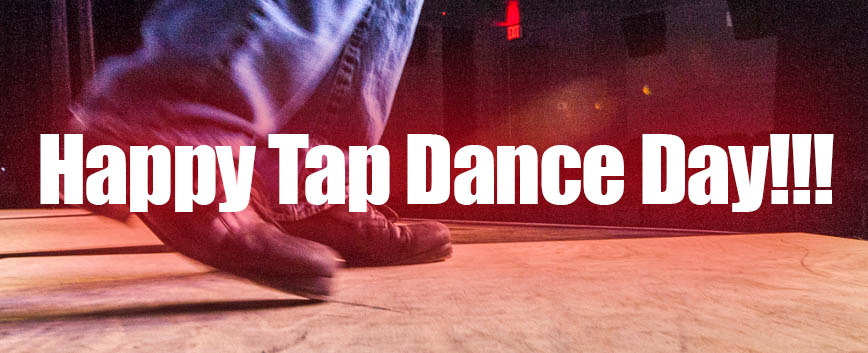
Happy Tap Dance Day

tap-dance-day


Another of the Who Knew?-type posts. It’s National Tap Dance Day.  When I was a little kid, I took the “required” ballet and tap classes for a year.  My mom has a picture of me in my tutu and one in my majorette costume for the tap recital.  I imagine I only took for the year because those costumes cost extra money.

Later on, I bought tap shoes – still unused – and signed up with a friend for a local adult tap class.  Unfortunately, we were the only ones who signed up for the class and it was cancelled.  It was a major nightmare trying to get our money back.  They wanted to give us a credit for the next time, but that would cost more money which we didn’t want to pay.

But, I digress.

National Tap Dance Day falls on May 25 every year and is a celebration of tap dancing as an American art form. The idea of National Tap Dance Day was first presented to U.S. Congress on February 7, 1989 and was signed into American law by President George H.W. Bush on November 8, 2004. The one-time official observance was on May 25, 1989.

Tap Dance Day is also celebrated in other countries, particularly Japan, Australia, India and Iceland.
National Tap Dance Day was the brainchild of Carol Vaughn, Nicola Daval, and Linda Christensen. They deemed May 25 appropriate for this holiday because it is the birthday of Bill “Bojangles” Robinson, a significant contributor to tap dance.


Even Legos can tap to Puttin’ On The Ritz! A tribute to Fred Astaire, in the classic scene from the 1946 musical, Blue Skies, with the music and lyrics by Irving Berlin. Although originally written for vaudevillian Harry Richman in 1930, the lyrics were readapted along with a brand new dance sequence some 16 years later.


Here’s the original from Blue Skies, although some has been cut with stills of Fred inserted:


And another version, with Michael Jackson 🙂


Just for comparison, the real original 1930 movie footage of Irving Berlin’s world-famous song, sung by Harry Richman, from the film of the same name.


And something completely different with my old favorites, The Nicholas Brothers from the film Stormy Weather.


Today is National Buy a Musical Instrument Day

Piano 8


Each year on May 22 we observe National Buy a Musical Instrument Day.  The day is all about playing music.  If you are a musician, it might be time for a new instrument.  Maybe you can learn to play a second or third one.  If you have never played an instrument before, National Buy A Musical Instrument Day might be the motivation you need to start.

Naturally, here at the O’Connor Music Studio, a piano, keyboard with weighted keys (and 88 of them!) or organ is recommended but this day is for all types of instruments and is for people of all ages.  Grandpa can play his ukulele while the grandkids play the drums, trombone, and flute. Together they can all make terrific music!

Adapted from http://www.nationaldaycalendar.com/national-buy-a-musical-instrument-day-may-22/