All Fairfax County public schools and offices will be closed today, Friday March 2.
All Fairfax County public schools and offices will be closed today March 2, 2018 (Condition 1) due to dangerous high winds. The following activities in schools and on school grounds are canceled:
extracurricular activities
interscholastic contests
team practices
field trips
middle school after-school programs
professional learning and training courses
adult and community education classes
recreation programs and community use by outside groups not affiliated with FCPS
School age child care (SACC) centers are closed.
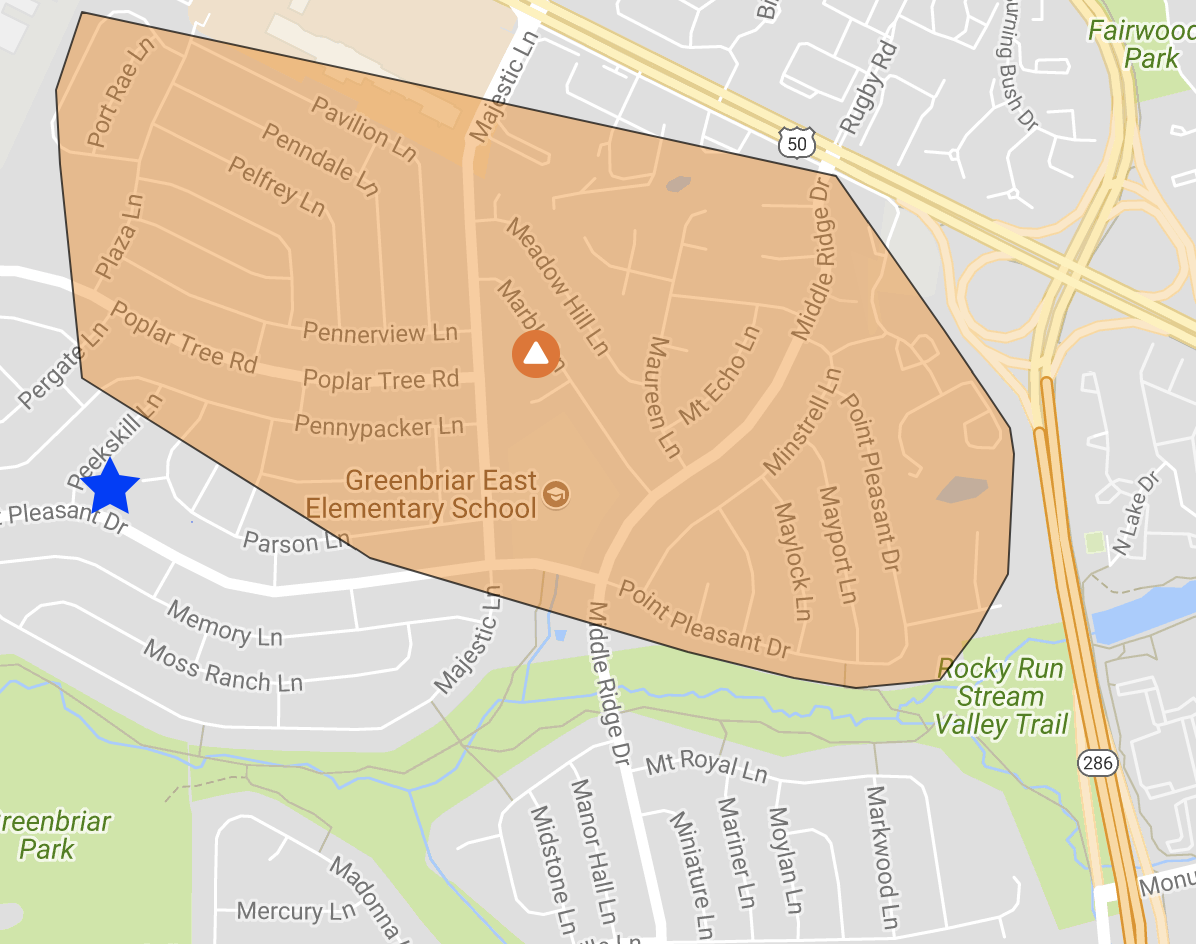
And the power situation at the O’Connor Music Studio this morning. The orange area has no power.
There MAY be piano lessons this afternoon. I’ll keep in touch 🙂
1791 ~ Carl Czerny, Austrian pianist and composer whose vast musical production amounted to over a thousand works.
His books of studies for the piano are still widely used in piano teaching.
More information on Czerny
Czerny is in the center top of this image. He influenced many!
At the age of fifteen, Czerny began a very successful teaching career. Basing his method on the teaching of Beethoven and Muzio Clementi, Czerny taught up to twelve lessons a day in the homes of Viennese nobility.
His ‘star’ pupils included Theodor Döhler, Stephen Heller, Sigismond Thalberg, Leopoldine Blahetka and Ninette de Belleville.In 1819, the father of Franz Liszt brought his son to Czerny.
Liszt became Czerny’s most famous pupil. He trained the child with the works of Beethoven, Clementi, Ignaz Moscheles and Johann Sebastian Bach. The Liszt family lived in the same street in Vienna as Czerny, who was so impressed by the boy that he taught him free of charge. Liszt was later to repay this confidence by introducing the music of Czerny at many of his Paris recitals.
Shortly before Liszt’s Vienna concert of 13 April 1823 (his final concert of that season), Czerny arranged, with some difficulty (as Beethoven increasingly disliked child prodigies) the introduction of Liszt to Beethoven. Beethoven was sufficiently impressed with the young Liszt to give him a kiss on the forehead. Liszt remained close to Czerny, and in 1852 his Études d’exécution transcendente (Transcendental Études) were published with a dedication to Czerny.
“The future of our nation depends on providing our children with a complete education that includes music.”
– Gerald Ford
“The future belongs to young people with an education and the imagination to create.”
–Barack Obama
“The Arts and Sciences, essential to the prosperity of the State and to the ornament of human life, have a primary claim to the encouragement of every lover of his country and mankind.”
–George Washington
“I must study politics and war, that my sons may study mathematics and philosophy…in order to give their children the right to study painting, poetry, music and architecture.”
–John Q. Adams
“Aeschylus and Plato are remembered today long after the triumphs of Imperial Athens are gone. Dante outlived the ambitions of thirteenth century Florence. Goethe stands serenely above the politics of Germany, and I am certain that after the dust of centuries has passed over cities, we too will be remembered not for victories or defeats in battle or in politics, but for our contribution to the human spirit.”
–John F. Kennedy
“Music education opens doors that help children pass from school into the world around them – a world of work, culture, intellectual activity, and human involvement. The future of our nation depends on providing our children with a complete education that includes music.”
– Gerald Ford
“Music is about communication, creativity, and cooperation, and by studying music in schools, students have the opportunity to build on these skills, enrich their lives, and experience the world from a new perspective.”
– Bill Clinton
“Education is not the means of showing people how to get what they want. Education is an exercise by means of which enough men, it is hoped, will learn to want what is worth having.”
– Ronald Reagan
Music “brings us together, helping us reflect upon who we are, where we have come from, and what lies ahead.” The Arts and Music transcend “languages, cultures, and borders.” … “exchange ideas and styles and share in the artistic vibrancy born from diverse experiences and traditions.
– President Obama in a 2010 message to the World Choir Games in Shaoxing, China
Millions of Americans earn a living in the arts and humanities, and the non-profit and for-profit arts industries are important parts of both our cultural heritage and our economy…. We must recognize the contributions of the arts and humanities not only by supporting the artists of today, but also by giving opportunities to the creative thinkers of tomorrow. Educators across our country are opening young -minds, fostering innovation, and developing imaginations through arts education.
– White House Proclamation, National Arts and Humanities Month 2014
“In a lot of the poorest countries we’re trying to help, the level of violence is a continuous undercurrent…There’s an enormous amount of evidence that giving people an opportunity for creative expression improves their ability to learn in school and increases their ability and desire to navigate life in a positive rather than a negative way.” Music “taught me discipline and teamwork on the one hand and the importance of creativity.”
The THEA Foundation in Arkansas has proved the merits of including art instruction in the schools.
Clinton said:
“Every place they’ve done this program, you see a reduction in the dropout rate and an increase in the academic performance of the young people. Having strong arts instruction supports learning in a very substantial way.”
-Bill Clinton in an interview with Patrick Cole at the 2011 Clinton Global Initiative
Presidents’ Day (celebrated on the third Monday in February), was originally established in 1885 in recognition of George Washington. The holiday became popularly known as Presidents’ Day after it was moved as part of the 1971 Uniform Monday Holiday Act, an attempt to create more three-day weekends for the nation’s workers. Presidents’ Day is now popularly viewed as a day to celebrate all U.S. presidents past and present.
Wondering how many U.S. Presidents played musical instruments?
Thomas Jefferson (1743 – 1826) Third president of the United States, drafted the Declaration of Independence, and played the violin and cello.
John Quincy Adams (1767 – 1848) The sixth president of the United States formulated the Monroe Doctrine, and played the flute.
John Tyler (1790-1862) The tenth president of the United States was the first Vice President to become President by the death of his predecessor. He played the violin.
Abraham Lincoln (1809-1865) The sixteenth president of the United States issued the Emancipation Proclamation and played the violin.
Ulysses S. Grant (1822- 1884) The eighteenth president of the United States certainly scrapes the bottom of the list. He was tone deaf and famously commented, “I only know two tunes. One of them is Yankee Doodle and the other isn’t.”
Chester Alan Arthur (1829 – 1886) Became the 21st president of the United States following the assassination of President James A. Garfield. He played the banjo.
Franklin Roosevelt (1882-1945) The 32nd President of the United States and the fifth cousin to President Theodore Roosevelt, played the piano and sang soprano in his school choir.
Woodrow Wilson (1856 – 1924) The 28th president of the United States and creator of the League of Nations, played the violin and sang tenor in his college glee club.
Warren Harding (1865-1923) The 29th president of the United States organized the Citizen’s Cornet Band, available for both Republican and Democratic rallies. He once remarked that, “I played every instrument but the slide trombone and the E-flat cornet.”
Calvin Coolidge (1872-1933) The 30th president of the United States was determined to preserve old moral and economic precepts amid American prosperity. He played the harmonica.
Harry Truman (1884 – 1972) The 33rd president of the United States who served during the conclusion of World War II, played the piano.
Richard Nixon (1913 – 1994) The 37th president of the United States, who ended American fighting in Vietnam and later resigned from office in the aftermath of the Watergate Scandal, was a classically-trained pianist and also played the accordion. He composed and played this piece, set to concerto form with “15 Democratic violinists.” Nixon takes a dig at Harry Truman just before playing.:
Ronald Reagan (1911-2004) The 40th president of the United States implemented the Reagan Revolution, which aimed to reinvigorate the American people and reduce their reliance upon Government. He played the harmonica.
Bill Clinton (born 1946) The 42nd president of the United States and the first Democratic president since Franklin D. Roosevelt to win a second term, plays the saxophone.
Barack Obama (born 1961) The 44th president of the United States and first African American president has broken into song on several recent occasions. President Obama sang Amazing Grace at the funeral for South Carolina State Senator Clementa Pinckney:
. 1957 ~ Lionel Hampton’s only major musical work, “King David”, made its debut at New York’s Town Hall. The four-part symphony jazz suite was conducted by Dimitri Mitropoulos.
. 1972 ~ “Grease” opened at the Eden Theatre in New York City. The musical later moved to the Broadhurst Theatre on Broadway where it became the longest-running musical ever with 3,388 performances. A hit movie based on the stage play starred John Travolta and Olivia Newton-John and produced the hit song, Grease, by Frankie Valli, You’re the One That I Want and Summer Nights by Travolta and Newton-John.
. 1984 ~ British rocker Elton John married Renata Blauel in Sydney, Australia on this day.
. 1998 ~ Frederick Loewe American composer of musicals, died
More information about Loewe
. 2003 ~ Jack Maher, 78, who served more than three decades as publisher of respected jazz magazine Down Beat and its parent company, Maher Publications, died. Down Beat began in 1934 to chronicle the comings and goings of touring swing bands. A previous owner forfeited the magazine to his printer, Mr. Maher’s father, John Maher. After his father died in 1968, Jack Maher put up his own money to acquire Down Beat, outbidding Playboy founder and jazz aficionado Hugh Hefner. Mr. Maher was credited with transforming Down Beat into a leading forum on jazz, with a roster of writers that included Leonard Feather, Nat Hentoff, Dan Morgenstern and Ira Gitler. He changed a number of his father’s policies, including one that had frowned on putting pictures of black musicians on Down Beat’s cover.
. 2004 ~ Joe McFarlin, whose late-night shows on WCCO radio featured big bands, swing and traditional jazz for a quarter-century, died. He was 78. McFarlin was as a nightly presence on 830 AM during the 1960s, ’70s and ’80s, attracting a following across the country. McFarlin retired from WCCO in 1992. Management and format changes had reduced his broadcast to about two hours on the weekends and he was forced to choose from a jazz-free play list. He served as a U.S. Navy signalman during World War II and was stationed in the Philippines and Pearl Harbor. McFarlin began his radio career in 1947 at WREX in Duluth and worked at several other stations before moving to the Twin Cities in 1961, where he worked at KRSI before joining WCCO.
. 2011 ~ George Shearing, British-American blind jazz pianist (Lullaby of Birdland), died at the age of 91
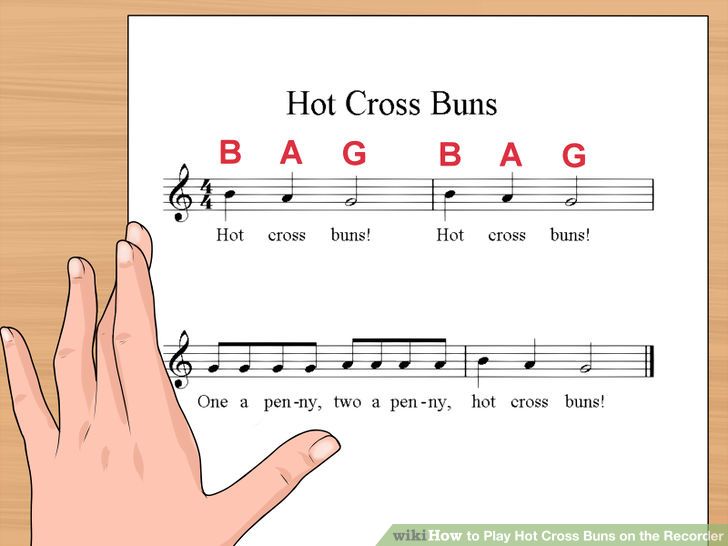
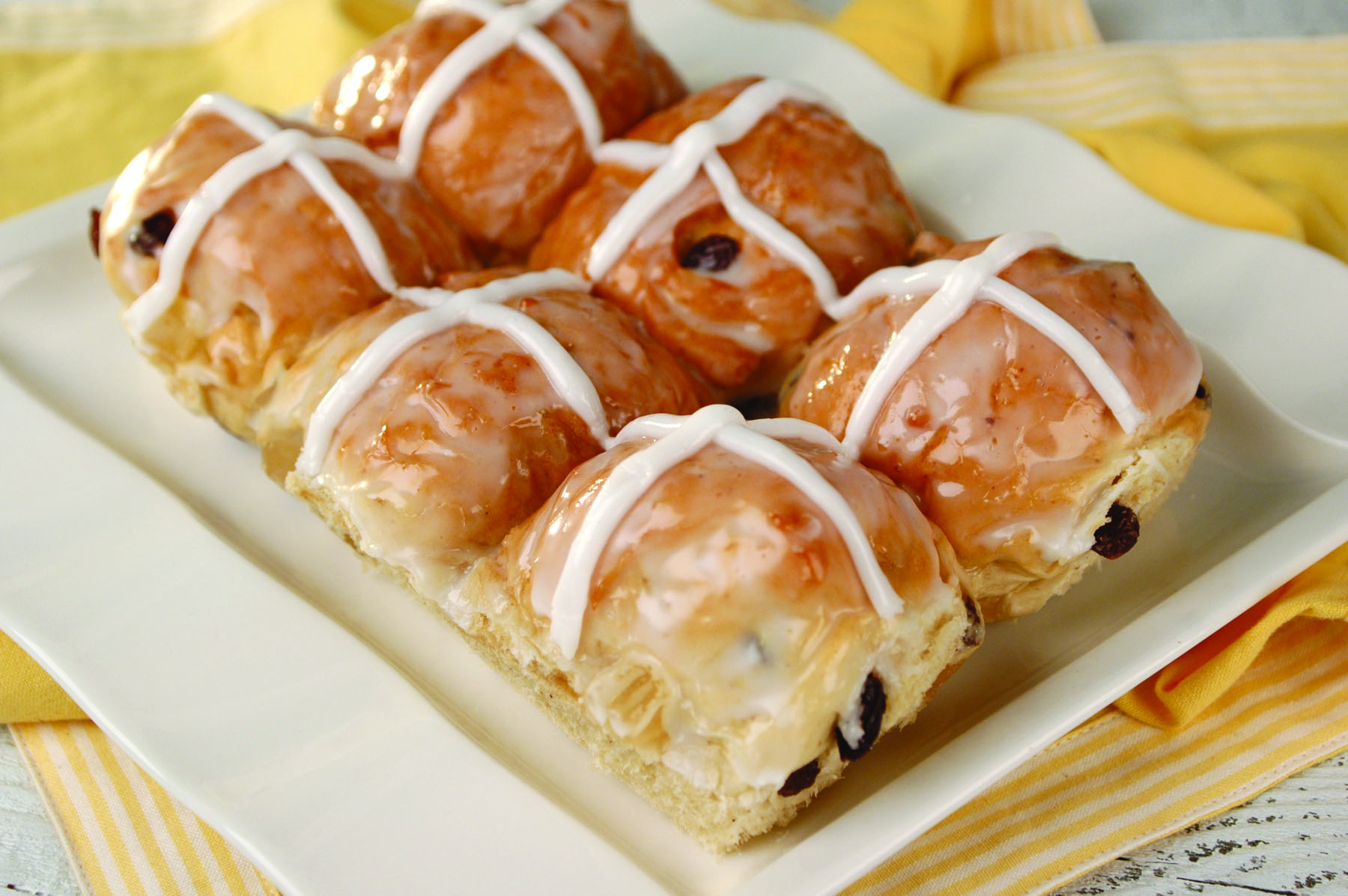
It’s time for Hot Cross Buns. “Hot Cross Buns” is an English language nursery rhyme, Easter song, and street cry referring to the spiced English bun known as a hot cross bun, which is associated with the end of Lent and is eaten on Good Friday in various countries.
My husband came home from the grocery store last night with Hot Cross Buns. I was surprised because they had never had them before Ash Wednesday in past years. I almost refused to eat them because they were “seasonally incorrect”. Of course, I did try one to be sure that they weren’t mislabeled or anything…
I’d never even heard of HCB before college. My freshman year in the dining commons at UMass Amherst changed all that. Huge pans of actually hot, cross buns. We actually even put butter on them, too. No wonder the “Freshman 15” was a problem.
I’ve made a fairly exhaustive study of the local grocery stores’ versions and the one from Giant come out on top. Surprisingly, Wegmans isn’t the winner in this case.
Looking for a video on the history of HCB, I came across one for making these at home.
Maybe that wouldn’t be a good thing!
A bit of HCB trivia: English folklore includes many superstitions surrounding hot cross buns. One of them says that buns baked and served on Good Friday will not spoil or grow moldy during the subsequent year.
Another encourages keeping such a bun for medicinal purposes. A piece of it given to someone ill is said to help them recover.
If taken on a sea voyage, hot cross buns are said to protect against shipwreck.
If hung in the kitchen, they are said to protect against fires and ensure that all breads turn out perfectly. The hanging bun is replaced each year.
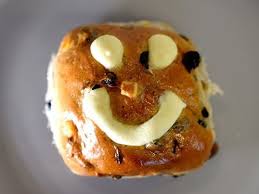
Turns out there’s also a “Not Cross Bun” which is a variation on the hot cross bun. It uses the same ingredients but instead of having a “cross” on top, it is has a smiley face in reference to it being “not cross” or “angry”.
The not cross bun was first sold commercially in 2014 by an Australian bakery in response to supermarkets selling hot cross buns as early as Boxing Day (December 26)
Thomas Wright “Fats” Waller (May 21, 1904 – December 15, 1943) was an influential American jazz pianist, organist, composer, singer, and comedic entertainer, whose innovations to the Harlem stride style laid the groundwork for modern jazz piano. He wrote the Valentine Stomp above in 1929.
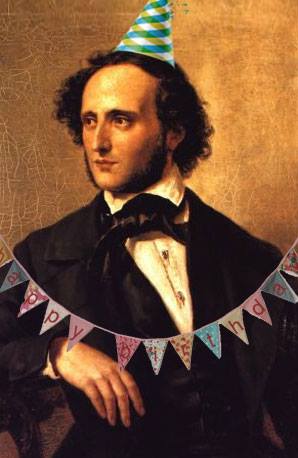
Felix Bartholdy Mendelssohn lived between 1809 and 1847. He is considered to be a romantic composer and pianist best known for his symphonies and concert overtures. Mendelssohn played the piano in public by the age of nine, so he was often compared to Mozart.
He composed works for solo instruments and orchestra, and German songs. Some of his better known works are the Wedding March, Elijah and Fingal’s Cave. Felix Mendelssohn, along with Hector Berlioz was one of the first conductors of a large orchestra.
Mendelssohn harmonized the works of other composers, including Johann Crüger. Listen to Mendelssohn’s harmonization of Now Thank We All our God:
One of my favorites, Mendelssohn’s Piano Concerto No. 1 in g minor, op. 25:
. 1789 ~ Armand-Louis Couperin, French composer, organist, and harpsichordist died at the age of 63
. 1875 ~ Fritz Kreisler, Austrian-born American violinist and virtuoso/composer Some of his best-known works are Caprice Viennois, Tambourin Chinois, Liebesfreud and La Gitana
. 1901 ~ Jascha Heifetz, Russian-born American violinist
Read quotes by and about Heifetz
More information about Heifetz
. 1911 ~ Jussi Björling, Swedish tenor
. 1912 ~ Burton Lane (Levy), Composer of How Are Things in Glocca Morra, That Old Devil Moon, Look to the Rainbow, How About You, I Hear Music, Come Back to Me, On a Clear Day You Can See Forever, How Could You Believe Me?; His Broadway musicals were Finian’s Rainbow (collaboration with Yip Harburg), On a Clear Day You Can See Forever (collaboration with Alan Jay Lerner). He contributed songs to over 30 films: Babes on Broadway, Royal Wedding, Ship Ahoy, St. Louis Blues and credited with discovering Judy Garland
. 1937 ~ Tom Smothers, Entertainer, The Smothers Brothers Comedy Hour, The Smothers Brothers Show, The Steve Allen Show, Dick’s Brother
. 1937 ~ Guy Lombardo and his orchestra recorded one of Guy’s most famous tunes. Boo Hoo was waxed on Victor Records and became one of the group’s all-time great hits.
. 1942 ~ Graham Nash, Singer with Crosby, Stills, Nash and Young
. 1947 ~ Peter Lucia, Drummer with Tommy James and The Shondells
. 1949 ~ Ross Valory, Bass with Journey
. 1959 ~ The Coasters tune, Charlie Brown, was released. The tune went to #2 and stayed there for three weeks, but didn’t make it to the top spot of the charts. A catchy song (“Fee fee fi fi fo fo fum. I smell smoke in the auditorium…”), it was on the charts for a total of 12 weeks. The song at number one, preventing Charlie Brown from reaching the top, was Venus, by Frankie Avalon.
. 1996 ~ Gene Kelly, American actor and dancer (Singin’ in the Rain), died at the age of 83
. 2001 ~ French pianist Nicole Henriot, who entered the Paris Conservatory at age 7 and went on to perform around the globe with conductor Charles Munch, died at the age of 75. Emerging on the world music scene after World War II, Henriot built her reputation on interpretations of works from Liszt to Prokofiev, and especially French composers such as Ravel, Fauré and Milhaud. She was most famous for her performances with Munch, music director of the Boston Symphony from 1949 to 1962. Munch, who died in 1968, was the uncle of Henriot’s husband. Born in 1925, Henriot won the Paris Conservatory’s first prize at age 13. During the war, Henriot gave aid to her brother, a member of the French Resistance. When Gestapo agents searched her home in 1944, she managed to destroy her brother’s secret documents but was badly beaten. After the war, Henriot became the first French pianist to appear in Britain and began an international tour that took her from Scandinavia to Egypt. She made her American debut in 1948 as a soloist with the New York Philharmonic under Munch’s direction. When Munch formed the Orchestra of Paris in 1967, Henriot was one of the fledgling orchestra’s first soloists. In the 1970s and 1980s, Henriot devoted herself to teaching, and worked at the Conservatory of Liege, Belgium, and at the Walloon Conservatory of Brussels.
. 2001 ~ Victor Norman, who founded the Eastern Connecticut Symphony Orchestra and conducted the group for three decades, died at the age of 95. Colleagues said Norman was a visionary who needed to be as skilled in politics as he was in music to keep the symphony together. “He had this idea that a symphony orchestra could be created around here, when really it had been tried several times before, never with any kind of significant success,” said Charles Frink, a New London composer who studied with Norman. Norman founded the New London Civic Orchestra in 1946. It merged with the Willimantic Orchestra in 1952 to become the Eastern Connecticut Symphony Orchestra. He stepped down from the podium in 1980. In his retirement, Norman composed music. Two of his orchestral pieces were performed by the New Britain Symphony Orchestra and the Westminster Community Orchestra in Princeton, N.J. His memoirs, “Victor Norman: A Life in Music, a Lifetime of Learning,” were published in 1999.
. 2015 ~ French piano virtuoso Aldo Ciccolini died at age 89. Born on August 15, 1925, into a musical family in Naples, Aldo Ciccolini was a child prodigy, beginning composition classes in the city’s conservatory at age nine.
. 2018 ~ Dennis Edwards, who joined the Temptations in 1968 and sang on a string of the group’s hits including “I Can’t Get Next to You,” “Ball of Confusion” and “Papa Was a Rollin’ Stone” in an initial tenure that stretched to 1977, died at the age of 74
Franz Peter Schubert lived between 1797 and 1828. He is considered to be a romantic composer. He was an Austrian composer who was one of the greatest creators of melody and foremost writer of ‘lieder’ (German songs).
Although he only lived for 31 years, Schubert composed more than 600 songs, 22 piano sonatas and many short piano pieces. This melodic output has never been equaled either in quantity of quality. He was one of the first musicians to earn a living from the sale of his music.
Schubert’s Ave Maria was featured in the Walt Disney movie Fantasia.
Schubert’s musical genius went well beyond his incomparable gift for melody
During Beethoven’s funeral in 1827, one of the torchbearers was a young composer who would himself die the following year. There’s a poignant irony in this image of Franz Schubert (1797-1828) paying homage to the master, for the extent of Schubert’s own accomplishment was to remain one of music’s best-kept secrets for decades after his death. He had indeed struck out on a uniquely personal creative path, however intense his hero worship of Beethoven was. As often happens in such periods of transition–in this case, the evolution in style and attitude from classical balance toward romantic experimentation–Schubert simply slipped through the cracks, not easily fitting into his contemporaries’ sense of the direction music was taking.
Yet the fact that the only recognition that came his way was mostly confined to a tight-knit circle of musical friends didn’t deter Schubert from pursuing his inspiration. Even though an astonishing number of compositions were never performed during his short lifetime, the prolific composer produced a wide body of material, all with a seemingly effortless swiftness reminiscent of Mozart (another of the composer’s idols). His style is most frequently associated with an uncanny gift for melody, but that’s a shortsighted view of the true nature of Schubert’s genius.
The selections on our featured disc represent two key but divergent aspects of his music: the gemlike miniaturism of his songwriting and his preoccupation with large-scale forms from the classical period. “Die Forelle” (“The Trout”)–sung here with a silvery, seductive grace by Barbara Bonney–is an example of how Schubert elevated the art of song to an opera in miniature, rich in evocative scene-painting. Pay attention not just to the beguiling melody but to how perfectly Schubert mirrors the text’s images in the details of the burbling piano accompaniment.
The cheerful quintet that takes its name from the song makes an excellent introduction to the composer’s longer works. Most of these belong to the realm of “chamber music”; that is, pieces written for small groups of musicians to be performed in people’s homes. From the high-spirited interplay of the ensemble gathered here–all virtuosos on their respective instruments but clearly merging their voices into a common goal–it’s easy to imagine a typical evening of Schubert making music with his friends. There’s a flowing sense of conversation in the music, and just as you think you’ve heard one untoppable melody, Schubert obliges with another, taking it down an unexpected course with a sudden harmonic surprise–another of the composer’s trademarks–and spinning it out as it suits his fancy. Schumann once characterized the composer’s tendency to make us want the music to last, following its multiple digressions, as Schubert’s “heavenly lengths.”
Much of the pleasure here can also be heard in the way Schubert plays sonorities off each other, above all in the fourth movement. It offers a set of variations on the melody from the “Trout” song, presaging how Mahler would later incorporate material from his own songs into vast symphonic structures. You can notice this both in the interwoven yet contrasting timbres from the keyboard against four strings and in the opposition between double bass and sparkling passages high in the register. And within the spontaneity of the moment, there’s something else: emerging within all the joie de vivre are ambivalent shadows hinting at Schubert’s darker side, particularly in the intensity of the slow movement’s middle core. This is also apparent in the opening of the “Arpeggione” Sonata (nicknamed after a short-lived invention that was a sort of cross between a guitar and a cello), which unfolds a kind of aching, spun-out lyricism that could belong to no one but Schubert.
In his final decade, when intense poverty and a debilitating case of syphilis began to take their toll, Schubert would mine this vein of profound self-expression. His last quartets and piano sonatas, the String Quintet, and his despairing song cycle Winterreise, he touches in his own way on the inwardness probed by Beethoven’s late-period creations. Thomas May, Classical Editor



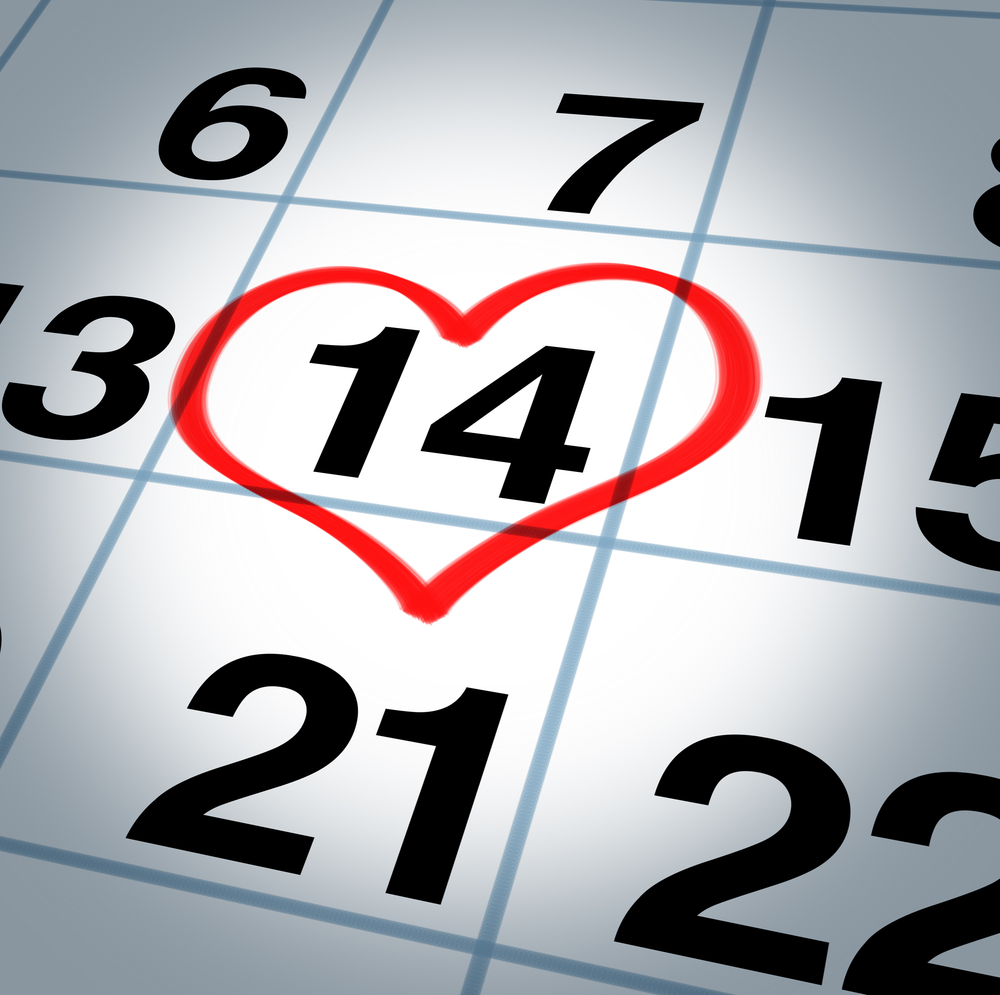
 Happy Valentine’s Day



 Franz Peter Schubert lived between 1797 and 1828. He is considered to be a romantic composer. He was an Austrian composer who was one of the greatest creators of melody and foremost writer of ‘lieder’ (German songs).


 MaryO'Studio