December 31 ~ in Music History

new_years_eve

Christmas Music, Conclusion ~Auld Lang Syne

• 1894 ~ Ernest John Moeran, English composer who had strong associations with Ireland.

• 1904 ~ Nathan Milstein, Russian-born American violinist and composer

• 1908 ~ Jonah Jones (Robert Elliott Jones), Trumpeter, singer, played with Cab Calloway and threw spitball that got Dizzy Gillespie fired from a band

• 1922 ~ Rex Allen, ‘The Arizona Cowboy’, entertainer, rodeo star, singer, songwriter who published over 300 songs

• 1923 ~ Singer Eddie Cantor opened in the lead role of Kid Boots. Broadway critics called the production, “A smash musical hit!” Eddie made several of the songs from that show into smash hits also, like Alabamy Bound and If You Knew Susie. Three years later, If You Knew Susie became the title song for a movie starring Cantor.

• 1928 ~ Ross Barbour, Singer with The Four Freshmen

• 1929 ~ Guy Lombardo and his Royal Canadians played Auld Lang Syne as a New Year’s Eve song for the first time. Auld Lang Syne had been the band’s theme song long before 1929. However, this night was the start of a New Year’s Eve tradition as Lombardo’s famed orchestra played at the Hotel Roosevelt Grill in New York City to usher in the new year. Where did it Auld begin? Scottish poet Robert Burns said he heard an old man singing the words, and wrote them down, but Burns is considered the original author. The literal translation means “old long since”; less literal means “days gone by”. Auld Lang Syne and Happy New Year!

• 1930 ~ Odetta (Holmes Felious Gordon), American folk-blues singer, guitarist, songwriter and actress

• 1940 ~ As a result of a dispute between the radio networks and ASCAP (the American Society of Composers and Publishers), the radio industry was prevented from playing any ASCAP-licensed music. The ban lasted for ten months. An ASCAP competitor, BMI (Broadcast Music Incorporated) made giant strides, expanding to include 36,000 copyrights. Many radio stations had to resort to playing public domain songs, such as marches and operas, to keep their stations on the air. Even kids songs were played over and over again until the ban was lifted. One of the most popular songs to be played was Happy Birthday to You, which was performed in many different languages just to get past the ban.

The American copyright status of “Happy Birthday to You” began to draw more attention with the passage of the Sonny Bono Copyright Term Extension Act in 1998. When the U.S. Supreme Court upheld the Act in Eldred v. Ashcroft in 2003, Associate Justice Stephen Breyer specifically mentioned “Happy Birthday to You” in his dissenting opinion. American law professor Robert Brauneis, who extensively researched the song, concluded in 2010 that “It is almost certainly no longer under copyright.” In 2013, based in large part on Brauneis’s research, Good Morning to You Productions, a company producing a documentary about “Good Morning to All”, sued Warner/Chappell for falsely claiming copyright to the song. In September 2015, a federal judge declared that the Warner/Chappell copyright claim was invalid, ruling that the copyright registration applied only to a specific piano arrangement of the song, and not to its lyrics and melody.

In 2016, Warner/Chappell settled for US $14 million, and the court declared that “Happy Birthday to You” was in the public domain.

• 1942 ~ Andy Summers (Somers), Guitarist, singer with The Police

• 1943 ~ John Denver (Deutschendorf), American singer and songwriter of popular music

• 1943 ~ Pete Quaife, Bass with The Kinks

• 1946 ~ Patti Smith, Songwriter, singer, playwright

• 1947 ~ Burton Cummings, Jr., Singer with The Guess Who

• 1947 ~ Roy Rogers, ‘the King of the Cowboys’, and Dale Evans were hitched in marriage. They rode off into that sunset together for over fifty years. (Roy died July 6, 1998.)

• 1948 ~ Donna Summer (LaDonna Gaines), Grammy Award-winning singer

• 1951 ~ Tom Hamilton, Bass with Aerosmith

• 1960 ~ After playing California nightclubs as The Pendletones, Kenny and the Cadets, and Carl and the Passions, a new group emerged this day: The Beach Boys. The group’s first national hit, Surfin’ Safari, was soon to be. They recorded for local (Los Angeles) Colpix Records and at the height of their popularity, Capitol Records. The Beach Boys also recorded under the Reprise Records banner. The revitalized group still tours and Capitol continues to reissue various greatest hits packages. The Beach Boys were inducted into The Rock and Roll Hall of Fame in 1988.

• 1972 ~ Joe McIntyre, Singer with New Kids on the Block

• 1975 ~ Elvis Presley performed before 60,000 fans at the Silverdome in Pontiac, MI. He earned $800,000 for the concert, a world record for a single concert by a single artist.

• 1985 ~ Over 54,500 people played kazoos in downtown Rochester, New York. The assembled multitude played A Bicycle Built for Two. Any idea why? Well, they felt it was appropriate for the last day of the year and it got the crowd listed in the Guinness Book of World Records for ‘Most Kazoo-ers’.

• 1997 ~ Floyd Cramer, American Hall of Fame pianist (Nashville Sound), died of cancer at the age of 64

• 2000 ~ Tanaquil Le Clercq, the ballerina who dazzled the world in the 1940s and ’50s before her career was cut short by paralytic polio, died of pneumonia at the age of 71. Le Clercq contracted the disease, which left her paralyzed below the waist, in 1956. At the time, she was the fourth wife of George Balanchine and had attracted an adoring public because of her long-legged elegance. She later became a teacher at Dance Theater of Harlem, wrote two books and regularly attended dance performances. The New York City Ballet, of which Le Clercq was a charter member, paid tribute to her in 1988, when it opened its 50th-anniversary season. She acknowledged a thunderous New York State Theater ovation from her wheelchair. Le Clercq was blessed with an elongated physique that she used with refinement or humor. She epitomized the modernized look in classical dancing, which enthralled Balanchine, who once cast her as a dragonfly. As the first City Ballet ballerina trained since childhood by Balanchine, she was naturally identified with the roles he created for her in his major works, such as the ballets “Symphonie Concertante,” “Symphony in C” and “La Valse,” in which her doomed heroine danced herself to death. She was equally unforgettable in the ballets of Jerome Robbins and as the white-faced allegorical figure of Sacred Love in “Illuminations” in 1950.

• 2000 ~ José Greco, the famed flamenco dancer and choreographer who founded the José Greco Spanish Dance Company, of heart failure at the age of 82. Born in Montorio nei Frentani, Italy, of Spanish-Italian parents, he moved to Seville, Spain, at the age of 3, then was raised in Brooklyn from the age of 10. He began his career in 1937 and became known as the greatest Spanish dancer in the world. In 1941, the already famous Argentine-born dancer La Argentinita (known off the stage as Encarnacion Lopez) was preparing for an American tour when she saw Greco dance and asked him to perform as her partner and the featured male performer in her company until she died in 1945. After that, Greco danced with her sister Pilar Lopez. In 1951, Greco shared with Carol Channing the title of “New Broadway Personality of the Year.” The José Greco Dance Company, which helped integrate flamenco with mainstream ballet, toured extensively in North America, and six times worldwide, over the following two decades. In 1962, he Greco was knighted by the Spanish government. In 1971, Greco formed the Foundation for Hispanic Dance. His autobiography, “Gypsy in My Soul: The Autobiography of Jose Greco,” was published in 1977.

• 2000 ~ Eddy Shaver, a guitarist who performed with his father Billy Joe Shaver and Dwight Yoakam, died at the age of 38. Eddy Shaver grew up around music because of his father, a celebrated songwriter whose songs include I’m Just an Old Chuck of Coal (But I’m Gonna Be a Diamond Someday) and Georgia on a Fast Train. Dickie Betts of The Allman Brothers Band helped teach Eddy Shaver to play and gave him his two favorite guitars, one formerly owned by the late guitarist Duane Allman. Eddy Shaver began playing guitar with his father at 13, and gradually became Billy Joe Shaver’s musical partner and sometime co-writer. Billy Joe Shaver merged from country to a more rock-influenced sound because of his son. Albums by the band Shaver include “Tramp on Your Street,” the live “Shaver: Unshaven,” and “Electric Shaver.” A new album, “The Earth Rolls On,” was released on March 20, 2001.

• 2001 ~ Marie Hartford, a well-known businesswoman on Music Row and widow of the late songwriter and performer John Hartford, died of lung cancer. She was 67. Marie Hartford worked at Glaser Publishing, booking the studios at the Glaser Brothers’ Music Row operation, where country music’s Outlaw movement was bred. John Hartford, who wrote the standard Gentle on My Mind, died June 4 after a decade-long battle with cancer. The song was recorded more than 300 times, most prominently by Glen Campbell in 1967 but also by Dean Martin, Elvis Presley and Aretha Franklin.

• 2003 ~ Renata Babak, an internationally known mezzo-soprano with the Bolshoi Opera who defected from the Soviet Union in 1973, died of pancreatic cancer. She was 69. Babak gave recitals until last year, singing in a sweet but powerful and well-controlled voice described by critics as among the best in the world. Her last opera was in 1997, when she performed in Tchaikovsky’s Iolanta with Opera Camerata of Washington. Babak was an international star with 10 years’ experience at the Bolshoi when she defected while the opera company was playing at La Scala in Milan, slipping out of a hotel lobby wearing a wig and dark glasses. She immigrated to Canada and went into hiding for two years. Babak’s U.S. debut at Carnegie Hall in 1975 was met with enthusiastic reviews. She moved to New York and then to Washington in the hopes of working with George London, then general director of the Washington Opera. Babak joined the faculty of the Washington Conservatory of Music when London was disabled by a stroke.

Happy Boxing Day!

Happy Boxing Day!

Boxing Day is a holiday traditionally celebrated the day following Christmas Day, when servants and tradesmen would receive gifts, known as a “Christmas box”, from their masters, employers or customers, in the United Kingdom,The Bahamas, Barbados, Canada, Hong Kong, Australia, Bermuda, New Zealand, Kenya, South Africa, Guyana, Trinidad and Tobago, Jamaica and other former British colonies.

Today, Boxing Day is a public holiday usually falling on 26 December.


boxing-day

December 26 ~ in Music History

boxing-day

Happy Boxing Day!  Boxing Day is a holiday traditionally celebrated the day following Christmas Day, when servants and tradesmen would receive gifts, known as a “Christmas box”, from their masters, employers or customers, in the United Kingdom,The Bahamas, Barbados, Canada, Hong Kong, Australia, Bermuda, New Zealand, Kenya, South Africa, Guyana, Trinidad and Tobago, Jamaica and other former British colonies. Today, Boxing Day is a public holiday usually falling on 26 December.


• 1678 ~ Johann Georg Pisendel, German violinist/composer

• 1762 ~ Franz Wilhelm Tausch, composer

• 1879 ~ Julius Weismann, German pianist, conductor, and composer

• 1921 ~ Steve Allen, Comedian, author, musician, composer, TV host of The Tonight Show, The Steve Allen Show; films: The Benny Goodman Story, married to Jayne Meadows

• 1926 ~ Earle Brown, American avant-garde composer

• 1931 ~ George Gershwin’s musical, Of Thee I Sing, opened at the Music Box Theatre in New York City. The show became the first American musical to be awarded a Pulitzer Prize.

• 1935 ~ Abdul ‘Duke’ Fakir, Singer with The Four Tops

• 1939 ~ W.C. Handy of Memphis, TN one of the legendary blues composers of all time, recorded the classic St. Louis Blues. W.C. and his band recorded in New York for Varsity Records. Handy was one of the first to use the flat third and seventh notes in his compositions, known in the music world as ‘blue’ notes. The music awards for blues artists’ are called the W.C. Handy National Blues Awards.

• 1940 ~ Phil Spector, ‘Tycoon of Teen’, record company executive, the originator of Wall of Sound, sang with The Teddy Bears, songwriter

• 1942 ~ Adriana Maliponte, Italian soprano

• 1952 ~ André-Michel Schub, French-born American pianist

• 1963 ~ Capitol Records rushed to release its first single by the Fab Four, otherwise known as The Beatles. I Want to Hold Your Hand, backed with I Saw Her Standing There, reached #1 on February 1, 1964. The flood of music by John, Paul, George and Ringo had started the British Invasion; changing contemporary music forever.

• 1964 ~ More Beatles news: The Fab Four got their sixth #1 hit song since February 1, as I Feel Fine became the top tune this day. The first five #1 hits by The Beatles were: I Want to Hold Your Hand, She Loves You, Can’t Buy Me Love, Love Me Do and A Hard Day’s Night.

• 1967 ~ A sad day for jazz fans, as the Dave Brubeck Quartet formally disbanded after sax man Paul Desmond left the group. Desmond was a fixture with the quartet for 16 years and can be heard on all the immortal Brubeck standards, including Take Five.

• 1999 ~ Curtis Mayfield passed away

• 2001 ~ Edward Downes, a professor best known as host of the “Texaco Opera Quiz” heard during live Metropolitan Opera radio broadcasts, died at the age of 90. Opera experts answered questions from listeners in the opera quiz, held during opera intermissions from 1958 to 1996. Known for his wit and mellow baritone voice, Downes put his panelists at ease and offered teasing hints to the answers when experts were stumped. Born in Boston, Downes began attending operas at a young age with his father, Olin Downes, who later became chief music critic at The New York Times. Edward Downes, who never completed an undergraduate degree, received a Ph.D. in musicology from Harvard University at the age of 47. He later taught at Wellesley College, the Longy School of Music, the University of Minnesota and Queens College.

• 2017 ~ Bonnie Hearne, singer, piano player and half of a celebrated musical couple that entertained New Mexico audiences with their folk and country music for decades, died at the age of 71.

Christmas Countdown: Hallelujah Chorus

hallelujah


Messiah (HWV 56) is an English-language oratorio composed in 1741 by George Frideric Handel, with a scriptural text compiled by Charles Jennens from the King James Bible, and from the Psalms. It was first performed in Dublin on 13 April 1742, and received its London premiere nearly a year later. After an initially modest public reception, the oratorio gained in popularity, eventually becoming one of the best-known and most frequently performed choral works in Western music.

Hallelujah Chorus

Part II of the Messiah covers the Passion, death, resurrection, ascension, and the later spreading of the Gospel, concluded by the “Hallelujah Chorus”.

The Mormon Tabernacle Choir sings the classical and beloved Hallelujah Chorus from Handel’s Messiah.

And also on Nov.13 2010 unsuspecting shoppers got a big surprise while enjoying their lunch. Over 100 participants in this awesome Christmas Flash Mob.


December 25 ~ in Music History

merry-christmas

Merry Christmas!
Christmas Family Fun
Christmas Music
Christmas Music Lyrics

Christmas Countdown: Hallelujah Chorus

OCMS 1583 ~ Orlando Gibbons
Read quotes by and about Gibbons
More information about Gibbons

• 1896 ~ John Philip Sousa wrote the melody to a song that had haunted him for days. On Christmas Day, that melody was finally titled, The Stars and Stripes Forever.

• 1907 ~ Cab Calloway (Cabell Calloway III), American jazz singer and bandleader

• 1912 ~ Tony Martin (Alvin Morris), Singer, actor, married to dancer Cyd Charisse

• 1915 ~ Pete Rugolo, Bandleader, arranger, scored TV’s The Fugitive

• 1931 ~ Lawrence Tibbett was the featured vocalist as radio came to the Metropolitan Opera House in New York City. The first opera was Hansel und Gretel by Humperdinck, heard on the NBC network of stations. In between acts of the opera, moderator Olin Downes would conduct an opera quiz, asking celebrity guests opera-related questions. The program’s host and announcer was Milton Cross. He worked out of the Met’s Box 44.

• 1932 ~ Little Richard, American rock-and-roll singer, pianist and songwriter

• 1937 ~ O’Kelly Isley, Singer with the Grammy Award-winning group, The Isley Brothers

• 1937 ~ Arturo Toscanini conducted the first broadcast of Symphony of the Air over NBC radio.

• 1939 ~ The Charles Dickens classic, A Christmas Carol, was read by Lionel Barrymore on The Campbell Playhouse on CBS radio. The reading of the tale became an annual radio event for years to come.

• 1941 ~ Don Pullen, pianist/composer

• 1944 ~ Henry Vestine, Guitarist with Canned Heat, sideman for Frank Zappa

• 1945 ~ Noel Redding, Bass with Noel Redding Band and also The Jimi Hendrix Experience

• 1946 ~ Jimmy Buffett, Songwriter, singer

• 1948 ~ Barbara Mandrell, CMA Entertainer of the Year (1980, 1981), Female Vocalist of the Year in 1979

• 1954 ~ Robin Campbell, Guitar, singer with UB40

• 1954 ~ Annie Lennox, Singer with Eurythmics

• 1957 ~ Shane MacGowan, Songwriter, musician: guitar, singer with The Pogues


MaryOXmasCarolers

Christmas Countdown: O Holy Night

o-holy-night

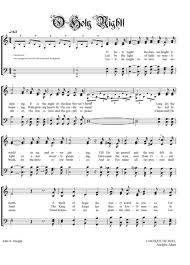
“O Holy Night” (“Cantique de Noël”) is a well-known Christmas carol composed by Adolphe Adam in 1847 to the French poem “Minuit, chrétiens” (Midnight, Christians) by Placide Cappeau (1808–1877).

Cappeau, a wine merchant and poet, had been asked by a parish priest to write a Christmas poem. Unitarian minister John Sullivan Dwight, editor of Dwight’s Journal of Music, created a singing edition based on Cappeau’s French text in 1855.

In both the French original and in the two familiar English versions of the carol, the text reflects on the birth of Jesus and of mankind’s redemption.
O Holy Night

O Holy Night sung by the Mormon Tabernacle Choir and the King’s Singers


December 24 ~ in Music History

today

Christmas Countdown: O Holy Night

• 1719 ~ Johann Christoph Altnikol, German organist, bass singer, and composer. He was a son-in-law and copyist of Johann Sebastian Bach

• 1818 ~ Franz Gruber of Oberndorf, Germany, composed the music for “Silent Night” to words written by Josef Mohr. The traditional song was sung for the first time during Midnight Mass on this night.

• 1824 ~ Peter Cornelius, German composer and writer

• 1871 ~ Opera-goers in Cairo, Egypt were treated to Verdi’s Aida in its world premiere. The composer was commissioned to write the opera for festivities celebrating the opening of the Suez Canal

• 1887 ~ Lucrezia Bori, Spanish lyric composer

• 1893 ~ Harry Warren (Salvatore Guaragna), Composer, Song Writer’s Hall of Famer: Best Song Oscar

• 1906 ~ Professor Reginald A. Fessenden sent his first radio broadcast from Brant Rock, MA. The program included a little verse, some violin and a speech.

• 1918 ~ Zara Nelsova, Canadian-born American cellist

• 1914 ~ Ralph Marterie, ‘Caruso of the trumpet’: musician, bandleader

• 1924 ~ Carol Haney, Dancer, member of Jack Cole dance company, worked with Bob Fosse, in films

• 1928 ~ The first broadcast of The Voice of Firestone was heard. The program aired each Monday evening at 8:00. The Voice of Firestone became a hallmark in radio broadcasting. It kept its same night, time (in 1931 the start time changed to 8:30) and sponsor for its entire run. Beginning on September 5, 1949, the program of classical and semiclassical music was also seen on television.

• 1930 ~ Robert Joffrey (Khan), Choreographer with The Joffrey Ballet; died in 1988

• 1931 ~ Ray Bryant, Pianist, composer

• 1944 ~ Mike Curb, Music executive, producer, Oscar-winner

• 1944 ~ The Andrews Sisters starred in the debut of The Andrews Sisters’ Eight-To- The-Bar-Ranch on ABC radio. Patti, Maxine and LaVerne ran a fictional dude ranch. George ‘Gabby’ Hayes was a regular guest along with Vic Schoen’s orchestra. The ranch stayed in operation until 1946.

• 1945 ~ Lemmy (Ian Kilmister), Bass, singer with Motorhead

• 1946 ~ Jan Akkerman, Guitar, lute with bands: Friendship Sextet, Johnny and the Cellar Rockers

• 1951 ~ Menotti’s “Amahl and the Night Visitors”, the first opera composed for television, made its debut on NBC-TV. Amal and the Night Visitors became a Christmas classic.


• 1955 ~ The lovely Lennon Sisters debuted as featured vocalists on The Lawrence Welk Show on ABC-TV. They became regulars with Welk within a month and stayed on the show until 1968.

• 1957 ~ Ian Burden, Keyboards with Human League

• 1977 ~ The Bee Gees spent Christmas and New Year’s Eve at the top of the music charts. How Deep is Your Love became #1 this day and stayed that way for three weeks.

• 2000 ~ Felix Popper, a conductor and music administrator at the New York City Opera, died at the age of 92. Popper joined the New York City Opera in 1949 as an assistant conductor and vocal coach. By 1958 he was named music administrator, and he played an important role in guiding the opera through a period in which the house truly established itself. During this time, the company is credited with discovering important American singers such as Johanna Meier, Tatiana Troyanos, Gianna Rolandi, Faith Esham and Jane Shaulis. Popper retired from the opera in 1980 but continued to work as a consultant and vocal coach.

• 2000 ~ Longtime Detroit blues radio personality and promoter Famous Coachman died of an apparent heart attack. He was 75. Coachman was host of the weekend blues and gospel show on Detroit’s WDET for 21 years until 1997 and remained busy in the city’s music world until his death. “Everybody knew Coachman,” said JoAnn Korczynska, blues music director for WHFR at Henry Ford Community College in Dearborn. “He really did know B.B. King and John Lee Hooker. When I met John Lee Hooker, one of the first things he said to me was `How is Coachman doing?'” Coachman said he was named “Famous” because “my mother knew I would be.”

• 2000 ~ Nick Massi, an original member of the Four Seasons who handled bass vocals and vocal arrangements throughout the band’s glory days, died of cancer at the age of 73. Massi was born in Newark as Nicholas Macioci. The longtime West Orange resident performed with several bands before joining Frankie Valli in a group called the Four Lovers. By 1961, the group had evolved into the Four Seasons. Massi remained with the group until 1965, when he grew tired of touring, Valli said. Massi performed on hits such as Sherry, Big Girls Don’t CryWalk Like a Man and Rag Doll, which friends said was his favorite. During his tenure, the group made the Billboard Top 40 chart 17 times and toured throughout the United States and overseas, melding doo-wop vocals with a contemporary beat. They were inducted into the Rock and Roll Hall of Fame in 1990. Valli’s falsetto was the band’s trademark, but he said Massi was his musical mentor. “He could do four-part modern harmonies that would amaze musicians who had studied for years. And he did it all in his head without writing it down,” Valli said.

Christmas Countdown: Adeste Fideles


“O Come, All Ye Faithful” (originally written in Latin as Adeste Fideles) is a Christmas carol which has been attributed to various authors, including John Francis Wade (1711–1786), John Reading (1645–1692) and King John IV of Portugal (1604–1656), with the earliest manuscript of the hymn bearing his name, located in the library of the Ducal Palace of Vila Viçosa.

The original four verses of the hymn were extended to a total of eight, and these have been translated into many languages. The English translation of “O Come, All Ye Faithful” by the English Catholic priest Frederick Oakeley, written in 1841, is widespread in most English speaking countries.
There are now several versions in the O’Connor Music Store if you are interested in learning this Christmas carol.